
Lecture 1 Gastrointestinal Physiology Chapter 63 pages 797


- Slides: 50
Lecture 1 Gastrointestinal Physiology Chapter 63; pages 797 -806 General Principles of Gastrointestinal Function-Motility, Nervous Control, and Blood Circulation Prof. Mohammed Alzoghaibi zzoghaibi@gmail. com malzoghaibi@ksu. edu. sa Cell Phone #: 0506338400
Note: Any kind of recording during the lectures is not allowed. Thanks
Required Textbook of Medical Physiology Thirteenth Edition Guyton & Hall Published by Elsevier Saunders 2016
Learning Objectives • Physiologic Anatomy of the Gastrointestinal Wall • The General Characteristics of Smooth Muscle • Smooth muscle cell classifications and types of contraction • Muscle layers in GI wall • Electrical Activity of Gastrointestinal Smooth Muscle • Slow Waves and spike potentials • Calcium Ions and Muscle Contraction • Neural Control of Gastrointestinal Function-Enteric Nervous System
Learning Objectives (Cont. ) • Differences Between the Myenteric and Submucosal Plexuses • Types of Neurotransmitters Secreted by Enteric Neurons • Autonomic Control of the Gastrointestinal Tract • Hormonal Control of Gastrointestinal Motility • Functional Types of Movements in the GI Tract • Gastrointestinal Blood Flow-"Splanchnic Circulation" • Effect of Gut Activity and Metabolic Factors on Gastrointestinal Blood Flow
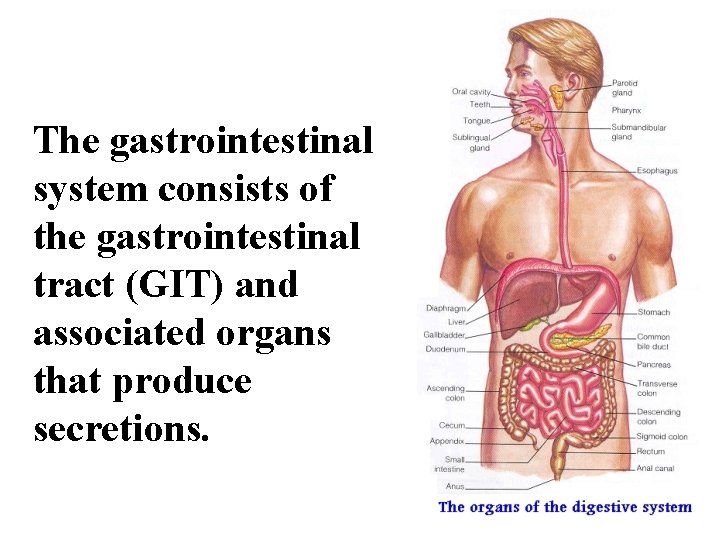
The gastrointestinal system consists of the gastrointestinal tract (GIT) and associated organs that produce secretions.
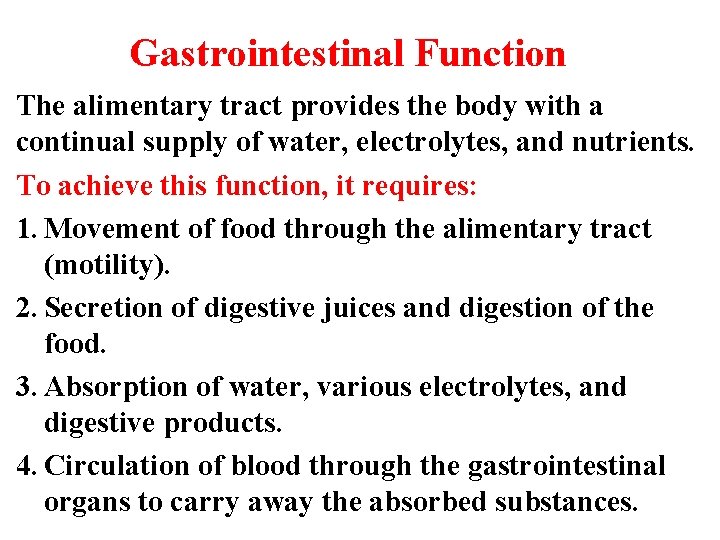
Gastrointestinal Function The alimentary tract provides the body with a continual supply of water, electrolytes, and nutrients. To achieve this function, it requires: 1. Movement of food through the alimentary tract (motility). 2. Secretion of digestive juices and digestion of the food. 3. Absorption of water, various electrolytes, and digestive products. 4. Circulation of blood through the gastrointestinal organs to carry away the absorbed substances.
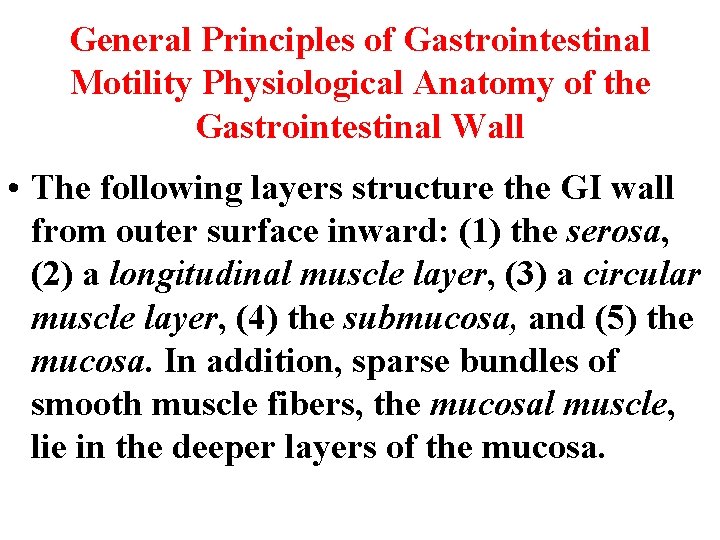
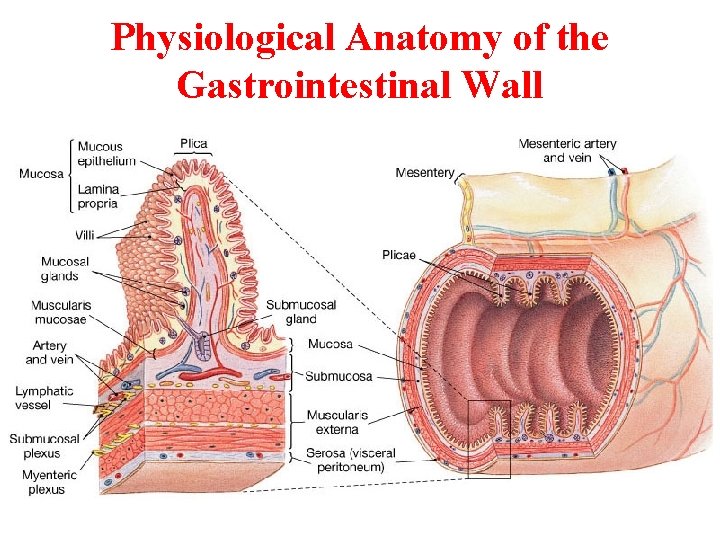
General Principles of Gastrointestinal Motility Physiological Anatomy of the Gastrointestinal Wall • The following layers structure the GI wall from outer surface inward: (1) the serosa, (2) a longitudinal muscle layer, (3) a circular muscle layer, (4) the submucosa, and (5) the mucosa. In addition, sparse bundles of smooth muscle fibers, the mucosal muscle, lie in the deeper layers of the mucosa.
Physiological Anatomy of the Gastrointestinal Wall
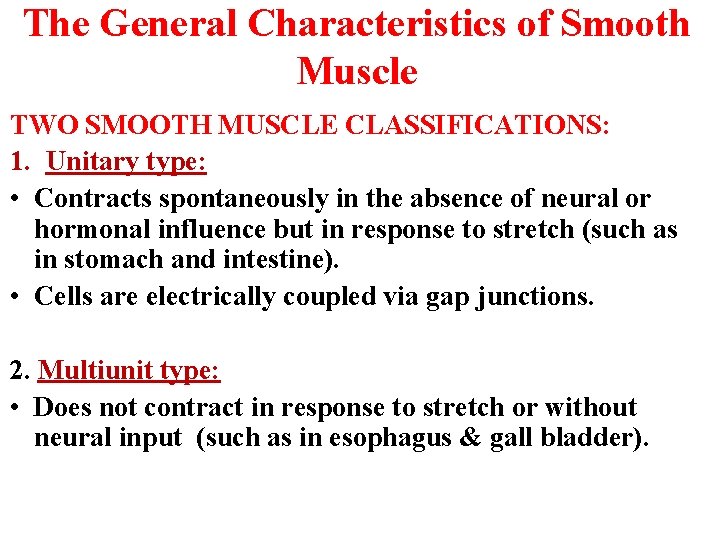
The General Characteristics of Smooth Muscle TWO SMOOTH MUSCLE CLASSIFICATIONS: 1. Unitary type: • Contracts spontaneously in the absence of neural or hormonal influence but in response to stretch (such as in stomach and intestine). • Cells are electrically coupled via gap junctions. 2. Multiunit type: • Does not contract in response to stretch or without neural input (such as in esophagus & gall bladder).
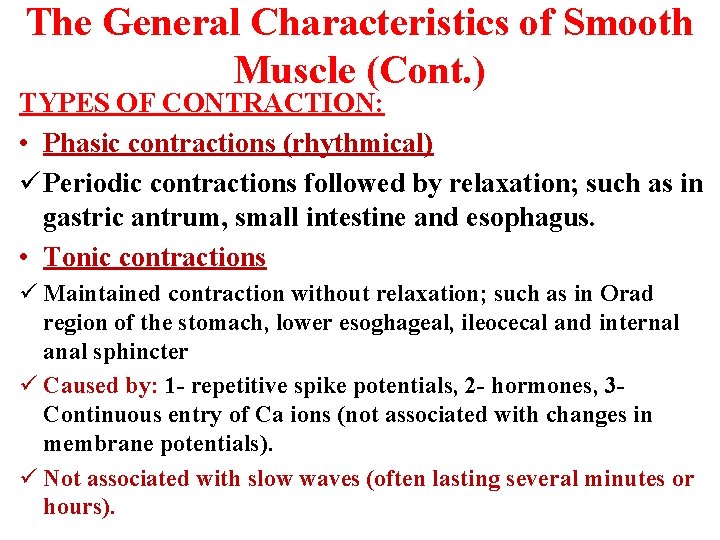
The General Characteristics of Smooth Muscle (Cont. ) TYPES OF CONTRACTION: • Phasic contractions (rhythmical) ü Periodic contractions followed by relaxation; such as in gastric antrum, small intestine and esophagus. • Tonic contractions ü Maintained contraction without relaxation; such as in Orad region of the stomach, lower esoghageal, ileocecal and internal anal sphincter ü Caused by: 1 - repetitive spike potentials, 2 - hormones, 3 Continuous entry of Ca ions (not associated with changes in membrane potentials). ü Not associated with slow waves (often lasting several minutes or hours).
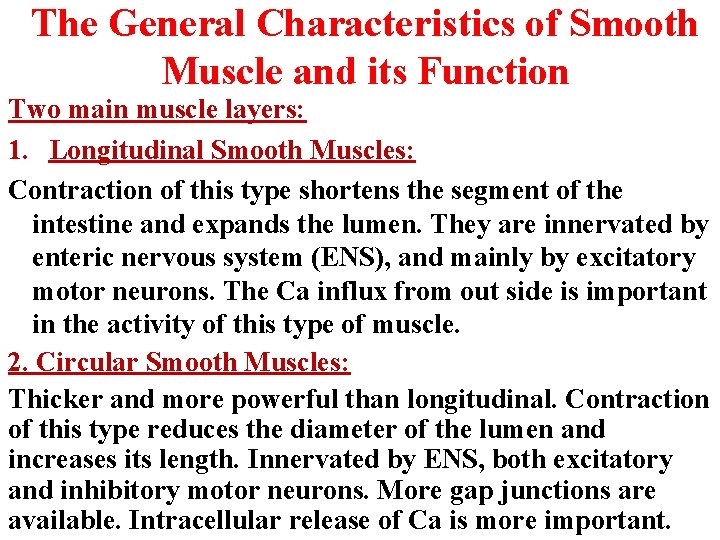
The General Characteristics of Smooth Muscle and its Function Two main muscle layers: 1. Longitudinal Smooth Muscles: Contraction of this type shortens the segment of the intestine and expands the lumen. They are innervated by enteric nervous system (ENS), and mainly by excitatory motor neurons. The Ca influx from out side is important in the activity of this type of muscle. 2. Circular Smooth Muscles: Thicker and more powerful than longitudinal. Contraction of this type reduces the diameter of the lumen and increases its length. Innervated by ENS, both excitatory and inhibitory motor neurons. More gap junctions are available. Intracellular release of Ca is more important.
The Specific Characteristics of Smooth Muscle in the Gut 1. Gastrointestinal Smooth Muscle Functions as a Syncytium: The individual smooth muscle fibers are 200 to 500 µm in length and 2 to 10 µm in diameter, and they are arranged in bundles of as many as 1000 parallel fibers. Within each bundle, the muscle fibers are electrically connected with one another through large numbers of gap junctions. Each muscle layer functions as a syncytium; that is, when an action potential is elicited anywhere within the muscle mass, it generally travels in all directions in the muscle.
The Specific Characteristics of Smooth Muscle in the Gut (Cont. ) 2. Electrical Activity of Gastrointestinal Smooth Muscle: The smooth muscle of the gastrointestinal tract is excited by almost continual slow, intrinsic electrical activity along the membranes of the muscle fibers. This activity has two basic types of electrical waves: (A) slow waves and (B) spikes.
Electrical Activity of Gastrointestinal Smooth Muscle
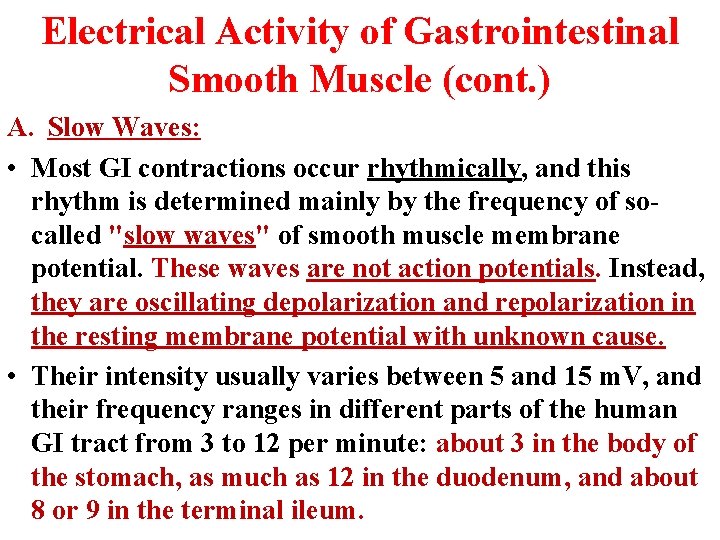
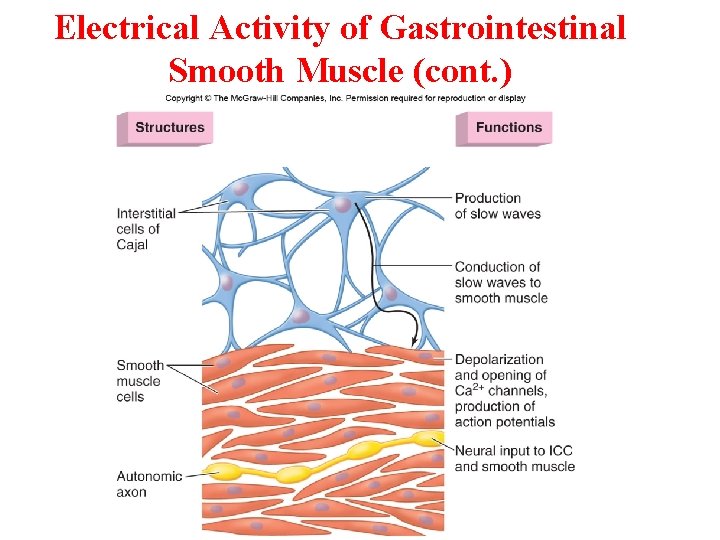
Electrical Activity of Gastrointestinal Smooth Muscle (cont. ) A. Slow Waves: • Most GI contractions occur rhythmically, and this rhythm is determined mainly by the frequency of socalled "slow waves" of smooth muscle membrane potential. These waves are not action potentials. Instead, they are oscillating depolarization and repolarization in the resting membrane potential with unknown cause. • Their intensity usually varies between 5 and 15 m. V, and their frequency ranges in different parts of the human GI tract from 3 to 12 per minute: about 3 in the body of the stomach, as much as 12 in the duodenum, and about 8 or 9 in the terminal ileum.
Electrical Activity of Gastrointestinal Smooth Muscle (cont. ) • Origin of slow waves: They may originate in the interstitial cells of Cajal (ICC, the GI pacemaker), which are abundant in the myenteric plexuses. These ICCs form a network with each other and are interposed between the smooth muscle layers, with synaptic-like contacts to smooth muscle cells.
Electrical Activity of Gastrointestinal Smooth Muscle (cont. )
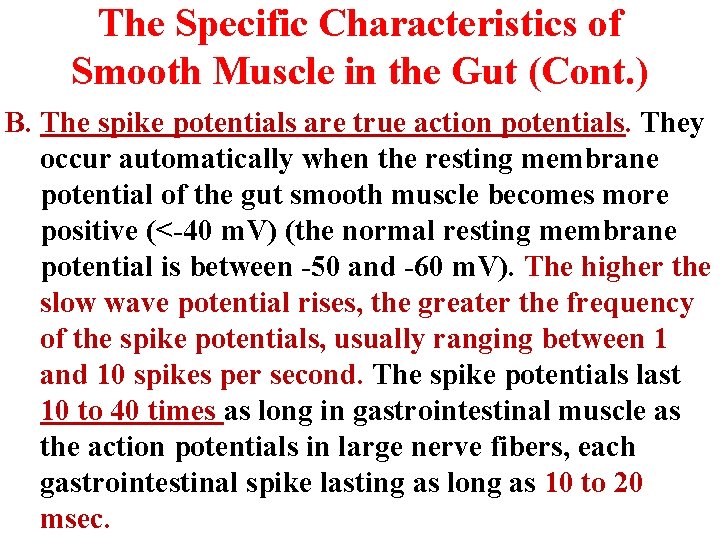
The Specific Characteristics of Smooth Muscle in the Gut (Cont. ) B. The spike potentials are true action potentials. They occur automatically when the resting membrane potential of the gut smooth muscle becomes more positive (<-40 m. V) (the normal resting membrane potential is between -50 and -60 m. V). The higher the slow wave potential rises, the greater the frequency of the spike potentials, usually ranging between 1 and 10 spikes per second. The spike potentials last 10 to 40 times as long in gastrointestinal muscle as the action potentials in large nerve fibers, each gastrointestinal spike lasting as long as 10 to 20 msec.
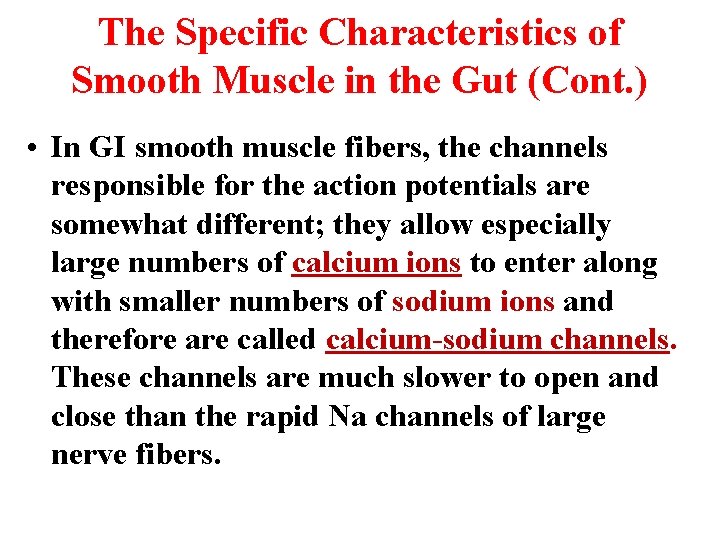
The Specific Characteristics of Smooth Muscle in the Gut (Cont. ) • In GI smooth muscle fibers, the channels responsible for the action potentials are somewhat different; they allow especially large numbers of calcium ions to enter along with smaller numbers of sodium ions and therefore are called calcium-sodium channels. These channels are much slower to open and close than the rapid Na channels of large nerve fibers.
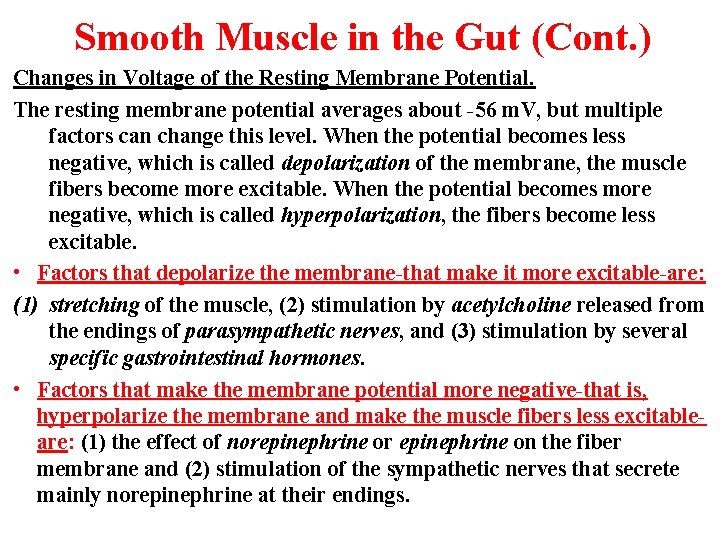
Smooth Muscle in the Gut (Cont. ) Changes in Voltage of the Resting Membrane Potential. The resting membrane potential averages about -56 m. V, but multiple factors can change this level. When the potential becomes less negative, which is called depolarization of the membrane, the muscle fibers become more excitable. When the potential becomes more negative, which is called hyperpolarization, the fibers become less excitable. • Factors that depolarize the membrane-that make it more excitable-are: (1) stretching of the muscle, (2) stimulation by acetylcholine released from the endings of parasympathetic nerves, and (3) stimulation by several specific gastrointestinal hormones. • Factors that make the membrane potential more negative-that is, hyperpolarize the membrane and make the muscle fibers less excitableare: (1) the effect of norepinephrine or epinephrine on the fiber membrane and (2) stimulation of the sympathetic nerves that secrete mainly norepinephrine at their endings.
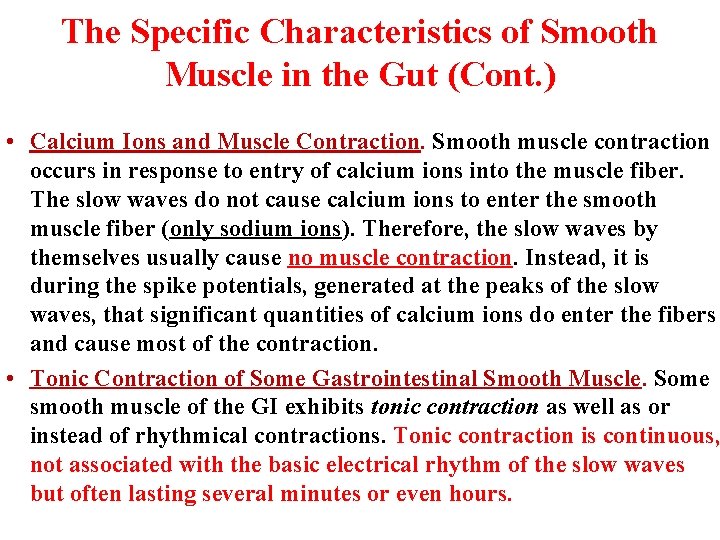
The Specific Characteristics of Smooth Muscle in the Gut (Cont. ) • Calcium Ions and Muscle Contraction. Smooth muscle contraction occurs in response to entry of calcium ions into the muscle fiber. The slow waves do not cause calcium ions to enter the smooth muscle fiber (only sodium ions). Therefore, the slow waves by themselves usually cause no muscle contraction. Instead, it is during the spike potentials, generated at the peaks of the slow waves, that significant quantities of calcium ions do enter the fibers and cause most of the contraction. • Tonic Contraction of Some Gastrointestinal Smooth Muscle. Some smooth muscle of the GI exhibits tonic contraction as well as or instead of rhythmical contractions. Tonic contraction is continuous, not associated with the basic electrical rhythm of the slow waves but often lasting several minutes or even hours.
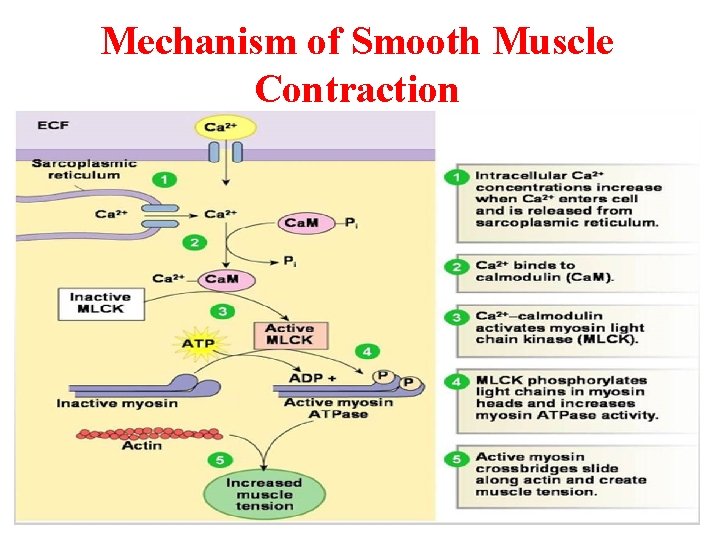
Mechanism of Smooth Muscle Contraction
Neural Control of Gastrointestinal Function-Enteric Nervous System
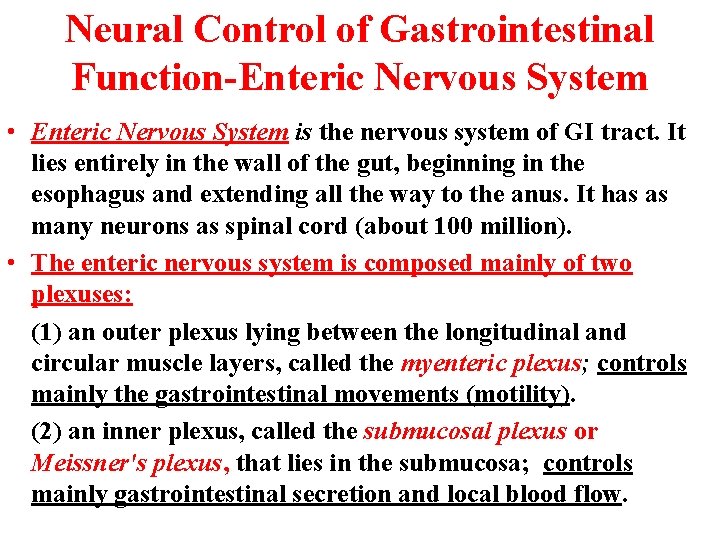
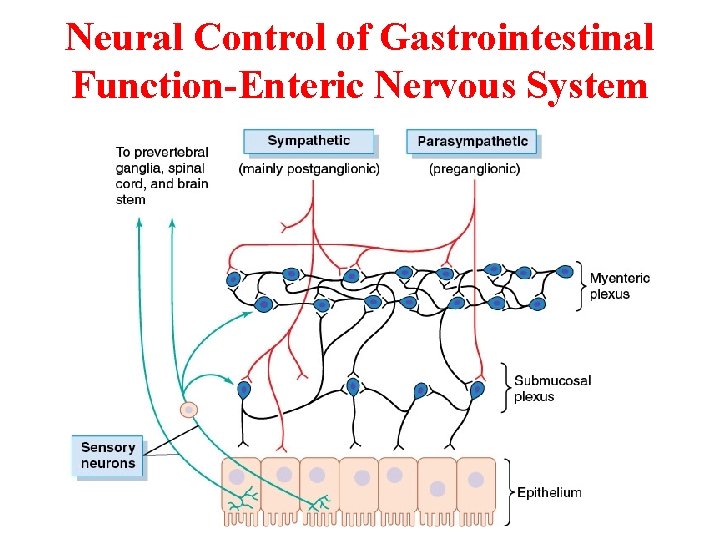
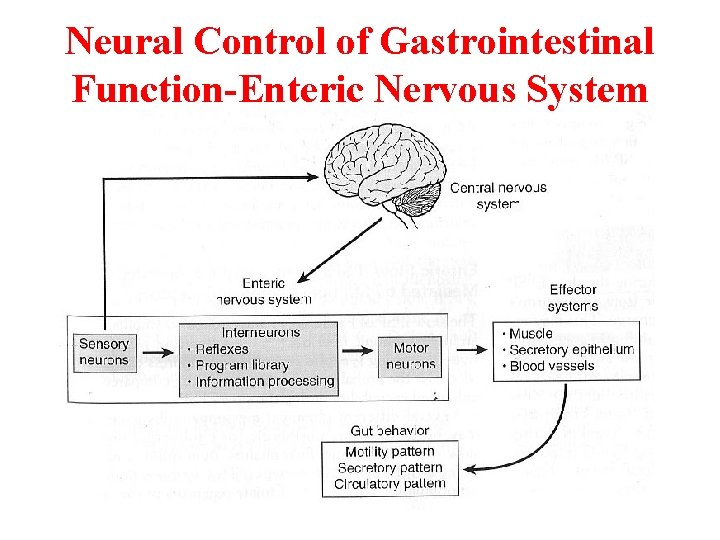
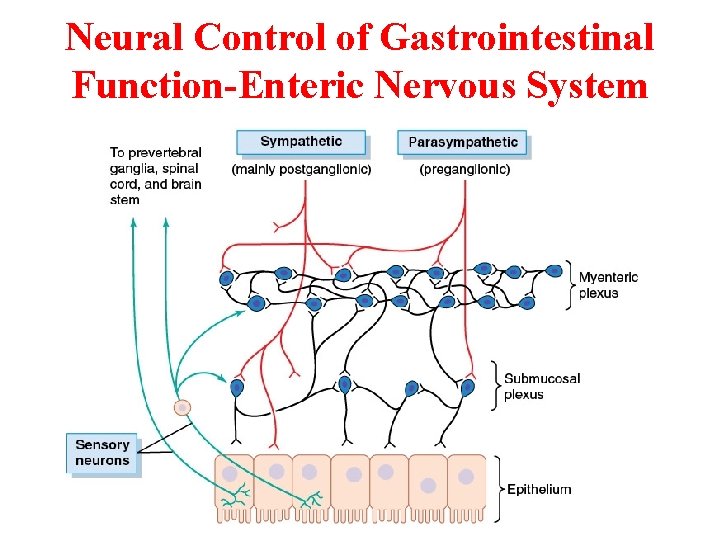
Neural Control of Gastrointestinal Function-Enteric Nervous System • Enteric Nervous System is the nervous system of GI tract. It lies entirely in the wall of the gut, beginning in the esophagus and extending all the way to the anus. It has as many neurons as spinal cord (about 100 million). • The enteric nervous system is composed mainly of two plexuses: (1) an outer plexus lying between the longitudinal and circular muscle layers, called the myenteric plexus; controls mainly the gastrointestinal movements (motility). (2) an inner plexus, called the submucosal plexus or Meissner's plexus, that lies in the submucosa; controls mainly gastrointestinal secretion and local blood flow.
Neural Control of Gastrointestinal Function-Enteric Nervous System
Neural Control of Gastrointestinal Function-Enteric Nervous System
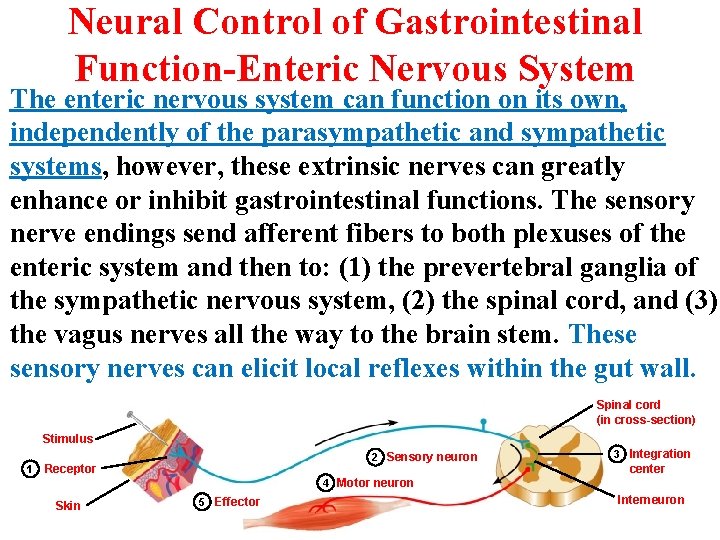
Neural Control of Gastrointestinal Function-Enteric Nervous System The enteric nervous system can function on its own, independently of the parasympathetic and sympathetic systems, however, these extrinsic nerves can greatly enhance or inhibit gastrointestinal functions. The sensory nerve endings send afferent fibers to both plexuses of the enteric system and then to: (1) the prevertebral ganglia of the sympathetic nervous system, (2) the spinal cord, and (3) the vagus nerves all the way to the brain stem. These sensory nerves can elicit local reflexes within the gut wall. Spinal cord (in cross-section) Stimulus 1 2 Sensory neuron Receptor 3 Integration center 4 Motor neuron Skin 5 Effector Interneuron
Differences Between the Myenteric and Submucosal Plexuses The myenteric plexus: • Consists mostly of a linear chain of many interconnecting neurons. • When it is stimulated, its principal effect is to: (1) increase tonic contraction. (2) increase intensity and rate of the rhythmical contractions. (3) increase velocity of conduction of excitatory waves along the gut wall. • The myenteric plexus has excitatory and inhibitory motor neurons.
Differences Between the Myenteric and Submucosal Plexuses (cont. ) The submucosal plexus: • Controls local intestinal secretion, local absorption, and local contraction of the submucosal muscle that causes various degrees of enfolding of the gastrointestinal mucosa.
Types of Neurotransmitters Secreted by Enteric Neurons • The specific functions of many of GI neurotransmitters are not well known, but some research have discovered the effects of some of these substances as following: I. Excitatory Motor Neurons, Evoke Muscle Contraction & Intestinal Secretion: a. 1. b. 1. Neurotransmitters of motor neurons: Substance P; 2. Ach Neurotransmitters of secretomotor neurons (releasing of water, electrolytes and mucus from crypts of Lieberkuhn): Ach; 2. vasoactive intestinal peptide (VIP); 3. Histamine. II. Inhibitory Motor Neurons Suppress Muscle Contraction: Adenosine tri-peptide (ATP), nitric oxide (NO), VIP.
Autonomic Control of the Gastrointestinal Tract • Autonomic nervous system (ANS) is divided into: - Parasympathetic - Sympathetic - Enteric Nervous System (ENS)
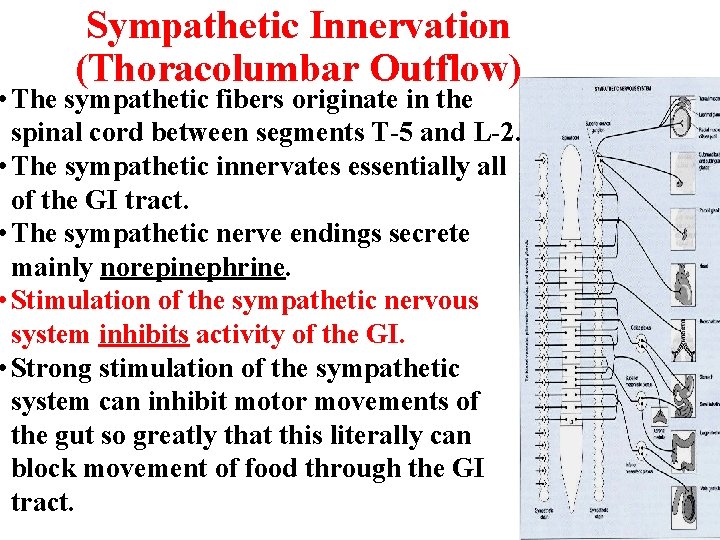
Sympathetic Innervation (Thoracolumbar Outflow) • The sympathetic fibers originate in the spinal cord between segments T-5 and L-2. • The sympathetic innervates essentially all of the GI tract. • The sympathetic nerve endings secrete mainly norepinephrine. • Stimulation of the sympathetic nervous system inhibits activity of the GI. • Strong stimulation of the sympathetic system can inhibit motor movements of the gut so greatly that this literally can block movement of food through the GI tract.
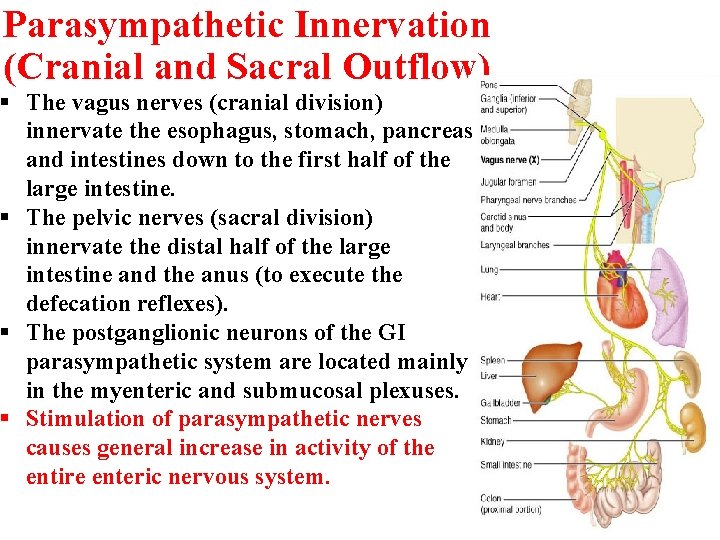
Parasympathetic Innervation (Cranial and Sacral Outflow) § The vagus nerves (cranial division) innervate the esophagus, stomach, pancreas and intestines down to the first half of the large intestine. § The pelvic nerves (sacral division) innervate the distal half of the large intestine and the anus (to execute the defecation reflexes). § The postganglionic neurons of the GI parasympathetic system are located mainly in the myenteric and submucosal plexuses. § Stimulation of parasympathetic nerves causes general increase in activity of the entire enteric nervous system.
Neural Control of Gastrointestinal Function-Enteric Nervous System
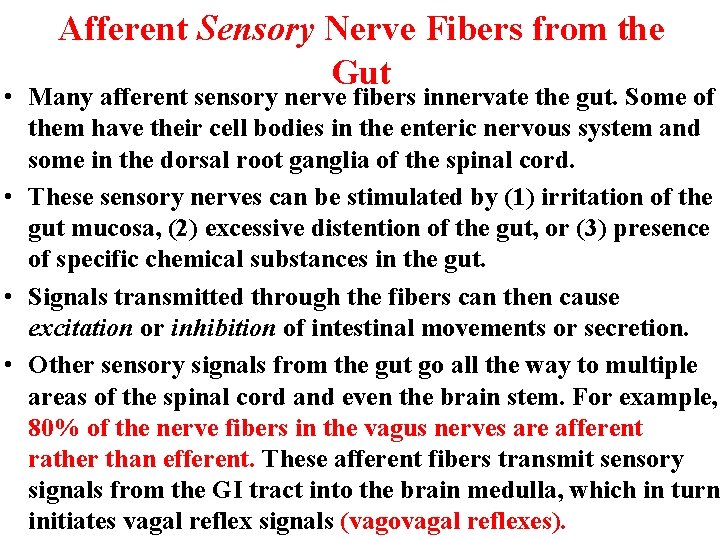
Afferent Sensory Nerve Fibers from the Gut • Many afferent sensory nerve fibers innervate the gut. Some of them have their cell bodies in the enteric nervous system and some in the dorsal root ganglia of the spinal cord. • These sensory nerves can be stimulated by (1) irritation of the gut mucosa, (2) excessive distention of the gut, or (3) presence of specific chemical substances in the gut. • Signals transmitted through the fibers can then cause excitation or inhibition of intestinal movements or secretion. • Other sensory signals from the gut go all the way to multiple areas of the spinal cord and even the brain stem. For example, 80% of the nerve fibers in the vagus nerves are afferent rather than efferent. These afferent fibers transmit sensory signals from the GI tract into the brain medulla, which in turn initiates vagal reflex signals (vagovagal reflexes).
Gastrointestinal Reflexes • The anatomical arrangement of the enteric nervous system and its connections with the sympathetic and parasympathetic systems support three types of GI reflexes that are essential to GI control. They are the following: 1. Reflexes that are integrated entirely within the gut wall enteric nervous system.
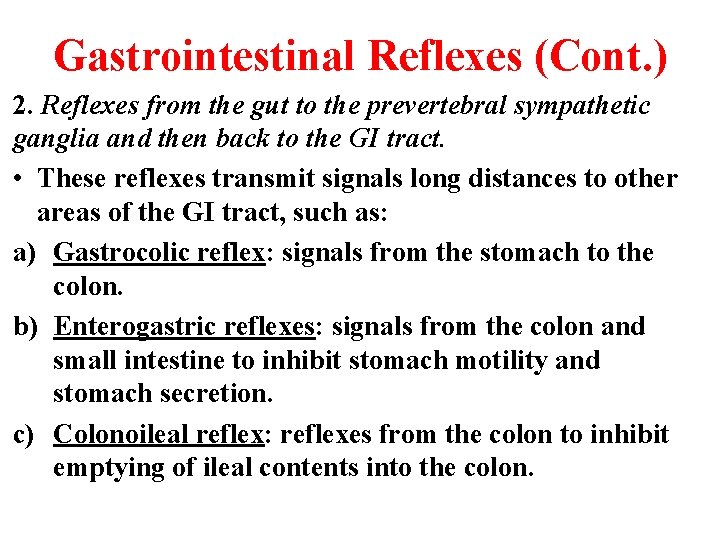
Gastrointestinal Reflexes (Cont. ) 2. Reflexes from the gut to the prevertebral sympathetic ganglia and then back to the GI tract. • These reflexes transmit signals long distances to other areas of the GI tract, such as: a) Gastrocolic reflex: signals from the stomach to the colon. b) Enterogastric reflexes: signals from the colon and small intestine to inhibit stomach motility and stomach secretion. c) Colonoileal reflex: reflexes from the colon to inhibit emptying of ileal contents into the colon.
Gastrointestinal Reflexes (Cont. ) 3. Reflexes from the gut to the spinal cord or brain stem and then back to the GI tract, such as: a) reflexes from the stomach and duodenum to the brain stem and back to the stomach—by way of the vagus nerves—to control gastric motor and secretory activity. b) pain reflexes that cause general inhibition of the entire GI tract. c) defecation reflexes that travel from the colon and rectum to the spinal cord and back again to produce the powerful colonic, rectal, and abdominal contractions required for defecation (the defecation reflexes).
Hormonal Control of Gastrointestinal Motility
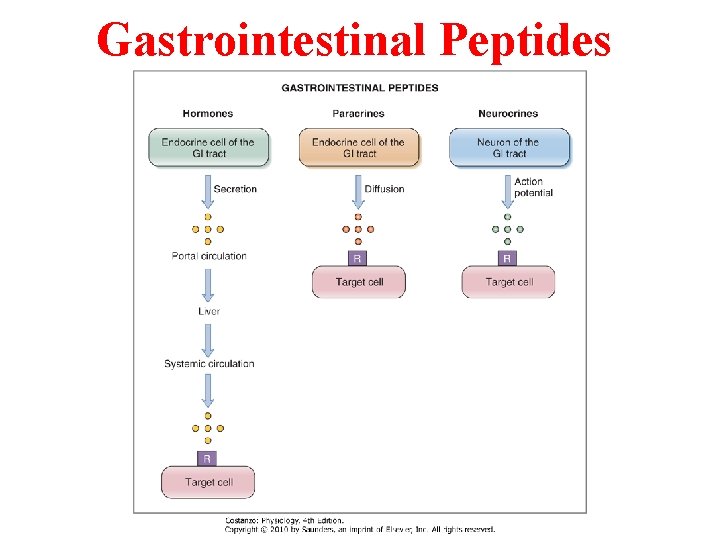
Gastrointestinal Peptides
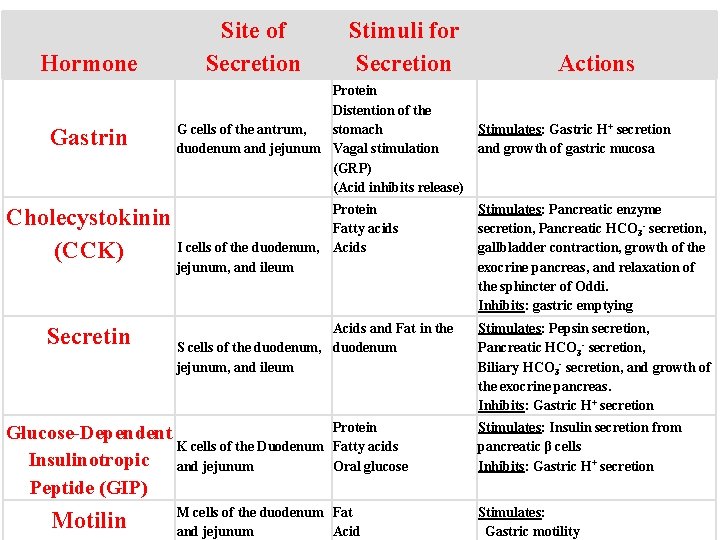
Hormone Gastrin Site of Secretion Stimuli for Secretion Protein Distention of the G cells of the antrum, stomach duodenum and jejunum Vagal stimulation (GRP) (Acid inhibits release) Cholecystokinin I cells of the duodenum, (CCK) Protein Fatty acids Acids jejunum, and ileum Secretin Acids and Fat in the S cells of the duodenum, duodenum jejunum, and ileum Glucose-Dependent K cells of the Duodenum Insulinotropic and jejunum Peptide (GIP) Motilin Protein Fatty acids Oral glucose M cells of the duodenum Fat and jejunum Acid Actions Stimulates: Gastric H+ secretion and growth of gastric mucosa Stimulates: Pancreatic enzyme secretion, Pancreatic HCO 3 - secretion, gallbladder contraction, growth of the exocrine pancreas, and relaxation of the sphincter of Oddi. Inhibits: gastric emptying Stimulates: Pepsin secretion, Pancreatic HCO 3 - secretion, Biliary HCO 3 - secretion, and growth of the exocrine pancreas. Inhibits: Gastric H+ secretion Stimulates: Insulin secretion from pancreatic β cells Inhibits: Gastric H+ secretion Stimulates: Gastric motility
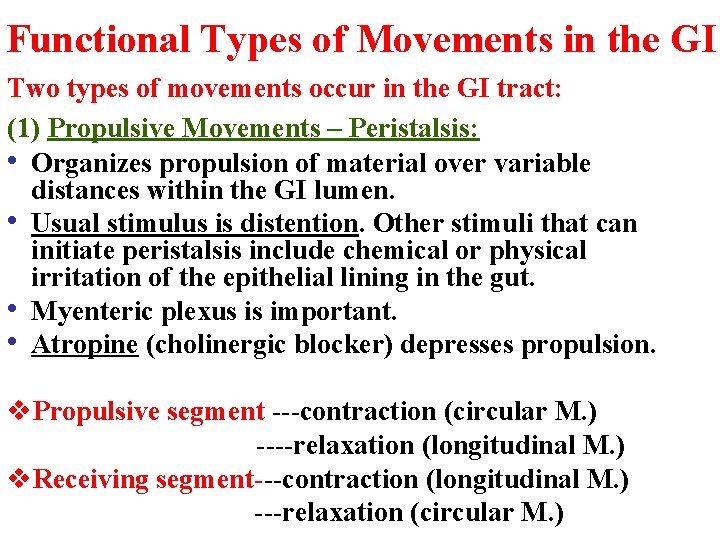
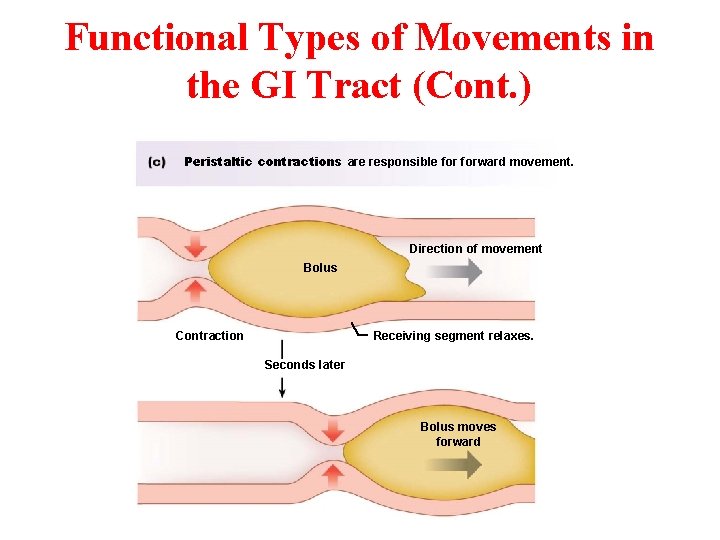
Functional Types of Movements in the GI Two types of movements occur in the GI tract: (1) Propulsive Movements – Peristalsis: • Organizes propulsion of material over variable distances within the GI lumen. • Usual stimulus is distention. Other stimuli that can initiate peristalsis include chemical or physical irritation of the epithelial lining in the gut. • Myenteric plexus is important. • Atropine (cholinergic blocker) depresses propulsion. v. Propulsive segment ---contraction (circular M. ) ----relaxation (longitudinal M. ) v. Receiving segment---contraction (longitudinal M. ) ---relaxation (circular M. )
Functional Types of Movements in the GI Tract (Cont. ) Peristaltic contractions are responsible forward movement. Direction of movement Bolus Contraction Receiving segment relaxes. Seconds later Bolus moves forward
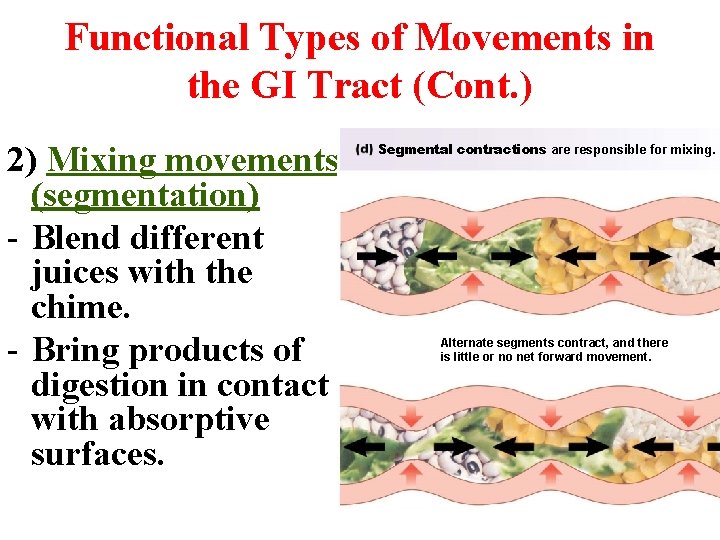
Functional Types of Movements in the GI Tract (Cont. ) 2) Mixing movements (segmentation) - Blend different juices with the chime. - Bring products of digestion in contact with absorptive surfaces. Segmental contractions are responsible for mixing. Alternate segments contract, and there is little or no net forward movement.
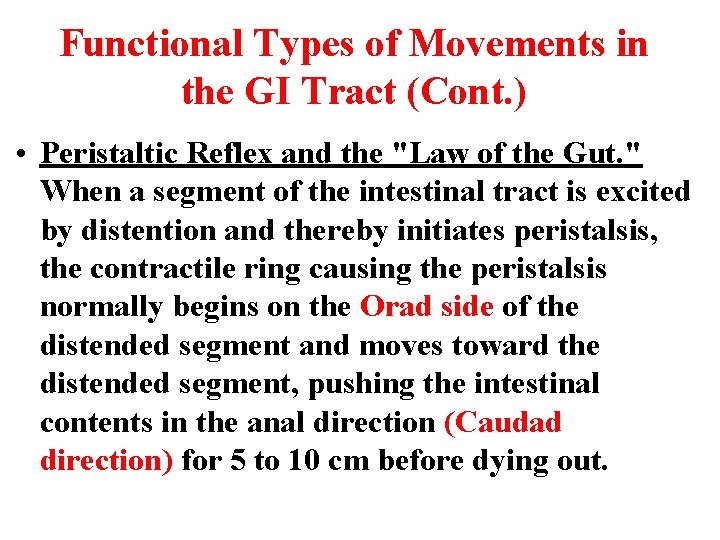
Functional Types of Movements in the GI Tract (Cont. ) • Peristaltic Reflex and the "Law of the Gut. " When a segment of the intestinal tract is excited by distention and thereby initiates peristalsis, the contractile ring causing the peristalsis normally begins on the Orad side of the distended segment and moves toward the distended segment, pushing the intestinal contents in the anal direction (Caudad direction) for 5 to 10 cm before dying out.
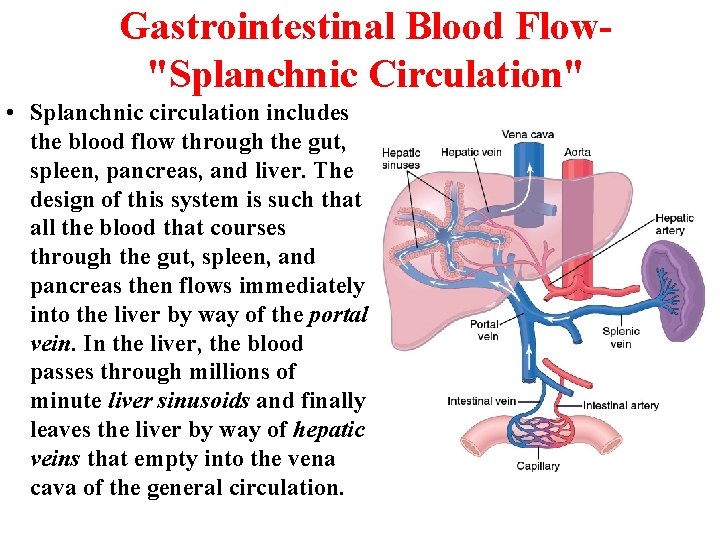
Gastrointestinal Blood Flow"Splanchnic Circulation" • Splanchnic circulation includes the blood flow through the gut, spleen, pancreas, and liver. The design of this system is such that all the blood that courses through the gut, spleen, and pancreas then flows immediately into the liver by way of the portal vein. In the liver, the blood passes through millions of minute liver sinusoids and finally leaves the liver by way of hepatic veins that empty into the vena cava of the general circulation.
Effect of Gut Activity and Metabolic Factors on Gastrointestinal Blood Flow • Possible Causes of the Increased Blood Flow During Gastrointestinal Activity: 1. Most of the peptide hormones, including: CCK, VIP, gastrin, and secretin. 2. Some of the GI glands release into the gut wall two kinins, kallidin and bradykinin (vasodilators). 3. Decreased oxygen concentration in the gut wall can increase intestinal blood flow at least 50 to 100%.
Nervous Control of Gastrointestinal Blood Flow • Stimulation of the parasympathetic nerves going to the stomach and lower colon increases local blood flow at the same time that it increases glandular secretion. • Sympathetic stimulation, by contrast, has a direct effect on essentially all the gastrointestinal tract to cause intense vasoconstriction of the arterioles with greatly decreased blood flow. But the local metabolic vasodilator mechanisms override the sympathetic vasoconstriction effects, returning the normal blood flow to GI muscle and glands.
The End