
Lecture 06 Pipelining Implementation Kai Bu kaibuzju edu
Lecture 06: Pipelining Implementation Kai Bu kaibu@zju. edu. cn http: //list. zju. edu. cn/kaibu/comparch 2016 fall
Assignment 1 due Lab 1 Report due Lab 2 Demo due November 06 Report due November 17 Final Exam: 2017. 01. 19 18: 30 -20: 30

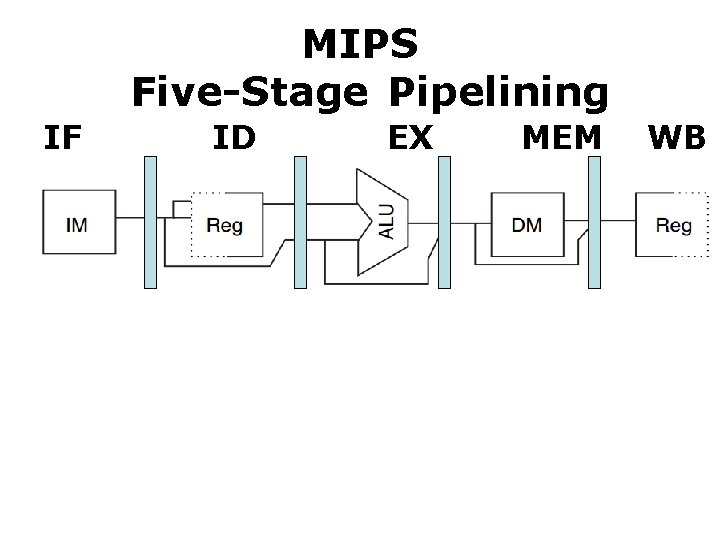
MIPS Data Path Five-Stage Pipelining Underneath IF ID EX MEM WB

Data Path Underneath Pipelining lab & exam
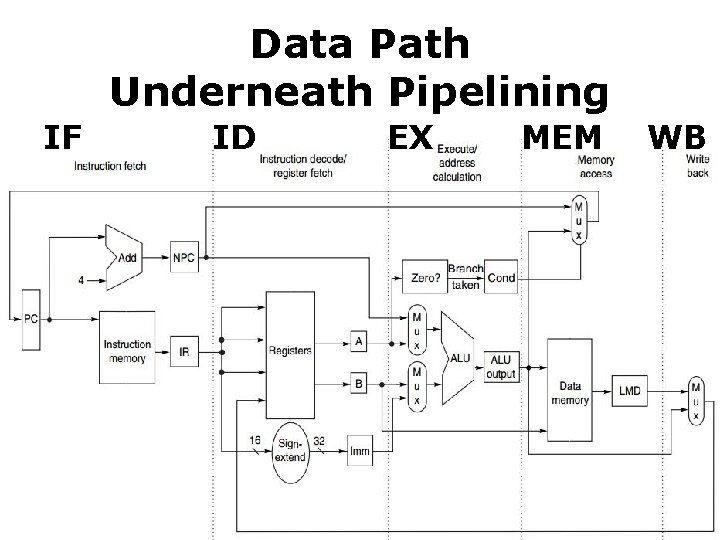
Data Path Underneath Pipelining IF ID EX MEM WB
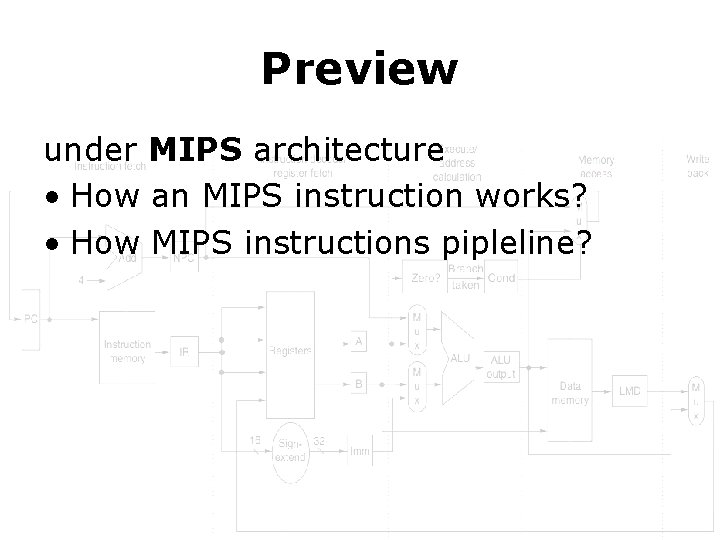
Preview under MIPS architecture • How an MIPS instruction works? • How MIPS instructions pipleline?

Appendix C. 3 -C. 4
How an unpipelined MIPS instruction works?
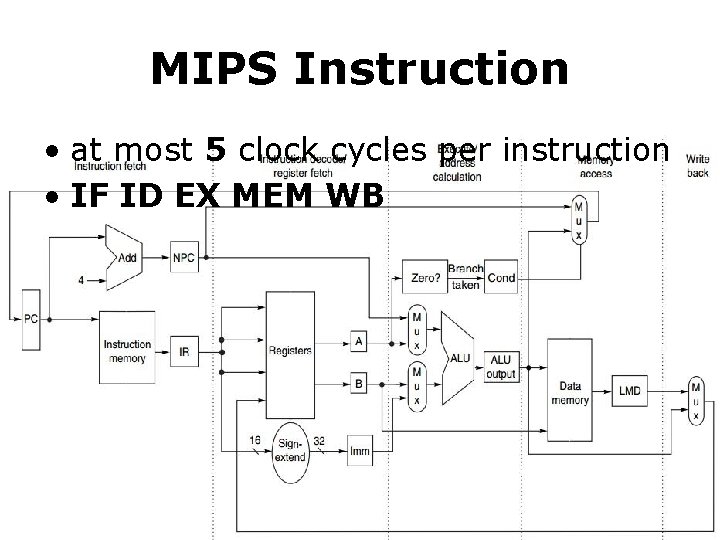
MIPS Instruction • at most 5 clock cycles per instruction • IF ID EX MEM WB
![IF IF ID EX MEM WB • Instruction Fetch cycle IR ← Mem[PC]; NPC](http://slidetodoc.com/presentation_image_h2/d71364c464fc709e834b3dcfc5c0e82c/image-11.jpg "IF IF ID EX MEM WB • Instruction Fetch cycle IR ← Mem[PC]; NPC")
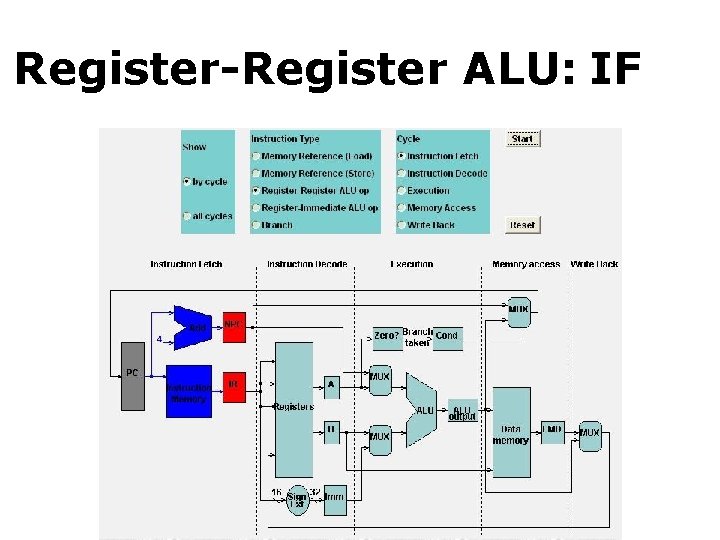
IF IF ID EX MEM WB • Instruction Fetch cycle IR ← Mem[PC]; NPC ← PC + 4; IR: instruction register NPC: next sequential PC
![ID IF ID EX MEM WB • Instruction Decode/register fetch A ← Regs[rs]; B](http://slidetodoc.com/presentation_image_h2/d71364c464fc709e834b3dcfc5c0e82c/image-12.jpg "ID IF ID EX MEM WB • Instruction Decode/register fetch A ← Regs[rs]; B")
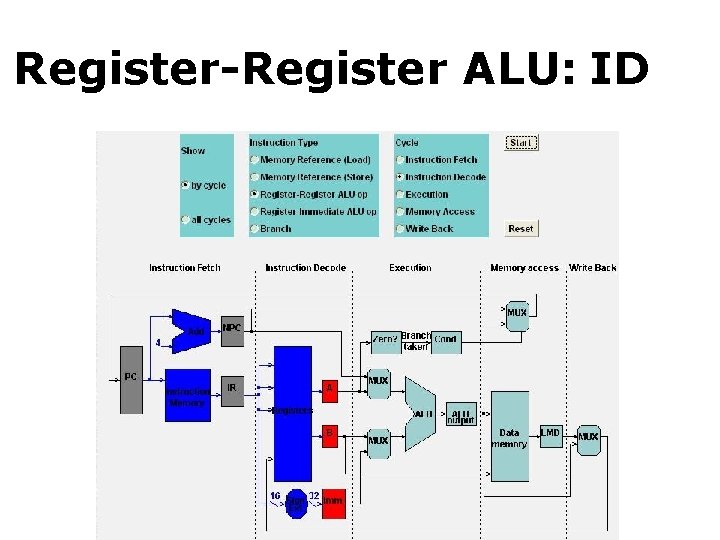
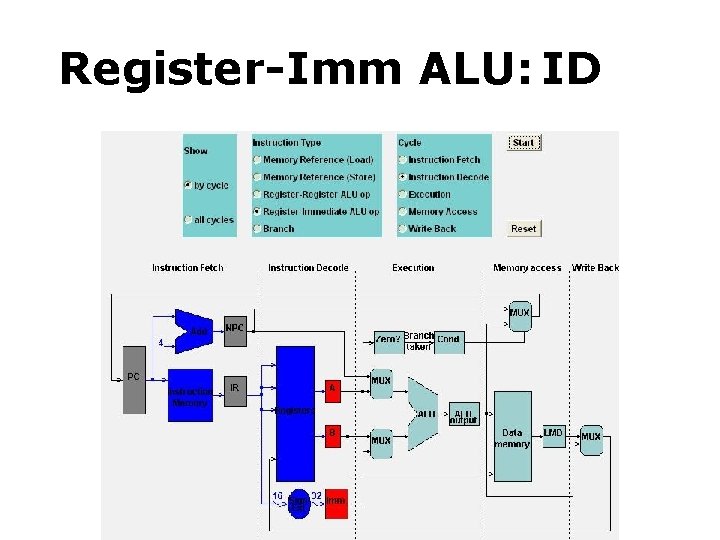
ID IF ID EX MEM WB • Instruction Decode/register fetch A ← Regs[rs]; B ← Regs[rt]; Imm ← sign-extended immediate field of IR (lower 16 bits)
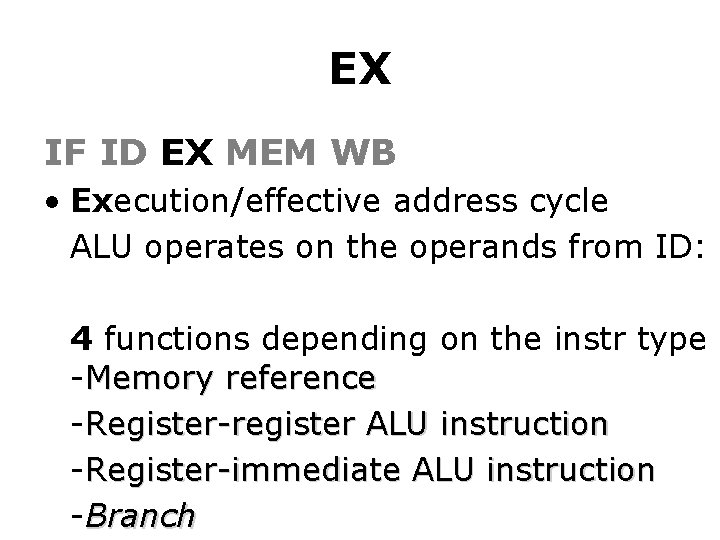
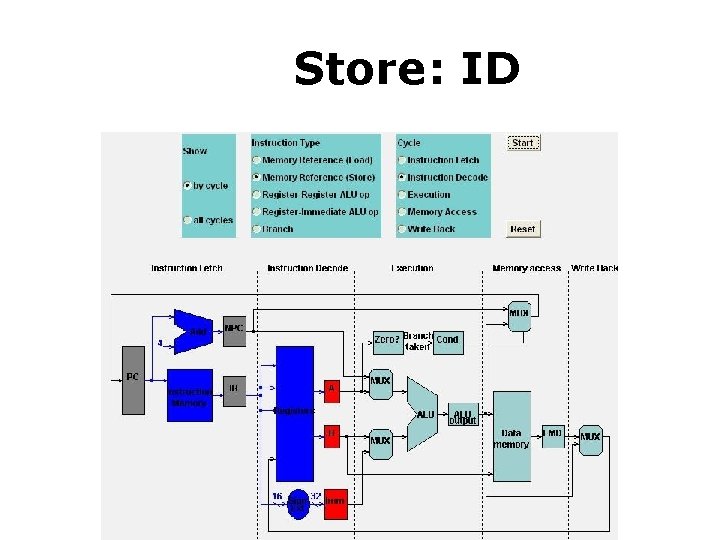
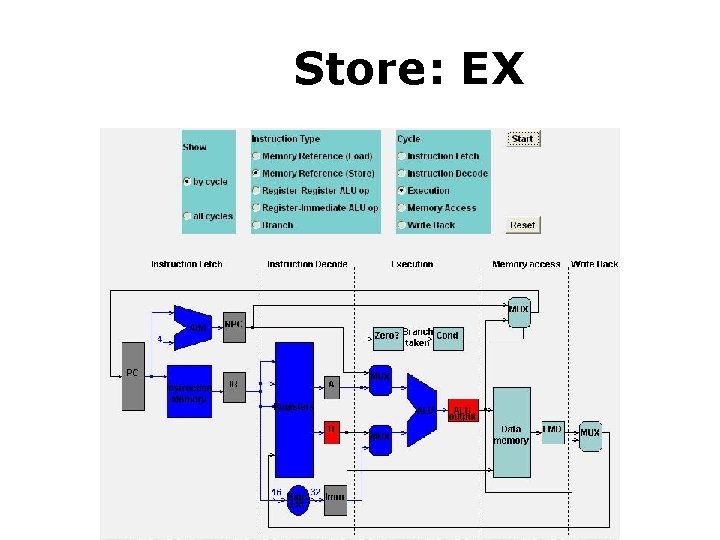
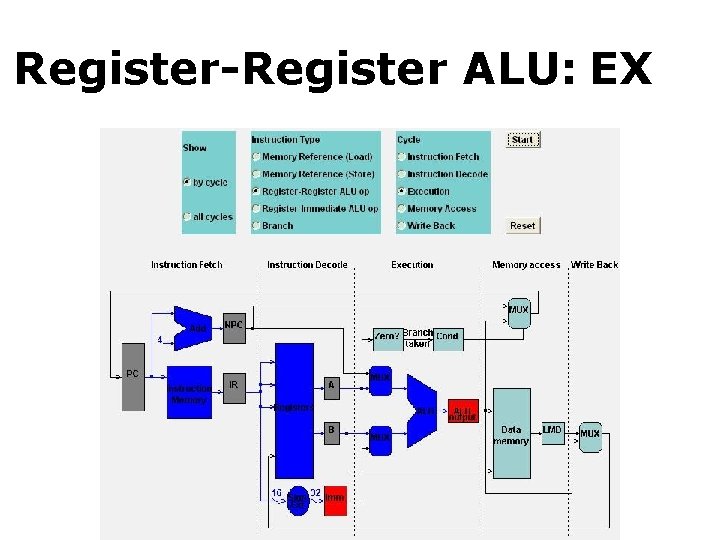
EX IF ID EX MEM WB • Execution/effective address cycle ALU operates on the operands from ID: 4 functions depending on the instr type -Memory reference -Register-register ALU instruction -Register-immediate ALU instruction -Branch
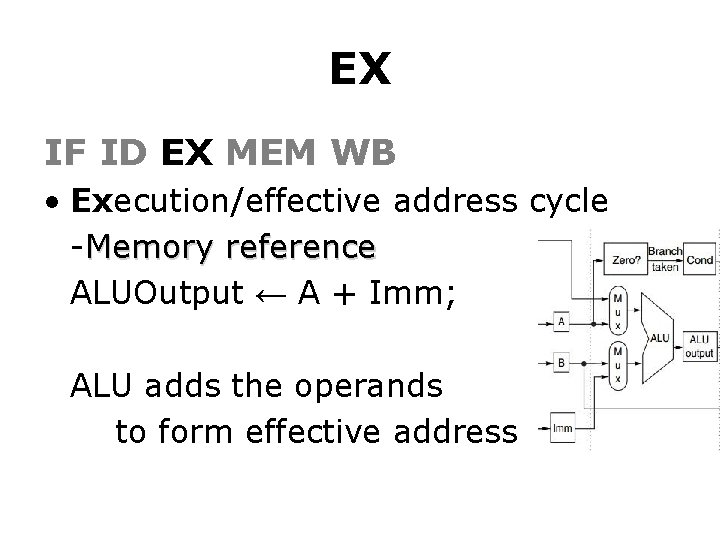
EX IF ID EX MEM WB • Execution/effective address cycle -Memory reference ALUOutput ← A + Imm; ALU adds the operands to form effective address
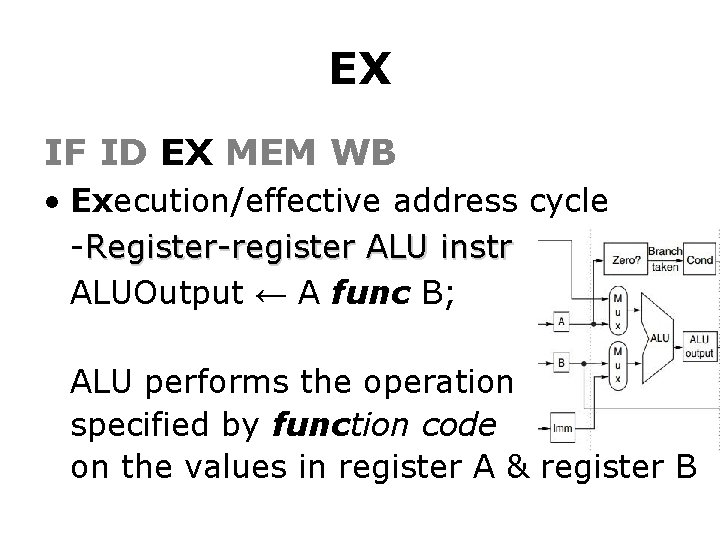
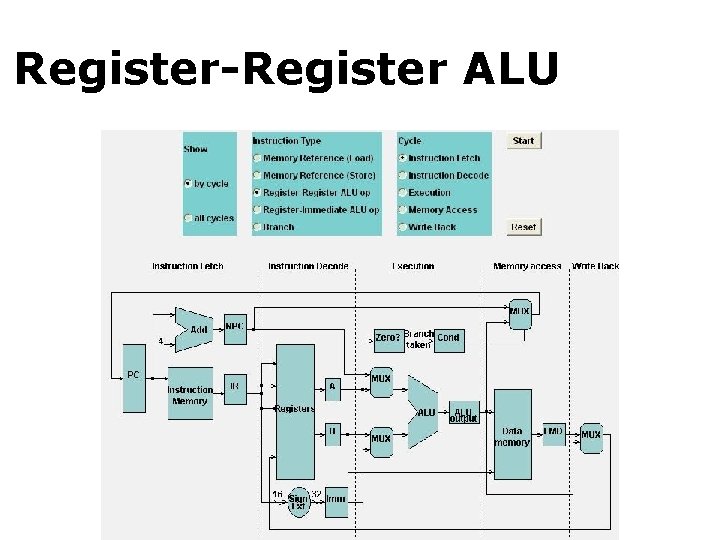
EX IF ID EX MEM WB • Execution/effective address cycle -Register-register ALU instr ALUOutput ← A func B; ALU performs the operation specified by function code on the values in register A & register B
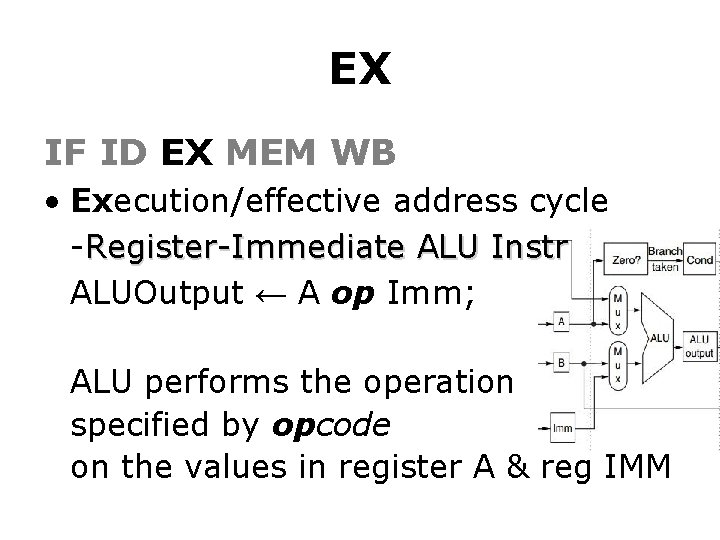
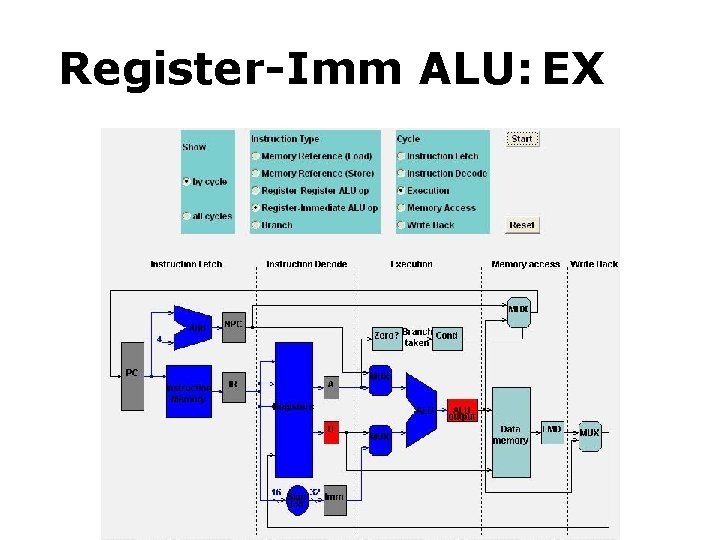
EX IF ID EX MEM WB • Execution/effective address cycle -Register-Immediate ALU Instr ALUOutput ← A op Imm; ALU performs the operation specified by opcode on the values in register A & reg IMM
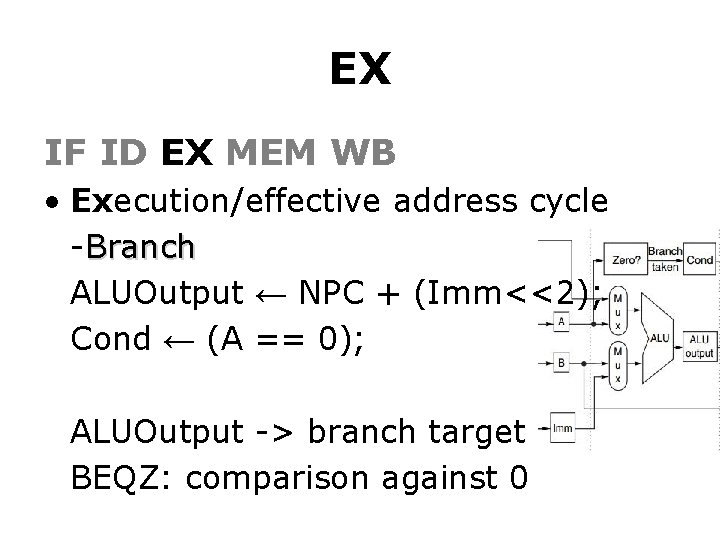
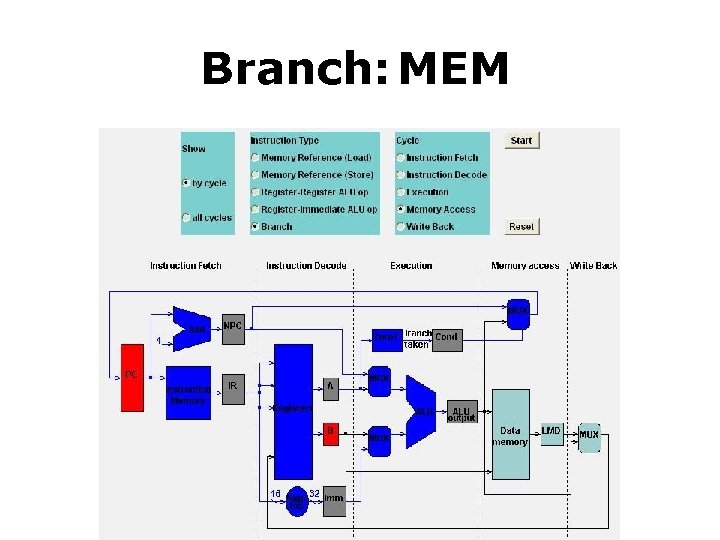
EX IF ID EX MEM WB • Execution/effective address cycle -Branch ALUOutput ← NPC + (Imm<<2); Cond ← (A == 0); ALUOutput -> branch target BEQZ: comparison against 0
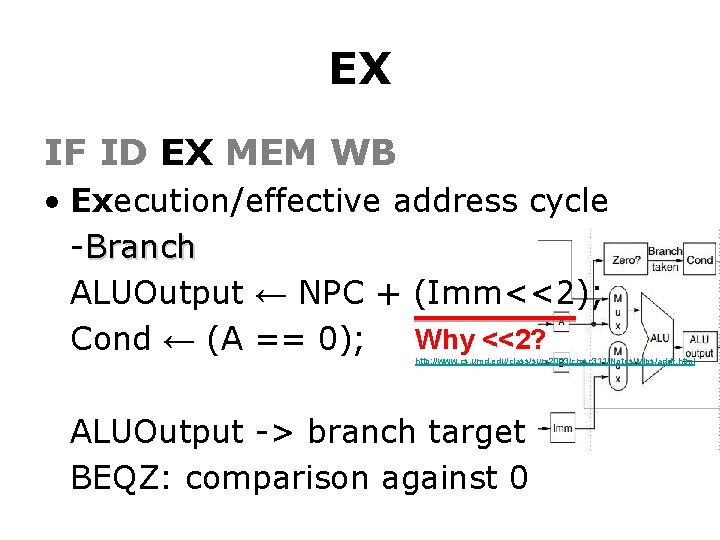
EX IF ID EX MEM WB • Execution/effective address cycle -Branch ALUOutput ← NPC + (Imm<<2); Why <<2? Cond ← (A == 0); http: //www. cs. umd. edu/class/sum 2003/cmsc 311/Notes/Mips/addr. html ALUOutput -> branch target BEQZ: comparison against 0
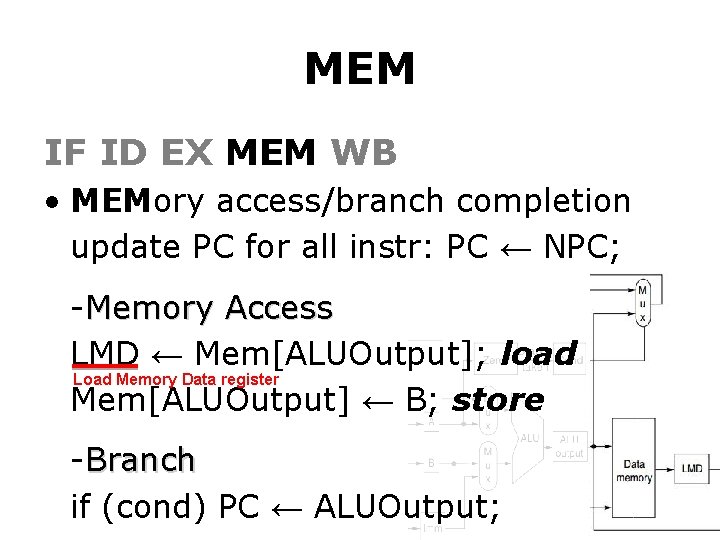
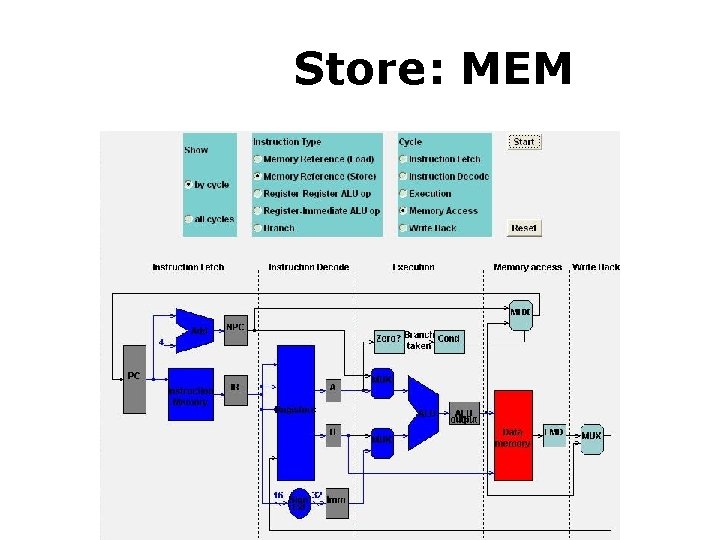
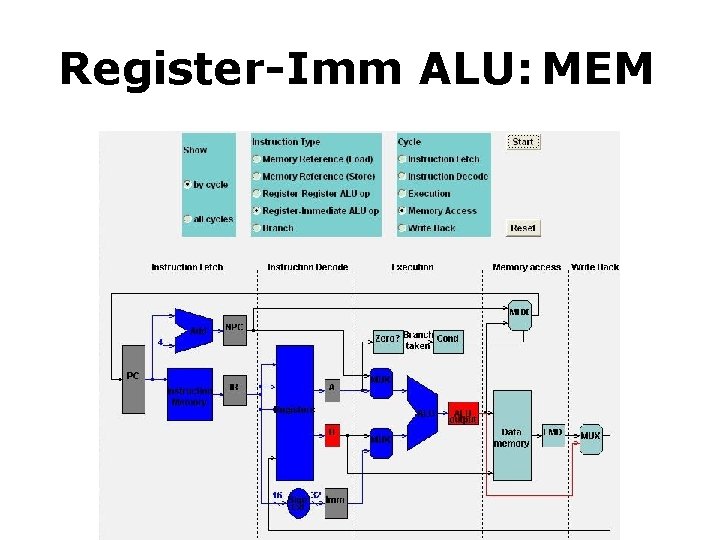
MEM IF ID EX MEM WB • MEMory access/branch completion update PC for all instr: PC ← NPC; -Memory Access LMD ← Mem[ALUOutput]; load Load Memory Data register Mem[ALUOutput] ← B; store -Branch if (cond) PC ← ALUOutput;
![WB IF ID EX MEM WB • Write-Back cycle -Register-register ALU instruction Regs[rd] ←](http://slidetodoc.com/presentation_image_h2/d71364c464fc709e834b3dcfc5c0e82c/image-20.jpg "WB IF ID EX MEM WB • Write-Back cycle -Register-register ALU instruction Regs[rd] ←")
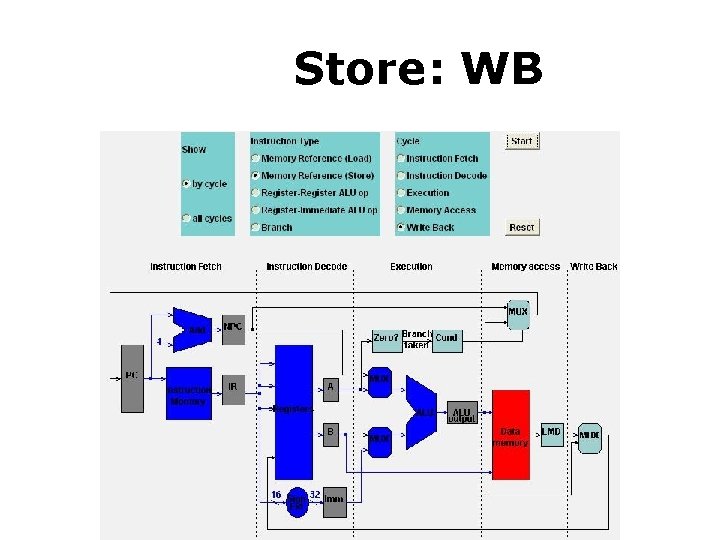
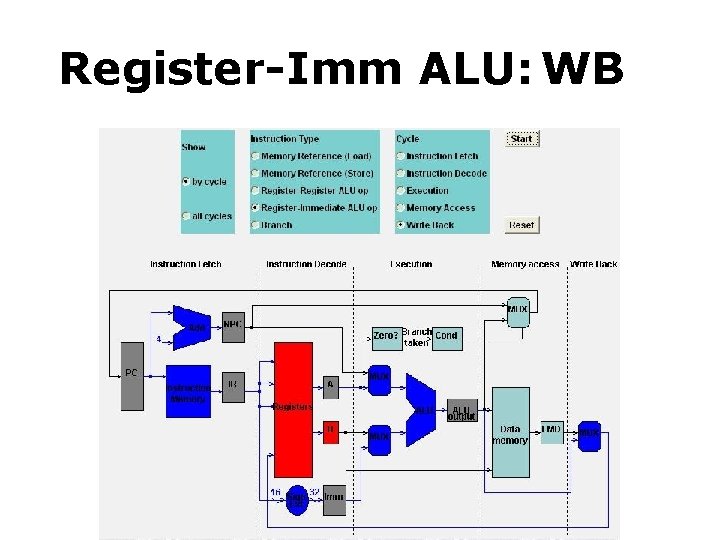
WB IF ID EX MEM WB • Write-Back cycle -Register-register ALU instruction Regs[rd] ← ALUOutput; -Register-immediate ALU instruction Regs[rt] ← ALUOutput; -Load instruction Regs[rt] ← LMD;

Put It All Together
![MIPS Instruction IF IR ← Mem[PC]; NPC ← PC + 4;](http://slidetodoc.com/presentation_image_h2/d71364c464fc709e834b3dcfc5c0e82c/image-22.jpg "MIPS Instruction IF IR ← Mem[PC]; NPC ← PC + 4;")
MIPS Instruction IF IR ← Mem[PC]; NPC ← PC + 4;
![MIPS Instruction IF ID A ← Regs[rs]; B ← Regs[rt]; Imm ← sign-extended immediate](http://slidetodoc.com/presentation_image_h2/d71364c464fc709e834b3dcfc5c0e82c/image-23.jpg "MIPS Instruction IF ID A ← Regs[rs]; B ← Regs[rt]; Imm ← sign-extended immediate")
MIPS Instruction IF ID A ← Regs[rs]; B ← Regs[rt]; Imm ← sign-extended immediate field of IR (lower 16 bits)
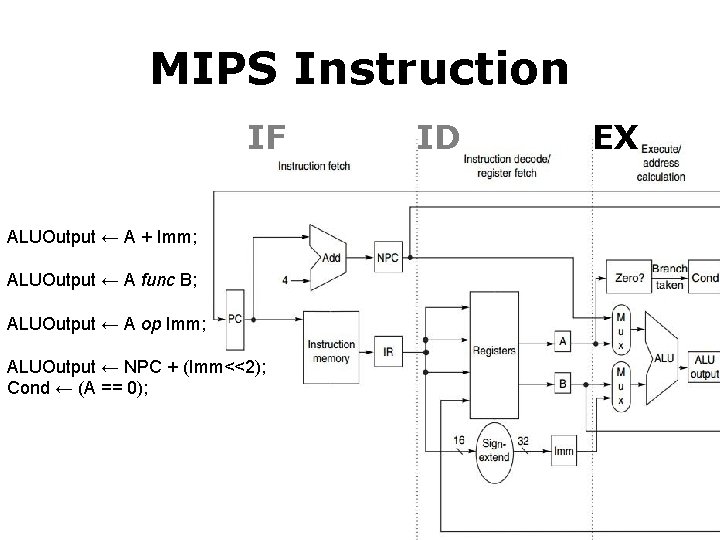
MIPS Instruction IF ALUOutput ← A + Imm; ALUOutput ← A func B; ALUOutput ← A op Imm; ALUOutput ← NPC + (Imm<<2); Cond ← (A == 0); ID EX
![MIPS Instruction IF ID EX MEM PC ← NPC LMD ← Mem[ALUOutput]; Mem[ALUOutput] ←](http://slidetodoc.com/presentation_image_h2/d71364c464fc709e834b3dcfc5c0e82c/image-25.jpg "MIPS Instruction IF ID EX MEM PC ← NPC LMD ← Mem[ALUOutput]; Mem[ALUOutput] ←")
MIPS Instruction IF ID EX MEM PC ← NPC LMD ← Mem[ALUOutput]; Mem[ALUOutput] ← B; if (cond) PC ← ALUOutput; W
![MIPS Instruction IF ID EX MEM WB Regs[rd] ← ALUOutput; Regs[rt] ← LMD;](http://slidetodoc.com/presentation_image_h2/d71364c464fc709e834b3dcfc5c0e82c/image-26.jpg "MIPS Instruction IF ID EX MEM WB Regs[rd] ← ALUOutput; Regs[rt] ← LMD;")
MIPS Instruction IF ID EX MEM WB Regs[rd] ← ALUOutput; Regs[rt] ← LMD;
MIPS Instruction Demo • Prof. Gurpur Prabhu, Iowa State Univ http: //www. cs. iastate. edu/~prabhu/Tu torial/PIPELINE/DLXimplem. html • Load, Store • Register-register ALU • Register-immediate ALU • Branch
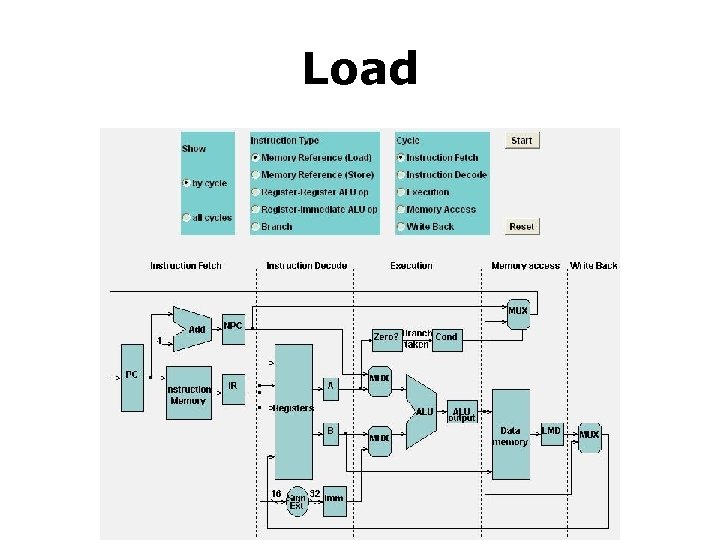
Load
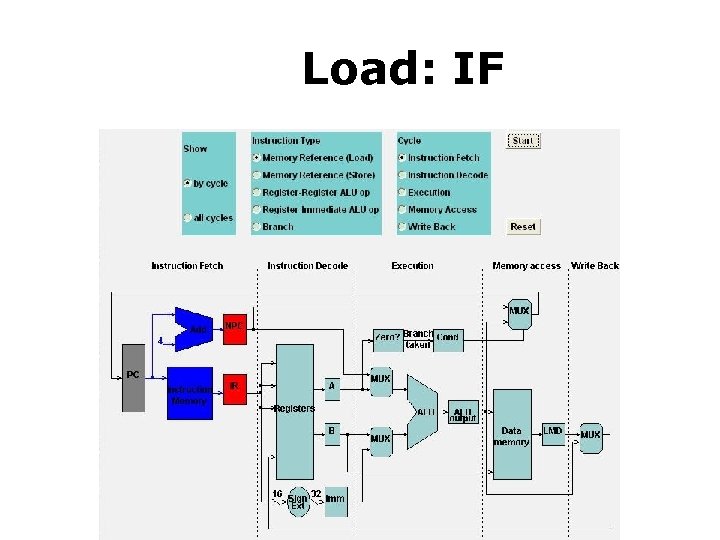
Load: IF Load
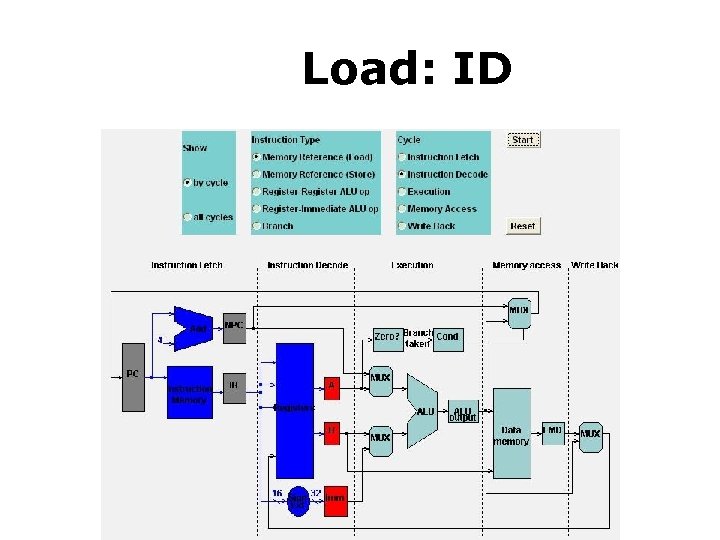
Load: ID Load
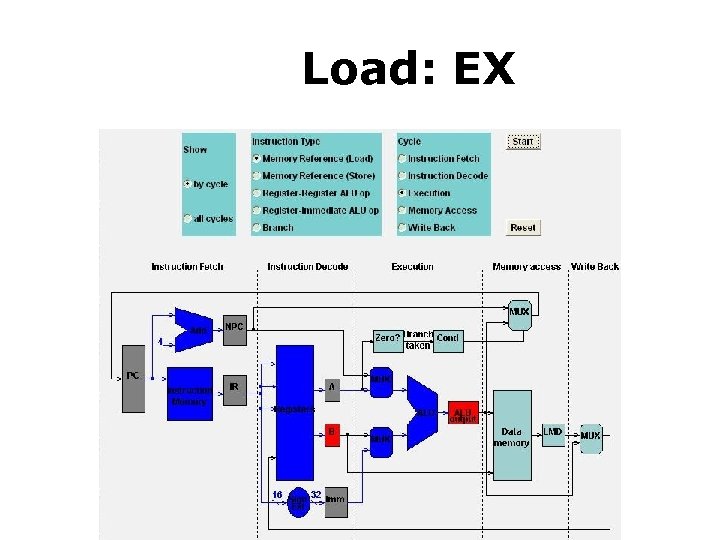
Load: EX Load
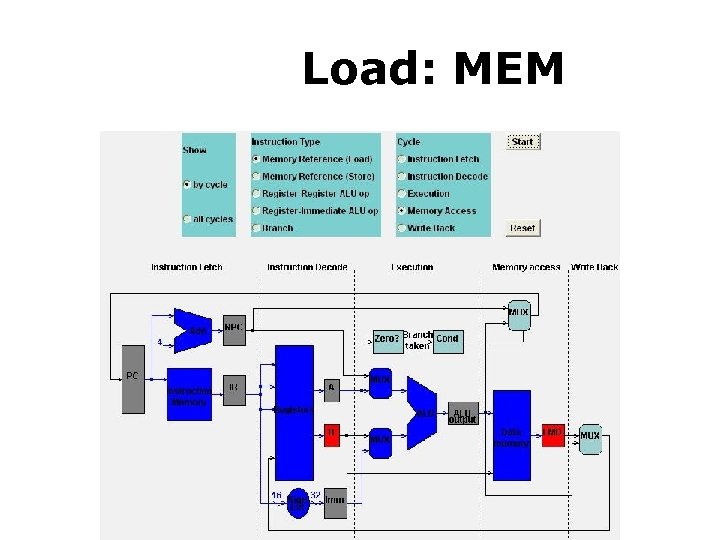
Load: MEM Load
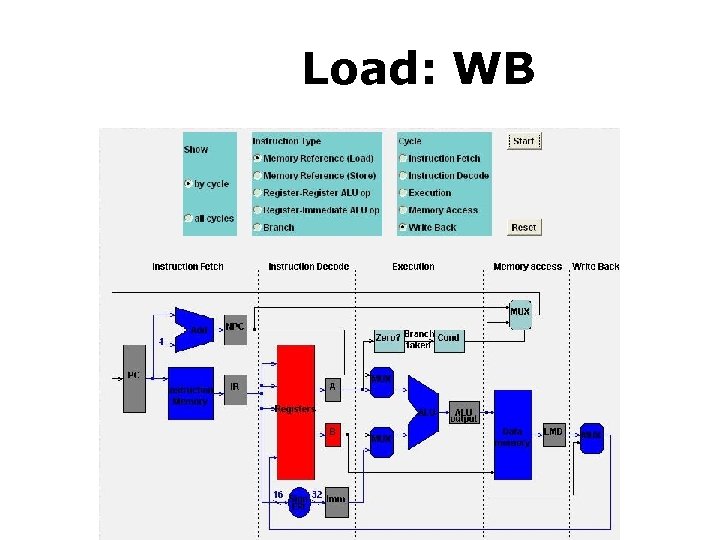
Load: WB Load
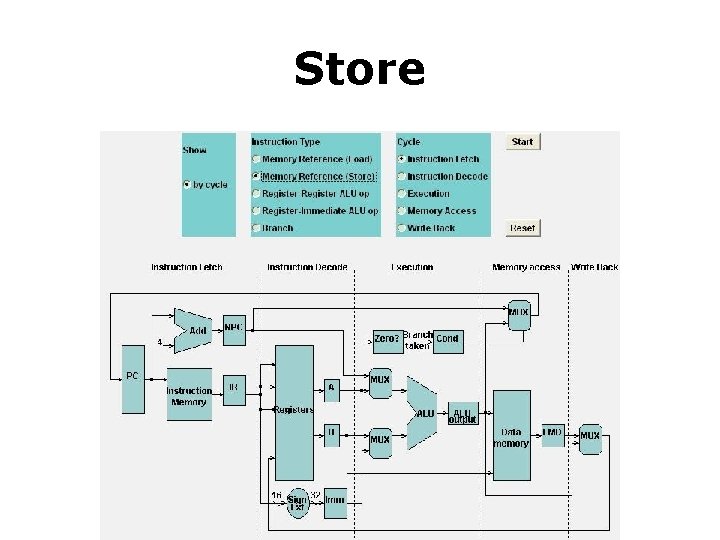
Store
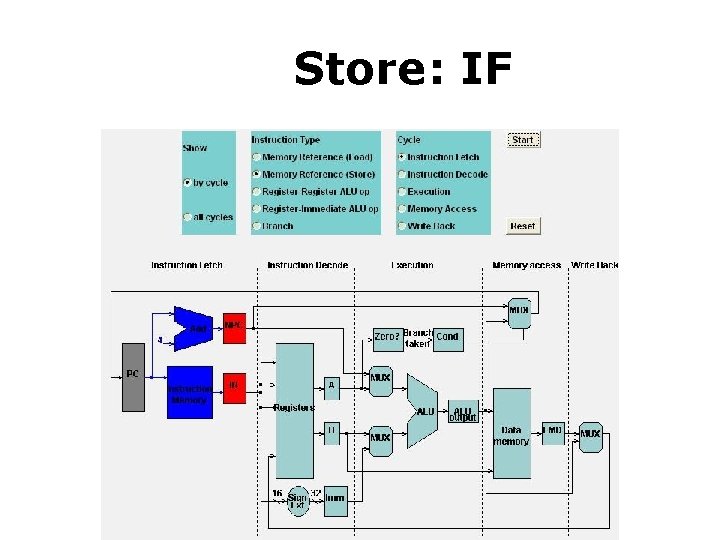
Store: IF Store
Store: ID Store
Store: EX Store
Store: MEM Store
Store: WB Store
Register-Register ALU: IF MEM
Register-Register ALU: IF MEM
Register-Register ALU: ID MEM
Register-Register ALU: EX MEM
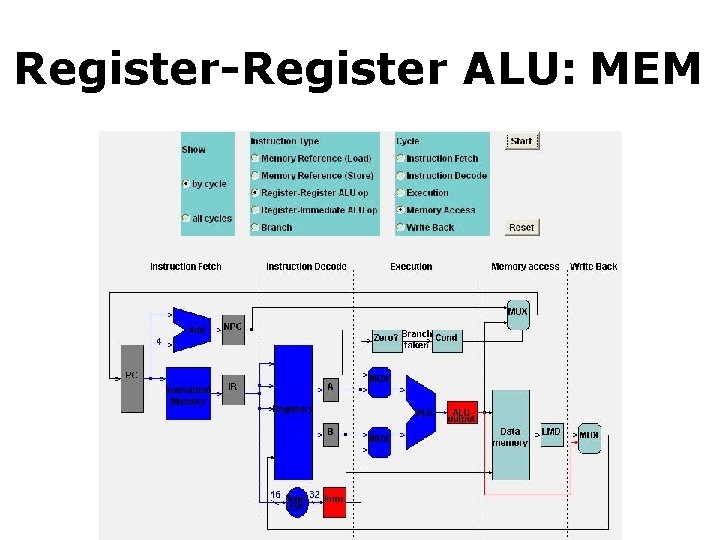
Register-Register ALU: MEM
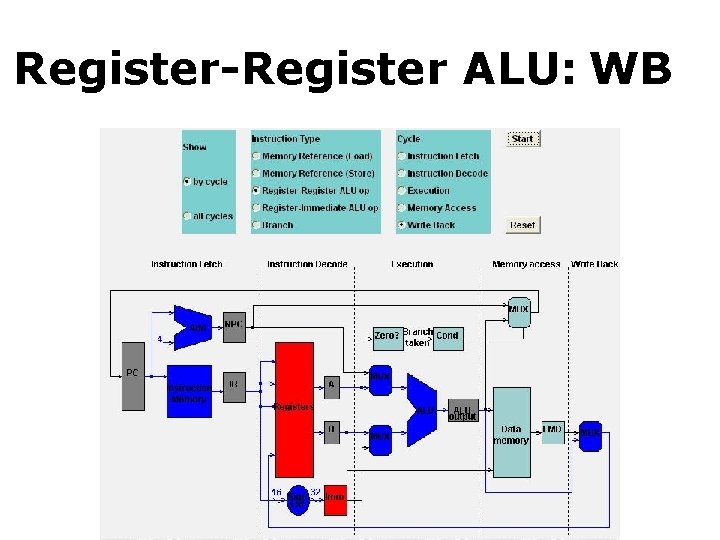
Register-Register ALU: WB MEM
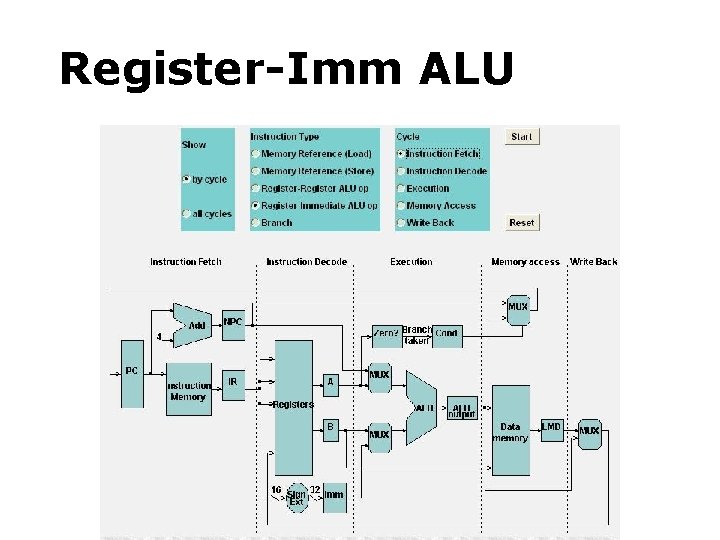
Register-Imm ALU: IFEM MEM
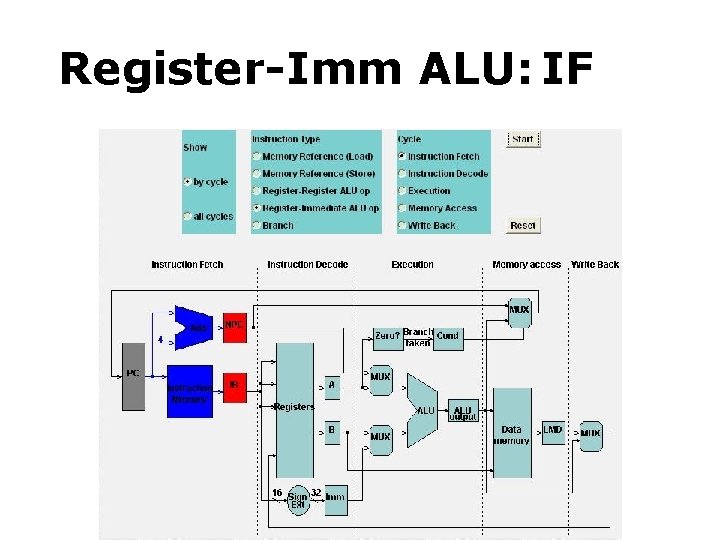
Register-Imm ALU: IFEM MEM
Register-Imm ALU: IDEM MEM
Register-Imm ALU: EXEM MEM
Register-Imm ALU: MEMEM
Register-Imm ALU: WBEM MEM
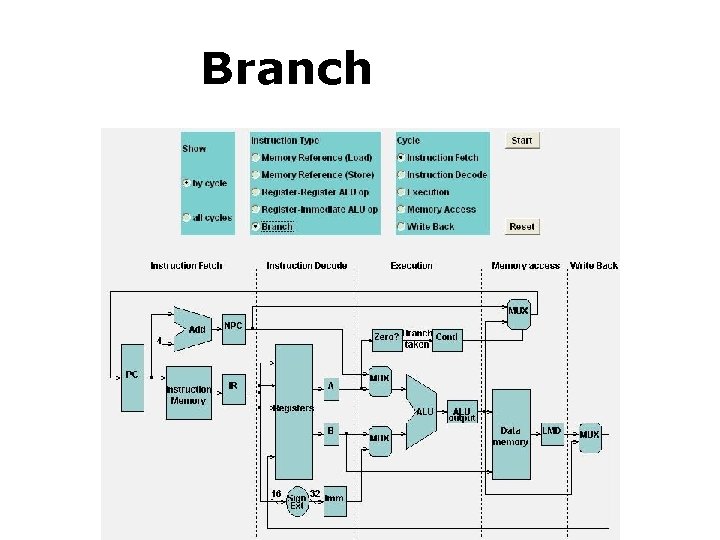
MEM Branch: MEM
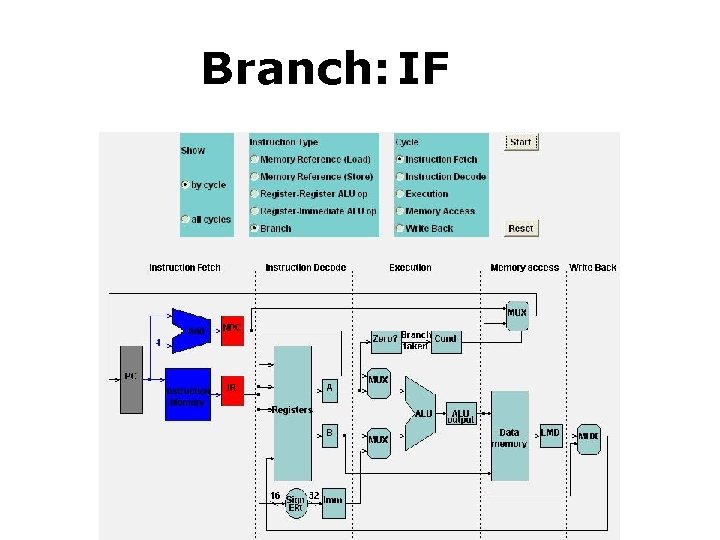
Branch: IFh: MEMMEM
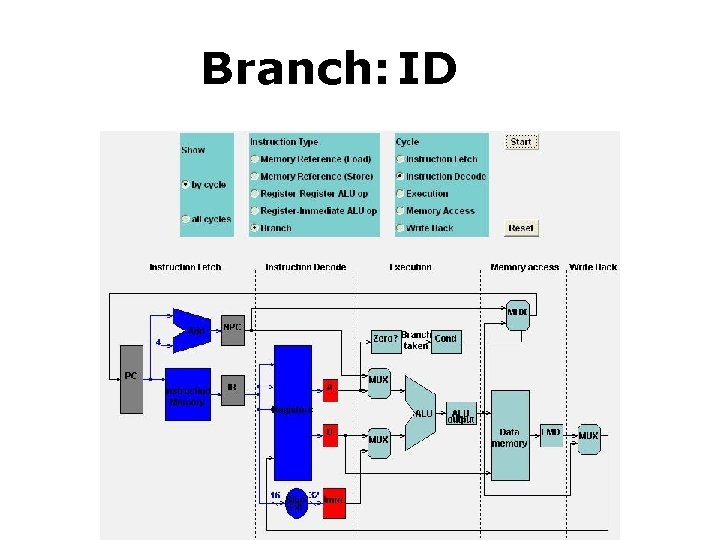
Branch: IDh: MEM
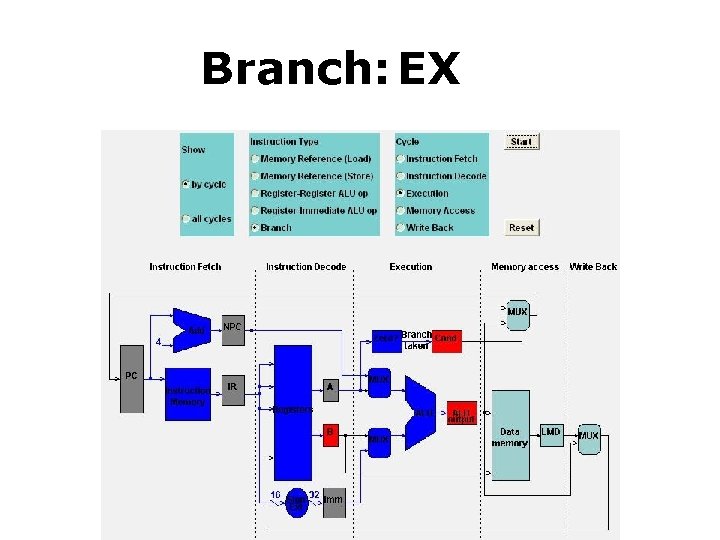
Branch: EXh: MEM
Branch: MEM MEM
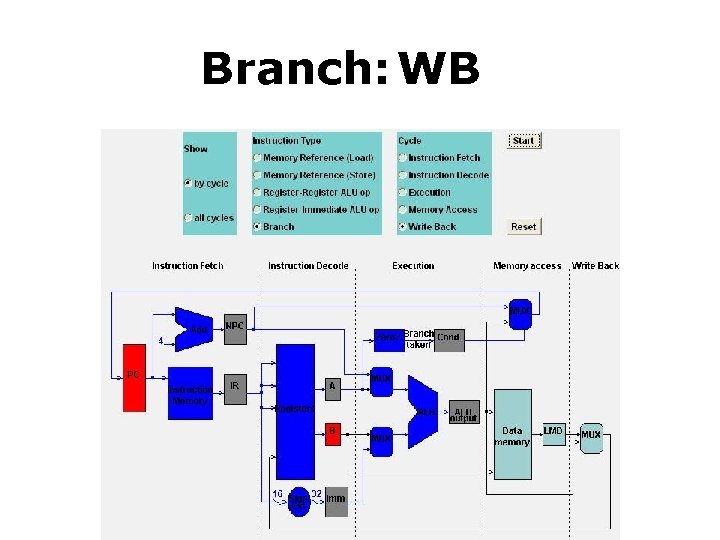
Branch: WBh: MEM
This chapter is about pipelining, right?
How MIPS instructions pipeline?
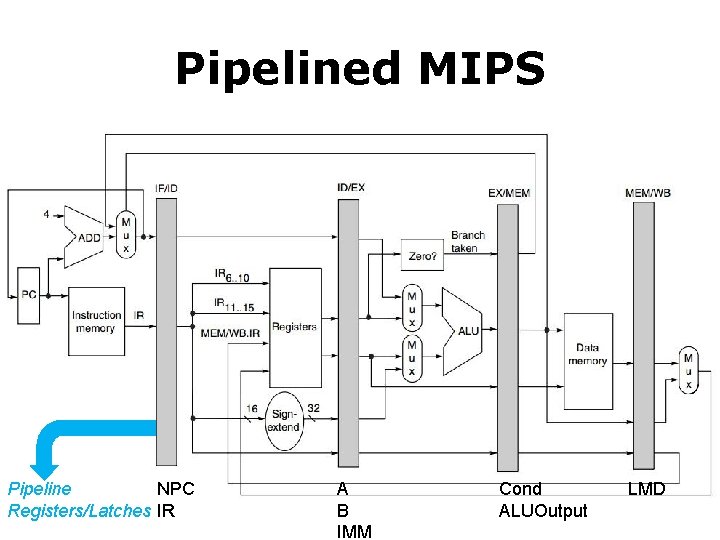
Pipelined MIPS Pipeline NPC Registers/Latches IR A B IMM Cond ALUOutput LMD
Instruction Type decides actions on a pipeline stage
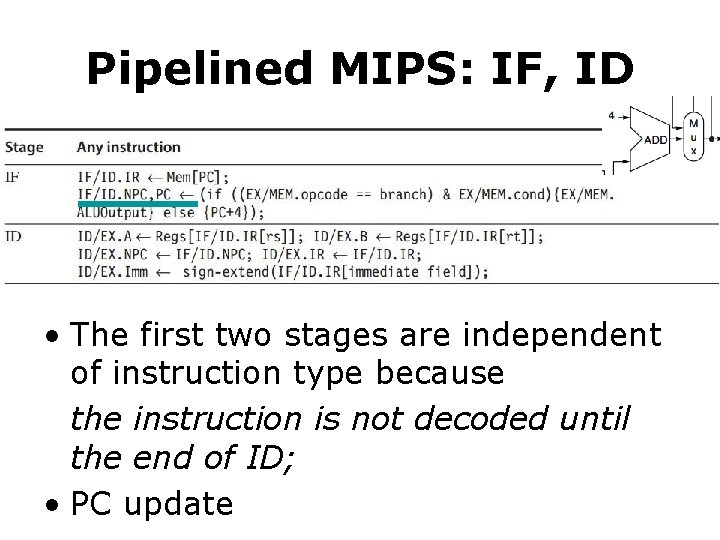
Pipelined MIPS: IF, ID • The first two stages are independent of instruction type because the instruction is not decoded until the end of ID; • PC update
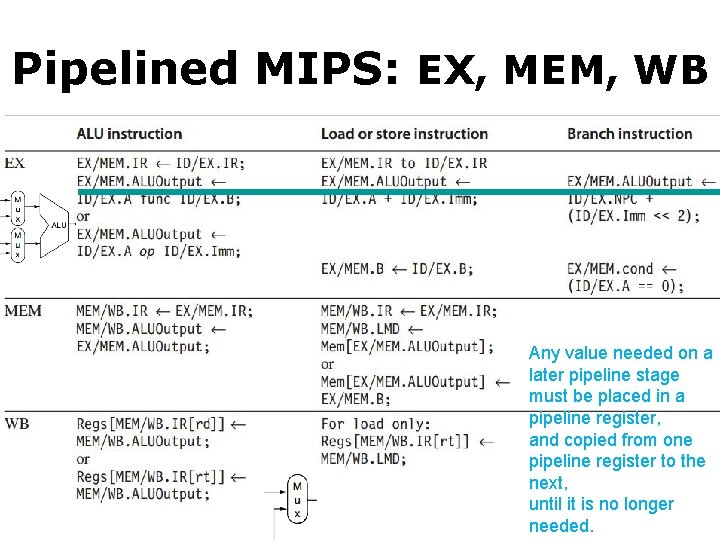
Pipelined MIPS: EX, MEM, WB Any value needed on a later pipeline stage must be placed in a pipeline register, and copied from one pipeline register to the next, until it is no longer needed.
Data Hazard • Instruction Issue: ID -> EX • If a data hazard exists, the instruction is stalled before it is issued. • For integer pipeline, data hazards and forwarding can be checked during ID • Detect hazards by comparing the destination and sources of adjacent instructions
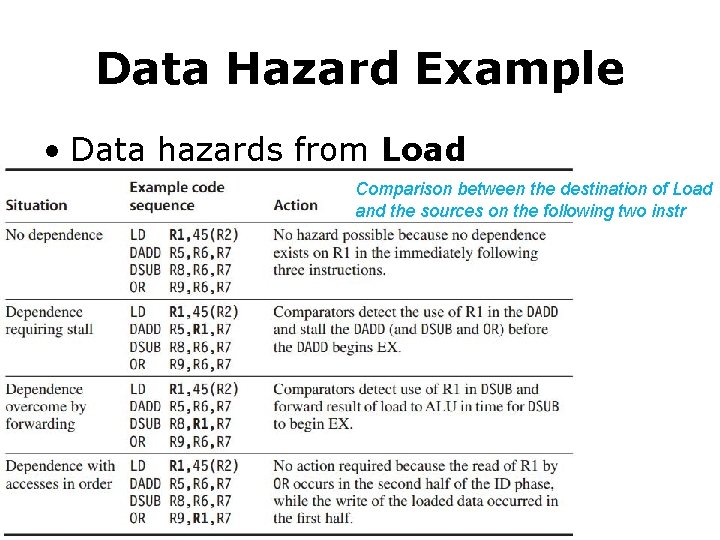
Data Hazard Example • Data hazards from Load Comparison between the destination of Load and the sources on the following two instr
Stall • Prevent instructions in IF and ID from advancing • Change the control portion of ID/EX to be a no-op • Recirculate the contents of IF/ID registers to hold the stalled instr
Forwarding • Data path: from the ALU or data memory output to the ALU input, the data memory input, or the zero detection unit. • Compare the destination registers of EX/MEM. IR and MEM/WB. IR against the source registers of ID/EX. IR and EX/MEM. IR
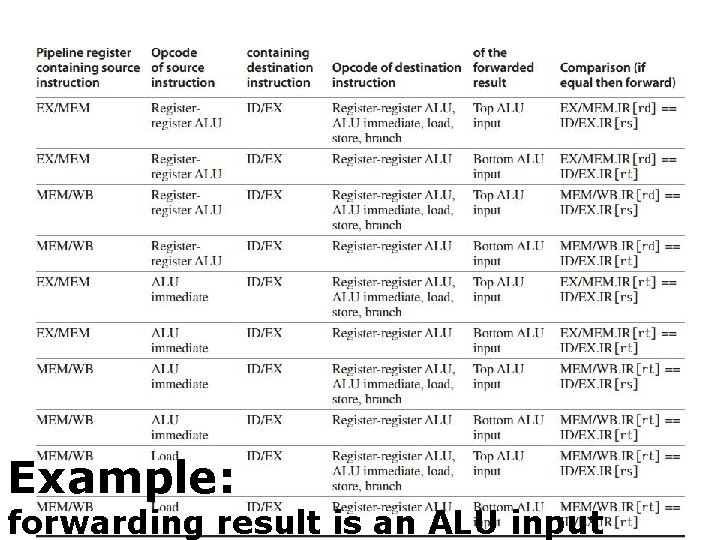
Example: forwarding result is an ALU input
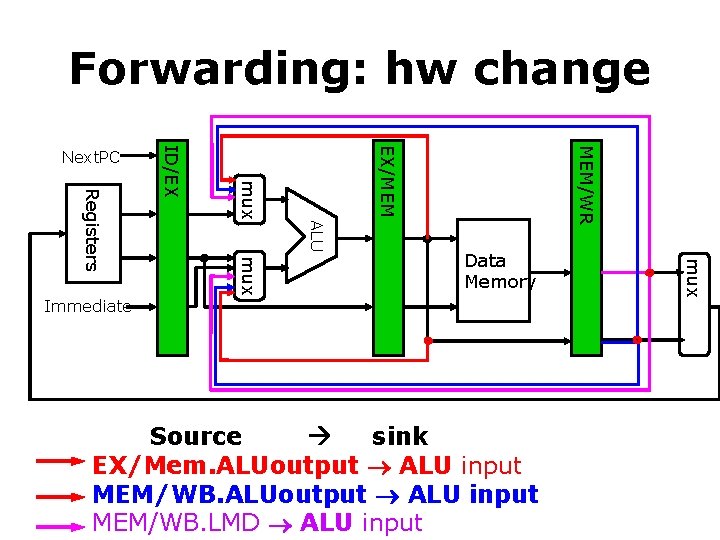
Forwarding: hw change ALU MEM/WR EX/MEM mux Data Memory Source sink EX/Mem. ALUoutput ALU input MEM/WB. LMD ALU input mux Registers Immediate ID/EX Next. PC
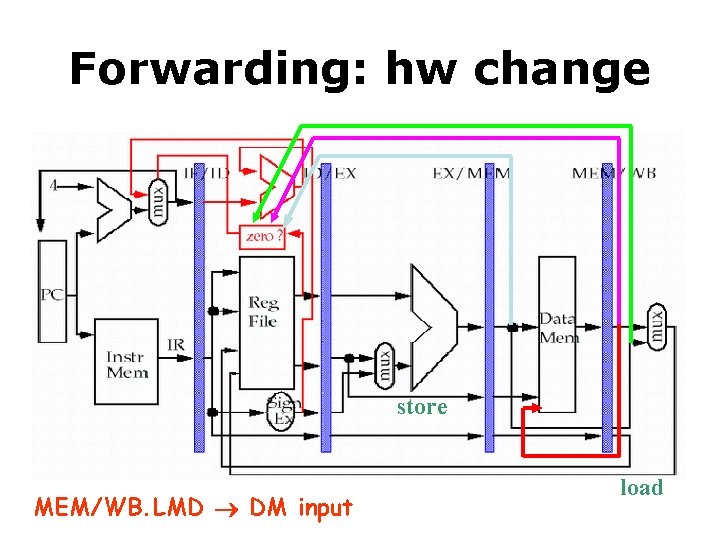
Forwarding: hw change store MEM/WB. LMD DM input load
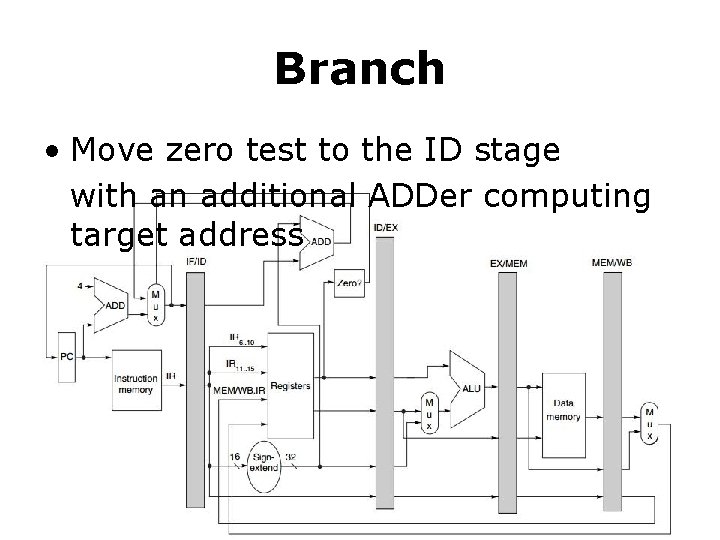
Branch • Move zero test to the ID stage with an additional ADDer computing target address

… You know there’re exceptions.
Exceptions: Instruction Execution Order • aka interrupt/fault • When the normal execution order of instruction is changed • May force CPU to abort the instructions in the pipeline before they complete
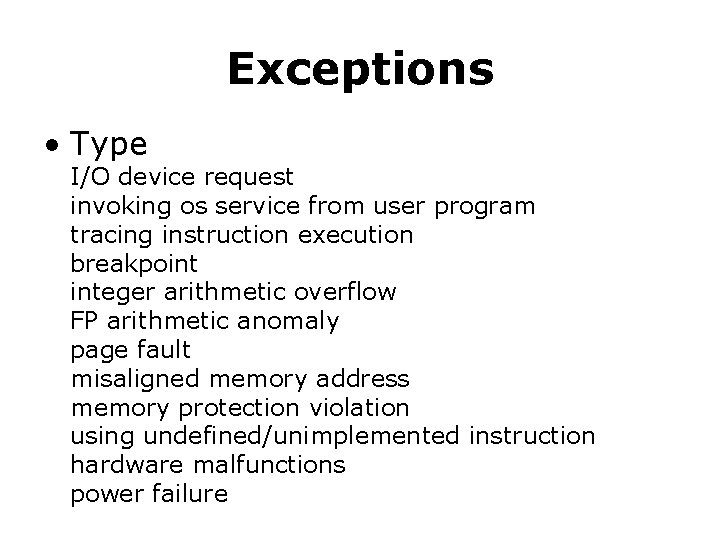
Exceptions • Type I/O device request invoking os service from user program tracing instruction execution breakpoint integer arithmetic overflow FP arithmetic anomaly page fault misaligned memory address memory protection violation using undefined/unimplemented instruction hardware malfunctions power failure
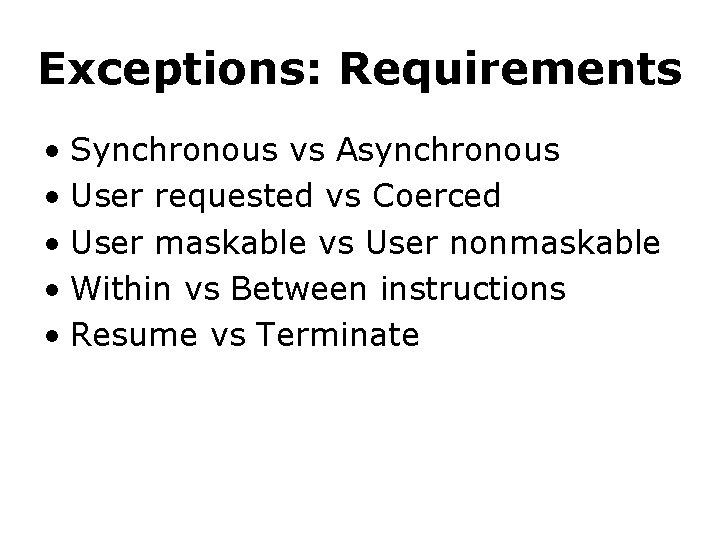
Exceptions: Requirements • Synchronous vs Asynchronous • User requested vs Coerced • User maskable vs User nonmaskable • Within vs Between instructions • Resume vs Terminate
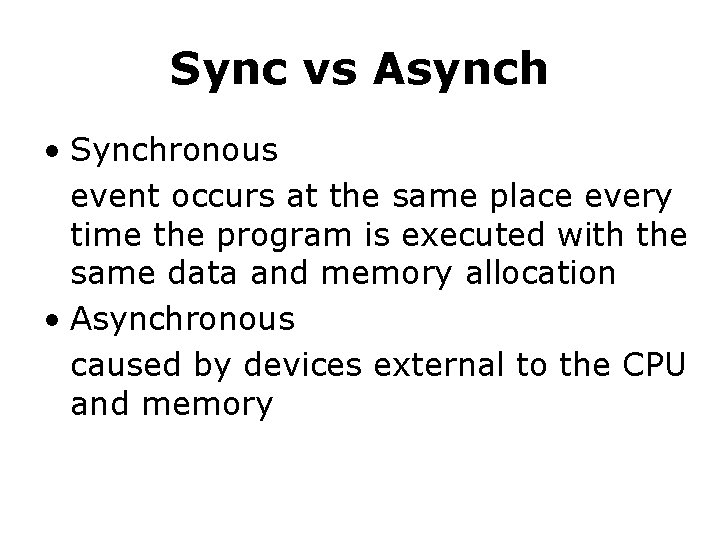
Sync vs Asynch • Synchronous event occurs at the same place every time the program is executed with the same data and memory allocation • Asynchronous caused by devices external to the CPU and memory
User requested vs Coerced • User requested the user task directly asks for it • Coerced caused by some hardware event that is not under the control of the user program
User non/maskable • User maskable an event can be masked or disabled by a user task
Within vs Between instr • Whether the event prevents intruction completion by occurring in the middle of execution (within) or is recognized between instructions
Resume vs Terminate • Resume the program’s execution continues after the interrupt • Terminate the program’s execution always stops after the interrupt
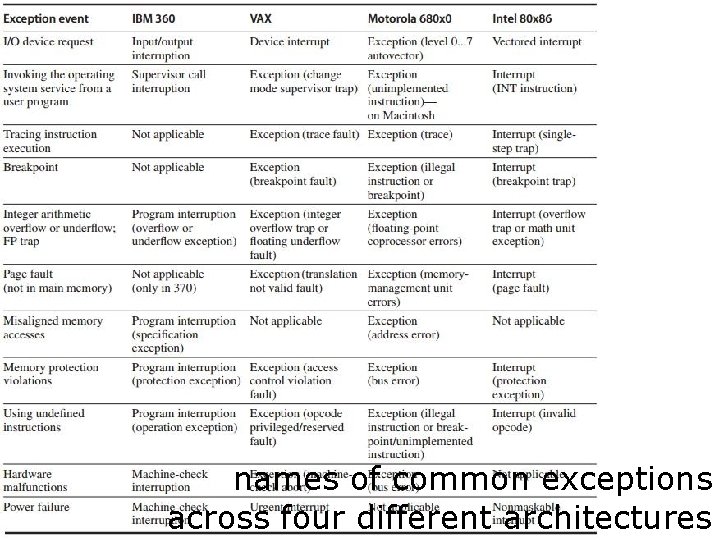
names of common exceptions across four different architectures
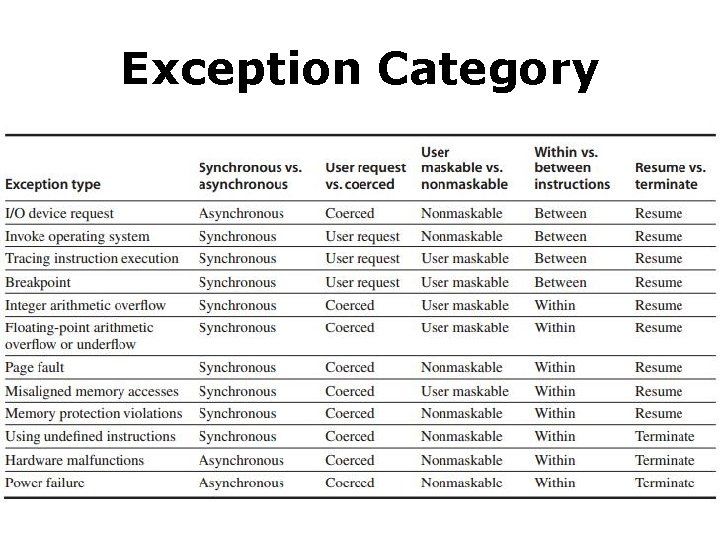
Exception Category
Instruction Set Complications • Instruction set specific factors that make pipelining harder to implement • PP. C-49 – C. 51


#What’s More • How to Write a Great Research Paper by Simon Peyton Jones • How to Give a Great Research Talk by Simon Peyton Jones
- Slides: 85