
Lecture 04 Cytoplasmic components their organization functions Cytoplasm



- Slides: 35
Lecture 04
Cytoplasmic components; their organization & functions
Cytoplasm ü The part of the cell between the cell membrane and the nuclear membrane is called the cytoplasm. ü The cytoplasm consists of the matrix and the organelles. ü The matrix is a transparent semi fluid substance. ü The organelles are found embedded in the cytoplasm.
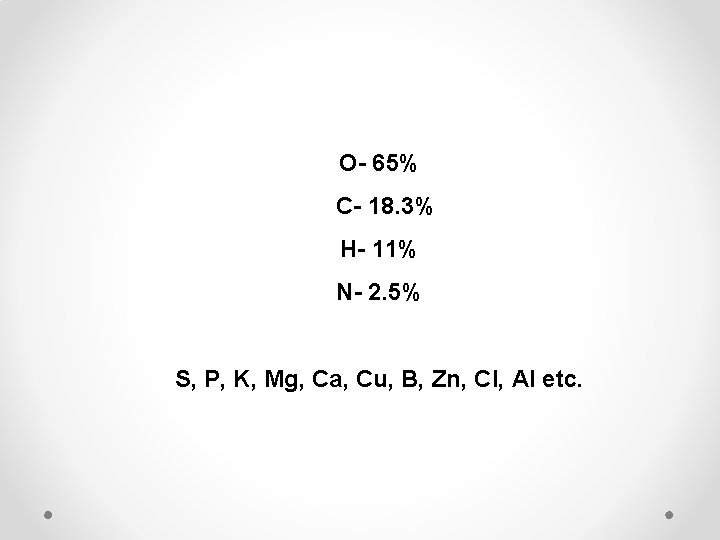
O- 65% C- 18. 3% H- 11% N- 2. 5% S, P, K, Mg, Ca, Cu, B, Zn, Cl, Al etc.
Parts of cytoplasm Cytosol Ectoplasm Mesoplasm Endoplasm Hayaloplasm
Functions • It is the seat of all metabolic and bio-chemical processes taking place in a cell. • It is involved in the storage of raw materials or reserve food required by the cell. • It brings about exchange of materials between the cell organelles. • It exchanges materials with the surrounding environment such as extra cellular fluid.
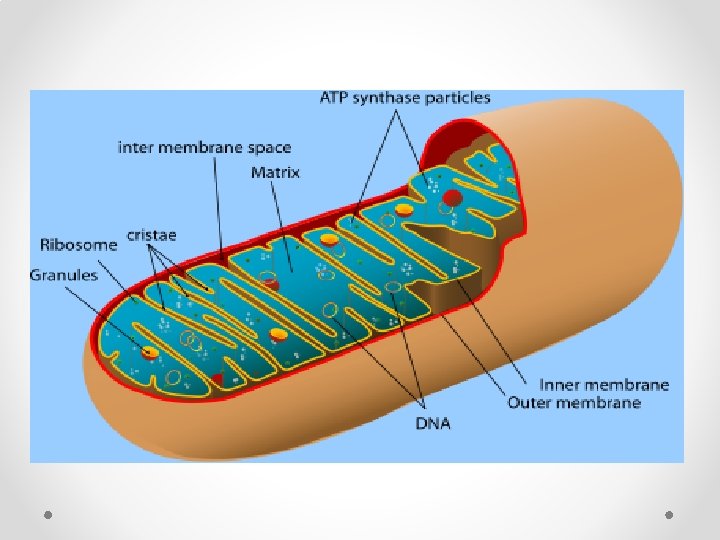
Mitochondrion These may be cylindrical, rod-shaped or spherical and distributed in the cytoplasm. Each mitochondrion is bound by a double membrane. New mitochondrions are formed by division of mitochondrion already existing in a cell.
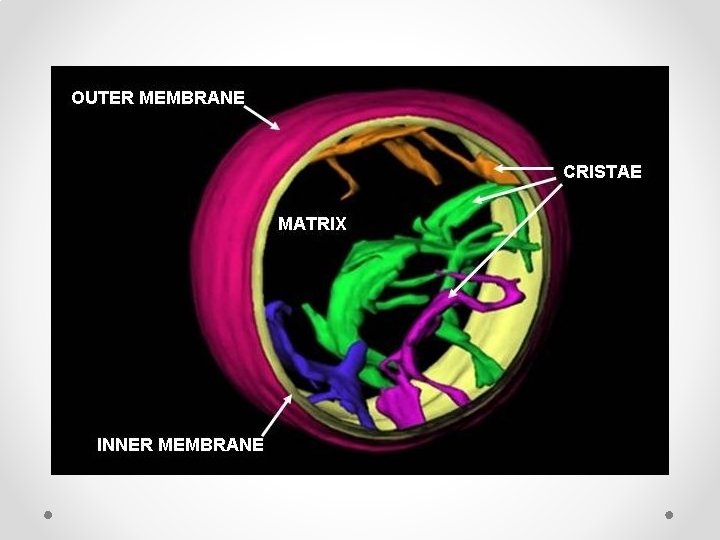
Structure The mitochondrion cover consists of two membranes external and internal. The external membrane smooth, it does not form any cords and excrescences. The internal membrane, on the contrary, forms numerous cords which are referred to a mitochondrion cavity.
Cords of an internal membrane name cristas ("Cristae" - a crest, an excrescence). In the central cavity, it contains granular matrix that fills the cavity.
Functions of Mitochondrion Power house of cell TCA Cycle ATP formation Secretes biological energy (ATP) to other organelles
Plastids are present in the cytoplasm of all plant cells. In cells of animals, plastid is absent. Distinguish three basic types of plastids: Leucoplast i) Amylopast- storing starch ii) Elaioplast-storing oils and fatty substances iii)Aleuroplast- storing protein Green – chloroplasts Chromoplast Red, orange and yellow – chromoplasts Colourless - leucoplasts.
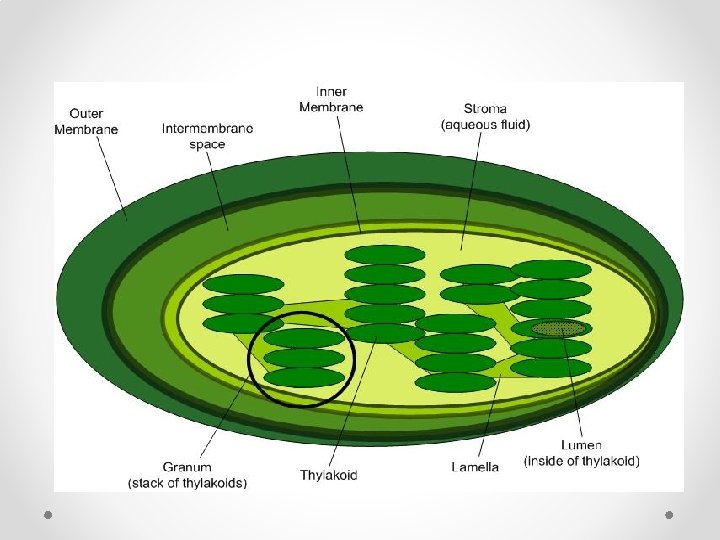
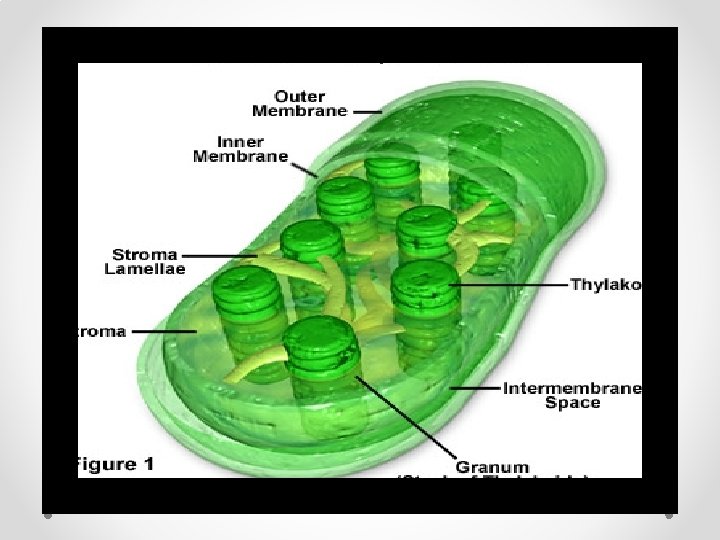
Chloroplast From a cytoplasm the chloroplast is delimited by two membranes - external and internal. The external membrane smooth, without cords and excrescences, and internal membrane surrounds the stroma and the grana.
§ The ground substance or matrix of chloroplast is called stroma. It is composed of proteinaceous material. § Within the stroma, a large number of granules are lying embedded called grana. § Each granum (stack) consists of varying number of disks or a pile of flattened vesicles arranged one on top of the other. Each disk is called thylakoid. § There are lamellae (stroma lamellae) or tubules present in low density in the matrix, interconnecting the grana.
Thylakoids are of disk-shaped membranous structures in the chloroplasts that contain chlorophyll. Photosynthesis takes place on thylakoid membrane where the chlorophylls are present.
Function of the chloroplast The function of the chloroplast is to the trap solar energy for photosynthesis. Chloroplast is the basic organoid of plants cell in which photosynthesis occurs, i. e. Formation of organic substances (carbohydrates) from inorganic (СО 2 and Н 2 О) materials by the use of energy of a sunlight.
• Chromoplasts are in different colorful parts of plants like stalks, leaves, petals and fruits. Presence of chromoplasts results yellow, orange and red coloring. • Leucoplasts are in a cytoplasm of cells of unpainted parts of plants, for example in stalks, roots, tubers. It is of three types
Golgi apparatus The Golgi apparatus (also called the Golgi body, Golgi complex, dictyosome, or more colloquially Golgi) is an organelle found in most eukaryotic cells. It was identified in 1898 by the Italian physician Camillo Golgi and was named after him.
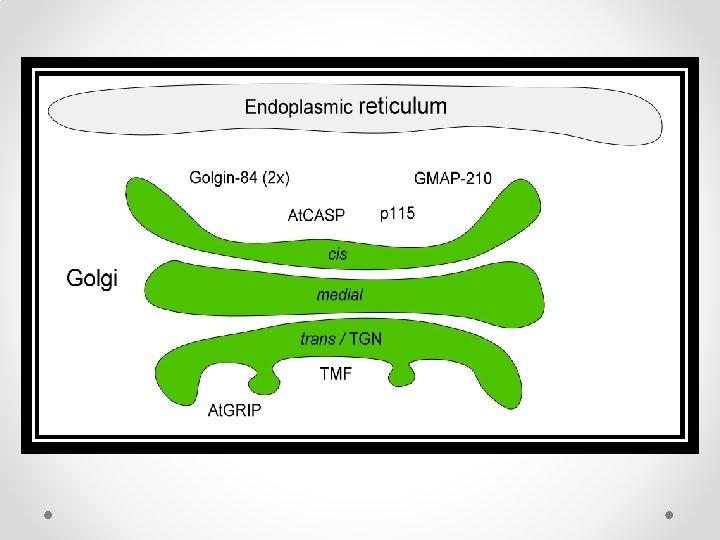
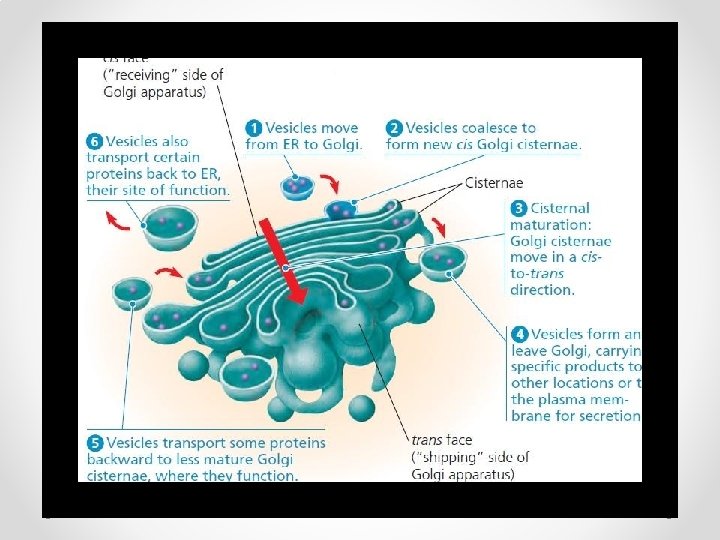
Structure The Golgi body is composed of stacks of membranebound structures known as cisternae (singular: cisterna). Each cisterna comprises a flattened membrane disk. The Golgi complex is made of several flattened membranes sacs, but can be ultimately divided into two sections: the Cis Golgi and the Trans Golgi Network (TGN).
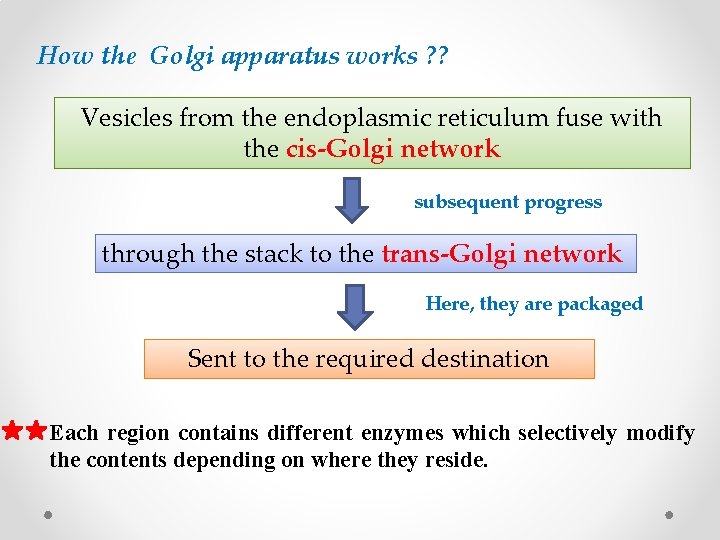
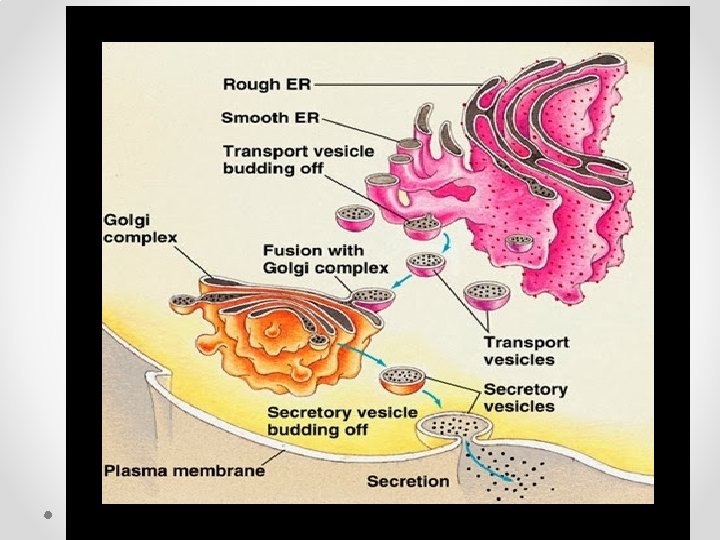
The Cis-Golgi functions as the receiving end for newly synthesized proteins from the lumen of the Endoplasmic Reticulum (ER). Vesicles containing proteins from the ER merge with the Cis. Golgi, allowing the proteins to enter the Golgi complex.
As the Cis-Golgi receives proteins from the ER, the proteins then begin their modification, moving along membrane towards the TGN (Trans Golgi Network). At the other end of the Golgi complex, the newly modified protein arrives at the TGN where it is then send off to different parts of the cell via a transport vesicle.
How the Golgi apparatus works ? ? Vesicles from the endoplasmic reticulum fuse with the cis-Golgi network subsequent progress through the stack to the trans-Golgi network Here, they are packaged Sent to the required destination Each region contains different enzymes which selectively modify the contents depending on where they reside.
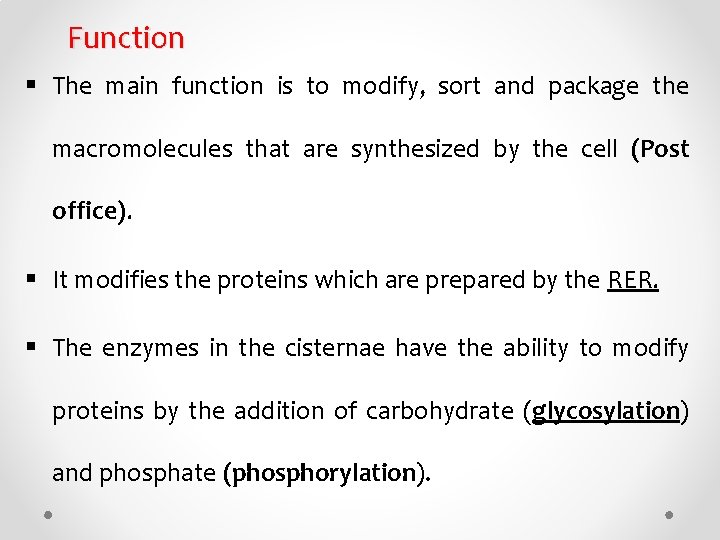
Function § The main function is to modify, sort and package the macromolecules that are synthesized by the cell (Post office). § It modifies the proteins which are prepared by the RER. § The enzymes in the cisternae have the ability to modify proteins by the addition of carbohydrate (glycosylation) and phosphate (phosphorylation).
• They are also involved in transport of lipid molecules around the cell. • They create lysosomes too. • This is also a major site of carbohydrate synthesis process.
Endoplasmic reticulum The endoplasmic reticulum (ER) is a eukaryotic organelle that forms an interconnected network of tubules, vesicles, and cisternae within cells.
The general structure of the endoplasmic reticulum is an extensive membrane network of cisternae (sac-like structures) held together by the cytoskeleton. The phospholipid membrane of ER encloses a space, the cisternal space (or lumen), from the cytosol.
The three varieties are Ø Rough endoplasmic reticulum The surface of the rough endoplasmic reticulum (RER) is studded with protein-manufacturing ribosomes giving it a "rough" appearance. Ø Smooth endoplasmic reticulum Ø Sarcoplasmic reticulum The sarcoplasmic reticulum (SR), from the Greek sarx, "flesh", is a special type of smooth ER found in smooth and striated muscle.
Function ü It plays major role in the production, processing and transport of protein and lipid molecules. ü ER produces transmembrane proteins and lipids for its membrane, as well as the membrane of lysosome, secretory vesicles, golgi apparatus, cell membrane and plant cell vacuoles.
“If the farmer is poor then so is the whole country” __Polish proverb