
Lecture 04 b Consumer Preferences and the Concept

Lecture # 04 b Consumer Preferences and the Concept of Utility Lecturer: Martin Paredes
1. 2. 3. 4. 5. Definition of Consumer Preferences Indifference Curves The Marginal Rate of Substitution The Utility Function l Marginal Utility Some Special Functional Forms 2

Definition: Consumer Preferences tell us how the consumer would rank any two allotments of goods (also called baskets or bundles), assuming they were available to the consumer at no cost. Assumptions: l Completeness l Transitiveness l Monotonicity 3
Definition: Preferences are complete if the consumer can rank any two baskets of goods. l For any two bundles A and B, the consumer has three possibilities: l Prefer A to B A B l Prefer B to A B A l Indifferent between A and B A ~ B 4
Definition: Preferences are transitive if the consumer makes choices that are consistent with each other l Consider three bundles: A, B, C l Suppose he prefers A to B l Suppose he prefers B to C l Then he must prefer A to C A B B C A C 5
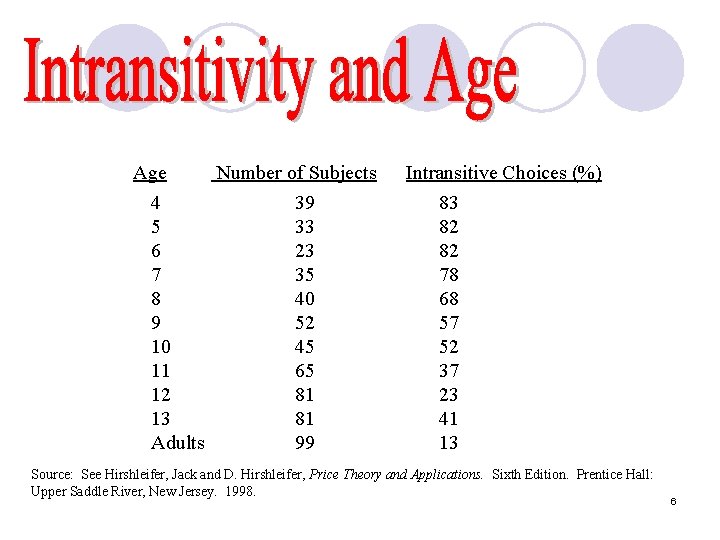
Age Number of Subjects Intransitive Choices (%) 4 39 83 5 33 82 6 23 82 7 35 78 8 40 68 9 52 57 10 45 52 11 65 37 12 81 23 13 81 41 Adults 99 13 Source: See Hirshleifer, Jack and D. Hirshleifer, Price Theory and Applications. Sixth Edition. Prentice Hall: Upper Saddle River, New Jersey. 1998. 6

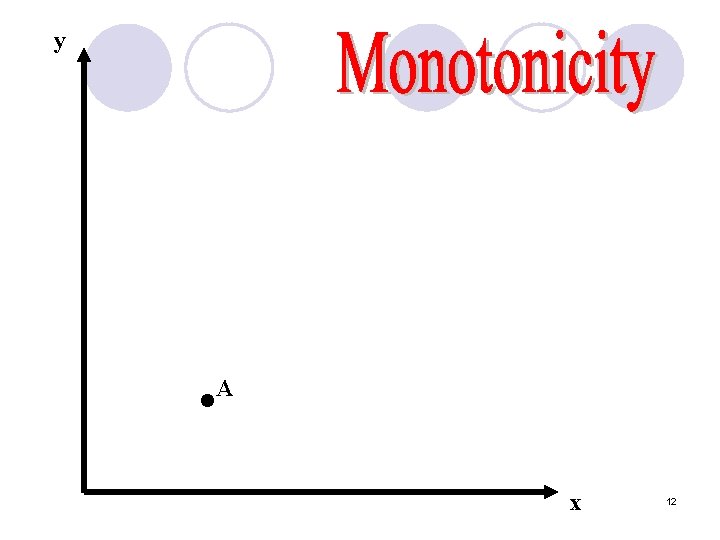
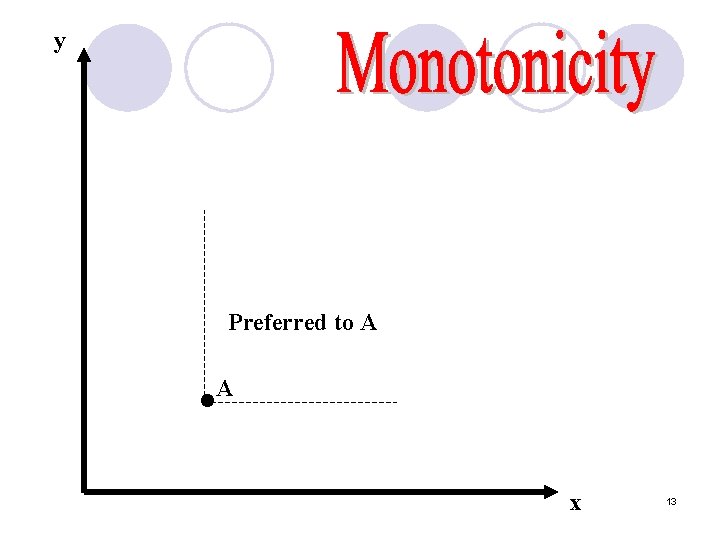
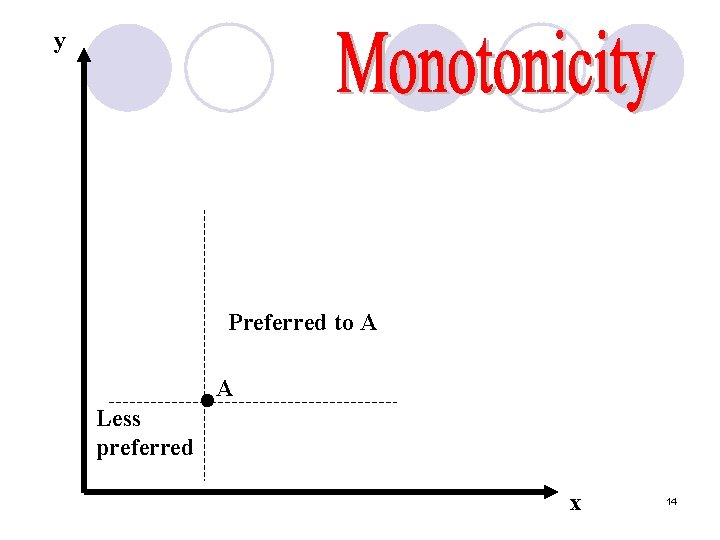
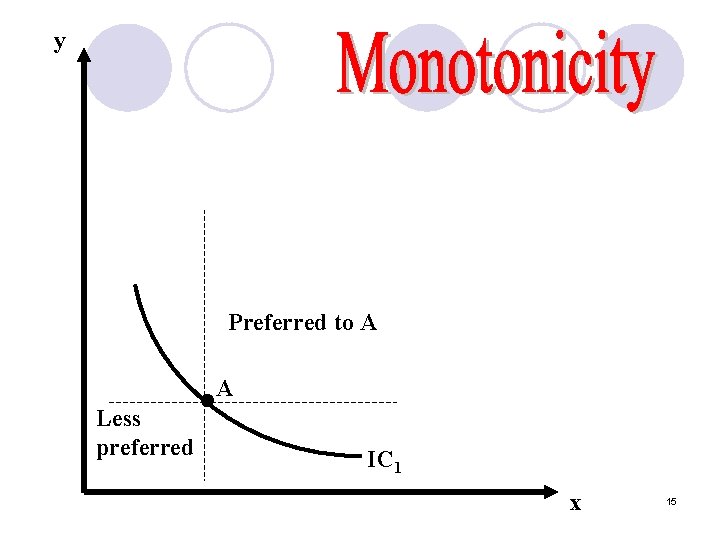
Definition: Preferences are monotonic if a basket with more of one good is preferred to the original basket. Notes: l Assumes all other goods in basket remain the same l Also called more is better, since having more of one good is better for the consumer. 7
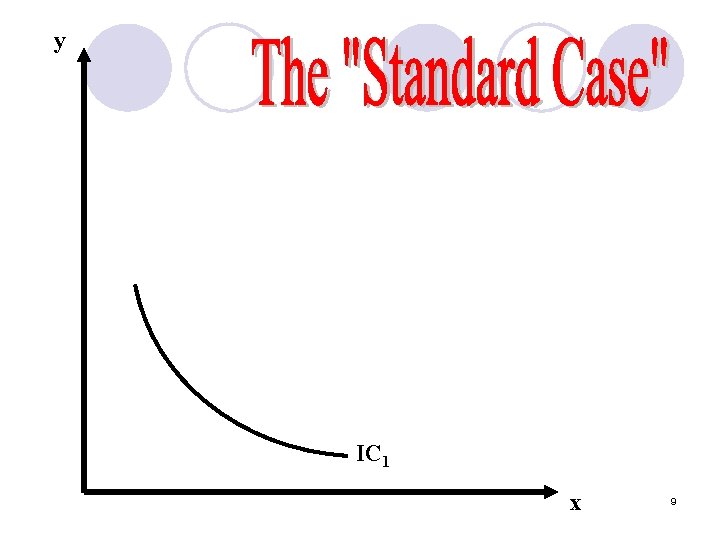
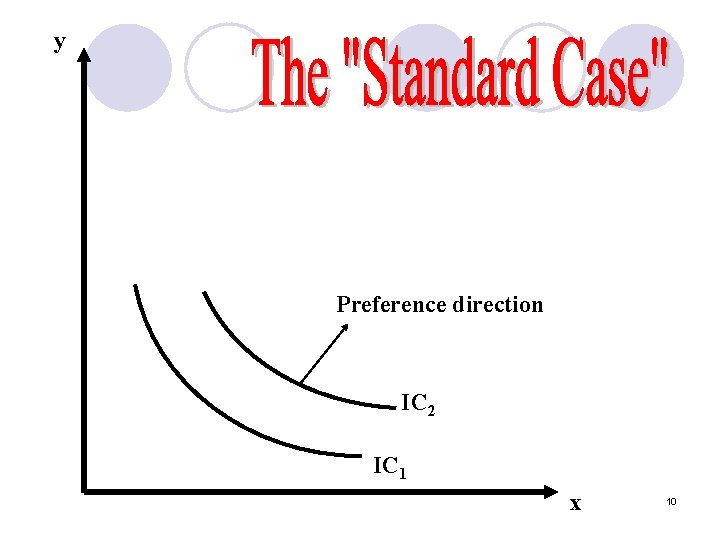
Definition: An Indifference Curve is the set of all baskets for which the consumer is indifferent Definition: An Indifference Map illustrates the set of indifference curves for a particular consumer 8
y IC 1 x 9
y Preference direction IC 2 IC 1 x 10
1. Completeness l Each basket lies on only one indifference curve 2. Monotonicity l Indifference curves have negative slope l Indifference curves are not “thick” 11
y • A x 12
y Preferred to A • A x 13
y Preferred to A • A Less preferred x 14
y Preferred to A • A Less preferred IC 1 x 15
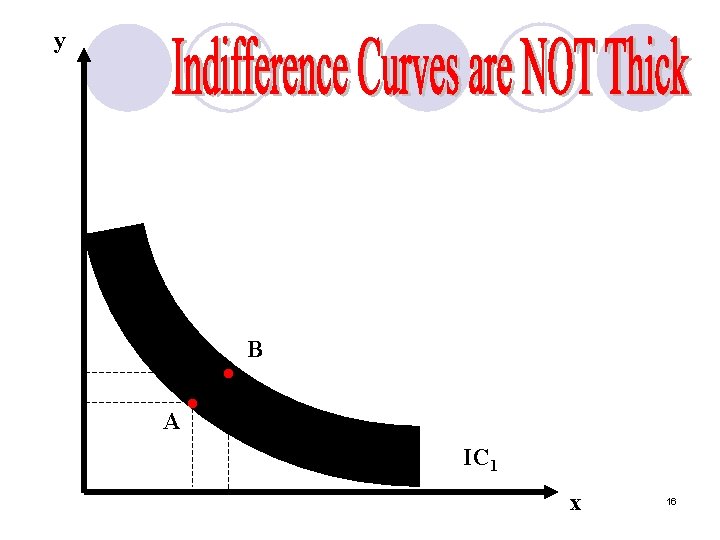
y A • • B IC 1 x 16
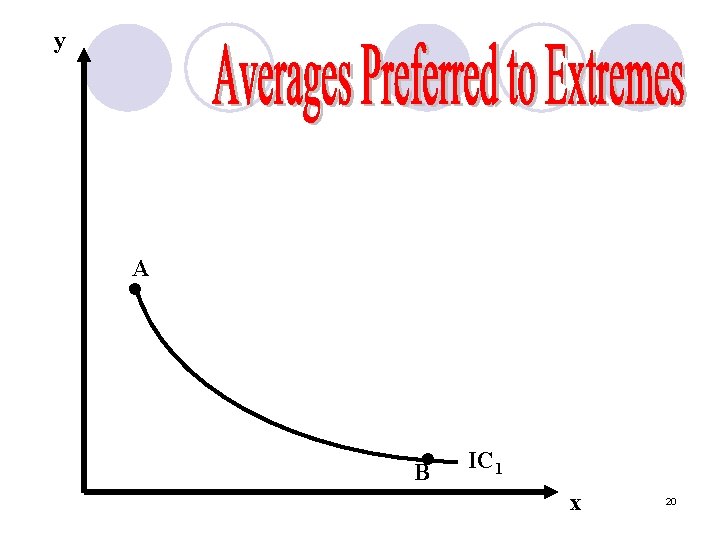
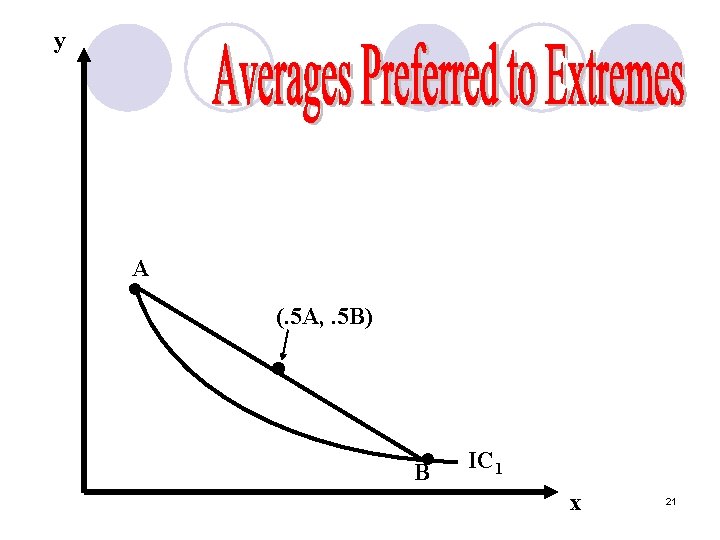
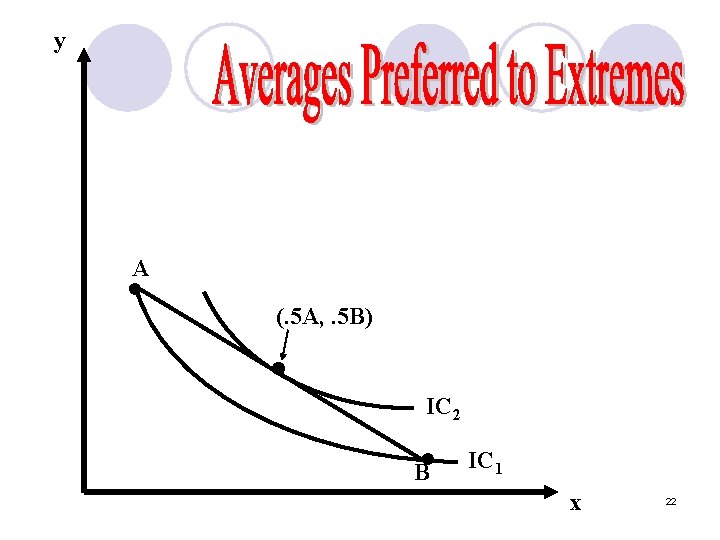
3. Transitivity l Indifference curves do not cross 4. Averages preferred to extremes l Indifference curves are bowed toward the origin (convex to the origin). 17
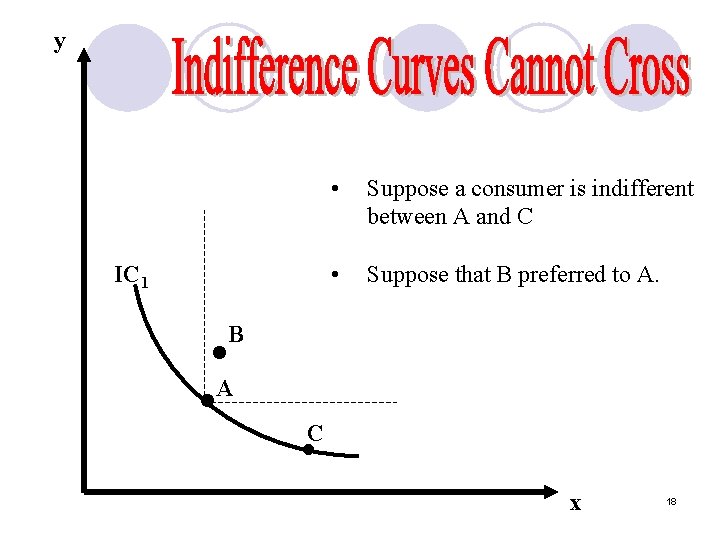
y IC 1 • Suppose a consumer is indifferent between A and C • Suppose that B preferred to A. B • A • C • x 18
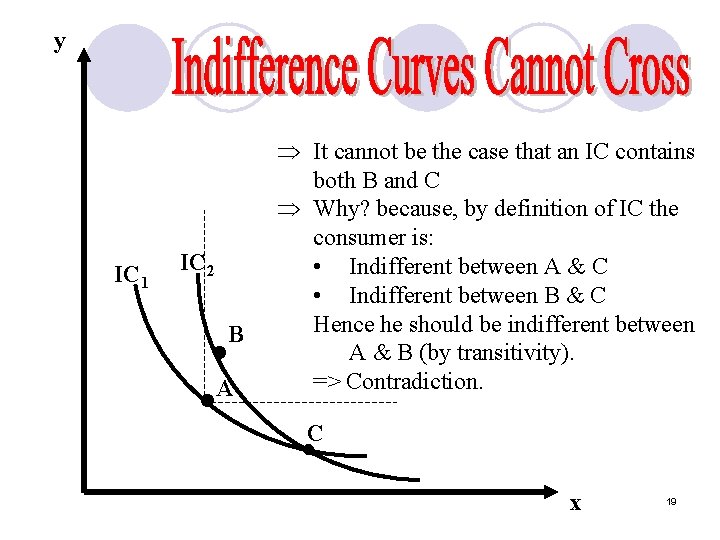
y IC 1 IC 2 B • A • Þ It cannot be the case that an IC contains both B and C Þ Why? because, by definition of IC the consumer is: • Indifferent between A & C • Indifferent between B & C Hence he should be indifferent between A & B (by transitivity). => Contradiction. C • x 19
y A • • B IC 1 x 20
y A • (. 5 A, . 5 B) • IC 2 • B IC 1 x 22
- Slides: 22