
Lecture 03 Demand Supply Demand A desire to


- Slides: 22
Lecture # 03 Demand & Supply
Demand A desire to process a good supported by Willingness and Ability to pay Willingness but not the ability to pay is wish Three main characters of demand are: ü Willingness and ability to pay ü Demand is always at a price ü Demand is always per unit time
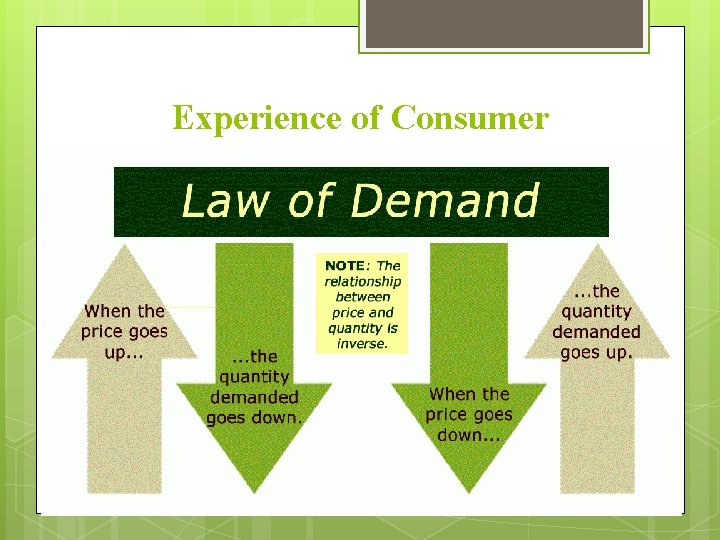
Experience of Consumer
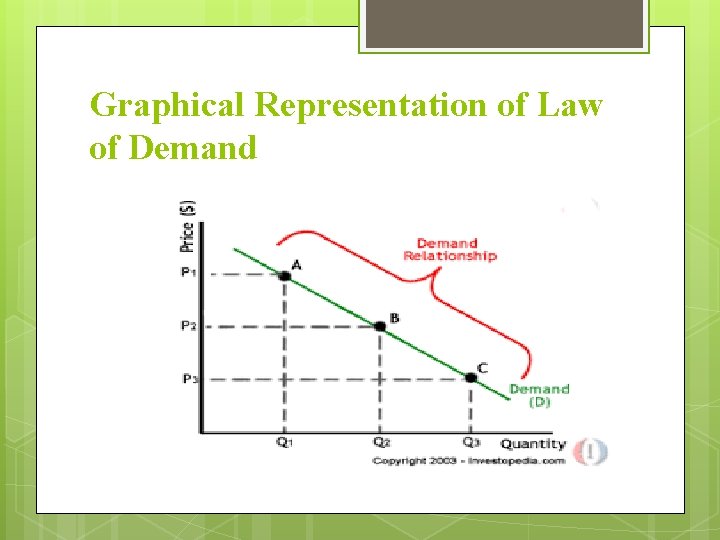
Graphical Representation of Law of Demand
Reasons for Above Behavior Increase in the no. of consumer Impact on purchasing power. Substitute effect
Assumption of law Units should be of same nature. Taste of consumer should not be change. Income of consumer should not change. Price of substitute should remain constant. No new substitute of commodity discovered. Population should not changed. No possibility in the change of the value of currency. The use of commodity should not be a cause of distinction.
Exception of Law Distinctive goods. Rare Commodities Basic necessities of life. Ignorance of people. Festivals
Supply is the amount of commodity that sellers are able to and willing to offer for sale at different prices per unit of time. Distinction between Stock and Supply.
Law of Supply Shows interrelationship between price and supply. “if all other things remains constant, the quantity supplied of a commodity increases in its price and vice –versa. What are all other things?
The Law of Supply There is a direct relationship between price and quantity supplied. ü Quantity supplied rises as price rises , other things constant. ü Quantity supplied falls as price falls, other things constant. ü As the price of a product rises, produces will be willing to supply more.
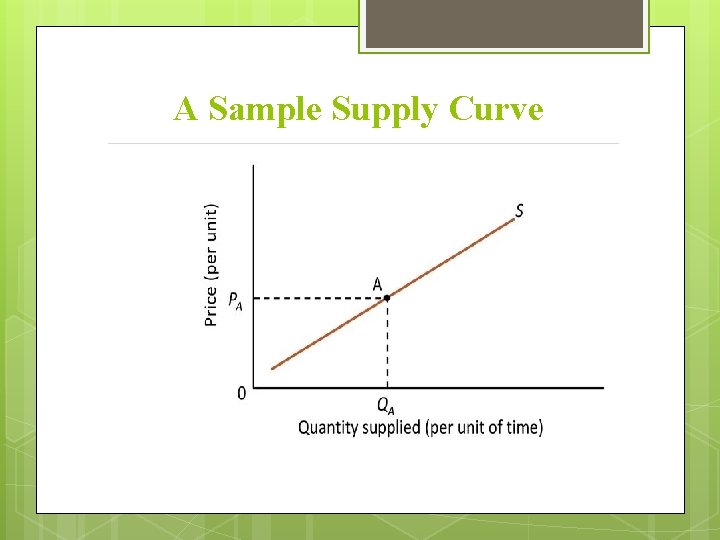
The Supply Curve The supply curve is the graphic representation of the law of supply. The supply curve slopes upward to the right. The slope tells us that the quantity supplies varies directly – in the same direction- with the price.
A Sample Supply Curve
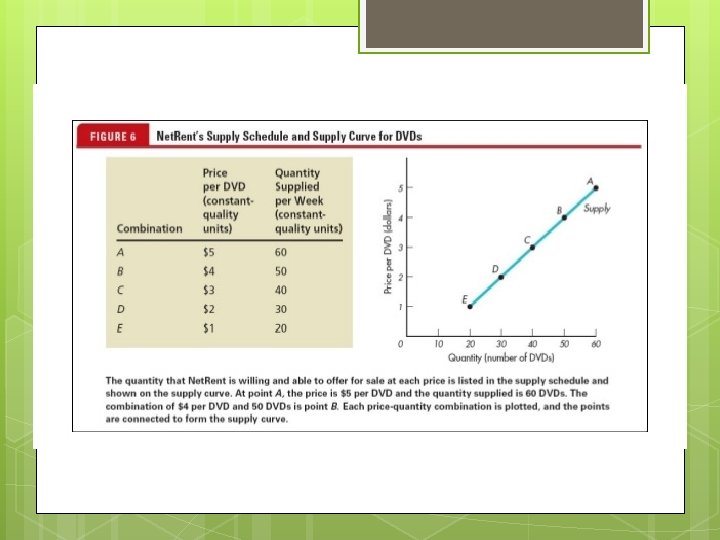
Supply Curve DVDs
Slope of Supply Curve has a positive slope. The law of supply is accounted for by two factors: ü Assuming firms costs are constant, a higher price means higher profits. ü When prices rise, firms offers more quantity in market to be sold, because a decrease in price in future reduce their profit.
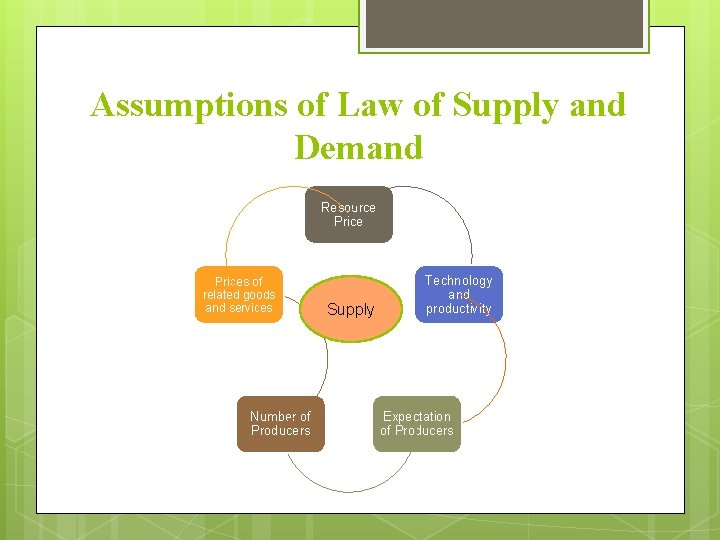
Assumptions of Law of Supply and Demand Resource Prices of related goods and services Number of Producers Supply Technology and productivity Expectation of Producers
Exceptions of Law and Supply and Demand Transfer from one place to another. Need of cash Defect in means of transport Political instability Improper behavior in agricultural and industrial labor
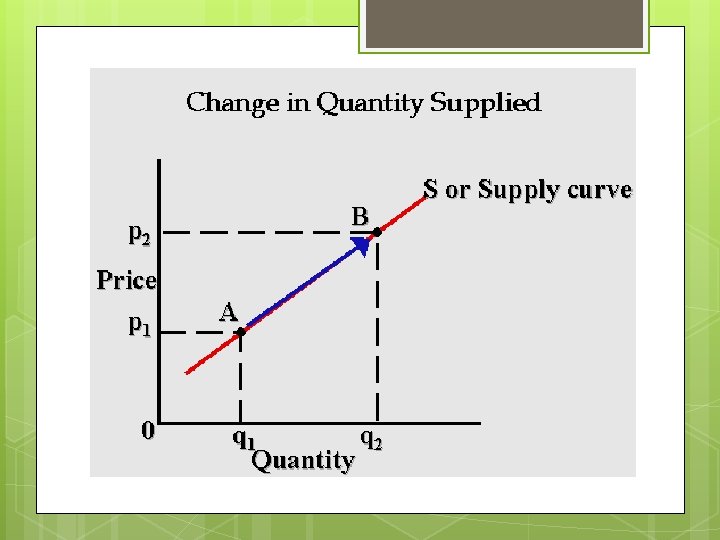
Shifts in Supply Versus Movement Along a Supply Curve Supply refers to a schedule of quantities a seller is willing to sell per unit of time at various prices , other things constant. Quantity Supplied refers to a specific amount that will be supplied at specific price. Changes in price causes changes in quantity supply represented by a movement along a supply curve.
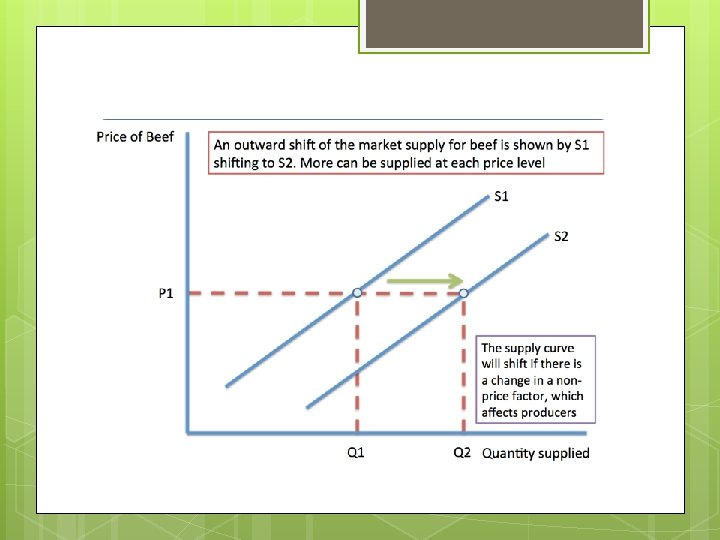
Shift in Supply versus Movements Along a Supply Curve A movement along a supply curve –the graphic representation of the effect of a change in price on the quantity supplied If the amount supplied is affected by anything other than a change in price , there will be shift I supply.
Shift in Supply Versus Movements Along a Supply Curve Shift in Supply -the graphic representation of the effect of a change in a factor other than price on supply.
Shift Factors of Supply Other factors besides price affect how much will be supplied Prices of inputs used in the production of a good Technology Suppliers expectation Taxes and subsidies Modern means of transportation Change in weather Cartel