
LECTURE 02 PATTERNS OF RURAL SETTLEMENT THE PHYSICAL


- Slides: 18
LECTURE # 02 PATTERNS OF RURAL SETTLEMENT
THE PHYSICAL STRUCTURE OF RURAL SOCIETY The physical structure of rural society refers to the tangible entities in rural society ; different patterns adopted by the rural people in their settlement, the spatial distribution of houses, the available resources and the number, density and composition of rural people themselves. o The pattern of settlement of rural people are different in various parts of the world and in some cases within a country itself based upon different factors. o Patterns of rural settlement are of two basic types ü The grouped or clustered dwellings forms ü Dispersed form o
CONT. . o Between the two type points are the varied combination of pattern of settlements found in general all over the world. o The following pattern of settlement have been identified ü Isolated farmsteads ü Villages ü Line villages ü Round village or circular patterns ü Cross-Road and Market Centre Settlements ü Hamlets ü Others
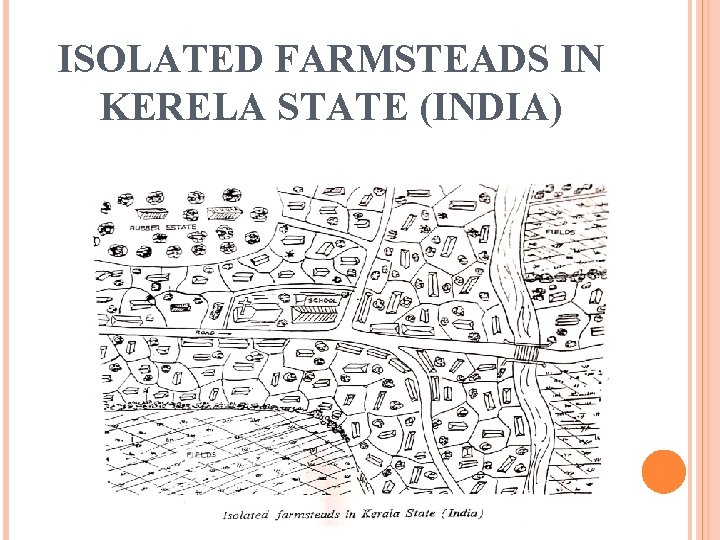
ISOLATED FARMSTEADS Here the individual lives on his farm with his farm land surrounding him. His neighbor may be a few miles from him depending on the size of their respective farms. Adjacent to his dwelling he keeps his livestock, barn, farm , equipment , harvested produce and other such commodities. This pattern is found in some parts of South India –in the state of Kerala and the Malabar Coast.
ISOLATED FARMSTEADS IN KERELA STATE (INDIA)
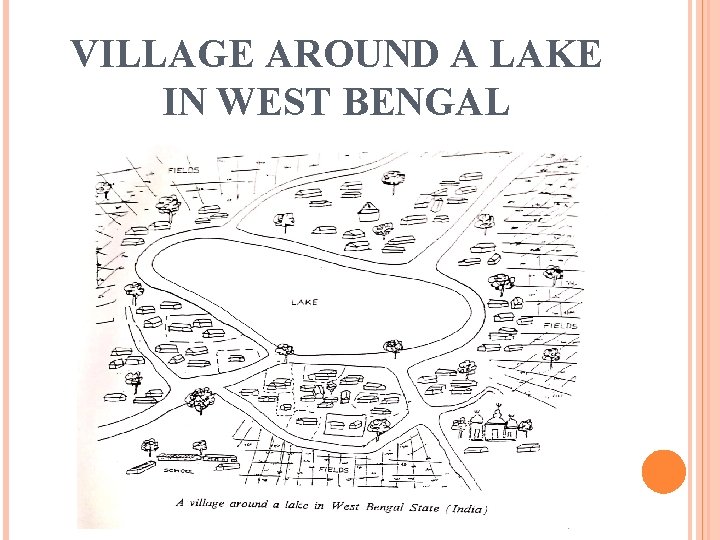
VILLAGE This pattern of settlement consists of dwellings of rural people concentrated together with their farmland outline their clustered dwellings or village. The number of dwellings will vary and will indicate the size of the village. Examples of the village pattern of settlements are to be found in most of the countries of the east. In India this pattern exists almost all over the country.
VILLAGE AROUND A LAKE IN WEST BENGAL
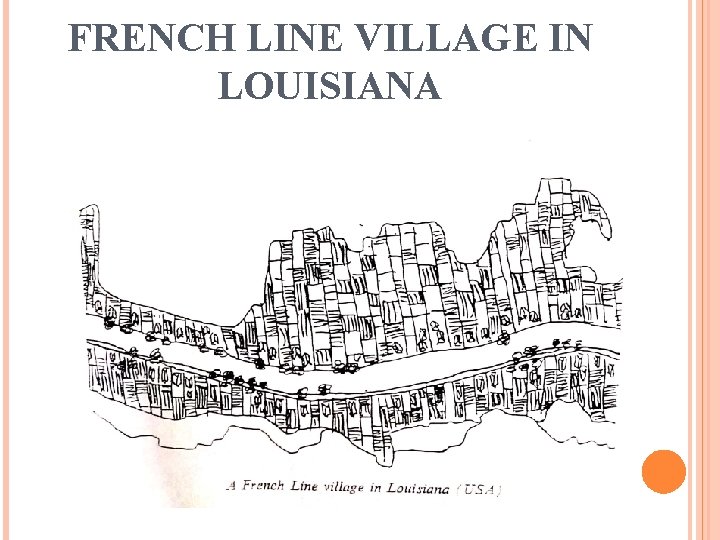
LINE VILLAGES Here houses are located along a road, a waterway or artery of transportation , each with adjoining strips of farm land oblong in shape extending away from the road. Residences are thus close and easily accessible to one another and at the same time are located on their respective farms Thus pattern of settlement may be seen along canals in Thailand , in certain parts of Canada , along the St. Lawrence River , in French Canadian settlements on Maine and Louisiana in the U. S. A and its characteristics of the French Land tenure pattern. Many villages in France and Germany are also of this type.
FRENCH LINE VILLAGE IN LOUISIANA
ROUND VILLAGE OR CIRCULAR PATTERNS In a round village houses are arranged in a circle enclosing a central area with the house and yard at the apex of a triangular plot. In this way, houses are closer together without creating a corresponding greater length in the tract of farm land. Such a pattern has been followed by some villages in Israel where irrigated land is very limited
CIRCULAR VILLAGE IN NAHALAL
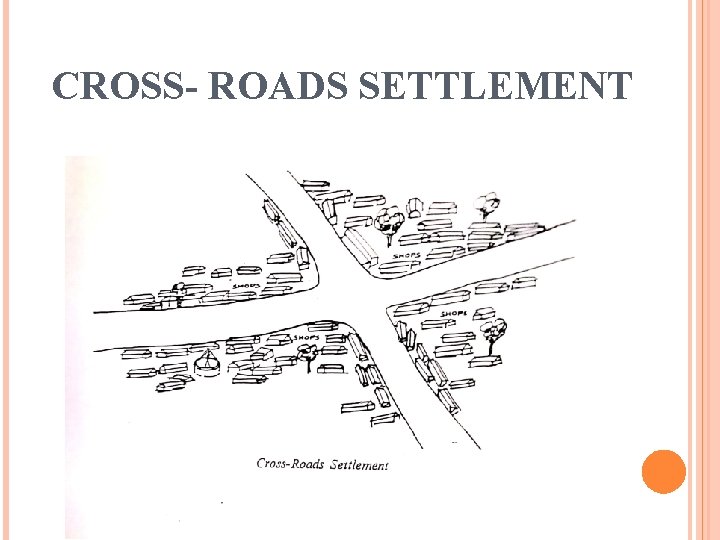
CROSS-ROADS AND MARKET CENTRE SETTLEMENTS Common in various parts of the world and based on economic factors of local location for supply and distribution of goods. these settlements provide needed products and commodities , such as prepared foodstuffs, refreshments, services such as petrol stations , repair shops , barbers shops , etc. Market centre settlements, therefore, are predominantly inhabited by merchants who handle agriculture products , bankers, shopkeepers and others. Farmers usually do not reside in such centres unless their farm land is adjacent. Normally , these centres consist of shops that line the main road
CROSS- ROADS SETTLEMENT
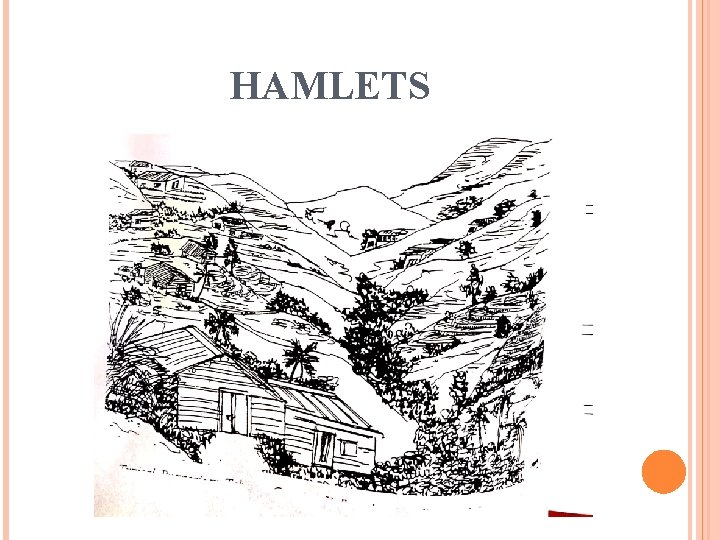
HAMLETS These are small villages located away from other villages or on the fringes of the larger villages. Usually , they do not possess adequate supplies and service facilities that may be more available in the larger village
HAMLETS
OTHER Other types of settlements exist to serve specific functions. For Example, in India at points of religious pilgrimage or interest a temple, a mosque, or a church may be built and along with it dwelling places for those who visits and worship. Similarly, there may be historic and other places of tourist interest which settlements have formed.
FACTORS INFLUENCING THE PATTERNS OF SETTLEMENTS Attempts have been made to determine and explain the various origins and causes of the different patterns of rural habitat. Demon Geon identified three major groups of factors as significantly influencing the pattern of settlement in rural area. ü Influence of natural conditions § Relief configurations or the topography of land § Soil constitution § Water resources
CONT. . ü § § § ü Influence of social condition Tradition Defence and mutual protection Agrarian regime. Influence of agricultural economy § Nomadic stage of cultivation § Stage of periodic redistribution § Stage of fixed possession § Stage of specialised culture