
Lecture 014 Kingdoms Monera Protista Kingdoms Plantae Fungi



















- Slides: 61
Lecture 014 Kingdoms Monera & Protista
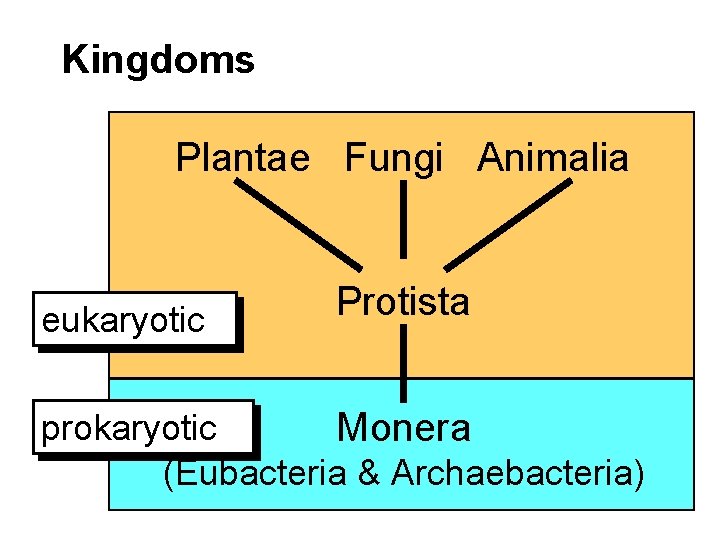
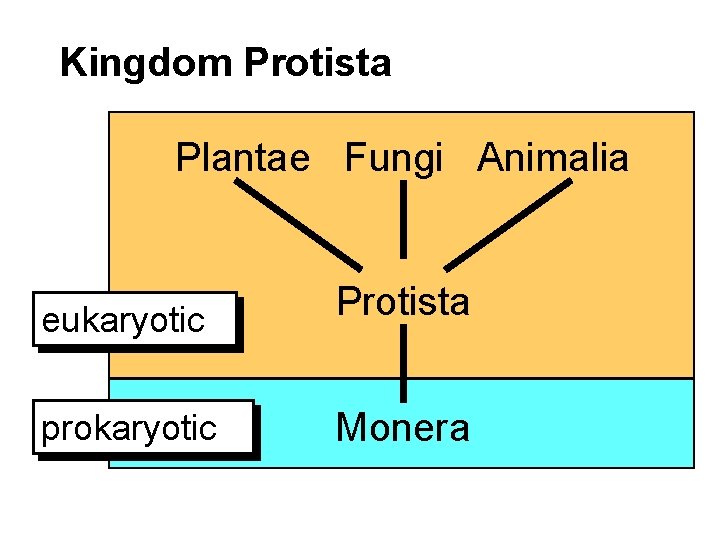
Kingdoms Plantae Fungi Animalia eukaryotic Protista prokaryotic Monera (Eubacteria & Archaebacteria)
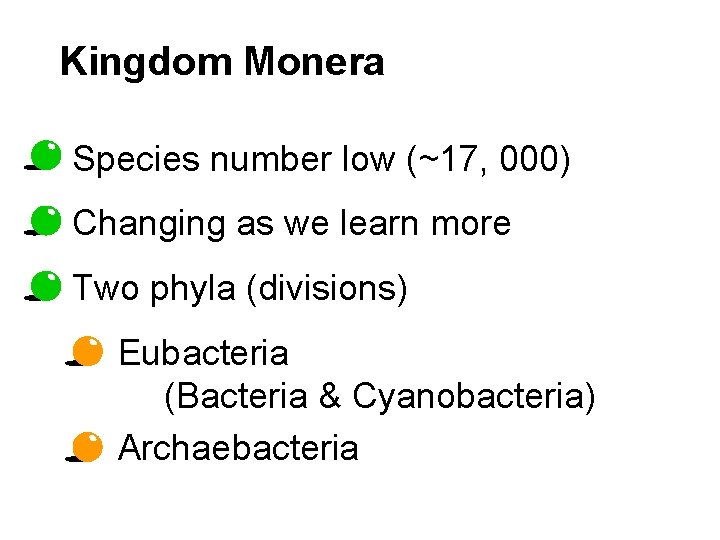
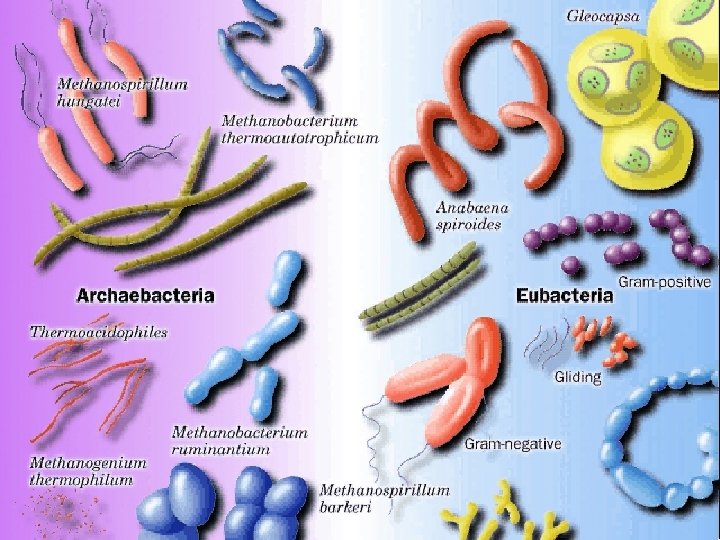
Kingdom Monera Species number low (~17, 000) Changing as we learn more Two phyla (divisions) Eubacteria (Bacteria & Cyanobacteria) Archaebacteria
Evolutionary Pattern Molecular studies are giving us more information Kingdom Protista Cyanobacteria Bacteria Archaebacteria Kingdom Monera
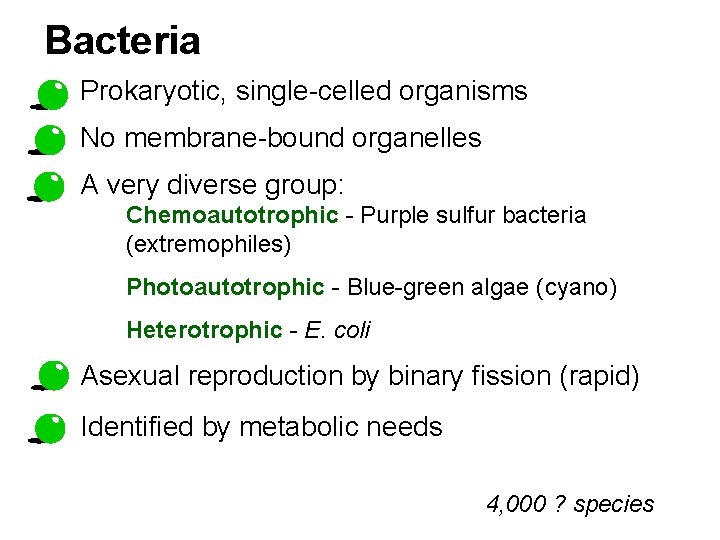
Bacteria Prokaryotic, single-celled organisms No membrane-bound organelles A very diverse group: Chemoautotrophic - Purple sulfur bacteria (extremophiles) Photoautotrophic - Blue-green algae (cyano) Heterotrophic - E. coli Asexual reproduction by binary fission (rapid) Identified by metabolic needs 4, 000 ? species
Medical Quick Tests Agar, nutrients & test chemical negative positive color comparison chart
rod-shaped bacteria pneumonia anthrax
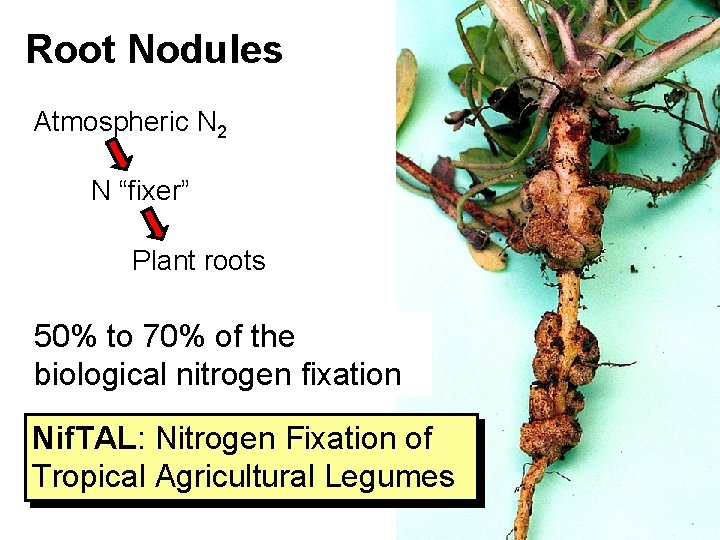
Root Nodules Atmospheric N 2 N “fixer” Plant roots 50% to 70% of the biological nitrogen fixation Nif. TAL: Nitrogen Fixation of Tropical Agricultural Legumes
Cyanobacteria “Blue-green algae” Only 200 species? In different conditions they grow differently Lots of colors Photosynthetic 7, 500 ? species
Mats of cyanobacteria
Red Sea Turkey Iran Egypt Saudi Arabia Red Sea Red-pigmented cyanobacteria floating on the surface
Productive Partnership: Azolla Nitrogen fixing cyanobacterium + fern (Azolla) Rapid growth Used as a “green manure”
Azolla + N-fixing cyanobacterium
Characteristics of Eukaryotic Cells • Membrane-bound nucleus • Membrane-bound organelles • Chromosomes consist of DNA and histone proteins and occur in pairs. • Multiplication of eukaryotic cells involves mitosis. • Reproduction is sexual and/or asexual • Protists, fungi, plants & animals are composed of eukaryotic cells.
Kingdom Protista Plantae Fungi Animalia eukaryotic Protista prokaryotic Monera
Kingdom Protista Eukaryotic Mostly single celled; however, if multicellular, then cells not well-organized into tissues and organs (more colonies of cells). A very heterogeneous group include both heterotrophic and photoautotrophic forms 8 phyla Lots of disagreements Whittaker = “leftovers”
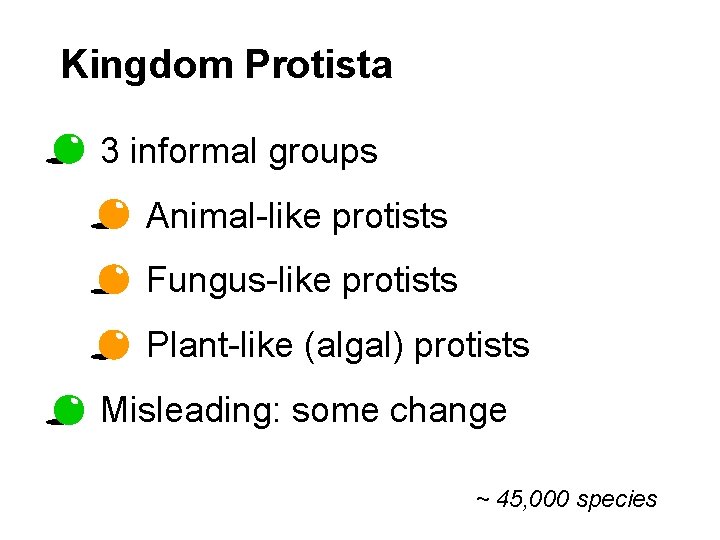
Kingdom Protista 3 informal groups Animal-like protists Fungus-like protists Plant-like (algal) protists Misleading: some change ~ 45, 000 species
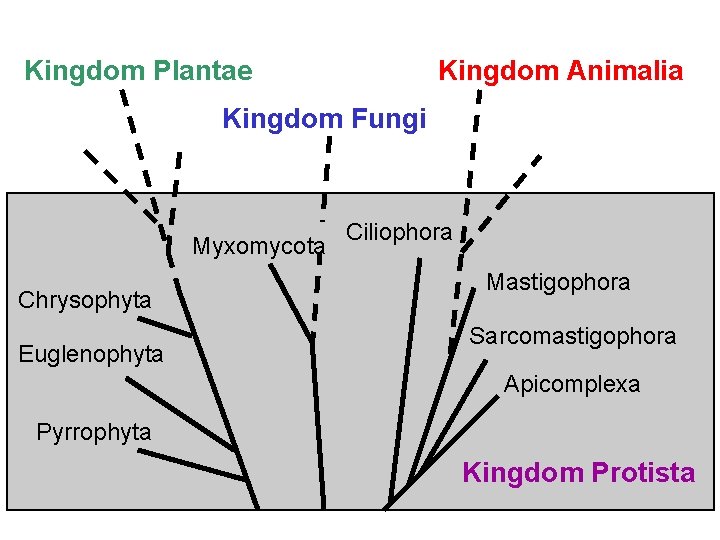
Kingdom Plantae Kingdom Animalia Kingdom Fungi Myxomycota Chrysophyta Euglenophyta Ciliophora Mastigophora Sarcomastigophora Apicomplexa Pyrrophyta Kingdom Protista
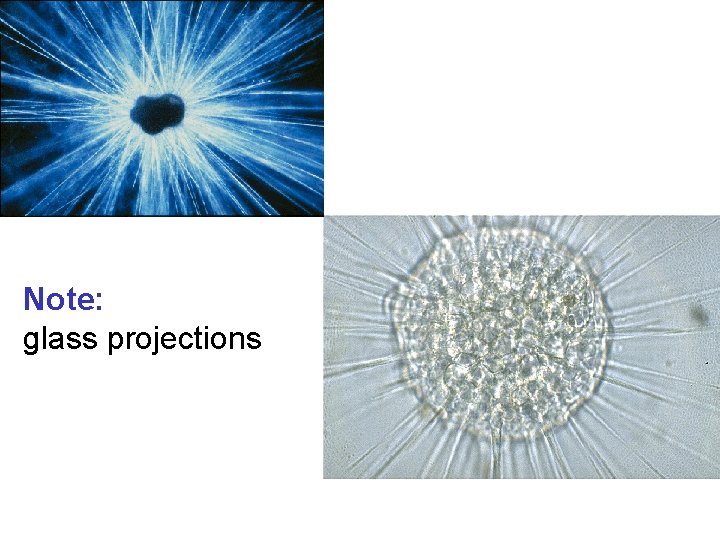
Animal-like Protists Phylum Sarcomastigophora “Amoeba” Shell-like glass or calcium carbonate structures Radiating projections 13, 000 species
Note: glass projections
Foraminifera Tropics = beaches Most have symbiotic algae
Foramenifera: Globigerina ooze Covers about 36% of the ocean floor
Animal-like Protists Phylum Apicomplexa “Sporozoa” Parasitic, often 2 hosts Resistant spore stage 5, 000 species
Malaria Mosquito & “victim” Africa = kills 1 million children per year Thousands of sporozoites injected Vaccine? (US support? ) Fall ‘ 96: field trials failed
Travel to Malarial Infected Areas Estimate your risk Prevent mosquito bites Take antimalarial drug(s) Know the symptoms of malaria Seek help if you suspect infection
Animal-like Protists Phylum Ciliophora (“ciliates”) Largest, most homogeneous Share few characteristics with others Movement coordinated Sex: 8 mating types 8, 000 species
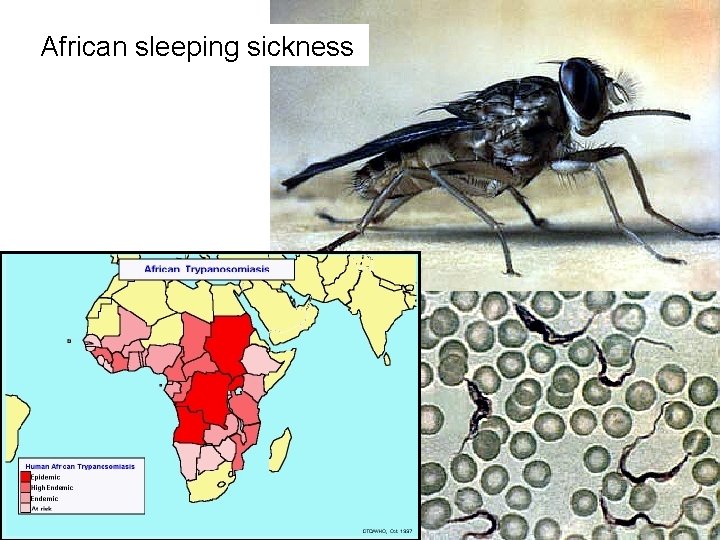
Animal-like Protists Phylum Mastigophora (“zooflagellates”) 1 to thousands of flagellae Some parasites Vaccines? change protein coat! Gave rise to animals? 1, 500 species
African sleeping sickness
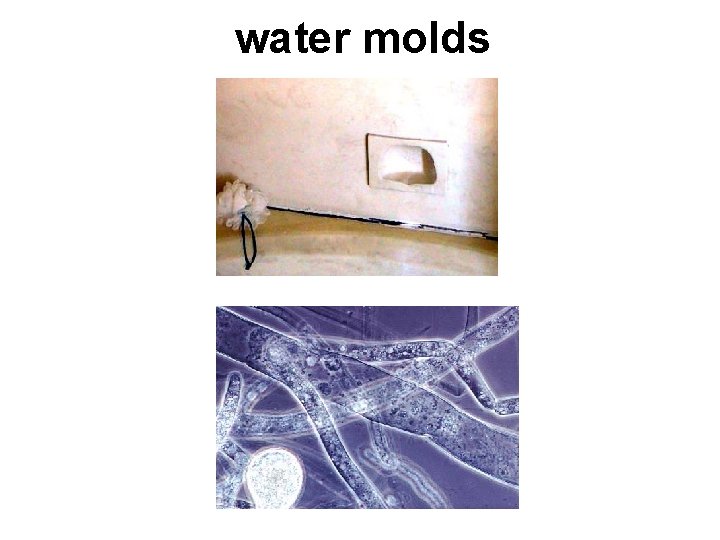
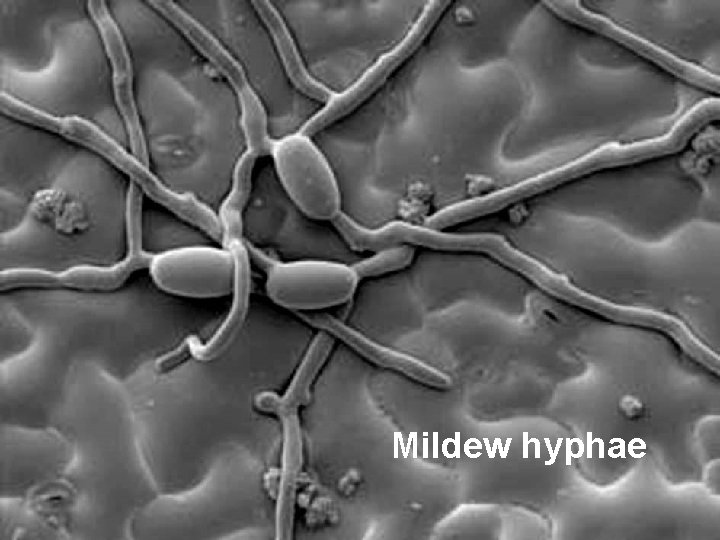
Fungus-like Protists 475 species Phylum Oomycota (“water molds”; mildew, blights) Some unicellular; others consist of hyphae Decomposers, parasites Cell walls- cellulose Related to algae based on cell wall composition Named after reproductive method No “septa”
water molds
Downy Mildew
Mildew hyphae
Oomycota Reproduction: the “egg fungi”, a relatively large egg cell is fertilized by a smaller “sperm nucleus, ” forming a resistant zygote.
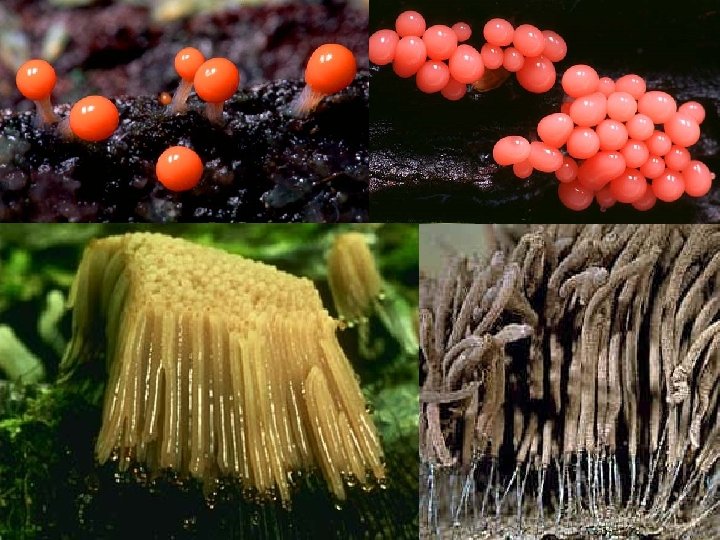
Fungus-like Protists Phylum Myxomycota (“slime molds”) Bizarre Bright colors Moving “slime” mass Acellular body 550 species
The Blob Unidentified Growing Object “Big as a platter, foamy and creamy and pale yellow. ” Died of sunstroke and nicotine poisoning
Diatoms Plant-like Protists • • Dinoflagellates Diatoms Euglena Cocolithophore Green algae Brown Algae Red algae Dinoflagellates Cocolithophore Radiolarian
Plant-like Protists Phylum Pyrrophyta (“dinoflagellates”) Marine and Freshwater Some live in corals Cause “red tide” 1, 100 species
Zooxanthellae in Coral Polyp
Pyrocystis fusiformis Bioluminescence
PSP (paraletic shellfish poisoning) Gonyaulax polyhedra, Gymnodium
13. 8 ppm 2. 07 ppm 0. 23 ppm 0. 04 ppm Tertiary consumers Secondary consumers Primary producers The numbers are representative values of the concentration in the tissues of dinoflagellate toxin (ppm)
Plant-like Protists Phylum Chrysophyta (“diatoms & golden algae”) Link to green algae 13, 000 species
Plant-like Protists Phylum Euglenophyta (“euglenoids”) 800 species
Division Chlorophyta “Green algae” Most freshwater or terrestrial Some marine 7, 000 species
Caulerpa toxifolia invasion – San Diego
Chlorophyta: Green Algae Halimeda opuntia Codium edule Caulerpa sertularioides Caulerpa racemosa Dictyosphaeria cavernosa
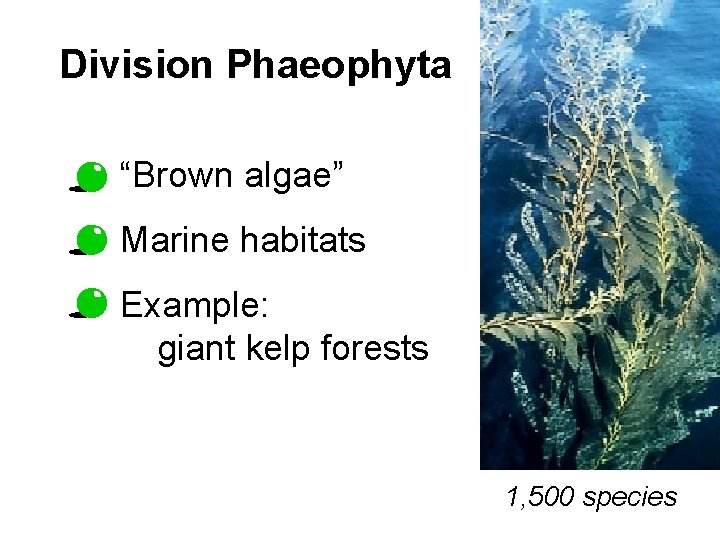
Division Phaeophyta “Brown algae” Marine habitats Example: giant kelp forests 1, 500 species
Phaeophyta: Brown Algae Padina japonica Hydroclathrus clathratus Turbinaria ornata Sargassum polyphyllum Sargassum echinocarpum
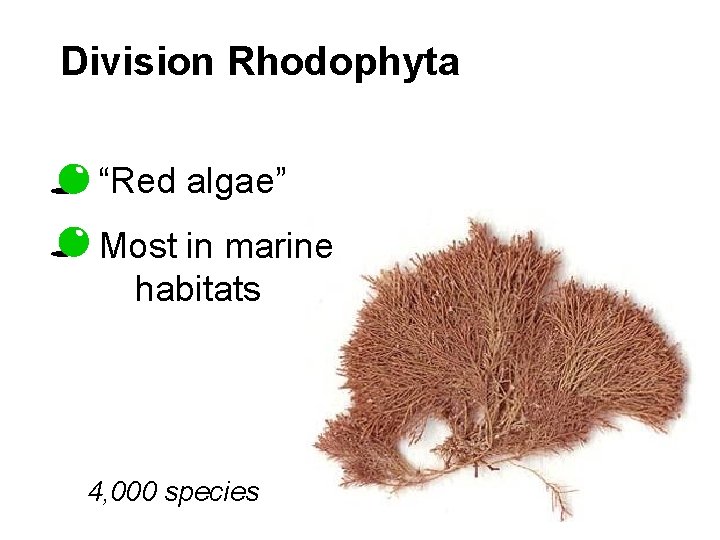
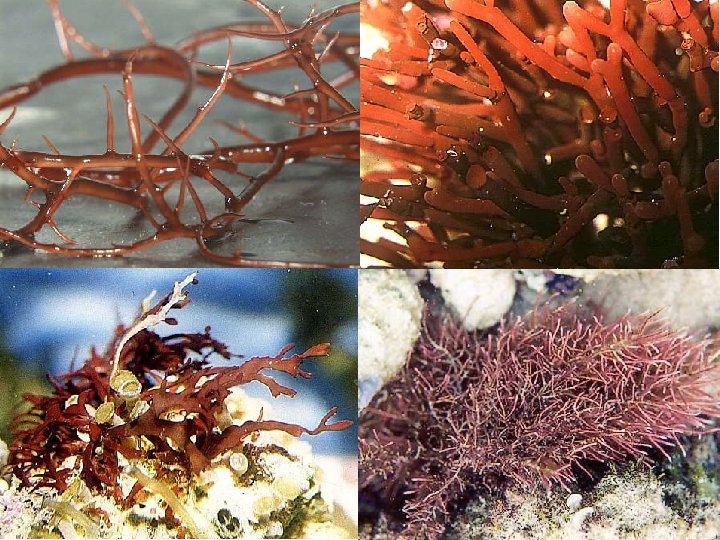
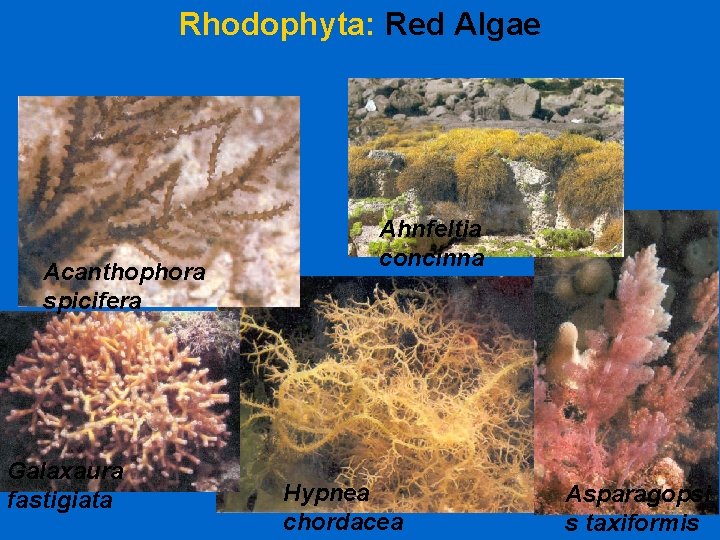
Division Rhodophyta “Red algae” Most in marine habitats 4, 000 species
Rhodophyta: Red Algae Acanthophora spicifera Galaxaura fastigiata Ahnfeltia concinna Hypnea chordacea Asparagopsi s taxiformis
Kingdom Protista (Summary) Varied, single celled Freshwater, marine, parasitic Huge number of individuals Gave rise to plants, animals, and fungi