
Lect 10 Marine Ecosystems Lect 07 Marine Ecosystems
- Slides: 37
Lect 10 Marine Ecosystems
Lect 07 Marine Ecosystems • • Estuaries Marine Shores Shallow Marine Waters Oceans
Estuaries • An estuary is a transition area between river and sea • Barrier to flooding • Filter for terrestrial pollutants • Usually found where rivers meet the sea • Salinity varies with the rise and fall of the tides • Estuaries are nutrient rich and highly productive – Primary production: salt marsh grasses, algae • An abundant supply of food attracts marine invertebrates and fish – Worms, oysters, crabs – etc – support water fowl, fish – Important as nurseries of many fish spp.
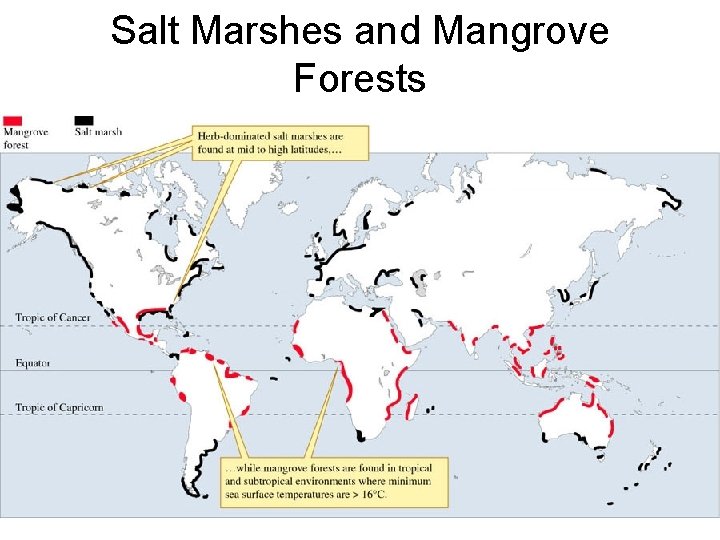
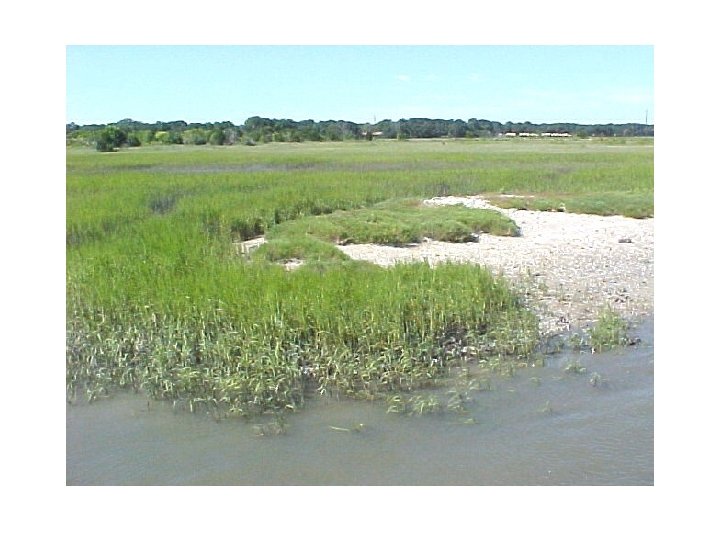
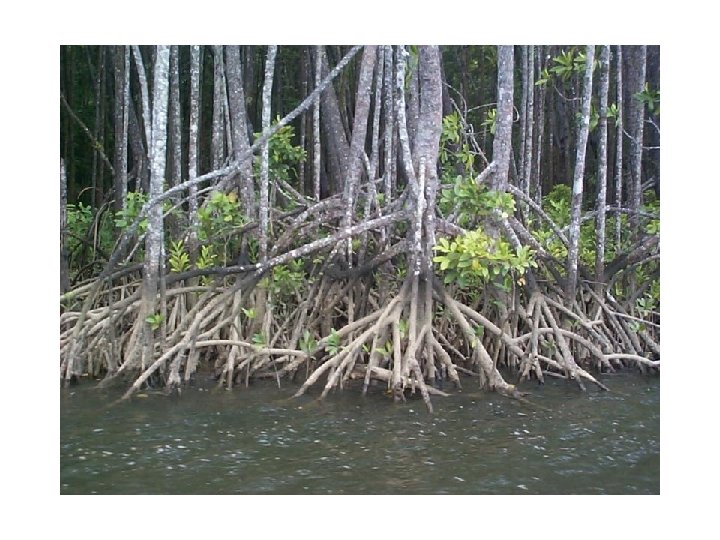
Salt Marshes and Mangrove Forests
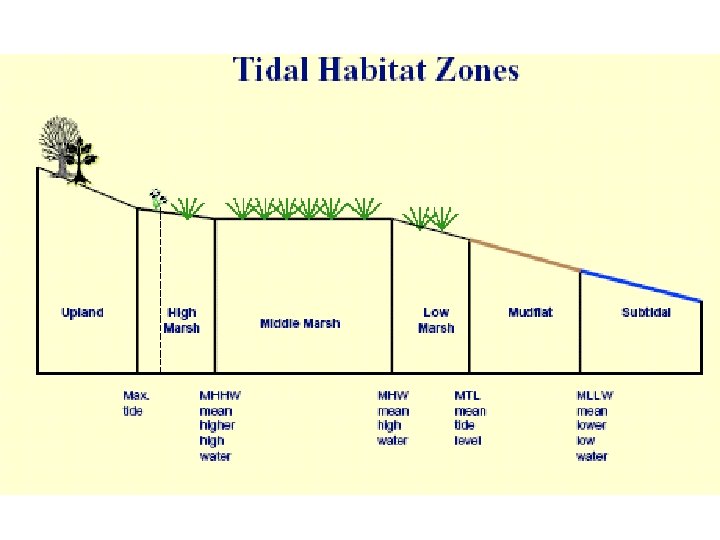
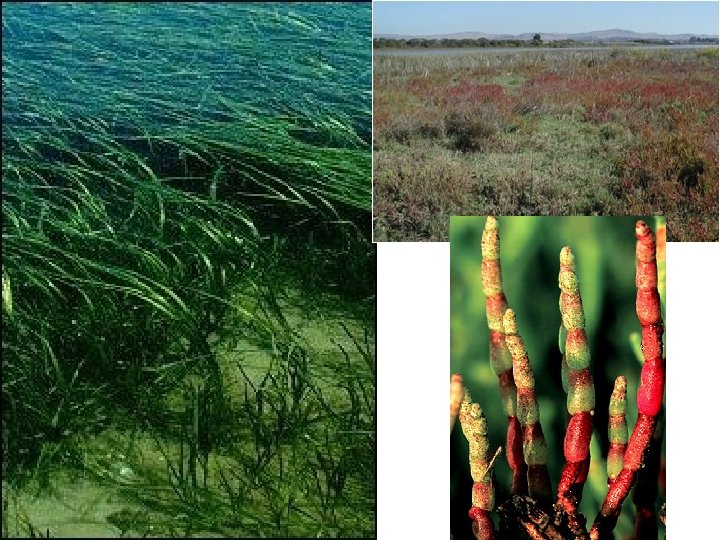
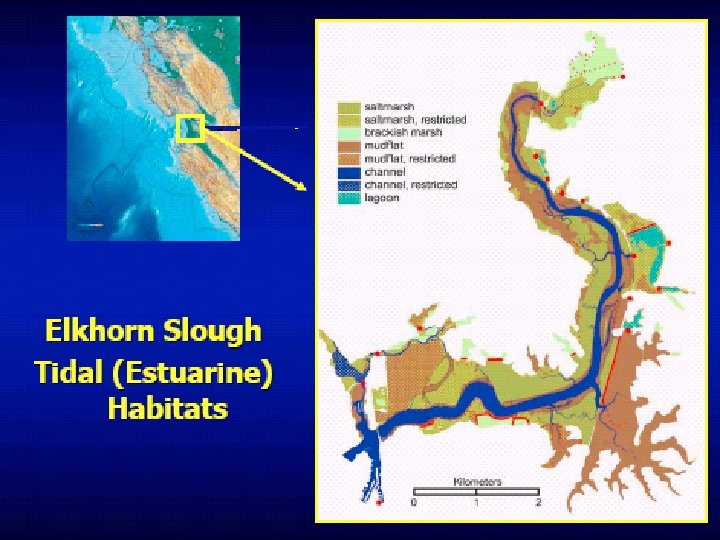
Characteristic Regions of Estuarine Habitat • Important factors: – Sediment size – Exposure during tidal flux • Aquatic Bed – Eelgrass – supports epiphytes, prevents erosion, traps sediment • Tidal Flats – Store heat, varied salinity, oxygen issues • Low and Middle Marsh/salt march – pickle weed, cord grass, mangrove
Issues in Estuaries • Excessive nutrients from adjacent terrestrial areas eutrophication anoxia • Silt accumulation • Invasive species • Impacts of development
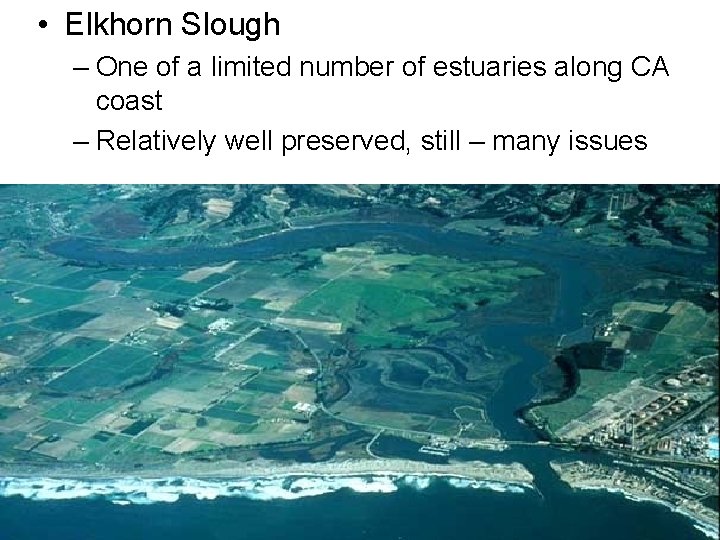
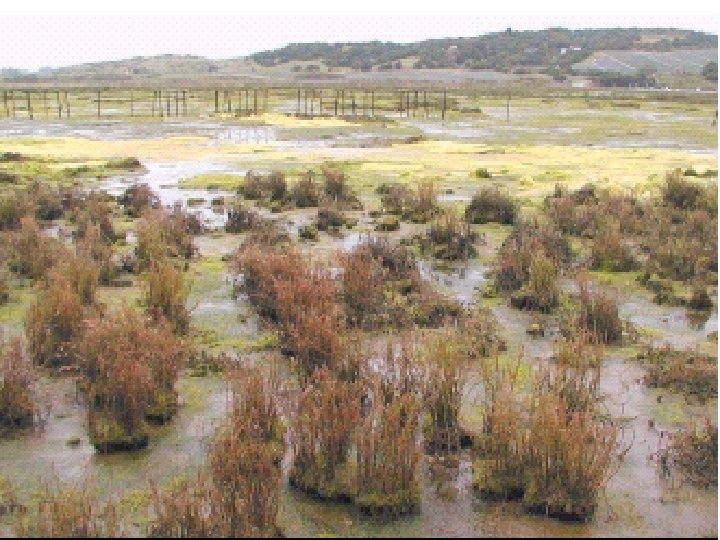
• Elkhorn Slough – One of a limited number of estuaries along CA coast – Relatively well preserved, still – many issues
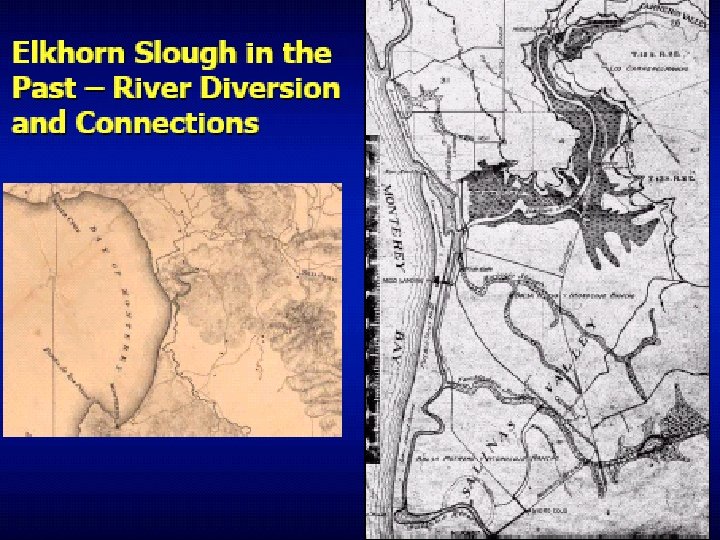
• Changes in Elkhorn Slough • Diversion of Salinas River • Increased tidal flow – Sediment loss • Construction of railway embankment • Loss in salt marsh habitat (50% since 1931) – Soil compaction and subsidence – Channel widening
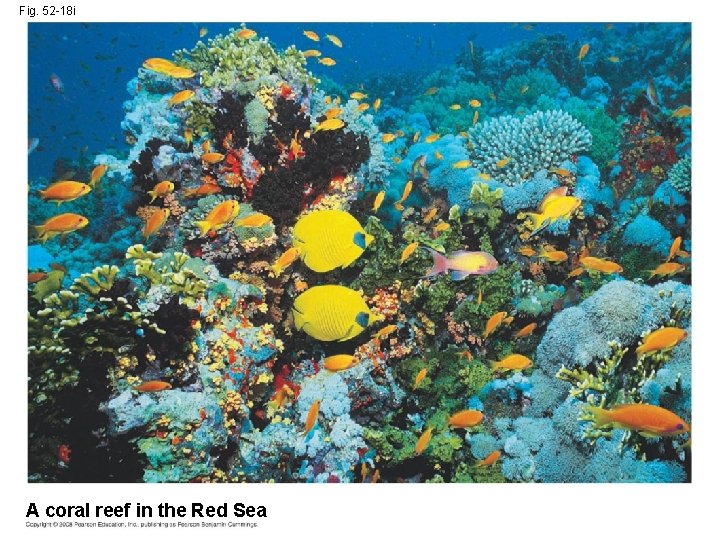
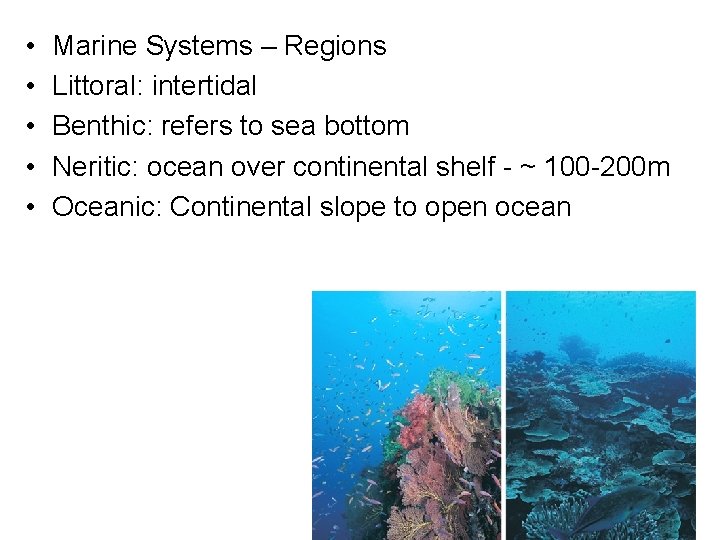
• Coral reefs: formed from the calcium carbonate skeletons of corals (phylum Cnidaria) • require a solid substrate for attachment • mutualistic relationship with algae provides corals with organic molecules • Highly diverse community
Fig. 52 -18 i A coral reef in the Red Sea
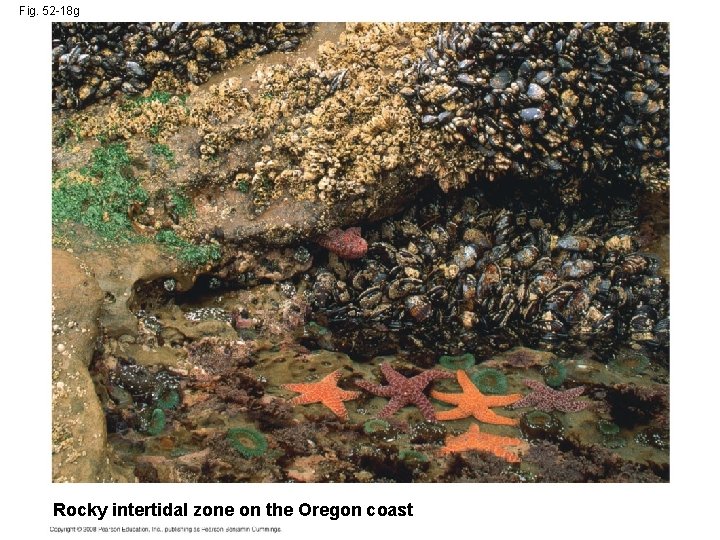
Intertidal Zones • An intertidal zone is periodically submerged and exposed by the tides • variations in temperature and salinity • the mechanical forces of wave action • structural adaptations that enable attachment hard substrate
Fig. 52 -18 g Rocky intertidal zone on the Oregon coast
Oceans - Geography • Cover 70% of earth’s surface • Average Depth – Pacific - 4, 000 m – Atlantic - 3, 900 m – Indian - 3, 900 m • Undersea Trenches – Marianas - 10, 000 m deep • Would engulf Mt. Everest with 2 km to spare.
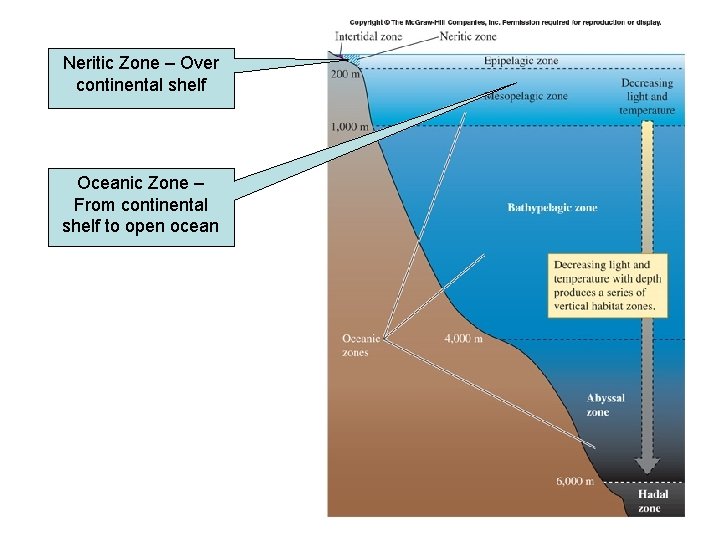
• • • Marine Systems – Regions Littoral: intertidal Benthic: refers to sea bottom Neritic: ocean over continental shelf - ~ 100 -200 m Oceanic: Continental slope to open ocean
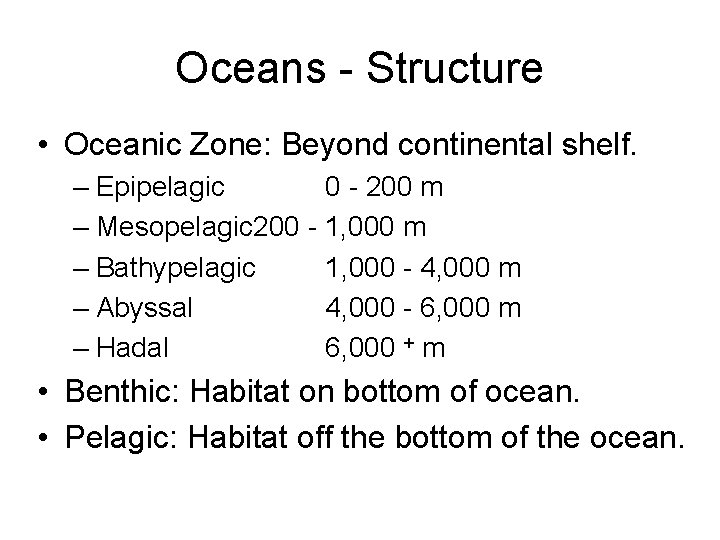
Oceans - Structure • Oceanic Zone: Beyond continental shelf. – Epipelagic 0 - 200 m – Mesopelagic 200 - 1, 000 m – Bathypelagic 1, 000 - 4, 000 m – Abyssal 4, 000 - 6, 000 m – Hadal 6, 000 + m • Benthic: Habitat on bottom of ocean. • Pelagic: Habitat off the bottom of the ocean.
Neritic Zone – Over continental shelf Oceanic Zone – From continental shelf to open ocean
• Ocean Currents: movement of large masses of water • Driven by steady winds, interrupted by land masses – Influenced by temperature + salinity differences • Gyres: large circular movements that circulate around an oceanic basin • counterclockwise in southern hemisphere • clockwise in northern hemisphere
• What affects life in the ocean? • Light – only penetrates to upper few meters • Nutrients – absorbed quickly by living things – become limiting factor • Temperature • Salinity – expressed as parts per thousand • 0/00 – Varies with depth, region (evaporation, fw inputs)
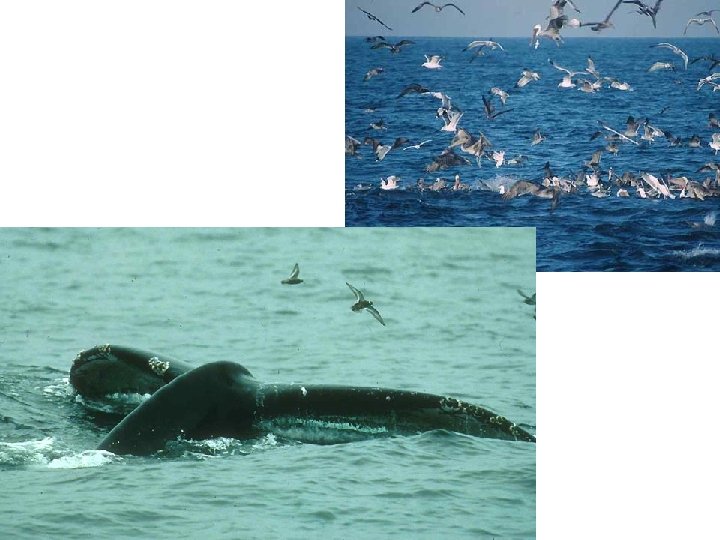
Marine Upwelling • Develop as winds bring nutrient rich waters to surface • Along edges of continents, sea mounts and islands • CA coastal regions: occur during summer months driven by winds offshore • Nutrients stimulate food chain causing massive increases in krill (tiny crustaceans) • Accounts for presence of sea bird and whale populations in Monterey Bay through summer/fall
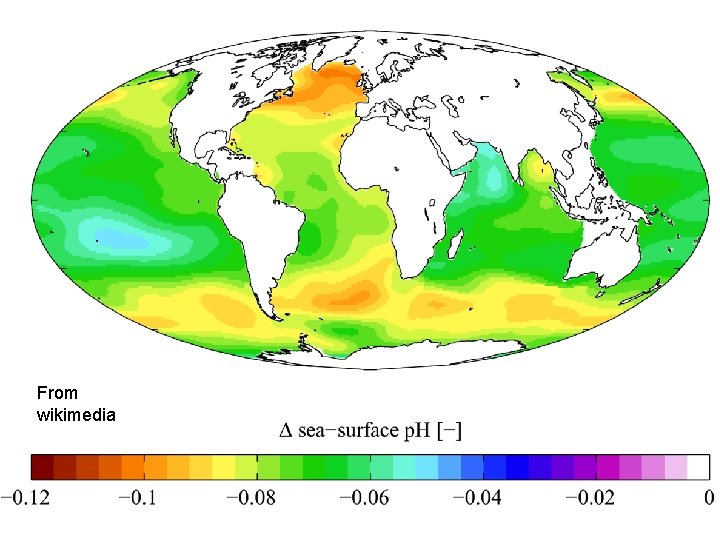
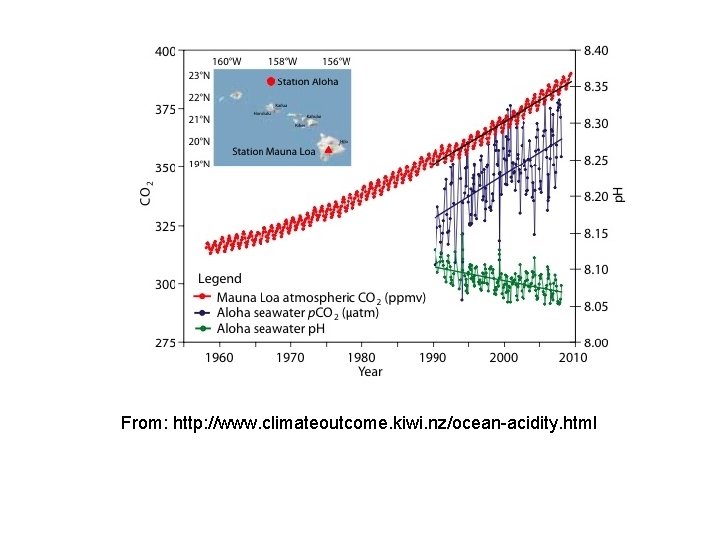
Carbon and oceanic waters • CO 2 dissolves in surface waters bicarbonate ions – Slow mixing with deeper waters – Reaches equilibrium with atmospheric CO 2 • Bicarbonate in water – Incorporated into organic compounds and animal shells as Ca. CO 3 & falls to bottom • Incorporated into rock (limestone sediments) • Adds to carbon reservoir • Acidification of surface waters
From wikimedia
From: http: //www. climateoutcome. kiwi. nz/ocean-acidity. html
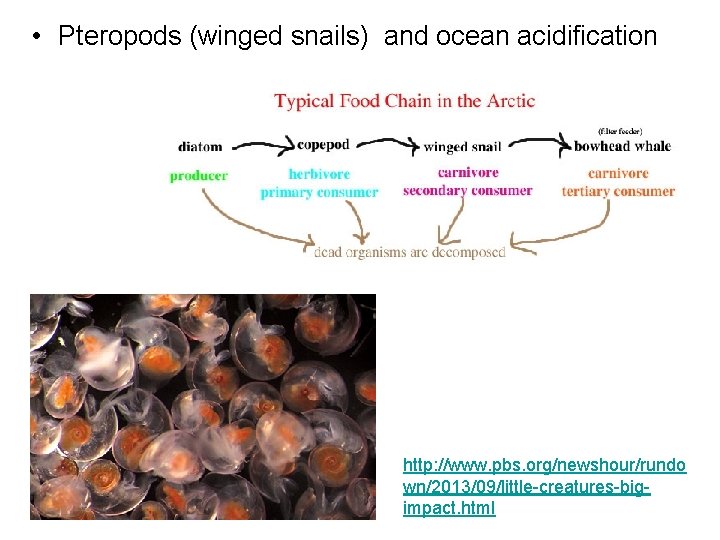
• Pteropods (winged snails) and ocean acidification http: //www. pbs. org/newshour/rundo wn/2013/09/little-creatures-bigimpact. html
Temperature • Stratification: – Sunlight waters warmer – less dense – Cooler waters are more dense – Thermocline: area of temperature transition – between temperature strata
Nutrients in oceanic ecosystems • Less in euphotic zone due to scavenging by phytoplankton • Greater below euphotic • Nutrients tend to be limiting – Iron especially a factor • Enrichment may lead to phytoplankton blooms • Upwellings: bring nutrients in deeper waters to surface – stimulate entire food chain
Aquatic Food Chains and Pyramids • An inverted pyramid – larger biomass in consumers than in producers – Populations able to increase rapidly • Nutrient turnover much more rapid than in other ecosystems • Producers short-lived - die or are consumed • Energy in producer level converted to biomass of consumers
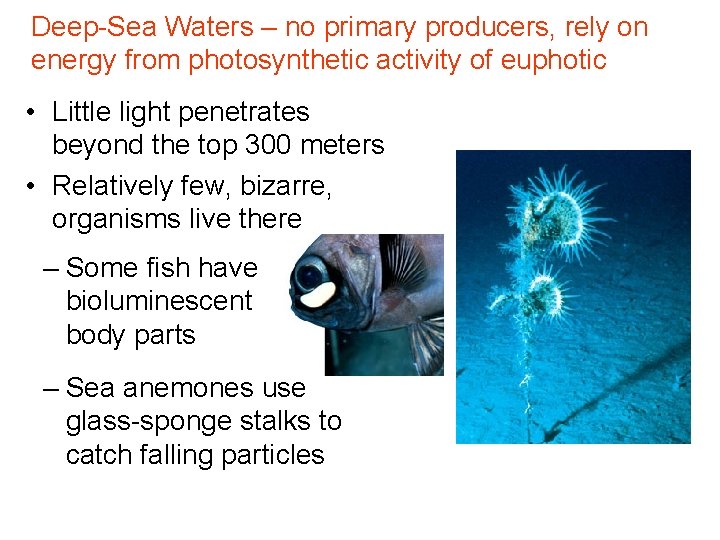
Deep-Sea Waters – no primary producers, rely on energy from photosynthetic activity of euphotic • Little light penetrates beyond the top 300 meters • Relatively few, bizarre, organisms live there – Some fish have bioluminescent body parts – Sea anemones use glass-sponge stalks to catch falling particles
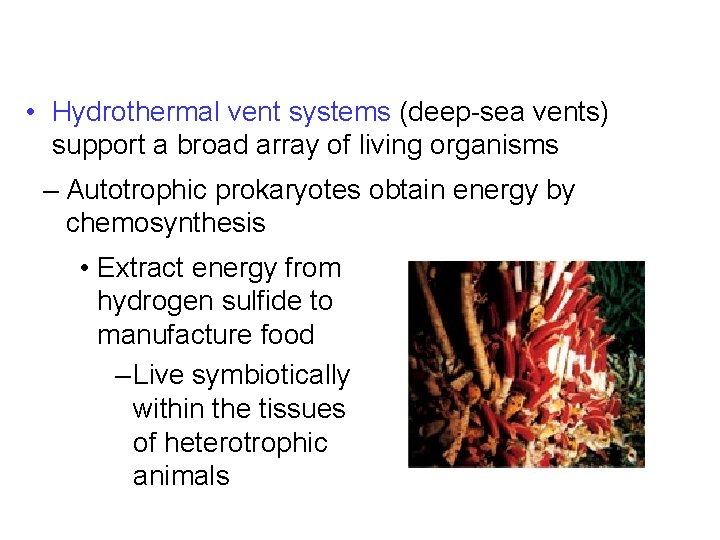
• Hydrothermal vent systems (deep-sea vents) support a broad array of living organisms – Autotrophic prokaryotes obtain energy by chemosynthesis • Extract energy from hydrogen sulfide to manufacture food – Live symbiotically within the tissues of heterotrophic animals
Summary – Marine Ecosystems • Various factors impact life in the ocean – most limiting are light and nutrients • Marine ecosystems may be considered an inverted pyramid, energy cycles quickly through system resulting in greater biomass of consumers than producers/prey • Factors that introduce nutrients to marine systems result in rapid increase in growth/development of food web