
Lebanon Community Power Liberty Utilities TOU Rate Battery

Lebanon Community Power & Liberty Utilities TOU Rate & Battery Pilot December 11, 2018 by City Councilor Clifton Below, Chair, Lebanon Energy Advisory Committee 1

Lebanon’s VISION for its ENERGY FUTURE • Overall Long-Term Goal of Master Plan: “Lebanon is a leader in energy efficiency, renewable energy reliance, and innovation across municipal, commercial, institutional, and residential sectors. ” • A key outcome: “The City relies upon as much local renewable energy as possible. ” • Sustainability Principles • Support for Paris Climate Agreement 2
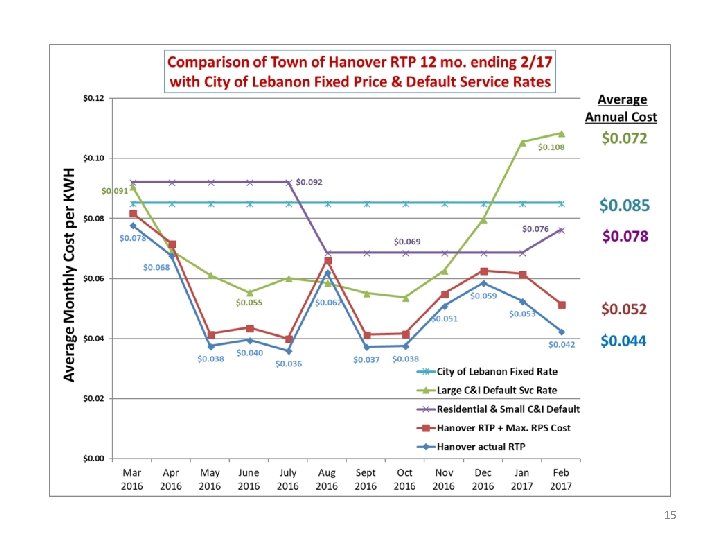
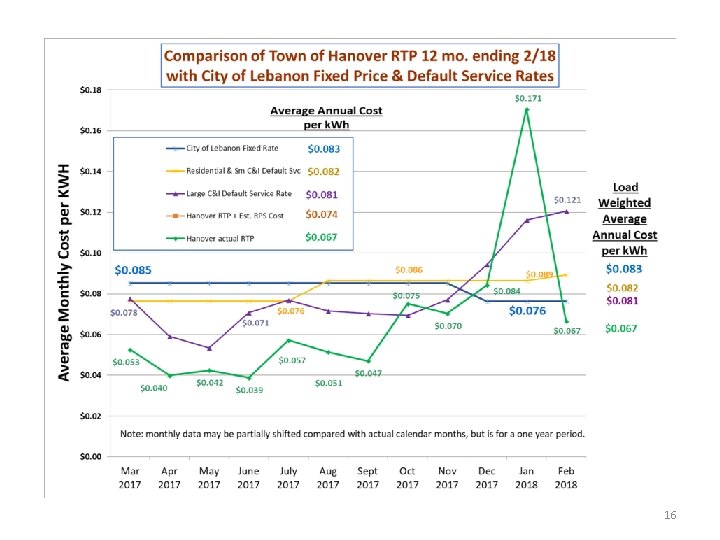
Lebanon Community Power: what is it? • A proposed municipal electric aggregation for electricity supply (“G” for Generation) & services authorized by RSA 53 -E open to all customers. • Purpose: to accelerate cost-effective adoption and integration of local renewables & other Distributed Energy Resources (DERs) for all. • A proposed local Transactive Energy (TE) Platform to enable direct producer to consumer (P 2 P) retail sales of local renewable energy. • Enable retail access to and use of Real Time Pricing (RTP) for electricity (G), TOU rates for Transmission & Distribution & serve as a PUC NM pilot. 3
T R A N S A C T IV E E N E R GY S T E MS EVOLVING APPROACHES FOR IMPLEMENTING TRANSACTIVE ENERGY Transactive Energy Definition • A system of economic and control mechanisms that allows the dynamic balance of supply and demand across the entire electrical infrastructure using value as a key operational parameter. • Transactive Energy ≠ Blockchain • Blockchain ≠ Transactive Energy • We have challenges to address across the electrical infrastructure • We need a loosely coupled set of controls with (just) enough information exchange to allow for stability and global optimization through local action • Transactive Energy is a tool to address those challenges • Blockchain may provide mechanisms to facilitate some TE requirem(ents • [Adapted from: https: //s 3. amazonaws. com/2018 -transactive-energy-conference/01+TESC+18+GWAC+Foundational. pdf] 2018 MIT, Cambridge, MA 4
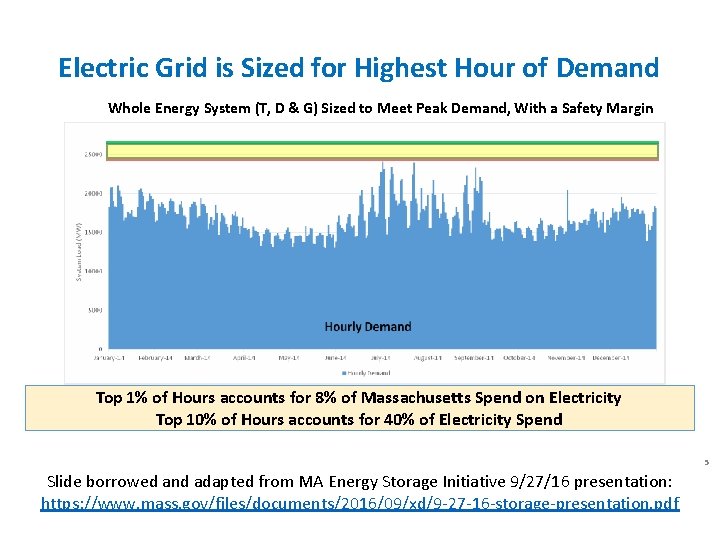
Electric Grid is Sized for Highest Hour of Demand Whole Energy System (T, D & G) Sized to Meet Peak Demand, With a Safety Margin Top 1% of Hours accounts for 8% of Massachusetts Spend on Electricity Top 10% of Hours accounts for 40% of Electricity Spend 5 Slide borrowed and adapted from MA Energy Storage Initiative 9/27/16 presentation: https: //www. mass. gov/files/documents/2016/09/xd/9 -27 -16 -storage-presentation. pdf
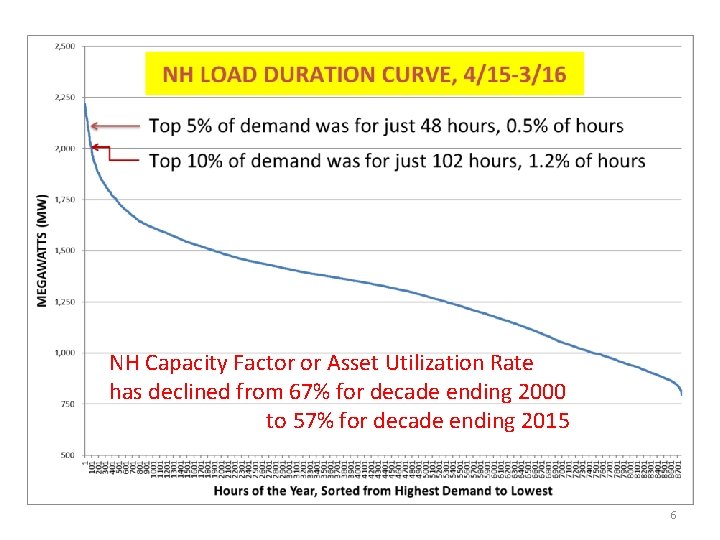
NH Capacity Factor or Asset Utilization Rate has declined from 67% for decade ending 2000 to 57% for decade ending 2015 6
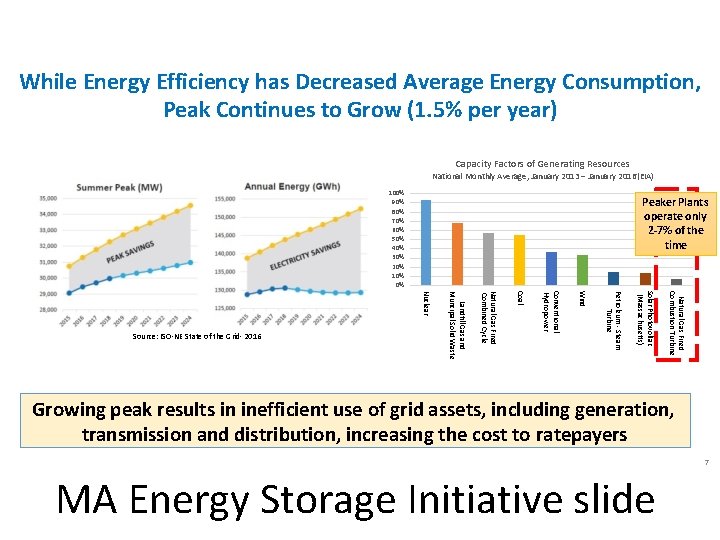
While Energy Efficiency has Decreased Average Energy Consumption, Peak Continues to Grow (1. 5% per year) Capacity Factors of Generating Resources National Monthly Average, January 2013 – January 2016 (EIA) 100% 90% 80% 70% 60% 50% 40% 30% 20% 10% 0% Peaker Plants operate only 2 -7% of the time Natural Gas Fired Combustion Turbine Solar Photovoltaic (Massachusetts) Petroleum - Steam Turbine Wind Conventional Hydropower Coal Natural Gas Fired Combined Cycle Landfill Gas and Muncipal Solid Waste Nuclear Source: ISO-NE State of the Grid- 2016 Growing peak results in inefficient use of grid assets, including generation, transmission and distribution, increasing the cost to ratepayers 7 MA Energy Storage Initiative slide
8
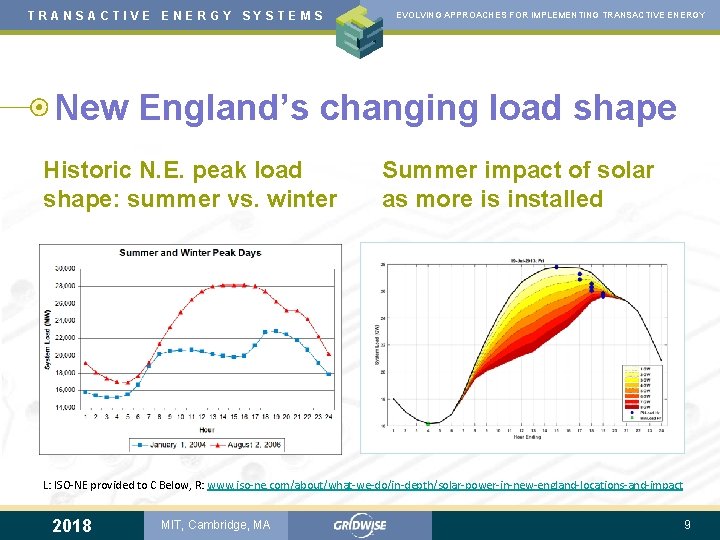
TRANSACTIVE ENERGY SYSTEMS EVOLVING APPROACHES FOR IMPLEMENTING TRANSACTIVE ENERGY New England’s changing load shape Historic N. E. peak load shape: summer vs. winter Summer impact of solar as more is installed L: ISO-NE provided to C Below, R: www. iso-ne. com/about/what-we-do/in-depth/solar-power-in-new-england-locations-and-impact 2018 MIT, Cambridge, MA 9
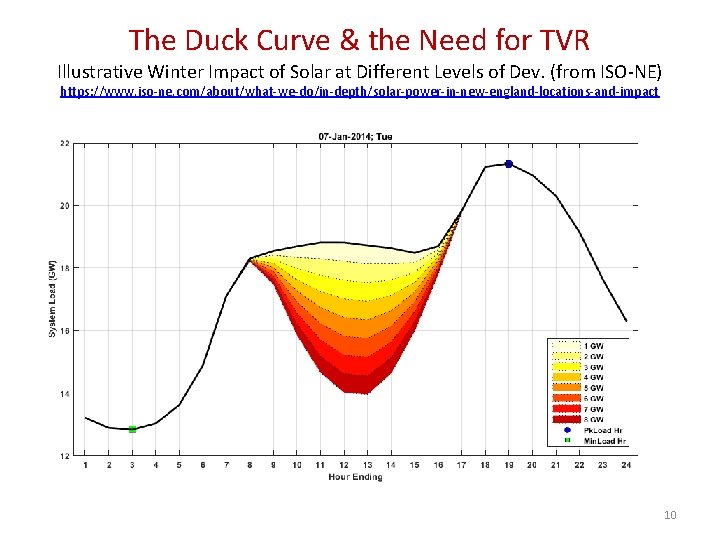
The Duck Curve & the Need for TVR Illustrative Winter Impact of Solar at Different Levels of Dev. (from ISO-NE) https: //www. iso-ne. com/about/what-we-do/in-depth/solar-power-in-new-england-locations-and-impact 10
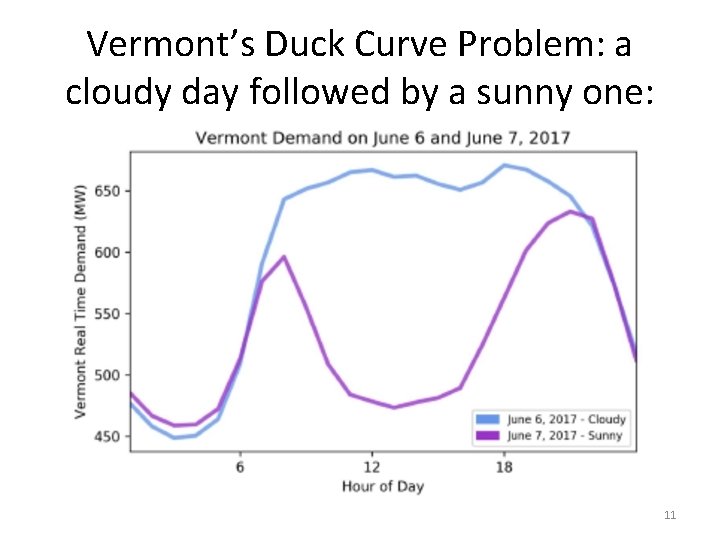
Vermont’s Duck Curve Problem: a cloudy day followed by a sunny one: 11
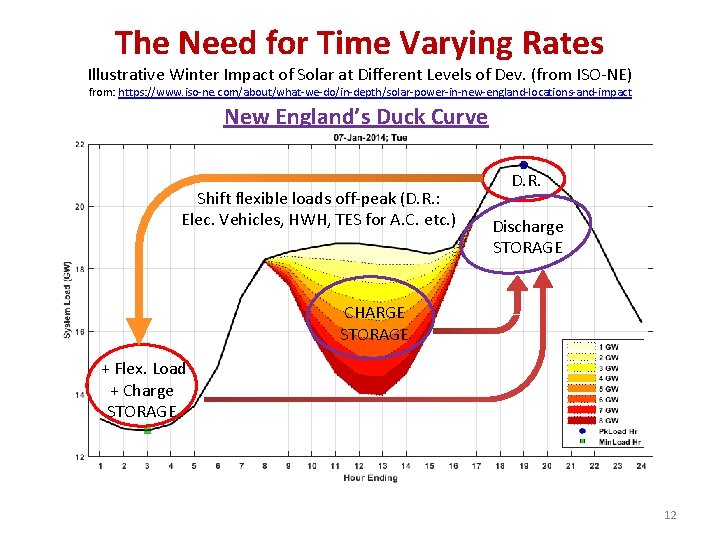
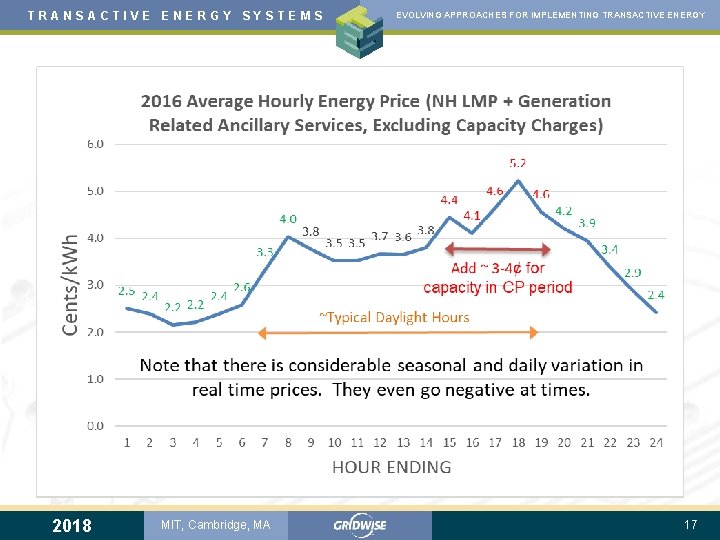
The Need for Time Varying Rates Illustrative Winter Impact of Solar at Different Levels of Dev. (from ISO-NE) from: https: //www. iso-ne. com/about/what-we-do/in-depth/solar-power-in-new-england-locations-and-impact New England’s Duck Curve Shift flexible loads off-peak (D. R. : Elec. Vehicles, HWH, TES for A. C. etc. ) D. R. Discharge STORAGE CHARGE STORAGE + Flex. Load + Charge STORAGE 12
MA Energy Storage Initiative slide 13
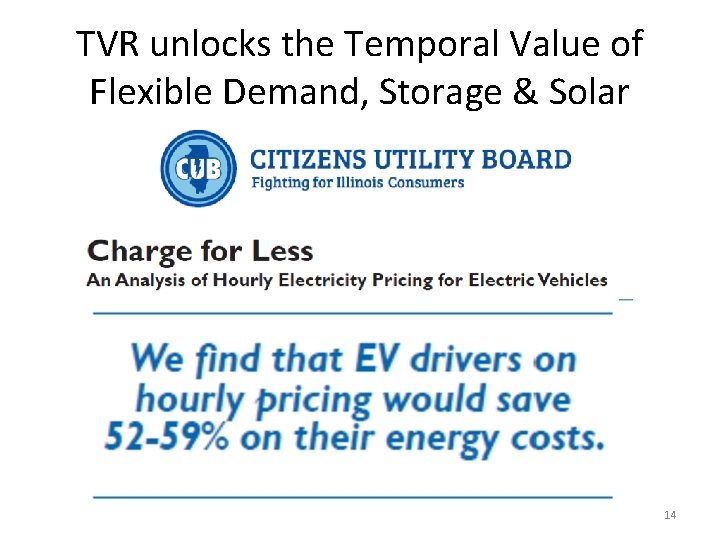
TVR unlocks the Temporal Value of Flexible Demand, Storage & Solar 14
15
16
TRANSACTIVE ENERGY SYSTEMS 2018 MIT, Cambridge, MA EVOLVING APPROACHES FOR IMPLEMENTING TRANSACTIVE ENERGY 17
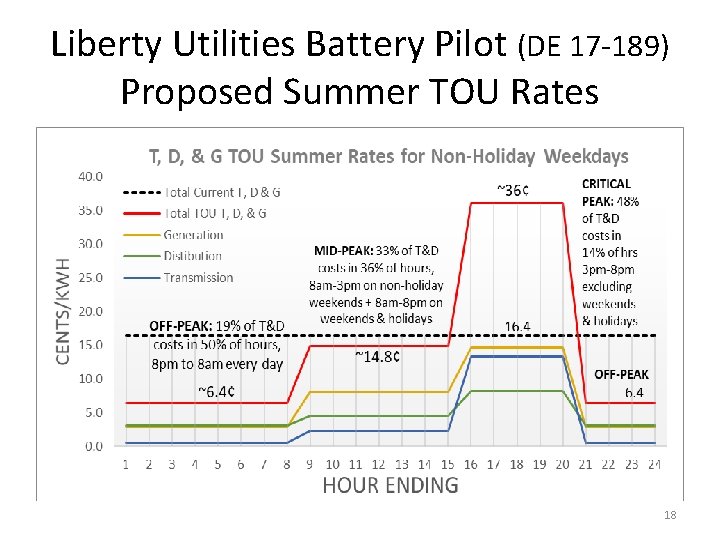
Liberty Utilities Battery Pilot (DE 17 -189) Proposed Summer TOU Rates 18
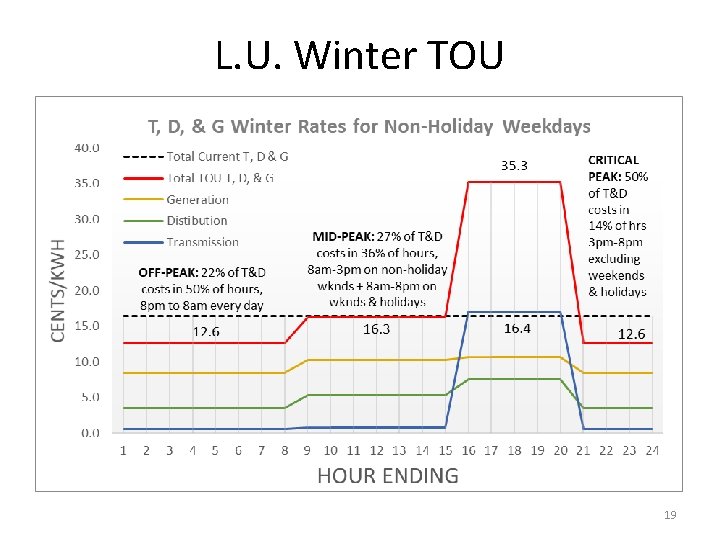
L. U. Winter TOU 19
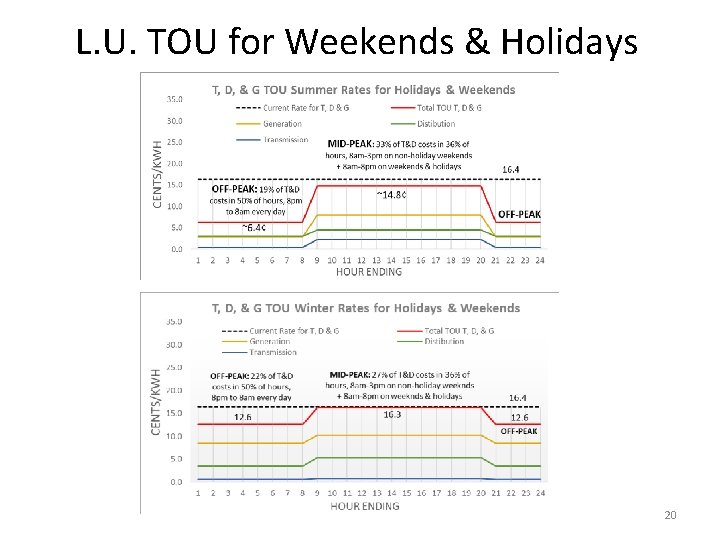
L. U. TOU for Weekends & Holidays 20
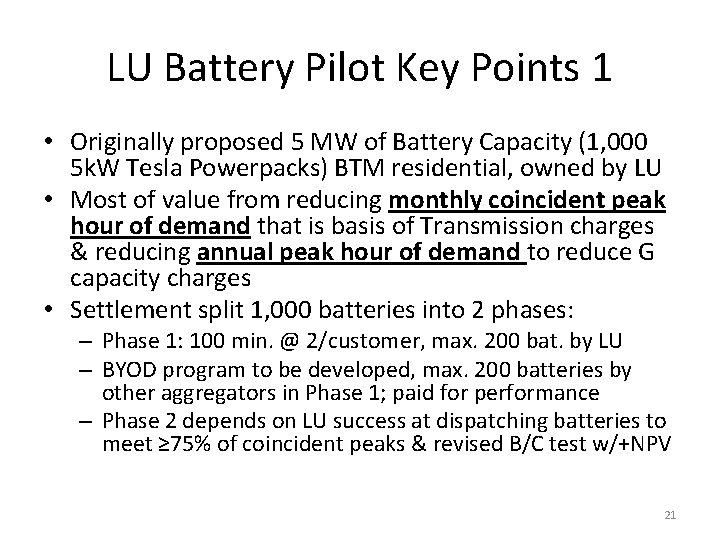
LU Battery Pilot Key Points 1 • Originally proposed 5 MW of Battery Capacity (1, 000 5 k. W Tesla Powerpacks) BTM residential, owned by LU • Most of value from reducing monthly coincident peak hour of demand that is basis of Transmission charges & reducing annual peak hour of demand to reduce G capacity charges • Settlement split 1, 000 batteries into 2 phases: – Phase 1: 100 min. @ 2/customer, max. 200 bat. by LU – BYOD program to be developed, max. 200 batteries by other aggregators in Phase 1; paid for performance – Phase 2 depends on LU success at dispatching batteries to meet ≥ 75% of coincident peaks & revised B/C test w/+NPV 21
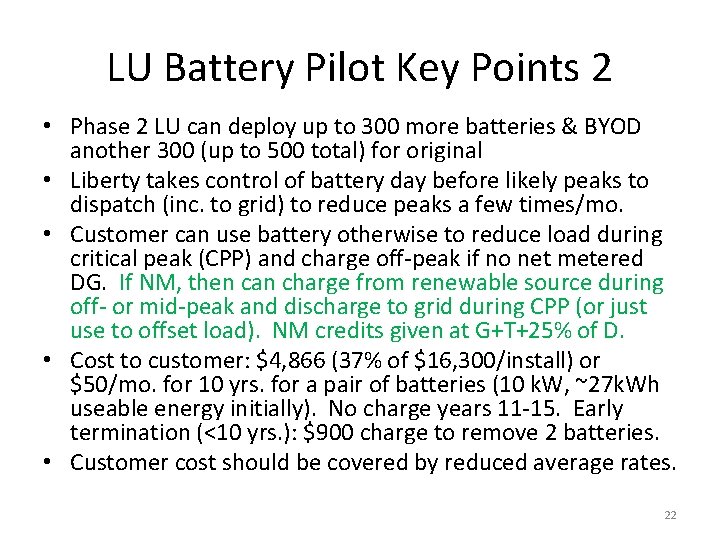
LU Battery Pilot Key Points 2 • Phase 2 LU can deploy up to 300 more batteries & BYOD another 300 (up to 500 total) for original • Liberty takes control of battery day before likely peaks to dispatch (inc. to grid) to reduce peaks a few times/mo. • Customer can use battery otherwise to reduce load during critical peak (CPP) and charge off-peak if no net metered DG. If NM, then can charge from renewable source during off- or mid-peak and discharge to grid during CPP (or just use to offset load). NM credits given at G+T+25% of D. • Cost to customer: $4, 866 (37% of $16, 300/install) or $50/mo. for 10 yrs. for a pair of batteries (10 k. W, ~27 k. Wh useable energy initially). No charge years 11 -15. Early termination (<10 yrs. ): $900 charge to remove 2 batteries. • Customer cost should be covered by reduced average rates. 22
- Slides: 22