
Leavingbio net Plant System Interactions The root system
Leavingbio. net Plant System Interactions
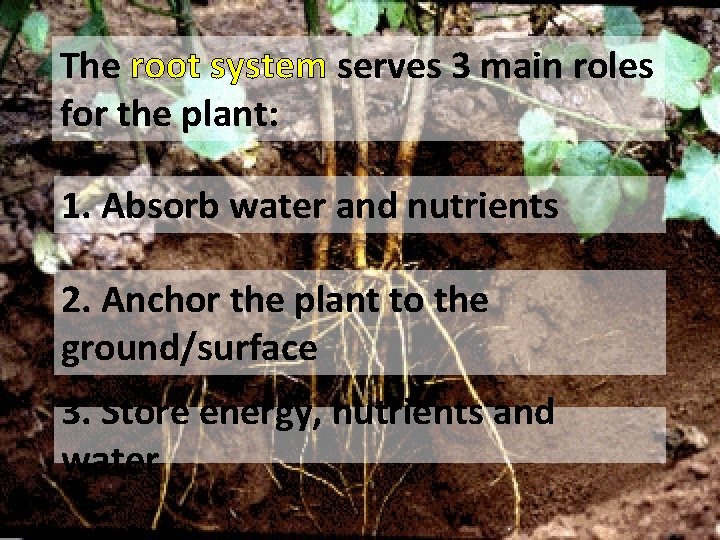
The root system serves 3 main roles for the plant: 1. Absorb water and nutrients 2. Anchor the plant to the ground/surface 3. Store energy, nutrients and water

Shoot System Everything above the ground is part of the shoot system. The shoot system contains tissues and organs responsible for many of the plant’s vital functions.
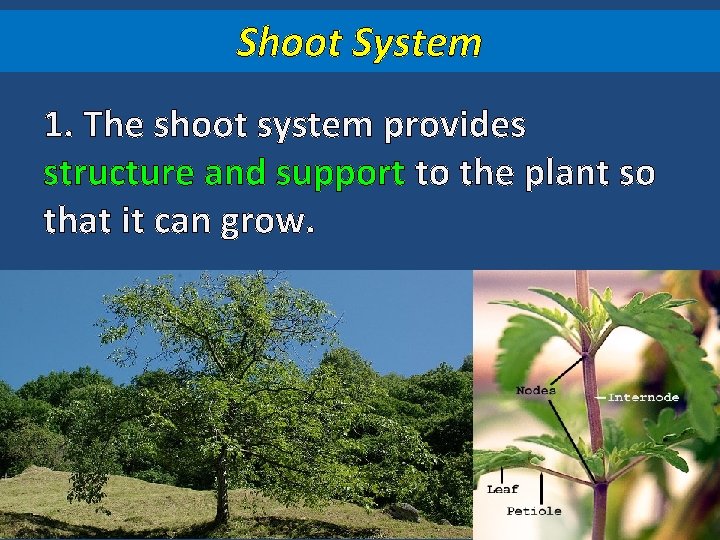
Shoot System 1. The shoot system provides structure and support to the plant so that it can grow.
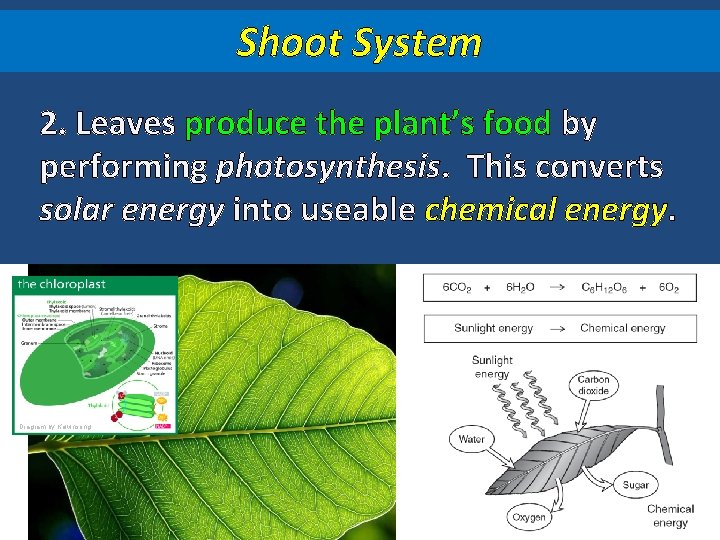
Shoot System 2. Leaves produce the plant’s food by performing photosynthesis. This converts solar energy into useable chemical energy. Diagram by Kelvinsong
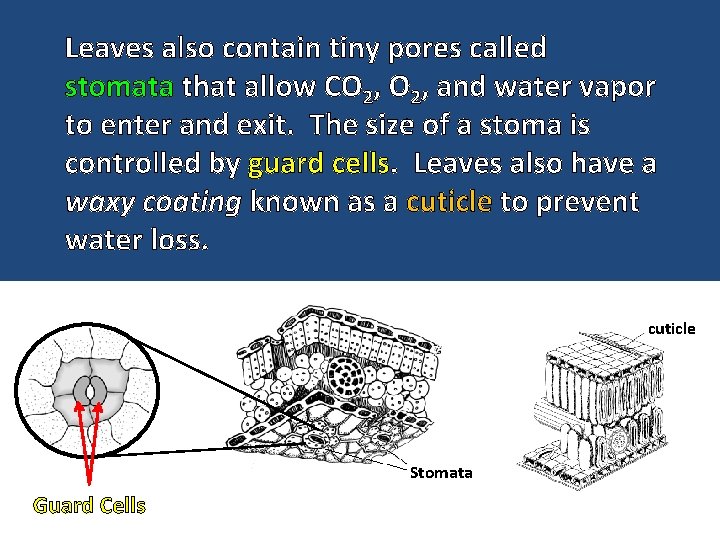
Leaves also contain tiny pores called stomata that allow CO 2, and water vapor to enter and exit. The size of a stoma is controlled by guard cells. Leaves also have a waxy coating known as a cuticle to prevent water loss. cuticle Stomata Guard Cells

Shoot System 3. Flowers or cones are the reproductive organs in many types of vascular plants. Photo by MPF
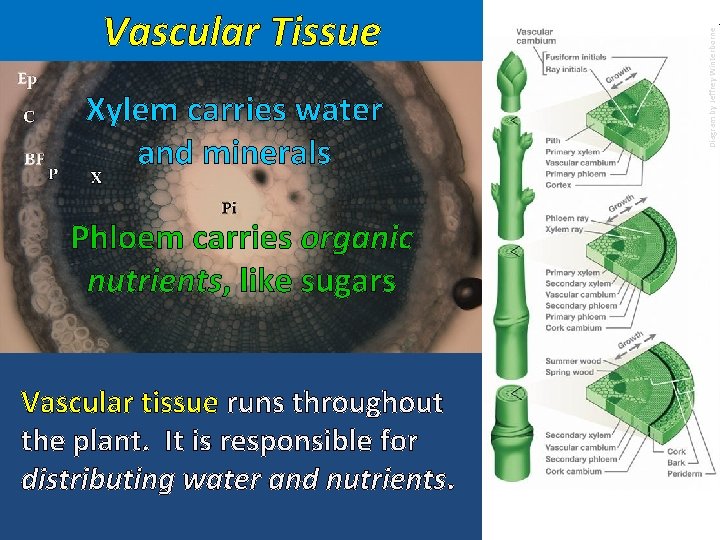
Xylem carries water and minerals Phloem carries organic nutrients, like sugars Vascular tissue runs throughout the plant. It is responsible for distributing water and nutrients. Diagram by Jeffrey Winterborne Vascular Tissue
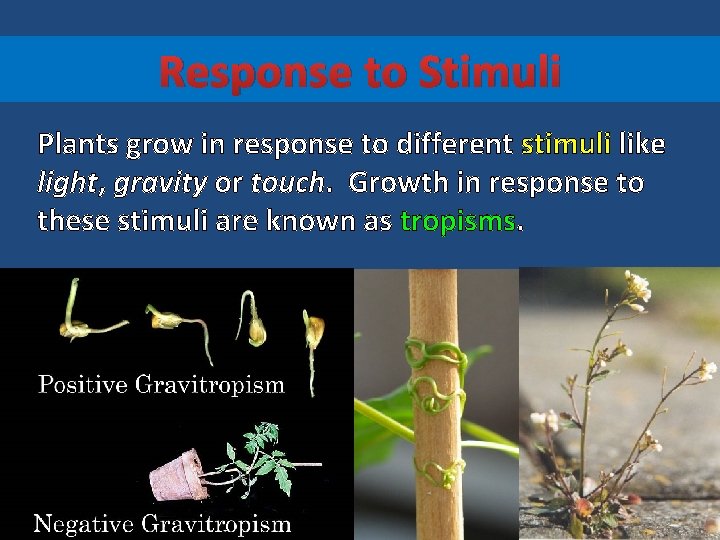
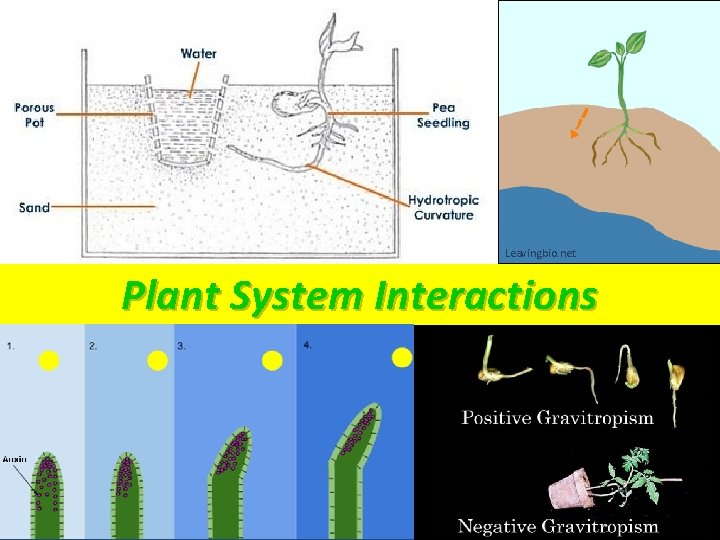
Response to Stimuli Plants grow in response to different stimuli like light, gravity or touch. Growth in response to these stimuli are known as tropisms.
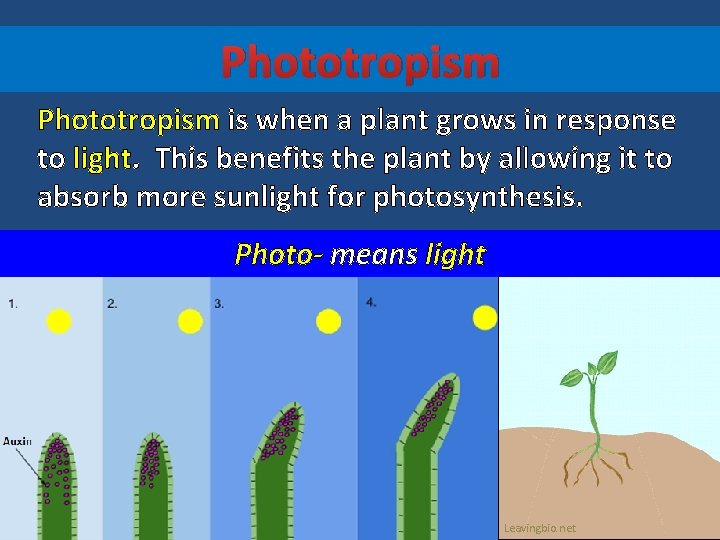
Phototropism is when a plant grows in response to light. This benefits the plant by allowing it to absorb more sunlight for photosynthesis. Photo- means light Leavingbio. net
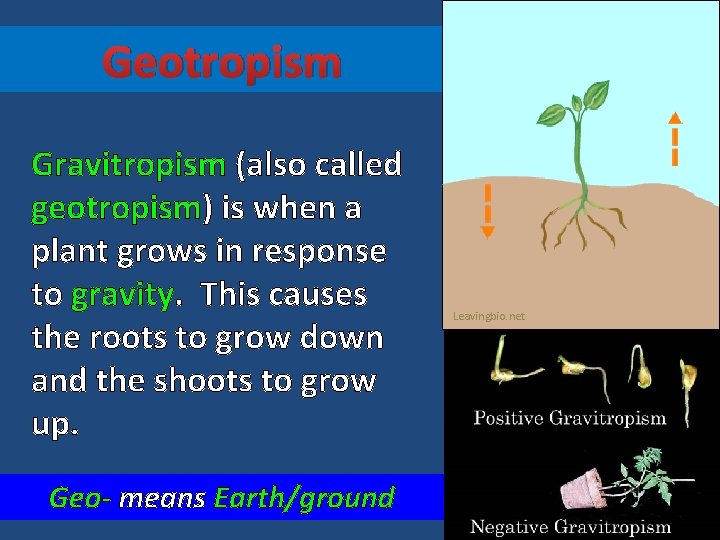
Geotropism Gravitropism (also called geotropism) is when a plant grows in response to gravity. This causes the roots to grow down and the shoots to grow up. Geo- means Earth/ground Leavingbio. net
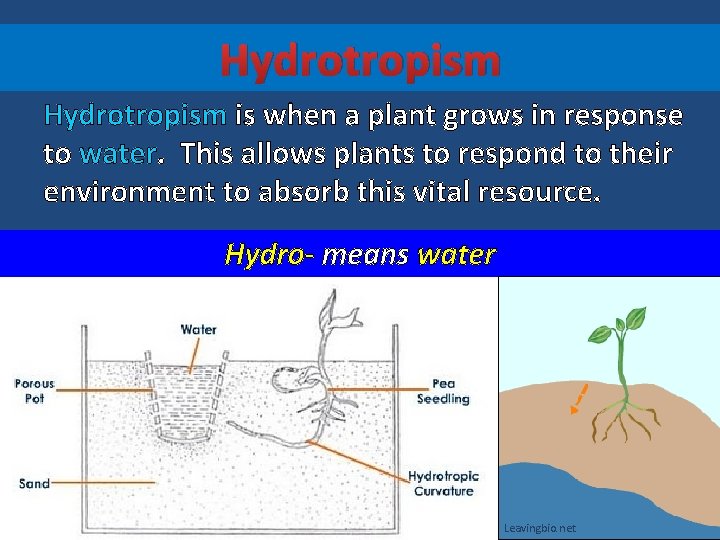
Hydrotropism is when a plant grows in response to water. This allows plants to respond to their environment to absorb this vital resource. Hydro- means water Leavingbio. net
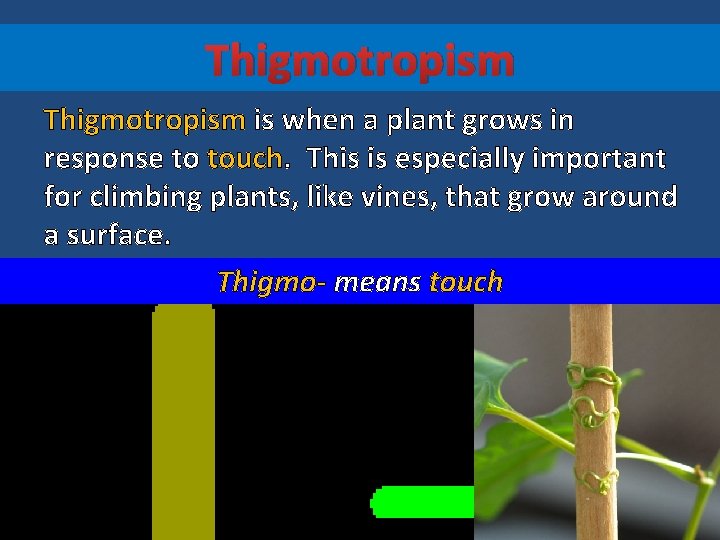
Thigmotropism is when a plant grows in response to touch. This is especially important for climbing plants, like vines, that grow around a surface. Thigmo- means touch
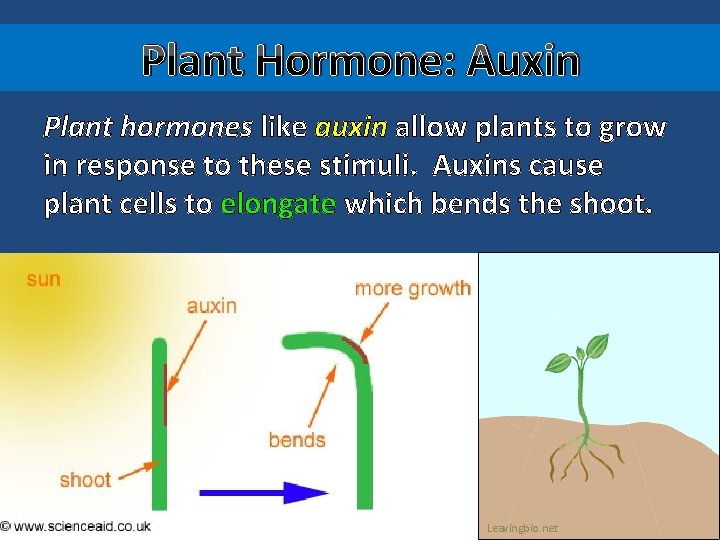
Plant Hormone: Auxin Plant hormones like auxin allow plants to grow in response to these stimuli. Auxins cause plant cells to elongate which bends the shoot. Leavingbio. net
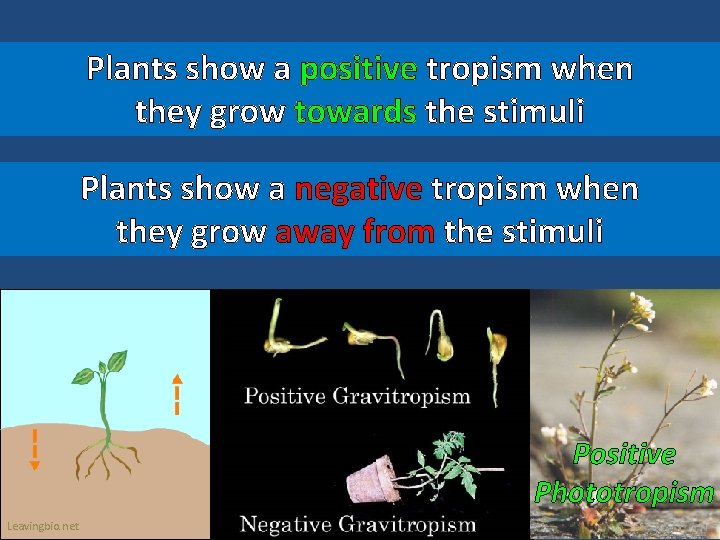
Plants show a positive tropism when they grow towards the stimuli Plants show a negative tropism when they grow away from the stimuli Positive Phototropism Leavingbio. net
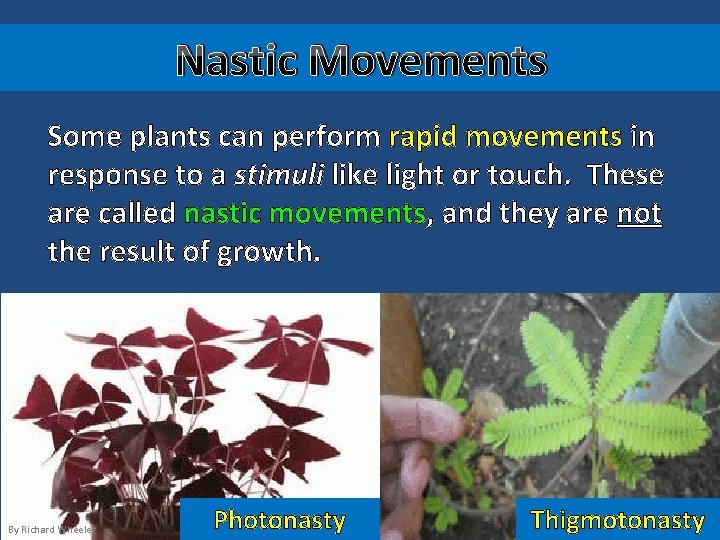
Nastic Movements Some plants can perform rapid movements in response to a stimuli like light or touch. These are called nastic movements, and they are not the result of growth. By Richard Wheeler Photonasty Thigmotonasty
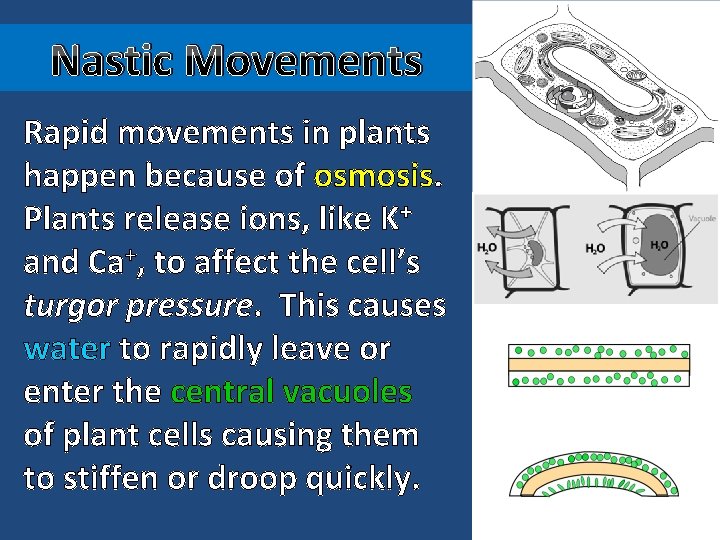
Nastic Movements Rapid movements in plants happen because of osmosis. Plants release ions, like K+ and Ca+, to affect the cell’s turgor pressure. This causes water to rapidly leave or enter the central vacuoles of plant cells causing them to stiffen or droop quickly.
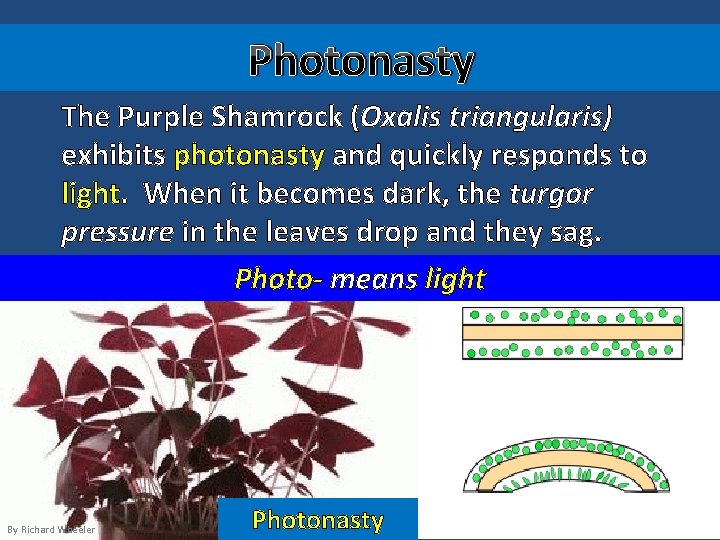
Photonasty The Purple Shamrock (Oxalis triangularis) exhibits photonasty and quickly responds to light. When it becomes dark, the turgor pressure in the leaves drop and they sag. Photo- means light By Richard Wheeler Photonasty
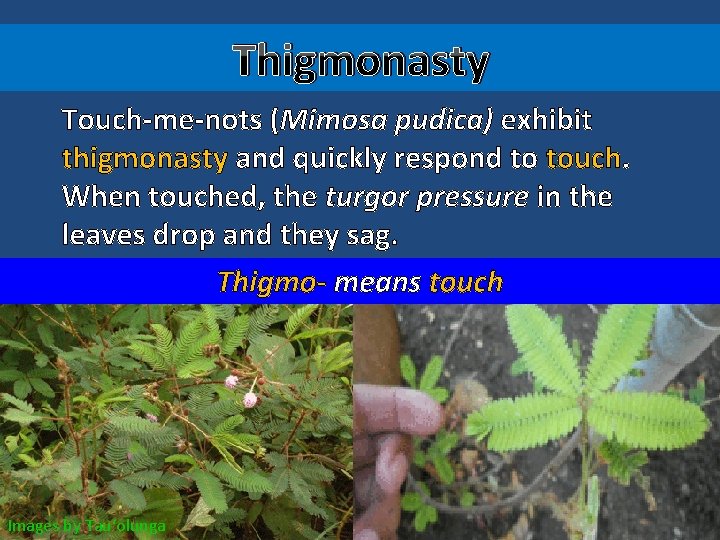
Thigmonasty Touch-me-nots (Mimosa pudica) exhibit thigmonasty and quickly respond to touch. When touched, the turgor pressure in the leaves drop and they sag. Thigmo- means touch Images by Tauʻolunga
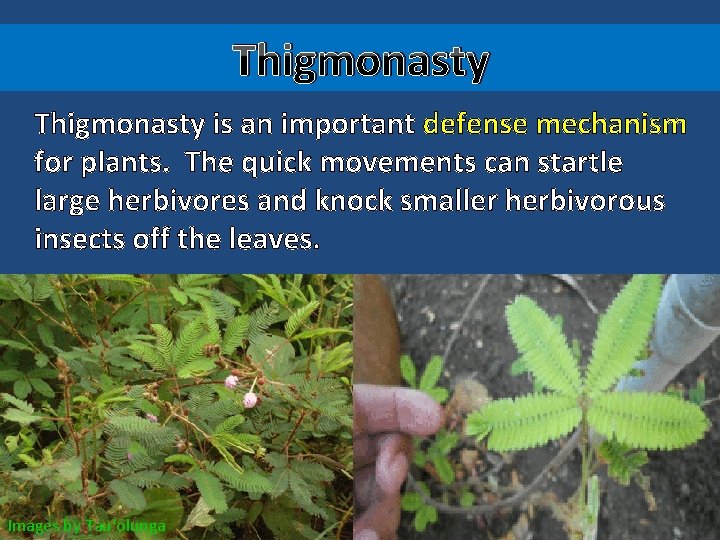
Thigmonasty is an important defense mechanism for plants. The quick movements can startle large herbivores and knock smaller herbivorous insects off the leaves. Images by Tauʻolunga
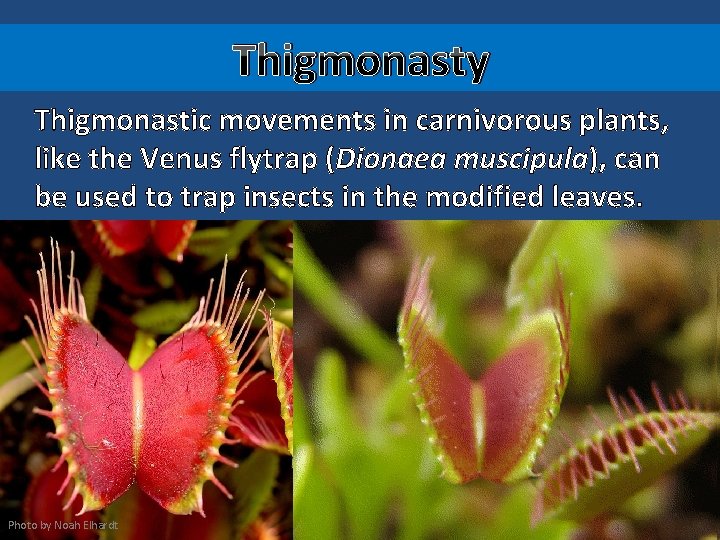
Thigmonasty Thigmonastic movements in carnivorous plants, like the Venus flytrap (Dionaea muscipula), can be used to trap insects in the modified leaves. Photo by Noah Elhardt Images by Mnolf
- Slides: 21