
Leaving No One Behind People of African descent
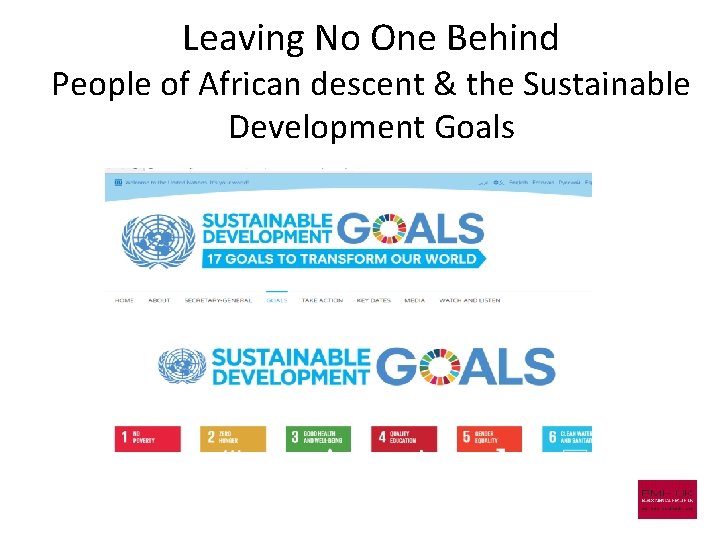
Leaving No One Behind People of African descent & the Sustainable Development Goals
People of African Descent and Right to Health Goal #3
Sustainable Development Goal 3
Matilda Mac. Attram Founder & Director Black Mental Health UK Email: matilda@blackmentalhealth. org. uk
Black Mental Health UK Human Rights and Social Justice
Black Mental Health UK Government to Grassroots Campaign group
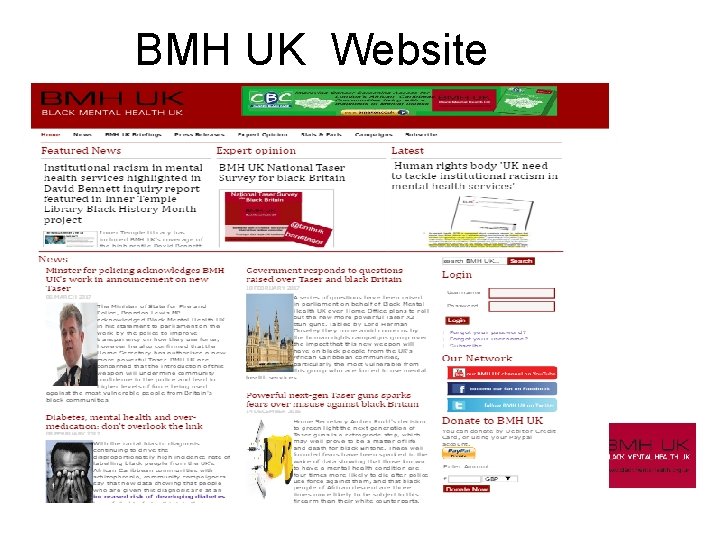
BMH UK Website
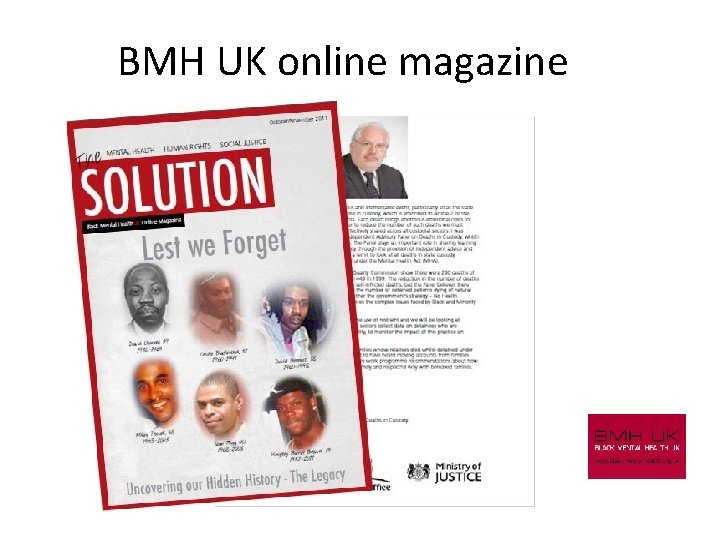
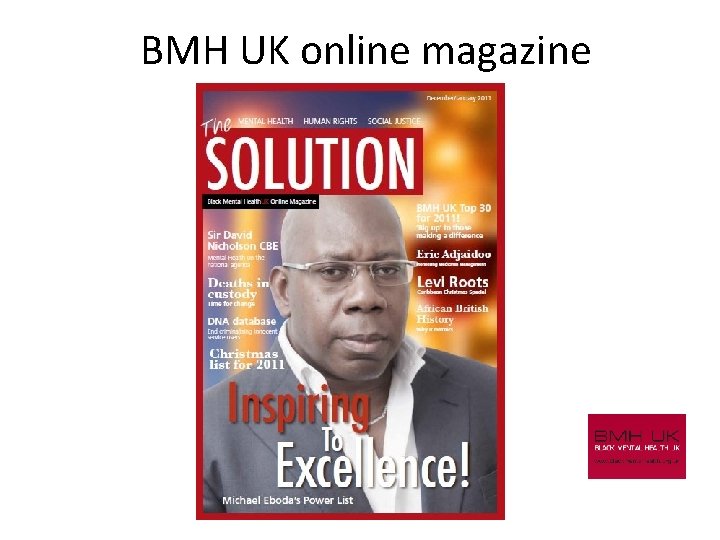
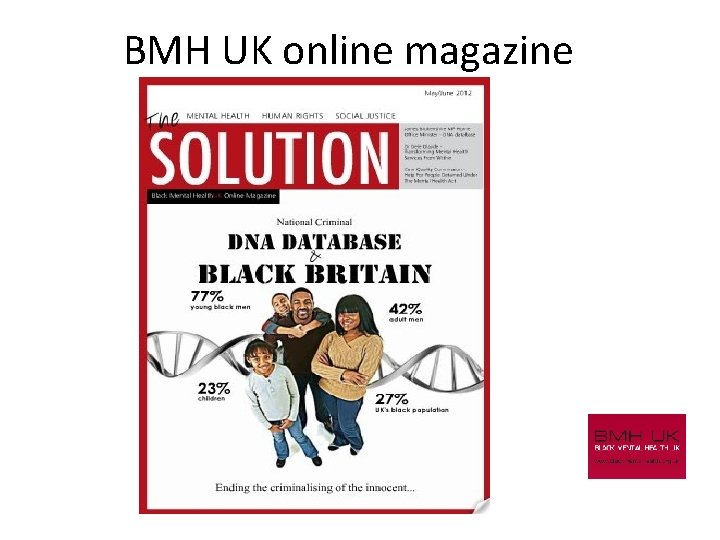
BMH UK Magazine
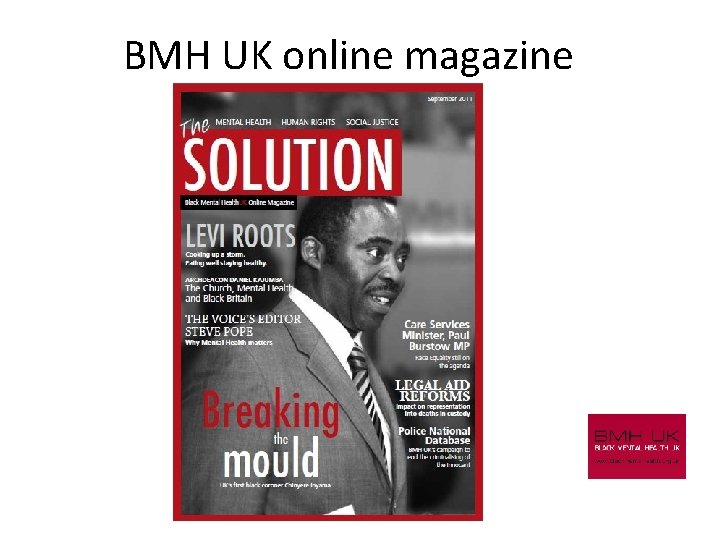
BMH UK online magazine
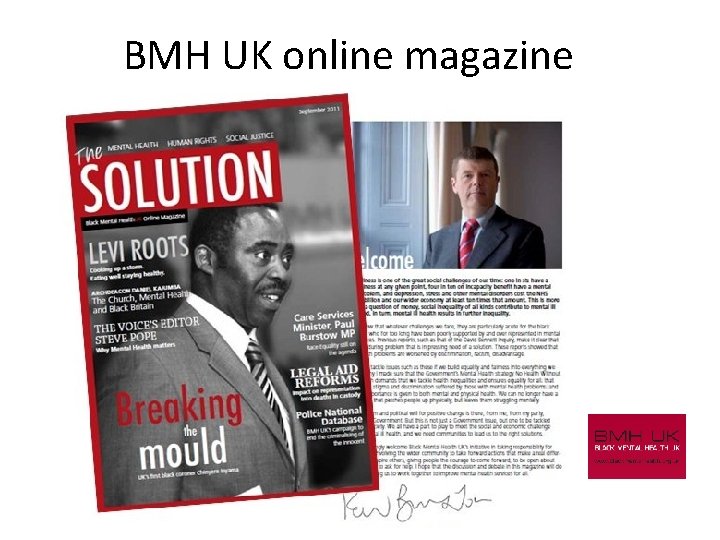
BMH UK online magazine
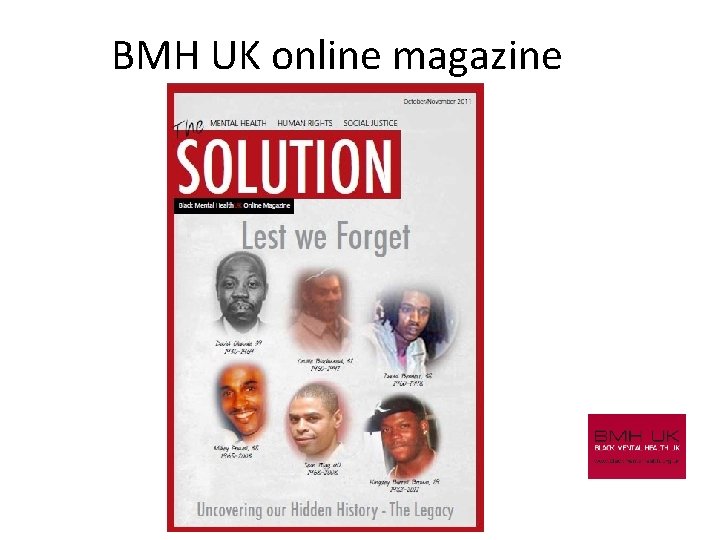
BMH UK online magazine
BMH UK online magazine
BMH UK online magazine
BMH UK online magazine
BMH UK online magazine
BMH UK online magazine
BMH UK online magazine
BMH UK online magazine
BMH UK online magazine
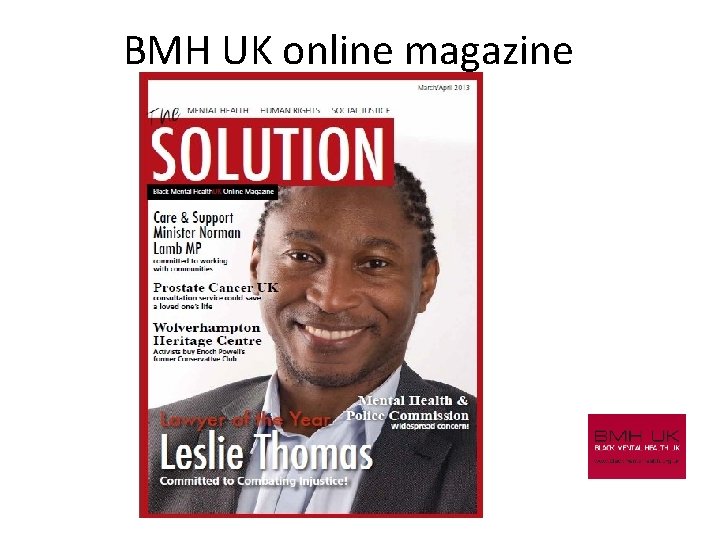
BMH UK online magazine
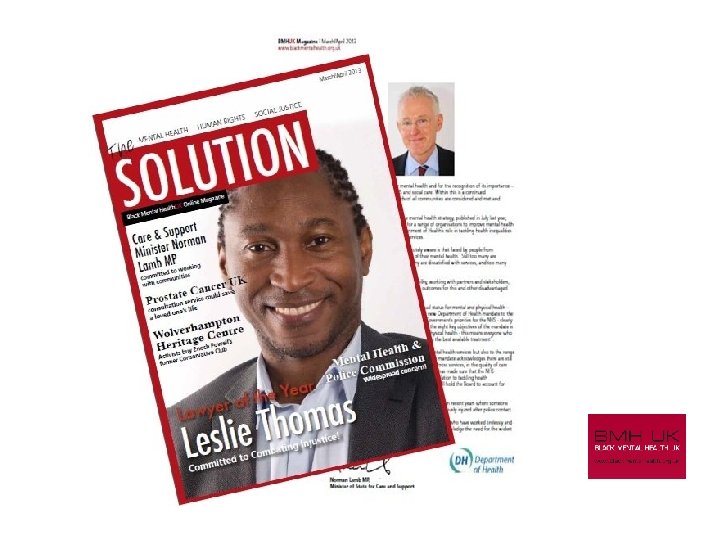
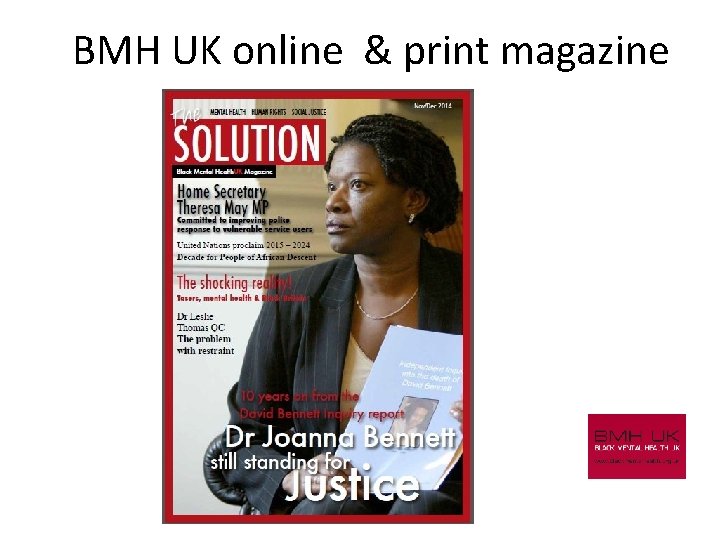
BMH UK online & print magazine
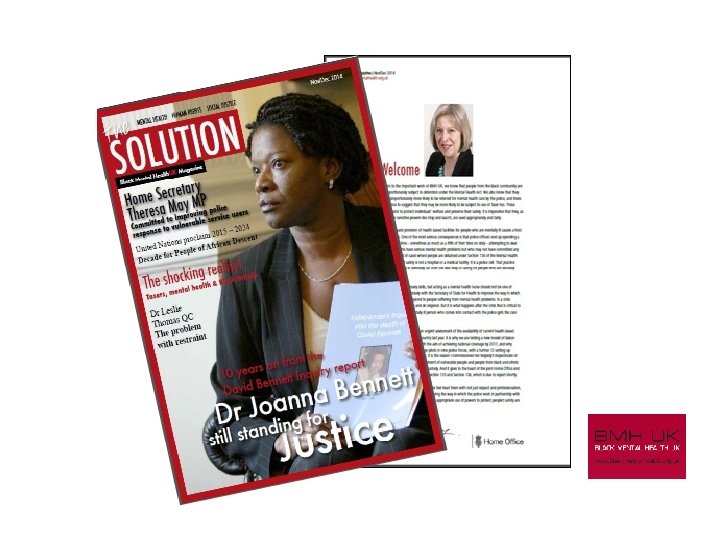
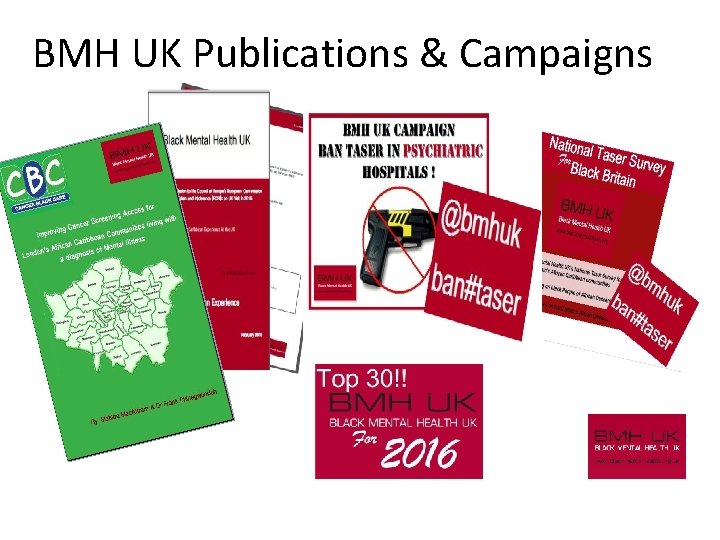
BMH UK Publications & Campaigns
Leaving No One Behind People of African descent & the Sustainable Development Goals
Published Sept 2016
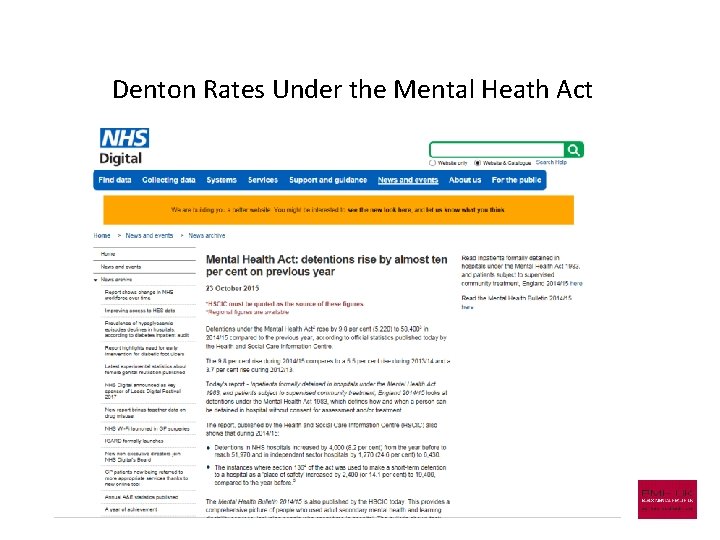
Denton Rates Under the Mental Heath Act
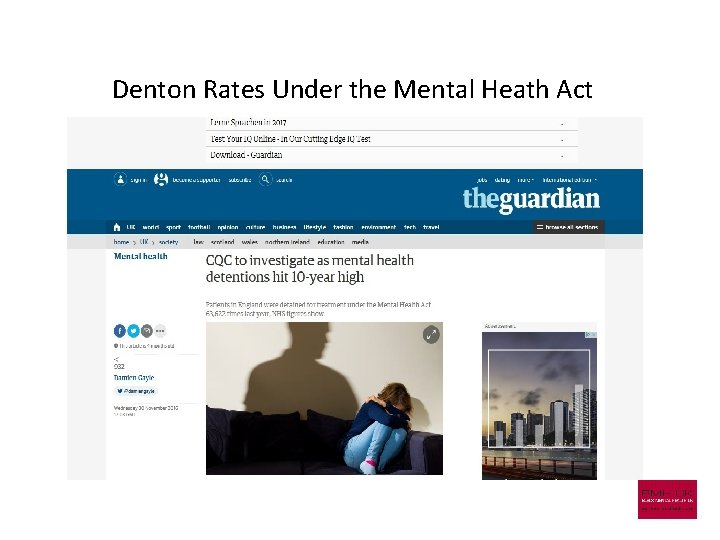
Denton Rates Under the Mental Heath Act
Background and context The African Caribbean Experience
Background and context The African Caribbean Experience
Police use of force Policing, Mental Health & Black Briton Recent developments
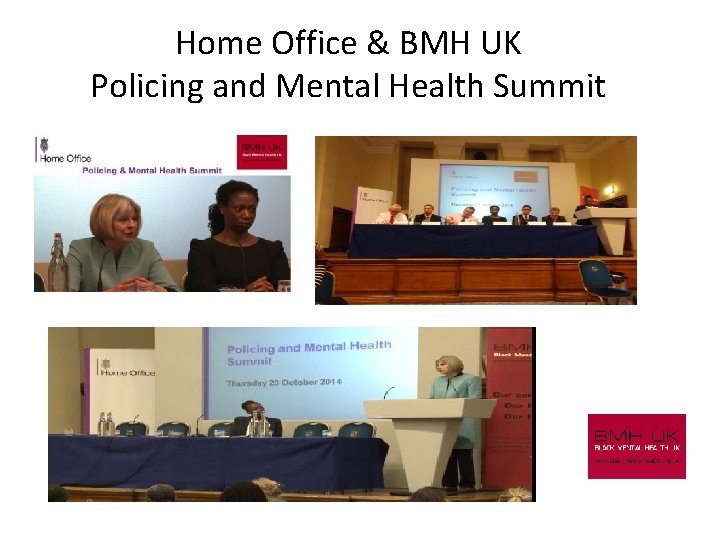
Home Office & BMH UK Policing and Mental Health Summit
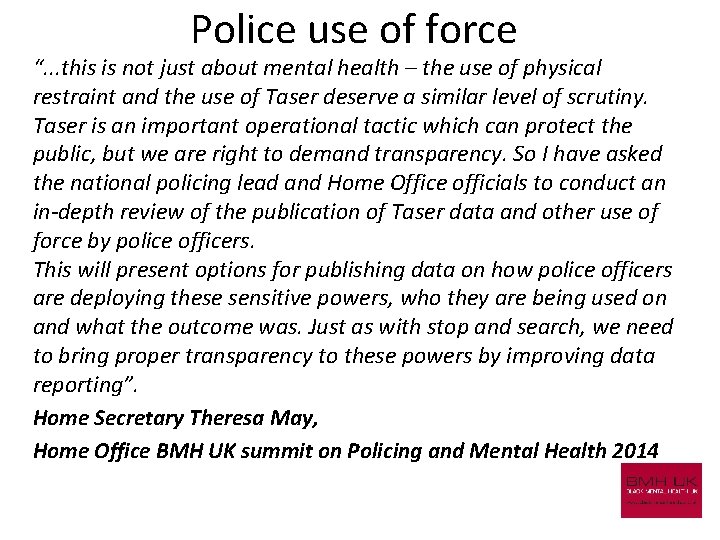
Police use of force “. . . this is not just about mental health – the use of physical restraint and the use of Taser deserve a similar level of scrutiny. Taser is an important operational tactic which can protect the public, but we are right to demand transparency. So I have asked the national policing lead and Home Office officials to conduct an in-depth review of the publication of Taser data and other use of force by police officers. This will present options for publishing data on how police officers are deploying these sensitive powers, who they are being used on and what the outcome was. Just as with stop and search, we need to bring proper transparency to these powers by improving data reporting”. Home Secretary Theresa May, Home Office BMH UK summit on Policing and Mental Health 2014
HMIC welfare of vulnerable people in custody 2015
Police use of force ‘People taken into police custody are vulnerable in some way, and that detention in police custody can be particularly detrimental to their welfare. This vulnerability may take many forms, including: • mental health problems; • learning difficulties; • physical illness or disability; • alcohol and/or substance misuse; • age (all children are vulnerable, and older people may be more likely to be vulnerable through illness, for example); and • race (people from black, Asian and minority ethnic (BAME) communities can be vulnerable because of their minority status) HMIC Report 2015
Police use of force People from African-Caribbean backgrounds are three times more likely to be arrested per 1, 000 population than a white person. Those from a mixed heritage were twice as likely to be arrested per 1, 000 population than a white person There was no difference in arrest rates between those from an Asian and white background HMIC Report 2015
Police use of force ‘Our data collection from the inspected forces indicated that a disproportionate number of people from African-Caribbean groups (compared to numbers in the general population) were both in custody, and subject to strip-searches. ‘ HMIC Report 2015
Police use of force ‘The Nat. Cen report and our focus group work indicated that people from African-Caribbean backgrounds felt they were discriminated against by the police. They cited examples of rudeness, disrespect or an over-use of force, which they attributed to racism. ’ HMIC Report 2015
Police use of force ‘While three percent of the population was from African-Caribbean groups in the forces we inspected, people from these backgrounds represented nine percent of the custody throughput, and 17 percent of those stripsearched. ’ HMIC Report 2015
Black Mental Health UK Human Rights and Social Justice

(Go back to fetch it) Symbol of the wisdom of learning from the past to build the future Ghanaian saying
The African Caribbean Experience
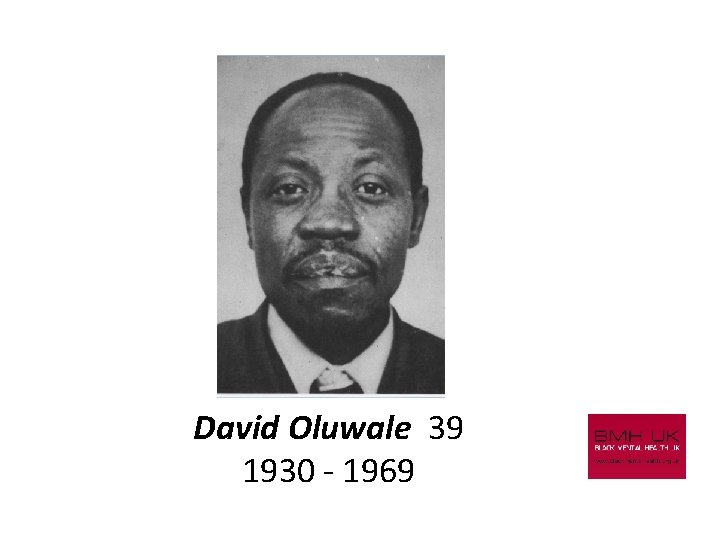
David Oluwale 39 1930 - 1969
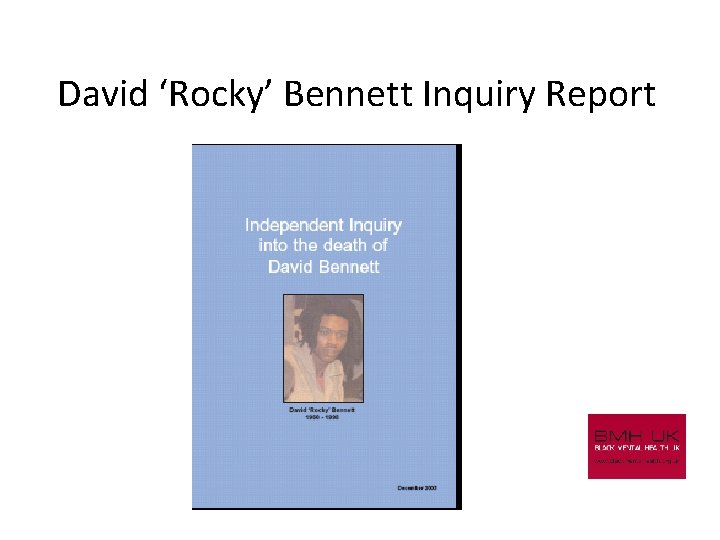
David ‘Rocky’ Bennett Inquiry Report
David Bennett Inquiry report Recommendations • Training in use of control and restraint – violent incidents 3 minute rule • Monitor patterns of diagnosis for African Caribbeans Further research into the diagnosis of schizophrenia of African Caribbeans • Staff training in resuscitation techniques • Staff member appointed to tackle racism in hospitals – National Race Equality Lead • Hospital develop clear procedures for advising relatives of the death of a patient • Ministerial acknowledgement of Institutional Racism
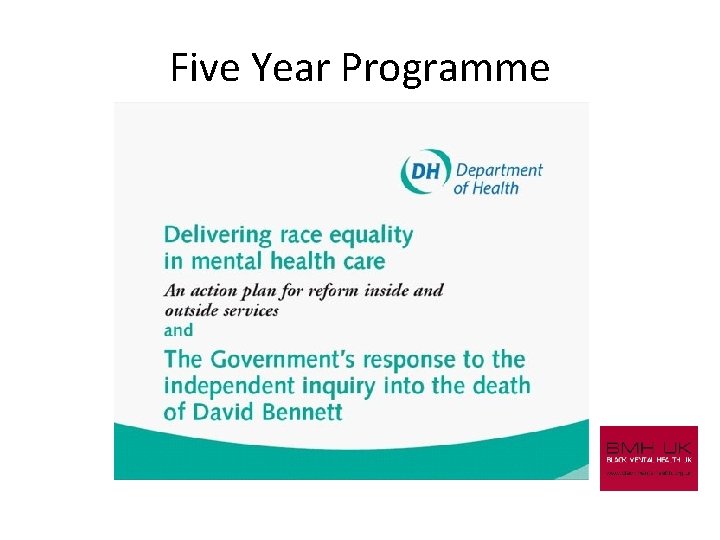
Five Year Programme
Count Me In Census
Count Me In 2005
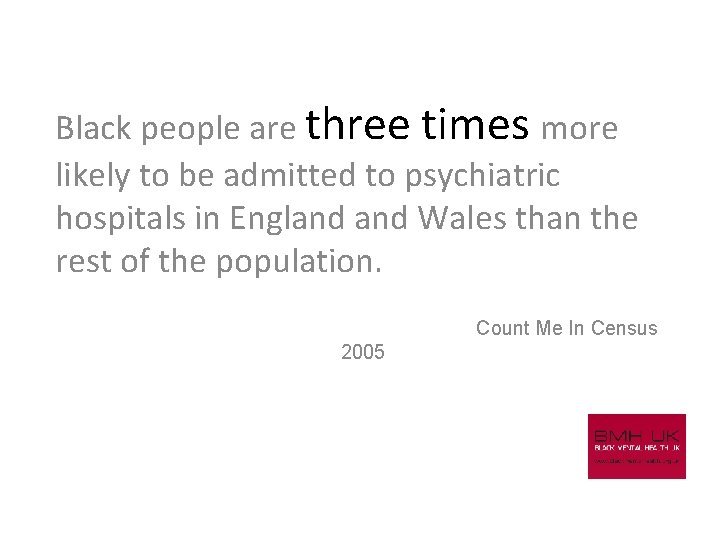
Black people are three times more likely to be admitted to psychiatric hospitals in England Wales than the rest of the population. Count Me In Census 2005
Count Me In 2006 -10
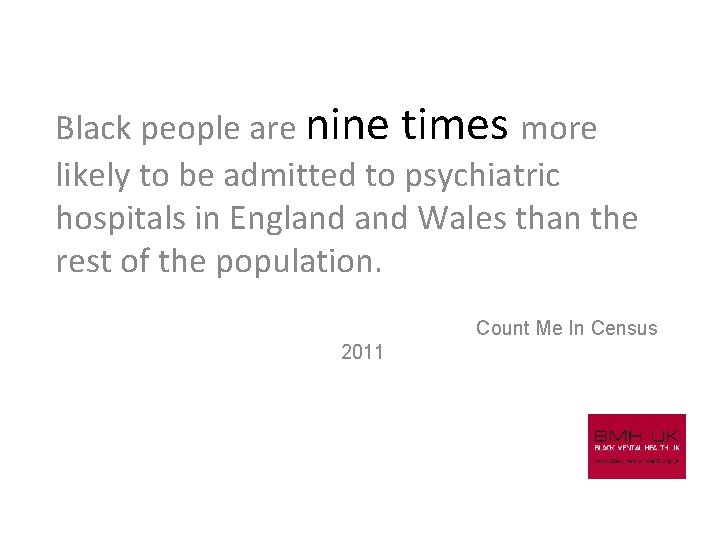
Black people are nine times more likely to be admitted to psychiatric hospitals in England Wales than the rest of the population. Count Me In Census 2011
African Caribbean Experience • Rates of sectioning for African Caribbean's has increased since DRE began • Rates of sectioning has fallen for host population in the last 12 months
Care Quality Commission Report
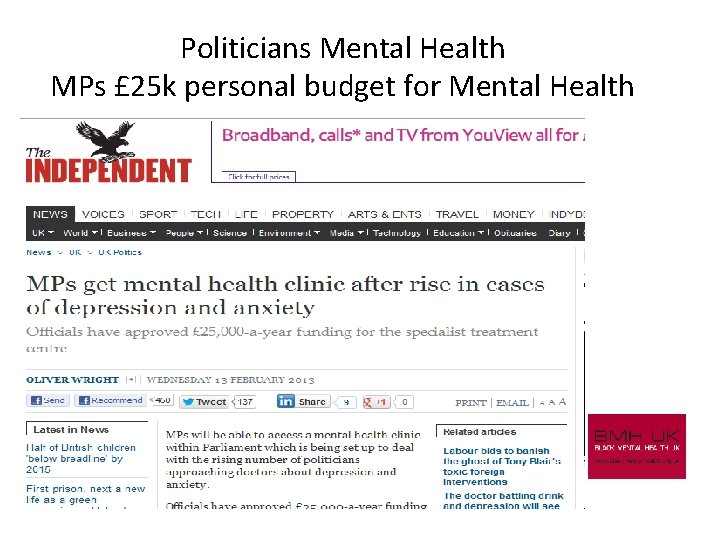
Politicians Mental Health MPs £ 25 k personal budget for Mental Health
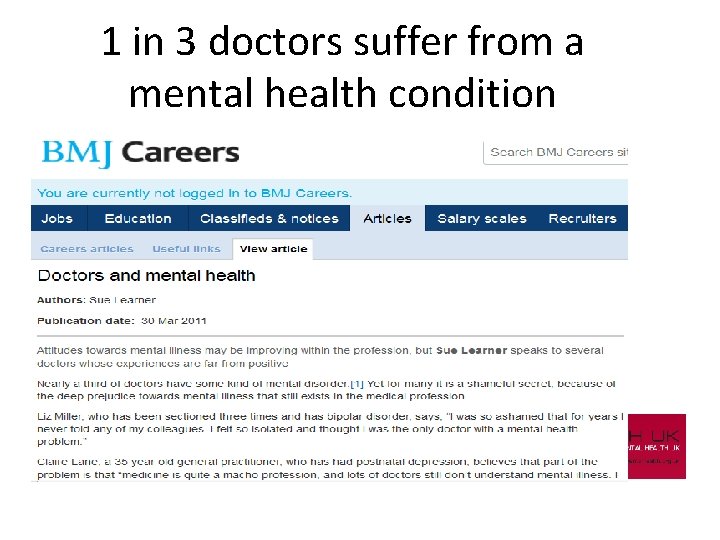
1 in 3 doctors suffer from a mental health condition
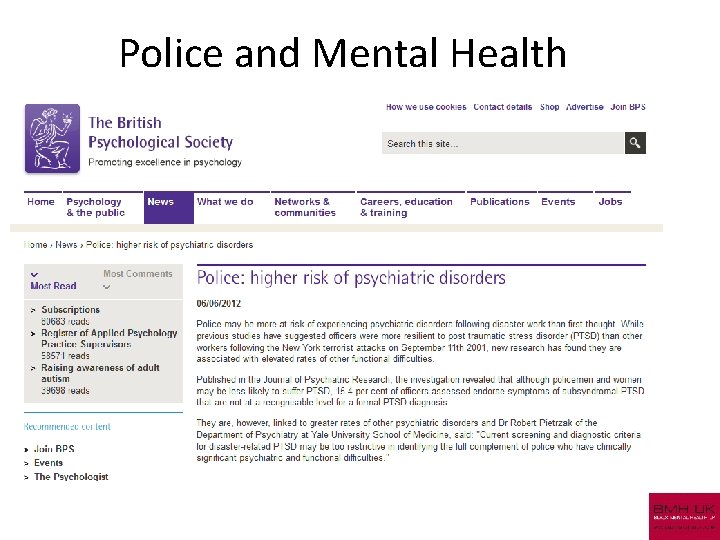
Police and Mental Health
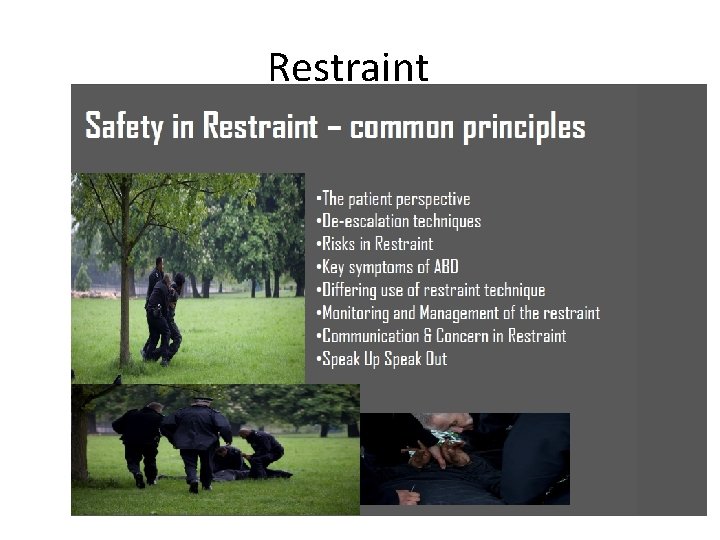
Restraint
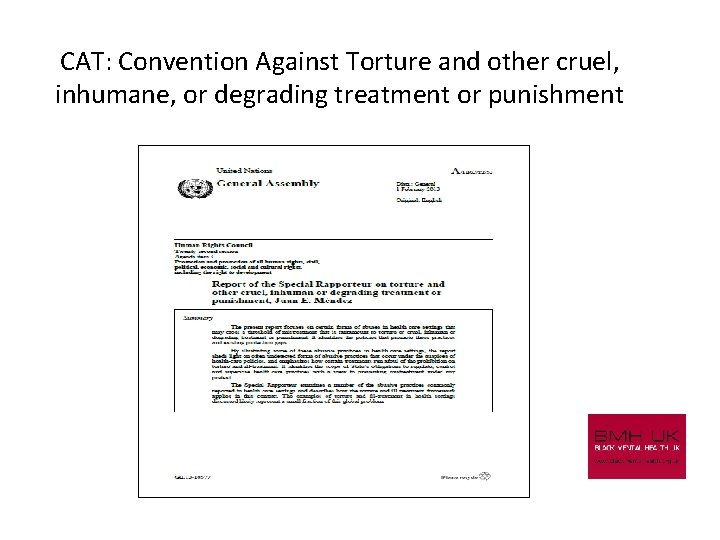
CAT: Convention Against Torture and other cruel, inhumane, or degrading treatment or punishment
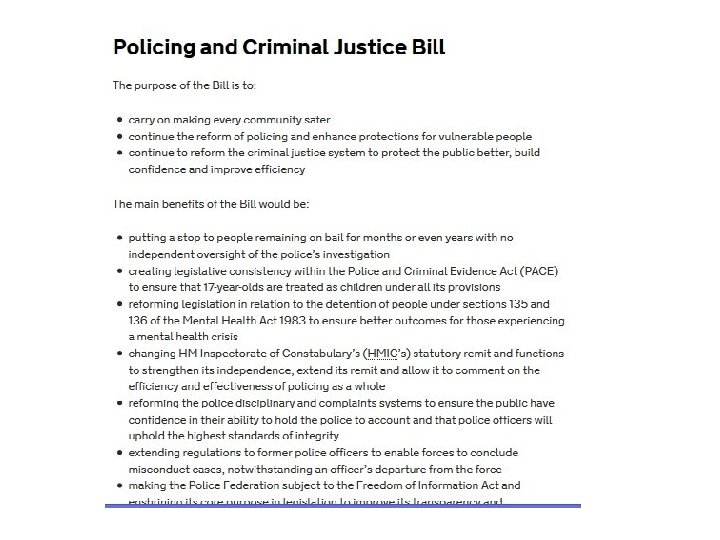
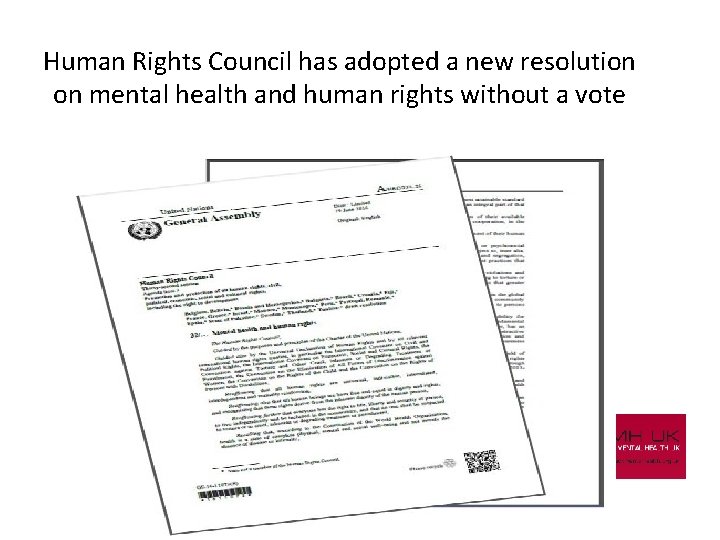
Human Rights Council has adopted a new resolution on mental health and human rights without a vote
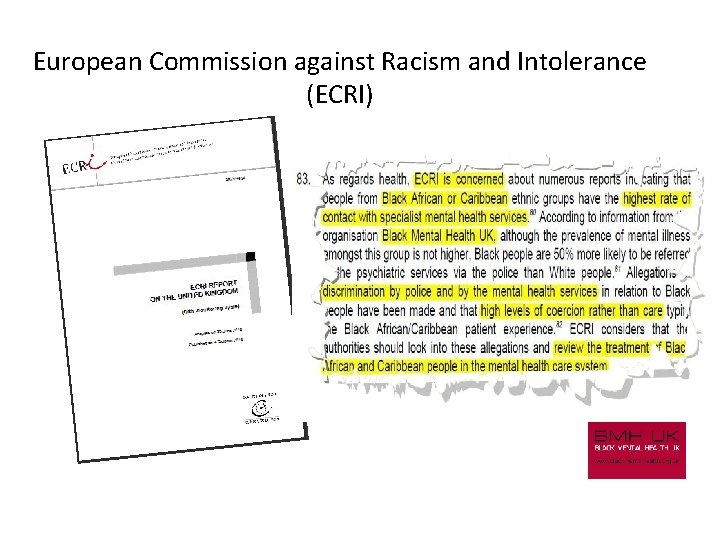
European Commission against Racism and Intolerance (ECRI)
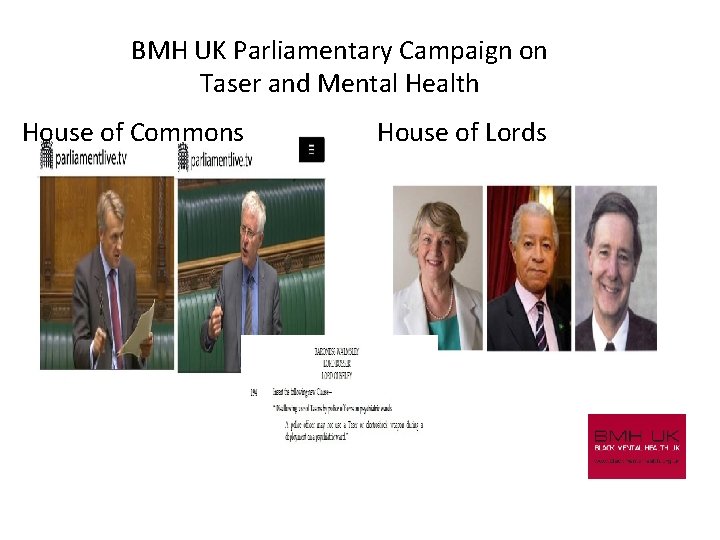
BMH UK Parliamentary Campaign on Taser and Mental Health House of Commons House of Lords
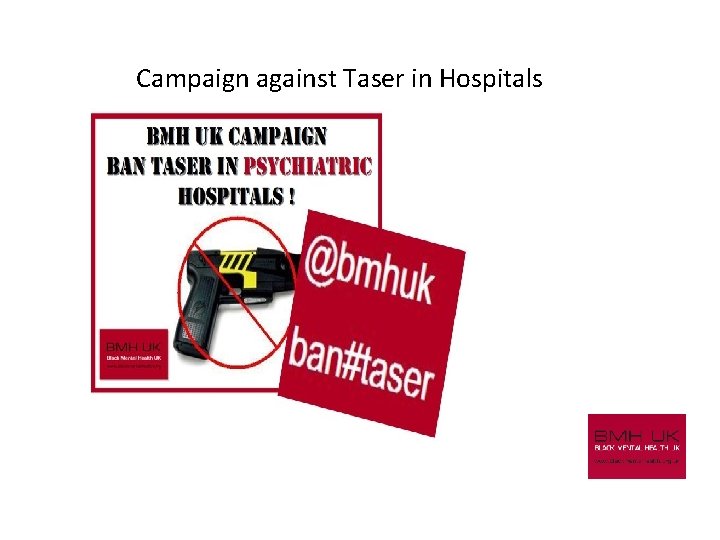
Campaign against Taser in Hospitals
BMH UK National Taser Survey

The End
- Slides: 67