
Leaving Certificate Religious Education Section A Search for
- Slides: 15
Leaving Certificate Religious Education Section A: Search for Meaning and Values
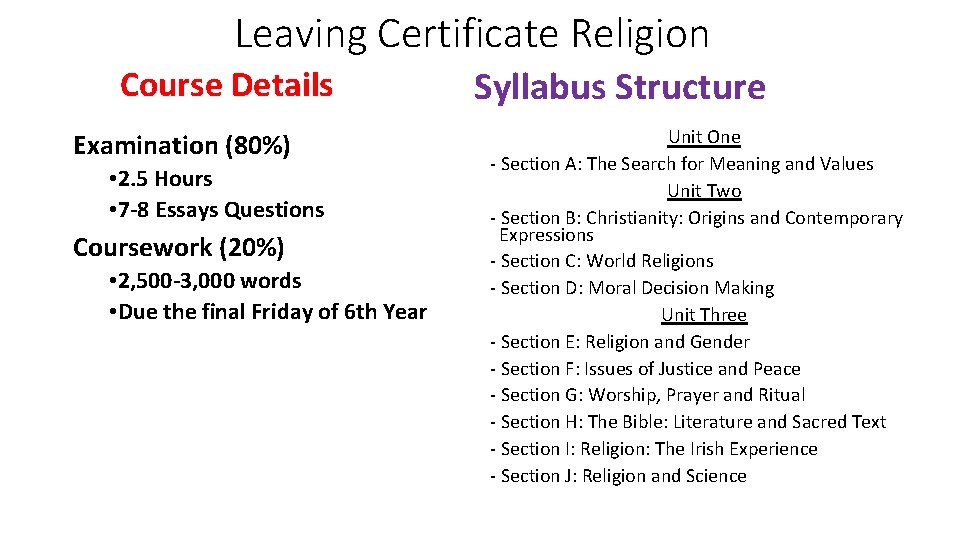
Leaving Certificate Religion Course Details Examination (80%) • 2. 5 Hours • 7 -8 Essays Questions Coursework (20%) • 2, 500 -3, 000 words • Due the final Friday of 6 th Year Syllabus Structure Unit One - Section A: The Search for Meaning and Values Unit Two - Section B: Christianity: Origins and Contemporary Expressions - Section C: World Religions - Section D: Moral Decision Making Unit Three - Section E: Religion and Gender - Section F: Issues of Justice and Peace - Section G: Worship, Prayer and Ritual - Section H: The Bible: Literature and Sacred Text - Section I: Religion: The Irish Experience - Section J: Religion and Science
Aims • To present religions as systematic responses to perennial questions common to all peoples about the meaning of life in the world. • To develop an understanding of the nature of this search for meaning through an examination of questions arising in personal experience. • To examine philosophical and religious answers to the questions of the meaning of life and its ultimate grounding. • To examine the philosophical and religious answers to the questions of the existence of God, and the nature of divine revelation. • To examine the role of religion in the secular world.
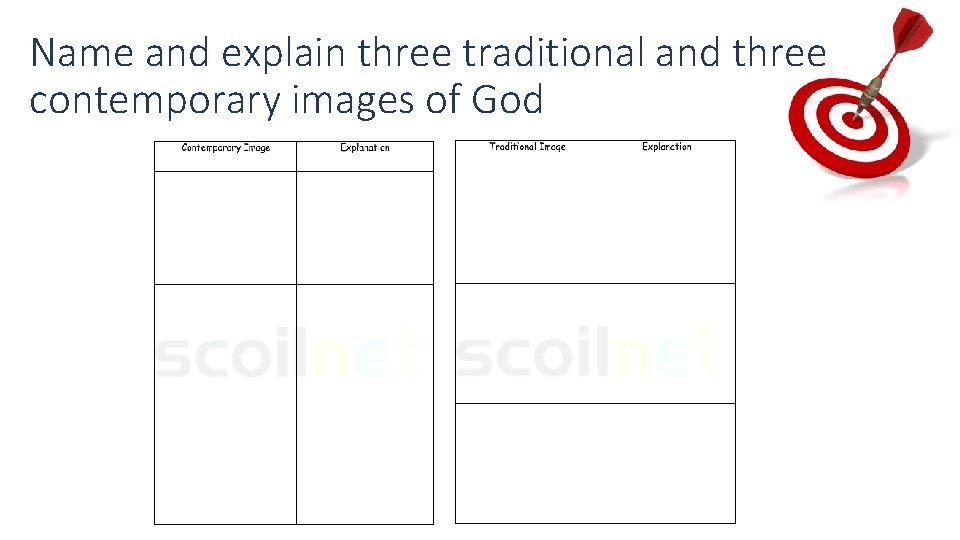
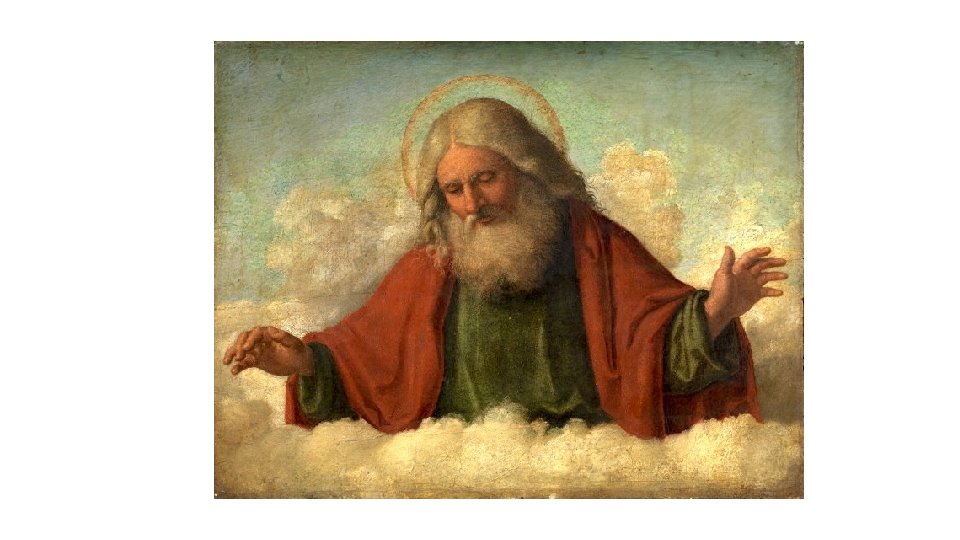
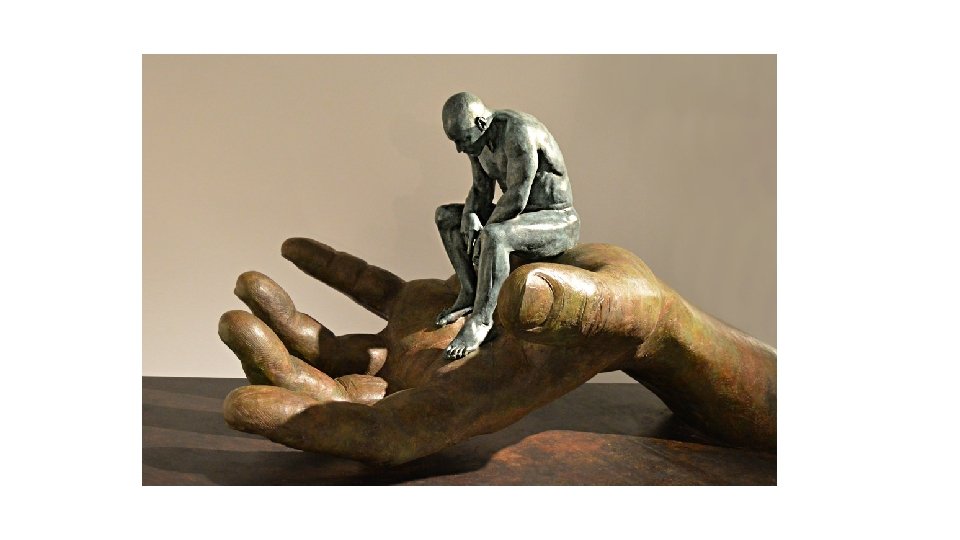
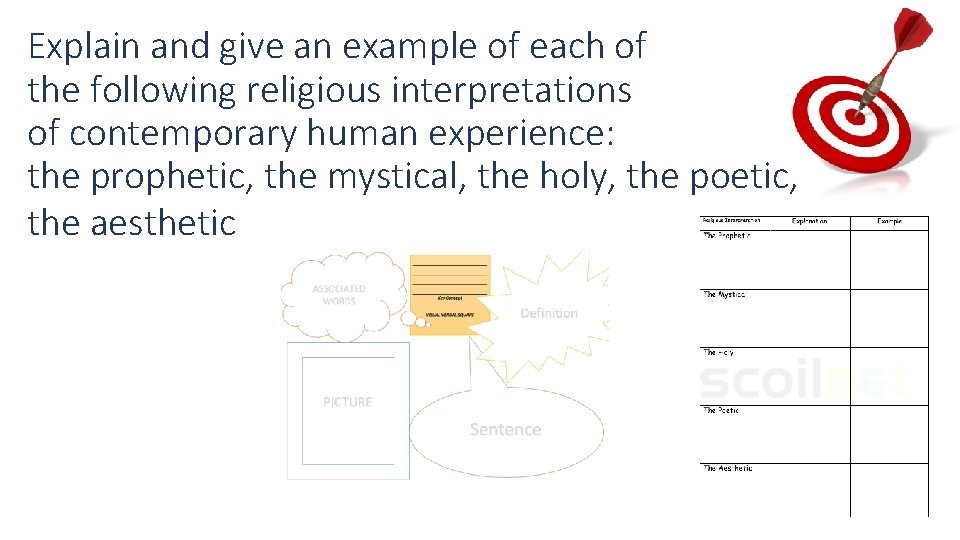
Concepts of God: Naming God, Past and Present As a result of studying this section students should be able to • name and explain three traditional and three contemporary images of God • explain and give an example of each of the following religious interpretations of contemporary human experience: the prophetic, the mystical, the holy, the poetic, the aesthetic • outline the traditional proofs of God in the writings of Anselm, Aquinas, and two others.
Name and explain three traditional and three contemporary images of God
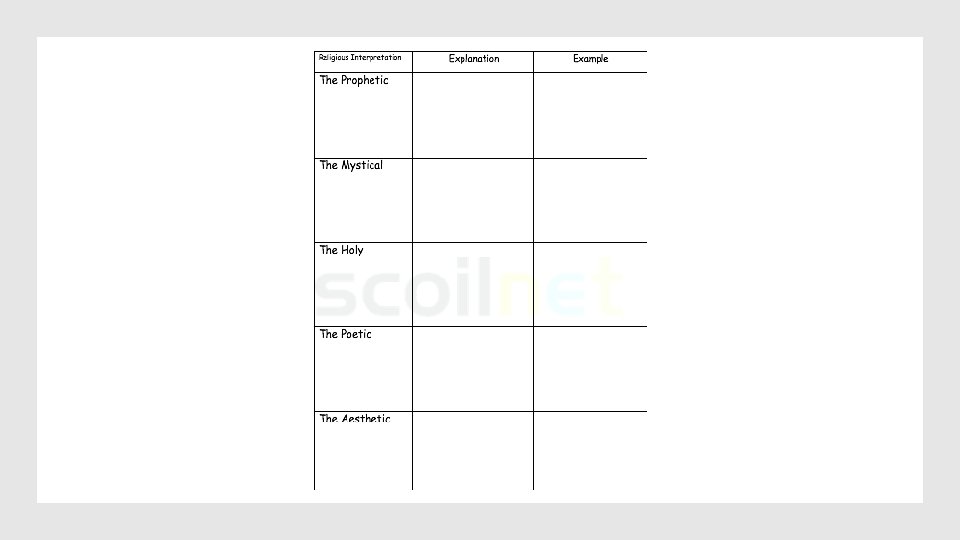
Explain and give an example of each of the following religious interpretations of contemporary human experience: the prophetic, the mystical, the holy, the poetic, the aesthetic
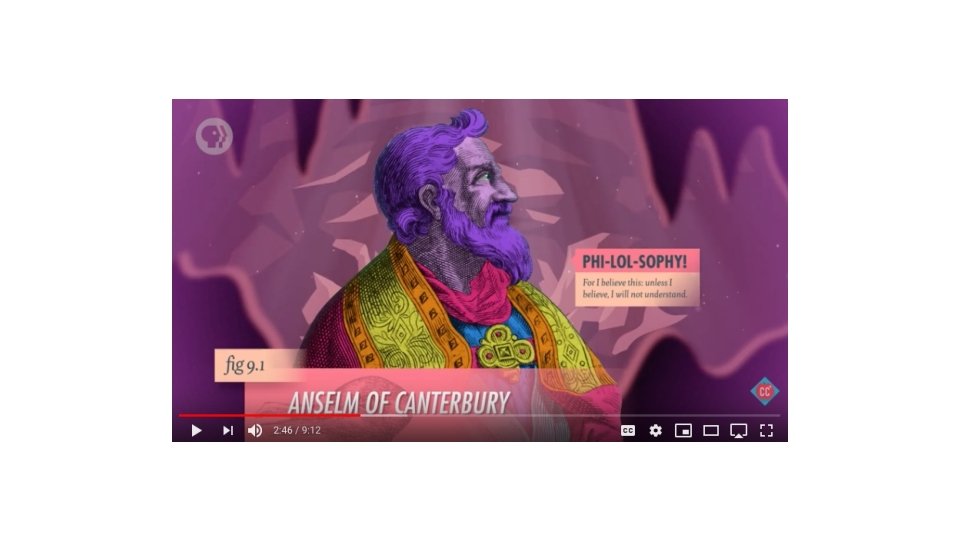
Outline the traditional proofs of God in the writings of Anselm, Aquinas, and two others.
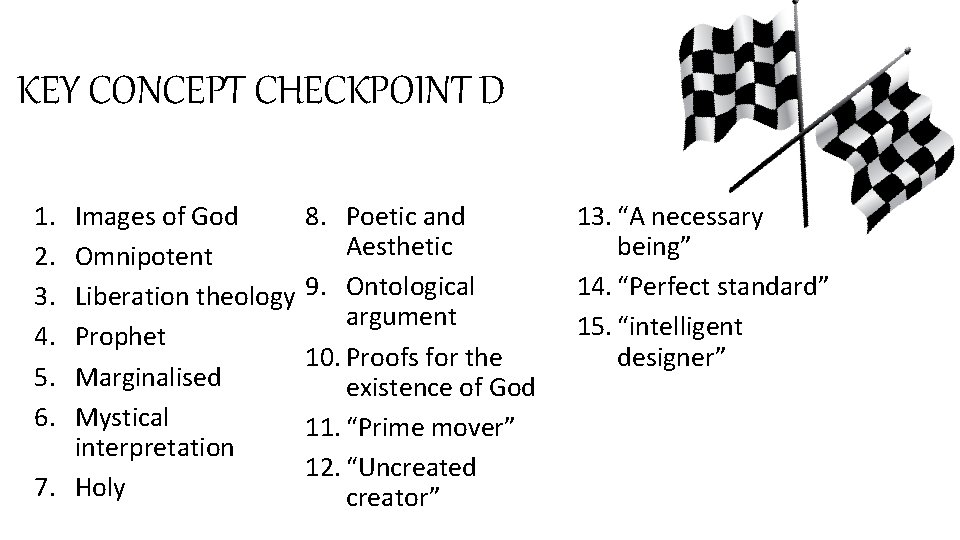
KEY CONCEPT CHECKPOINT D 8. Poetic and Images of God Aesthetic Omnipotent Liberation theology 9. Ontological argument Prophet 10. Proofs for the Marginalised existence of God Mystical 11. “Prime mover” interpretation 12. “Uncreated 7. Holy creator” 1. 2. 3. 4. 5. 6. 13. “A necessary being” 14. “Perfect standard” 15. “intelligent designer”