
Leaving Certificate Agricultural Science Catch Crops Adapted from
- Slides: 12
Leaving Certificate Agricultural Science Catch Crops Adapted from the PDST Resource DVD Presentation, created by IASTA Members.
CATCH CROPS “Any crop that is grown between 2 main crops is called a catch crop. ” �Cabbages, Kale, Rape, Grasses, Cereals and Stubble Turnips have used from time to time as catch crops. �In Ireland, rape, kale and stubble turnips are the ones most commonly used.
Advantages of Catch Crops • An additional crop is grown on land that would be left idle. • The grazing season is extended as a fresh green crop is produced outside the normal growing season. • Better control of weeds. • Better use of nutrients in the soil.
Advantages of Catch Crops • • Adds organic matter to the soil. Protects soil structure against heavy rain. Conserves leachable minerals. Sometimes can add Minerals to the soil e. g. Legume add N. • Conserves soil moisture. • Examples of catch crops are: Italian Rye Grass, Kale, Fodder rape, Vetches.
Rape & Kale • Are members of the Brassica’s • Best sown in July/August in light free draining soil. • Fine seed bed is essential. • Seed sown by precision drill/broadcast. • Roll after sowing to maintain moisture. • Application of fertiliser needed for best results (be careful not to lodge the crop)
Rape & Kale • Capable of quick growth and good yields of herbage. • Best used by December. • Sugar Beet cannot be grown in the same field for 2 years afterwards. • Leave at least 3 years between Brassica crops to avoid problems of “Club Root”.
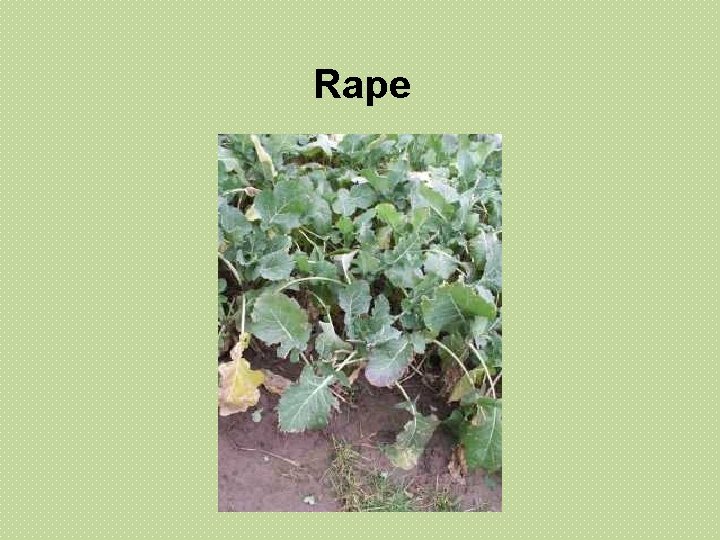
Rape
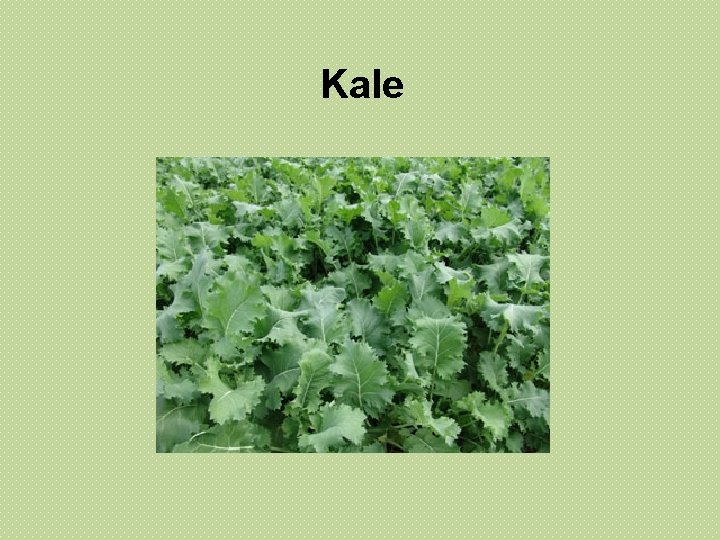
Kale
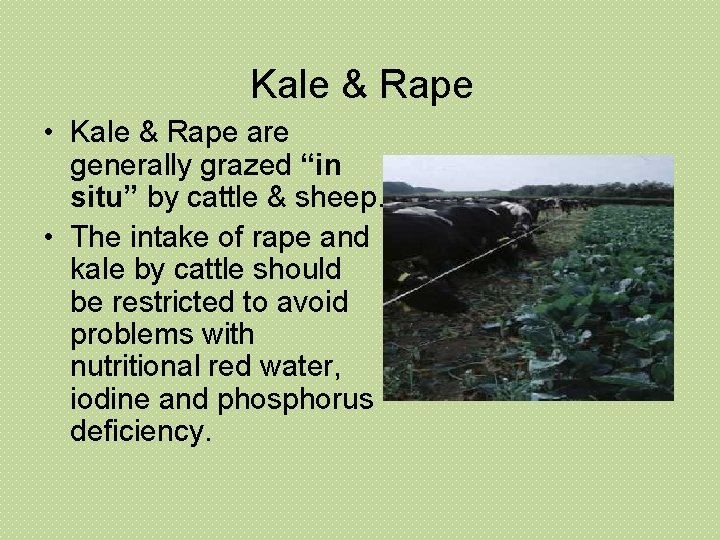
Kale & Rape • Kale & Rape are generally grazed “in situ” by cattle & sheep. • The intake of rape and kale by cattle should be restricted to avoid problems with nutritional red water, iodine and phosphorus deficiency.
Stubble Turnips • Also known as fodder turnips. • Sown Late July to mid August. • Usually sown into standing crop that is due to be harvested early. • Need plenty of fertiliser. • Fast growing and provide quick supply of fresh fodder. • Generally grazed “in situ” by sheep.
Italian Rye Grass • Sown July/August and needs to be grazed before the autumn sets in. • Sowing Italian Ryegrass in September produces a higher yield in spring if they are not grazed in the autumn. • Has the ability to grow rapidly. • Recovers quickly to give several grazings. • Has an added advantage over other catch crops in that is can be carried on through the following season to give a one year ley.
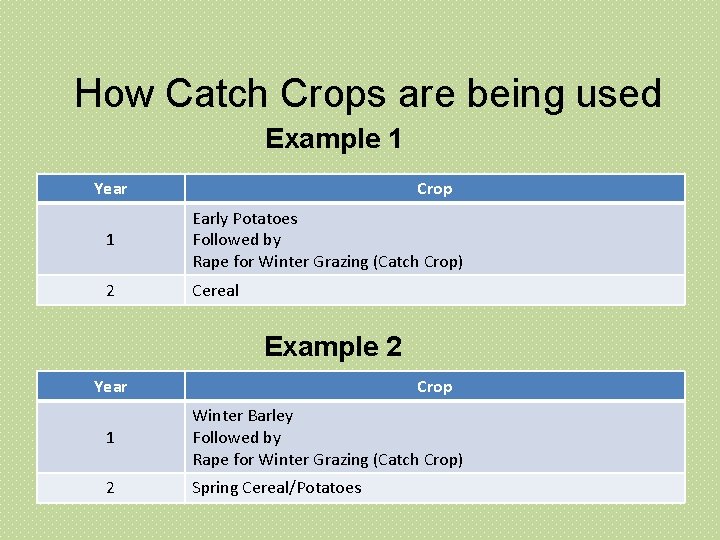
How Catch Crops are being used Example 1 Year Crop 1 Early Potatoes Followed by Rape for Winter Grazing (Catch Crop) 2 Cereal Example 2 Year Crop 1 Winter Barley Followed by Rape for Winter Grazing (Catch Crop) 2 Spring Cereal/Potatoes