
Leaves Photosynthesis Photosynthesis Regulate water loss Gas exchange
- Slides: 17
Leaves & Photosynthesis
üPhotosynthesis üRegulate water loss üGas exchange
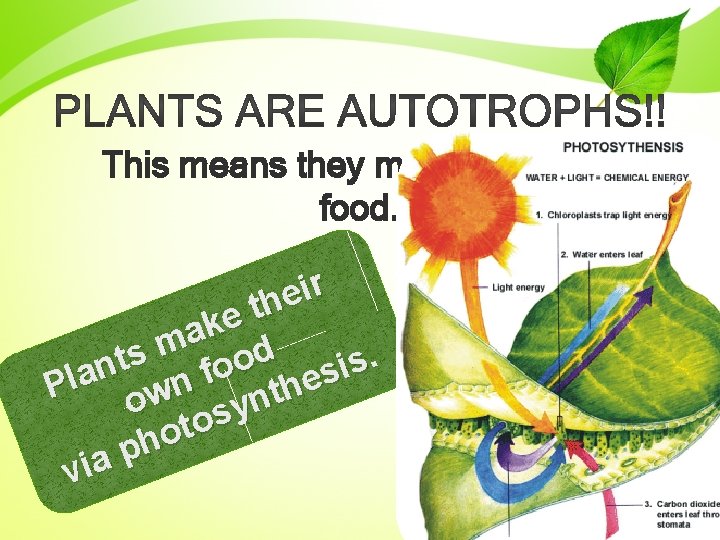
This means they make their own food. r i e h t e k a m d s. t o s i n o f s a l e n P ow synth o t o h p via
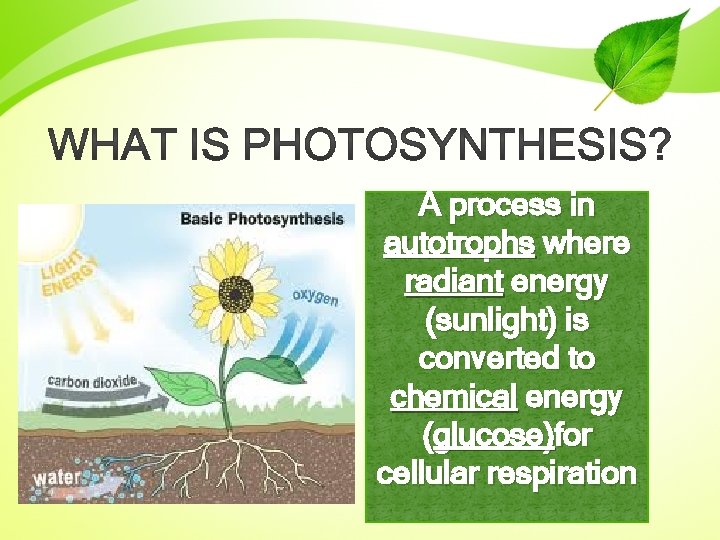
A process in autotrophs where radiant energy (sunlight) is converted to chemical energy (glucose)for cellular respiration
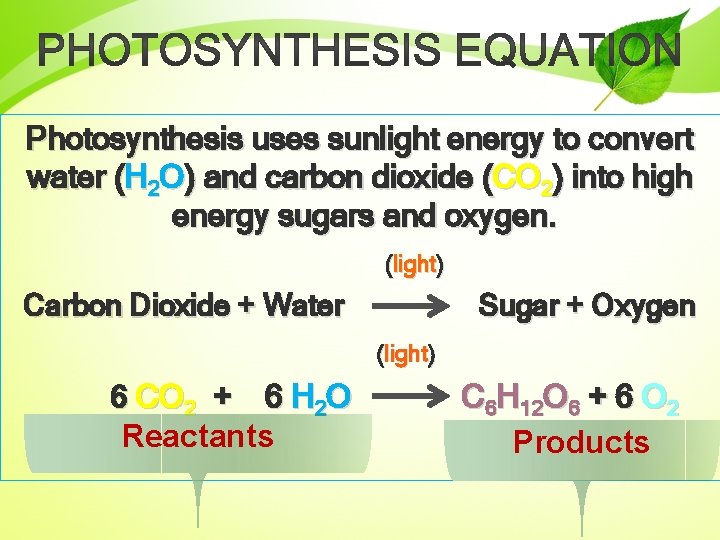
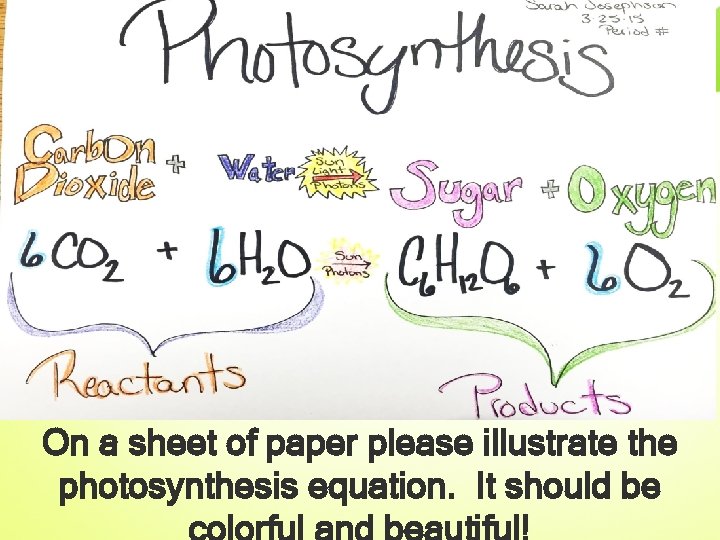
Photosynthesis uses sunlight energy to convert water (H 2 O) and carbon dioxide (CO 2) into high energy sugars and oxygen. (light) Carbon Dioxide + Water Sugar + Oxygen (light) 6 CO 2 + 6 H 2 O Reactants C 6 H 12 O 6 + 6 O 2 Products
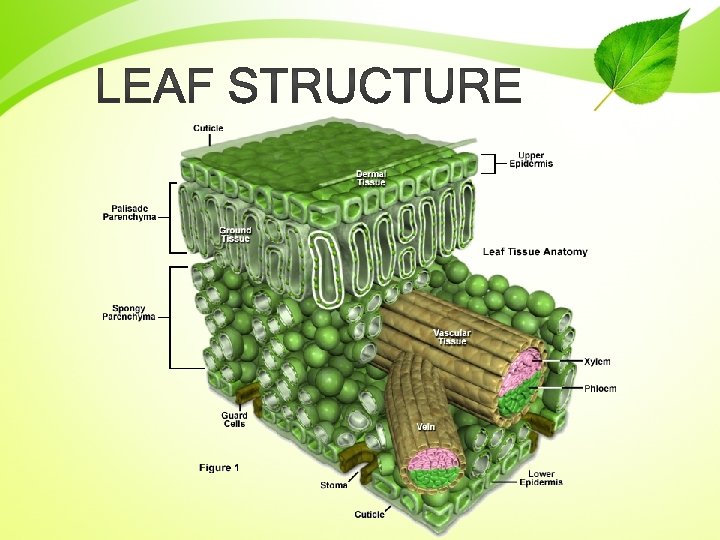
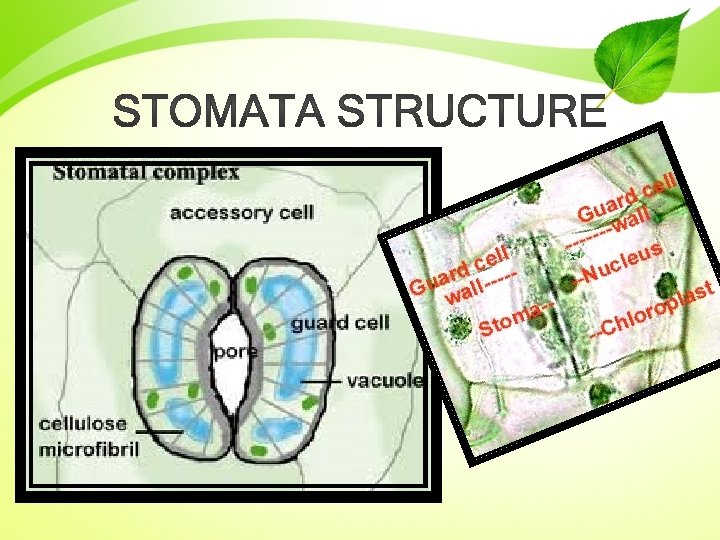
Leaves have 2 structure that help regulate water loss. Ø Cuticle § Waxy layer • (what biomolecule is a wax) Ø Stomata § Structure that opens and closes to help regulate water evaporation.
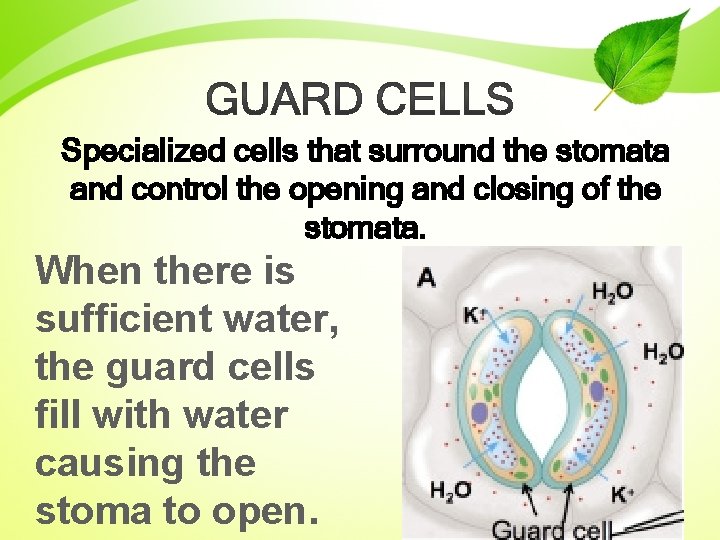
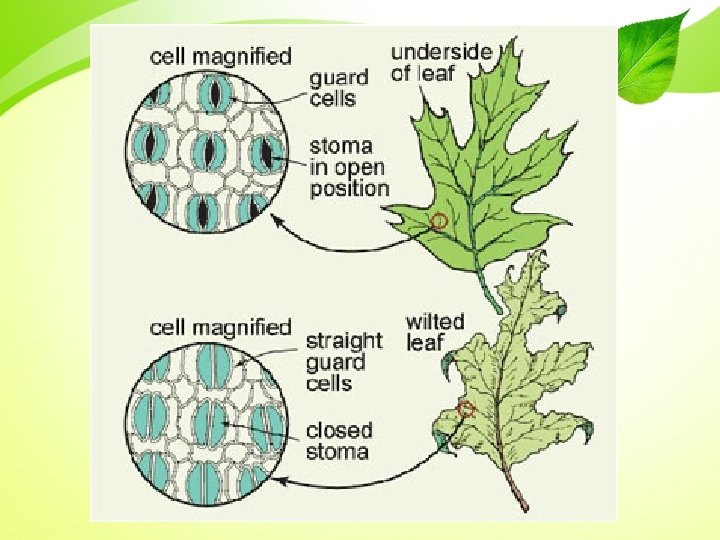
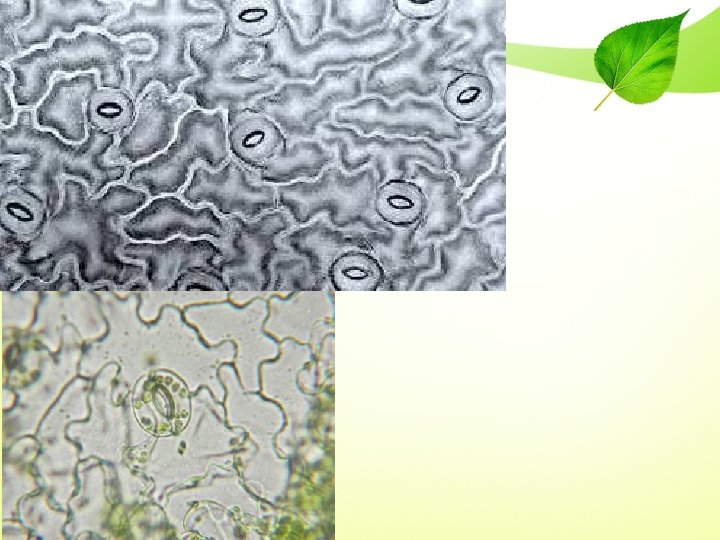
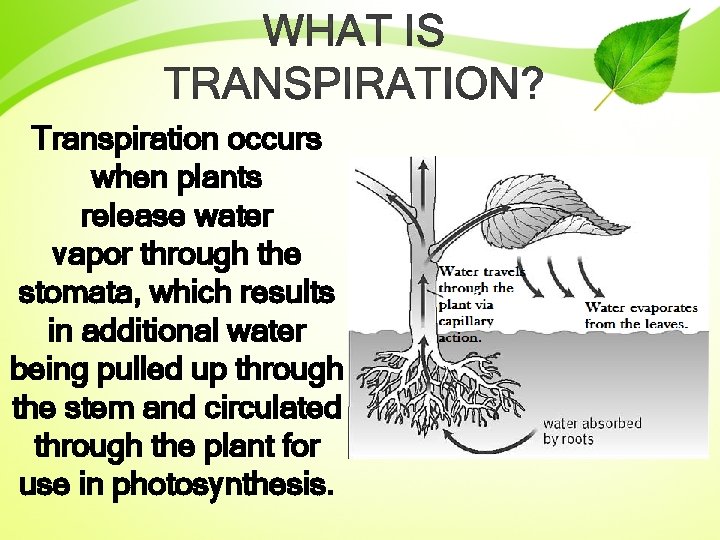
Specialized cells that surround the stomata and control the opening and closing of the stomata. When there is sufficient water, the guard cells fill with water causing the stoma to open.
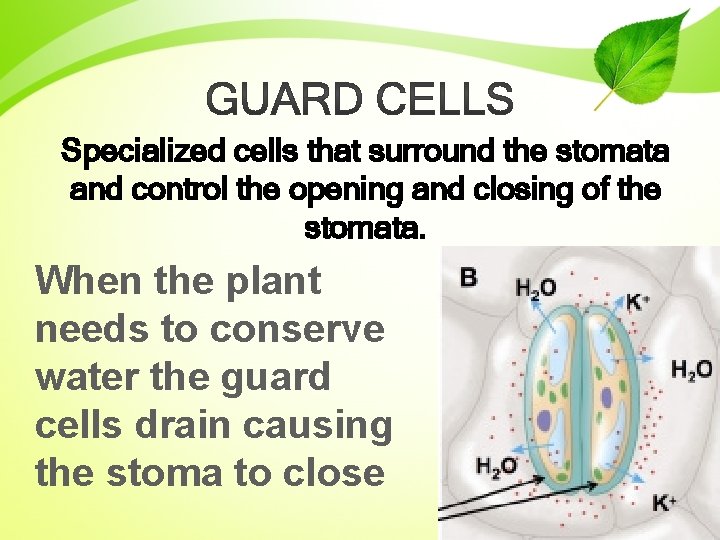
Specialized cells that surround the stomata and control the opening and closing of the stomata. When the plant needs to conserve water the guard cells drain causing the stoma to close
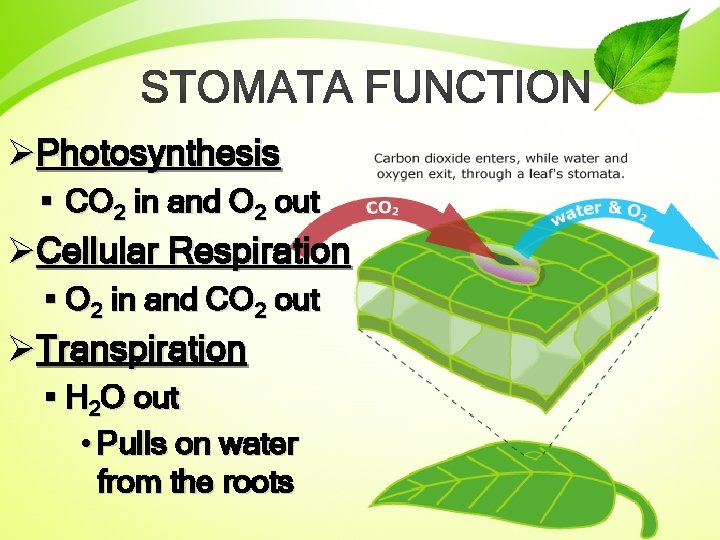
ØPhotosynthesis § CO 2 in and O 2 out ØCellular Respiration § O 2 in and CO 2 out ØTranspiration § H 2 O out • Pulls on water from the roots
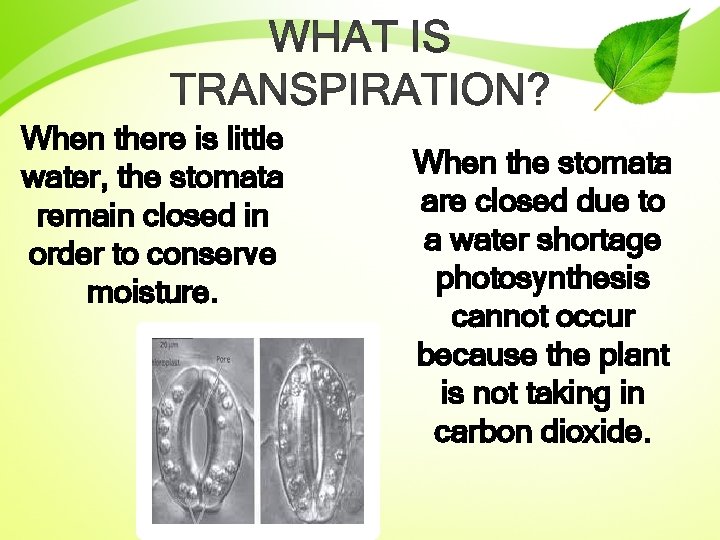
Transpiration occurs when plants release water vapor through the stomata, which results in additional water being pulled up through the stem and circulated through the plant for use in photosynthesis.
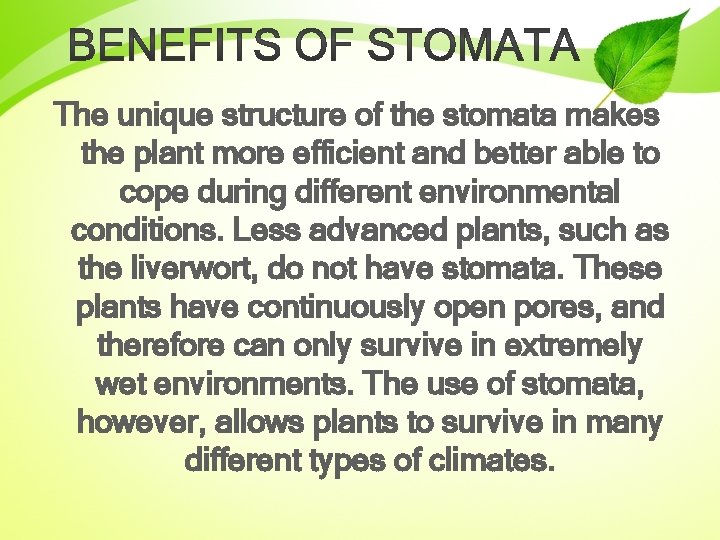
When there is little water, the stomata remain closed in order to conserve moisture. When the stomata are closed due to a water shortage photosynthesis cannot occur because the plant is not taking in carbon dioxide.
The unique structure of the stomata makes the plant more efficient and better able to cope during different environmental conditions. Less advanced plants, such as the liverwort, do not have stomata. These plants have continuously open pores, and therefore can only survive in extremely wet environments. The use of stomata, however, allows plants to survive in many different types of climates.
On a sheet of paper please illustrate the photosynthesis equation. It should be