
Learning What do we want to learn and
- Slides: 21
Learning What do we want to learn…. …. and how do we do it?
Think about what you’re going to have to learn on the GP Training Scheme
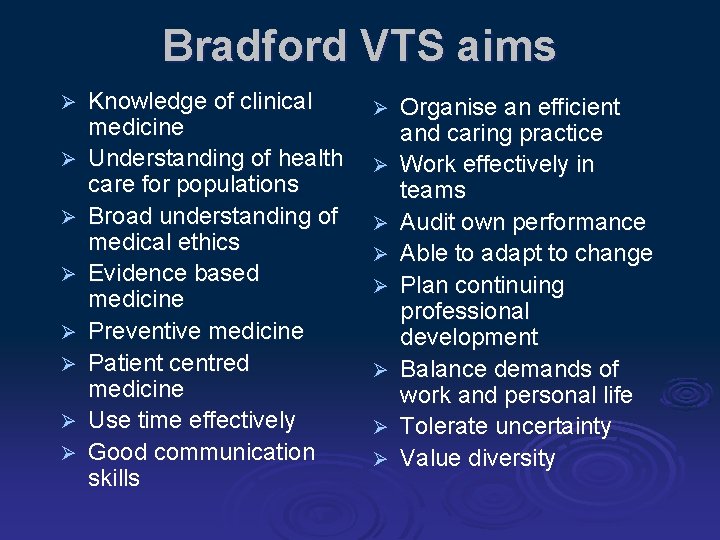
Bradford VTS aims Ø Ø Ø Ø Knowledge of clinical medicine Understanding of health care for populations Broad understanding of medical ethics Evidence based medicine Preventive medicine Patient centred medicine Use time effectively Good communication skills Ø Ø Ø Ø Organise an efficient and caring practice Work effectively in teams Audit own performance Able to adapt to change Plan continuing professional development Balance demands of work and personal life Tolerate uncertainty Value diversity
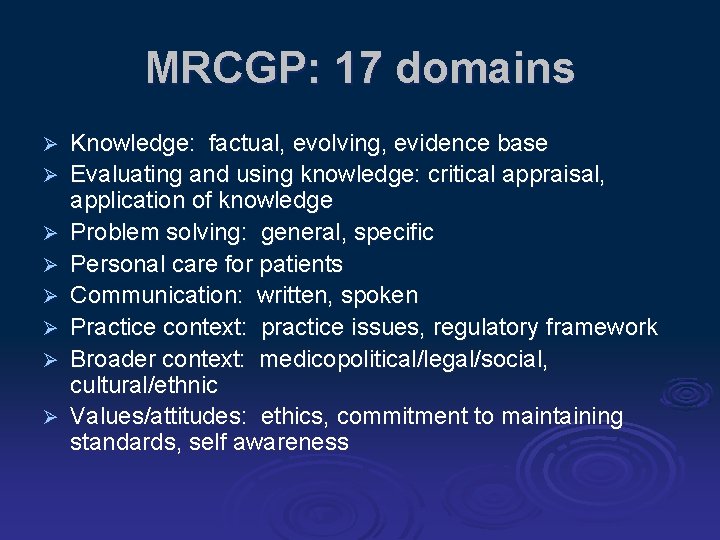
MRCGP: 17 domains Ø Ø Ø Ø Knowledge: factual, evolving, evidence base Evaluating and using knowledge: critical appraisal, application of knowledge Problem solving: general, specific Personal care for patients Communication: written, spoken Practice context: practice issues, regulatory framework Broader context: medicopolitical/legal/social, cultural/ethnic Values/attitudes: ethics, commitment to maintaining standards, self awareness
Think about how you learned something
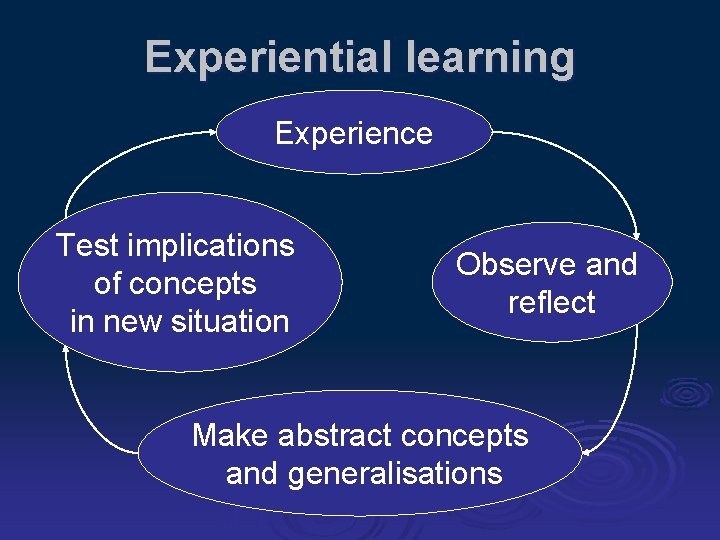
Experiential learning Experience Test implications of concepts in new situation Observe and reflect Make abstract concepts and generalisations
The reflective practitioner The professional practitioner reflects on their knowledge whilst engaging in activity. This enables them to adapt to the potentially unique context or problem with which they are faced (Schon, 1983) Ø Professional education should provide people with the opportunity to reflect on their practice and identify theories embedded in their routine work (Coles, 1994) Ø
Constructivism (3 C’s) Ø Construction - you build your knowledge on what you know already Ø Context - important both in learning and in applying it Ø Collaboration - work together and explore each other’s perspectives: “knowledge” varies across contexts and cultures
Adult learning Ø Learning what’s important to you Ø Applicable in the real world Ø Learner, not teacher, is responsible Ø Learning is self directed Ø Learning is continuous, adapts to new situations
Think about feedback
Definition of feedback Ø Information about performance or behaviour which leads to action to affirm or develop performance or behaviour - i e Ø To affirm what you do well Ø To help you develop in areas you do less well
Useful feedback Ø Is well timed (enough time, full attention, calm, prepared) Ø Involves mutual goodwill Ø Is balanced Ø Is specific Ø Is descriptive Ø Can lead to change (if change required)
Receiving feedback Ø May need to ask Ø Listen carefully Ø Ask for clarification, examples, alternatives Ø Give it time to sink in Ø Think about your relationship with the giver Ø Don’t let small criticisms devastate you Ø Don’t be defensive
Giving feedback Ø GP trainers value feedback Ø Be balanced Ø Be specific Ø Make suggestions for change Ø Don’t wait till you’re about to leave
Think about learning from each other
Learning from each other Ø Feedback Ø Facilitating reflection Ø Sharing knowledge Ø Sharing resources Ø Teaching skills Ø Different perspectives
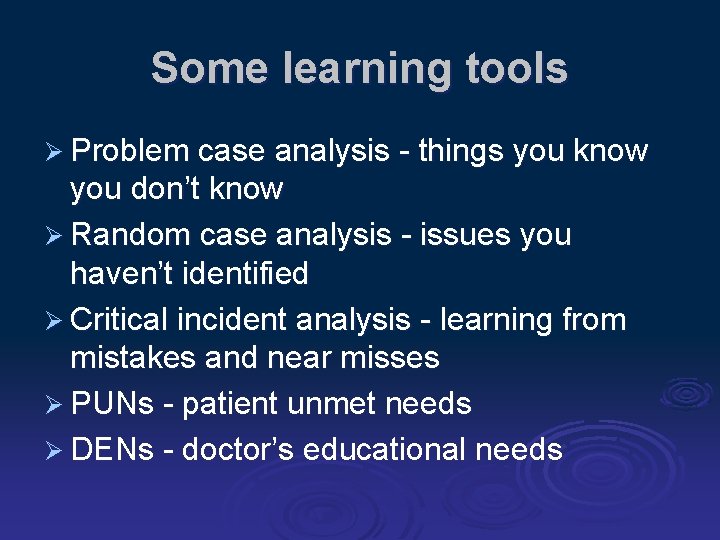
Some learning tools Ø Problem case analysis - things you know you don’t know Ø Random case analysis - issues you haven’t identified Ø Critical incident analysis - learning from mistakes and near misses Ø PUNs - patient unmet needs Ø DENs - doctor’s educational needs
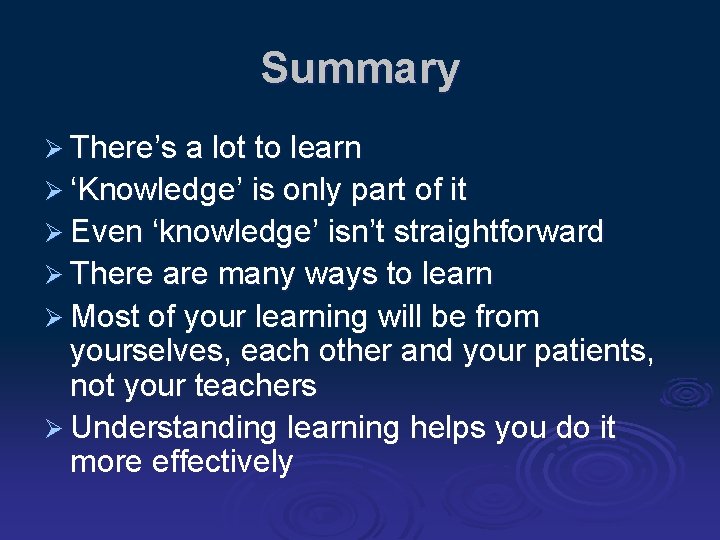
Summary Ø There’s a lot to learn Ø ‘Knowledge’ is only part of it Ø Even ‘knowledge’ isn’t straightforward Ø There are many ways to learn Ø Most of your learning will be from yourselves, each other and your patients, not your teachers Ø Understanding learning helps you do it more effectively
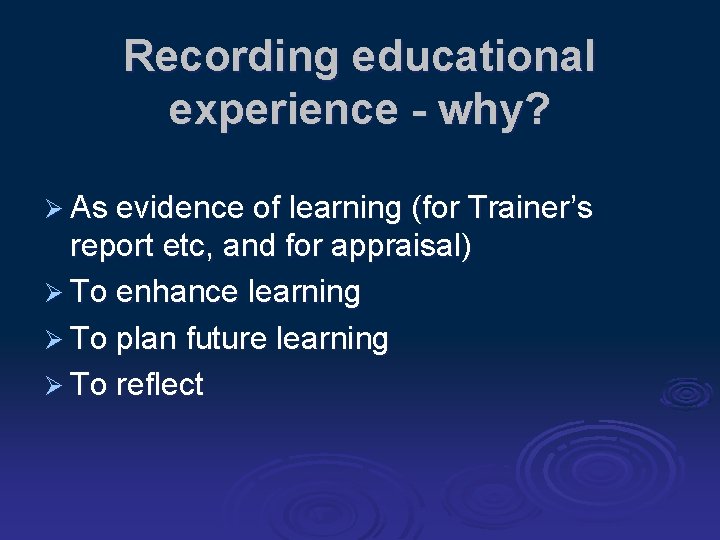
Recording educational experience - why? Ø As evidence of learning (for Trainer’s report etc, and for appraisal) Ø To enhance learning Ø To plan future learning Ø To reflect
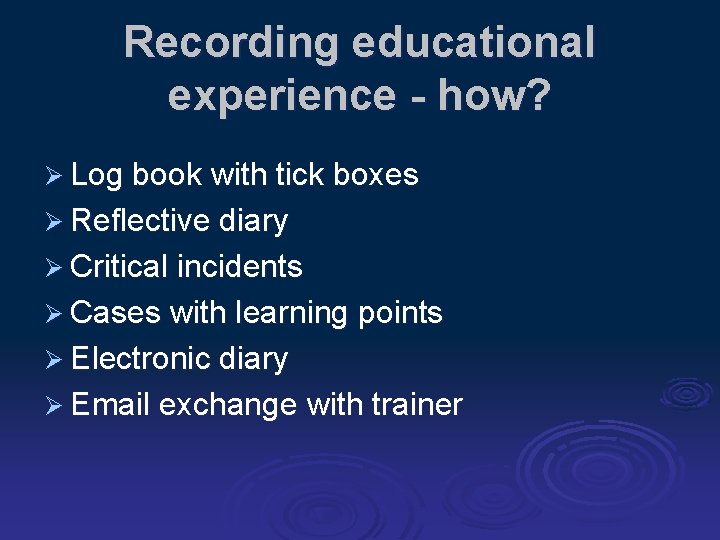
Recording educational experience - how? Ø Log book with tick boxes Ø Reflective diary Ø Critical incidents Ø Cases with learning points Ø Electronic diary Ø Email exchange with trainer
Whatever method you choose Ø Record it somehow Ø and choose something Ø (or several things) Ø which works for YOU