
Learning Unit 3 The Market Environment Outcomes Why


- Slides: 42
Learning Unit 3 The Market Environment
Outcomes �Why must managers understand the market environment? �Discuss Porter’s 5 forces model �Different structures in industry
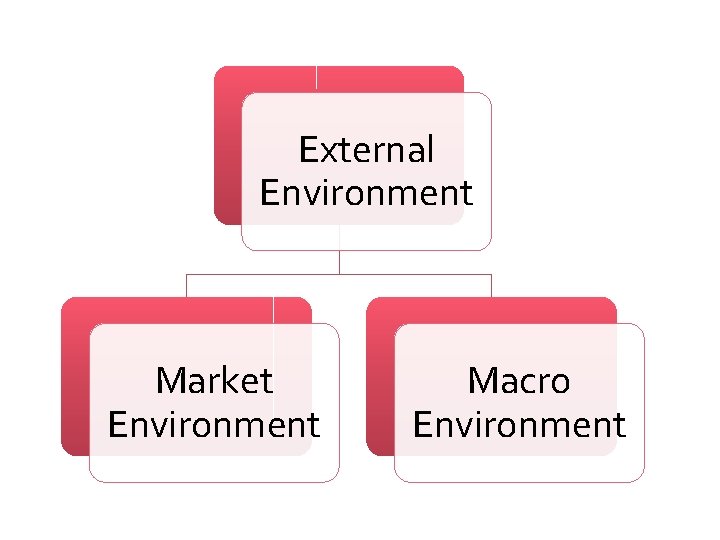
External Environment Market Environment Macro Environment
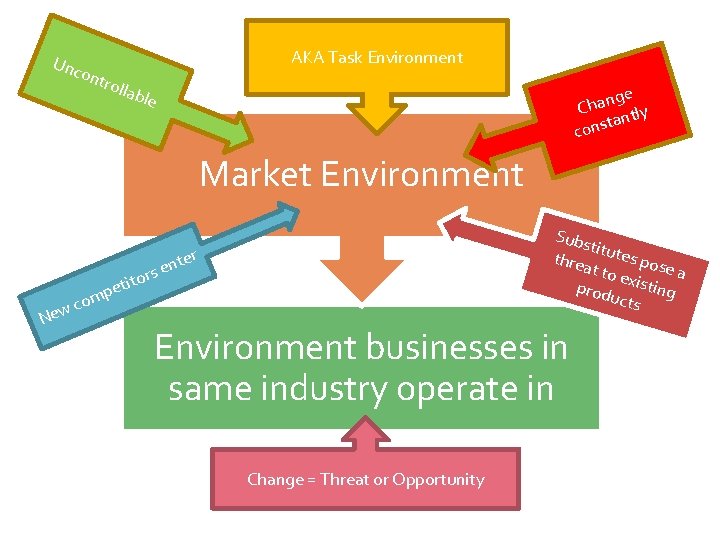
Unc AKA Task Environment ont rolla ble ge Chan tly an t s n co Market Environment New er nt e s r ito pet m co Subs ti threa tutes pos ea t to e x i sti prod ucts ng Environment businesses in same industry operate in Change = Threat or Opportunity
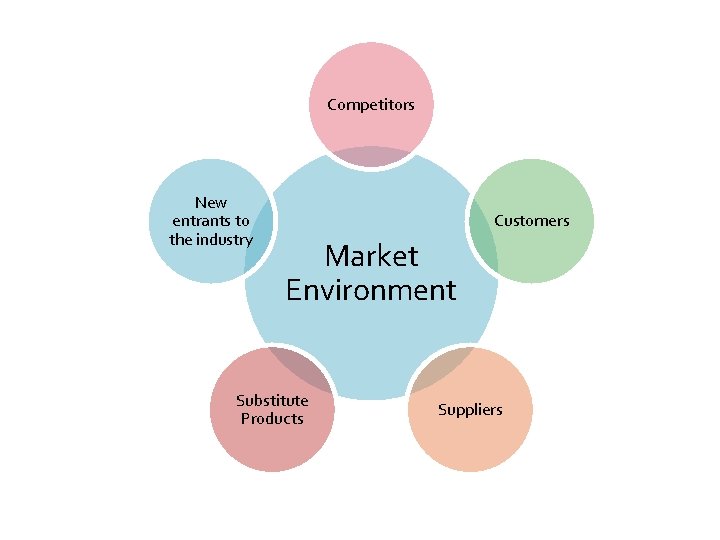
Competitors New entrants to the industry Customers Market Environment Substitute Products Suppliers
Why must managers understand the market environment? �Helps to define the competing arena. �Focus attention on competitors. �Help determine key factors for success. �Helps to be pro-active when changes occur. �Helps to identify opportunities and threats.
Characteristics of market environment �Within immediate business environment. �Uncontrollable. �Can be influenced.
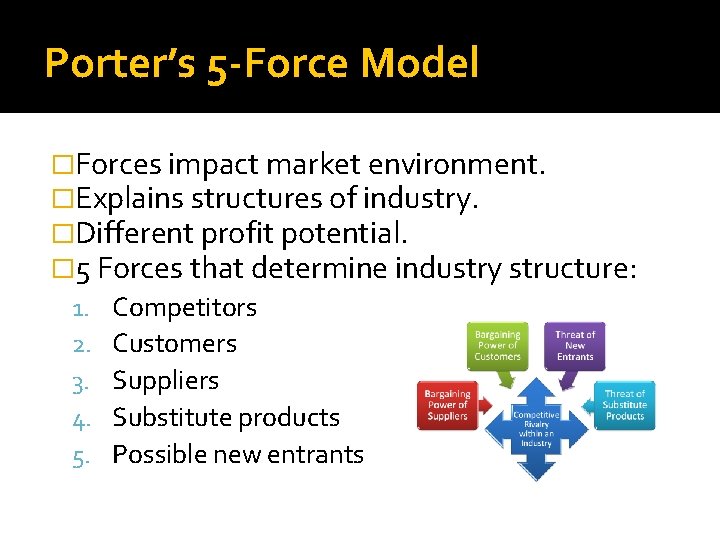
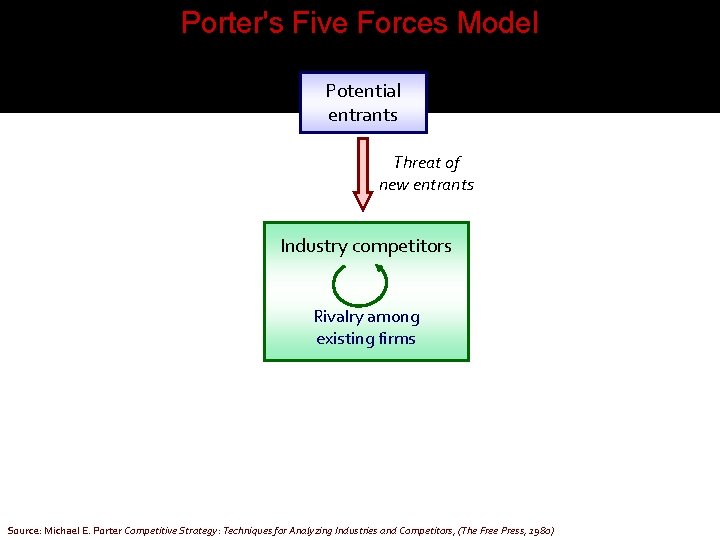
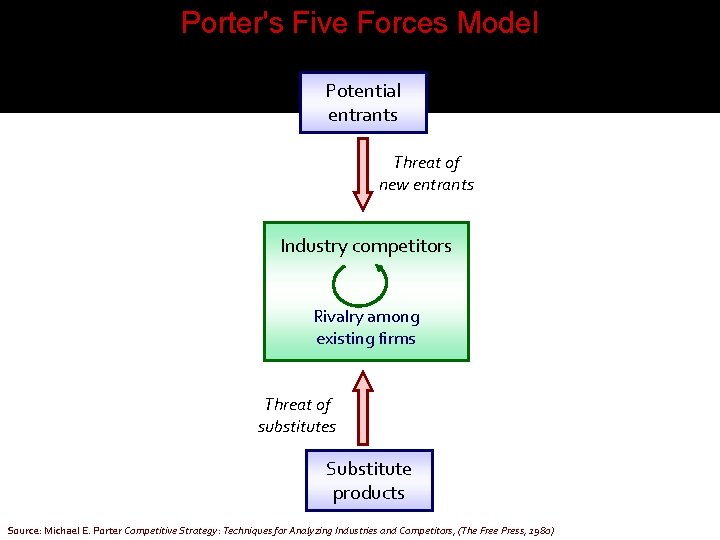
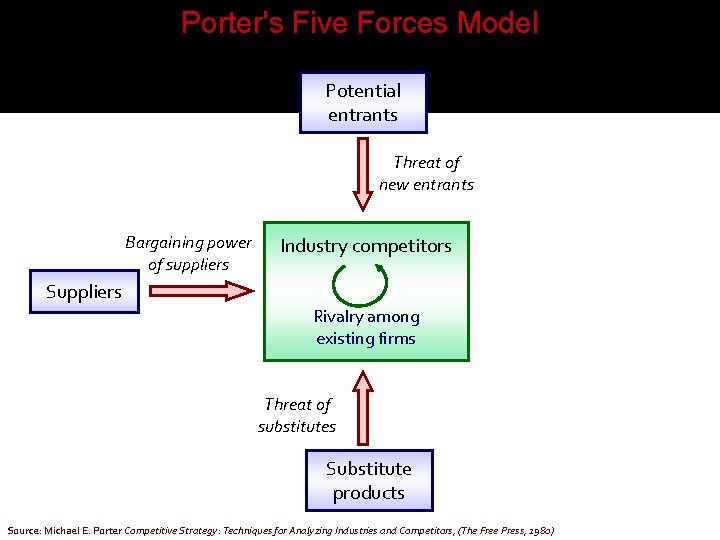
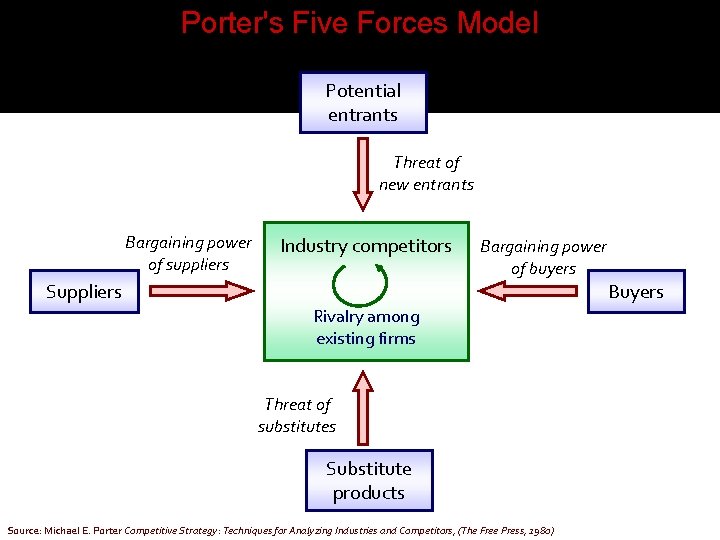
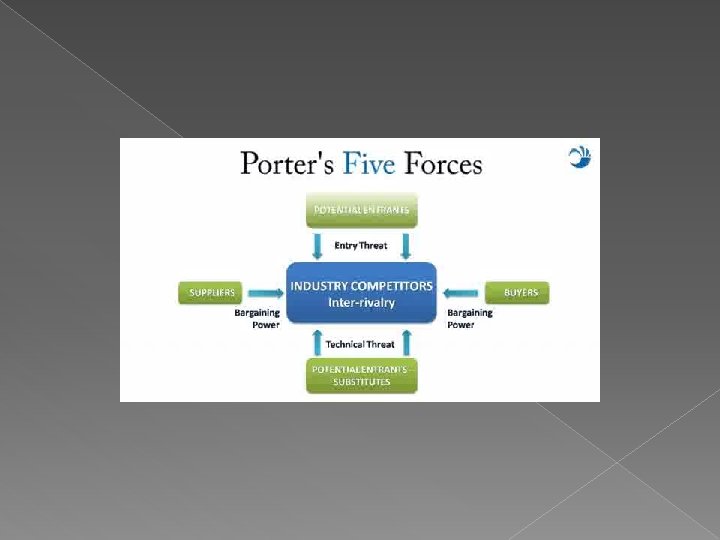
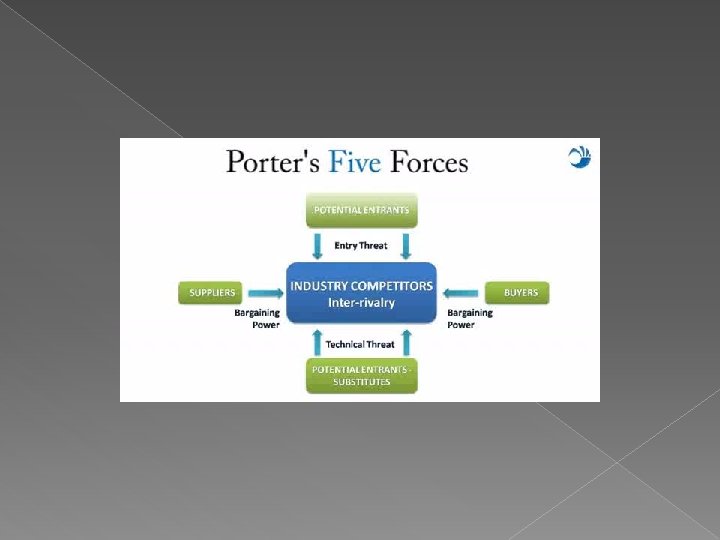
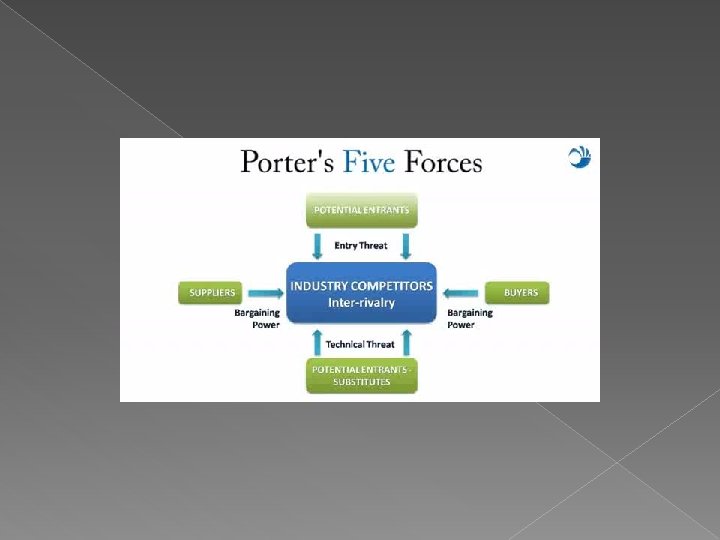
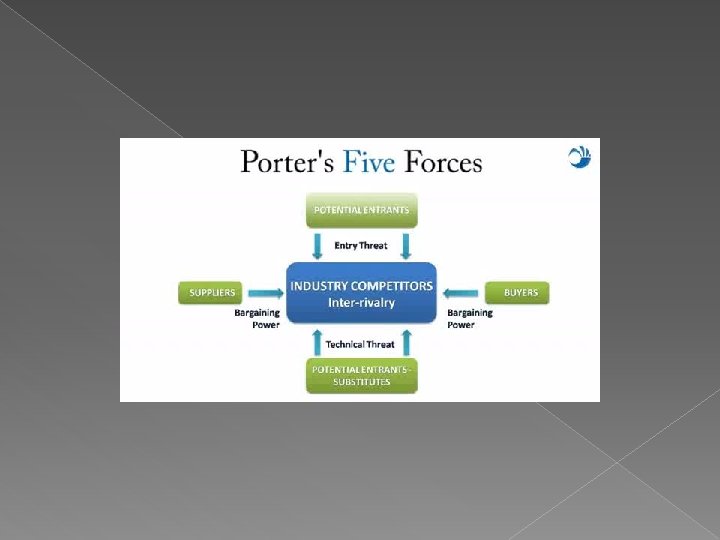
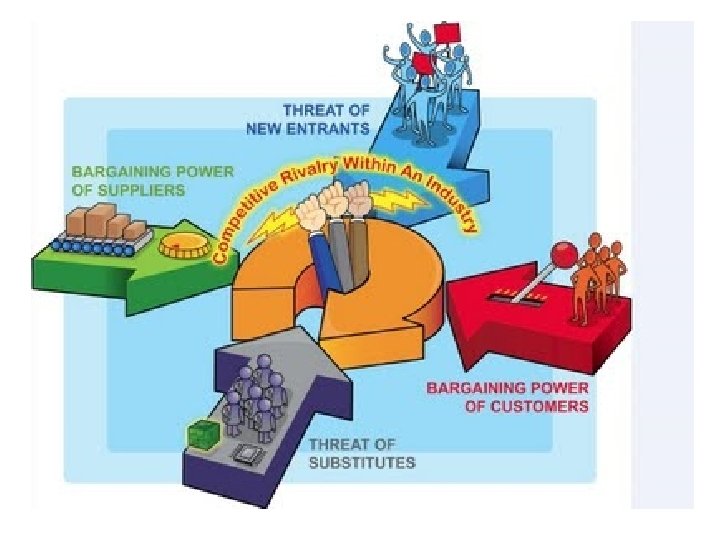
Porter’s 5 -Force Model �Forces impact market environment. �Explains structures of industry. �Different profit potential. � 5 Forces that determine industry structure: 1. Competitors 2. Customers 3. Suppliers 4. Substitute products 5. Possible new entrants
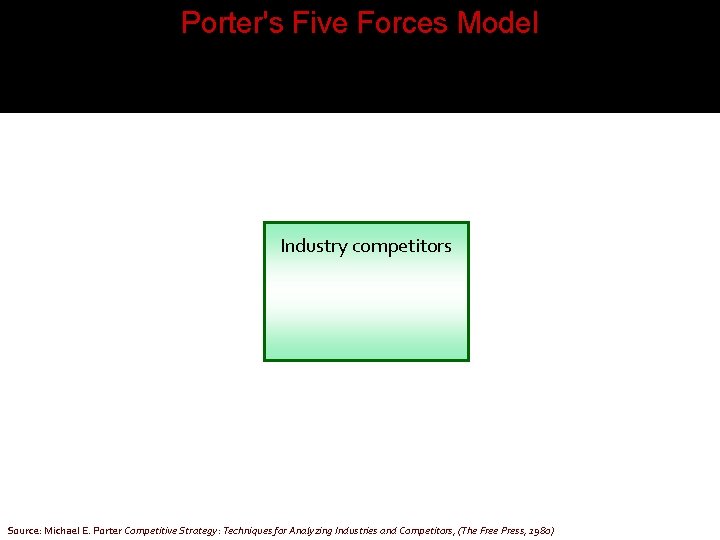
Porter's Five Forces Model Industry competitors Source: Michael E. Porter Competitive Strategy: Techniques for Analyzing Industries and Competitors, (The Free Press, 1980)
Porter's Five Forces Model Potential entrants Threat of new entrants Industry competitors Rivalry among existing firms Source: Michael E. Porter Competitive Strategy: Techniques for Analyzing Industries and Competitors, (The Free Press, 1980)
Porter's Five Forces Model Potential entrants Threat of new entrants Industry competitors Rivalry among existing firms Threat of substitutes Substitute products Source: Michael E. Porter Competitive Strategy: Techniques for Analyzing Industries and Competitors, (The Free Press, 1980)
Porter's Five Forces Model Potential entrants Threat of new entrants Bargaining power of suppliers Industry competitors Suppliers Rivalry among existing firms Threat of substitutes Substitute products Source: Michael E. Porter Competitive Strategy: Techniques for Analyzing Industries and Competitors, (The Free Press, 1980)
Porter's Five Forces Model Potential entrants Threat of new entrants Bargaining power of suppliers Industry competitors Bargaining power of buyers Suppliers Buyers Rivalry among existing firms Threat of substitutes Substitute products Source: Michael E. Porter Competitive Strategy: Techniques for Analyzing Industries and Competitors, (The Free Press, 1980)
Competitors �SA free market economy Competitive market environment �Comply to legal requirements = Compete in specific industry Experience fierce competition in SA �Highest market share �Compete to acquire scarce resources �Competition for skilled labour – Very fierce! Extreme Salaries!
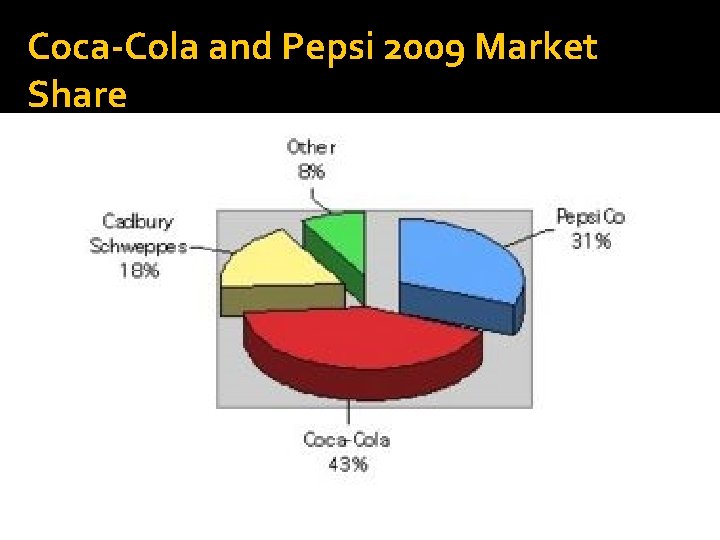
Coca-Cola and Pepsi 2009 Market Share
Advantage of healthy competition �Lower prices �Better quality products �Organisation more productive �Motivate to continuously improve �Encourage regular introduction of new products
Competition �Action Reaction Come Hungry Come Thirsty
Competition �Government role: Fair competition No monopoly �Competition commission Don’t abuse dominant positions
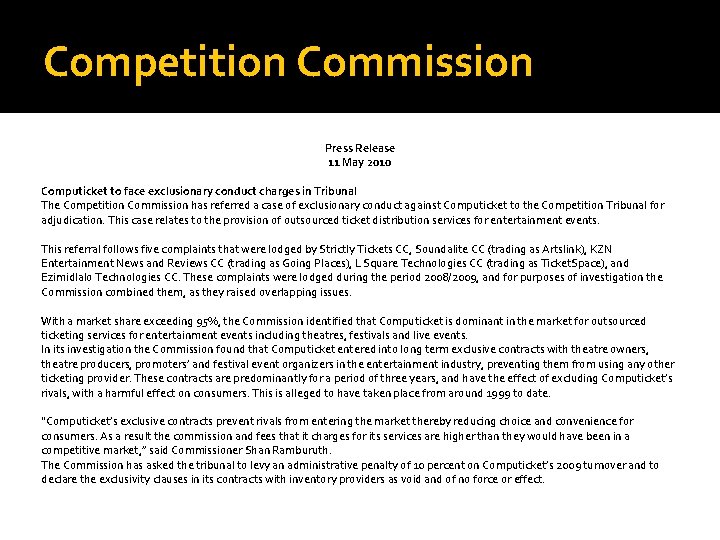
Competition Commission Press Release 11 May 2010 Computicket to face exclusionary conduct charges in Tribunal The Competition Commission has referred a case of exclusionary conduct against Computicket to the Competition Tribunal for adjudication. This case relates to the provision of outsourced ticket distribution services for entertainment events. This referral follows five complaints that were lodged by Strictly Tickets CC, Soundalite CC (trading as Artslink), KZN Entertainment News and Reviews CC (trading as Going Places), L Square Technologies CC (trading as Ticket. Space), and Ezimidlalo Technologies CC. These complaints were lodged during the period 2008/2009, and for purposes of investigation the Commission combined them, as they raised overlapping issues. With a market share exceeding 95%, the Commission identified that Computicket is dominant in the market for outsourced ticketing services for entertainment events including theatres, festivals and live events. In its investigation the Commission found that Computicket entered into long term exclusive contracts with theatre owners, theatre producers, promoters’ and festival event organizers in the entertainment industry, preventing them from using any other ticketing provider. These contracts are predominantly for a period of three years, and have the effect of excluding Computicket’s rivals, with a harmful effect on consumers. This is alleged to have taken place from around 1999 to date. “Computicket’s exclusive contracts prevent rivals from entering the market thereby reducing choice and convenience for consumers. As a result the commission and fees that it charges for its services are higher than they would have been in a competitive market, ” said Commissioner Shan Ramburuth. The Commission has asked the tribunal to levy an administrative penalty of 10 percent on Computicket’s 2009 turnover and to declare the exclusivity clauses in its contracts with inventory providers as void and of no force or effect.
Customer �AKA market & buyers All individuals with the need for an organisations G&S Ability to pay for the G&S �CONFLICT! Organisation = Maximum profit Customer = Highest quality lowest price
Customer �Know who your customer is! Age Gender Marital Status Size of their families Literate or not �Purchasing power and buyer behaviour.
Customer �Design G&S to satisfy unique needs. Market research!
Customer �Large bargaining power Force prices down Bargain for higher quality Play suppliers against each other
Do no mislead! �False or misleading advertising
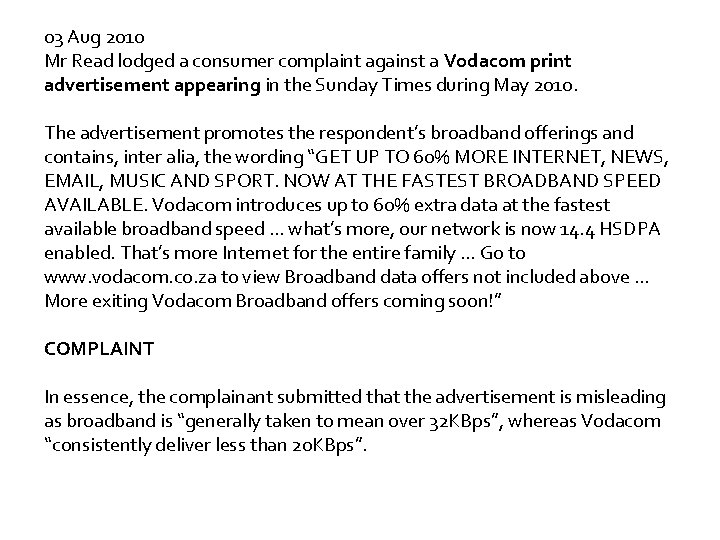
03 Aug 2010 Mr Read lodged a consumer complaint against a Vodacom print advertisement appearing in the Sunday Times during May 2010. The advertisement promotes the respondent’s broadband offerings and contains, inter alia, the wording “GET UP TO 60% MORE INTERNET, NEWS, EMAIL, MUSIC AND SPORT. NOW AT THE FASTEST BROADBAND SPEED AVAILABLE. Vodacom introduces up to 60% extra data at the fastest available broadband speed … what’s more, our network is now 14. 4 HSDPA enabled. That’s more Internet for the entire family … Go to www. vodacom. co. za to view Broadband data offers not included above … More exiting Vodacom Broadband offers coming soon!” COMPLAINT In essence, the complainant submitted that the advertisement is misleading as broadband is “generally taken to mean over 32 KBps”, whereas Vodacom “consistently deliver less than 20 KBps”.
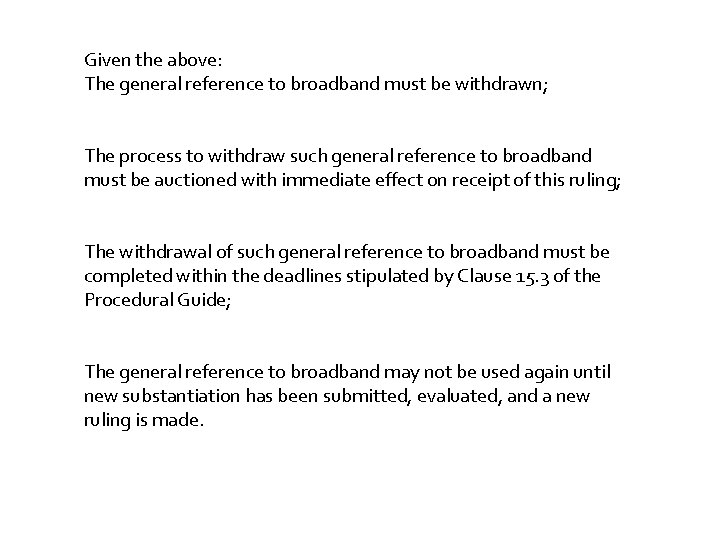
Given the above: The general reference to broadband must be withdrawn; The process to withdraw such general reference to broadband must be auctioned with immediate effect on receipt of this ruling; The withdrawal of such general reference to broadband must be completed within the deadlines stipulated by Clause 15. 3 of the Procedural Guide; The general reference to broadband may not be used again until new substantiation has been submitted, evaluated, and a new ruling is made.
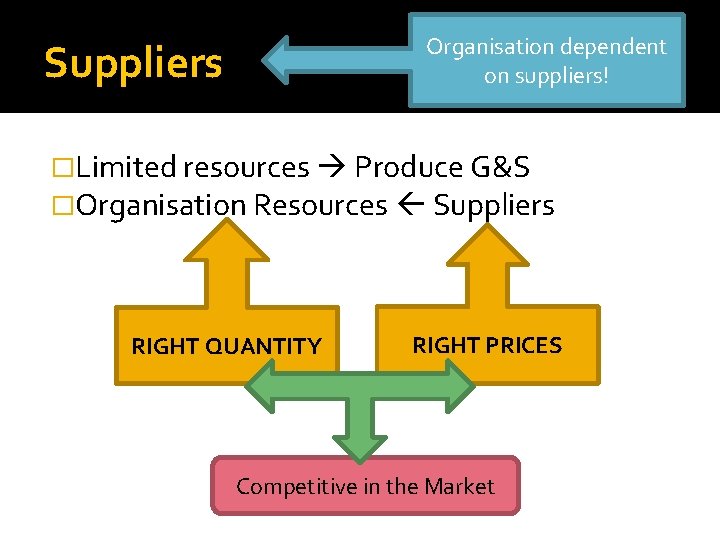
Organisation dependent on suppliers! Suppliers �Limited resources Produce G&S �Organisation Resources Suppliers RIGHT QUANTITY RIGHT PRICES Competitive in the Market
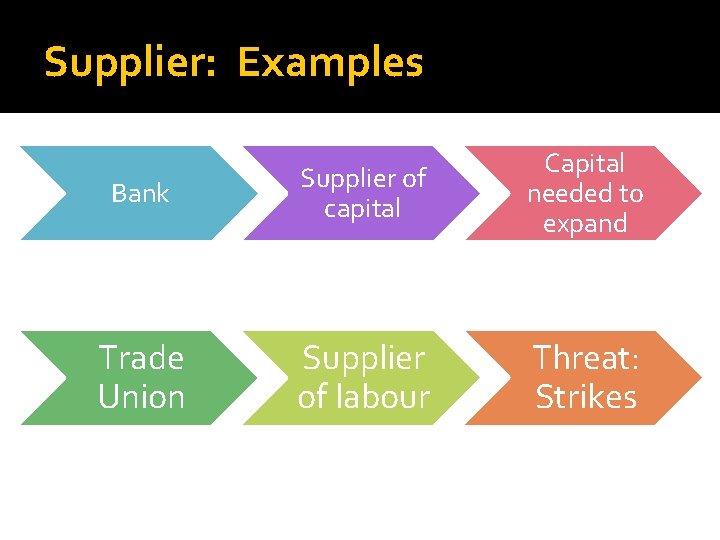
Supplier: Examples Bank Supplier of capital Capital needed to expand Trade Union Supplier of labour Threat: Strikes
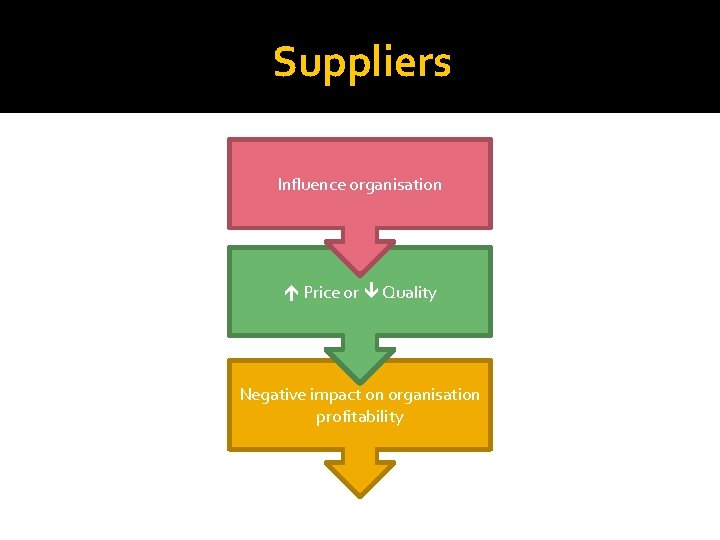
Suppliers Influence organisation Price or Quality Negative impact on organisation profitability
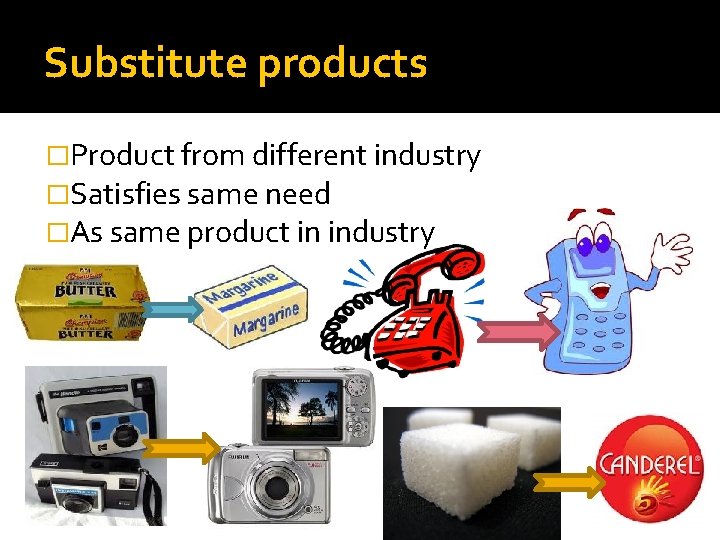
Substitute products �Product from different industry �Satisfies same need �As same product in industry
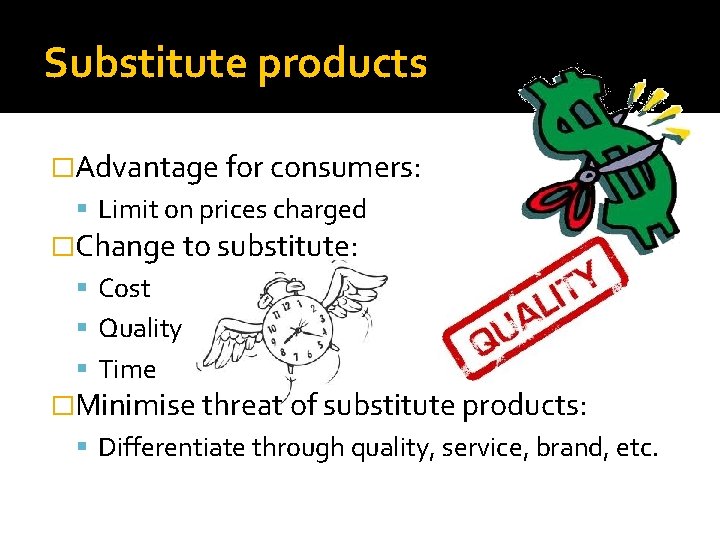
Substitute products �Advantage for consumers: Limit on prices charged �Change to substitute: Cost Quality Time �Minimise threat of substitute products: Differentiate through quality, service, brand, etc.
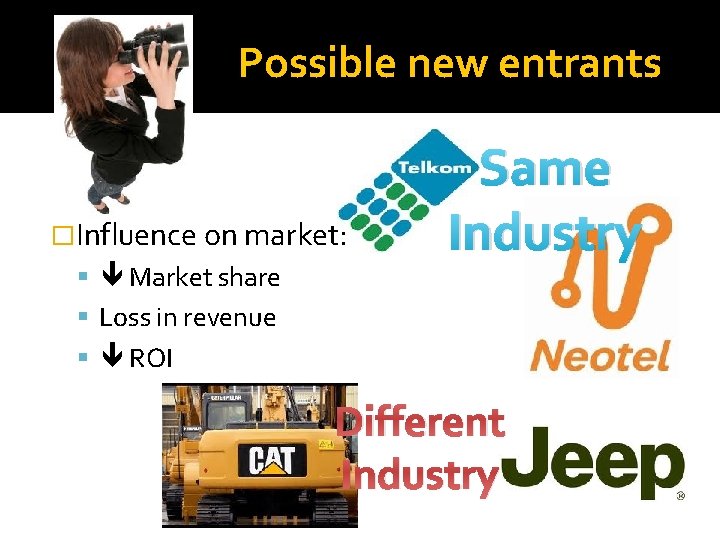
Possible new entrants �Influence on market: Market share Same Industry Loss in revenue ROI Different Industry
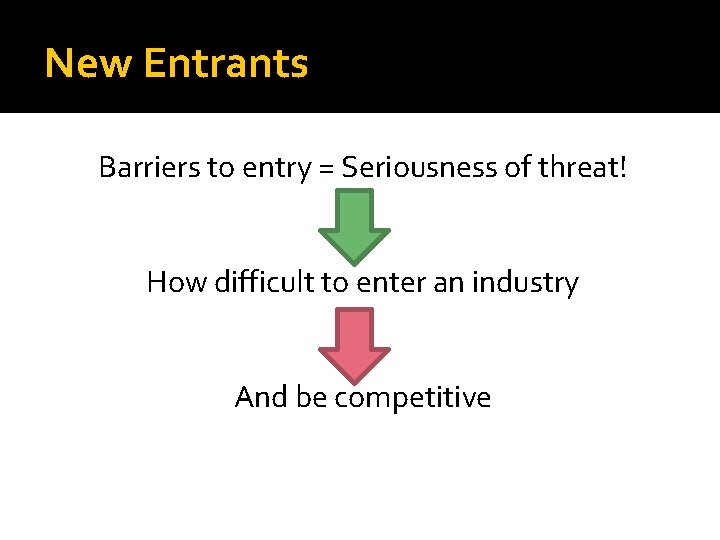
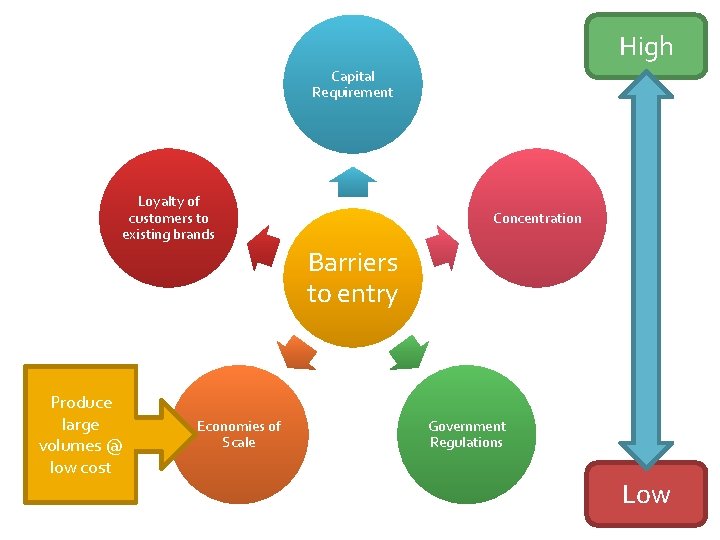
New Entrants Barriers to entry = Seriousness of threat! How difficult to enter an industry And be competitive
High Capital Requirement Loyalty of customers to existing brands Concentration Barriers to entry Produce large volumes @ low cost Economies of Scale Government Regulations Low
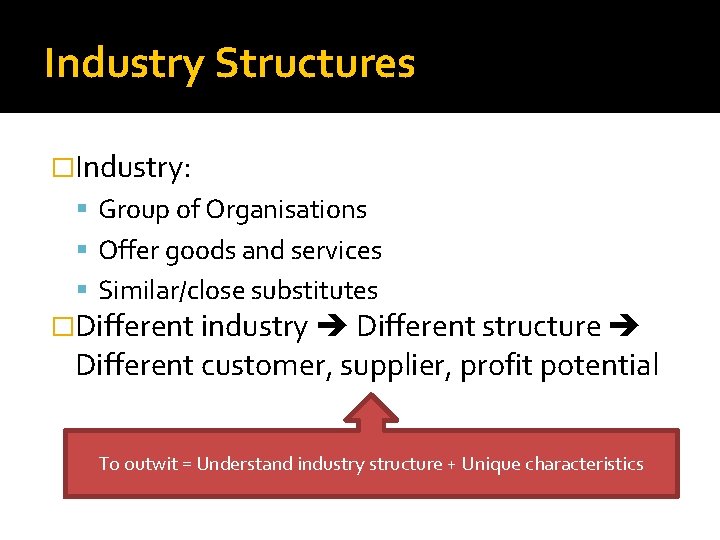
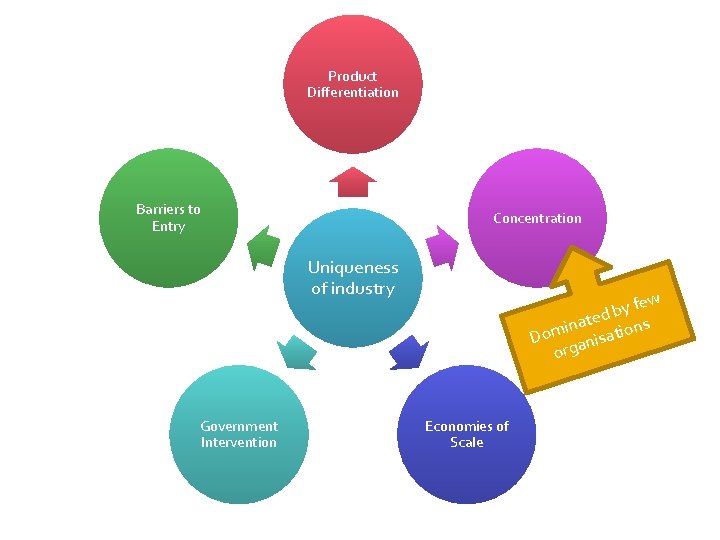
Industry Structures �Industry: Group of Organisations Offer goods and services Similar/close substitutes �Different industry Different structure Different customer, supplier, profit potential To outwit = Understand industry structure + Unique characteristics
Product Differentiation Barriers to Entry Concentration Uniqueness of industry Government Intervention few y b ted ns a n i Dom anisatio org Economies of Scale