
Learning Together The CIT ECHO for Training Law
- Slides: 29
Learning Together: The CIT ECHO for Training Law Enforcement International Association of Chiefs of Police October 22, 2017 Presented by: Detective Matthew Tinney Dr. Nils Rosenbaum Dr. Dan Duhigg
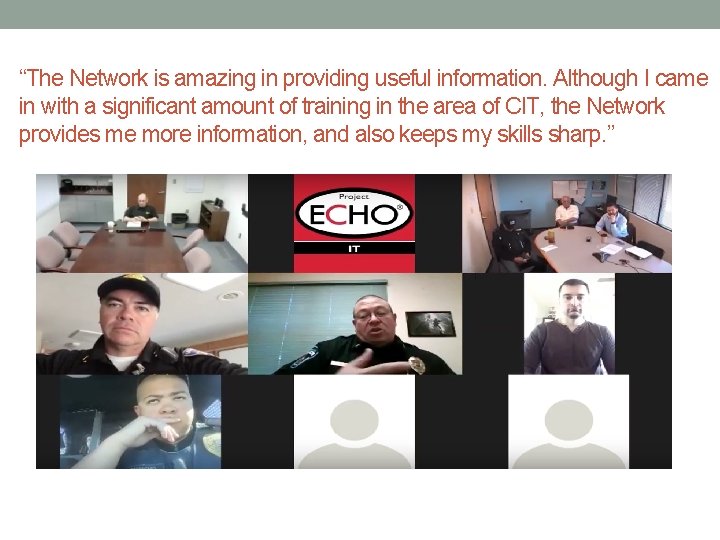
“The Network is amazing in providing useful information. Although I came in with a significant amount of training in the area of CIT, the Network provides me more information, and also keeps my skills sharp. ”
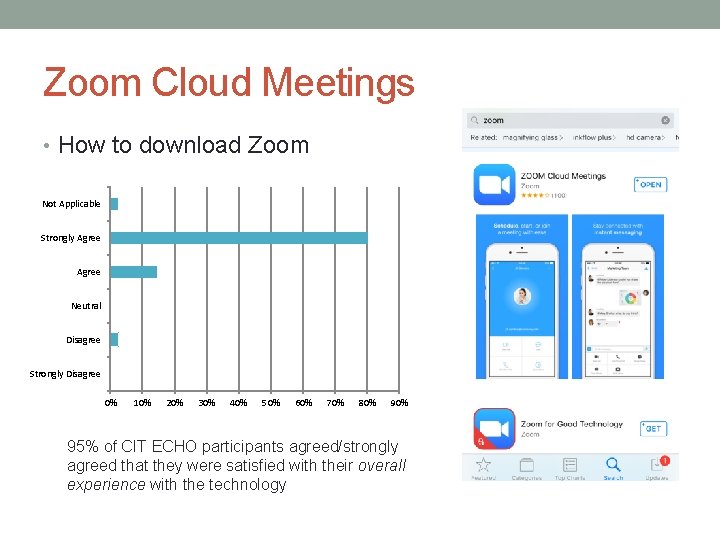
Zoom Cloud Meetings • How to download Zoom Not Applicable Strongly Agree Neutral Disagree Strongly Disagree 0% 10% 20% 30% 40% 50% 60% 70% 80% 95% of CIT ECHO participants agreed/strongly agreed that they were satisfied with their overall experience with the technology
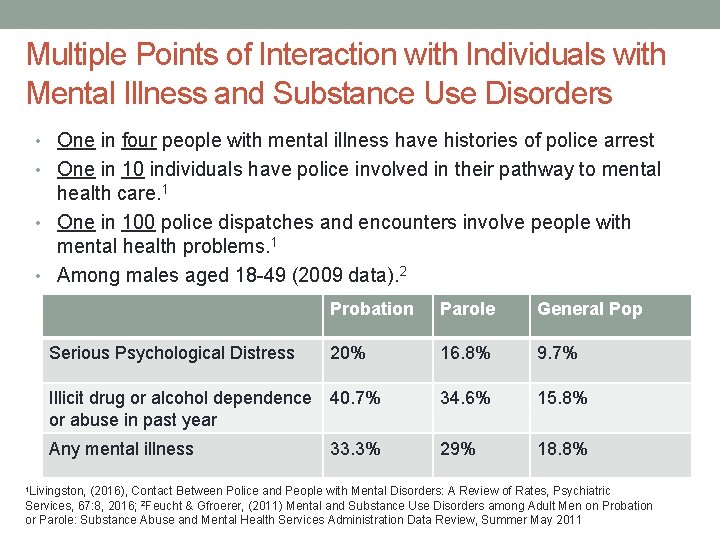
Multiple Points of Interaction with Individuals with Mental Illness and Substance Use Disorders • One in four people with mental illness have histories of police arrest • One in 10 individuals have police involved in their pathway to mental health care. 1 • One in 100 police dispatches and encounters involve people with mental health problems. 1 • Among males aged 18 -49 (2009 data). 2 Probation Parole General Pop 20% 16. 8% 9. 7% Illicit drug or alcohol dependence 40. 7% or abuse in past year 34. 6% 15. 8% Any mental illness 29% 18. 8% Serious Psychological Distress 33. 3% 1 Livingston, (2016), Contact Between Police and People with Mental Disorders: A Review of Rates, Psychiatric Services, 67: 8, 2016; 2 Feucht & Gfroerer, (2011) Mental and Substance Use Disorders among Adult Men on Probation or Parole: Substance Abuse and Mental Health Services Administration Data Review, Summer May 2011
Need for Specialized and Ongoing Training • Training historically focused on command/control and officer safety • Non-compliance may result in the use of force • Historically, no special training focused on interactions with people living with mental illness • A lack of guidance and training on how to apply police tactics to people living with mental illness resulted in highly publicized of uses of force CIT, Crisis Intervention Teams • CIT (Crisis Intervention Team) programs are local initiatives designed to improve the way law enforcement and the community respond to people experiencing mental health crises. They are built on strong partnerships between law enforcement, mental health provider agencies and individuals and families affected by mental illness.
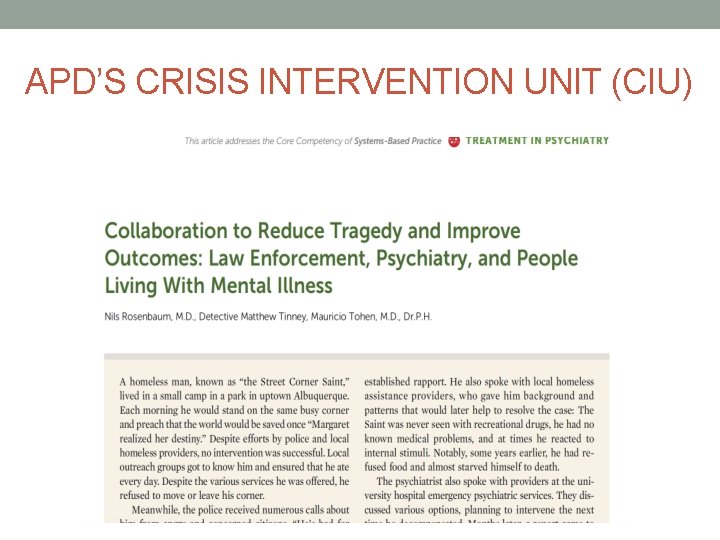
APD’S CRISIS INTERVENTION UNIT (CIU)
PARTNERS
Grant Funding • $250, 000 Three-Year Grant • BJA FY 2015 Justice and Mental Health Collaboration Program: Planning and Implementation
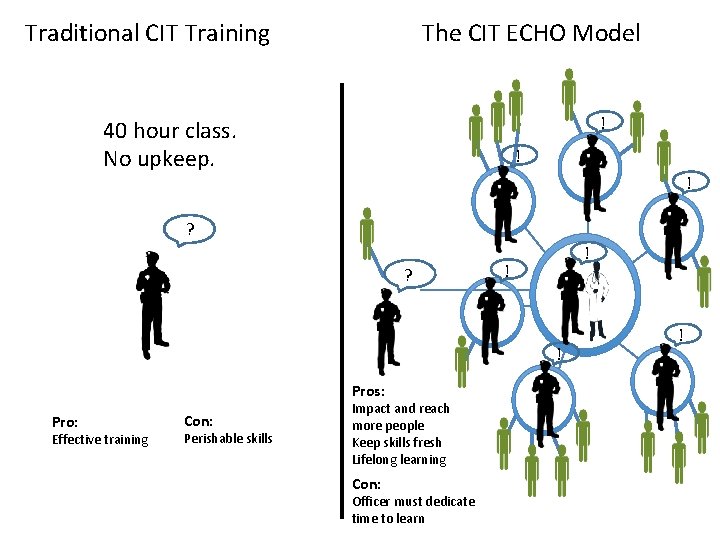
Traditional CIT Training The CIT ECHO Model ! 40 hour class. No upkeep. ! ! ? ? ! ! ! Pros: Pro: Effective training Con: Perishable skills Impact and reach more people Keep skills fresh Lifelong learning Con: Officer must dedicate time to learn !
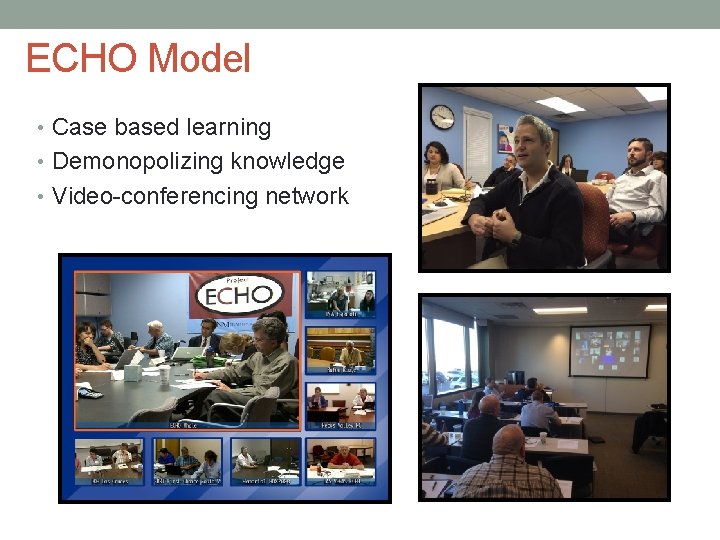
ECHO Model • Case based learning • Demonopolizing knowledge • Video-conferencing network
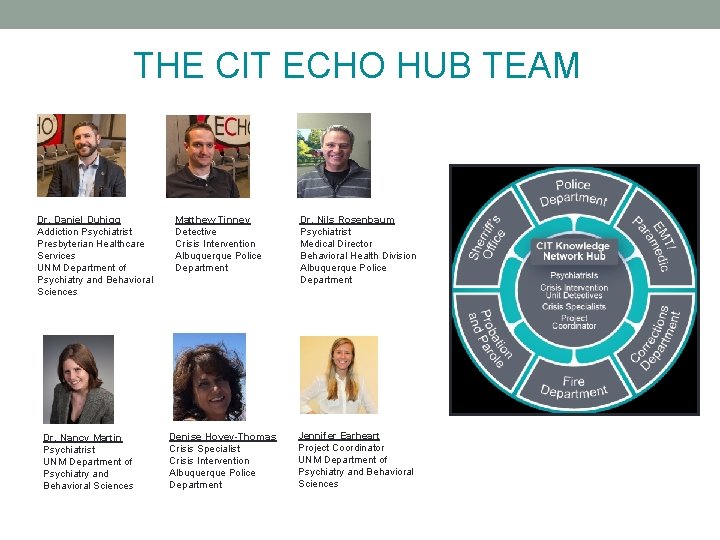
THE CIT ECHO HUB TEAM Dr. Daniel Duhigg Addiction Psychiatrist Presbyterian Healthcare Services UNM Department of Psychiatry and Behavioral Sciences Dr. Nancy Martin Psychiatrist UNM Department of Psychiatry and Behavioral Sciences Matthew Tinney Detective Crisis Intervention Albuquerque Police Department Dr. Nils Rosenbaum Psychiatrist Medical Director Behavioral Health Division Albuquerque Police Department Denise Hovey-Thomas Crisis Specialist Crisis Intervention Albuquerque Police Department Jennifer Earheart Project Coordinator UNM Department of Psychiatry and Behavioral Sciences
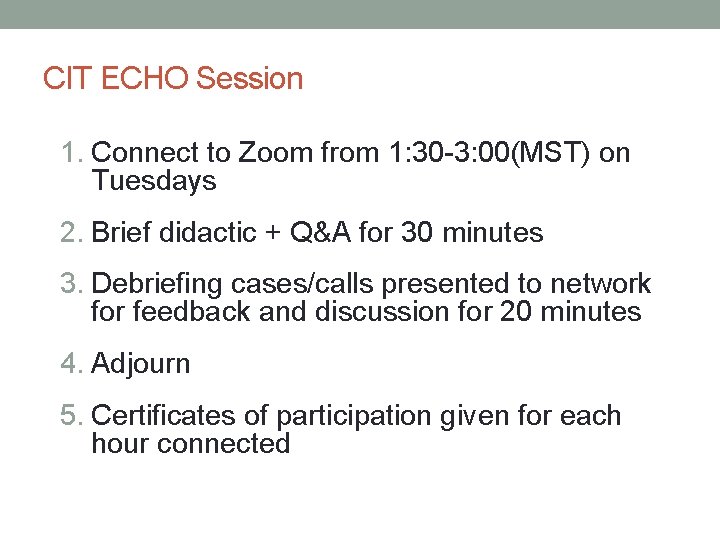
CIT ECHO Session 1. Connect to Zoom from 1: 30 -3: 00(MST) on Tuesdays 2. Brief didactic + Q&A for 30 minutes 3. Debriefing cases/calls presented to network for feedback and discussion for 20 minutes 4. Adjourn 5. Certificates of participation given for each hour connected
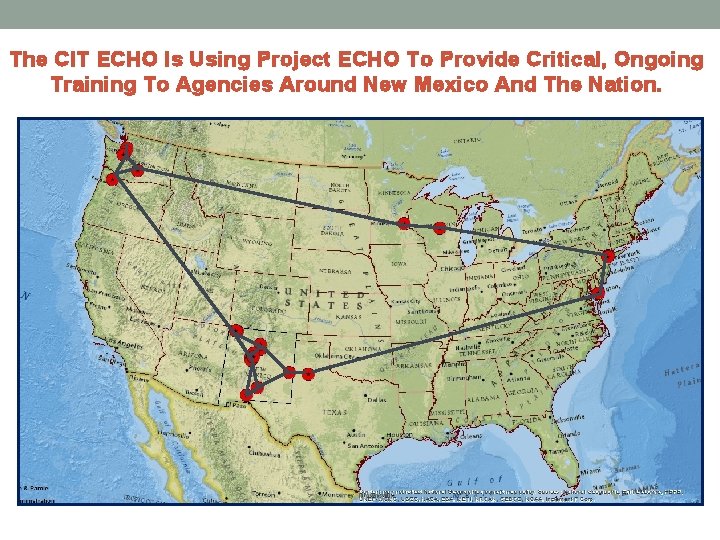
The CIT ECHO Is Using Project ECHO To Provide Critical, Ongoing Training To Agencies Around New Mexico And The Nation.
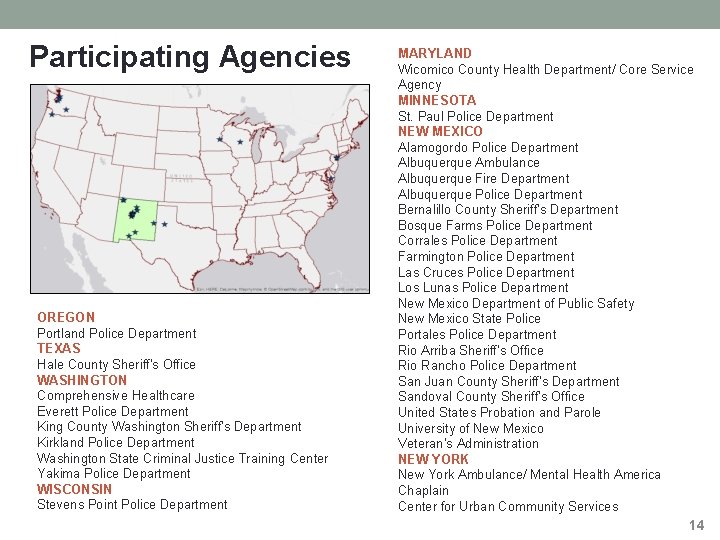
Participating Agencies OREGON Portland Police Department TEXAS Hale County Sheriff's Office WASHINGTON Comprehensive Healthcare Everett Police Department King County Washington Sheriff's Department Kirkland Police Department Washington State Criminal Justice Training Center Yakima Police Department WISCONSIN Stevens Point Police Department MARYLAND Wicomico County Health Department/ Core Service Agency MINNESOTA St. Paul Police Department NEW MEXICO Alamogordo Police Department Albuquerque Ambulance Albuquerque Fire Department Albuquerque Police Department Bernalillo County Sheriff’s Department Bosque Farms Police Department Corrales Police Department Farmington Police Department Las Cruces Police Department Los Lunas Police Department New Mexico Department of Public Safety New Mexico State Police Portales Police Department Rio Arriba Sheriff’s Office Rio Rancho Police Department San Juan County Sheriff’s Department Sandoval County Sheriff’s Office United States Probation and Parole University of New Mexico Veteran’s Administration NEW YORK New York Ambulance/ Mental Health America Chaplain Center for Urban Community Services 14
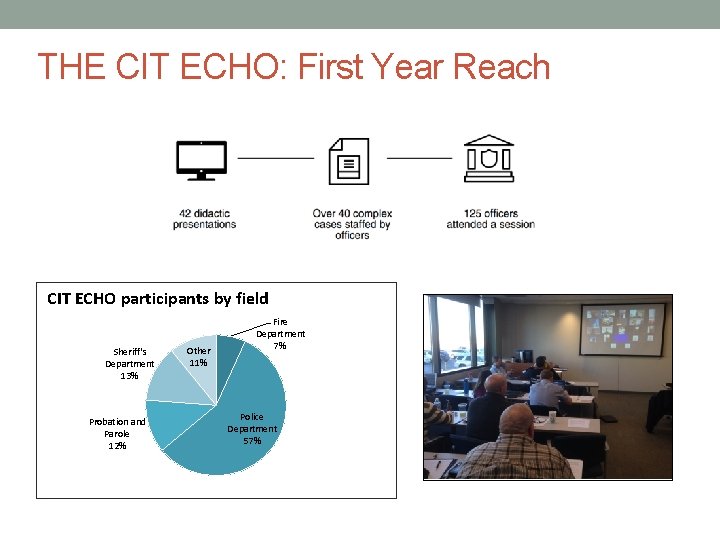
THE CIT ECHO: First Year Reach CIT ECHO participants by field Sheriff's Department 13% Probation and Parole 12% Other 11% Fire Department 7% Police Department 57%
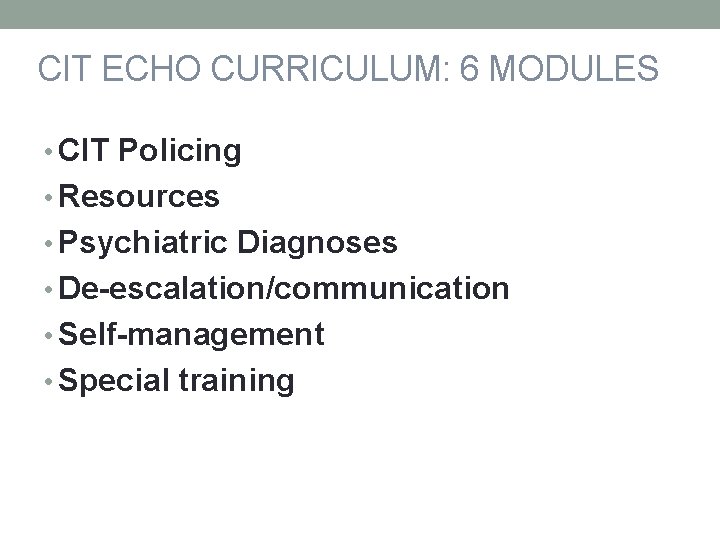
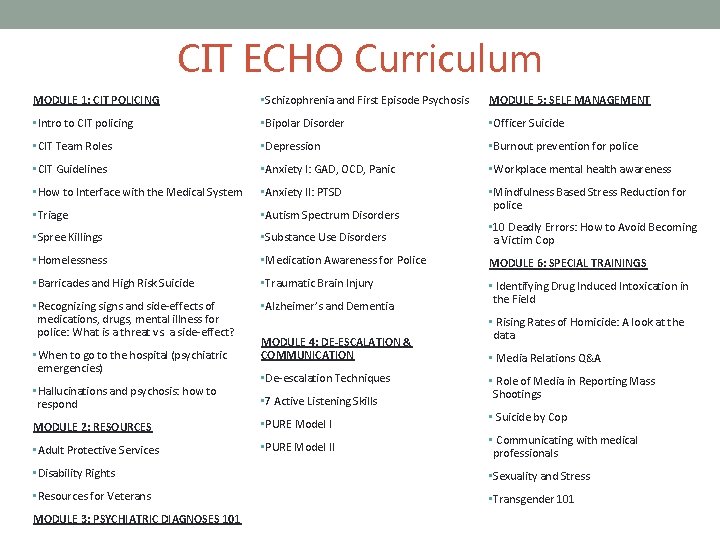
CIT ECHO CURRICULUM: 6 MODULES • CIT Policing • Resources • Psychiatric Diagnoses • De-escalation/communication • Self-management • Special training
CIT ECHO Curriculum MODULE 1: CIT POLICING • Schizophrenia and First Episode Psychosis MODULE 5: SELF MANAGEMENT • Intro to CIT policing • Bipolar Disorder • Officer Suicide • CIT Team Roles • Depression • Burnout prevention for police • CIT Guidelines • Anxiety I: GAD, OCD, Panic • Workplace mental health awareness • How to Interface with the Medical System • Anxiety II: PTSD • Triage • Autism Spectrum Disorders • Mindfulness Based Stress Reduction for police • Spree Killings • Substance Use Disorders • 10 Deadly Errors: How to Avoid Becoming a Victim Cop • Homelessness • Medication Awareness for Police MODULE 6: SPECIAL TRAININGS • Barricades and High Risk Suicide • Traumatic Brain Injury • Recognizing signs and side-effects of medications, drugs, mental illness for police: What is a threat vs. a side-effect? • Alzheimer’s and Dementia • Identifying Drug Induced Intoxication in the Field • When to go to the hospital (psychiatric emergencies) • Hallucinations and psychosis: how to respond MODULE 4: DE-ESCALATION & COMMUNICATION • De-escalation Techniques • 7 Active Listening Skills MODULE 2: RESOURCES • PURE Model I • Adult Protective Services • PURE Model II • Rising Rates of Homicide: A look at the data • Media Relations Q&A • Role of Media in Reporting Mass Shootings • Suicide by Cop • Communicating with medical professionals • Disability Rights • Sexuality and Stress • Resources for Veterans • Transgender 101 MODULE 3: PSYCHIATRIC DIAGNOSES 101
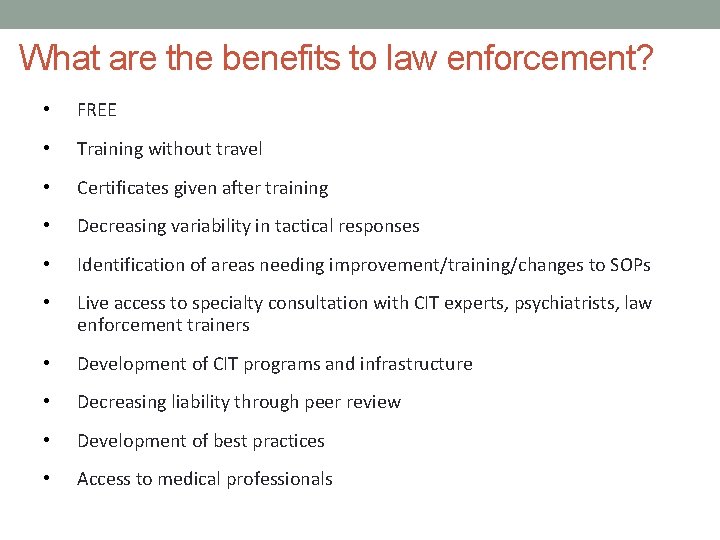
What are the benefits to law enforcement? • FREE • Training without travel • Certificates given after training • Decreasing variability in tactical responses • Identification of areas needing improvement/training/changes to SOPs • Live access to specialty consultation with CIT experts, psychiatrists, law enforcement trainers • Development of CIT programs and infrastructure • Decreasing liability through peer review • Development of best practices • Access to medical professionals
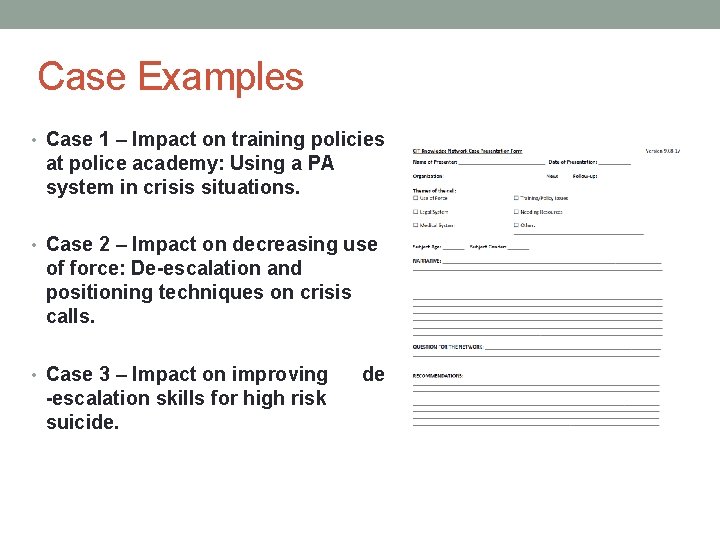
Case Examples • Case 1 – Impact on training policies at police academy: Using a PA system in crisis situations. • Case 2 – Impact on decreasing use of force: De-escalation and positioning techniques on crisis calls. • Case 3 – Impact on improving -escalation skills for high risk suicide. de
CIT INC. • www. go. CIT. org • Searchable for CIT program information • CIT ECHO didactics • No recorded cases
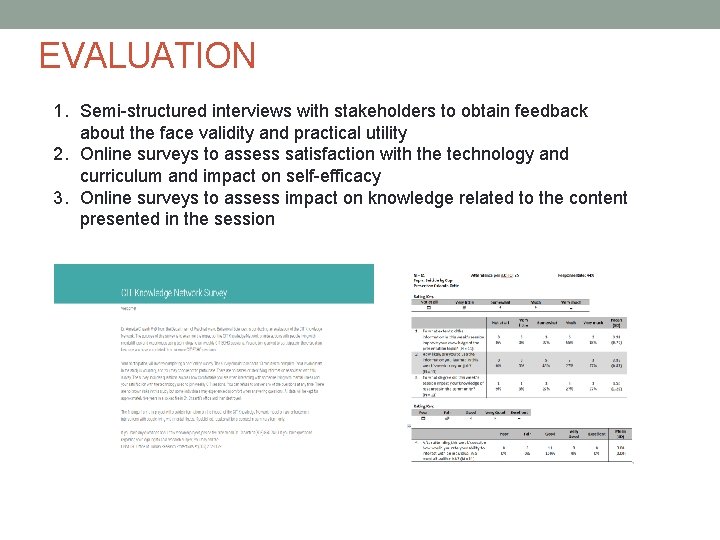
EVALUATION 1. Semi-structured interviews with stakeholders to obtain feedback about the face validity and practical utility 2. Online surveys to assess satisfaction with the technology and curriculum and impact on self-efficacy 3. Online surveys to assess impact on knowledge related to the content presented in the session
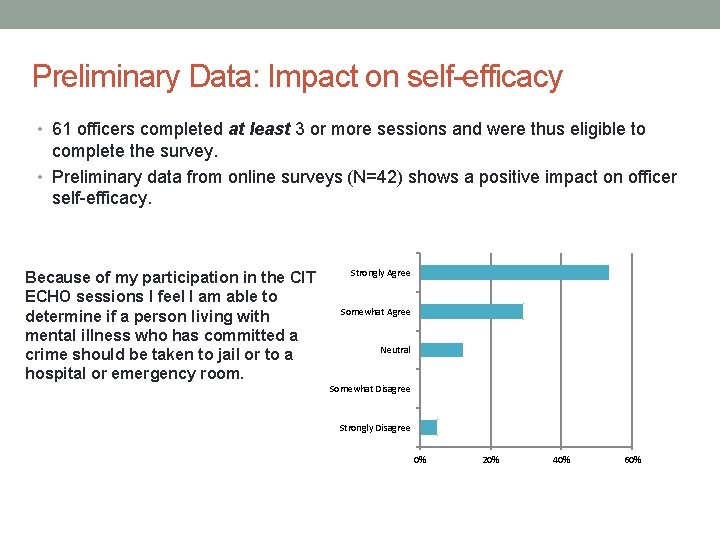
Preliminary Data: Impact on self-efficacy • 61 officers completed at least 3 or more sessions and were thus eligible to complete the survey. • Preliminary data from online surveys (N=42) shows a positive impact on officer self-efficacy. Because of my participation in the CIT ECHO sessions I feel I am able to determine if a person living with mental illness who has committed a crime should be taken to jail or to a hospital or emergency room. Strongly Agree Somewhat Agree Neutral Somewhat Disagree Strongly Disagree 0% 20% 40% 60%
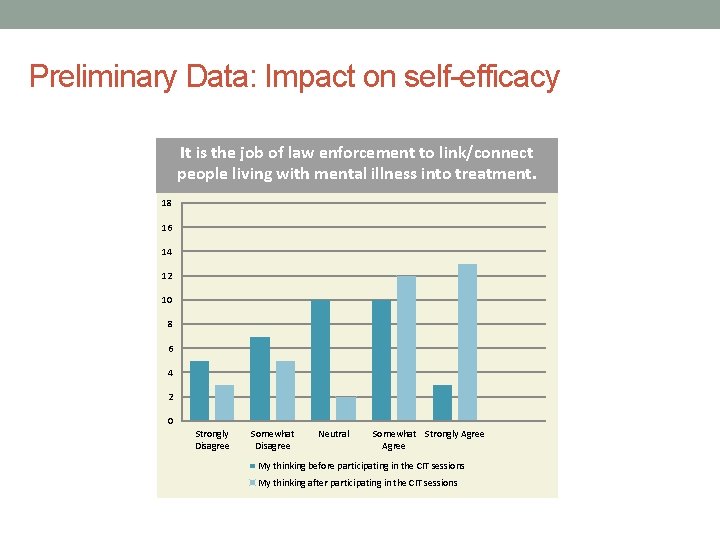
Preliminary Data: Impact on self-efficacy It is the job of law enforcement to link/connect people living with mental illness into treatment. 18 16 14 12 10 8 6 4 2 0 Strongly Disagree Somewhat Disagree Neutral Somewhat Strongly Agree My thinking before participating in the CIT sessions My thinking after participating in the CIT sessions
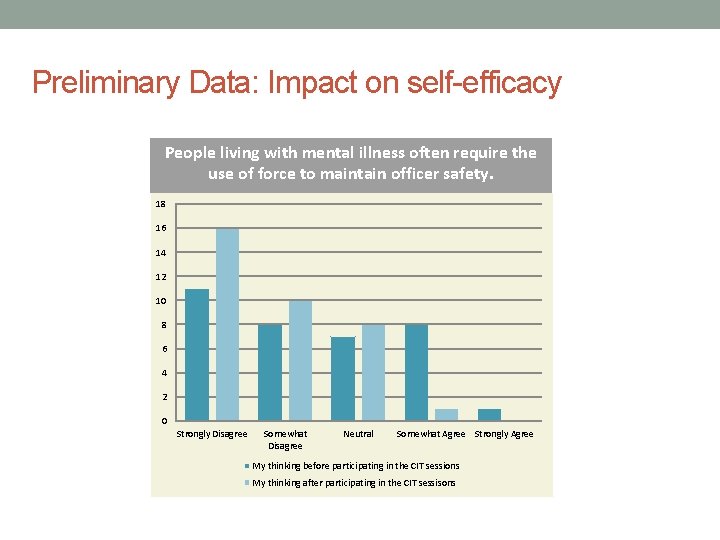
Preliminary Data: Impact on self-efficacy People living with mental illness often require the use of force to maintain officer safety. 18 16 14 12 10 8 6 4 2 0 Strongly Disagree Somewhat Disagree Neutral Somewhat Agree Strongly Agree My thinking before participating in the CIT sessions My thinking after participating in the CIT sessisons
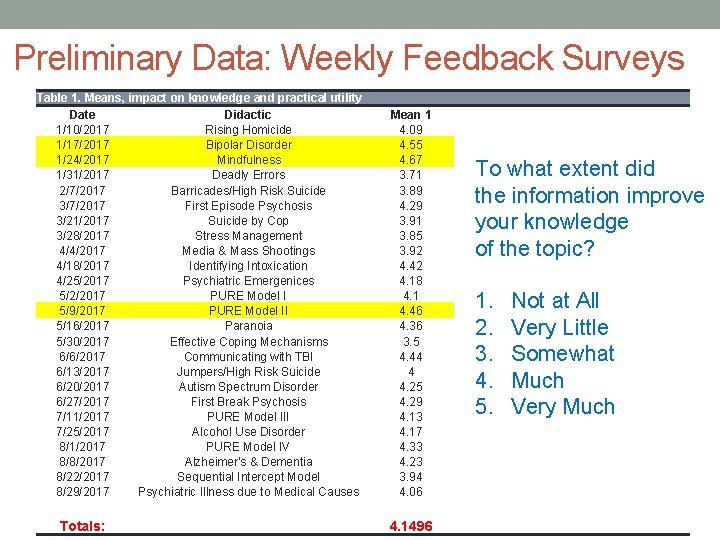
Preliminary Data: Weekly Feedback Surveys Table 1. Means, impact on knowledge and practical utility Date Didactic 1/10/2017 Rising Homicide 1/17/2017 Bipolar Disorder 1/24/2017 Mindfulness 1/31/2017 Deadly Errors 2/7/2017 Barricades/High Risk Suicide 3/7/2017 First Episode Psychosis 3/21/2017 Suicide by Cop 3/28/2017 Stress Management 4/4/2017 Media & Mass Shootings 4/18/2017 Identifying Intoxication 4/25/2017 Psychiatric Emergenices 5/2/2017 PURE Model I 5/9/2017 PURE Model II 5/16/2017 Paranoia 5/30/2017 Effective Coping Mechanisms 6/6/2017 Communicating with TBI 6/13/2017 Jumpers/High Risk Suicide 6/20/2017 Autism Spectrum Disorder 6/27/2017 First Break Psychosis 7/11/2017 PURE Model III 7/25/2017 Alcohol Use Disorder 8/1/2017 PURE Model IV 8/8/2017 Alzheimer's & Dementia 8/22/2017 Sequential Intercept Model 8/29/2017 Psychiatric Illness due to Medical Causes Totals: Mean 1 4. 09 4. 55 4. 67 3. 71 3. 89 4. 29 3. 91 3. 85 3. 92 4. 42 4. 18 4. 1 4. 46 4. 36 3. 5 4. 44 4 4. 25 4. 29 4. 13 4. 17 4. 33 4. 23 3. 94 4. 06 4. 1496 To what extent did the information improve your knowledge of the topic? 1. 2. 3. 4. 5. Not at All Very Little Somewhat Much Very Much
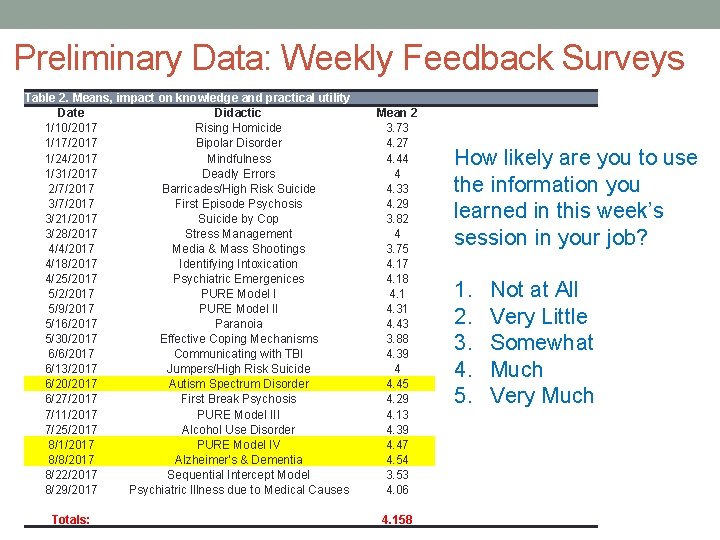
Preliminary Data: Weekly Feedback Surveys Table 2. Means, impact on knowledge and practical utility Date Didactic 1/10/2017 Rising Homicide 1/17/2017 Bipolar Disorder 1/24/2017 Mindfulness 1/31/2017 Deadly Errors 2/7/2017 Barricades/High Risk Suicide 3/7/2017 First Episode Psychosis 3/21/2017 Suicide by Cop 3/28/2017 Stress Management 4/4/2017 Media & Mass Shootings 4/18/2017 Identifying Intoxication 4/25/2017 Psychiatric Emergenices 5/2/2017 PURE Model I 5/9/2017 PURE Model II 5/16/2017 Paranoia 5/30/2017 Effective Coping Mechanisms 6/6/2017 Communicating with TBI 6/13/2017 Jumpers/High Risk Suicide 6/20/2017 Autism Spectrum Disorder 6/27/2017 First Break Psychosis 7/11/2017 PURE Model III 7/25/2017 Alcohol Use Disorder 8/1/2017 PURE Model IV 8/8/2017 Alzheimer's & Dementia 8/22/2017 Sequential Intercept Model 8/29/2017 Psychiatric Illness due to Medical Causes Totals: Mean 2 3. 73 4. 27 4. 44 4 4. 33 4. 29 3. 82 4 3. 75 4. 17 4. 18 4. 1 4. 31 4. 43 3. 88 4. 39 4 4. 45 4. 29 4. 13 4. 39 4. 47 4. 54 3. 53 4. 06 4. 158 How likely are you to use the information you learned in this week’s session in your job? 1. 2. 3. 4. 5. Not at All Very Little Somewhat Much Very Much
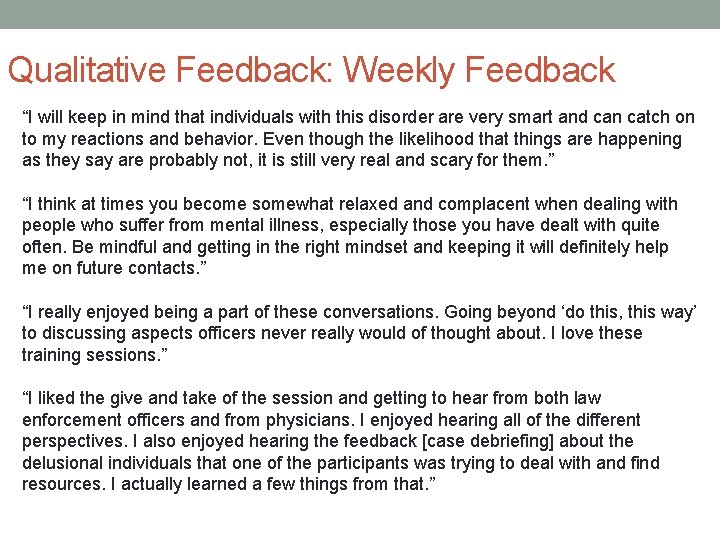
Qualitative Feedback: Weekly Feedback “I will keep in mind that individuals with this disorder are very smart and can catch on to my reactions and behavior. Even though the likelihood that things are happening as they say are probably not, it is still very real and scary for them. ” “I think at times you become somewhat relaxed and complacent when dealing with people who suffer from mental illness, especially those you have dealt with quite often. Be mindful and getting in the right mindset and keeping it will definitely help me on future contacts. ” “I really enjoyed being a part of these conversations. Going beyond ‘do this, this way’ to discussing aspects officers never really would of thought about. I love these training sessions. ” “I liked the give and take of the session and getting to hear from both law enforcement officers and from physicians. I enjoyed hearing all of the different perspectives. I also enjoyed hearing the feedback [case debriefing] about the delusional individuals that one of the participants was trying to deal with and find resources. I actually learned a few things from that. ”
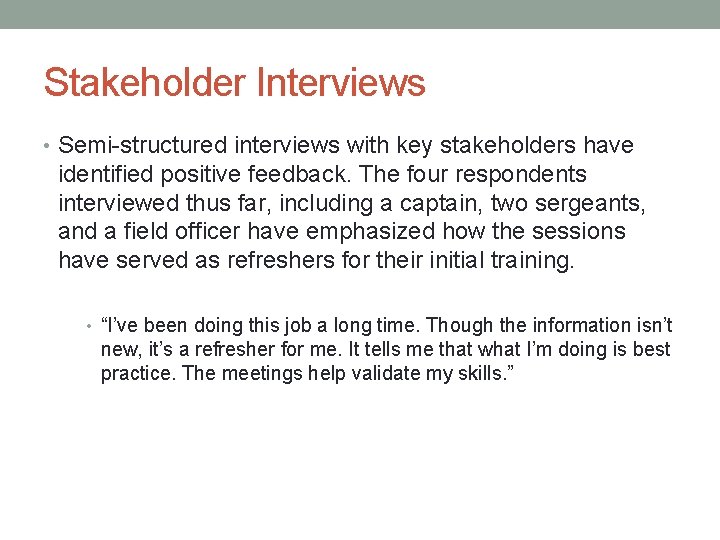
Stakeholder Interviews • Semi-structured interviews with key stakeholders have identified positive feedback. The four respondents interviewed thus far, including a captain, two sergeants, and a field officer have emphasized how the sessions have served as refreshers for their initial training. • “I’ve been doing this job a long time. Though the information isn’t new, it’s a refresher for me. It tells me that what I’m doing is best practice. The meetings help validate my skills. ”
Questions? Matthew Tinney mtinney@cabq. gov 505 -553 -2229 Nils Rosenbaum, MD nrosenbaum@cabq. gov Daniel Duhigg, DO dduhigg@phs. org Jennifer Earheart jearheart@cabq. gov