
Learning to Use Your Behavioral Style Leadership Resources
Learning to Use Your Behavioral Style Leadership Resources and Consulting © Leadership Resources & Consulting
Objectives 1. Name each style and become familiar with the characteristics. 2. Be aware of how to better communicate with each style. 3. Be aware of what motivates each style. 4. Understand how each style interacts with other styles on a professional and personal level. 5. Determine your own style. 6. Tell the difference between Graph I and Graph II. 7. Be aware of how to better manage different styles. 8. Recognize the style of a good facilitator. 9. Chart a team graph and determine the natural team characteristics. 10. Use models to apply DISC in the workplace. © Leadership Resources & Consulting

The Problem Once upon a time, there were four people named EVERYBODY, SOMEBODY, NOBODY, and ANYBODY. When there was an important job to be done, EVERYBODY was sure that SOMEBODY would do it. ANYBODY could have done it, but NOBODY did it. When NOBODY did it, SOMEBODY got angry because it was EVERYBODY’S job. EVERYBODY thought that ANYBODY could do it, but NOBODY realized that EVERYBODY wouldn’t do it. So it ended up that EVERYBODY blamed SOMEBODY when NOBODY did what ANYBODY could have done in the first place. © Leadership Resources & Consulting

Communication Channel Sender Receiver Feedback Variables That Influence Communication 7% Words 35% Tone of Voice 58% Body Language Culture Behavioral Style Vocabulary Experience Emotions Internal Noise Knowledge Skills Attitude © Leadership Resources & Consulting
What Did You Say? I Know You Believe You Understand What You Think I Said, But I Am Not Sure You Realize That What You Heard Is Not What I Meant! © Leadership Resources & Consulting
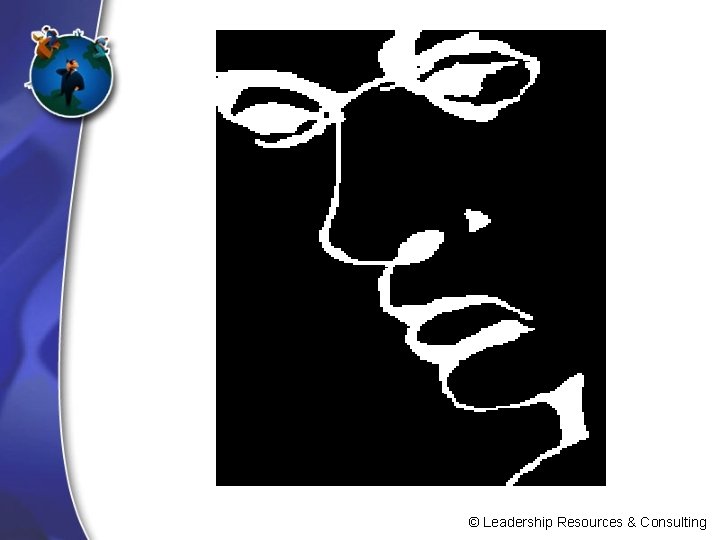
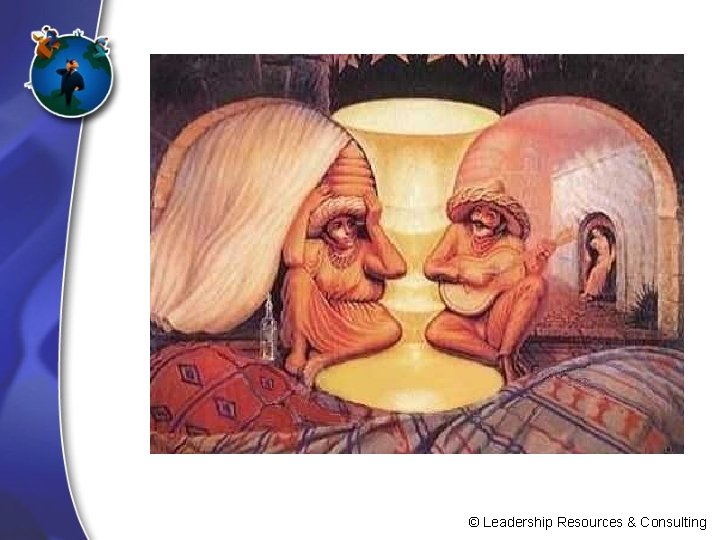
Perception “Perception is all there is. There is no reality. There is only perceived reality. ” Tom Peters © Leadership Resources & Consulting
© Leadership Resources & Consulting
© Leadership Resources & Consulting

© Leadership Resources & Consulting
History • Hippocrates – 400 BC – Observed four different areas of behavior – – • • Blood Black Bile Yellow Bile Phlegm Jung - 1921 – refined the four types Marsten – 1928 – Published “Emotions of Normal People” and identified the behavioral theory we use today © Leadership Resources & Consulting
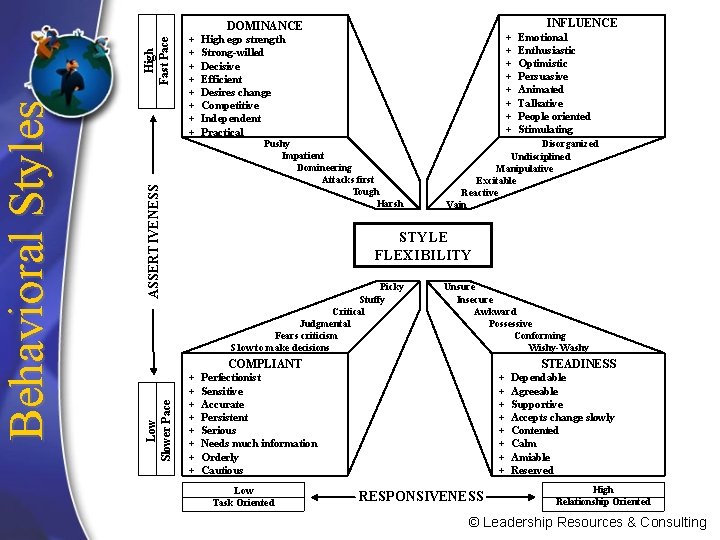
High Fast Pace ASSERTIVENESS + Emotional + Enthusiastic + Optimistic + Persuasive + Animated + Talkative + People oriented + Stimulating + High ego strength + Strong-willed + Decisive + Efficient + Desires change + Competitive + Independent + Practical Pushy Impatient Domineering Attacks first Tough Harsh Disorganized Undisciplined Manipulative Excitable Reactive Vain STYLE FLEXIBILITY Picky Unsure Stuffy Critical Judgmental Fears criticism S low to make decisions Insecure Awkward Possessive Conforming Wishy-Washy COMPLIANT Low Slower Pace Behavioral Styles INFLUENCE DOMINANCE STEADINESS + Perfectionist + Sensitive + Accurate + Persistent + Serious + Needs much information + Orderly + Cautious Low Task Oriented + Dependable + Agreeable + Supportive + Accepts change slowly + Contented + Calm + Amiable + Reserved RESPONSIVENESS High Relationship Oriented © Leadership Resources & Consulting
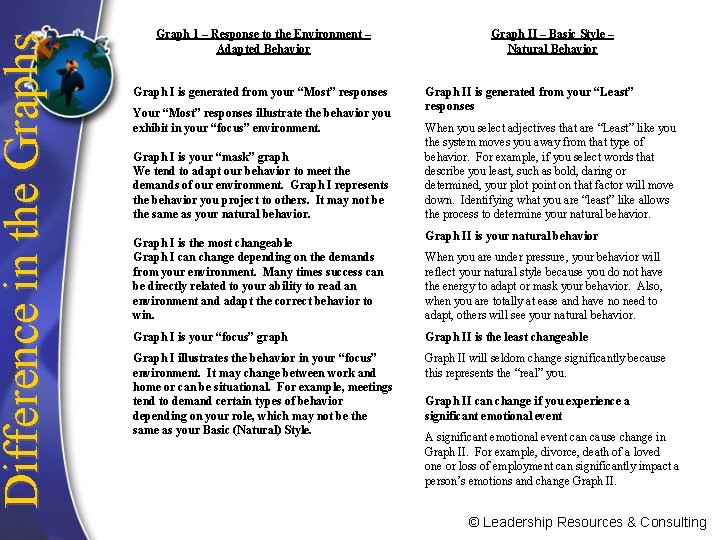
Difference in the Graphs Graph 1 – Response to the Environment – Adapted Behavior Graph II – Basic Style – Natural Behavior Graph I is generated from your “Most” responses Your “Most” responses illustrate the behavior you exhibit in your “focus” environment. Graph I is your “mask” graph We tend to adapt our behavior to meet the demands of our environment. Graph I represents the behavior you project to others. It may not be the same as your natural behavior. Graph I is the most changeable Graph I can change depending on the demands from your environment. Many times success can be directly related to your ability to read an environment and adapt the correct behavior to win. Graph II is generated from your “Least” responses When you select adjectives that are “Least” like you the system moves you away from that type of behavior. For example, if you select words that describe you least, such as bold, daring or determined, your plot point on that factor will move down. Identifying what you are “least” like allows the process to determine your natural behavior. Graph II is your natural behavior When you are under pressure, your behavior will reflect your natural style because you do not have the energy to adapt or mask your behavior. Also, when you are totally at ease and have no need to adapt, others will see your natural behavior. Graph I is your “focus” graph Graph II is the least changeable Graph I illustrates the behavior in your “focus” environment. It may change between work and home or can be situational. For example, meetings tend to demand certain types of behavior depending on your role, which may not be the same as your Basic (Natural) Style. Graph II will seldom change significantly because this represents the “real” you. Graph II can change if you experience a significant emotional event A significant emotional event can cause change in Graph II. For example, divorce, death of a loved one or loss of employment can significantly impact a person’s emotions and change Graph II. © Leadership Resources & Consulting
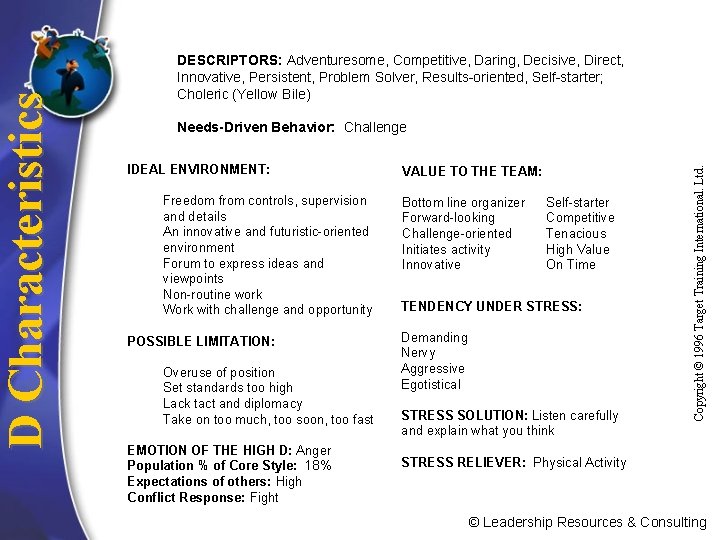
Needs-Driven Behavior: Challenge IDEAL ENVIRONMENT: Freedom from controls, supervision and details An innovative and futuristic-oriented environment Forum to express ideas and viewpoints Non-routine work Work with challenge and opportunity POSSIBLE LIMITATION: Overuse of position Set standards too high Lack tact and diplomacy Take on too much, too soon, too fast EMOTION OF THE HIGH D: Anger Population % of Core Style: 18% Expectations of others: High Conflict Response: Fight VALUE TO THE TEAM: Bottom line organizer Forward-looking Challenge-oriented Initiates activity Innovative Self-starter Competitive Tenacious High Value On Time TENDENCY UNDER STRESS: Demanding Nervy Aggressive Egotistical STRESS SOLUTION: Listen carefully and explain what you think Copyright © 1996 Target Training International. Ltd. D Characteristics DESCRIPTORS: Adventuresome, Competitive, Daring, Decisive, Direct, Innovative, Persistent, Problem Solver, Results-oriented, Self-starter; Choleric (Yellow Bile) STRESS RELIEVER: Physical Activity © Leadership Resources & Consulting
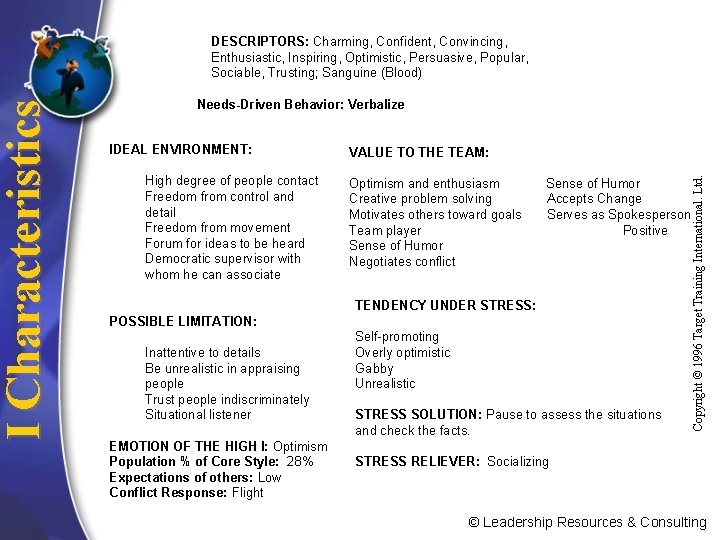
Needs-Driven Behavior: Verbalize IDEAL ENVIRONMENT: High degree of people contact Freedom from control and detail Freedom from movement Forum for ideas to be heard Democratic supervisor with whom he can associate VALUE TO THE TEAM: Optimism and enthusiasm Sense of Humor Creative problem solving Accepts Change Motivates others toward goals Serves as Spokesperson Team player Positive Sense of Humor Negotiates conflict TENDENCY UNDER STRESS: POSSIBLE LIMITATION: Inattentive to details Be unrealistic in appraising people Trust people indiscriminately Situational listener EMOTION OF THE HIGH I: Optimism Population % of Core Style: 28% Expectations of others: Low Conflict Response: Flight Self-promoting Overly optimistic Gabby Unrealistic STRESS SOLUTION: Pause to assess the situations and check the facts. Copyright © 1996 Target Training International. Ltd. I Characteristics DESCRIPTORS: Charming, Confident, Convincing, Enthusiastic, Inspiring, Optimistic, Persuasive, Popular, Sociable, Trusting; Sanguine (Blood) STRESS RELIEVER: Socializing © Leadership Resources & Consulting
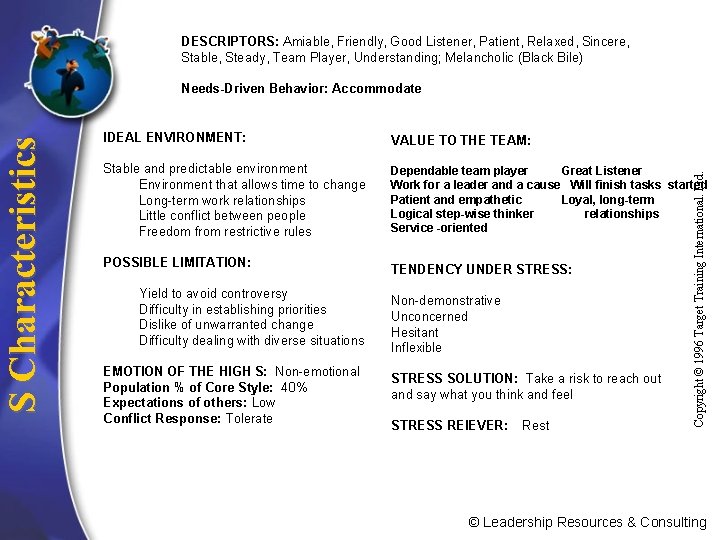
DESCRIPTORS: Amiable, Friendly, Good Listener, Patient, Relaxed, Sincere, Stable, Steady, Team Player, Understanding; Melancholic (Black Bile) IDEAL ENVIRONMENT: VALUE TO THE TEAM: Stable and predictable environment Environment that allows time to change Long-term work relationships Little conflict between people Freedom from restrictive rules Dependable team player Great Listener Work for a leader and a cause Will finish tasks started Patient and empathetic Loyal, long-term Logical step-wise thinker relationships Service -oriented POSSIBLE LIMITATION: Yield to avoid controversy Difficulty in establishing priorities Dislike of unwarranted change Difficulty dealing with diverse situations EMOTION OF THE HIGH S: Non-emotional Population % of Core Style: 40% Expectations of others: Low Conflict Response: Tolerate TENDENCY UNDER STRESS: Non-demonstrative Unconcerned Hesitant Inflexible STRESS SOLUTION: Take a risk to reach out and say what you think and feel STRESS REIEVER: Rest Copyright © 1996 Target Training International. Ltd. S Characteristics Needs-Driven Behavior: Accommodate © Leadership Resources & Consulting
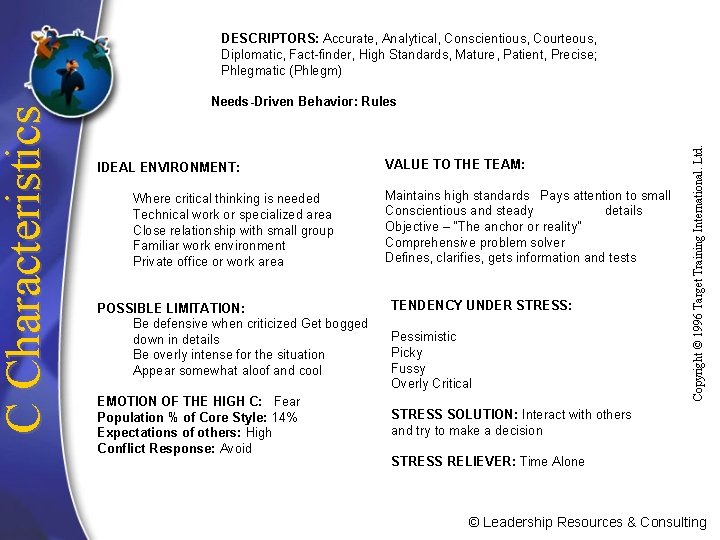
Needs-Driven Behavior: Rules IDEAL ENVIRONMENT: Where critical thinking is needed Technical work or specialized area Close relationship with small group Familiar work environment Private office or work area POSSIBLE LIMITATION: Be defensive when criticized Get bogged down in details Be overly intense for the situation Appear somewhat aloof and cool EMOTION OF THE HIGH C: Fear Population % of Core Style: 14% Expectations of others: High Conflict Response: Avoid VALUE TO THE TEAM: Maintains high standards Pays attention to small Conscientious and steady details Objective – “The anchor or reality” Comprehensive problem solver Defines, clarifies, gets information and tests TENDENCY UNDER STRESS: Pessimistic Picky Fussy Overly Critical Copyright © 1996 Target Training International. Ltd. C Characteristics DESCRIPTORS: Accurate, Analytical, Conscientious, Courteous, Diplomatic, Fact-finder, High Standards, Mature, Patient, Precise; Phlegmatic (Phlegm) STRESS SOLUTION: Interact with others and try to make a decision STRESS RELIEVER: Time Alone © Leadership Resources & Consulting
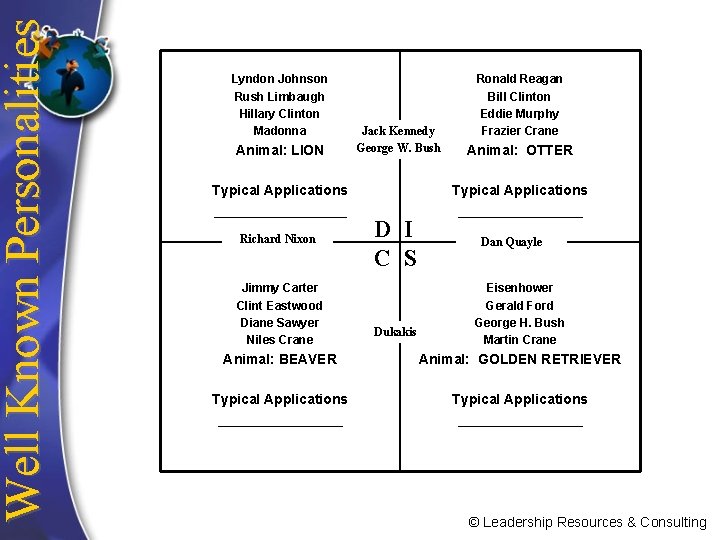
Well Known Personalities Lyndon Johnson Rush Limbaugh Hillary Clinton Madonna Animal: LION Typical Applications _________ Richard Nixon Jimmy Carter Clint Eastwood Diane Sawyer Niles Crane Jack Kennedy George W. Bush D I C S Dukakis Ronald Reagan Bill Clinton Eddie Murphy Frazier Crane Animal: OTTER Typical Applications ________ Dan Quayle Eisenhower Gerald Ford George H. Bush Martin Crane Animal: BEAVER Animal: GOLDEN RETRIEVER Typical Applications ________________ © Leadership Resources & Consulting
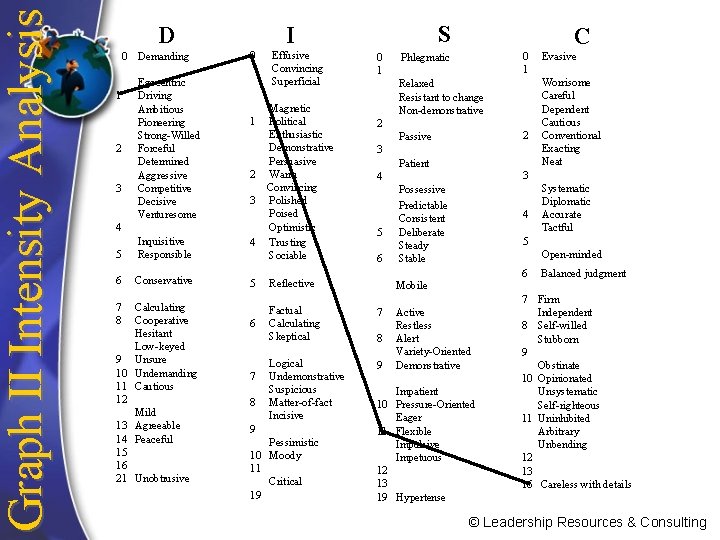
Graph II Intensity Analysis D 0 Demanding Egocentric 1 Driving Ambitious Pioneering Strong-Willed 2 Forceful Determined Aggressive 3 Competitive Decisive Venturesome 4 Inquisitive 5 Responsible 6 Conservative 7 Calculating 8 Cooperative Hesitant Low-keyed 9 Unsure 10 Undemanding 11 Cautious 12 Mild 13 Agreeable 14 Peaceful 15 16 21 Unobtrusive S I 0 Effusive Convincing Superficial C Magnetic 1 Political Enthusiastic Demonstrative Persuasive 2 Warm Convincing 3 Polished Poised Optimistic 4 Trusting Sociable 0 Phlegmatic 1 Relaxed Resistant to change Non-demonstrative 2 Passive 3 Patient 4 Possessive Predictable Consistent 5 Deliberate Steady 6 Stable 5 Reflective Mobile Factual 6 Calculating Skeptical 7 Active Restless 8 Alert Variety-Oriented 9 Demonstrative Logical 7 Undemonstrative Suspicious 8 Matter-of-fact Incisive 9 Pessimistic 10 Moody 11 Critical 19 Impatient 10 Pressure-Oriented Eager 11 Flexible Impulsive Impetuous 12 13 19 Hypertense 0 Evasive 1 Worrisome Careful Dependent Cautious 2 Conventional Exacting Neat 3 Systematic Diplomatic 4 Accurate Tactful 5 Open-minded 6 Balanced judgment 7 Firm Independent 8 Self-willed Stubborn 9 Obstinate 10 Opinionated Unsystematic Self-righteous 11 Uninhibited Arbitrary Unbending 12 13 16 Careless with details © Leadership Resources & Consulting
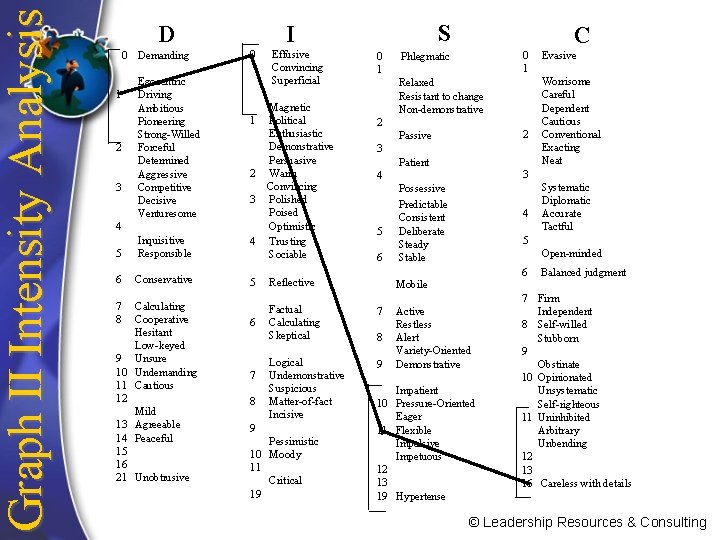
Graph II Intensity Analysis D 0 Demanding Egocentric 1 Driving Ambitious Pioneering Strong-Willed 2 Forceful Determined Aggressive 3 Competitive Decisive Venturesome 4 Inquisitive 5 Responsible 6 Conservative 7 Calculating 8 Cooperative Hesitant Low-keyed 9 Unsure 10 Undemanding 11 Cautious 12 Mild 13 Agreeable 14 Peaceful 15 16 21 Unobtrusive S I 0 Effusive Convincing Superficial Magnetic 1 Political Enthusiastic Demonstrative Persuasive 2 Warm Convincing 3 Polished Poised Optimistic 4 Trusting Sociable C 0 Phlegmatic 1 Relaxed Resistant to change Non-demonstrative 2 Passive 3 Patient 4 Possessive Predictable Consistent 5 Deliberate Steady 6 Stable 5 Reflective Mobile Factual 6 Calculating Skeptical 7 Active Restless 8 Alert Variety-Oriented 9 Demonstrative Logical 7 Undemonstrative Suspicious 8 Matter-of-fact Incisive 9 Pessimistic 10 Moody 11 Critical 19 Impatient 10 Pressure-Oriented Eager 11 Flexible Impulsive Impetuous 12 13 19 Hypertense 0 Evasive 1 Worrisome Careful Dependent Cautious 2 Conventional Exacting Neat 3 Systematic Diplomatic 4 Accurate Tactful 5 Open-minded 6 Balanced judgment 7 Firm Independent 8 Self-willed Stubborn 9 Obstinate 10 Opinionated Unsystematic Self-righteous 11 Uninhibited Arbitrary Unbending 12 13 16 Careless with details © Leadership Resources & Consulting
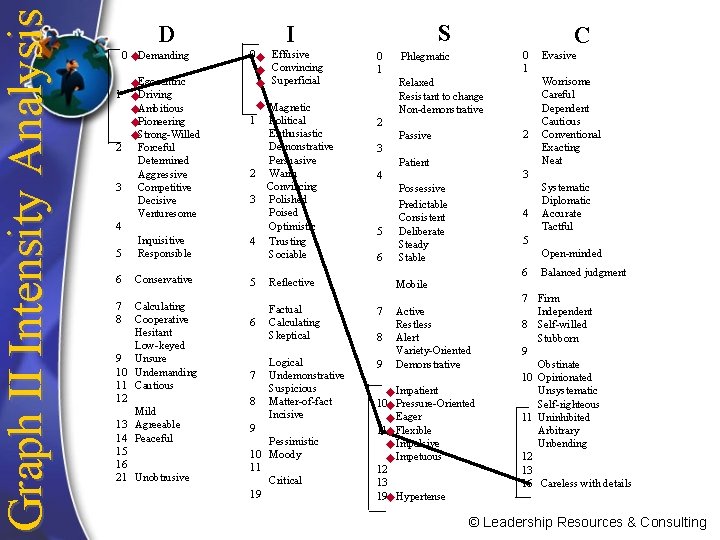
Graph II Intensity Analysis D 0 Demanding u Egocentric u 1 Driving u Ambitious u Pioneering u Strong-Willed u 2 Forceful Determined Aggressive 3 Competitive Decisive Venturesome 4 Inquisitive 5 Responsible 6 Conservative 7 Calculating 8 Cooperative Hesitant Low-keyed 9 Unsure 10 Undemanding 11 Cautious 12 Mild 13 Agreeable 14 Peaceful 15 16 21 Unobtrusive S I 0 Effusive u Convincing u Superficial u u Magnetic 1 Political Enthusiastic Demonstrative Persuasive 2 Warm Convincing 3 Polished Poised Optimistic 4 Trusting Sociable C 0 Phlegmatic 1 Relaxed Resistant to change Non-demonstrative 2 Passive 3 Patient 4 Possessive Predictable Consistent 5 Deliberate Steady 6 Stable 5 Reflective Mobile Factual 6 Calculating Skeptical 7 Active Restless 8 Alert Variety-Oriented 9 Demonstrative Logical 7 Undemonstrative Suspicious 8 Matter-of-fact Incisive 9 Pessimistic 10 Moody 11 Critical 19 Impatient u 10 Pressure-Oriented u Eager u 11 Flexible u Impulsive u Impetuous u 12 13 19 Hypertense u 0 Evasive 1 Worrisome Careful Dependent Cautious 2 Conventional Exacting Neat 3 Systematic Diplomatic 4 Accurate Tactful 5 Open-minded 6 Balanced judgment 7 Firm Independent 8 Self-willed Stubborn 9 Obstinate 10 Opinionated Unsystematic Self-righteous 11 Uninhibited Arbitrary Unbending 12 13 16 Careless with details © Leadership Resources & Consulting
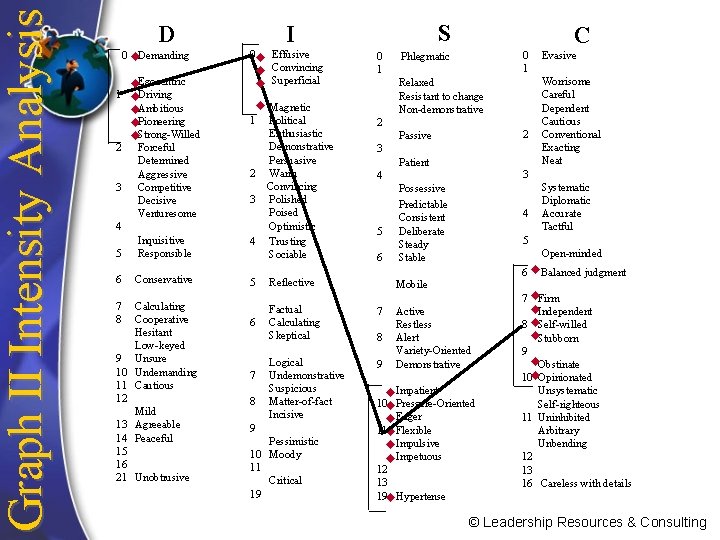
Graph II Intensity Analysis D 0 Demanding u Egocentric u 1 Driving u Ambitious u Pioneering u Strong-Willed u 2 Forceful Determined Aggressive 3 Competitive Decisive Venturesome 4 Inquisitive 5 Responsible 6 Conservative 7 Calculating 8 Cooperative Hesitant Low-keyed 9 Unsure 10 Undemanding 11 Cautious 12 Mild 13 Agreeable 14 Peaceful 15 16 21 Unobtrusive S I 0 Effusive u Convincing u Superficial u C u Magnetic 1 Political Enthusiastic Demonstrative Persuasive 2 Warm Convincing 3 Polished Poised Optimistic 4 Trusting Sociable 0 Phlegmatic 1 Relaxed Resistant to change Non-demonstrative 2 Passive 3 Patient 4 Possessive Predictable Consistent 5 Deliberate Steady 6 Stable 5 Reflective Mobile Factual 6 Calculating Skeptical 7 Active Restless 8 Alert Variety-Oriented 9 Demonstrative Logical 7 Undemonstrative Suspicious 8 Matter-of-fact Incisive 9 Pessimistic 10 Moody 11 Critical 19 Impatient u 10 Pressure-Oriented u Eager u 11 Flexible u Impulsive u Impetuous u 12 13 19 Hypertense u 0 Evasive 1 Worrisome Careful Dependent Cautious 2 Conventional Exacting Neat 3 Systematic Diplomatic 4 Accurate Tactful 5 Open-minded u 6 Balanced judgment u 7 Firm u Independent u 8 Self-willed u Stubborn 9 u Obstinate u 10 Opinionated Unsystematic Self-righteous 11 Uninhibited Arbitrary Unbending 12 13 16 Careless with details © Leadership Resources & Consulting
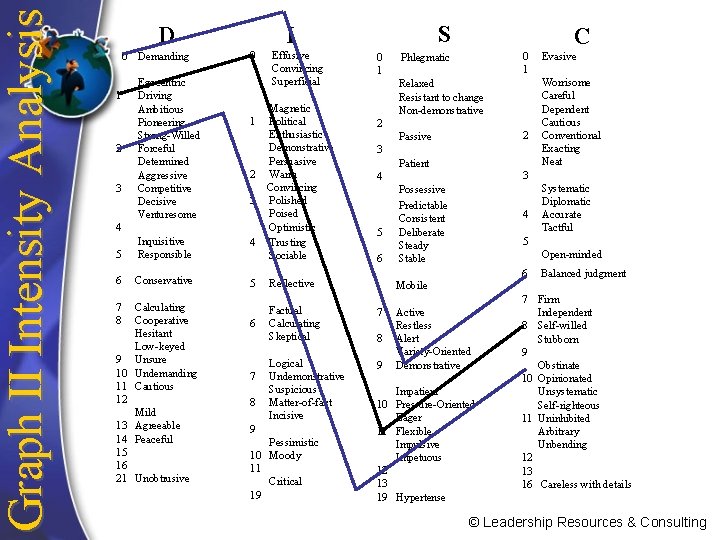
Graph II Intensity Analysis D 0 Demanding Egocentric 1 Driving Ambitious Pioneering Strong-Willed 2 Forceful Determined Aggressive 3 Competitive Decisive Venturesome 4 Inquisitive 5 Responsible 6 Conservative 7 Calculating 8 Cooperative Hesitant Low-keyed 9 Unsure 10 Undemanding 11 Cautious 12 Mild 13 Agreeable 14 Peaceful 15 16 21 Unobtrusive S I 0 Effusive Convincing Superficial C Magnetic 1 Political Enthusiastic Demonstrative Persuasive 2 Warm Convincing 3 Polished Poised Optimistic 4 Trusting Sociable 0 Phlegmatic 1 Relaxed Resistant to change Non-demonstrative 2 Passive 3 Patient 4 Possessive Predictable Consistent 5 Deliberate Steady 6 Stable 5 Reflective Mobile Factual 6 Calculating Skeptical 7 Active Restless 8 Alert Variety-Oriented 9 Demonstrative Logical 7 Undemonstrative Suspicious 8 Matter-of-fact Incisive 9 Pessimistic 10 Moody 11 Critical 19 Impatient 10 Pressure-Oriented Eager 11 Flexible Impulsive Impetuous 12 13 19 Hypertense 0 Evasive 1 Worrisome Careful Dependent Cautious 2 Conventional Exacting Neat 3 Systematic Diplomatic 4 Accurate Tactful 5 Open-minded 6 Balanced judgment 7 Firm Independent 8 Self-willed Stubborn 9 Obstinate 10 Opinionated Unsystematic Self-righteous 11 Uninhibited Arbitrary Unbending 12 13 16 Careless with details © Leadership Resources & Consulting
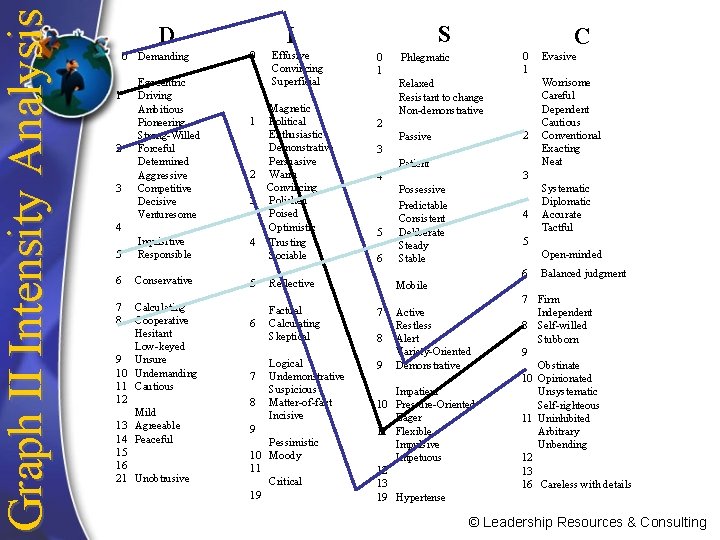
Graph II Intensity Analysis D 0 Demanding Egocentric 1 Driving Ambitious Pioneering Strong-Willed 2 Forceful Determined Aggressive 3 Competitive Decisive Venturesome 4 Inquisitive 5 Responsible 6 Conservative 7 Calculating 8 Cooperative Hesitant Low-keyed 9 Unsure 10 Undemanding 11 Cautious 12 Mild 13 Agreeable 14 Peaceful 15 16 21 Unobtrusive S I 0 Effusive Convincing Superficial C Magnetic 1 Political Enthusiastic Demonstrative Persuasive 2 Warm Convincing 3 Polished Poised Optimistic 4 Trusting Sociable 0 Phlegmatic 1 Relaxed Resistant to change Non-demonstrative 2 Passive 3 Patient 4 Possessive Predictable Consistent 5 Deliberate Steady 6 Stable 5 Reflective Mobile Factual 6 Calculating Skeptical 7 Active Restless 8 Alert Variety-Oriented 9 Demonstrative Logical 7 Undemonstrative Suspicious 8 Matter-of-fact Incisive 9 Pessimistic 10 Moody 11 Critical 19 Impatient 10 Pressure-Oriented Eager 11 Flexible Impulsive Impetuous 12 13 19 Hypertense 0 Evasive 1 Worrisome Careful Dependent Cautious 2 Conventional Exacting Neat 3 Systematic Diplomatic 4 Accurate Tactful 5 Open-minded 6 Balanced judgment 7 Firm Independent 8 Self-willed Stubborn 9 Obstinate 10 Opinionated Unsystematic Self-righteous 11 Uninhibited Arbitrary Unbending 12 13 16 Careless with details © Leadership Resources & Consulting
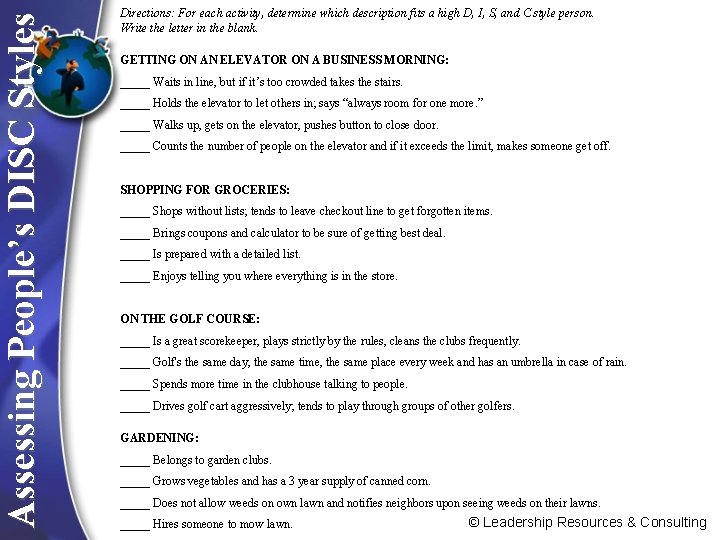
Assessing People’s DISC Styles Directions: For each activity, determine which description fits a high D, I, S, and C style person. Write the letter in the blank. GETTING ON AN ELEVATOR ON A BUSINESS MORNING: _____ Waits in line, but if it’s too crowded takes the stairs. _____ Holds the elevator to let others in; says “always room for one more. ” _____ Walks up, gets on the elevator, pushes button to close door. _____ Counts the number of people on the elevator and if it exceeds the limit, makes someone get off. SHOPPING FOR GROCERIES: _____ Shops without lists; tends to leave checkout line to get forgotten items. _____ Brings coupons and calculator to be sure of getting best deal. _____ Is prepared with a detailed list. _____ Enjoys telling you where everything is in the store. ON THE GOLF COURSE: _____ Is a great scorekeeper, plays strictly by the rules, cleans the clubs frequently. _____ Golf's the same day, the same time, the same place every week and has an umbrella in case of rain. _____ Spends more time in the clubhouse talking to people. _____ Drives golf cart aggressively; tends to play through groups of other golfers. GARDENING: _____ Belongs to garden clubs. _____ Grows vegetables and has a 3 year supply of canned corn. _____ Does not allow weeds on own lawn and notifies neighbors upon seeing weeds on their lawns. _____ Hires someone to mow lawn. © Leadership Resources & Consulting
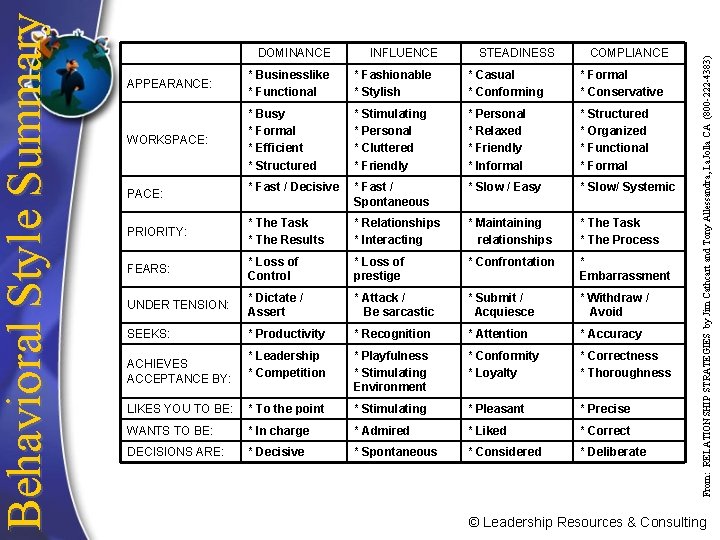
INFLUENCE STEADINESS COMPLIANCE APPEARANCE: * Businesslike * Functional * Fashionable * Stylish * Casual * Conforming * Formal * Conservative WORKSPACE: * Busy * Formal * Efficient * Structured * Stimulating * Personal * Cluttered * Friendly * Personal * Relaxed * Friendly * Informal * Structured * Organized * Functional * Formal PACE: * Fast / Decisive * Fast / Spontaneous * Slow / Easy * Slow/ Systemic PRIORITY: * The Task * The Results * Relationships * Interacting * Maintaining relationships * The Task * The Process FEARS: * Loss of Control * Loss of prestige * Confrontation * Embarrassment UNDER TENSION: * Dictate / Assert * Attack / Be sarcastic * Submit / Acquiesce * Withdraw / Avoid SEEKS: * Productivity * Recognition * Attention * Accuracy ACHIEVES ACCEPTANCE BY: * Leadership * Competition * Playfulness * Stimulating Environment * Conformity * Loyalty * Correctness * Thoroughness LIKES YOU TO BE: * To the point * Stimulating * Pleasant * Precise WANTS TO BE: * In charge * Admired * Liked * Correct DECISIONS ARE: * Decisive * Spontaneous * Considered * Deliberate From: RELATIONSHIP STRATEGIES by Jim Cathcart and Tony Allessandra, La. Jolla CA (800 -222 -4383) Behavioral Style Summary DOMINANCE © Leadership Resources & Consulting

Style Compatibility STYLES D - D GREAT RELATIONSHIP 10 9 8 REQUIRES EFFORT 7 6 5 4 REQUIRES WORK 3 2 1 S W S W S S W S W S D - I D – S D – C I – I I – S I – C S – S S W S W S – C C – C S = Social W = Work © Leadership Resources & Consulting

Appreciating Others Identify behaviors that we appreciate about the: D I S C styles. © Leadership Resources & Consulting
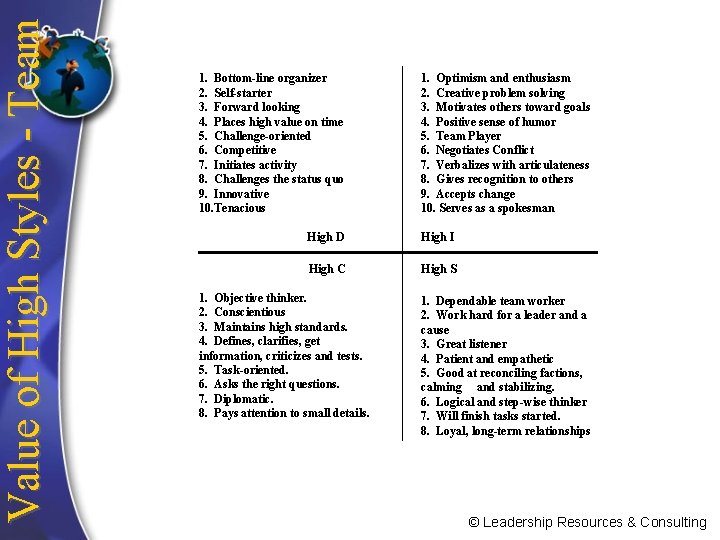
Value of High Styles - Team 1. Bottom-line organizer 2. Self-starter 3. Forward looking 4. Places high value on time 5. Challenge-oriented 6. Competitive 7. Initiates activity 8. Challenges the status quo 9. Innovative 10. Tenacious 1. Optimism and enthusiasm 2. Creative problem solving 3. Motivates others toward goals 4. Positive sense of humor 5. Team Player 6. Negotiates Conflict 7. Verbalizes with articulateness 8. Gives recognition to others 9. Accepts change 10. Serves as a spokesman High D High I High C High S 1. Objective thinker. 2. Conscientious 3. Maintains high standards. 4. Defines, clarifies, get information, criticizes and tests. 5. Task-oriented. 6. Asks the right questions. 7. Diplomatic. 8. Pays attention to small details. 1. Dependable team worker 2. Work hard for a leader and a cause 3. Great listener 4. Patient and empathetic 5. Good at reconciling factions, calming and stabilizing. 6. Logical and step-wise thinker 7. Will finish tasks started. 8. Loyal, long-term relationships © Leadership Resources & Consulting
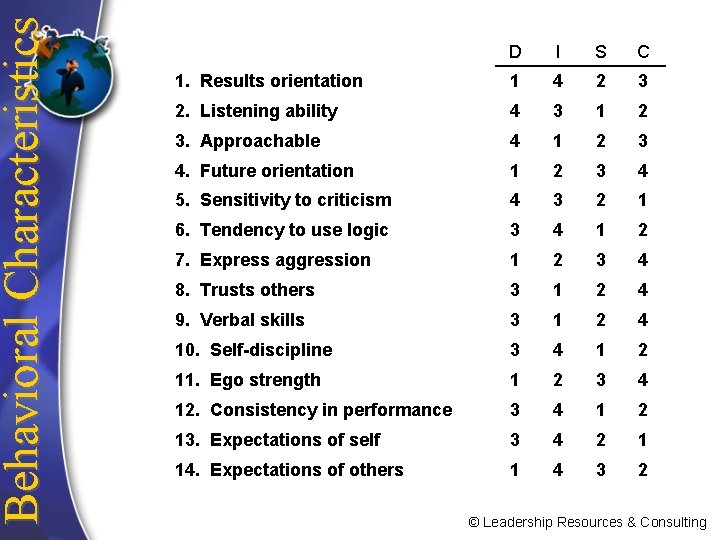
Behavioral Characteristics D I S C 1. Results orientation 1 4 2 3 2. Listening ability 4 3 1 2 3. Approachable 4 1 2 3 4. Future orientation 1 2 3 4 5. Sensitivity to criticism 4 3 2 1 6. Tendency to use logic 3 4 1 2 7. Express aggression 1 2 3 4 8. Trusts others 3 1 2 4 9. Verbal skills 3 1 2 4 10. Self-discipline 3 4 1 2 11. Ego strength 1 2 3 4 12. Consistency in performance 3 4 1 2 13. Expectations of self 3 4 2 1 14. Expectations of others 1 4 3 2 © Leadership Resources & Consulting
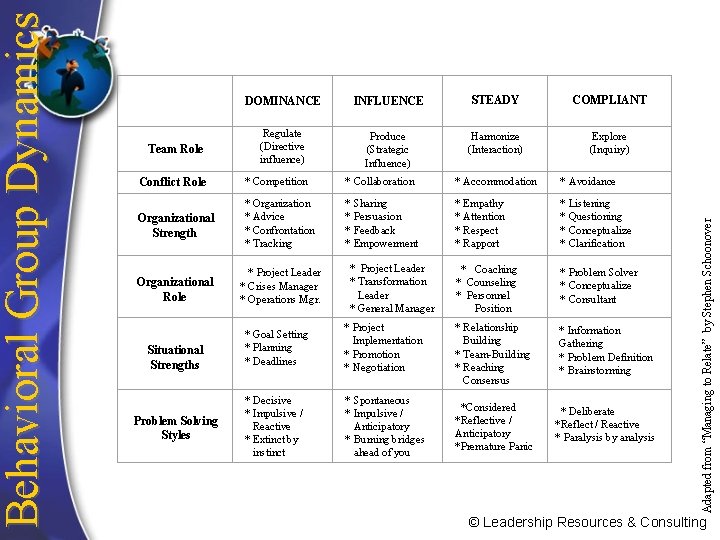
DOMINANCE INFLUENCE STEADY COMPLIANT Team Role Regulate (Directive influence) Produce (Strategic Influence) Harmonize (Interaction) Explore (Inquiry) Conflict Role * Competition * Collaboration Organizational Role Situational Strengths Problem Solving Styles * Avoidance * Organization * Advice * Confrontation * Tracking * Sharing * Empathy * Listening * Persuasion * Attention * Questioning * Feedback * Respect * Conceptualize * Empowerment * Rapport * Clarification * Coaching * Problem Solver * Project Leader * Transformation * Counseling * Conceptualize * Crises Manager Leader * Personnel * Consultant * Operations Mgr. * General Manager Position * Goal Setting * Planning * Deadlines * Project Implementation * Promotion * Negotiation * Decisive * Impulsive / Reactive * Extinct by instinct * Spontaneous * Impulsive / Anticipatory * Burning bridges ahead of you * Relationship Building * Team-Building * Reaching Consensus *Considered *Reflective / Anticipatory *Premature Panic * Information Gathering * Problem Definition * Brainstorming * Deliberate *Reflect / Reactive * Paralysis by analysis Organizational Strength * Accommodation Adapted from “Managing to Relate” by Stephen Schoonover Behavioral Group Dynamics © Leadership Resources & Consulting
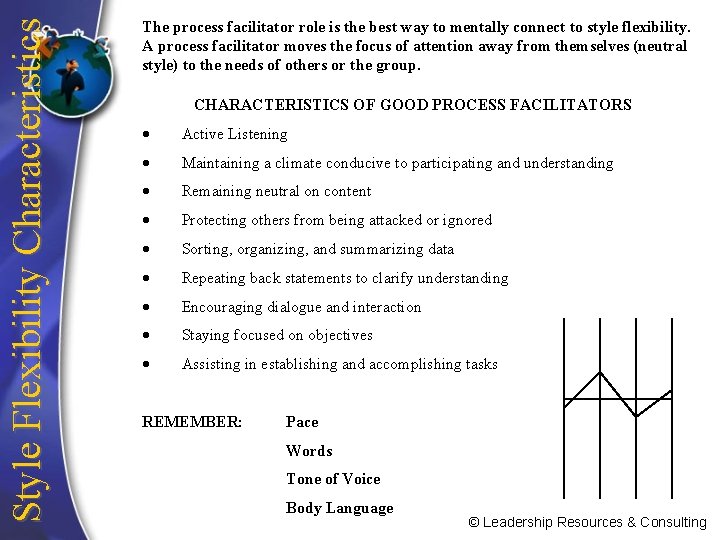
Style Flexibility Characteristics The process facilitator role is the best way to mentally connect to style flexibility. A process facilitator moves the focus of attention away from themselves (neutral style) to the needs of others or the group. CHARACTERISTICS OF GOOD PROCESS FACILITATORS · Active Listening · Maintaining a climate conducive to participating and understanding · Remaining neutral on content · Protecting others from being attacked or ignored · Sorting, organizing, and summarizing data · Repeating back statements to clarify understanding · Encouraging dialogue and interaction · Staying focused on objectives · Assisting in establishing and accomplishing tasks REMEMBER: Pace Words Tone of Voice Body Language © Leadership Resources & Consulting
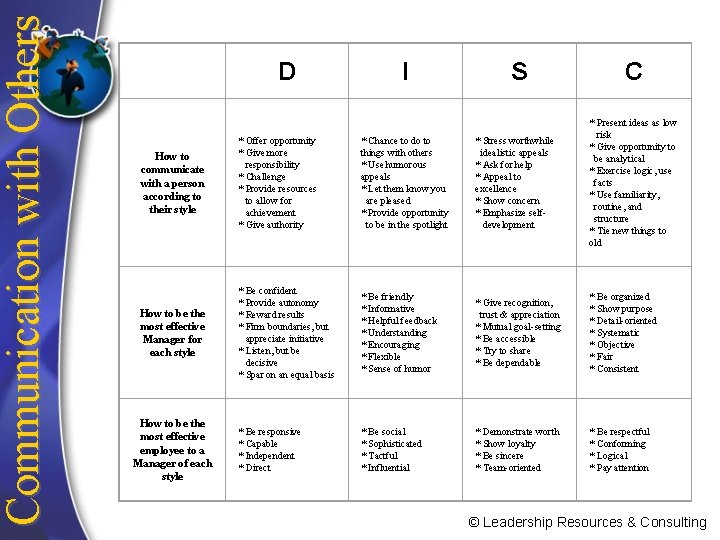
Communication with Others D I S C How to communicate with a person according to their style * Offer opportunity * Give more responsibility * Challenge * Provide resources to allow for achievement * Give authority * Chance to do to things with others * Use humorous appeals * Let them know you are pleased * Provide opportunity to be in the spotlight * Stress worthwhile idealistic appeals * Ask for help * Appeal to excellence * Show concern * Emphasize self development * Present ideas as low risk * Give opportunity to be analytical * Exercise logic, use facts * Use familiarity, routine, and structure * Tie new things to old How to be the most effective Manager for each style * Be confident * Provide autonomy * Reward results * Firm boundaries, but appreciate initiative * Listen, but be decisive * Spar on an equal basis * Be friendly * Informative * Helpful feedback * Understanding * Encouraging * Flexible * Sense of humor * Give recognition, trust & appreciation * Mutual goal-setting * Be accessible * Try to share * Be dependable * Be organized * Show purpose * Detail-oriented * Systematic * Objective * Fair * Consistent * Be responsive * Capable * Independent * Direct * Be social * Sophisticated * Tactful * Influential * Demonstrate worth * Show loyalty * Be sincere * Team-oriented * Be respectful * Conforming * Logical * Pay attention How to be the most effective employee to a Manager of each style © Leadership Resources & Consulting
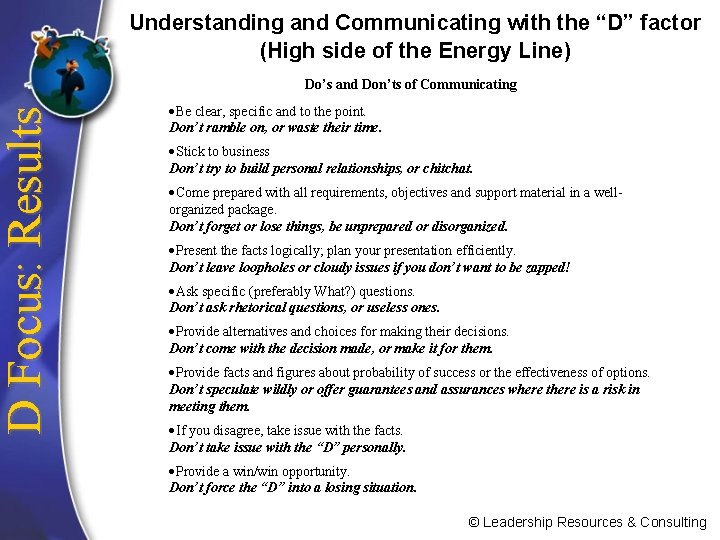
D Focus: Results Understanding and Communicating with the “D” factor (High side of the Energy Line) Do’s and Don’ts of Communicating ·Be clear, specific and to the point. Don’t ramble on, or waste their time. ·Stick to business Don’t try to build personal relationships, or chitchat. ·Come prepared with all requirements, objectives and support material in a wellorganized package. Don’t forget or lose things, be unprepared or disorganized. ·Present the facts logically; plan your presentation efficiently. Don’t leave loopholes or cloudy issues if you don’t want to be zapped! ·Ask specific (preferably What? ) questions. Don’t ask rhetorical questions, or useless ones. ·Provide alternatives and choices for making their decisions. Don’t come with the decision made, or make it for them. ·Provide facts and figures about probability of success or the effectiveness of options. Don’t speculate wildly or offer guarantees and assurances where there is a risk in meeting them. ·If you disagree, take issue with the facts. Don’t take issue with the “D” personally. ·Provide a win/win opportunity. Don’t force the “D” into a losing situation. © Leadership Resources & Consulting
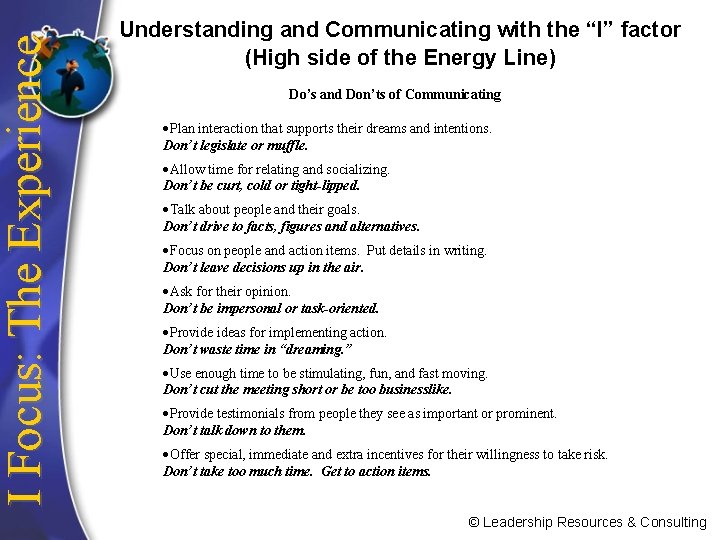
I Focus: The Experience Understanding and Communicating with the “I” factor (High side of the Energy Line) Do’s and Don’ts of Communicating ·Plan interaction that supports their dreams and intentions. Don’t legislate or muffle. ·Allow time for relating and socializing. Don’t be curt, cold or tight-lipped. ·Talk about people and their goals. Don’t drive to facts, figures and alternatives. ·Focus on people and action items. Put details in writing. Don’t leave decisions up in the air. ·Ask for their opinion. Don’t be impersonal or task-oriented. ·Provide ideas for implementing action. Don’t waste time in “dreaming. ” ·Use enough time to be stimulating, fun, and fast moving. Don’t cut the meeting short or be too businesslike. ·Provide testimonials from people they see as important or prominent. Don’t talk down to them. ·Offer special, immediate and extra incentives for their willingness to take risk. Don’t take too much time. Get to action items. © Leadership Resources & Consulting
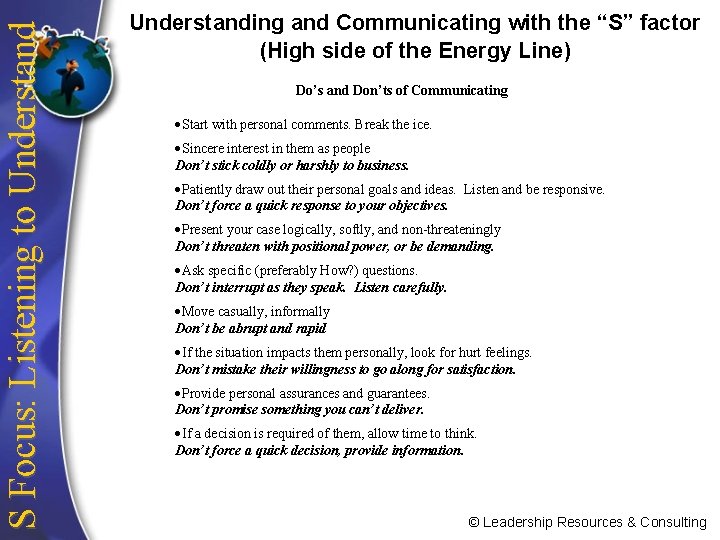
S Focus: Listening to Understanding and Communicating with the “S” factor (High side of the Energy Line) Do’s and Don’ts of Communicating ·Start with personal comments. Break the ice. ·Sincere interest in them as people Don’t stick coldly or harshly to business. ·Patiently draw out their personal goals and ideas. Listen and be responsive. Don’t force a quick response to your objectives. ·Present your case logically, softly, and non-threateningly Don’t threaten with positional power, or be demanding. ·Ask specific (preferably How? ) questions. Don’t interrupt as they speak. Listen carefully. ·Move casually, informally Don’t be abrupt and rapid ·If the situation impacts them personally, look for hurt feelings. Don’t mistake their willingness to go along for satisfaction. ·Provide personal assurances and guarantees. Don’t promise something you can’t deliver. ·If a decision is required of them, allow time to think. Don’t force a quick decision, provide information. © Leadership Resources & Consulting
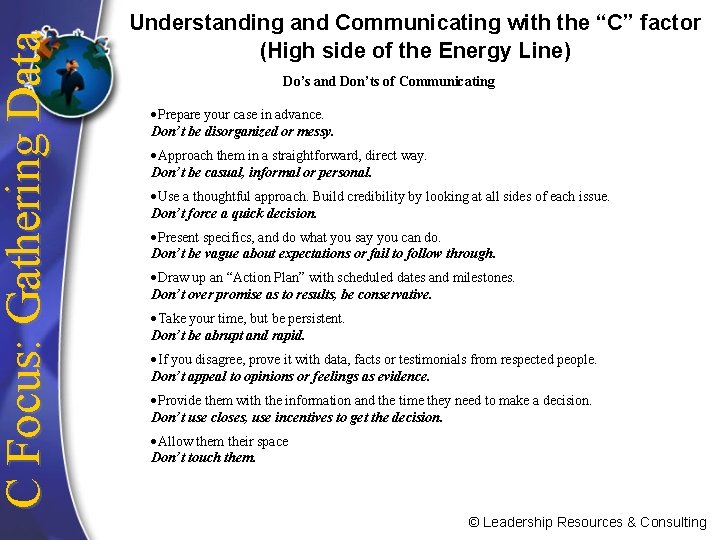
C Focus: Gathering Data Understanding and Communicating with the “C” factor (High side of the Energy Line) Do’s and Don’ts of Communicating ·Prepare your case in advance. Don’t be disorganized or messy. ·Approach them in a straightforward, direct way. Don’t be casual, informal or personal. ·Use a thoughtful approach. Build credibility by looking at all sides of each issue. Don’t force a quick decision. ·Present specifics, and do what you say you can do. Don’t be vague about expectations or fail to follow through. ·Draw up an “Action Plan” with scheduled dates and milestones. Don’t over promise as to results, be conservative. ·Take your time, but be persistent. Don’t be abrupt and rapid. ·If you disagree, prove it with data, facts or testimonials from respected people. Don’t appeal to opinions or feelings as evidence. ·Provide them with the information and the time they need to make a decision. Don’t use closes, use incentives to get the decision. ·Allow them their space Don’t touch them. © Leadership Resources & Consulting
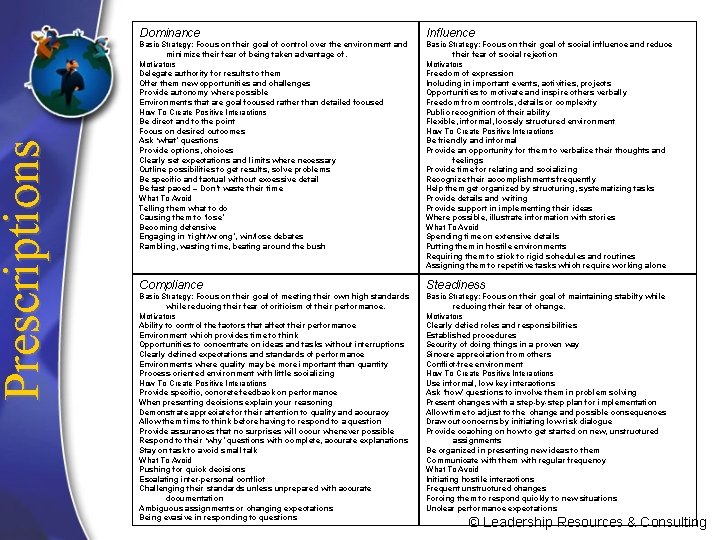
Prescriptions Dominance Influence Basic Strategy: Focus on their goal of control over the environment and minimize their fear of being taken advantage of. Motivators Delegate authority for results to them Offer them new opportunities and challenges Provide autonomy where possible Environments that are goal focused rather than detailed focused How To Create Positive Interactions Be direct and to the point Focus on desired outcomes Ask ‘what’ questions Provide options, choices Clearly set expectations and limits where necessary Outline possibilities to get results, solve problems Be specific and factual without excessive detail Be fast paced – Don’t waste their time What To Avoid Telling them what to do Causing them to ‘lose’ Becoming defensive Engaging in ‘right/wrong’, win/lose debates Rambling, wasting time, beating around the bush Basic Strategy: Focus on their goal of social influence and reduce their fear of social rejection Motivators Freedom of expression Including in important events, activities, projects Opportunities to motivate and inspire others verbally Freedom from controls, details or complexity Public recognition of their ability Flexible, informal, loosely structured environment How To Create Positive Interactions Be friendly and informal Provide an opportunity for them to verbalize their thoughts and feelings Provide time for relating and socializing Recognize their accomplishments frequently Help them get organized by structuring, systematizing tasks Provide details and writing Provide support in implementing their ideas Where possible, illustrate information with stories What To Avoid Spending time on extensive details Putting them in hostile environments Requiring them to stick to rigid schedules and routines Assigning them to repetitive tasks which require working alone Compliance Steadiness Basic Strategy: Focus on their goal of meeting their own high standards while reducing their fear of criticism of their performance. Motivators Ability to control the factors that affect their performance Environment which provides time to think Opportunities to concentrate on ideas and tasks without interruptions Clearly defined expectations and standards of performance Environments where quality may be more important than quantity Process-oriented environment with little socializing How To Create Positive Interactions Provide specific, concrete feedback on performance When presenting decisions explain your reasoning Demonstrate appreciate for their attention to quality and accuracy Allow them time to think before having to respond to a question Provide assurances that no surprises will occur whenever possible Respond to their ‘why’ questions with complete, accurate explanations Stay on task to avoid small talk What To Avoid Pushing for quick decisions Escalating inter-personal conflict Challenging their standards unless unprepared with accurate documentation Ambiguous assignments or changing expectations Being evasive in responding to questions Basic Strategy: Focus on their goal of maintaining stabilty while reducing their fear of change. Motivators Clearly defied roles and responsibilities Established procedures Security of doing things in a proven way Sincere appreciation from others Conflict-free environment How To Create Positive Interactions Use informal, low-key interactions Ask ‘how’ questions to involve them in problem solving Present changes with a step-by-step plan for implementation Allow time to adjust to the change and possible consequences Draw out concerns by initiating low-risk dialogue Provide coaching on how to get started on new, unstructured assignments Be organized in presenting new ideas to them Communicate with them with regular frequency What To Avoid Initiating hostile interactions Frequent unstructured changes Forcing them to respond quickly to new situations Unclear performance expectations © Leadership Resources & Consulting
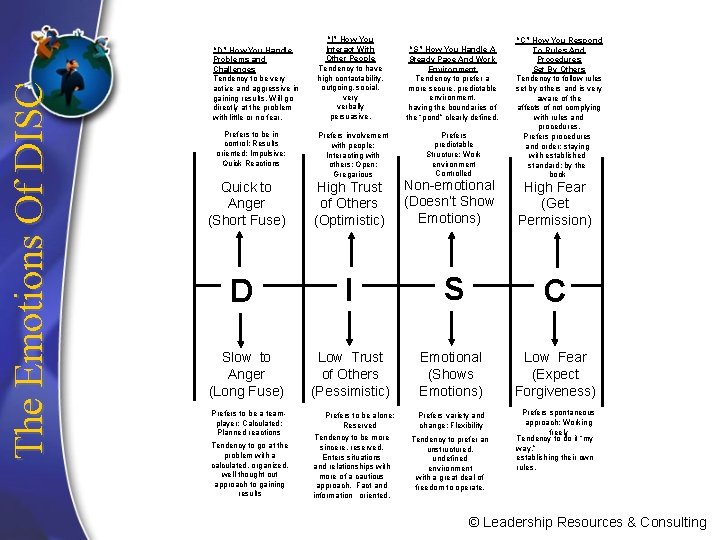
The Emotions Of DISC “D” How You Handle Problems and Challenges Tendency to be very active and aggressive in gaining results. Will go directly at the problem with little or no fear. Prefers to be in control; Results oriented; Impulsive; Quick Reactions Quick to Anger (Short Fuse) D Slow to Anger (Long Fuse) Prefers to be a team- player; Calculated; Planned reactions Tendency to go at the problem with a calculated, organized, well thought out approach to gaining results “I” How You Interact With Other People Tendency to have high contactability, outgoing, social, very verbally persuasive. Prefers involvement with people; Interacting with others; Open; Gregarious High Trust of Others (Optimistic) “S” How You Handle A Steady Pace And Work Environment Tendency to prefer a more secure, predictable environment, having the boundaries of the “pond” clearly defined. Prefers predictable Structure; Work environment Controlled Non-emotional (Doesn’t Show Emotions) “C” How You Respond To Rules And Procedures Set By Others Tendency to follow rules set by others and is very aware of the affects of not complying with rules and procedures. Prefers procedures and order; staying with established standard; by the book High Fear (Get Permission) I S C Low Trust of Others (Pessimistic) Emotional (Shows Emotions) Low Fear (Expect Forgiveness) Prefers variety and change; Flexibility Prefers spontaneous approach; Working freely Tendency to do it “my way, ” establishing their own rules. Prefers to be alone; Reserved Tendency to be more sincere, reserved. Enters situations and relationships with more of a cautious approach. Fact and information oriented. Tendency to prefer an unstructured, undefined environment with a great deal of freedom to operate. © Leadership Resources & Consulting
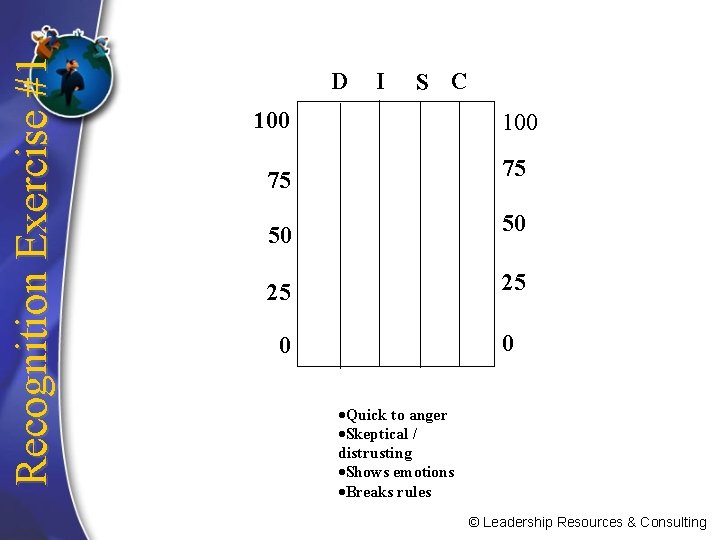
Recognition Exercise #1 D I S C 100 75 75 50 50 25 25 0 0 ·Quick to anger ·Skeptical / distrusting ·Shows emotions ·Breaks rules © Leadership Resources & Consulting
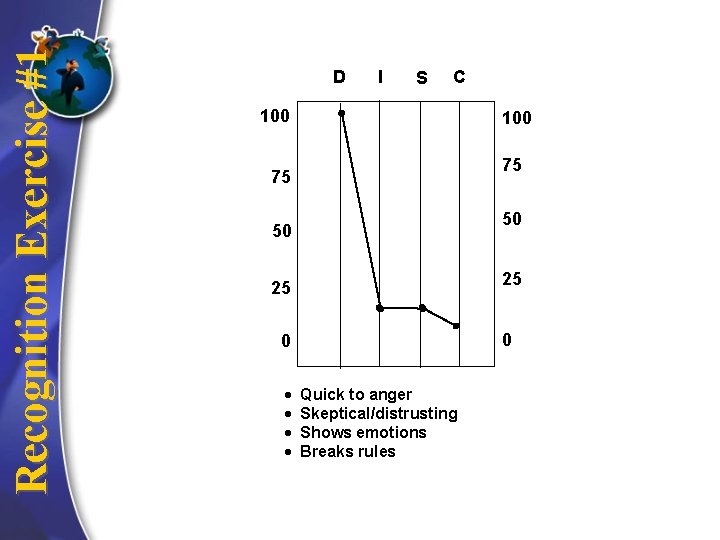
Recognition Exercise #1 D I S C 100 75 50 25 0 · Quick to anger · Skeptical/distrusting · Shows emotions · Breaks rules 100 75 50 25 0
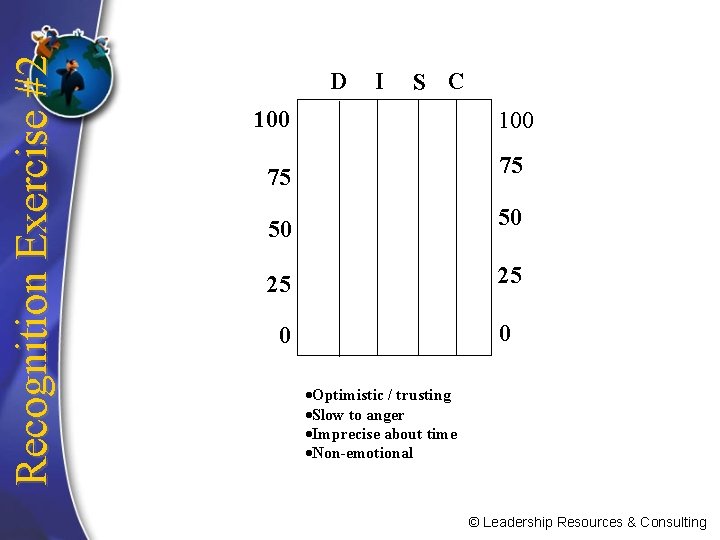
Recognition Exercise #2 D I S C 100 75 75 50 50 25 25 0 0 ·Optimistic / trusting ·Slow to anger ·Imprecise about time ·Non-emotional © Leadership Resources & Consulting
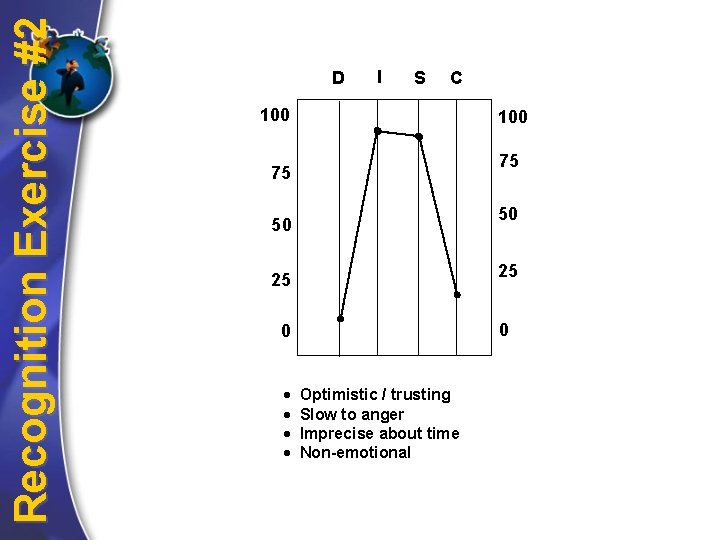
Recognition Exercise #2 D I S C 100 75 50 25 25 0 0 · Optimistic / trusting · Slow to anger · Imprecise about time · Non-emotional
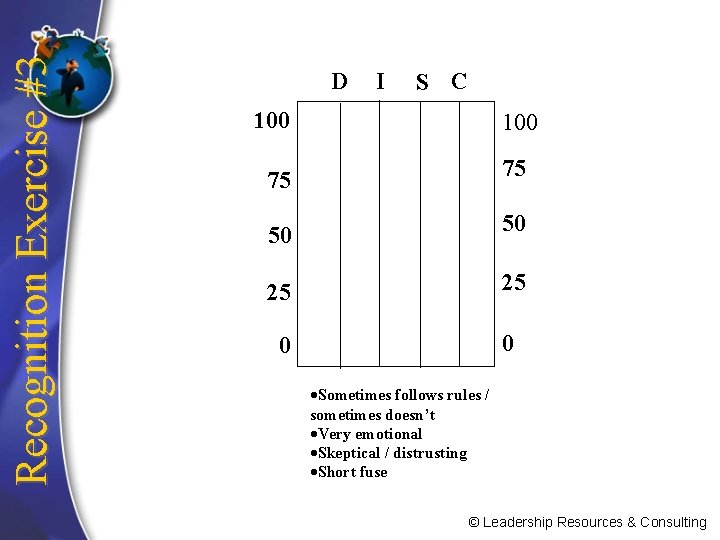
Recognition Exercise #3 D I S C 100 75 75 50 50 25 25 0 0 ·Sometimes follows rules / sometimes doesn’t ·Very emotional ·Skeptical / distrusting ·Short fuse © Leadership Resources & Consulting
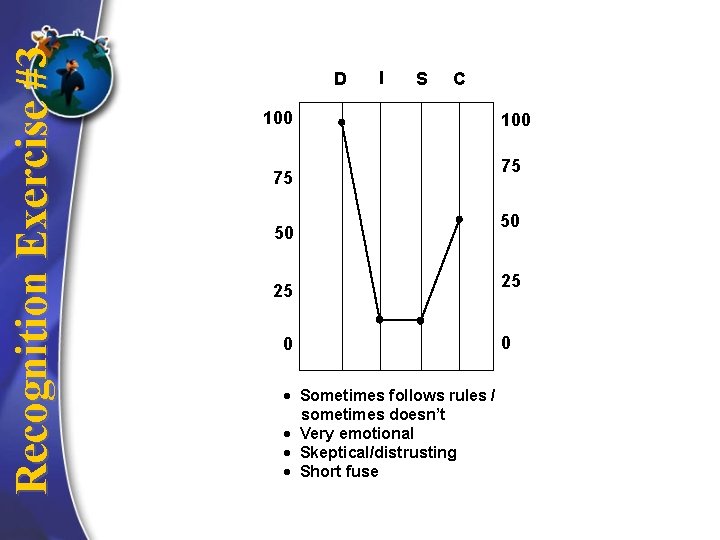
Recognition Exercise #3 D 100 75 50 25 0 I S C 100 75 50 25 0 · Sometimes follows rules / sometimes doesn’t · Very emotional · Skeptical/distrusting · Short fuse
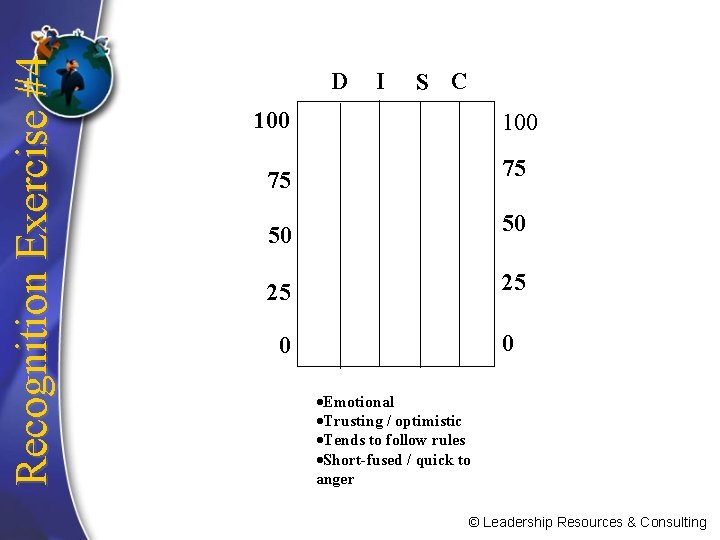
Recognition Exercise #4 D I S C 100 75 75 50 50 25 25 0 0 ·Emotional ·Trusting / optimistic ·Tends to follow rules ·Short-fused / quick to anger © Leadership Resources & Consulting
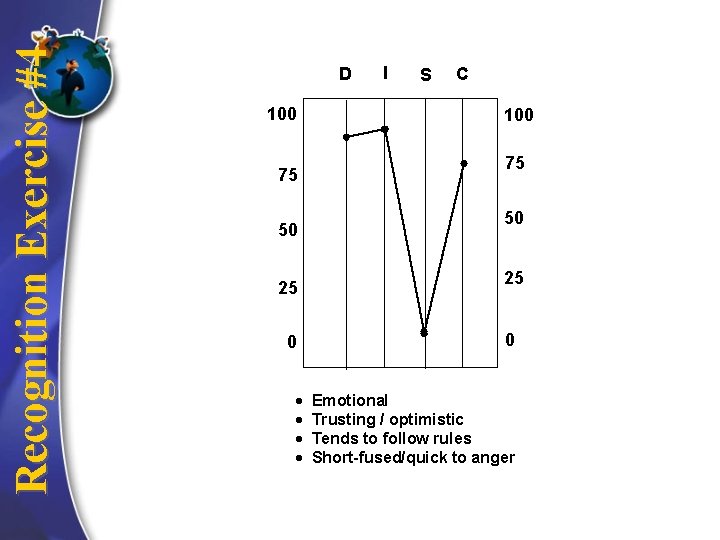
Recognition Exercise #4 D 100 75 50 25 0 I S C 100 75 50 25 0 · Emotional · Trusting / optimistic · Tends to follow rules · Short-fused/quick to anger
Recognition Exercise # 5 D I S C 100 75 75 50 50 25 25 0 0 ·Very direct, forward ·Never believes what I say ·I can’t tell when he’s mad ·Real safe driver © Leadership Resources & Consulting
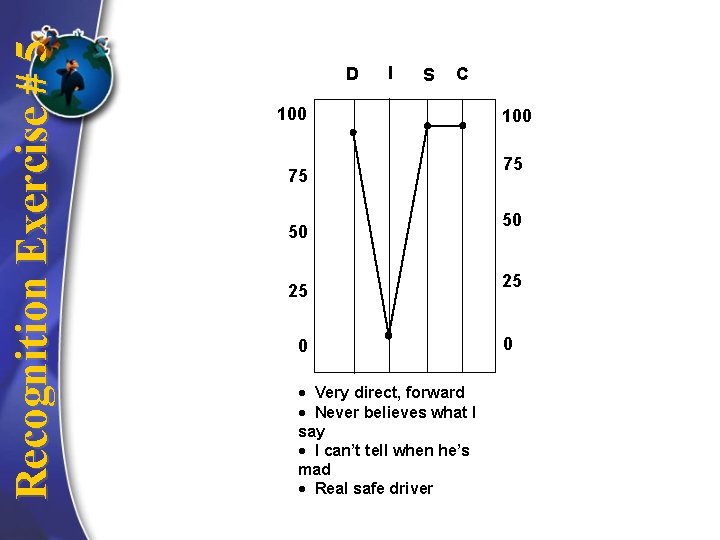
Recognition Exercise # 5 D I S C 100 75 50 25 0 · Very direct, forward · Never believes what I say · I can’t tell when he’s mad · Real safe driver 100 75 50 25 0
Recognition Exercise #6 D I S C 100 75 75 50 50 25 25 0 0 ·People rarely get under my skin ·I’m too trusting of people ·You know when he’s in a bad mood ·Rules are meant to be followed © Leadership Resources & Consulting
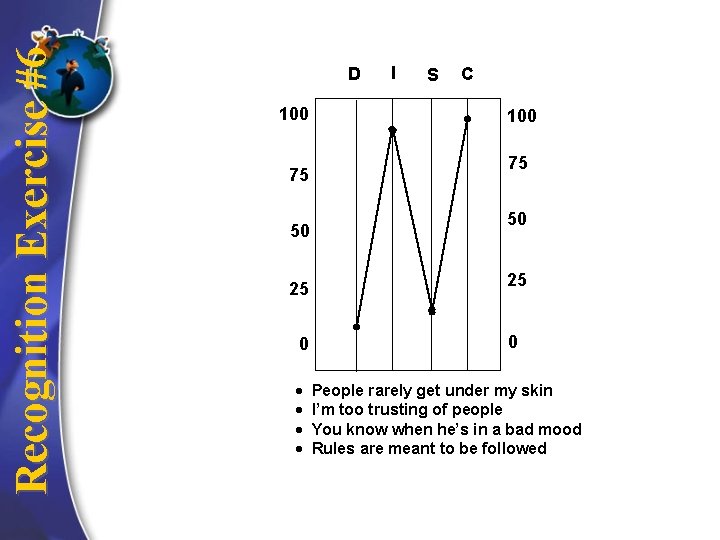
Recognition Exercise #6 D 100 75 50 25 0 I S C 100 75 50 25 0 · People rarely get under my skin · I’m too trusting of people · You know when he’s in a bad mood · Rules are meant to be followed
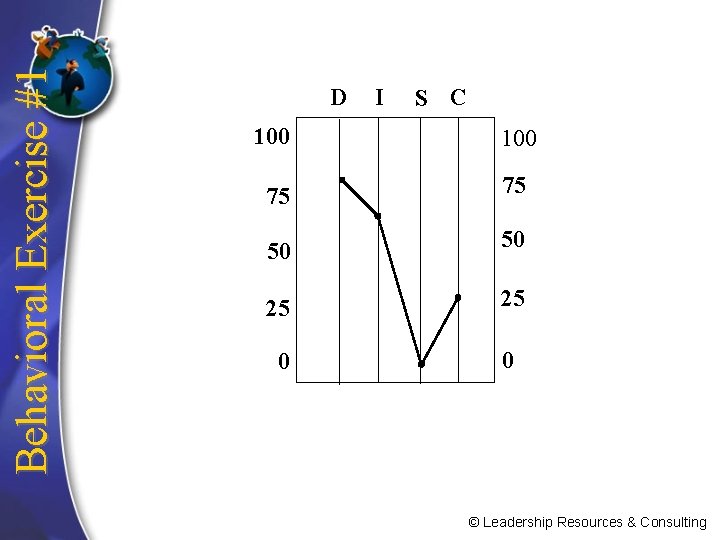
Behavioral Exercise #1 D I S C 100 75 75 50 50 25 25 0 0 © Leadership Resources & Consulting
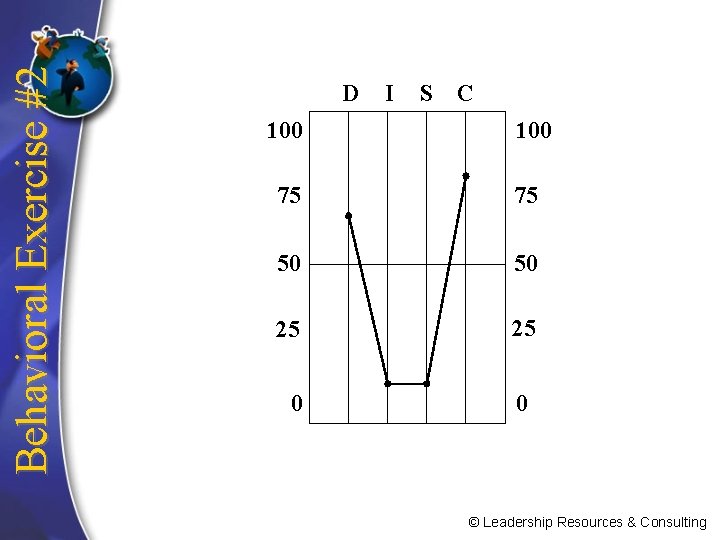
Behavioral Exercise #2 D 100 I S C 100 75 75 50 50 25 25 0 0 © Leadership Resources & Consulting
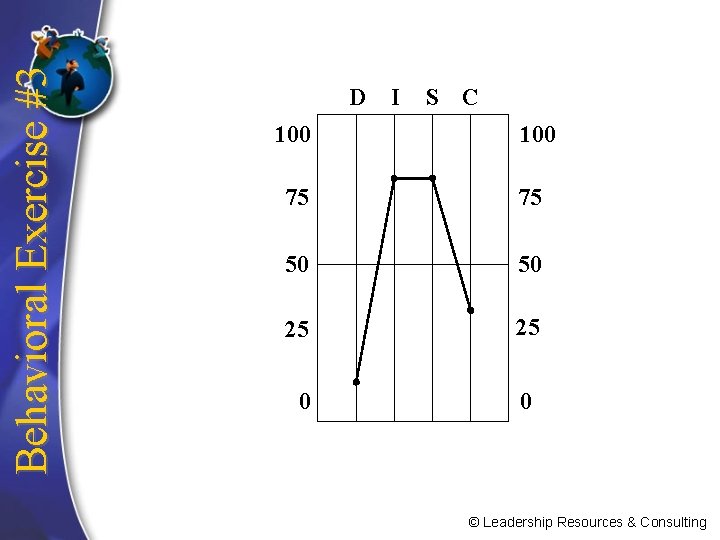
Behavioral Exercise #3 D 100 I S C 100 75 75 50 50 25 25 0 0 © Leadership Resources & Consulting
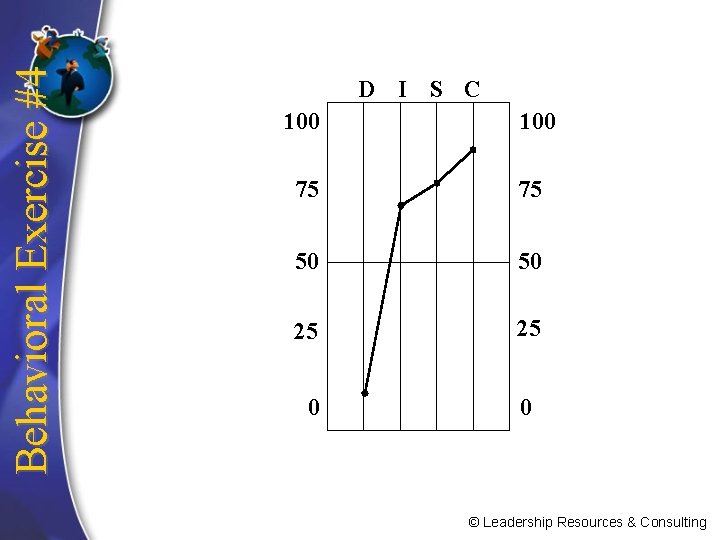
Behavioral Exercise #4 D I S C 100 75 75 50 50 25 25 0 0 © Leadership Resources & Consulting
Team Graph Analysis Discuss the combined Graph II using the participant manual as reference information. Use the following questions as a guide for discussion. • Is the Team heavy in any particular style or area? What does this represent? • Is the Team deficient in any particular style or area? What does this represent? • What problems or opportunities could be present? What does this represent? • What team characteristics exist for your group? • Are these the characteristics necessary to accomplish the team’s goals? • Do any obvious conflict possibilities exist? • Given the combined profiles, how do you think other groups in the organization might perceive your team • What team challenges exist for growth? © Leadership Resources & Consulting
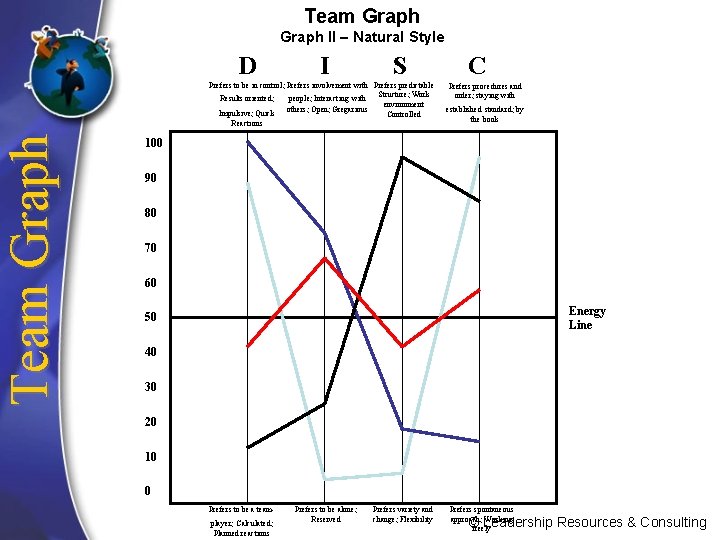
Team Graph II – Natural Style D I S Prefers to be in control; Prefers involvement with Prefers predictable Results oriented; people; Interacting with Structure; Work environment others; Open; Gregarious Impulsive; Quick Controlled Reactions C Prefers procedures and order; staying with established standard; by the book 100 90 80 70 60 Energy Line 50 40 30 20 10 0 Prefers to be a team- player; Calculated; Planned reactions Prefers to be alone; Reserved Prefers variety and change; Flexibility Prefers spontaneous approach; Working freely © Leadership Resources & Consulting
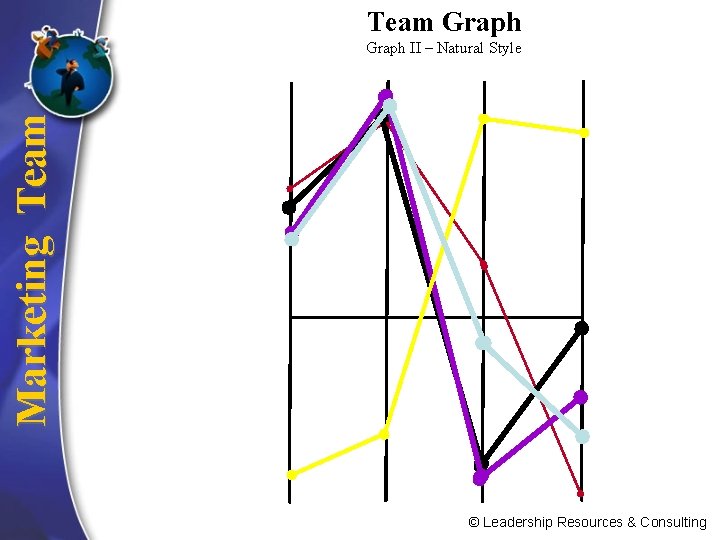
Team Graph Marketing Team Graph II – Natural Style © Leadership Resources & Consulting
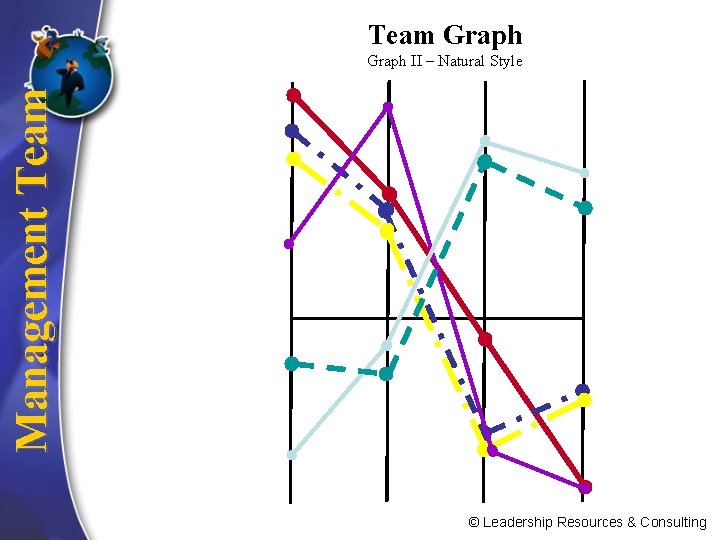
Team Graph Management Team Graph II – Natural Style © Leadership Resources & Consulting
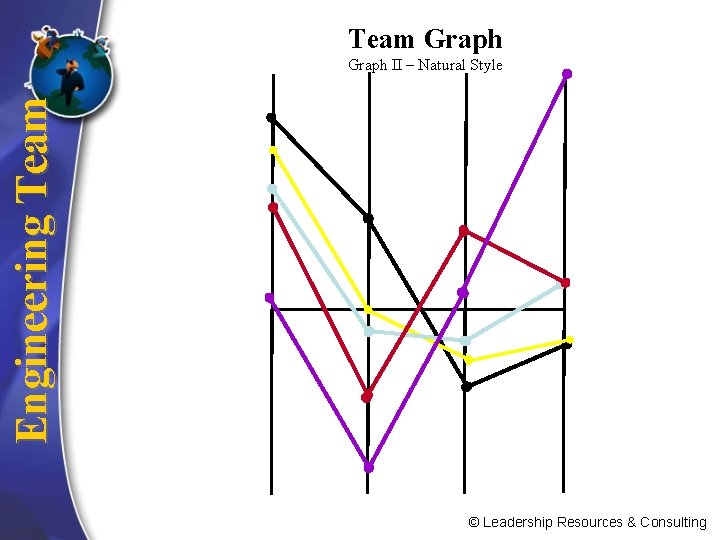
Team Graph Engineering Team Graph II – Natural Style © Leadership Resources & Consulting
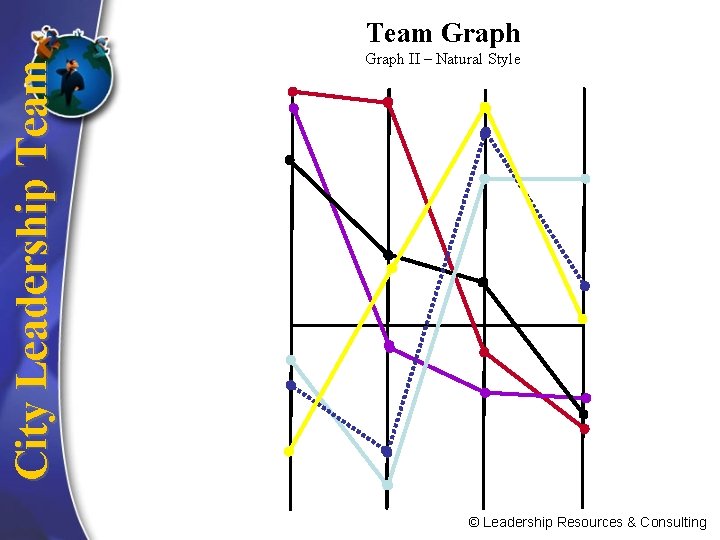
City Leadership Team Graph II – Natural Style © Leadership Resources & Consulting
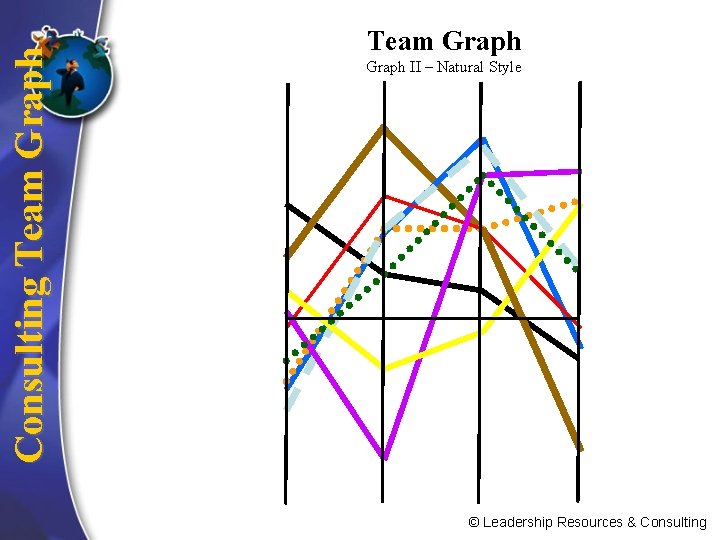
Consulting Team Graph II – Natural Style © Leadership Resources & Consulting
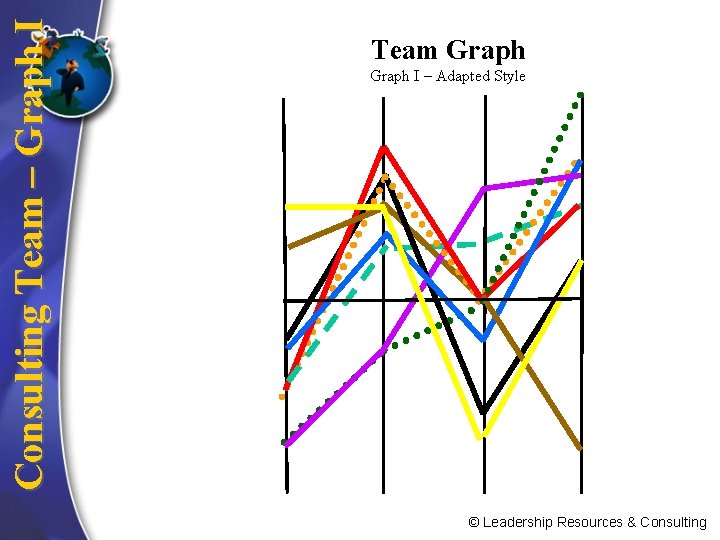
Consulting Team – Graph I Team Graph I – Adapted Style © Leadership Resources & Consulting
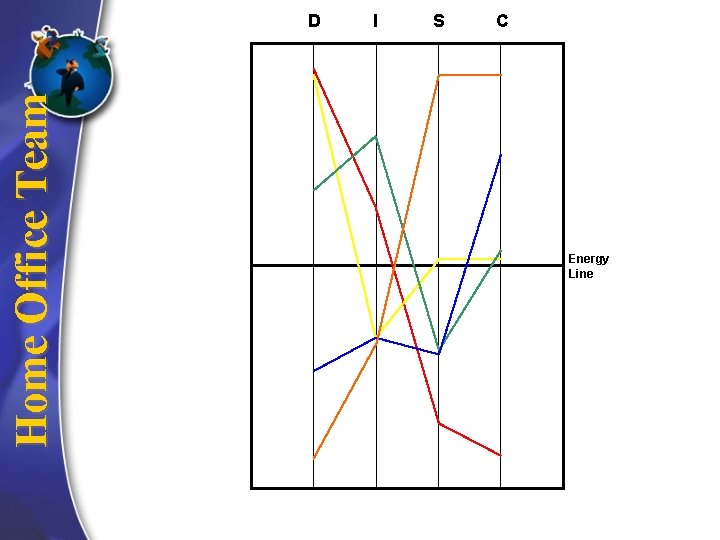
Home Office Team D I S C Energy Line
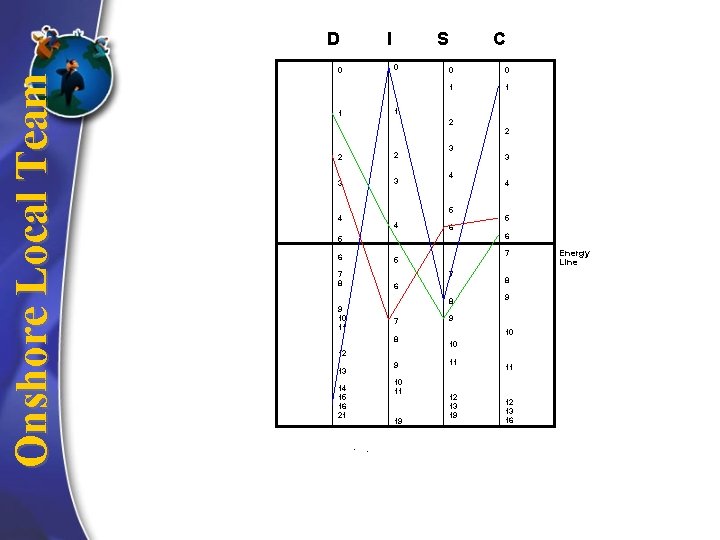
Onshore Local Team D 0 I 0 5 6 7 8 9 10 11 12 13 14 15 16 21 1 2 3 4 5 6 7 8 9 10 11 2 3 4 S C 0 0 1 2 3 4 5 6 1 2 3 4 5 6 7 8 9 10 11 12 13 16 7 8 9 10 11 12 13 19 Energy Line - ;
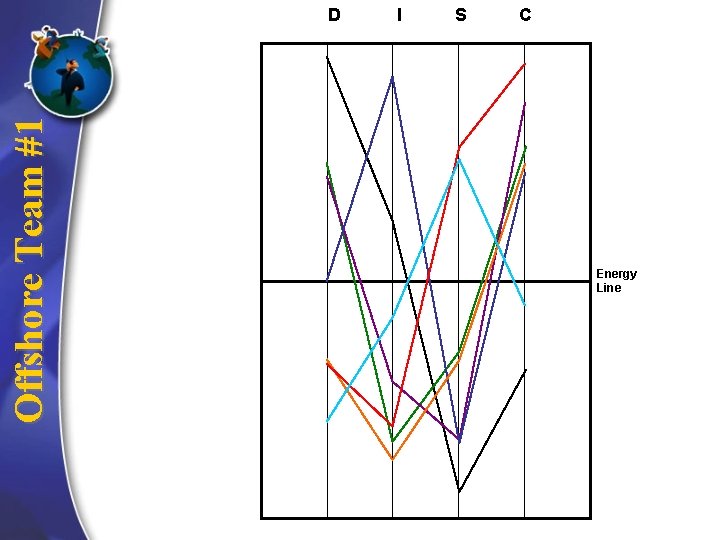
Offshore Team #1 D I S C Energy Line
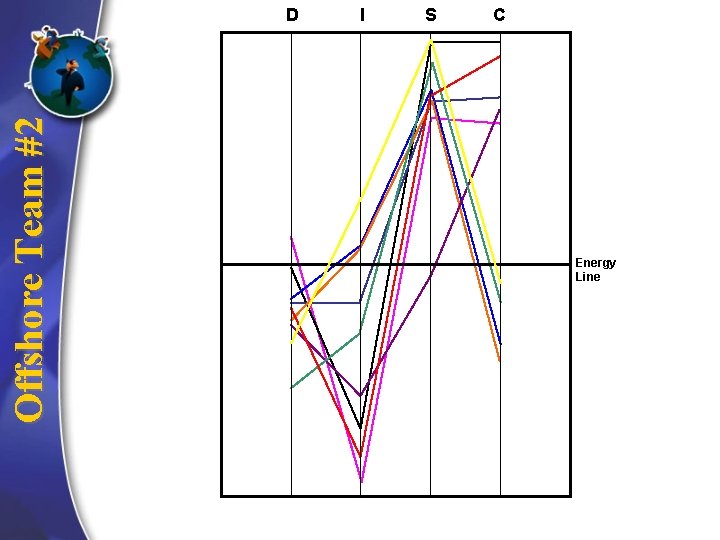
Offshore Team #2 D I S C Energy Line
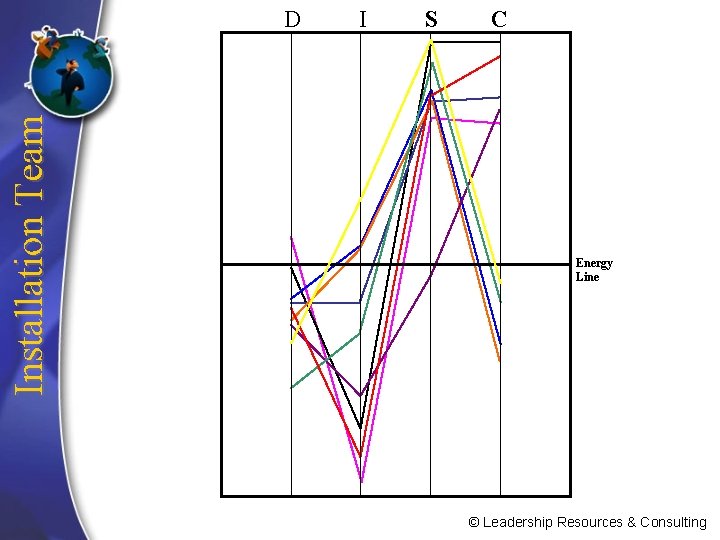
Installation Team D I S C Energy Line © Leadership Resources & Consulting
Character Traits A character trait is defined as a distinguishing feature that reflects a person’s character. We all have a combination of these traits or features that distinguishes us from one another. These character traits differ from how we act or our behavior styles. Behavior is defined as the manner in which a person behaves. It’s the way we act or react to persons, things, and circumstances. In dealing with the DISC Graph we are dealing with a person’s behavior style, not with their character traits. For example, a person could have the character trait of being very stubborn. This is not a behavior style. A person could be a D, I, S, or a C, and still be a person who is stubborn. Their behavior style is the way they choose to display or “act out” this particular character trait. © Leadership Resources & Consulting
List of Traits Partial List of Character Traits Humble Brave Courageous Serious Funny Humorous Sad Resourceful Stubborn Loyal Gullible Handsome Caring Carefree Selfish Unselfish Generous Self-Confident Respectful Considerate Imaginative Inventive Creative Independent Studious Intelligent Honest Mischievous Friendly Adventurous Hardworking Timid Shy Bold Daring Dainty Busy Lazy Patriotic Fun-loving Successful Responsible Helpful Dreamer Happy Disagreeable Conceited Leader Demanding Bossy Gentle Loving Proud Wild Messy Neat Joyful Cooperative Lovable Ambitious Quiet Curious Witty Fighter Determined Energetic Cheerful Thoughtful Calm Mannerly Rude Mean © Leadership Resources & Consulting
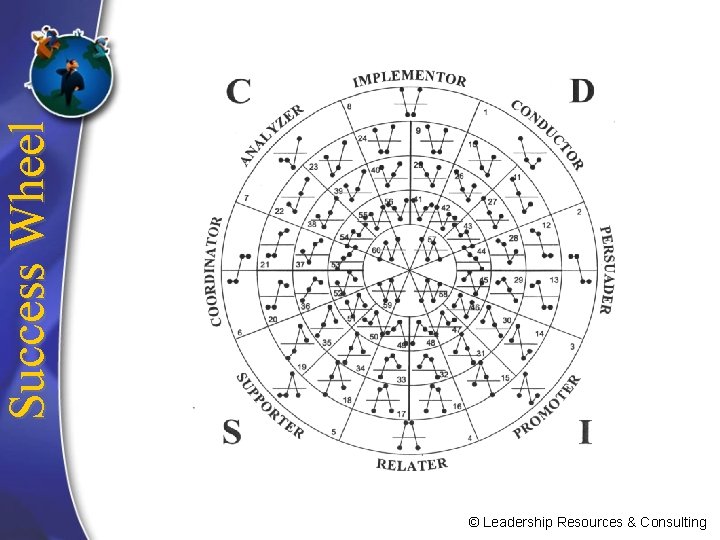
Success Wheel © Leadership Resources & Consulting
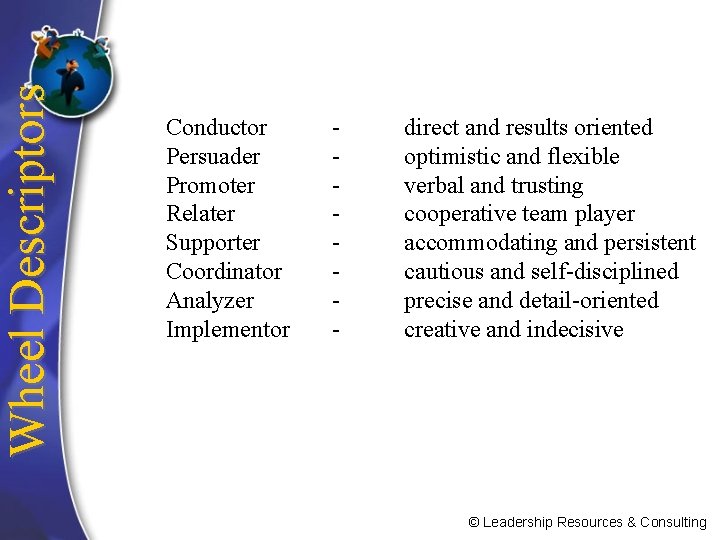
Wheel Descriptors Conductor Persuader Promoter Relater Supporter Coordinator Analyzer Implementor - direct and results oriented optimistic and flexible verbal and trusting cooperative team player accommodating and persistent cautious and self-disciplined precise and detail-oriented creative and indecisive © Leadership Resources & Consulting
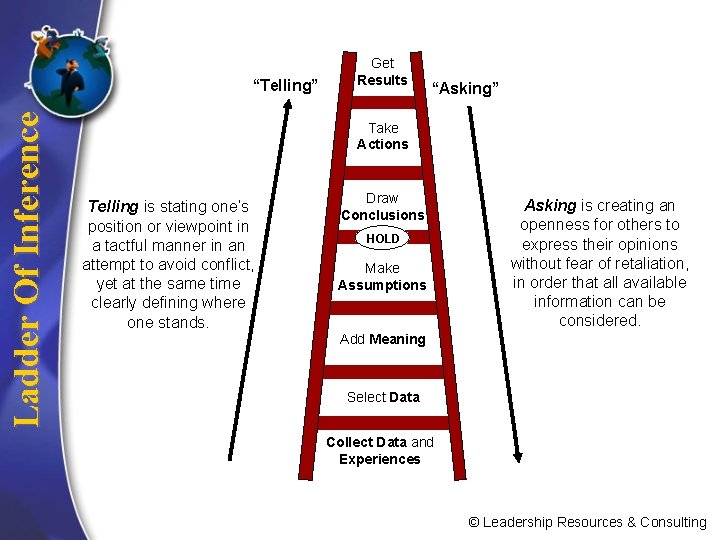
Ladder Of Inference “Telling” Get Results “Asking” Take Actions Telling is stating one’s position or viewpoint in a tactful manner in an attempt to avoid conflict, yet at the same time clearly defining where one stands. Draw Conclusions HOLD Make Assumptions Asking is creating an openness for others to express their opinions without fear of retaliation, in order that all available information can be considered. Add Meaning Select Data Collect Data and Experiences © Leadership Resources & Consulting
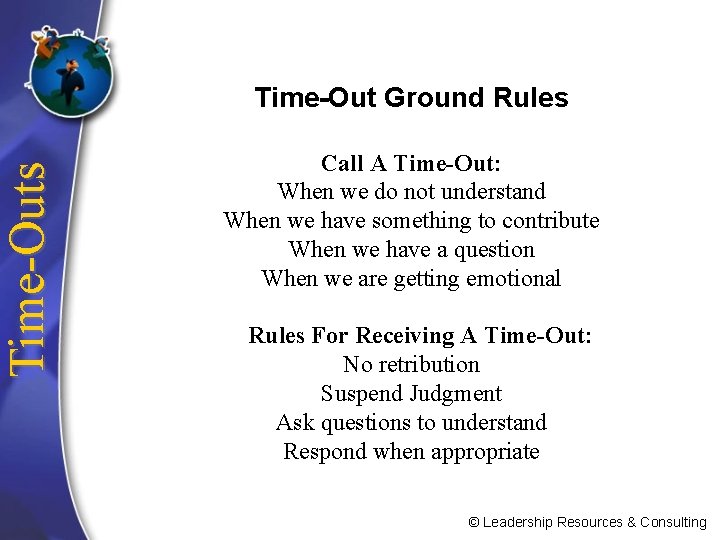
Time-Outs Time-Out Ground Rules Call A Time-Out: When we do not understand When we have something to contribute When we have a question When we are getting emotional Rules For Receiving A Time-Out: No retribution Suspend Judgment Ask questions to understand Respond when appropriate © Leadership Resources & Consulting
Time-Outs Create a list of the ways you could call time-out in regular conversations and meetings. 1. 2. 3. 4. 5. 6. 7. 8. © Leadership Resources & Consulting
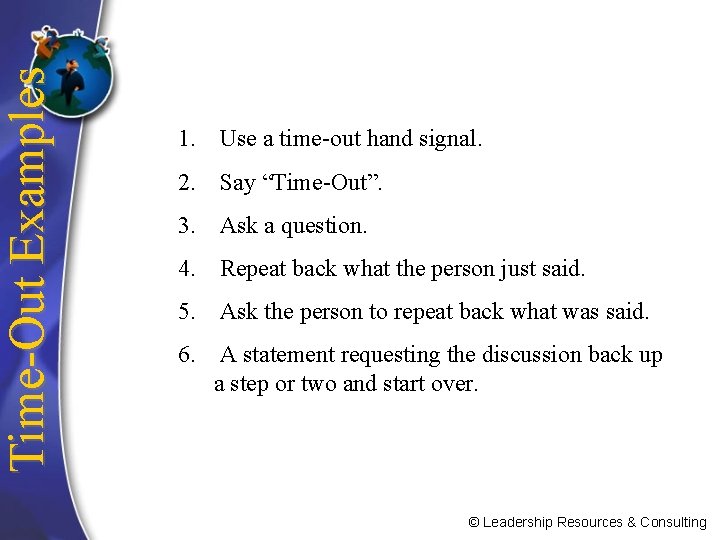
Time-Out Examples 1. Use a time-out hand signal. 2. Say “Time-Out”. 3. Ask a question. 4. Repeat back what the person just said. 5. Ask the person to repeat back what was said. 6. A statement requesting the discussion back up a step or two and start over. © Leadership Resources & Consulting
Paradigm of Reality If you always do what you’ve always done you’ll always get what you’ve always got! What are you going to do differently? © Leadership Resources & Consulting
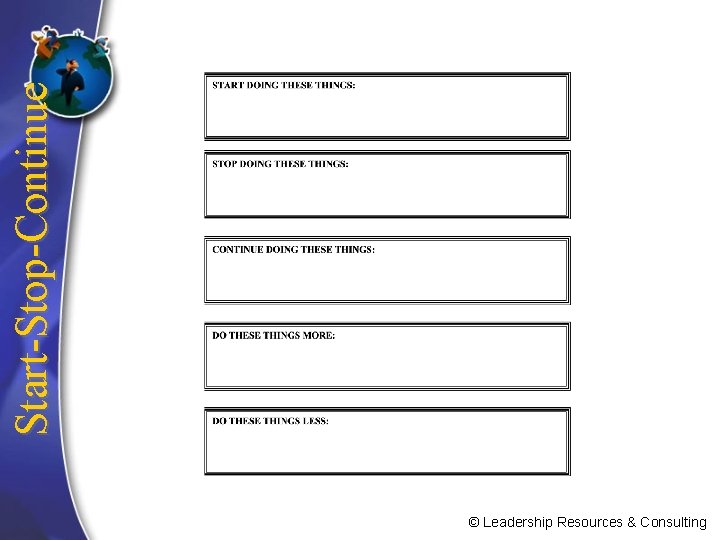
Start-Stop-Continue © Leadership Resources & Consulting

Summary Exercise In your group, make a list of the items you learned today that you feel will assist you in performing your job. Appoint a person in your group to report your results to the big group. © Leadership Resources & Consulting
DISC Summary 1. We all demonstrate some of all four tendencies. 2. Behavior is situational. We may be a High “I” at work if our job requires a lot of communication; but when we get home, we may find that we are a High “D”, “S”, or “C”. 3. There is only one tendency we “lean” toward the majority of the time. 4. People are unique. There probably are not two people in this room with exactly the same profiles. This means we need to try to understand others. 5. We all have strengths, and when used, they can be the key to our success and the success of our organization. 6. If, however, we over-extend those strengths, they can become weaknesses. 7. Every organization needs people in all four areas to be well-balanced and effective. © Leadership Resources & Consulting
References • People Smarts by Mike O’Conner* • “Self-Leadership and the One Minute Manager” by Ken Blanchard • Leadership and Self-Deception” by The Arbinger Institute • Becoming A Master Manager by Robert Quinn. * • I’m Stuck, You’re Stuck by Tom Richie. * The references above with an asterisk (*) are available from Leadership Resources, 1 -800 -657 -2235 © Leadership Resources & Consulting

THE END © Leadership Resources & Consulting
- Slides: 81