
Learning to Use the ACS for Transportation Planning
- Slides: 25
Learning to Use the ACS for Transportation Planning Report on NCHRP Project 8 -48 presented to TRB Census Data for Transportation Planning Meeting presented by Kevin Tierney Cambridge Systematics, Inc. May 12, 2005 Transportation leadership you can trust.
National Cooperative Highway Research Program Project 8 -48 Project Activities Review current and potential use of census-related data in transportation planning Compare residence-based, workplace-based and home-to -work outputs from ACS and census long form for use in transportation planning applications Prepare ACS guidebook Recommend new transportation data products based on ACS data 1
ACS for Transportation Planning Benefits Key Census Bureau objectives are likely to be achieved with ACS implementation • Improve the year 2010 Decennial Census • Operational schedules and budgets close to predicted levels ACS data quality is likely to be superior to that of the Census Long Form in terms of nonsampling error ACS data will be available more frequently ACS data will be more timely 2
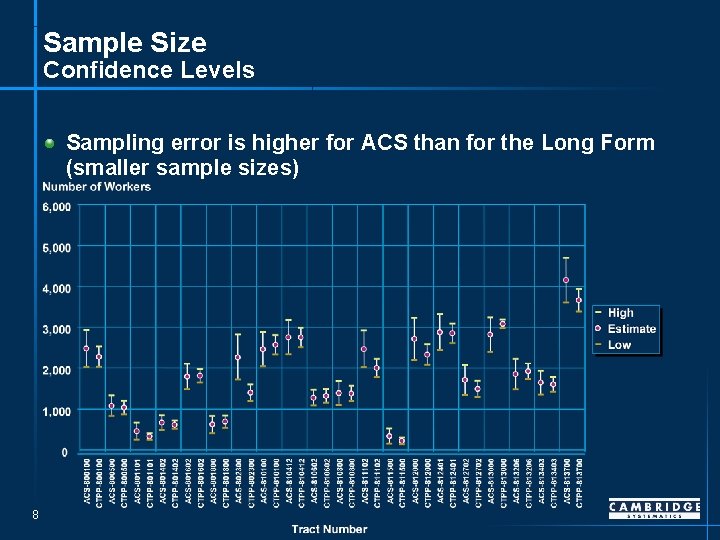
ACS for Transportation Planning Challenges Sampling error is higher for ACS than for the Long Form (smaller sample sizes) Data disclosure avoidance will prevent many smaller area analyses that transportation users would like to do, including some that are possible with Census 2000 data ACS differences from the Census Long Form place limits on our ability to bridge analyses between Year 2000 data and ACS data 3
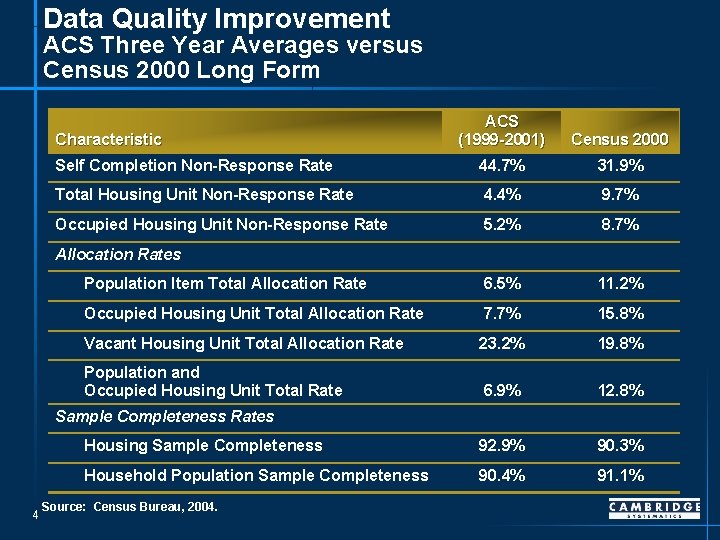
Data Quality Improvement ACS Three Year Averages versus Census 2000 Long Form ACS (1999 -2001) Census 2000 Self Completion Non-Response Rate 44. 7% 31. 9% Total Housing Unit Non-Response Rate 4. 4% 9. 7% Occupied Housing Unit Non-Response Rate 5. 2% 8. 7% Population Item Total Allocation Rate 6. 5% 11. 2% Occupied Housing Unit Total Allocation Rate 7. 7% 15. 8% Vacant Housing Unit Total Allocation Rate 23. 2% 19. 8% Population and Occupied Housing Unit Total Rate 6. 9% 12. 8% Housing Sample Completeness 92. 9% 90. 3% Household Population Sample Completeness 90. 4% 91. 1% Characteristic Allocation Rates Sample Completeness Rates 4 Source: Census Bureau, 2004.
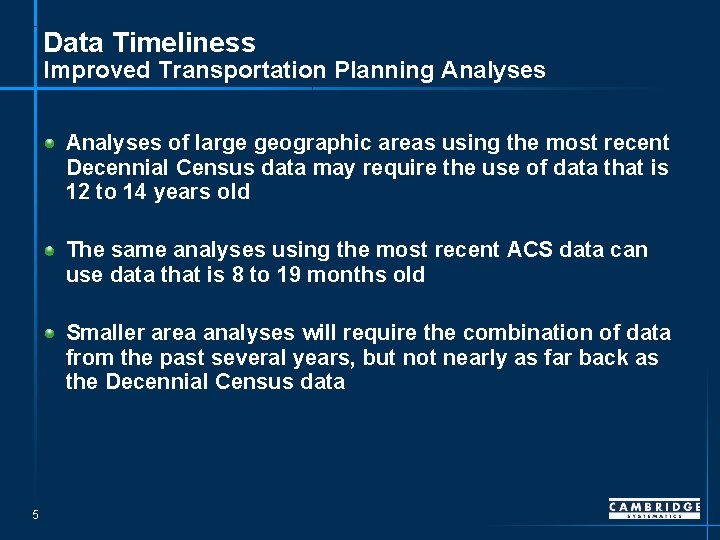
Data Timeliness Improved Transportation Planning Analyses of large geographic areas using the most recent Decennial Census data may require the use of data that is 12 to 14 years old The same analyses using the most recent ACS data can use data that is 8 to 19 months old Smaller area analyses will require the combination of data from the past several years, but not nearly as far back as the Decennial Census data 5
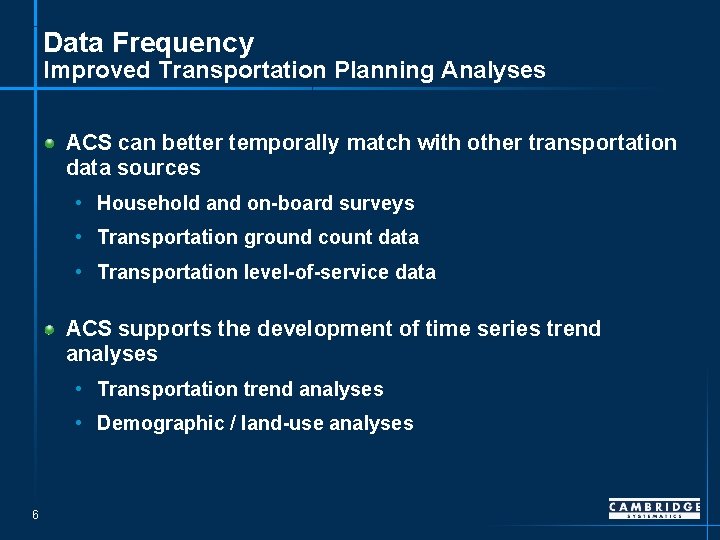
Data Frequency Improved Transportation Planning Analyses ACS can better temporally match with other transportation data sources • Household and on-board surveys • Transportation ground count data • Transportation level-of-service data ACS supports the development of time series trend analyses • Transportation trend analyses • Demographic / land-use analyses 6
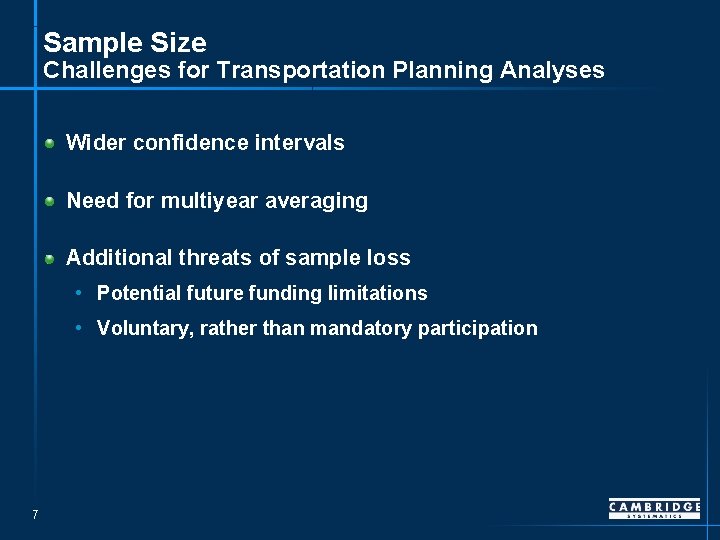
Sample Size Challenges for Transportation Planning Analyses Wider confidence intervals Need for multiyear averaging Additional threats of sample loss • Potential future funding limitations • Voluntary, rather than mandatory participation 7
Sample Size Confidence Levels Sampling error is higher for ACS than for the Long Form (smaller sample sizes) 8
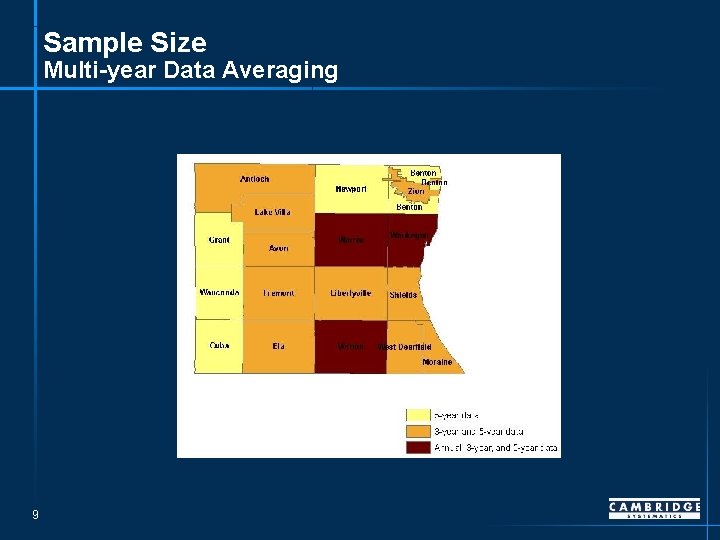
Sample Size Multi-year Data Averaging 9
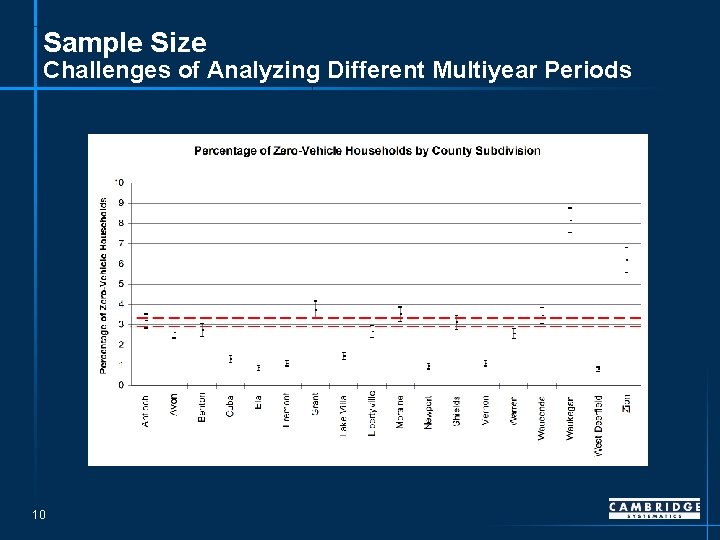
Sample Size Challenges of Analyzing Different Multiyear Periods 10
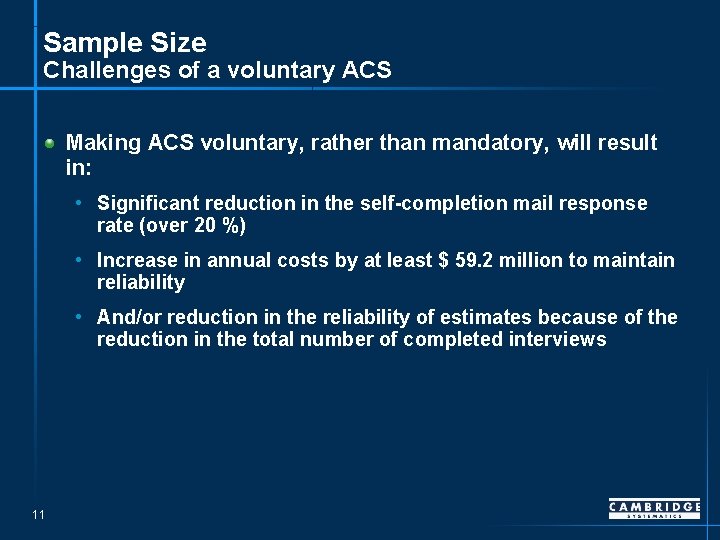
Sample Size Challenges of a voluntary ACS Making ACS voluntary, rather than mandatory, will result in: • Significant reduction in the self-completion mail response rate (over 20 %) • Increase in annual costs by at least $ 59. 2 million to maintain reliability • And/or reduction in the reliability of estimates because of the reduction in the total number of completed interviews 11
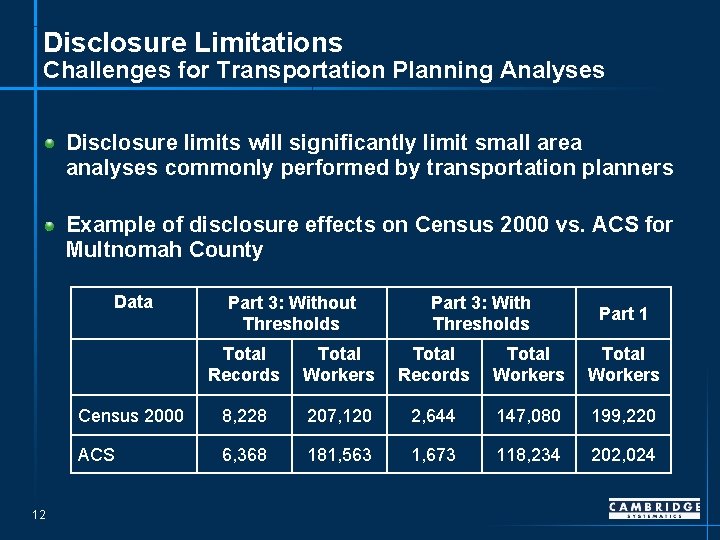
Disclosure Limitations Challenges for Transportation Planning Analyses Disclosure limits will significantly limit small area analyses commonly performed by transportation planners Example of disclosure effects on Census 2000 vs. ACS for Multnomah County Data 12 Part 3: Without Thresholds Part 3: With Thresholds Part 1 Total Records Total Workers Census 2000 8, 228 207, 120 2, 644 147, 080 199, 220 ACS 6, 368 181, 563 1, 673 118, 234 202, 024
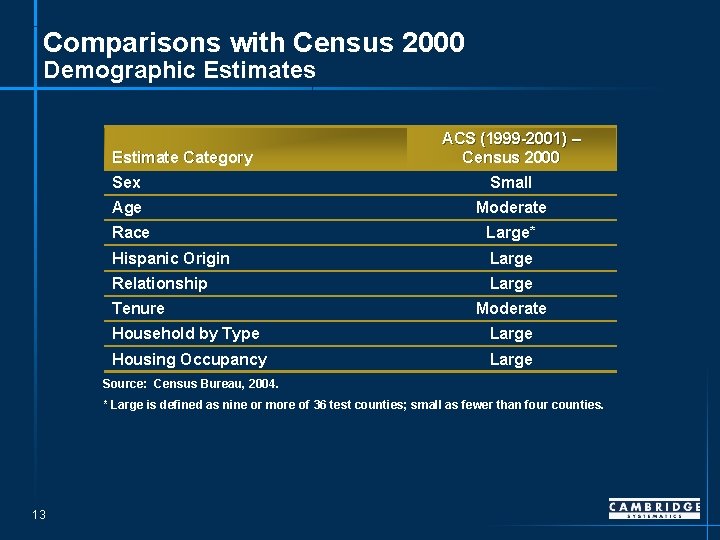
Comparisons with Census 2000 Demographic Estimates Estimate Category ACS (1999 -2001) – Census 2000 Sex Small Age Moderate Race Large* Hispanic Origin Large Relationship Large Tenure Moderate Household by Type Large Housing Occupancy Large Source: Census Bureau, 2004. * Large is defined as nine or more of 36 test counties; small as fewer than four counties. 13
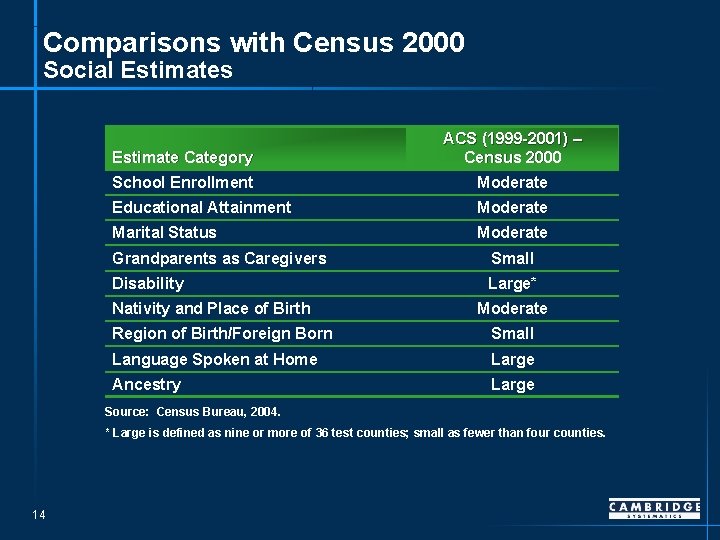
Comparisons with Census 2000 Social Estimates Estimate Category ACS (1999 -2001) – Census 2000 School Enrollment Moderate Educational Attainment Moderate Marital Status Moderate Grandparents as Caregivers Small Disability Large* Nativity and Place of Birth Moderate Region of Birth/Foreign Born Small Language Spoken at Home Large Ancestry Large Source: Census Bureau, 2004. * Large is defined as nine or more of 36 test counties; small as fewer than four counties. 14
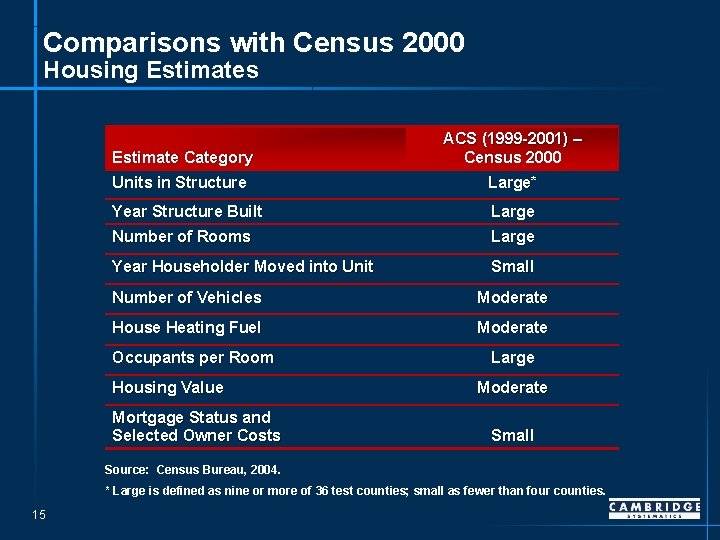
Comparisons with Census 2000 Housing Estimates Estimate Category ACS (1999 -2001) – Census 2000 Units in Structure Large* Year Structure Built Large Number of Rooms Large Year Householder Moved into Unit Small Number of Vehicles Moderate House Heating Fuel Moderate Occupants per Room Housing Value Mortgage Status and Selected Owner Costs Large Moderate Small Source: Census Bureau, 2004. * Large is defined as nine or more of 36 test counties; small as fewer than four counties. 15
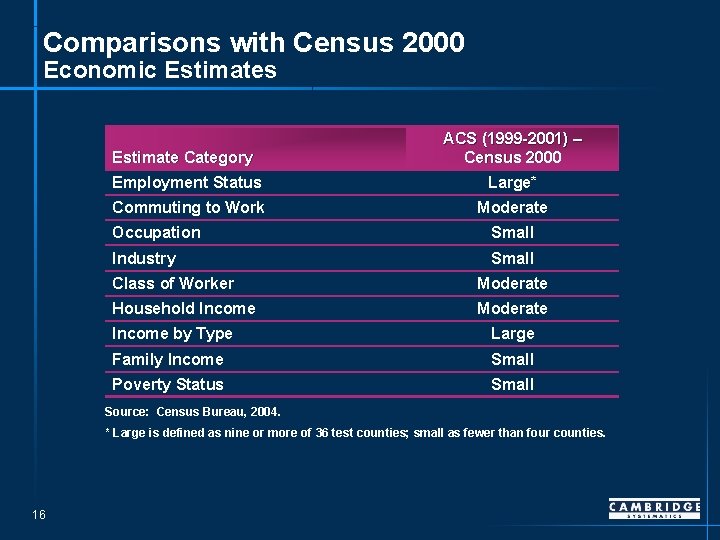
Comparisons with Census 2000 Economic Estimates Estimate Category ACS (1999 -2001) – Census 2000 Employment Status Large* Commuting to Work Moderate Occupation Small Industry Small Class of Worker Moderate Household Income Moderate Income by Type Large Family Income Small Poverty Status Small Source: Census Bureau, 2004. * Large is defined as nine or more of 36 test counties; small as fewer than four counties. 16
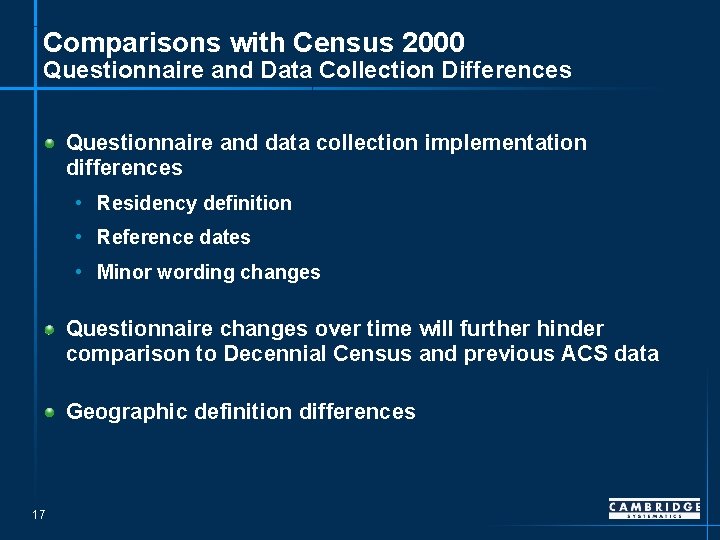
Comparisons with Census 2000 Questionnaire and Data Collection Differences Questionnaire and data collection implementation differences • Residency definition • Reference dates • Minor wording changes Questionnaire changes over time will further hinder comparison to Decennial Census and previous ACS data Geographic definition differences 17
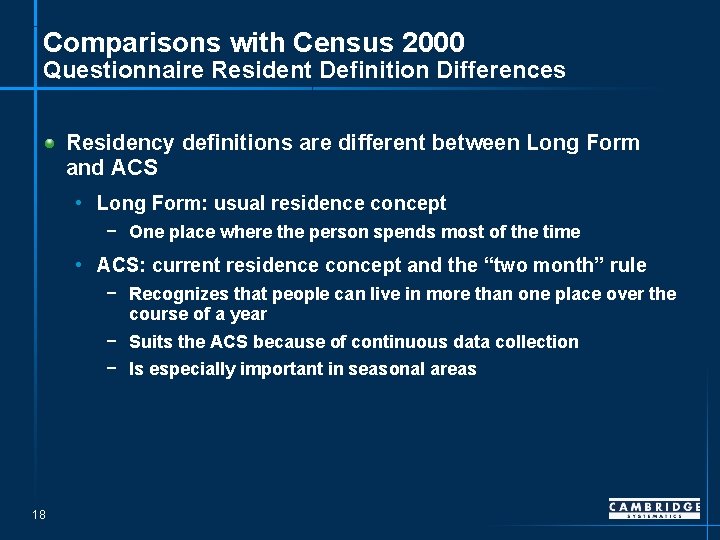
Comparisons with Census 2000 Questionnaire Resident Definition Differences Residency definitions are different between Long Form and ACS • Long Form: usual residence concept − One place where the person spends most of the time • ACS: current residence concept and the “two month” rule − Recognizes that people can live in more than one place over the course of a year − Suits the ACS because of continuous data collection − Is especially important in seasonal areas 18
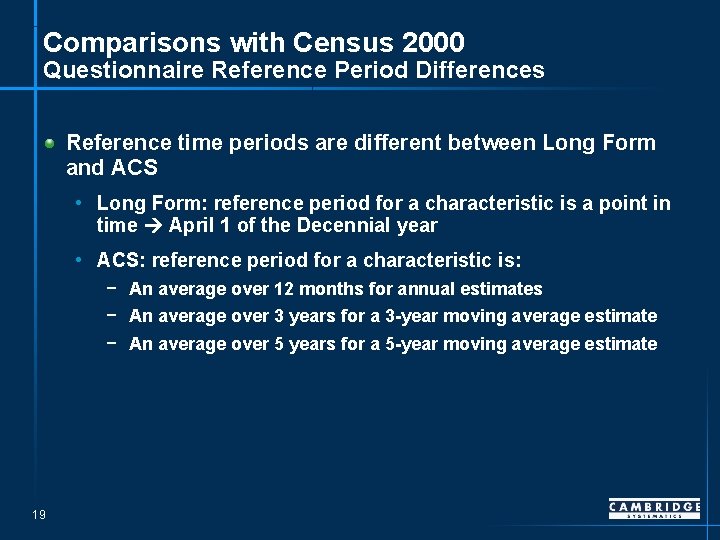
Comparisons with Census 2000 Questionnaire Reference Period Differences Reference time periods are different between Long Form and ACS • Long Form: reference period for a characteristic is a point in time April 1 of the Decennial year • ACS: reference period for a characteristic is: − An average over 12 months for annual estimates − An average over 3 years for a 3 -year moving average estimate − An average over 5 years for a 5 -year moving average estimate 19
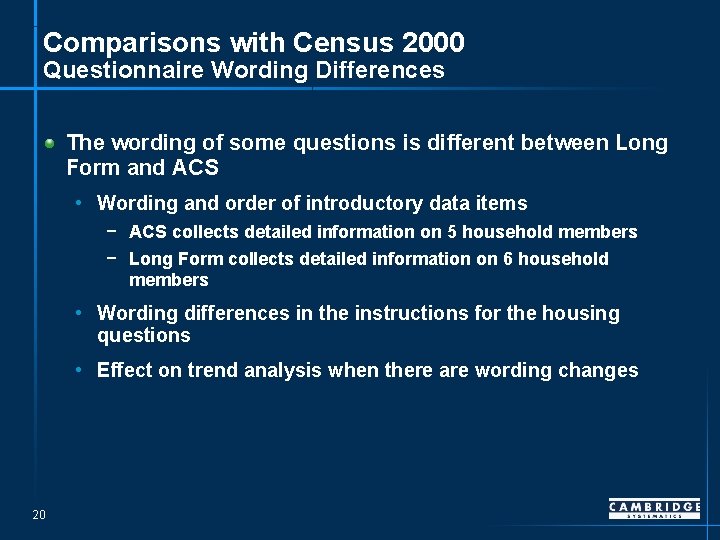
Comparisons with Census 2000 Questionnaire Wording Differences The wording of some questions is different between Long Form and ACS • Wording and order of introductory data items − ACS collects detailed information on 5 household members − Long Form collects detailed information on 6 household members • Wording differences in the instructions for the housing questions • Effect on trend analysis when there are wording changes 20
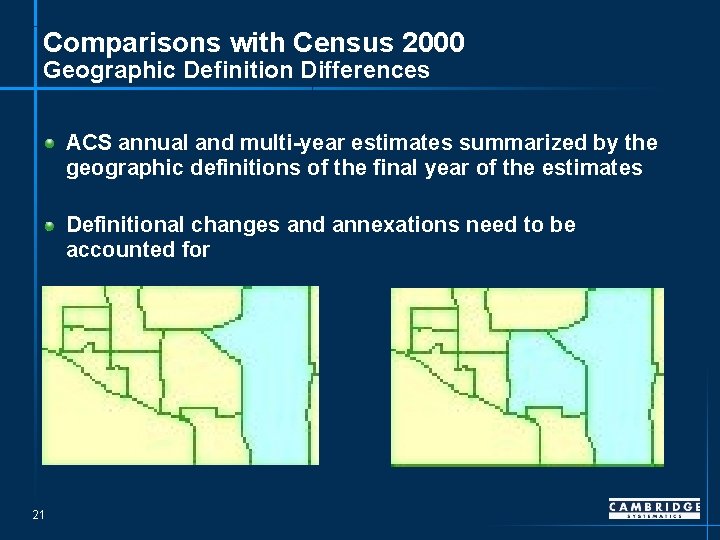
Comparisons with Census 2000 Geographic Definition Differences ACS annual and multi-year estimates summarized by the geographic definitions of the final year of the estimates Definitional changes and annexations need to be accounted for 21
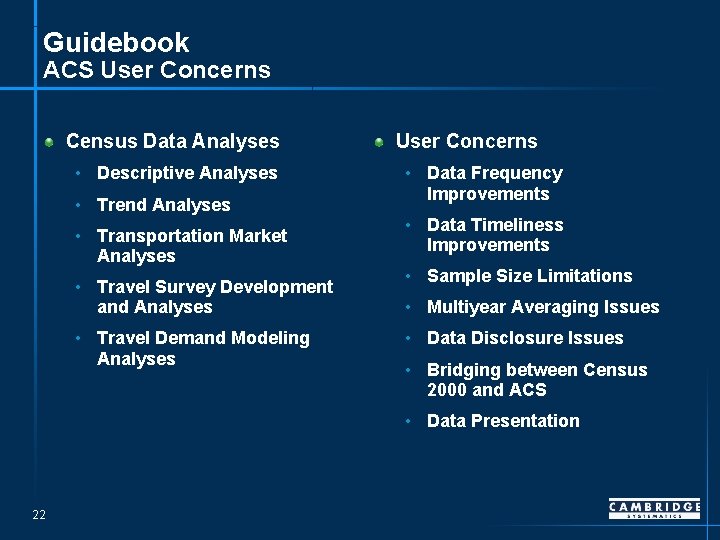
Guidebook ACS User Concerns Census Data Analyses • Descriptive Analyses • Trend Analyses • Transportation Market Analyses • Travel Survey Development and Analyses • Travel Demand Modeling Analyses User Concerns • Data Frequency Improvements • Data Timeliness Improvements • Sample Size Limitations • Multiyear Averaging Issues • Data Disclosure Issues • Bridging between Census 2000 and ACS • Data Presentation 22
Considerations in Defining Transportation Data Products and Special Tabulations Data needs vary by transportation users Considerably more transportation planning data may be available from standard ACS tabulations than from standard Decennial Census products Census Bureau and FHWA have raised concerns about how analysts will treat overlapping multiyear averages 23
Considerations in Defining Transportation Data Products and Special Tabulations Availability of flow data special tabulations with acceptable suppression is in question Ability to define customized geographic areas for tabulations will be limited Opportunity to average more than five years of data to increase sample sizes, but the number of years that can be pooled together will reach a practical limit especially in fast growing areas 24