
Learning to make a difference Planning and assessing
- Slides: 14
Learning to make a difference Planning and assessing social learning through value-creation stories Etienne and Beverly Wenger-Trayner LOGIN General Assembly, Colombo, December 14, 2016
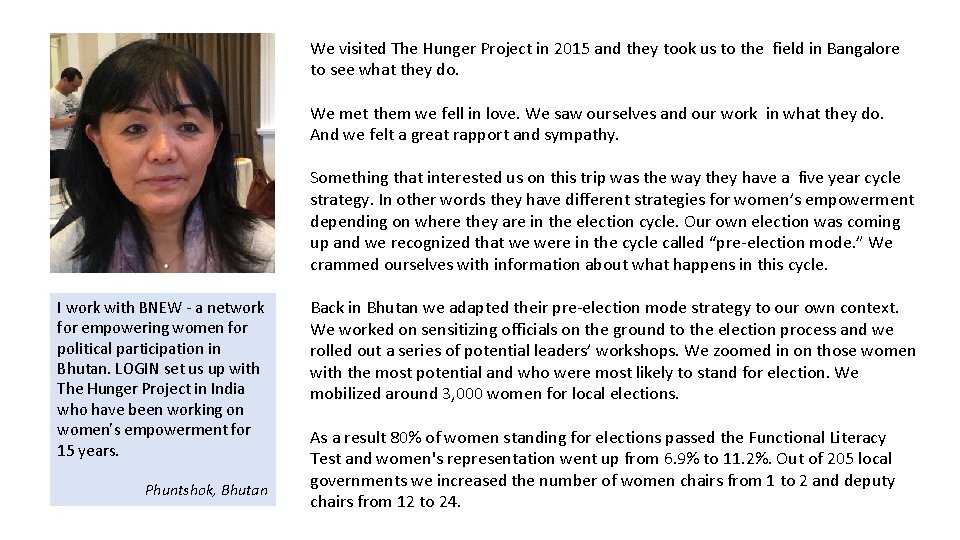
We visited The Hunger Project in 2015 and they took us to the field in Bangalore to see what they do. I work with BNEW - a network for empowering women for political participation in Bhutan. LOGIN set us up with The Hunger Project in India who have been working on women’s empowerment for 15 years. Phuntshok, Bhutan We met them we fell in love. We saw ourselves and our work in what they do. And we felt a great rapport and sympathy. Something that interested us on this trip was the way they have a five year cycle strategy. In other words they have different strategies for women’s empowerment depending on where they are in the election cycle. Our own election was coming up and we recognized that we were in the cycle called “pre-election mode. ” We crammed ourselves with information about what happens in this cycle. Back in Bhutan we adapted their pre-election mode strategy to our own context. We worked on sensitizing officials on the ground to the election process and we rolled out a series of potential leaders’ workshops. We zoomed in on those women with the most potential and who were most likely to stand for election. We mobilized around 3, 000 women for local elections. As a result 80% of women standing for elections passed the Functional Literacy Test and women's representation went up from 6. 9% to 11. 2%. Out of 205 local governments we increased the number of women chairs from 1 to 2 and deputy chairs from 12 to 24.
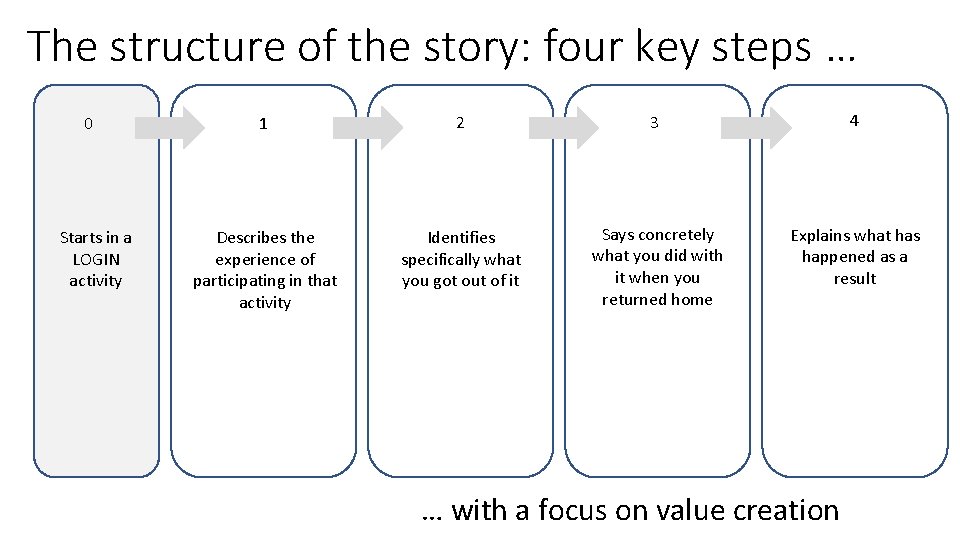
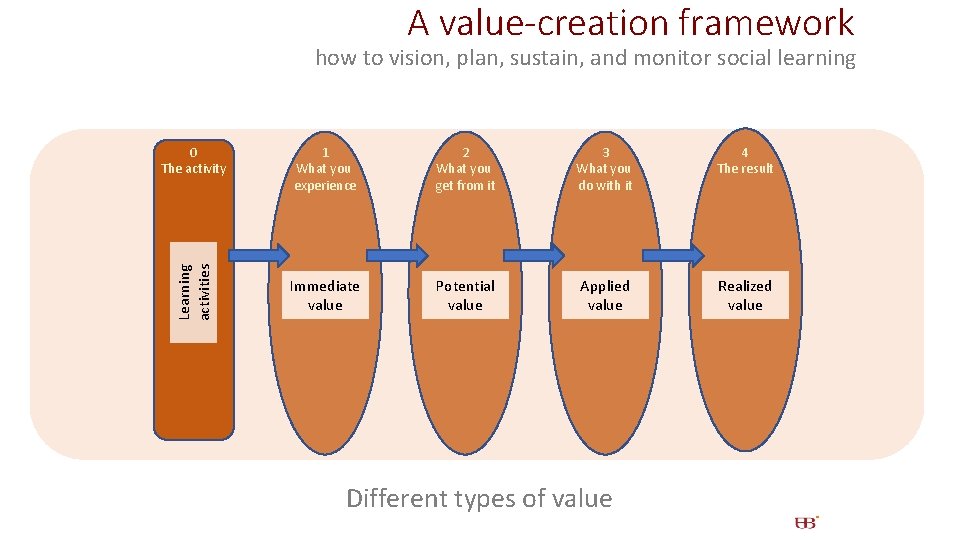
The structure of the story: four key steps … 0 Starts in a LOGIN activity 1 2 Describes the experience of participating in that activity Identifies specifically what you got out of it 4 3 Says concretely what you did with it when you returned home Explains what has happened as a result … with a focus on value creation
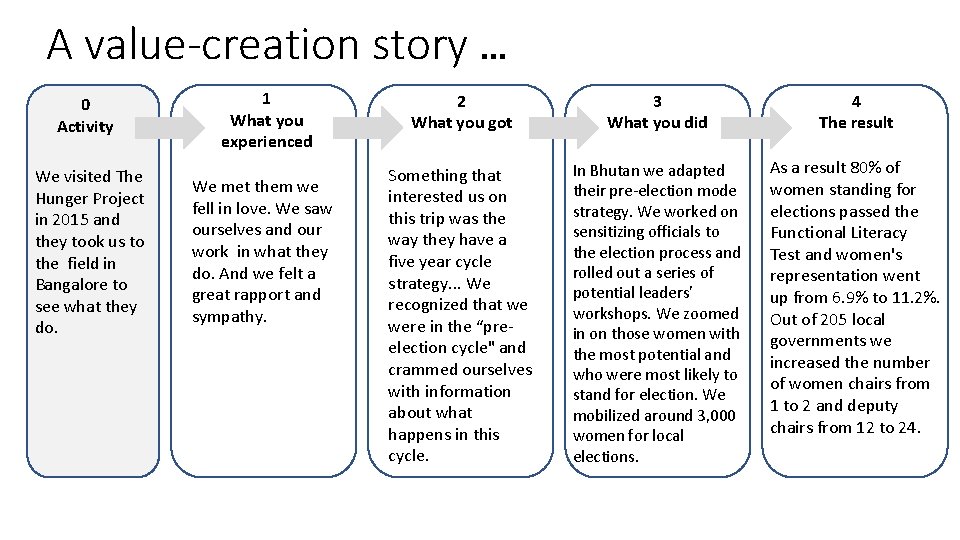
A value-creation story … 0 Activity We visited The Hunger Project in 2015 and they took us to the field in Bangalore to see what they do. 1 What you experienced We met them we fell in love. We saw ourselves and our work in what they do. And we felt a great rapport and sympathy. 2 What you got 3 What you did 4 The result Something that interested us on this trip was the way they have a five year cycle strategy. . . We recognized that we were in the “preelection cycle" and crammed ourselves with information about what happens in this cycle. In Bhutan we adapted their pre-election mode strategy. We worked on sensitizing officials to the election process and rolled out a series of potential leaders’ workshops. We zoomed in on those women with the most potential and who were most likely to stand for election. We mobilized around 3, 000 women for local elections. As a result 80% of women standing for elections passed the Functional Literacy Test and women's representation went up from 6. 9% to 11. 2%. Out of 205 local governments we increased the number of women chairs from 1 to 2 and deputy chairs from 12 to 24.
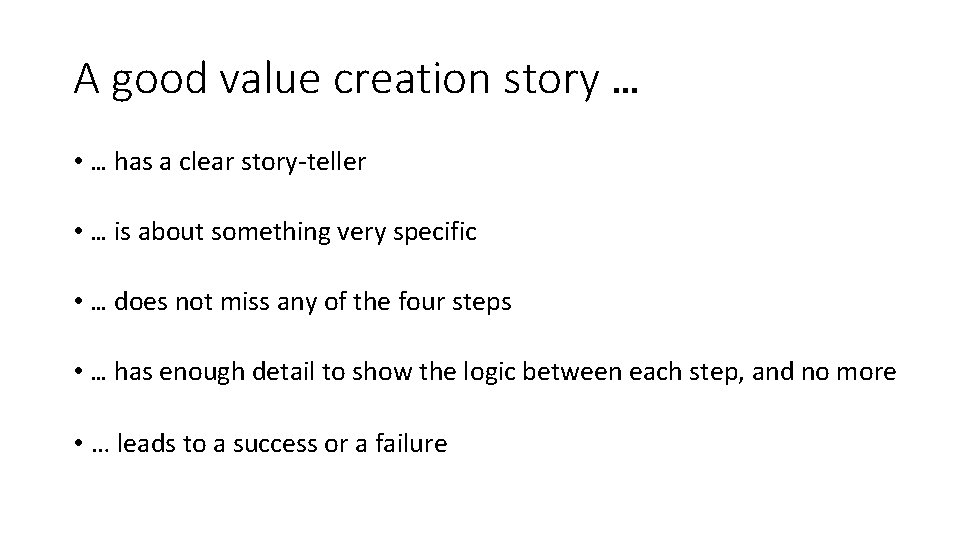
A good value creation story … • … has a clear story-teller • … is about something very specific • … does not miss any of the four steps • … has enough detail to show the logic between each step, and no more • … leads to a success or a failure
Tell a story of your own • Use the instructions and the template to write your story • Share it with your group • Select one to share with everyone
What your group is about You have five minutes: • Agree on three key words or phrases to describe theme of this group • Write them on a flipchart Now you may join another group
Why you are together • Who is here • What you have in common • How it manifests in your work • Would it be valuable to do something together?
A value-creation framework how to vision, plan, sustain, and monitor social learning Learning activities 0 The activity 1 What you experience 2 What you get from it 3 What you do with it 4 The result Immediate value Potential value Applied value Realized value Different types of value
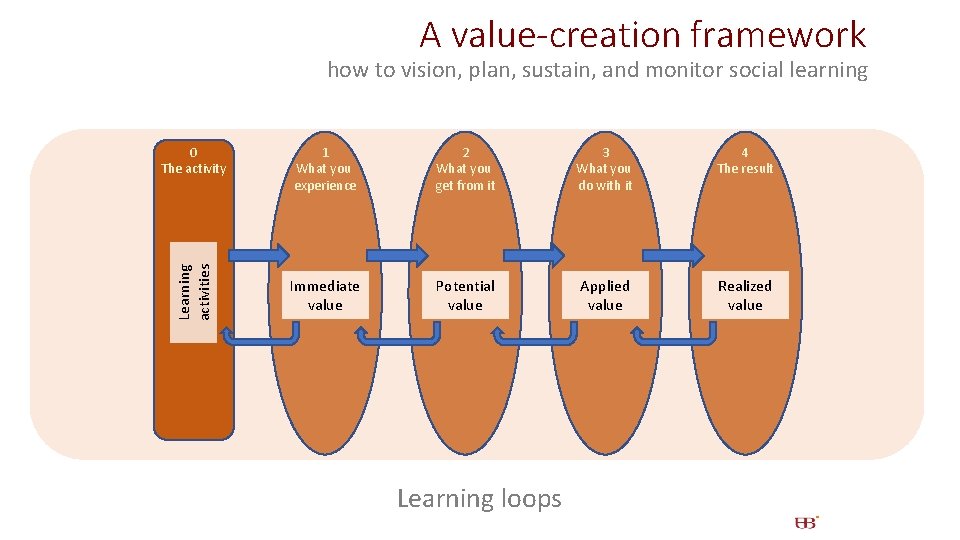
A value-creation framework how to vision, plan, sustain, and monitor social learning Learning activities 0 The activity 1 What you experience 2 What you get from it 3 What you do with it 4 The result Immediate value Potential value Applied value Realized value Learning loops
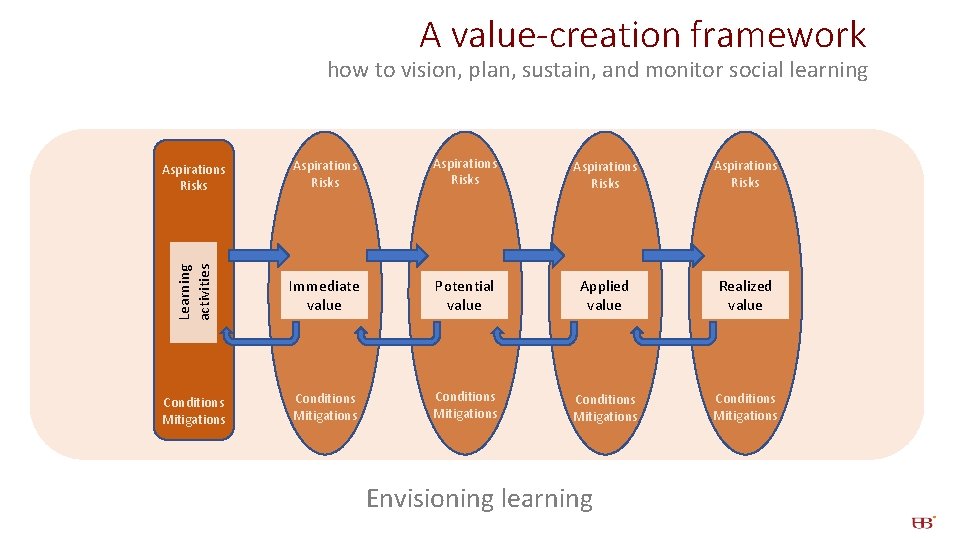
A value-creation framework Aspirations Risks Learning activities how to vision, plan, sustain, and monitor social learning Immediate value Potential value Applied value Realized value Conditions Mitigations Conditions Mitigations Aspirations Risks Envisioning learning
Your aspirations • What change in your country would your participation in this group generate? (Be specific and realistic. ) • Put them on cards on the board • What are the stories that will take you there? • Put them on cards on the board
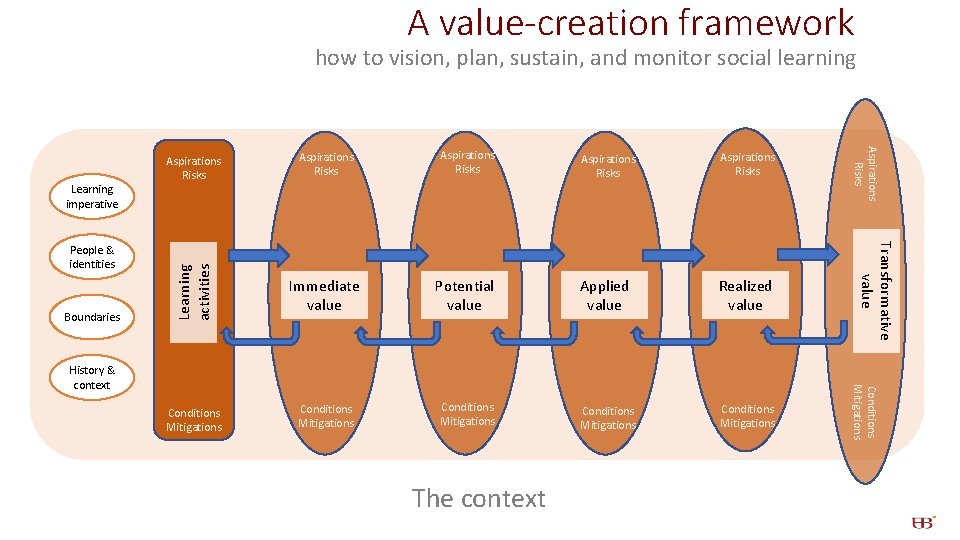
A value-creation framework Boundaries Aspirations Risks Immediate value Potential value Applied value Realized value Conditions Mitigations Conditions Mitigations Aspirations Risks History & context The context Conditions Mitigations Aspirations Risks Transformative value People & identities Aspirations Risks Learning imperative Aspirations Risks Learning activities how to vision, plan, sustain, and monitor social learning
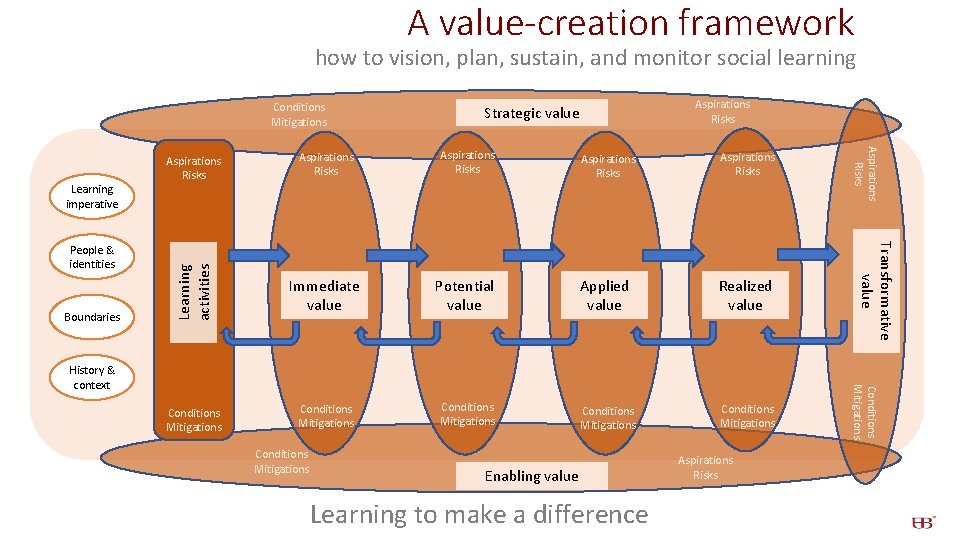
A value-creation framework how to vision, plan, sustain, and monitor social learning Boundaries Aspirations Risks Immediate value Potential value Applied value Realized value Conditions Mitigations Conditions Mitigations Aspirations Risks History & context Conditions Mitigations Enabling value Learning to make a difference Aspirations Risks Conditions Mitigations Aspirations Risks Transformative value People & identities Aspirations Risks Learning imperative Aspirations Risks Strategic value Learning activities Conditions Mitigations