
Learning the Guitar How the learning process works
- Slides: 22
Learning the Guitar!
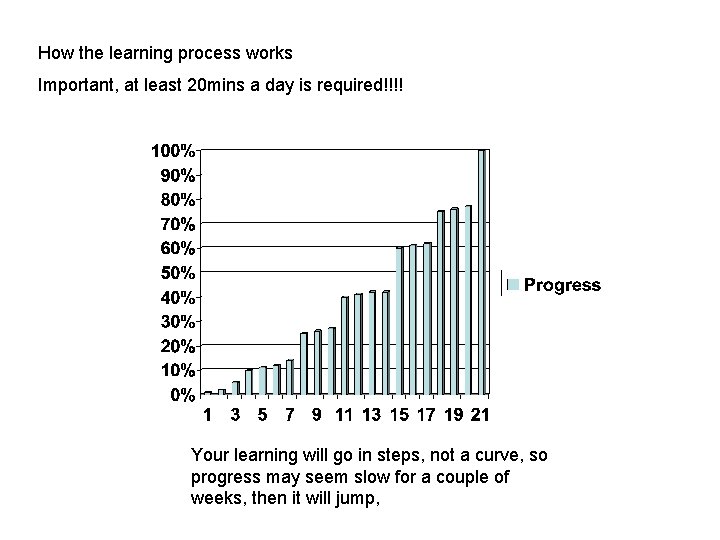
How the learning process works Important, at least 20 mins a day is required!!!! Your learning will go in steps, not a curve, so progress may seem slow for a couple of weeks, then it will jump,
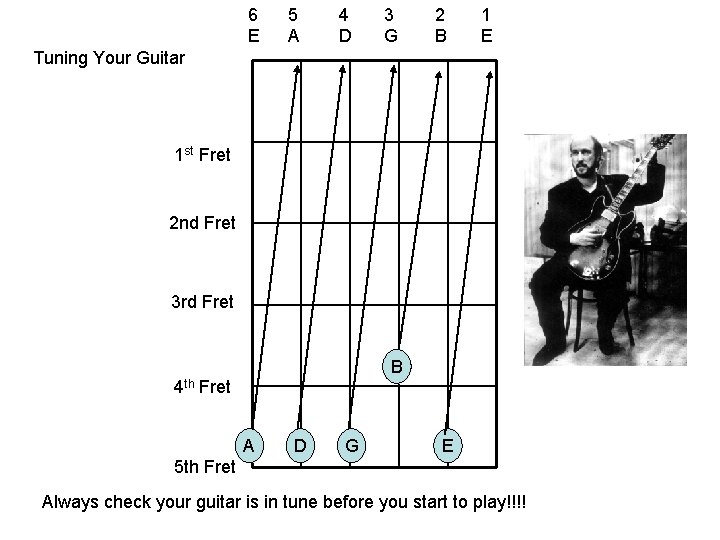
6 E 5 A 4 D 3 G 2 B 1 E Tuning Your Guitar 1 st Fret 2 nd Fret 3 rd Fret 4 th B Fret A D G E 5 th Fret Always check your guitar is in tune before you start to play!!!!
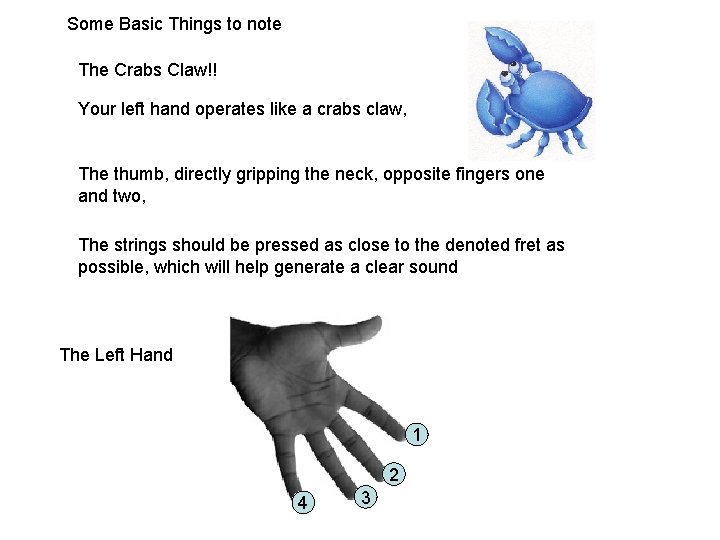
Some Basic Things to note The Crabs Claw!! Your left hand operates like a crabs claw, The thumb, directly gripping the neck, opposite fingers one and two, The strings should be pressed as close to the denoted fret as possible, which will help generate a clear sound The Left Hand 1 2 4 3
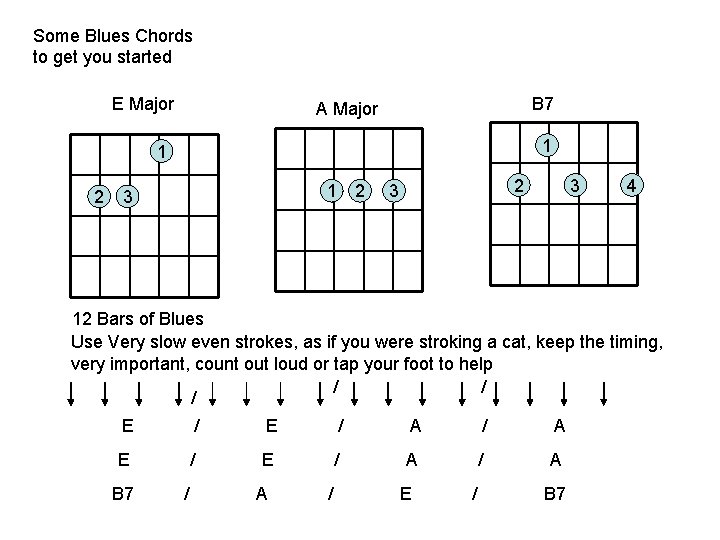
Some Blues Chords to get you started E Major B 7 A Major 1 1 2 1 3 2 2 3 3 4 12 Bars of Blues Use Very slow even strokes, as if you were stroking a cat, keep the timing, very important, count out loud or tap your foot to help / / / E / A / A B 7 / A / E / B 7
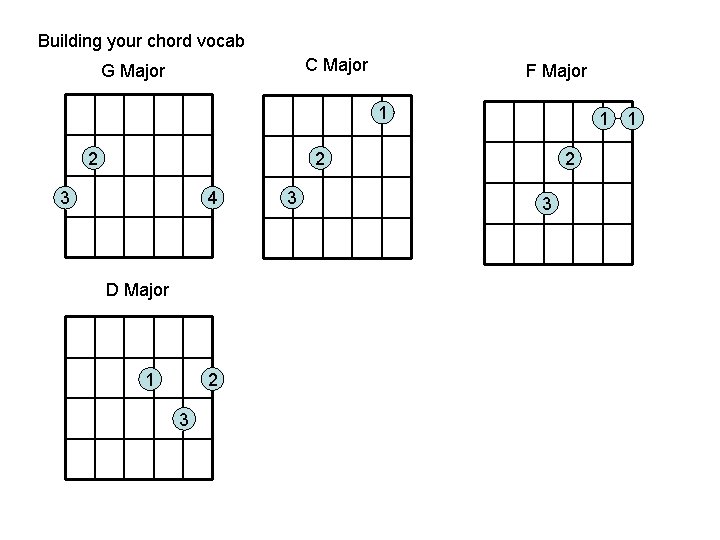
Building your chord vocab C Major G Major F Major 1 2 3 4 D Major 1 2 3 3 2 3 1
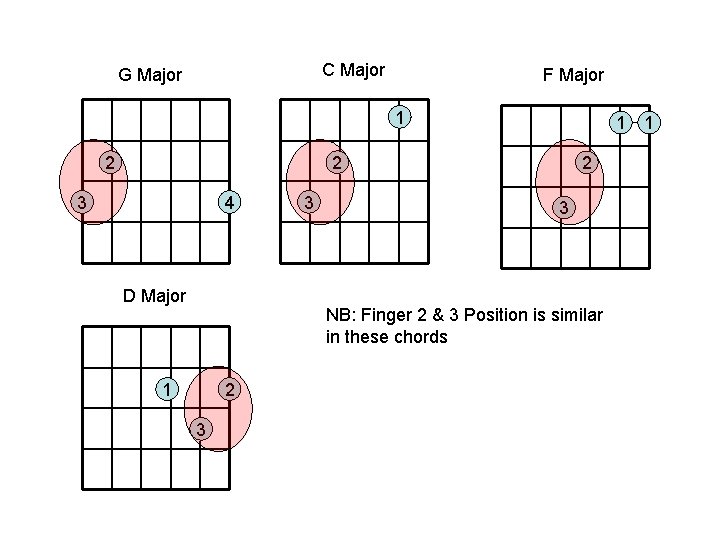
C Major G Major F Major 1 2 3 4 D Major 3 2 3 NB: Finger 2 & 3 Position is similar in these chords 1 2 3 1
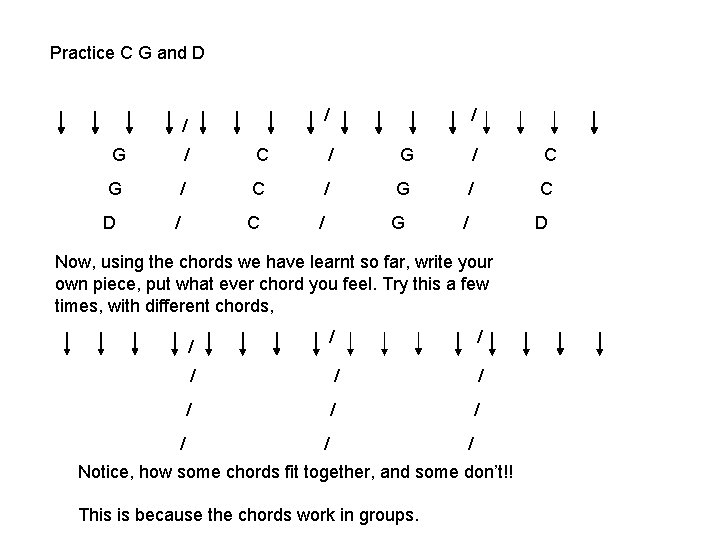
Practice C G and D / / / G / C / G / C D / C / G / D Now, using the chords we have learnt so far, write your own piece, put what ever chord you feel. Try this a few times, with different chords, / / / Notice, how some chords fit together, and some don’t!! This is because the chords work in groups.
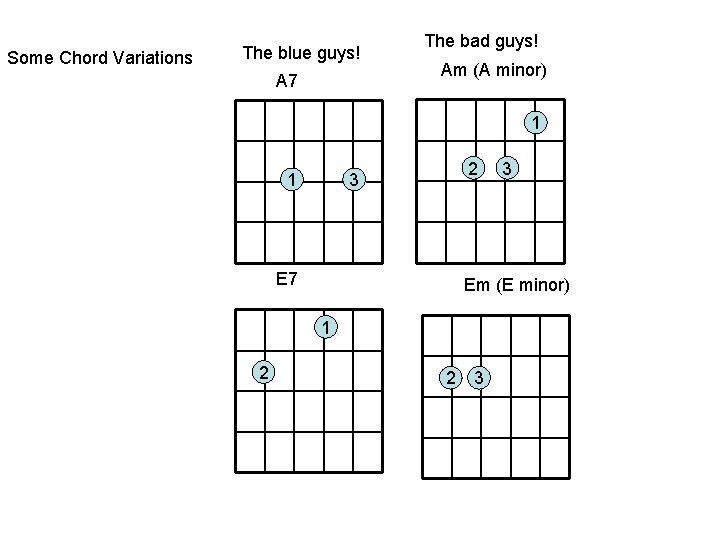
Some Chord Variations The blue guys! A 7 The bad guys! Am (A minor) 1 1 2 3 E 7 Em (E minor) 1 2 3
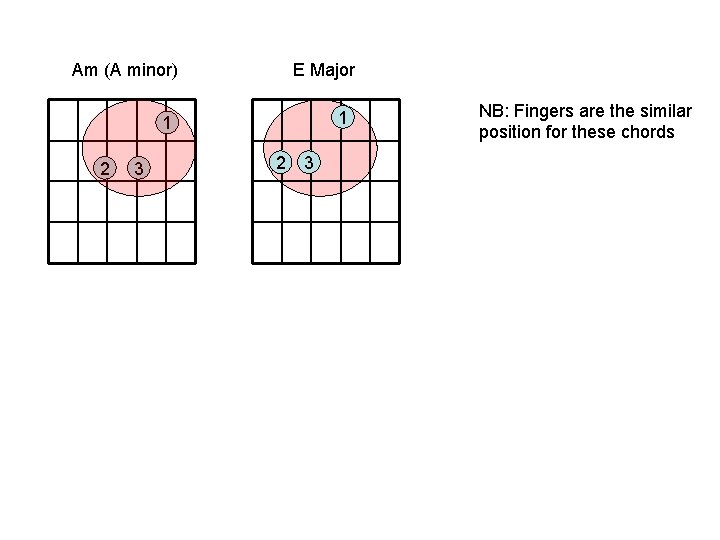
Am (A minor) E Major 1 1 2 3 NB: Fingers are the similar position for these chords
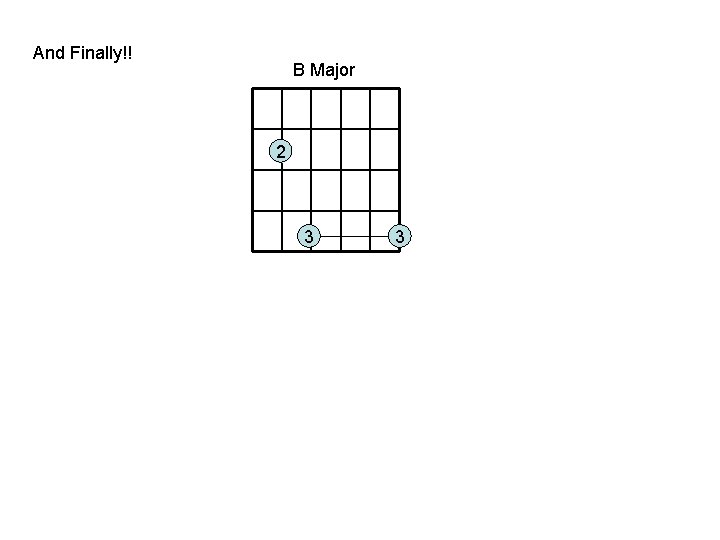
And Finally!! B Major 2 3 3
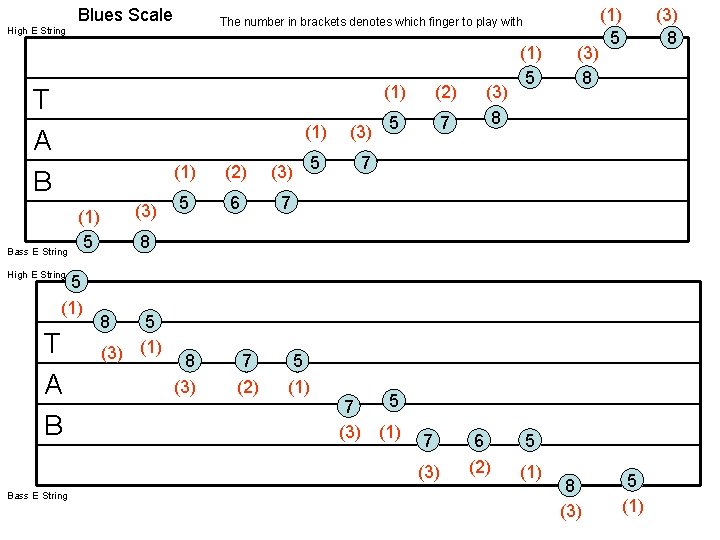
Now, to get your fingers mobile, and a change from learning chords, here is your first scale! Follow the positions, named in the diagram, try to use your 1 st 2 nd and 3 rd fingers in order as the scale goes up the fret board, and in reverse order as the scale moves down the fret board
High E String Blues Scale The number in brackets denotes which finger to play with (1) T A B (1) Bass E String (3) (1) 5 (1) (2) 5 6 (3) 5 (2) (3) 5 7 (3) 8 (1) 5 (3) 8 7 7 8 High E String 5 (1) T A B 8 5 (3) (1) 8 (3) 7 (2) 5 (1) 5 7 (3) (1) 7 (3) Bass E String 6 (2) 5 (1) 8 (3) 5 (1)
The recap! All the chords we've learnt so far!
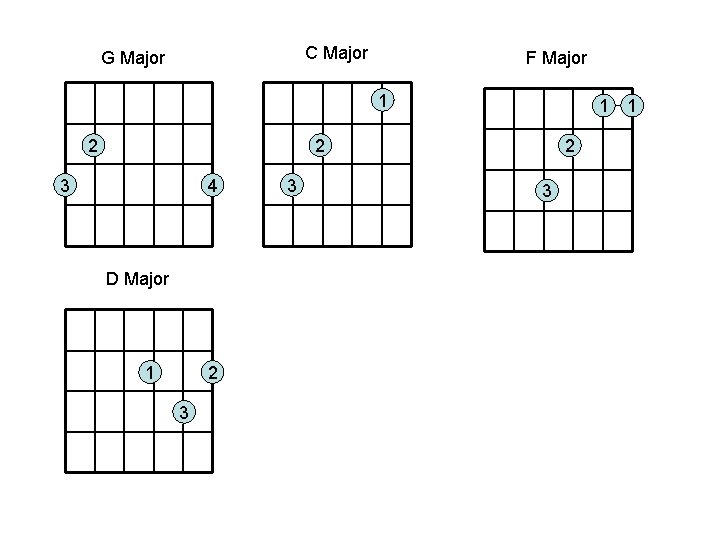
C Major G Major F Major 1 2 3 4 D Major 1 2 3 3 2 3 1
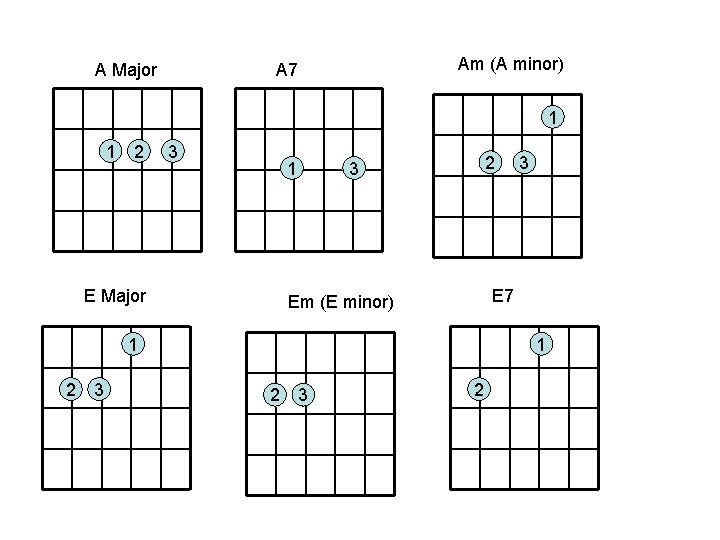
A Major Am (A minor) A 7 1 1 2 3 1 E Major 2 3 E 7 Em (E minor) 1 2 3 3 1 2 3 2
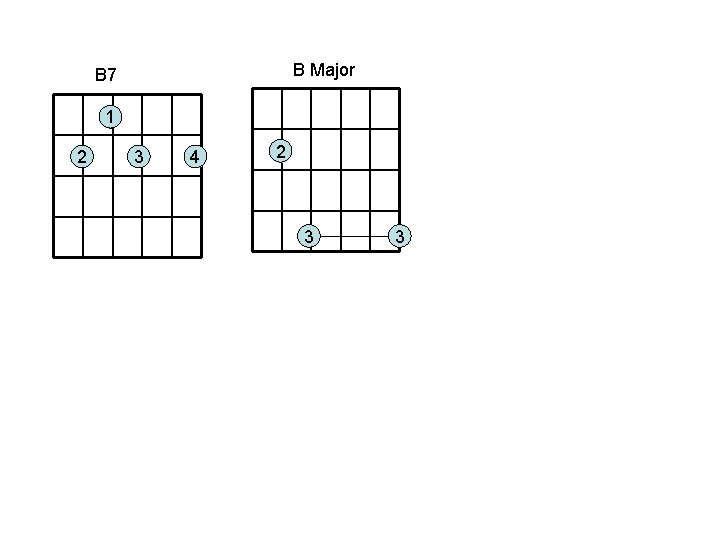
B Major B 7 1 2 3 4 2 3 3
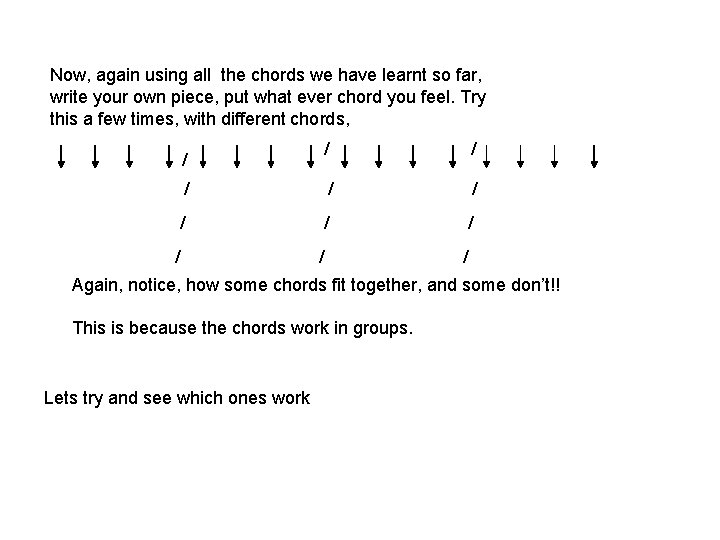
Now, again using all the chords we have learnt so far, write your own piece, put what ever chord you feel. Try this a few times, with different chords, / / / Again, notice, how some chords fit together, and some don’t!! This is because the chords work in groups. Lets try and see which ones work
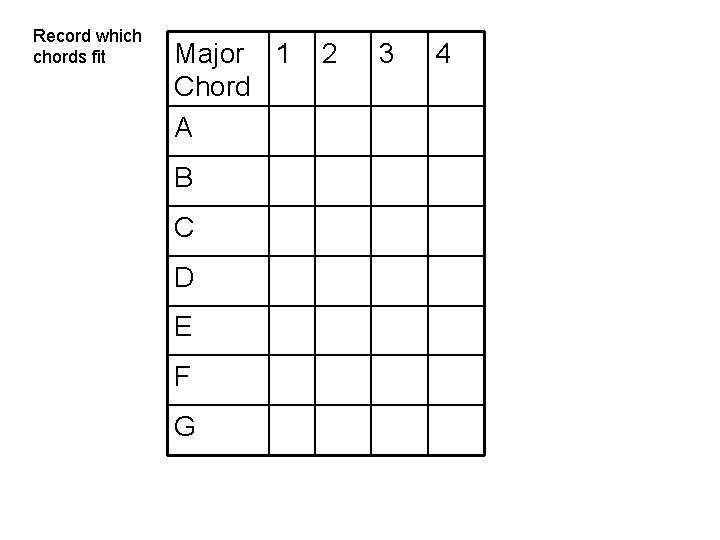
Record which chords fit Major 1 Chord A B C D E F G 2 3 4
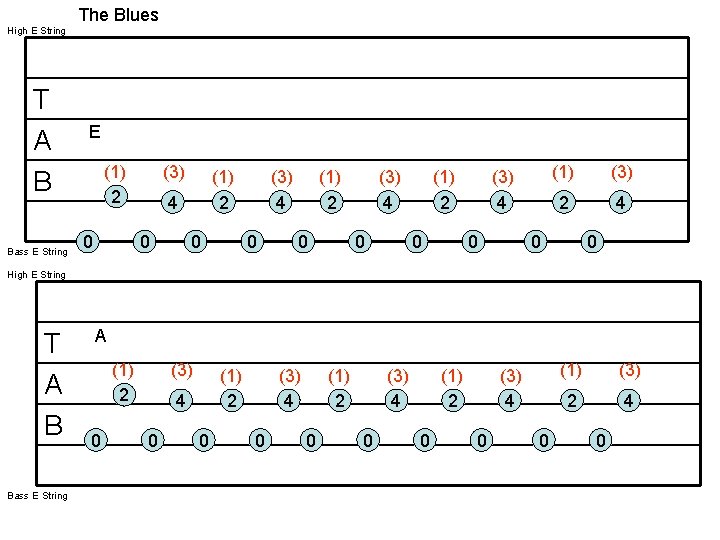
Next – Your fingers should be starting to get mobile, remember changing chords And learning new shapes is all about muscle memory, so keep at it and you’ll get there! Next we are going to learn a basic blues riff!
High E String T A B Bass E String The Blues E (1) 2 0 (3) (1) 2 4 0 0 (3) 4 0 (1) 2 0 (3) 4 0 (1) (3) 2 4 0 0 High E String T A B Bass E String A (1) 2 0 (3) (1) 2 4 0 0 (3) 4 0 (1) 2 0 (3) 4 0 0 (1) (3) 2 4 0
Bar Chords!!! This is a really big challenge