
Learning Targets Recording Closing Entries and Preparing a
- Slides: 28
Learning Targets Recording Closing Entries and Preparing a Post. Closing Trial Balance for a Service Business : t a h W Lesson 8 -1 Recording Closing Entries © 2014 Cengage Learning. All Rights Reserved.
Learning Targets : y h W To understand how to complete the end-offiscal-period work to end the accounting cycle and make the records ready to begin a new fiscal (financial) period. STEP 7 of the Accounting Cycle © 2014 Cengage Learning. All Rights Reserved.
Learning Targets : w o H Use your Aplia “Work Together” and “On Your Own” to verify concept accuracy. LT 1 Journalize and post closing entries for a service business organized as a proprietorship. © 2014 Cengage Learning. All Rights Reserved.
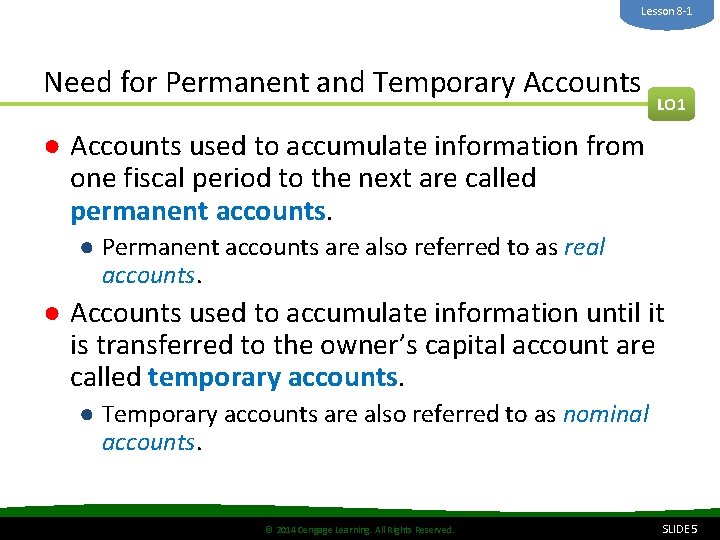
Lesson 8 -1 Need for Permanent and Temporary Accounts LO 1 ● Accounts used to accumulate information from one fiscal period to the next are called permanent accounts. ● Permanent accounts are also referred to as real accounts. ● Accounts used to accumulate information until it is transferred to the owner’s capital account are called temporary accounts. ● Temporary accounts are also referred to as nominal accounts. © 2014 Cengage Learning. All Rights Reserved. SLIDE 5
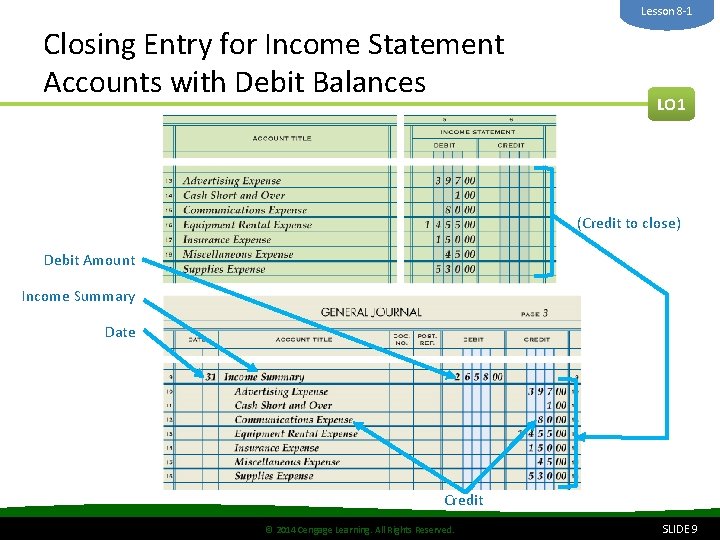
Lesson 8 -1 Need for Closing Temporary Accounts LO 1 ● Journal entries used to prepare temporary accounts for a new fiscal period are called closing entries. ● The temporary account balances must be reduced to zero at the end of each fiscal period. © 2014 Cengage Learning. All Rights Reserved. SLIDE 6
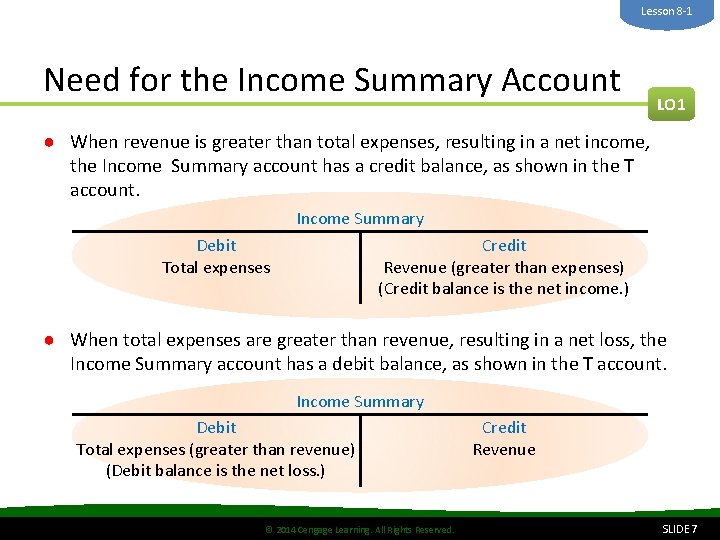
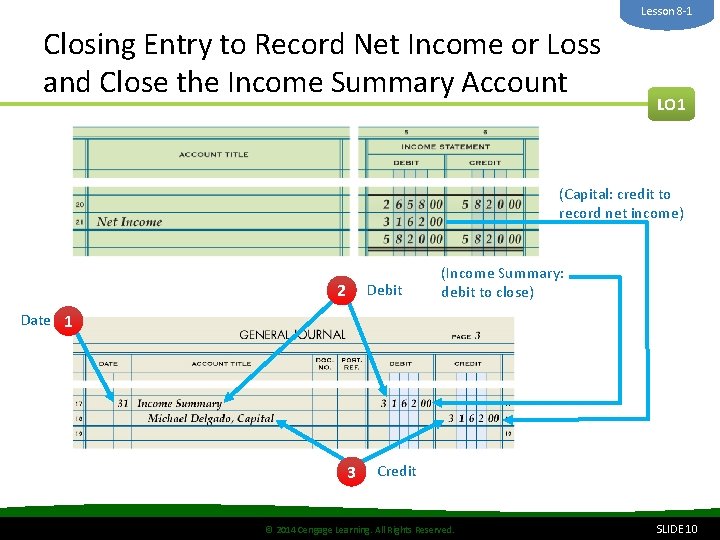
Lesson 8 -1 Need for the Income Summary Account LO 1 ● When revenue is greater than total expenses, resulting in a net income, the Income Summary account has a credit balance, as shown in the T account. Income Summary Credit Revenue (greater than expenses) (Credit balance is the net income. ) Debit Total expenses ● When total expenses are greater than revenue, resulting in a net loss, the Income Summary account has a debit balance, as shown in the T account. Income Summary Debit Total expenses (greater than revenue) (Debit balance is the net loss. ) © 2014 Cengage Learning. All Rights Reserved. Credit Revenue SLIDE 7
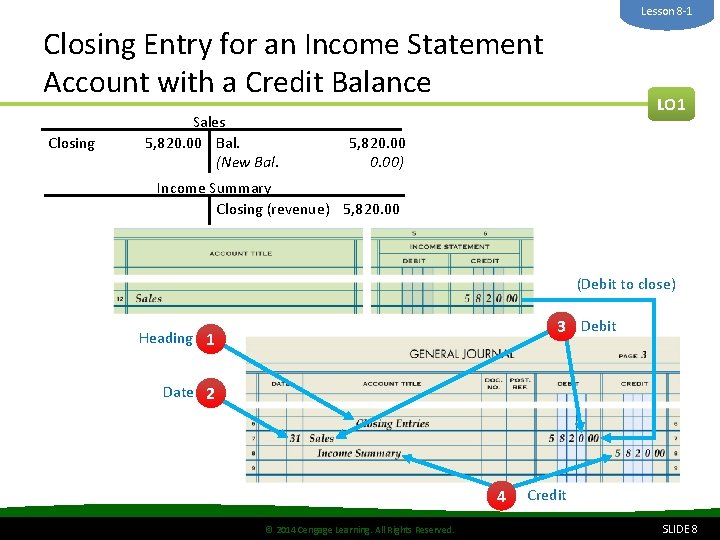
Lesson 8 -1 Closing Entry for an Income Statement Account with a Credit Balance Closing Sales 5, 820. 00 Bal. (New Bal. LO 1 5, 820. 00) Income Summary Closing (revenue) 5, 820. 00 (Debit to close) 3 Debit Heading 1 Date 2 4 © 2014 Cengage Learning. All Rights Reserved. Credit SLIDE 8
Lesson 8 -1 Closing Entry for Income Statement Accounts with Debit Balances LO 1 (Credit to close) Debit Amount Income Summary Date Credit © 2014 Cengage Learning. All Rights Reserved. SLIDE 9
Lesson 8 -1 Closing Entry to Record Net Income or Loss and Close the Income Summary Account LO 1 (Capital: credit to record net income) 2 Debit (Income Summary: debit to close) Date 1 3 Credit © 2014 Cengage Learning. All Rights Reserved. SLIDE 10
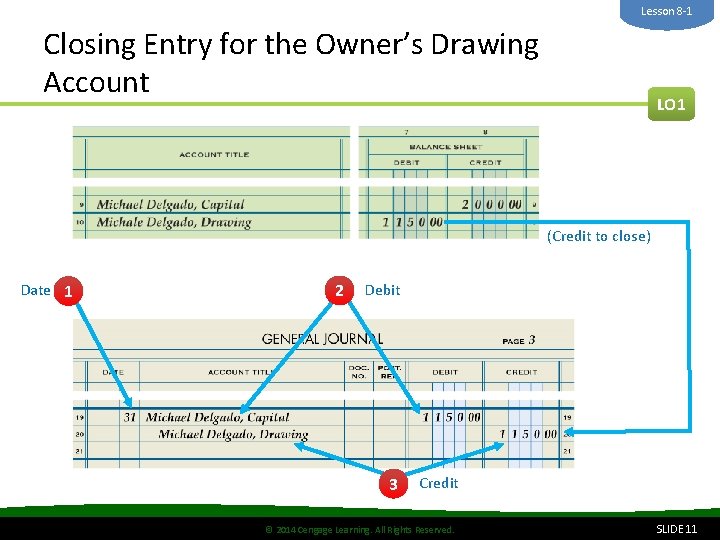
Lesson 8 -1 Closing Entry for the Owner’s Drawing Account LO 1 (Credit to close) Date 1 2 Debit 3 Credit © 2014 Cengage Learning. All Rights Reserved. SLIDE 11
Lesson 8 -1 Audit Your Understanding 1. What do the ending balances of permanent accounts for one fiscal period represent at the beginning of the next fiscal period? ANSWER Beginning balances © 2014 Cengage Learning. All Rights Reserved. SLIDE 12
Lesson 8 -1 Audit Your Understanding 2. What do the balances of temporary accounts show? ANSWER Changes in the owner’s capital account for a single fiscal period © 2014 Cengage Learning. All Rights Reserved. SLIDE 13
Lesson 8 -1 Audit Your Understanding 3. List the four closing entries. ANSWER 1. An entry to close income statement accounts with credit balances. 2. An entry to close income statement accounts with debit balances. 3. An entry to record net income or net loss and close the Income Summary account. 4. An entry to close the owner’s drawing account. © 2014 Cengage Learning. All Rights Reserved. SLIDE 14
Learning Targets Recording Closing Entries and Preparing a Post. Closing Trial Balance for a Service Business : t a h W Lesson 8 -2 Preparing a Post-Closing Trial Balance © 2014 Cengage Learning. All Rights Reserved.
Learning Targets : y h W To understand how to complete the end-offiscal-period work to end the accounting cycle and make the records ready to begin a new fiscal (financial) period. STEP 8 of the Accounting Cycle © 2014 Cengage Learning. All Rights Reserved.
Learning Targets : w o H Use your Aplia “Work Together” and “On Your Own” to verify concept accuracy. LT 2 Prepare a post-closing trial balance. © 2014 Cengage Learning. All Rights Reserved.
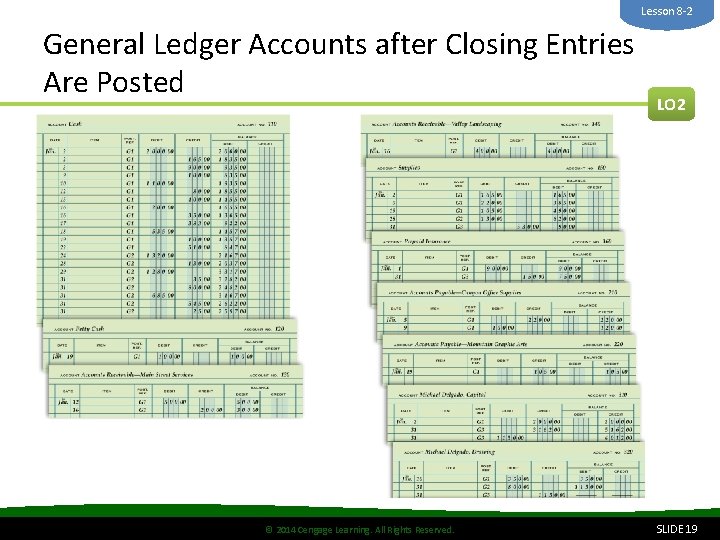
Lesson 8 -2 General Ledger Accounts after Closing Entries Are Posted © 2014 Cengage Learning. All Rights Reserved. LO 2 SLIDE 19
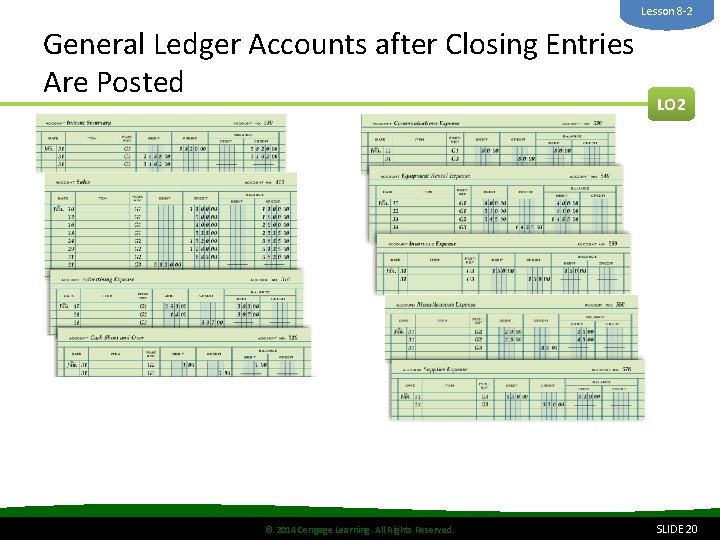
Lesson 8 -2 General Ledger Accounts after Closing Entries Are Posted © 2014 Cengage Learning. All Rights Reserved. LO 2 SLIDE 20
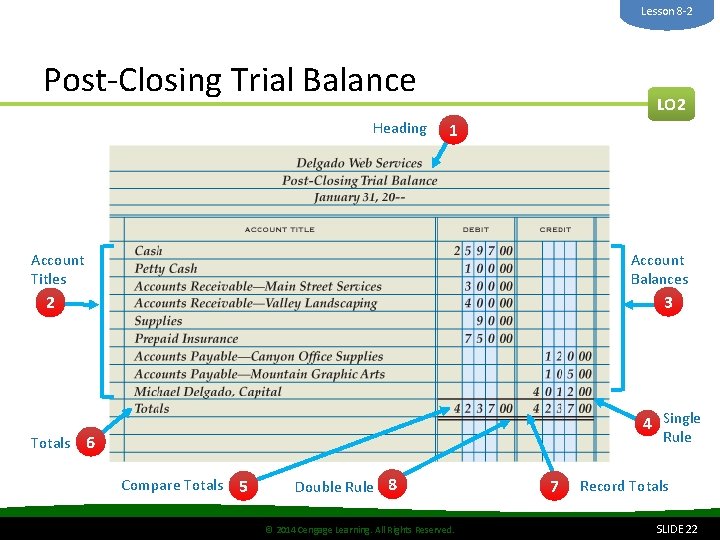
Lesson 8 -2 Post-Closing Trial Balance LO 2 ● A trial balance prepared after the closing entries are posted is called a post-closing trial balance. © 2014 Cengage Learning. All Rights Reserved. SLIDE 21
Lesson 8 -2 Post-Closing Trial Balance Heading LO 2 1 Account Balances Account Titles 3 2 4 Single Rule Totals 6 Compare Totals 5 Double Rule 8 © 2014 Cengage Learning. All Rights Reserved. 7 Record Totals SLIDE 22
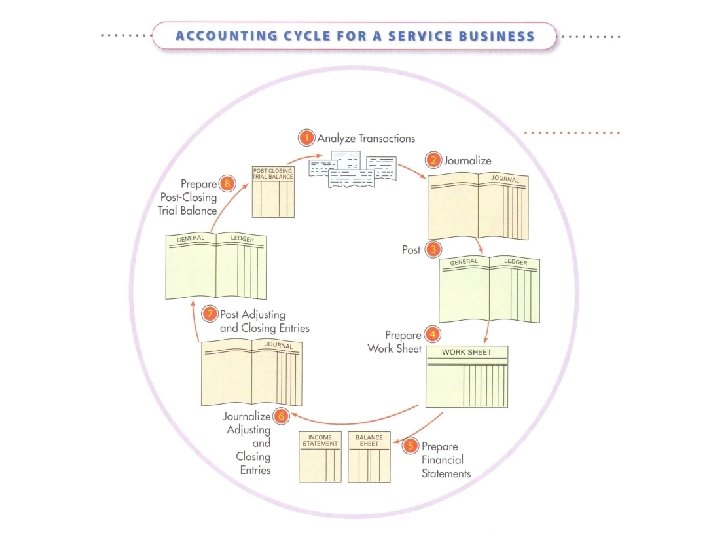
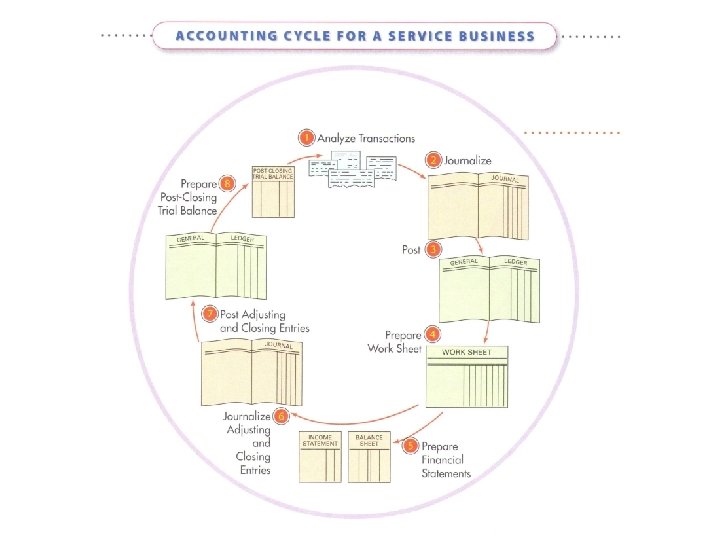
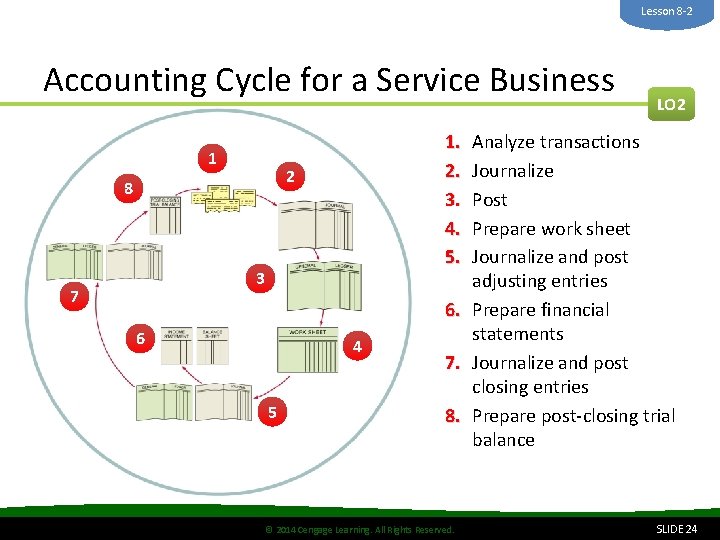
Lesson 8 -2 Accounting Cycle for a Service Business LO 2 ● The series of accounting activities included in recording financial information for a fiscal period is called an accounting cycle. © 2014 Cengage Learning. All Rights Reserved. SLIDE 23
Lesson 8 -2 Accounting Cycle for a Service Business 1 1. 2. 3. 4. 5. 2 8 3 7 6 4 5 LO 2 Analyze transactions Journalize Post Prepare work sheet Journalize and post adjusting entries 6. Prepare financial statements 7. Journalize and post closing entries 8. Prepare post-closing trial balance © 2014 Cengage Learning. All Rights Reserved. SLIDE 24
Lesson 8 -2 Audit Your Understanding 1. Why are lines drawn in both the Balance Debit and Balance Credit columns when an account has a zero balance? ANSWER To assure a reader that a balance has not been omitted © 2014 Cengage Learning. All Rights Reserved. SLIDE 25
Lesson 8 -2 Audit Your Understanding 2. Which accounts go on the post-closing trial balance? ANSWER Only those with balances (permanent accounts) © 2014 Cengage Learning. All Rights Reserved. SLIDE 26
Lesson 8 -2 Audit Your Understanding 3. Why are temporary accounts omitted from a post-closing trial balance? ANSWER Because they are closed and have zero balances © 2014 Cengage Learning. All Rights Reserved. SLIDE 27
Lesson 8 -2 Audit Your Understanding 4. What are the steps in the accounting cycle? ANSWER 1. Analyze transactions. 2. Journalize. 3. Post. 4. Prepare work sheet. 5. Journalize and post adjusting entries. 6. Prepare financial statements. 7. Journalize and post closing entries. 8. Prepare post-closing trial balance. © 2014 Cengage Learning. All Rights Reserved. SLIDE 28