
LEARNING TARGET WATER CYCLE How is water cycled
- Slides: 16
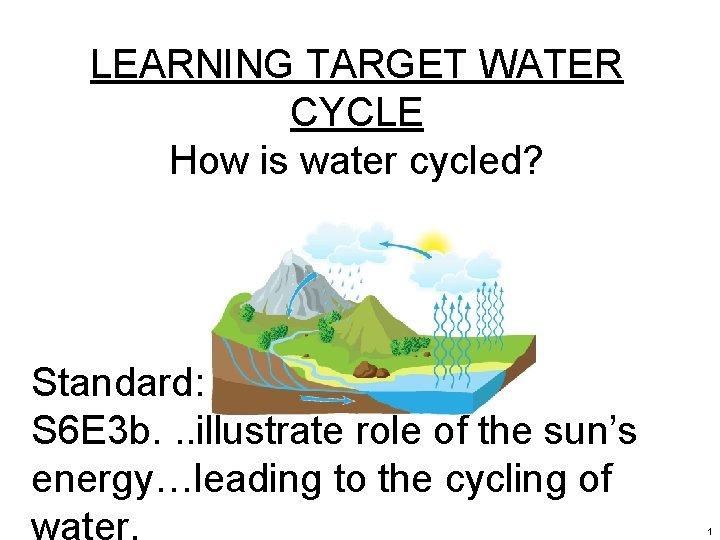
LEARNING TARGET WATER CYCLE How is water cycled? Standard: S 6 E 3 b. . . illustrate role of the sun’s energy…leading to the cycling of water. 1
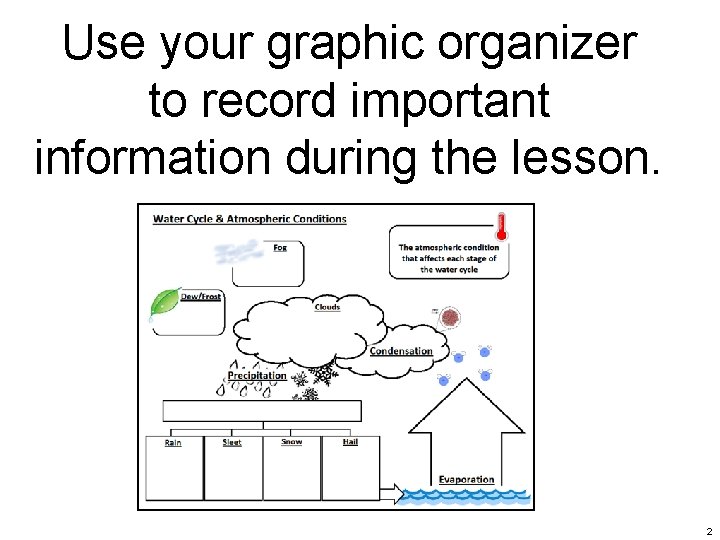
Use your graphic organizer to record important information during the lesson. 2
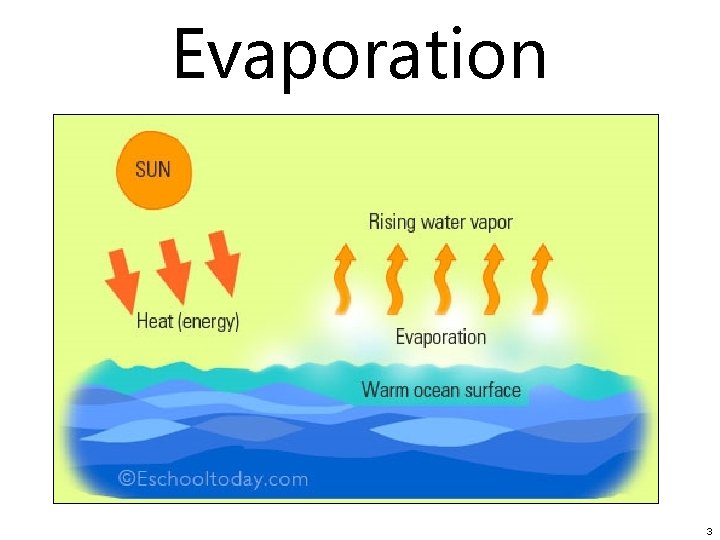
Evaporation 3
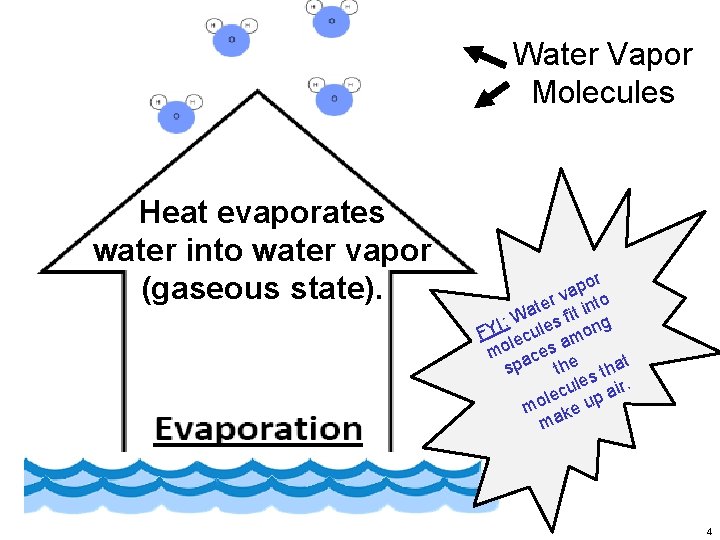
Water Vapor Molecules Heat evaporates water into water vapor (gaseous state). or p a r v into e t Wa es fit g : I FY lecul amon mo aces the s that sp le u ir. c a e l p mo ke u ma 4
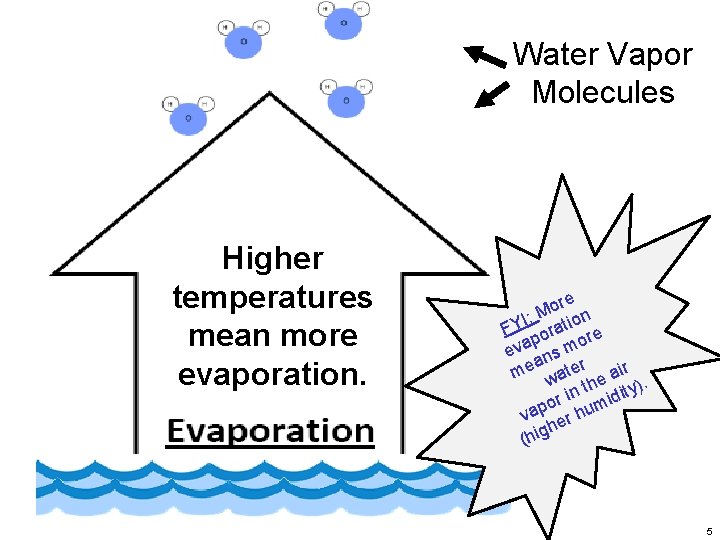
Water Vapor Molecules Higher temperatures mean more evaporation. ore M n I: FY oratio re p o eva ns m a me water e air th ity). n i id r o m p u va er h h (hig 5
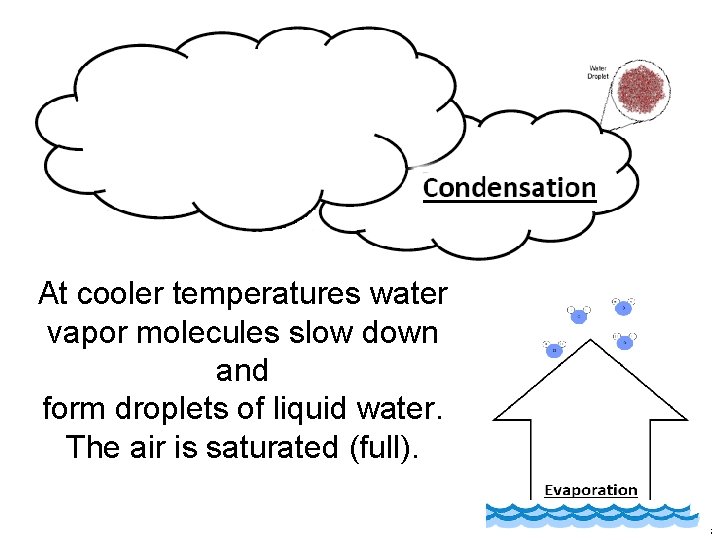
At cooler temperatures water vapor molecules slow down and form droplets of liquid water. The air is saturated (full). 6
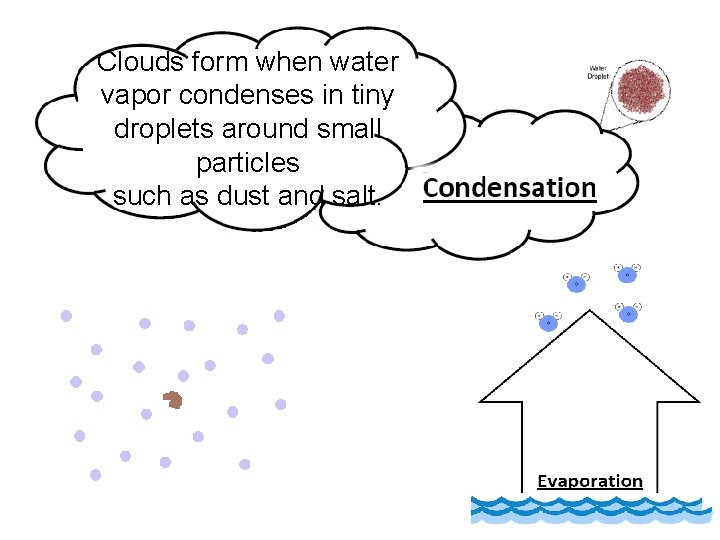
Clouds form when water vapor condenses in tiny droplets around small particles such as dust and salt. 7
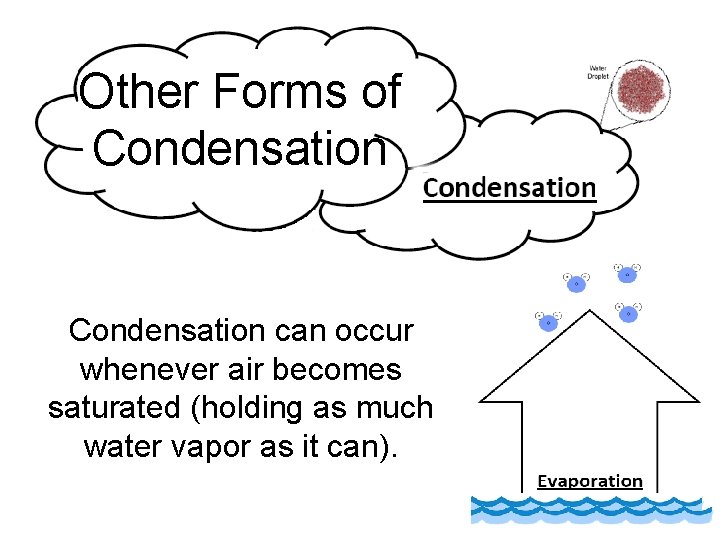
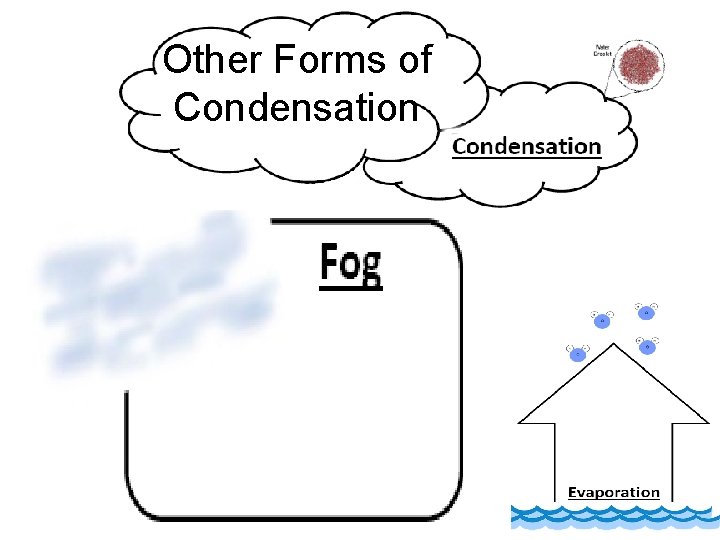
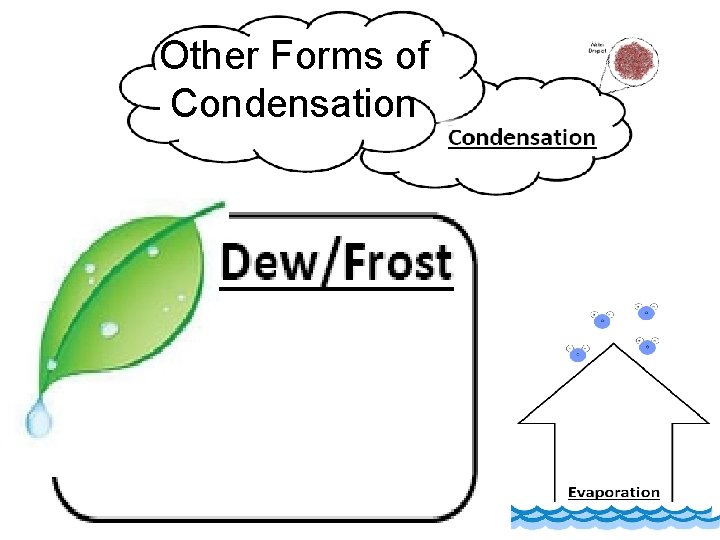
Other Forms of Condensation can occur whenever air becomes saturated (holding as much water vapor as it can). 8
Other Forms of Condensation 9
Other Forms of Condensation 10
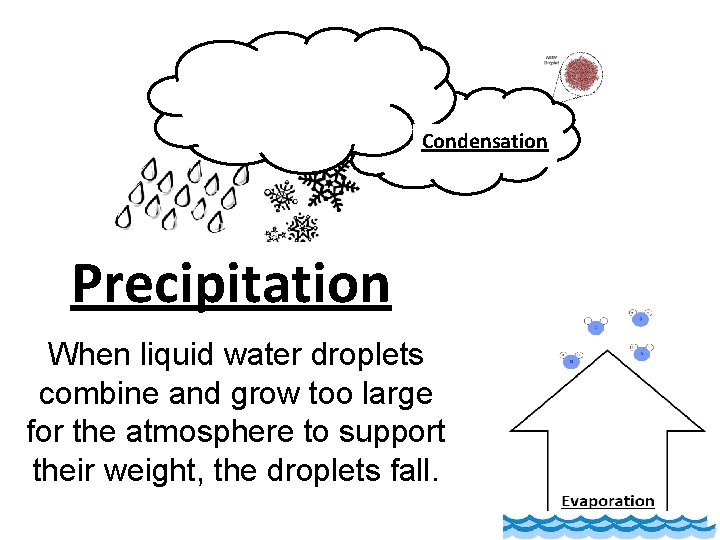
Condensation Precipitation When liquid water droplets combine and grow too large for the atmosphere to support their weight, the droplets fall. 11
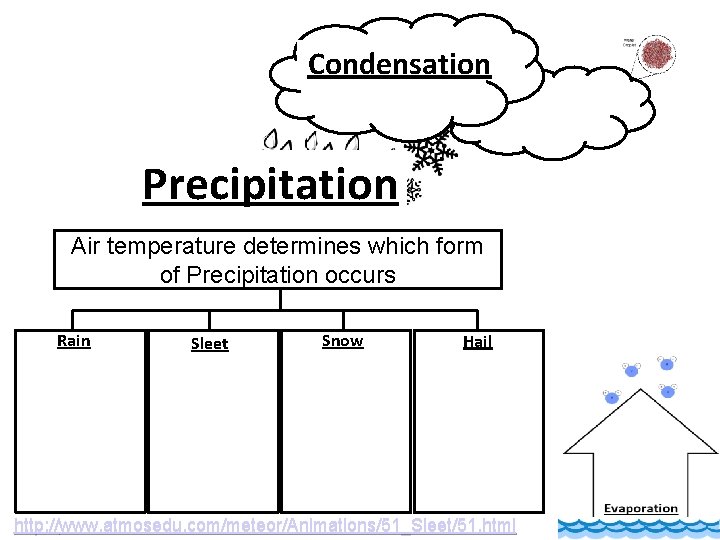
Condensation Precipitation Air temperature determines which form of Precipitation occurs Rain Sleet Snow Hail http: //www. atmosedu. com/meteor/Animations/51_Sleet/51. html 12
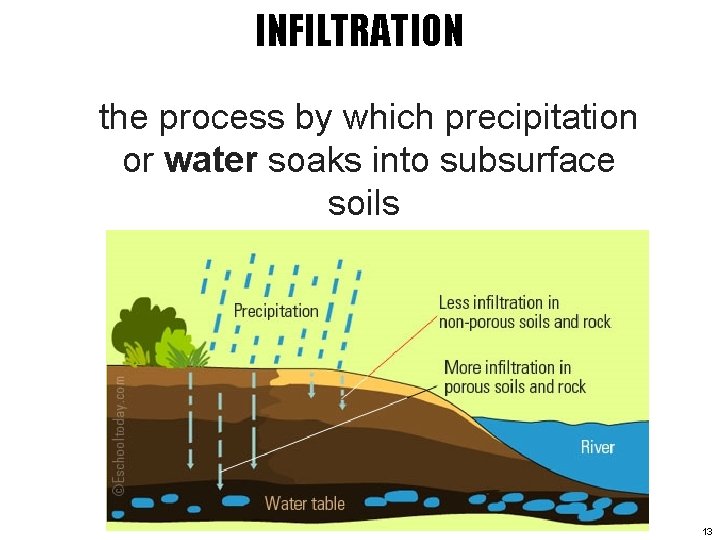
INFILTRATION the process by which precipitation or water soaks into subsurface soils 13
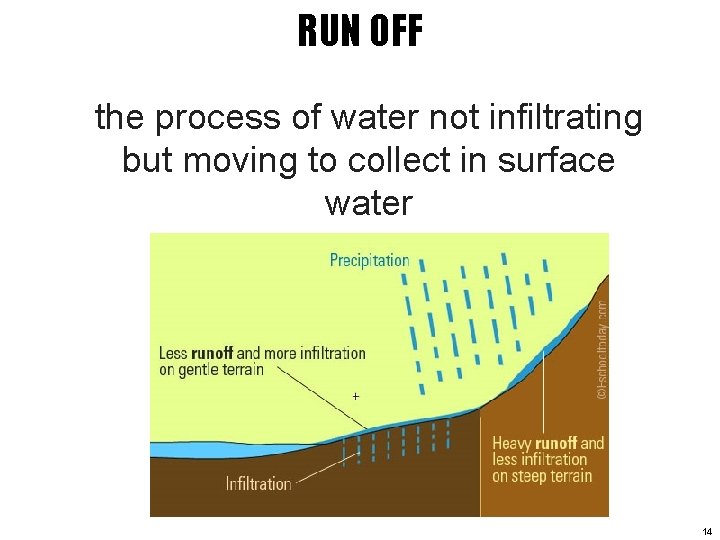
RUN OFF the process of water not infiltrating but moving to collect in surface water 14
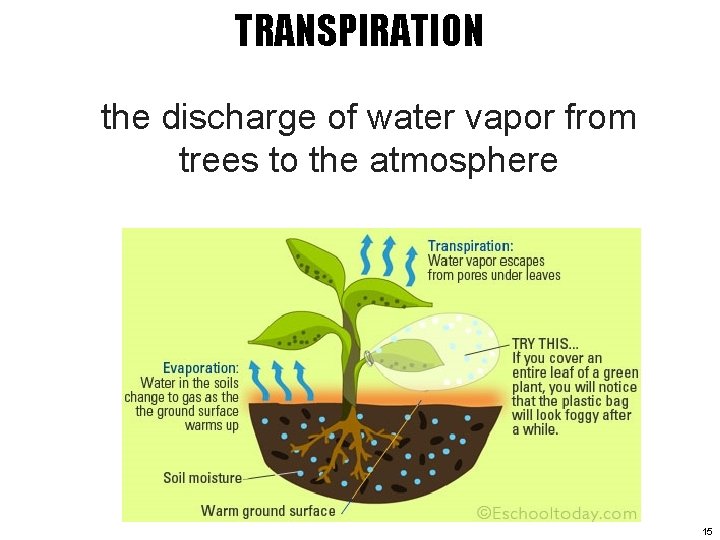
TRANSPIRATION the discharge of water vapor from trees to the atmosphere 15
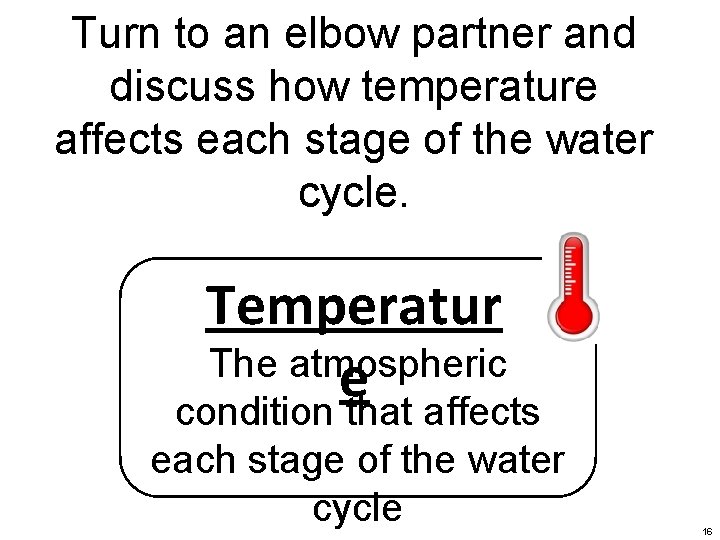
Turn to an elbow partner and discuss how temperature affects each stage of the water cycle. Temperatur The atmospheric e condition that affects each stage of the water cycle 16