
LEARNING STYLES AND STRATEGIES IN THE MULTIMEDIA AGE

- Slides: 53
LEARNING STYLES AND STRATEGIES IN THE MULTIMEDIA AGE Rebecca L. Oxford, Ph. D. University of Maryland
LEARNING STYLES AND STRATEGIES
PURPOSE To introduce main concepts and dimensions of learning styles and strategies in the multimedia age
WHAT HAS THE MULTIMEDIA AGE BROUGHT US? ¨ Internet as a source of fast, at-our-fingertips information ¨ E-mail, chat-rooms, and instant messaging ¨ “Reach out and touch someone!” . . . anyplace in the world
WHAT HAS THE MULTIMEDIA AGE BROUGHT US? (Continued) ¨ Hundreds of new L 2 learning programs, some exciting and some not ¨ Hypermedia – the Latin example ¨ New on-line projects for L 2 strategy instruction
WHAT HAS THE MULTIMEDIA AGE BROUGHT US? (Continued) ¨ Electronic portfolios for students (and teachers) ¨ Game-Boys, Nintendo, and Leapfrog ¨ CNN video linked with the lessons in your textbooks
WHAT HAS THE MULTIMEDIA AGE BROUGHT US? (Continued) ¨ CDs, tapes, videos – opening up new L 2 practice possibilities ¨ E-books, e-journals, and e-zines ¨ Interactive simulations like ICONS and Create-a-Company
WHAT HAS THE MULTIMEDIA AGE BROUGHT US? (Continued) ¨ Shortened attention spans ¨ Increased Internet-aided plagiarism ¨ Easy ways to steal music, software, and other people’s writing
WHAT HAS THE MULTIMEDIA AGE BROUGHT US? (Continued) ¨ Concept of teacher as technology wizard ¨ Comfort: Your students will ALWAYS know more than you do about some things! ¨ Teacher-student technology alliances
WHAT HAS THE MULTIMEDIA AGE BROUGHT US? (Continued) ¨ New ways of looking at learning and teaching ¨ More attention paid to HOW PEOPLE LEARN (learning styles and learning strategies)
LEARNING STYLE CONCEPTS ¨ Learning styles are the general, broad approaches a person uses to learn or to solve a problem. ¨ Learning styles occur on a continuum. They are not blackand-white categories.
LEARNING STYLE CONCEPTS (CONTINUED) ¨ Learning styles can be stretched by learning new strategies. ¨ Learning styles are related to cultural background and beliefs. ¨ Learning styles can change somewhat over the lifespan.
EXAMPLES OF LEARNING STYLES ¨ Holistic and item-focused styles ¨ Synthesizing and analyzing styles ¨ Open and closure-oriented styles ¨ Intuitive-random and concrete-sequential styles ¨ Extroverted and introverted styles ¨ Sensory preference styles
LEARNING STRATEGY CONCEPTS ¨Unlike learning styles, learning strategies are the specific thoughts, steps, or behaviors that learners consciously use to enhance the perception, storage, retention, and retrieval of new information.
LEARNING STRATEGY CONCEPTS (CONTINUED) ¨ Learning strategies are intentional tools learners use to make their learning more efficient, more effective, and more enjoyable. ¨ Many kinds of learning strategies exist. These are used for literacy and other areas of learning.
LEARNING STRATEGY CONCEPTS (CONTINUED) ¨ Familiar strategy groupings include: – Cognitive / Memory (outlining, highlighting, analyzing, synthesizing, semantic-mapping, using imagery to remember, and many more) – Metacognitive (planning, organizing, evaluating, and monitoring – POEM)
LEARNING STRATEGY CONCEPTS (CONTINUED) ¨ Familiar strategy groupings include: – Compensation (guessing from the context, using gestures to convey meaning, and pausing for help in a conversation) – Affective (lowering anxiety through music or other means, rewarding yourself, making learning more fun) – Social (asking questions, learning with others, finding out about the target culture)
PULLING STYLES AND STRATEGIES TOGETHER ¨ Holistic and item-focused styles ¨ Synthesizing and analyzing styles ¨ Open and closure-oriented styles ¨ Intuitive-random and concrete-sequential styles ¨ Extroverted and introverted styles ¨ Sensory preference styles HOW DO STRATEGIES RELATE TO STYLES? HOW DO BOTH RELATE TO TECHNOLOGY?
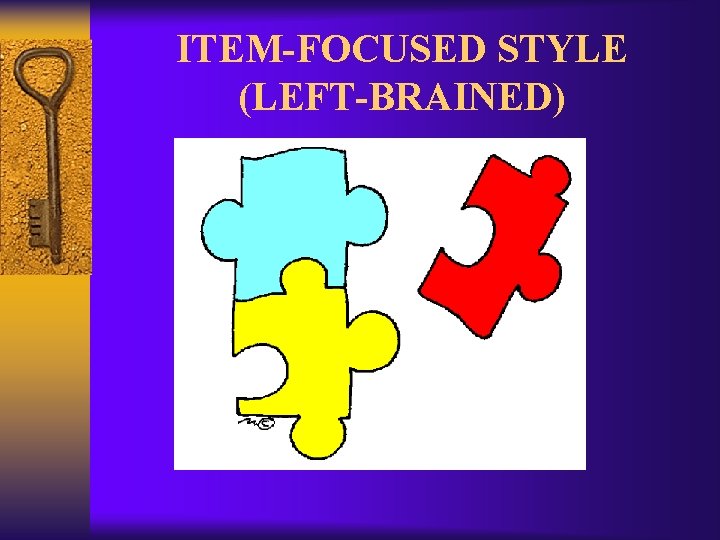
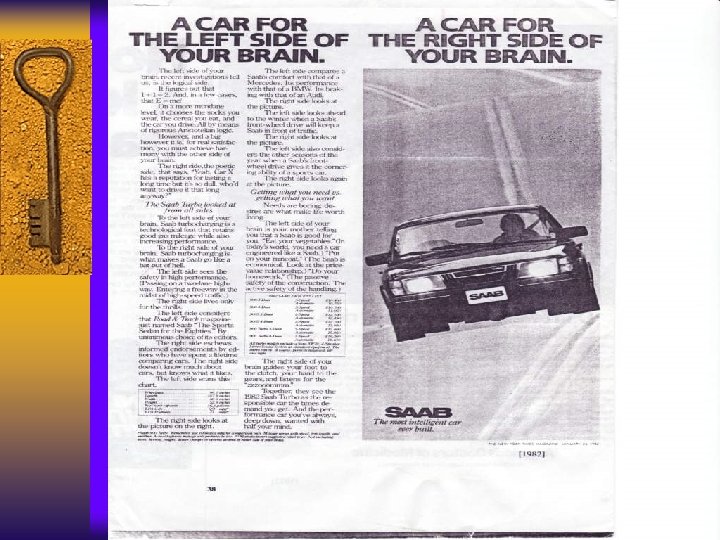
HOLISTIC AND ITEM-FOCUSED STYLES ¨ The holistic style prefers big ideas and few details; can guess or predict easily, though not particularly accurately; may use all-or-nothing thinking; often impulsive; does not involve systematic, reflective synthesis. ¨ The item-focused style prefers small pieces of information; may be hyper-focused on details, though not interested in relationships between them; does not involve systematic, reflective analysis.
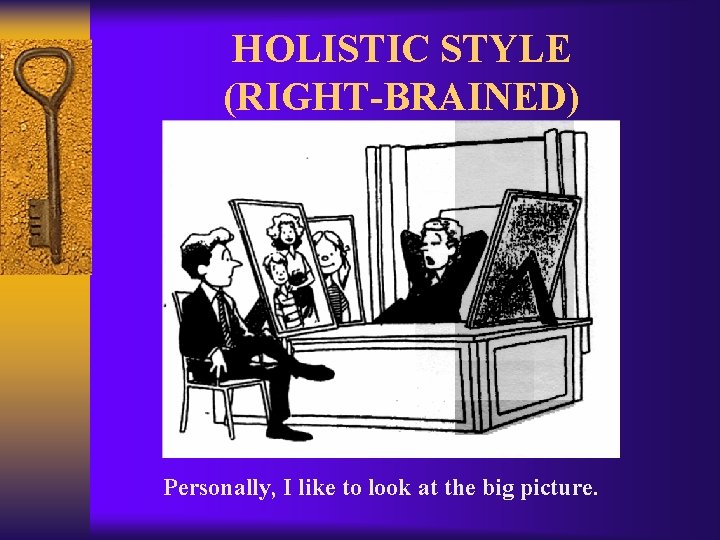
HOLISTIC STYLE (RIGHT-BRAINED) Personally, I like to look at the big picture.
SAMPLE STRATEGIES LINKED WITH THE HOLISTIC STYLE ¨ Seek only a general impression of what is read or heard, without focusing well ¨ Skim very fast for the main idea (may involve grabbing for the first concept encountered) ¨ Look for / accept someone else’s summary without asking if it is adequate ¨ Guess randomly (desperately) from context or background knowledge
ITEM-FOCUSED STYLE (LEFT-BRAINED)
SAMPLE STRATEGIES LINKED WITH THE ITEM-FOCUSED STYLE ¨ Make lists of facts, ideas, or expressions without organizing or labeling them ¨ Listen or read for details without attending to relative importance ¨ Take detailed notes but without coherence ¨ Ramble through the Internet picking up odds and ends ¨ In a “summary, ” list facts without regard to what’s important
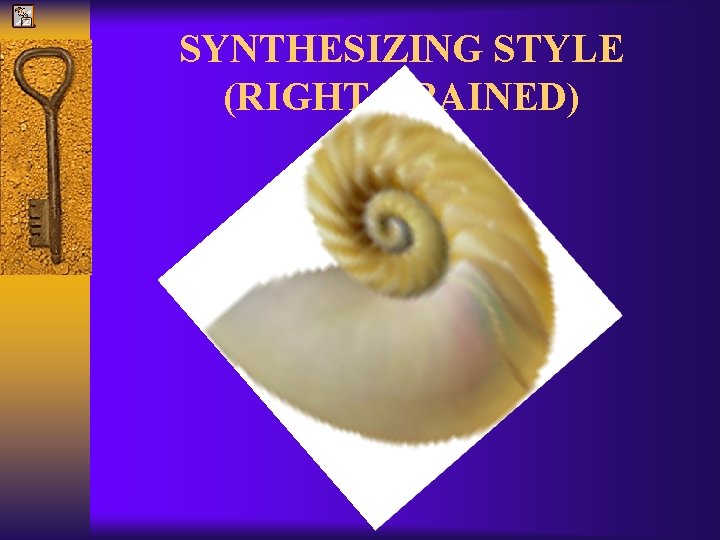
SYNTHESIZING AND ANALYZING STYLES ¨ The synthesizing style prefers big ideas and few details, does not need total accuracy, can guess or predict easily, and seeks the main theme, based on systematic, reflective synthesis. ¨ The analyzing style likes detailed information, precision, and accuracy; does not prefer to guess unless relatively sure of being right; seeks relationships between parts and part-to-whole, based on systematic, reflective analysis.
SYNTHESIZING STYLE (RIGHT-BRAINED)
SAMPLE STRATEGIES LINKED WITH THE SYNTHESIZING STYLE ¨ Integrate multiple strands into a written synthesis that reflects thoughtful priorities ¨ Make a mind-map centered on a big idea (involves both synthesis and analysis) ¨ Seek the main idea and double-check ¨ Use Internet to search for all the big ideas related to TOPIC OR PERSON X
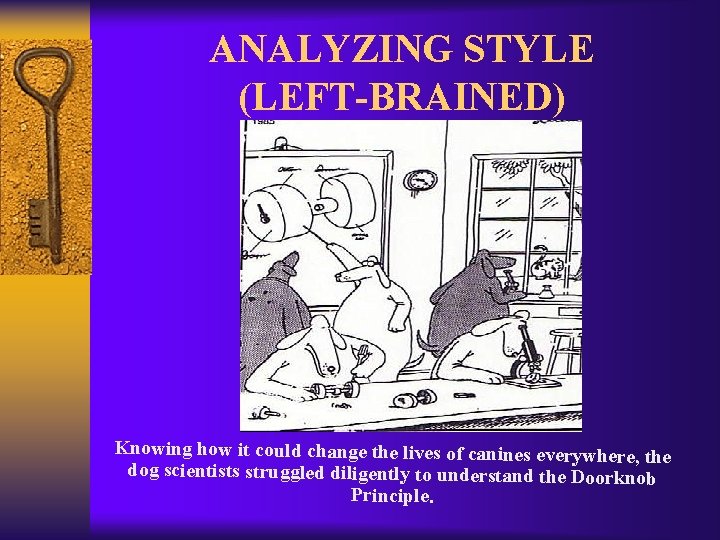
ANALYZING STYLE (LEFT-BRAINED) Knowing how it could change the lives of canines everywhere, the dog scientists struggled diligently to understand the Doorknob Principle.
SAMPLE STRATEGIES LINKED WITH THE ANALYZING STYLE ¨ Seek relationships and priorities among facts or ideas found through multimedia ¨ Create a flowchart indicating linkages ¨ Make a mind-map centered on a big idea (involves both analysis and synthesis) ¨ Break down an expression into parts to understand the meaning ¨ Compare and contrast ¨ Ask for evidence to support assertions
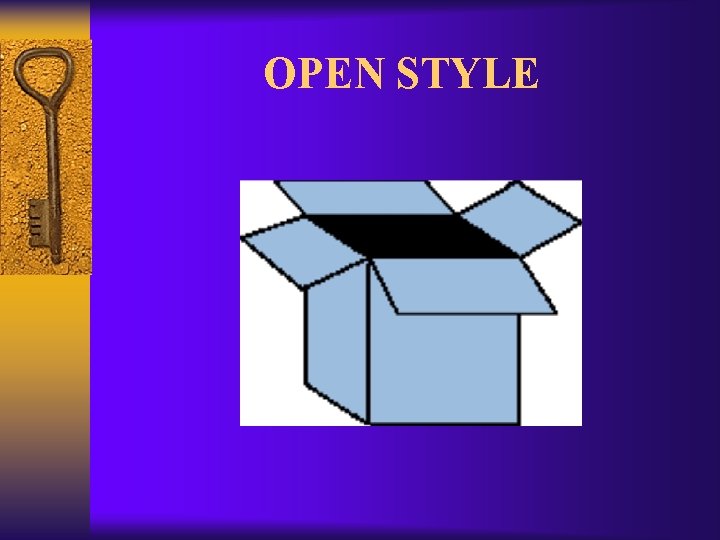
OPEN AND CLOSUREORIENTED STYLES ¨ The open style thinks learning is a game, believes deadlines are ridiculous, and wants to keep “taking in” (perceiving) information. This is the MBTI Perceiving type. ¨ The closure-oriented style likes decisions made rapidly, prefers clarity NOW, and actually prefers deadlines. This is the MBTI Judging type.
OPEN STYLE
SAMPLE STRATEGIES LINKED WITH THE OPEN STYLE ¨ Make L 2 learning a personal game ¨ Put things off to take in more information on a topic (Procrastination can be based on interest, not just anxiety!) ¨ Leave paper and e-files and folders all over, with personal meanings unknown to others but (perhaps) clear to you ¨ Respond to urgent instructional demands when you can find no way out
CLOSURE-ORIENTED STYLE
SAMPLE STRATEGIES LINKED WITH THE CLOSURE-ORIENTED STYLE ¨ Identify the purpose of a task and plan how to fulfill it ¨ Organize your computer files or notebook ¨ Put away materials not in use ¨ Evaluate your work ¨ Review in a widening “spiral” ¨ Work toward deadlines ¨ In cooperative learning, identify roles for each person and encourage productivity
INTUITIVE-RANDOM AND CONCRETE-SEQUENTIAL STYLES ¨ The intuitive-random style thinks futuristically and abstractly, wants many options, wants freedom to make own rules, and avoids authority figures. This is the MBTI Intuitive type. ¨ The concrete-sequential style focuses on today’s task, learns step-by-step, and wants an authority figure to give the rules and directions. This is the MBTI Sensing type.
INTUITIVE-RANDOM STYLE
SAMPLE STRATEGIES LINKED WITH THE INTUITIVE-RANDOM STYLE ¨ Brainstorm many current and future options – Internet is perfect for this! ¨ Create your own theories ¨ Alter assignments for your own intellectual interests; seek your own voice ¨ Add new twists and multiple views ¨ Judge your work by creative or theoretical value, not by linear rationality or conformity ¨ Become your own authority
CONCRETE-SEQUENTIAL STYLE
SAMPLE STRATEGIES LINKED WITH THE CONCRETE-SEQUENTIAL STYLE ¨ Ask the person in charge for the “right way” to do it ¨ Ask for step-by-step instruction and feedback ¨ Do a systematic search using multiple electronic data bases ¨ Keep everyone on track ¨ Look back to see what’s accomplished and forward to see what’s next
EXTROVERTED AND INTROVERTED STYLES ¨ The extroverted style gets energy from other people and from lots of activities. This is the MBTI Extroverted type. ¨ The introverted style gets energy from the internal world of ideas, thoughts, and feelings. This is the MBTI Introverted type.
EXTROVERTED STYLE
SAMPLE STRATEGIES LINKED WITH THE EXTROVERTED STYLE ¨ Seek a “learning buddy, ” peer reviewer, or conversation partner ¨ Ask questions for clarification or verification ¨ Set up a study group ¨ Keep the e-mail hotline going! ¨ Practice jointly for presentations or exams ¨ Express your ideas, whether your know the audience or not ¨ Exercise social skills (persuasion, small talk, asking personal questions) useful to create a “learning community” ¨ Find out everybody’s interests
INTROVERTED STYLE
SAMPLE STRATEGIES LINKED WITH THE INTROVERTED STYLE ¨ Use a chat group or listserv that is relatively anonymous ¨ Study by yourself or with one trusted friend ¨ Choose independent tasks when possible ¨ Write in a private journal that is not to be shared ¨ Seek greater depth than breadth
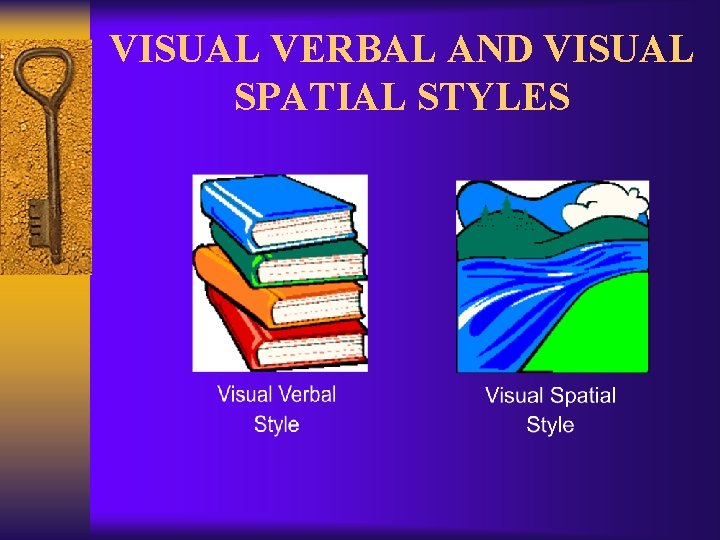
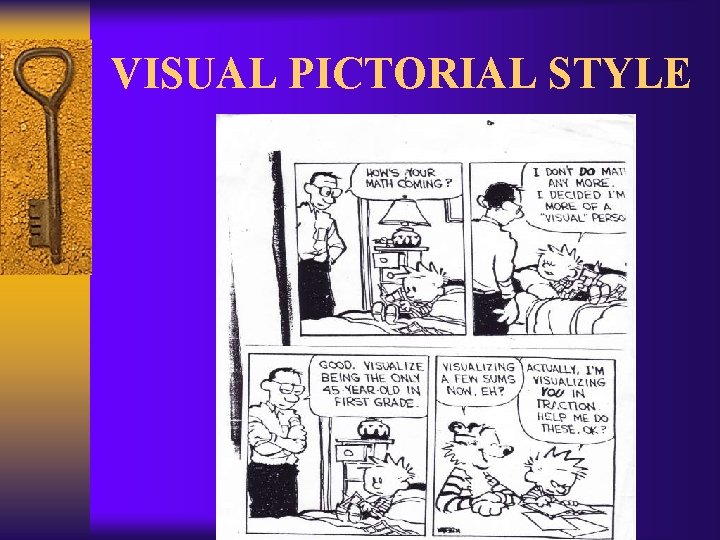
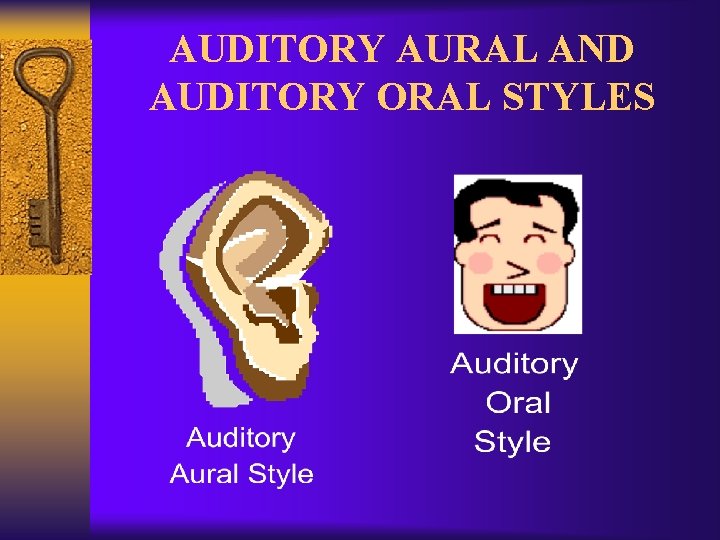
SENSORY PREFERENCE STYLES ¨ The visual style prefers to learn through the eye: reading, computers, TV, bulletin boards; needs written directions! Examples: visual verbal style, visual spatial style, and visual pictorial style. ¨ The auditory style prefers to learn thorough listening and/or talking. Examples: auditory aural style and auditory oral style. ¨ The hands-on style prefers to learn through touch or movement. Examples: tactile style and kinesthetic style.
VISUAL VERBAL AND VISUAL SPATIAL STYLES
VISUAL PICTORIAL STYLE
SAMPLE STRATEGIES LINKED WITH THE VISUAL STYLE ¨ Use flowcharts, story grammars, T-lines ¨ Use videos, movies, Internet , photos, pictures, books for visual stimulation ¨ Read extensively ¨ Exercise your fine visual memory ¨ Remember material by where it is located ¨ Create visual art to illustrate stories/ideas ¨ Start a class newsletter
AUDITORY AURAL AND AUDITORY ORAL STYLES
SAMPLE STRATEGIES LINKED WITH THE AUDITORY STYLE ¨ Remember material by what it sounds like ¨ Remember material by when you first heard it or by who said it aloud ¨ Use rhyming, intonation, and background noise to remember (accessible through media) ¨ Listen carefully to oral directions ¨ Tape native speakers and imitate their pronunciation ¨ Exercise your fine auditory memory ¨ Remember by listening to yourself talk!
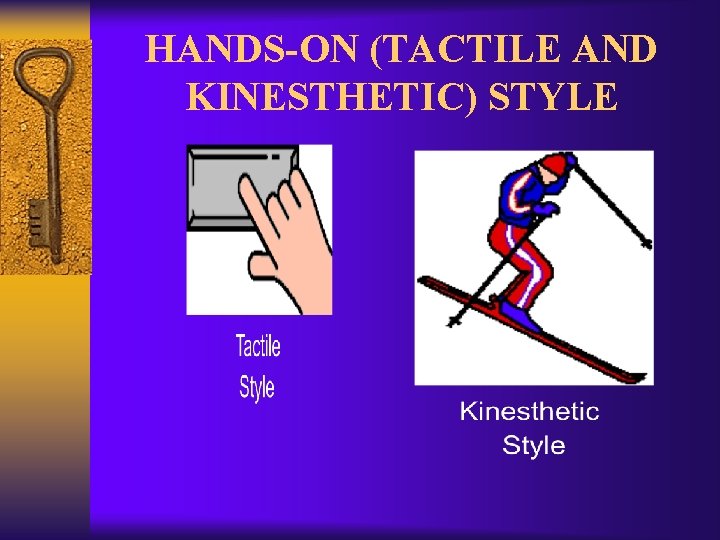
HANDS-ON (TACTILE AND KINESTHETIC) STYLE
SAMPLE STRATEGIES LINKED WITH THE HANDS-ON STYLE ¨ Build 3 -dimensional models or dioramas of literary scenes ¨ Label objects to remember their meanings ¨ Play guessing games with objects or props ¨ Participate in role-plays, skits, etc. that require movement or touch ¨ Practice vocabulary or concepts while taking a leisurely walk (with your Walkman) ¨ Rehearse or review while lifting weights at the gym ¨ Use flash cards or other movement-related aids
WHERE WE HAVE BEEN We have: ¨ Outlined major concepts of learning styles and strategies in the multimedia age. ¨ Provided definitions and illustrations of key learning styles. ¨ Listed sample strategies related to each style. HOW CAN YOU USE THIS INFORMATION TO TEACH MORE EFFECTIVELY?