
Learning Styles 1 Review 4 Learning Theories 4

- Slides: 34
Learning Styles 1
Review 4 Learning Theories 4 Training Cycle 4 MBTI 4 Management/Leadership Style 2
Lesson Objectives (Addendum 8 -10) 4 Describe four stages of the learning cycle / differentiate between four learning styles. 4 Describe your particular learning style, characteristics. . . 4 Match learning situations to the appropriate phase. 3
Learning Style 4 How do people learn best? 4 What difference does it make in designing training? 4
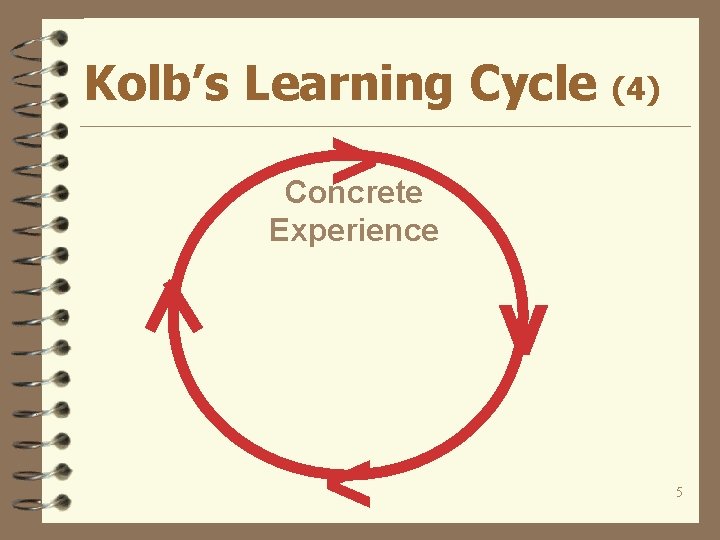
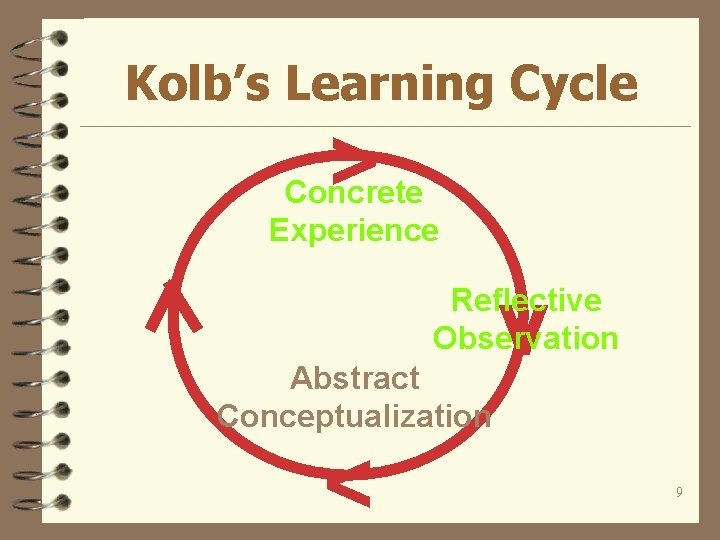
Kolb’s Learning Cycle (4) > Concrete Experience v < 5
Concrete Experience 4 Specific experience (personal involvement) 4 Relate to people 4 Sensitive to feelings/people 4 Examples? 6
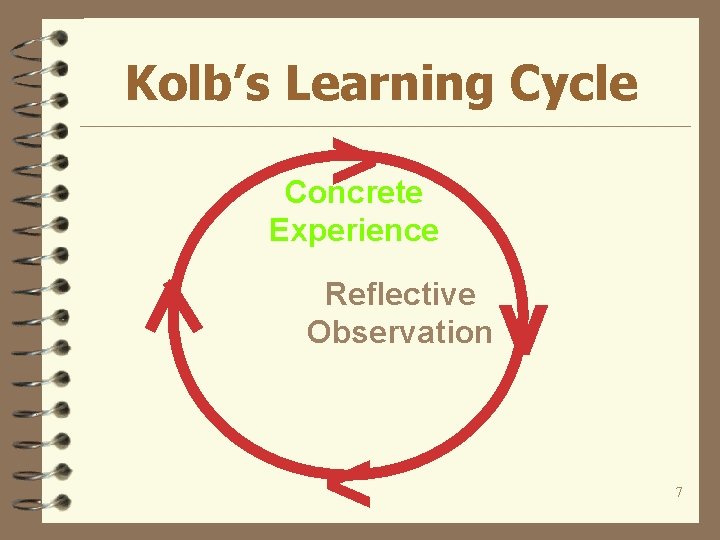
Kolb’s Learning Cycle > Concrete Experience Reflective Observation < v 7
Reflective Observation 4 Observing (watching & listening) 4 Different perspectives 4 Look for meaning (thoughts/ feelings to form opinions) 4 Examples? 8
Kolb’s Learning Cycle > Concrete Experience v Reflective Observation Abstract Conceptualization < 9
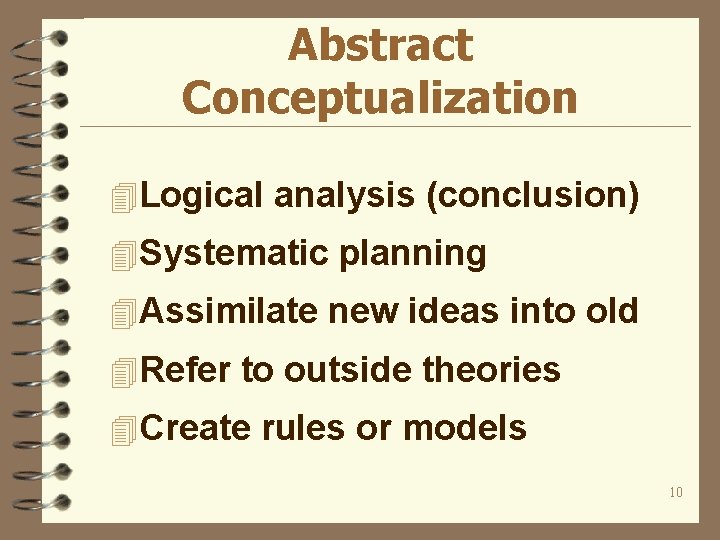
Abstract Conceptualization 4 Logical analysis (conclusion) 4 Systematic planning 4 Assimilate new ideas into old 4 Refer to outside theories 4 Create rules or models 10
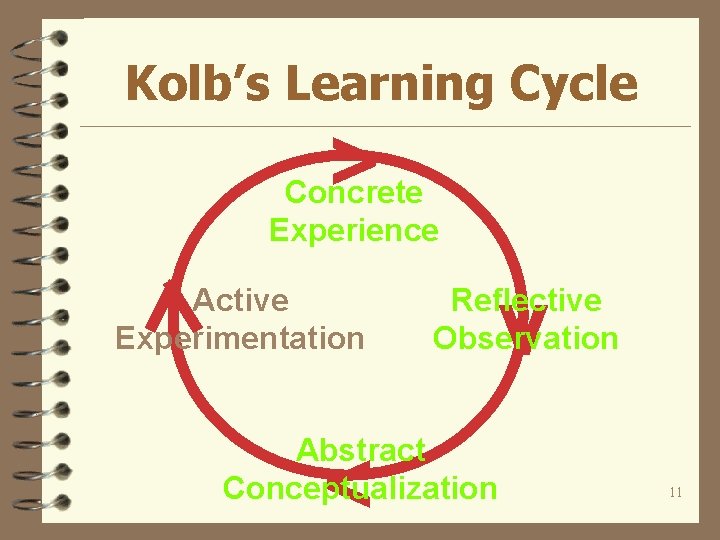
Kolb’s Learning Cycle > Concrete Experience Active Experimentation v Reflective Observation Abstract Conceptualization < 11
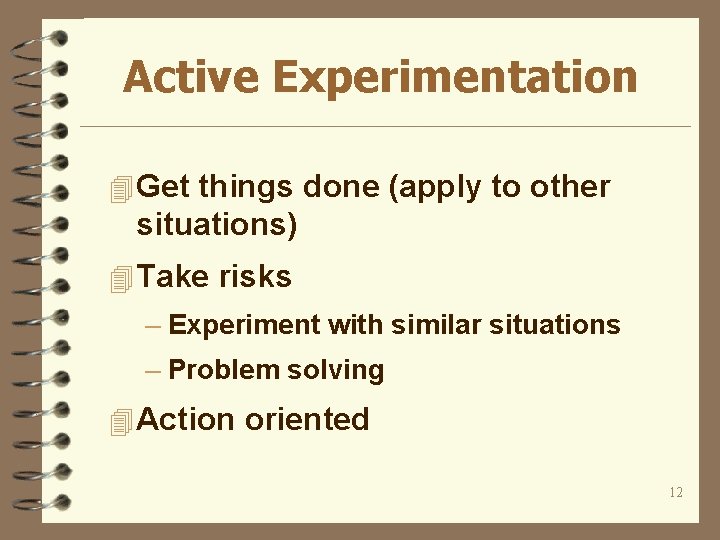
Active Experimentation 4 Get things done (apply to other situations) 4 Take risks – Experiment with similar situations – Problem solving 4 Action oriented 12
Individual Learning Style 4 Preferred mode of learning 4 Preferred phase(s) of cycle 13
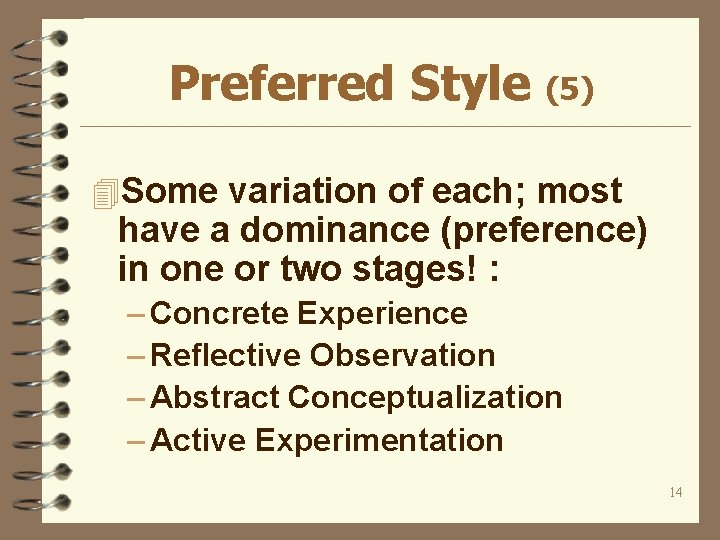
Preferred Style (5) 4 Some variation of each; most have a dominance (preference) in one or two stages! : – Concrete Experience – Reflective Observation – Abstract Conceptualization – Active Experimentation 14
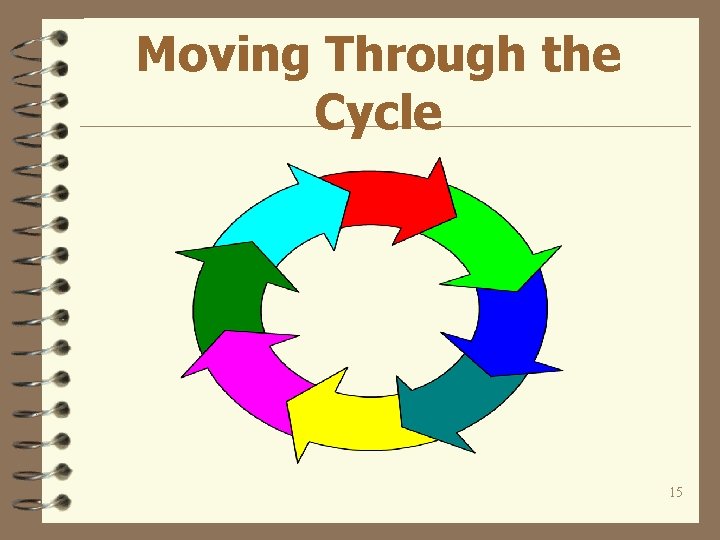
Moving Through the Cycle 15
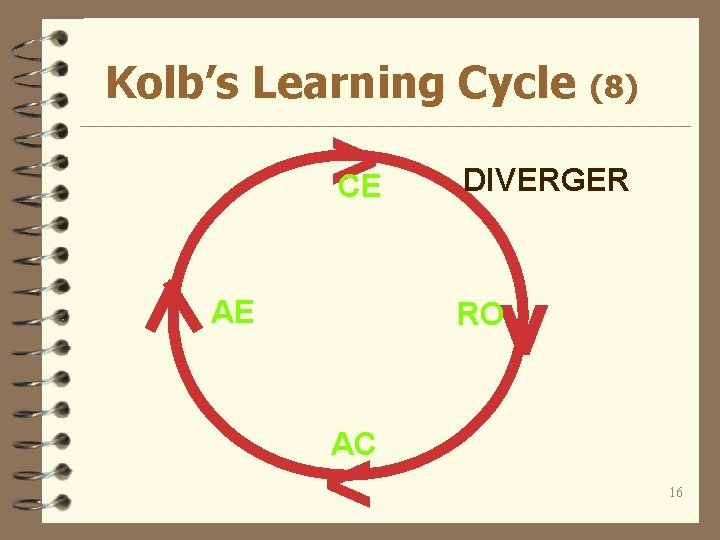
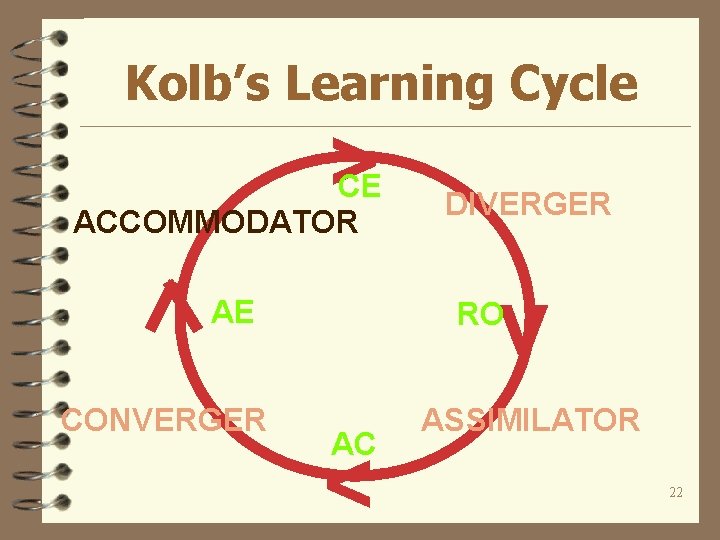
Kolb’s Learning Cycle > CE (8) DIVERGER v AE RO AC < 16
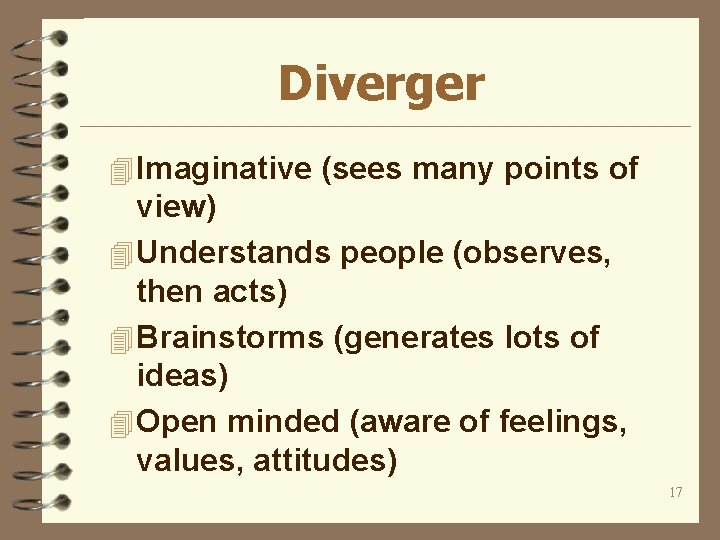
Diverger 4 Imaginative (sees many points of view) 4 Understands people (observes, then acts) 4 Brainstorms (generates lots of ideas) 4 Open minded (aware of feelings, values, attitudes) 17
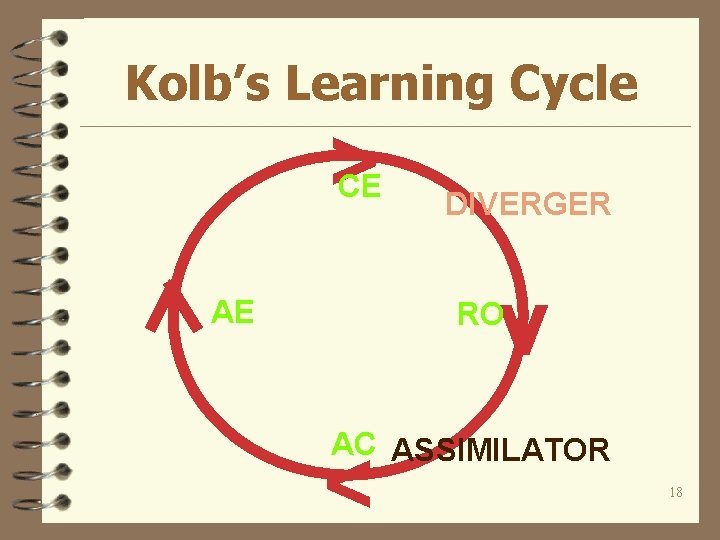
Kolb’s Learning Cycle > CE DIVERGER v AE RO AC ASSIMILATOR < 18
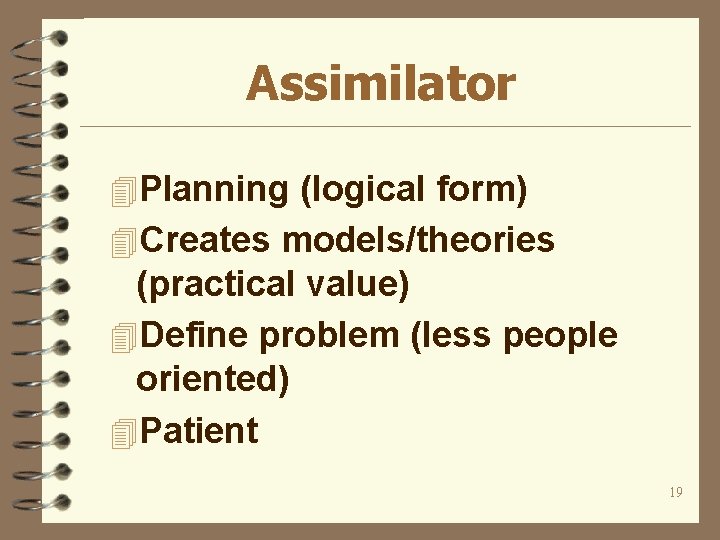
Assimilator 4 Planning (logical form) 4 Creates models/theories (practical value) 4 Define problem (less people oriented) 4 Patient 19
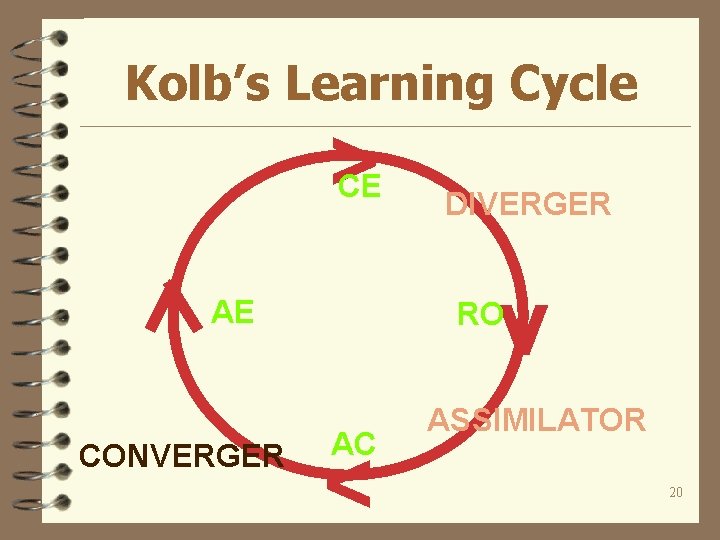
Kolb’s Learning Cycle > CE v AE CONVERGER DIVERGER RO AC < ASSIMILATOR 20
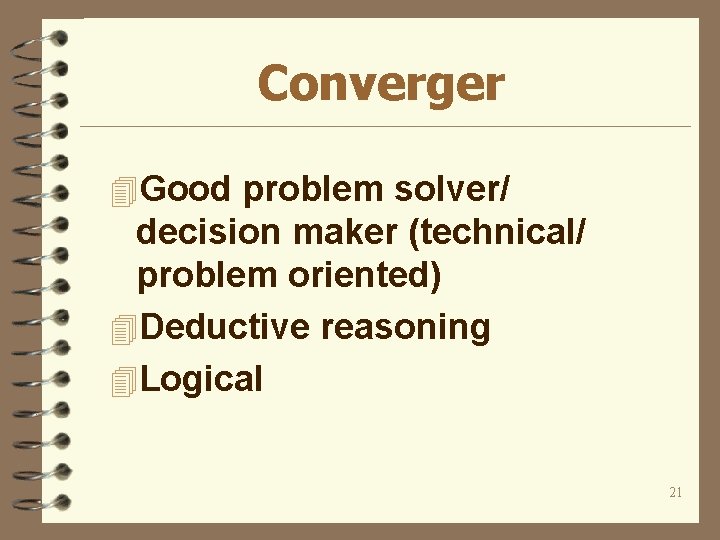
Converger 4 Good problem solver/ decision maker (technical/ problem oriented) 4 Deductive reasoning 4 Logical 21
Kolb’s Learning Cycle > CE ACCOMMODATOR v AE CONVERGER DIVERGER RO AC < ASSIMILATOR 22
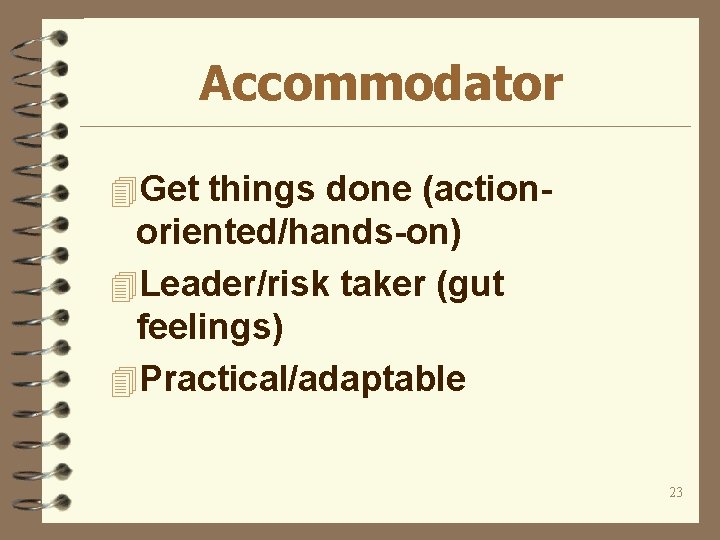
Accommodator 4 Get things done (action- oriented/hands-on) 4 Leader/risk taker (gut feelings) 4 Practical/adaptable 23
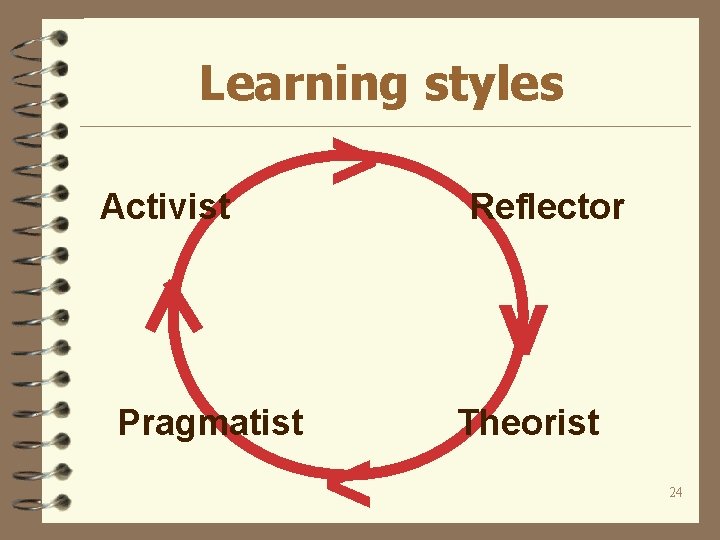
Learning styles Activist > Reflector v Pragmatist < Theorist 24
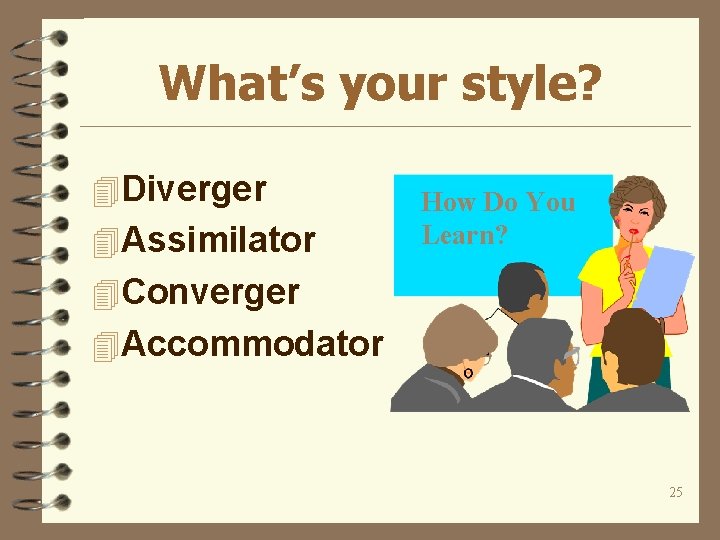
What’s your style? 4 Diverger 4 Assimilator How Do You Learn? 4 Converger 4 Accommodator 25
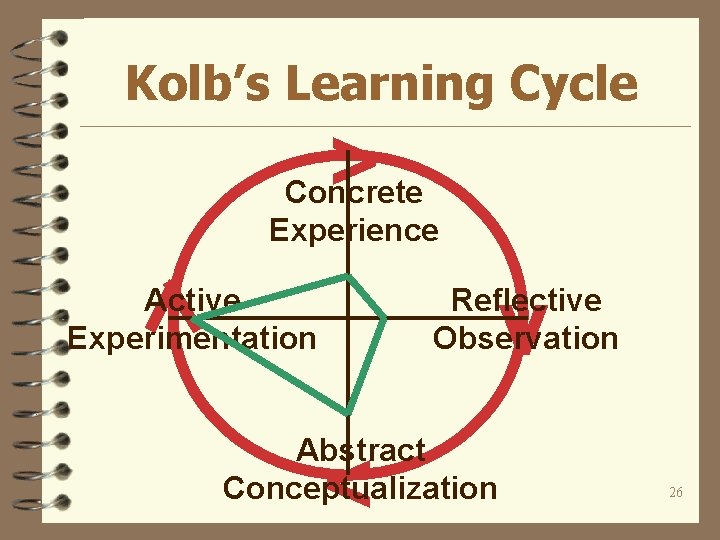
Kolb’s Learning Cycle > Concrete Experience v Active Experimentation Reflective Observation Abstract Conceptualization < 26
Your LSI Results 4 What are the points on the axes? 4 What do you prefer more and what do you prefer less? 4 What does the shape of the rectangle tell about you? 27
Discuss in groups 4 Strengths 4 Career choices 4 Weaknesses 4 Ways to strengthen weak side (look on opposite side of diagram) 28
So what? How can I use this to best advantage? 29
Applying the Learning Cycle 4 Individual strengths & weaknesses 4 Learning situations 4 Career choices 4 Training situations 4 Team situations 30
Applying to Learning Situations Keep a learning journal 4 What were my aims? 4 What happened? 4 How did I feel about what happened? 4 What have I learned? 4 Where does this lead me? 31
Apply to Career Choices 4 Business-related careers 4 Examine where strengths lie 4 Expect to change as you mature 32
Apply to Training 4 Use the entire learning cycle 4 Try to meet all learning styles 4 Don’t emphasize only one side thinking/doing or concrete/abstract 33
Summary 4 Describe four stages of the learning cycle / differentiate between four learning styles. 4 Describe your particular learning style, characteristics. . . 4 Match learning situations to the appropriate phase. 34