
Learning Plan 1 2 Ch 2Chemistry of Life
- Slides: 23
Learning Plan 1. 2: Ch. 2—Chemistry of Life: Marieb (College Text, 8 th Ed. ): 23 -30, 38 -39, 42 -48, 53 -56 Ch. 2—Basic Chemistry: Marieb (High School Text, 8 th Ed. ): 25 -60 Chemistry Comes Alive Mr. Michael Aprill Revised: 5/4/11 1
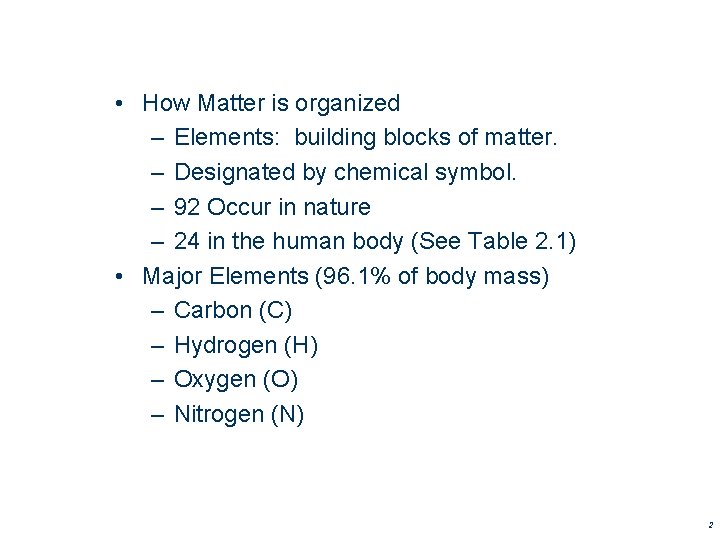
• How Matter is organized – Elements: building blocks of matter. – Designated by chemical symbol. – 92 Occur in nature – 24 in the human body (See Table 2. 1) • Major Elements (96. 1% of body mass) – Carbon (C) – Hydrogen (H) – Oxygen (O) – Nitrogen (N) 2
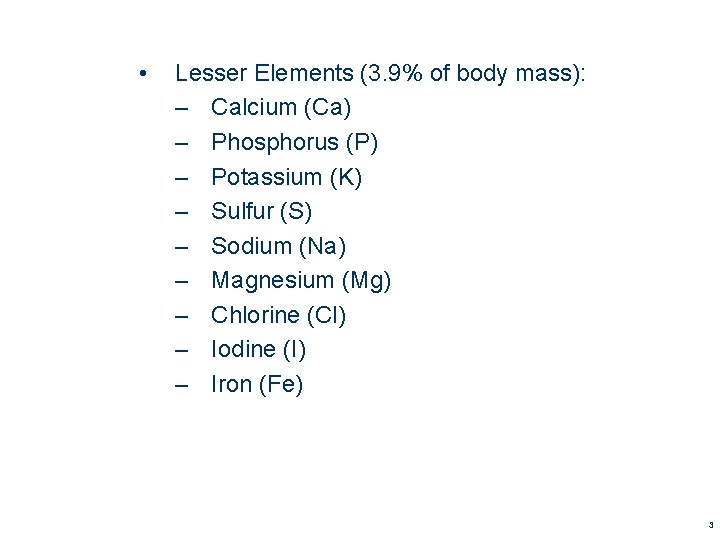
• Lesser Elements (3. 9% of body mass): – Calcium (Ca) – Phosphorus (P) – Potassium (K) – Sulfur (S) – Sodium (Na) – Magnesium (Mg) – Chlorine (Cl) – Iodine (I) – Iron (Fe) 3
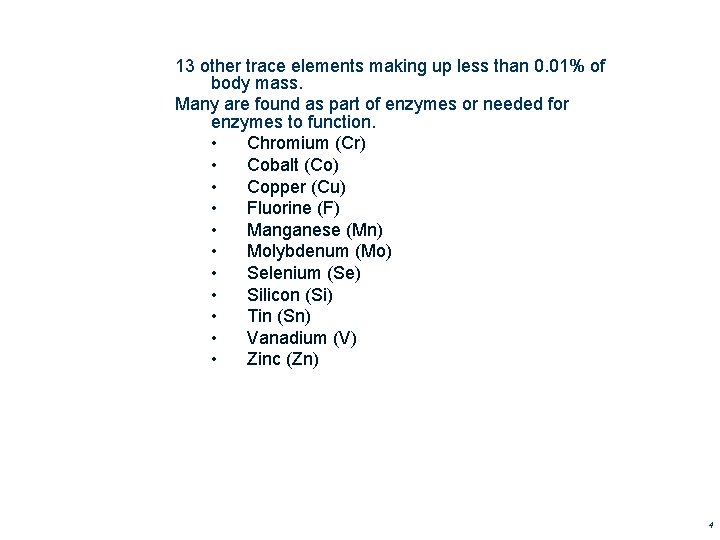
13 other trace elements making up less than 0. 01% of body mass. Many are found as part of enzymes or needed for enzymes to function. • Chromium (Cr) • Cobalt (Co) • Copper (Cu) • Fluorine (F) • Manganese (Mn) • Molybdenum (Mo) • Selenium (Se) • Silicon (Si) • Tin (Sn) • Vanadium (V) • Zinc (Zn) 4
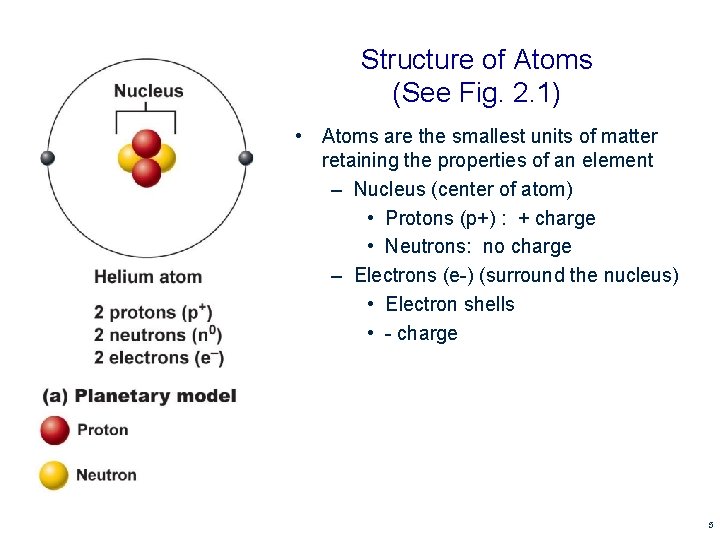
Structure of Atoms (See Fig. 2. 1) • Atoms are the smallest units of matter retaining the properties of an element – Nucleus (center of atom) • Protons (p+) : + charge • Neutrons: no charge – Electrons (e-) (surround the nucleus) • Electron shells • - charge 5
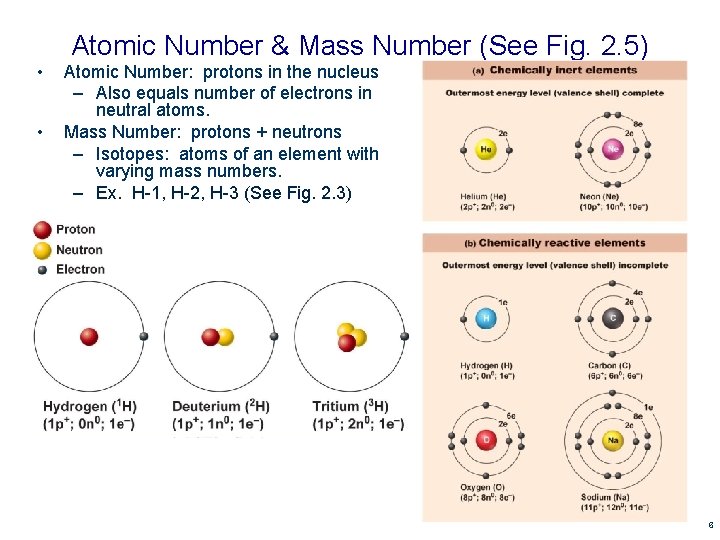
• • Atomic Number & Mass Number (See Fig. 2. 5) Atomic Number: protons in the nucleus – Also equals number of electrons in neutral atoms. Mass Number: protons + neutrons – Isotopes: atoms of an element with varying mass numbers. – Ex. H-1, H-2, H-3 (See Fig. 2. 3) 6
Atomic Mass • The average mass of all naturally occurring isotopes. • Mass is measured as dalton (atomic mass unit [amu]) – neutron = 1. 008 daltons – Proton = 1. 007 daltons – Electron = 0. 0005 daltons 7
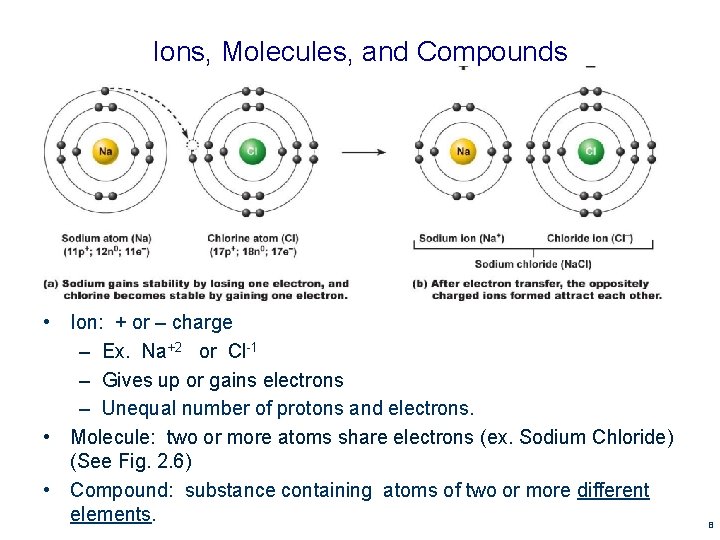
Ions, Molecules, and Compounds • Ion: + or – charge – Ex. Na+2 or Cl-1 – Gives up or gains electrons – Unequal number of protons and electrons. • Molecule: two or more atoms share electrons (ex. Sodium Chloride) (See Fig. 2. 6) • Compound: substance containing atoms of two or more different elements. 8
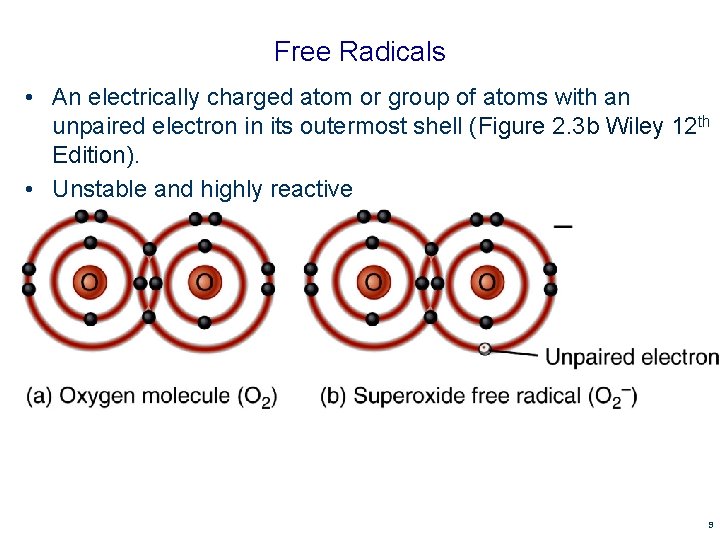
Free Radicals • An electrically charged atom or group of atoms with an unpaired electron in its outermost shell (Figure 2. 3 b Wiley 12 th Edition). • Unstable and highly reactive 9
INORGANIC COMPOUNDS AND SOLUTIONS • Inorganic compounds: usually lack carbon (Not always) • Water: most important & abundant inorganic compound 1. Solvent: dissolves another substance (solutes) • Usually more solvent than solute Hydrophilic vs. Hydrophobic • Hydrophilic: dissolve in water (water loving) • Hydrophobic: solutes don’t dissolve easily (water fearing) 10
2. Assist in chemical reactions – Hydrolysis: enable dietary nutrients to be absorbed. – Dehydration synthesis Reaction: water forms as smaller molecules join to form larger molecules. 3. Thermal properties • High heat capacity: can absorb or release heat with only a small change in its own temperature. • High heat of vaporization: water evaporates from skin surface 4. • • • Lubricant/Cushioning Mucous & other lubricating fluids Needed for chest, abdomen, joints, & gastrointestinal system. Cushions organs 11
Organic Compounds • • • Always contain carbon Carbon & its functional groups – Can bond to other carbon atoms – Form long chains & large molecules (polymers) for creating body structures – Other atoms readily bond with carbon. – Carbon skeleton: chain of carbon atoms in a molecule. Includes: – Carbohydrates – Lipids – Proteins – Amino Acids & Polypeptides – Nucleic Acids – ATP 12
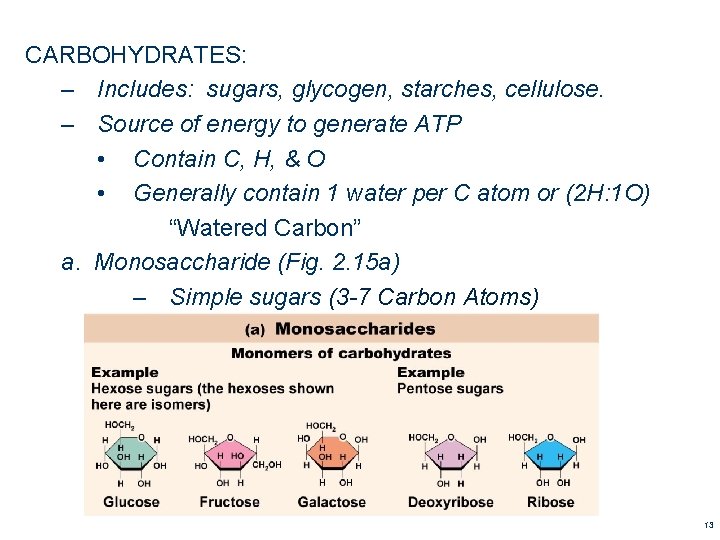
CARBOHYDRATES: – Includes: sugars, glycogen, starches, cellulose. – Source of energy to generate ATP • Contain C, H, & O • Generally contain 1 water per C atom or (2 H: 1 O) “Watered Carbon” a. Monosaccharide (Fig. 2. 15 a) – Simple sugars (3 -7 Carbon Atoms) – Sweet – Ex. Glucose 13
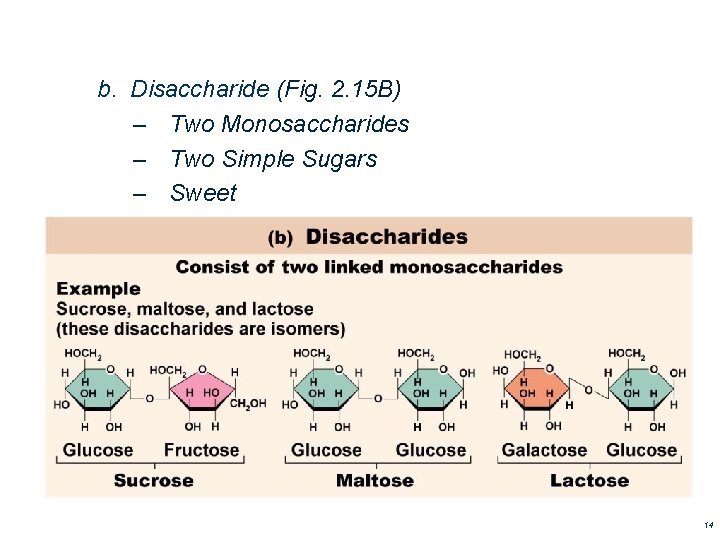
b. Disaccharide (Fig. 2. 15 B) – Two Monosaccharides – Two Simple Sugars – Sweet – Ex. Glucose + Fructose = Sucrose 14
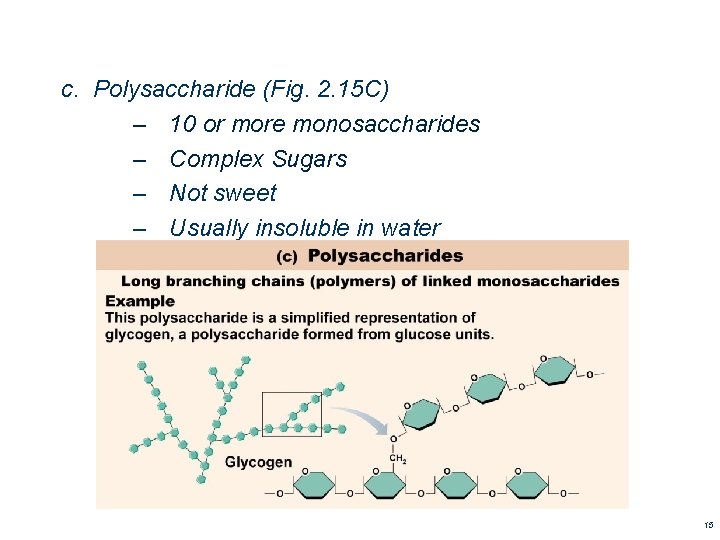
c. Polysaccharide (Fig. 2. 15 C) – 10 or more monosaccharides – Complex Sugars – Not sweet – Usually insoluble in water – Ex. Glycogen or starch 15
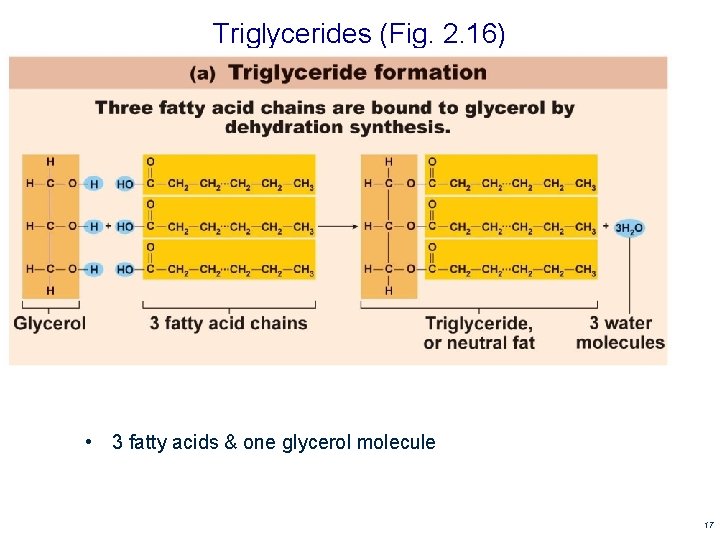
LIPIDS (fats) – Contain C, H, O – Do not have a 2 H : 1 O – Hydrophobic a. Triglycerides (Fig. 2. 16) • Most highly concentrated form of energy. Includes: – Saturated fats (ex. Lard--only single covalent bonds) – Monounsaturated fats (ex. Corn oil—one double covalent bond) – Polyunsaturated fats (ex. Olive, peanut oil—more than one double covalent bond) 16
Triglycerides (Fig. 2. 16) • 3 fatty acids & one glycerol molecule 17
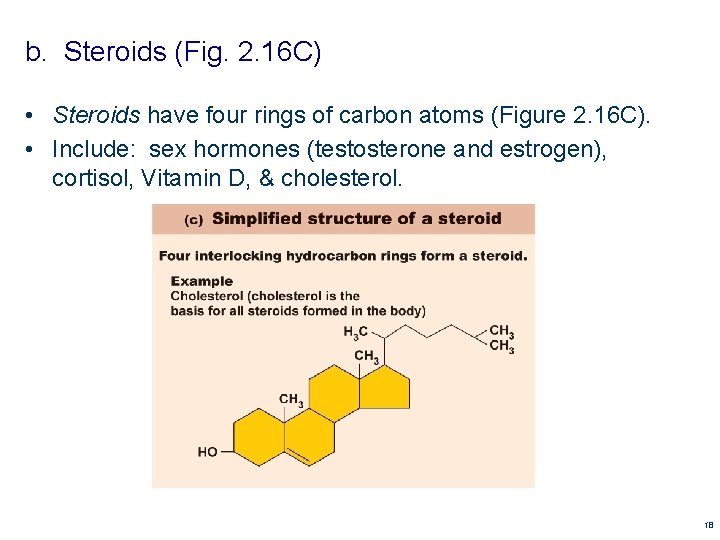
b. Steroids (Fig. 2. 16 C) • Steroids have four rings of carbon atoms (Figure 2. 16 C). • Include: sex hormones (testosterone and estrogen), cortisol, Vitamin D, & cholesterol. 18
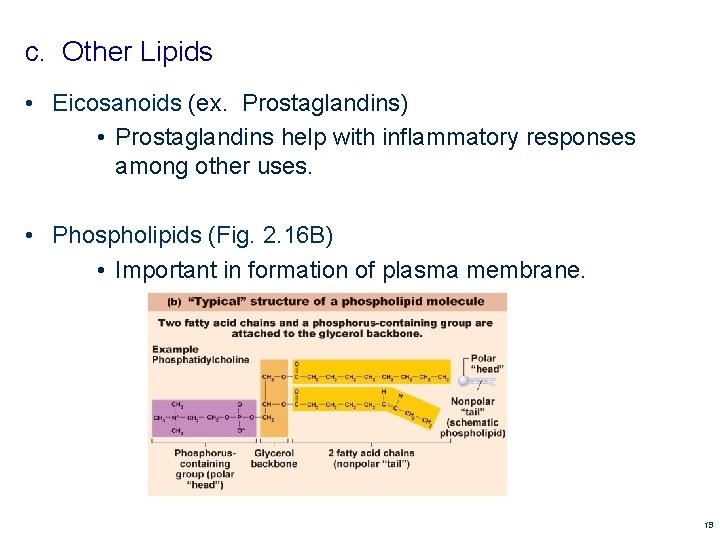
c. Other Lipids • Eicosanoids (ex. Prostaglandins) • Prostaglandins help with inflammatory responses among other uses. • Phospholipids (Fig. 2. 16 B) • Important in formation of plasma membrane. 19
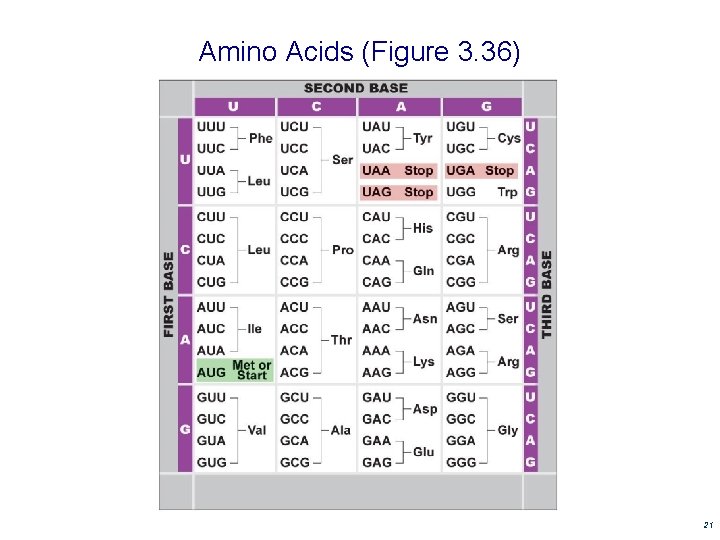
• • Proteins Large molecules, containing C, H, O, N. Functions: – glue structure to the body – regulate processes – provide protection (immune response) – help muscles contract – transport substances – serve as enzymes (regulate biochemical reactions. (Fig. 3. 36) – Building blocks of proteins is amino acids. There are 20 different amino acids. (Each amino acid is a triplet of nucleotides, See next slide) – Dipeptide: two amino acids – Tripeptide: 3 amino acids – Polypeptide: 10 to 2000 amino acids. Enzymes: proteins that catalysts. 20
Amino Acids (Figure 3. 36) 21
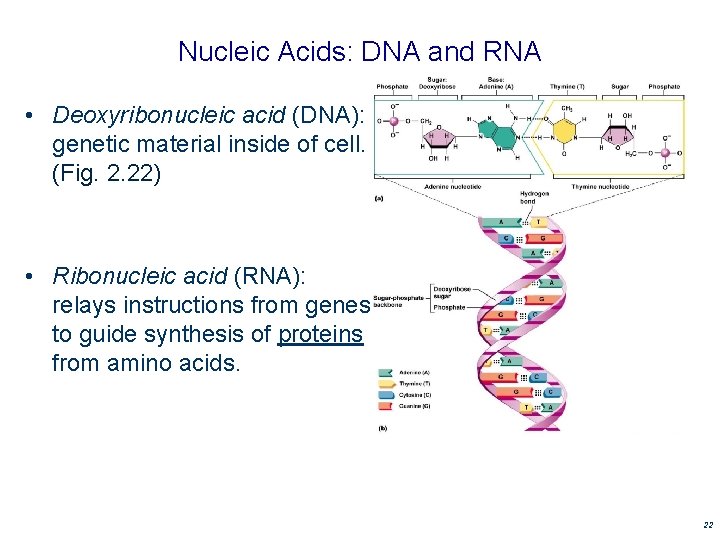
Nucleic Acids: DNA and RNA • Deoxyribonucleic acid (DNA): genetic material inside of cell. (Fig. 2. 22) • Ribonucleic acid (RNA): relays instructions from genes to guide synthesis of proteins from amino acids. 22
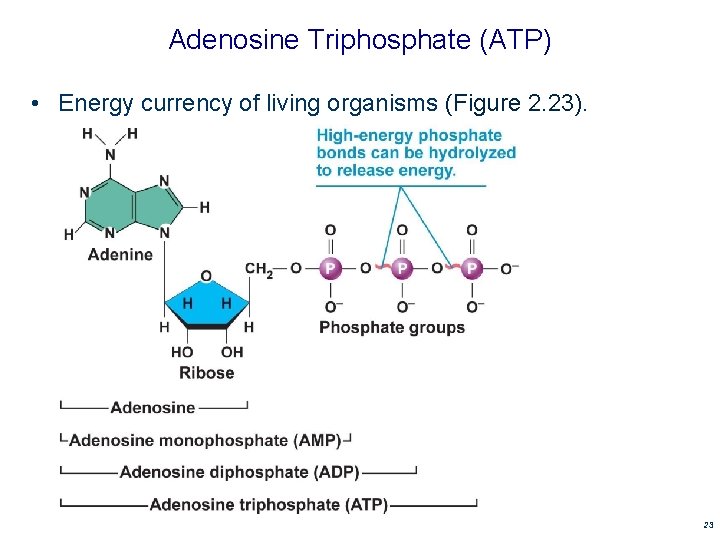
Adenosine Triphosphate (ATP) • Energy currency of living organisms (Figure 2. 23). 23