
Learning outcomes Part A 1 Describe how pain
Learning outcomes – Part A 1. Describe how pain and symptoms can be assessed using the model of total suffering 2. List the possible causes of physical pain 3. Describe the known barriers to accurate pain and symptom assessment and effective management 4. Outline assessment tools which may be used to assess symptoms, their benefits and limitations 5. Discuss the importance of impeccable and ongoing assessment in developing care plans
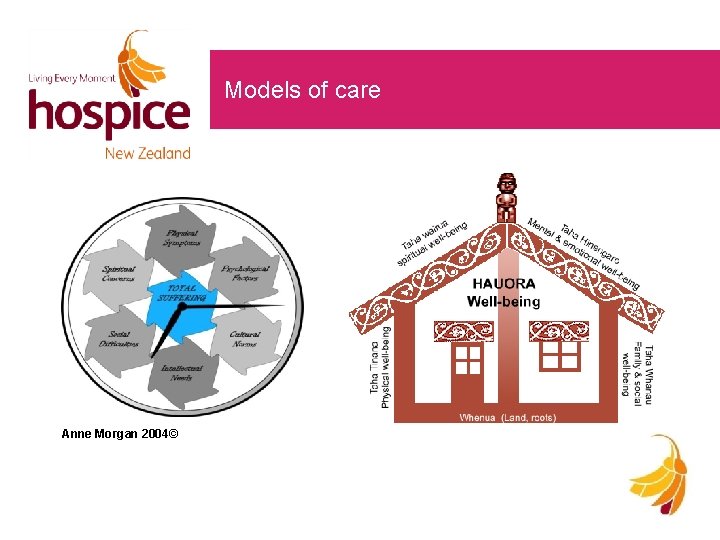
Models of care Anne Morgan 2004©

Cultural considerations at the end of life • What are the attitudes, values and beliefs you bring to your practice? • What are your rituals around death and dying? • What is the organisational culture? • Discuss the important role of the family at this time Adapted from Waitemata Palliative Care Education Programme 2011
Symptom control • Palliative care is an approach that improves the quality of life of patients and their families facing the problems associated with life-threatening illness. • The approach focuses on the prevention and relief of suffering by means of early identification and impeccable assessment and treatment of pain and other problems, physical, psychosocial and spiritual.
Symptom control • People with advancing illness can experience many symptoms before they die • Our challenge is to identify the problem, think of a possible cause and manage the symptoms in the best possible way in order to provide comfort and relief of suffering • The person, family and whānau must always be at the centre of the assessment and management plan
Pain • Early recognition of symptoms is paramount • Pain is often unrecognised and under treated particularly in the elderly and those with cognitive and communicative difficulties • Pain is often overwhelming and slows recovery and decreases mobility leading to new problems • Cognitive and communicative difficulties make assessment difficult • Attitudes towards expectation of symptoms
Pain • Pain is what the person says hurts: it is what the person describes and not what or where others say it is • Good management of pain will aid the management of future pain • Palliation of other symptoms will improve pain control • Total suffering must be considered – failure to address psychological distress and social/cultural issues is a common cause of unrelieved pain “We cannot know when another is experiencing pain, unless they tell us. Self-report is the only valid measure of pain. ” (Meinyer, 2002)
Physical assessment • Accept the person’s description • Assess pain carefully – history (onset, course, site, radiation, severity, quality, frequency, associated factors, etc. ), examination, investigations • Assess each pain • Assess extent of disease • Assess other factors which influence pain • Reassess regularly
Physical assessment continued Ensure a physical assessment is done • Examine the site/sites of pain; • Palpate the areas for tenderness • Observe for nonverbal cues such as grimacing, body posture, withdrawn behaviour, moaning, agitation or irritability • Assess for fluid accumulation (e. g. ascites), abnormal breath sounds (e. g. pneumonia or heart failure), bowel obstruction or neurological problems (e. g. spinal cord compression)
Psychological assessment • What pain experiences has this person had previously? • How have they managed pain in the past? • When is the pain most troubling them? • Guilt – ? deserve pain • Fear

Cultural and spiritual assessment • What are their beliefs? • Conflicts in belief systems? • Questions about strength of faith? • Will they now be accepted? • How will they express their pain? • Culture affects how they understand health and illness and it also affects health professionals and their attitudes • Gentle truth – telling
Social and intellectual assessment • Altered roles and relationships • Pain of leaving loved ones behind • How much do they wish to know? • Financial issues
Impeccable assessment • What is the person saying? • Assessment tools are not always helpful – good questioning is more accurate • Consider barriers; cognitive and communicative deficits social diversity persons attitude to planned treatment health professionals beliefs
Assessment tools • Pain scales – limited use • Face scale – limitations • Good questioning is more accurate (physical assessment questions) • Needs to be multidimensional – not linear • Body charts are a useful self reporting tool • Documentation of assessment is imperative
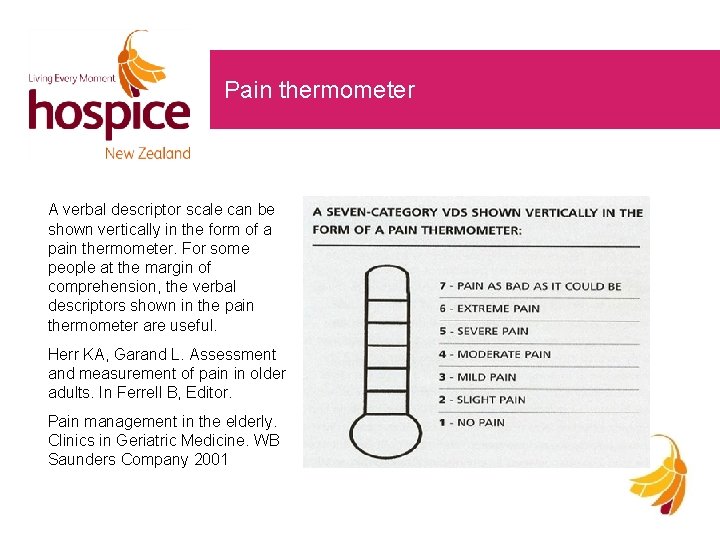
Pain thermometer A verbal descriptor scale can be shown vertically in the form of a pain thermometer. For some people at the margin of comprehension, the verbal descriptors shown in the pain thermometer are useful. Herr KA, Garand L. Assessment and measurement of pain in older adults. In Ferrell B, Editor. Pain management in the elderly. Clinics in Geriatric Medicine. WB Saunders Company 2001
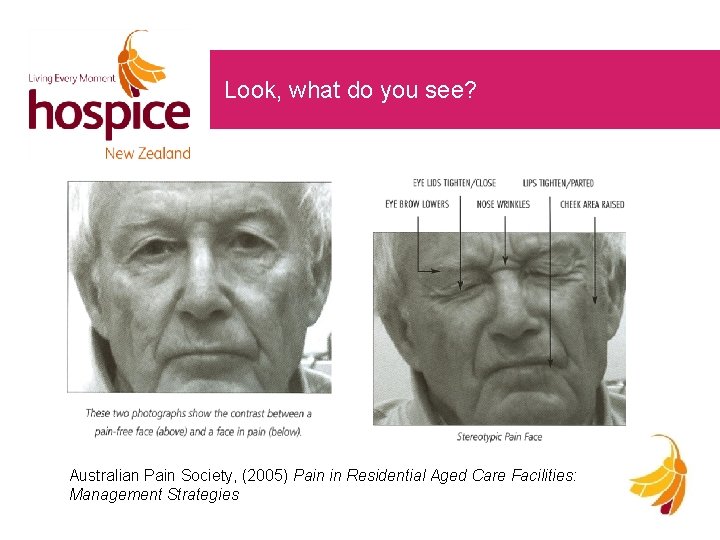
Look, what do you see? Australian Pain Society, (2005) Pain in Residential Aged Care Facilities: Management Strategies
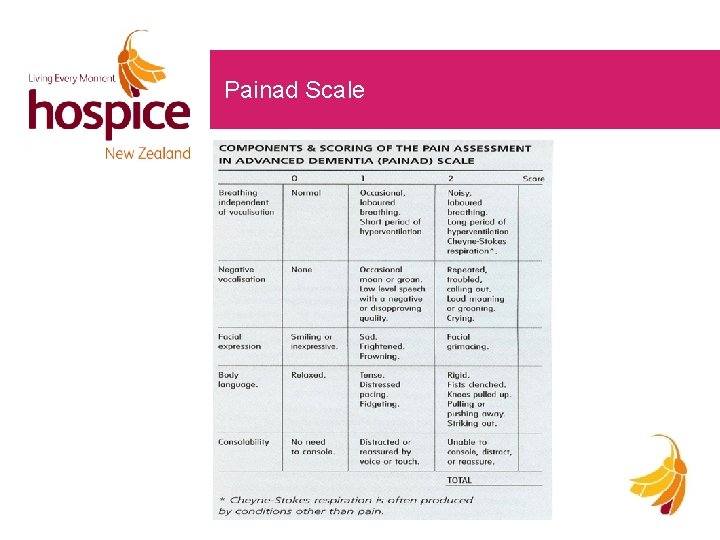
Painad Scale
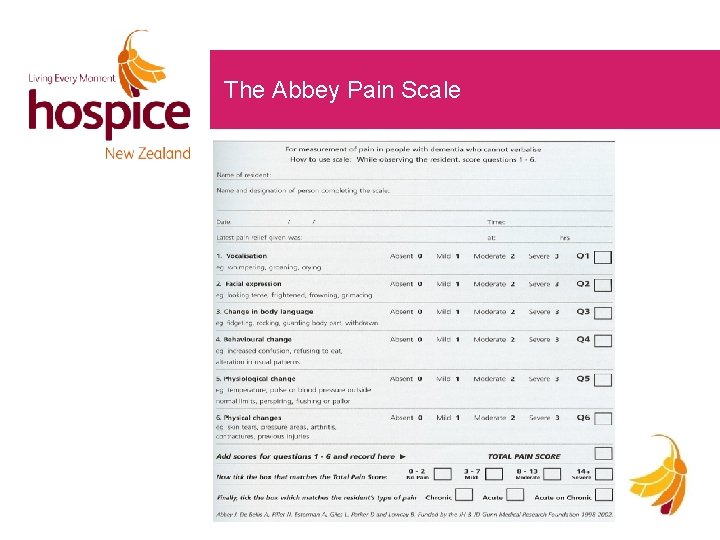
The Abbey Pain Scale
Possible causes of pain in palliative care • Low back disorders • Post stroke pain syndromes • Degenerative joint disease • • Rheumatoid arthritis Neuropathic pain – diabetic neuropathy, trigeminal neuralgia • Gout • Headaches • Pressure and skin ulcers • Dental problems • Chronic leg cramps • Angina • PVD • Constipation • Amputations • Immobility • Mood disorders • Improper positioning
Management of pain Aim of treatment is prompt relief of the pain and prevention of its recurrence; • • • thorough assessment (and reassessment) good communication reassurance about pain relief discourage acceptance of pain be consistent, not variable use the interdisciplinary team
Principles of analgesic use By mouth if at all possible By the clock – give regularly; • Individual treatment • Supervision • Prevention of side effects • Adjuvant drugs • Subcutaneous if oral route no longer possible
Choosing the right medication • Individualised treatment • What is the person currently taking? • Best medication with least side effects • Try one new medication at a time and assess effectiveness • Regular charting for symptoms rather than just PRN • Anticipate and treat drug side effects • Rationalise medications taken to avoid unnecessary polypharmacy

Non drug options • Massage • Music therapy • Art therapy • Heat packs • TENS • Relaxation and visualisation • Humour and distraction • Be resourceful
Key to success • Comprehensive assessment of pain • Identification of type of pain • Combination of pharmacologic and non pharmacological treatment • Adaptation of medications to co-morbidities • Start with medications having the best efficacy/adverse effects ratio • ‘Start low, go slow’ • Be attentive to drug – drug interactions • Re-evaluate frequently
Learning outcomes – Part B 1. Discuss the management of nausea and vomiting 2. Explain the importance of good bowel care and the prevention of constipation 3. Describe how to assess and manage dyspnoea, fatigue, bowel obstruction, delirium 4. Explain the importance of providing the person, family and whānau with support and accurate information about symptoms and their management 5. Explain how to access specialist resources to assist with symptom management
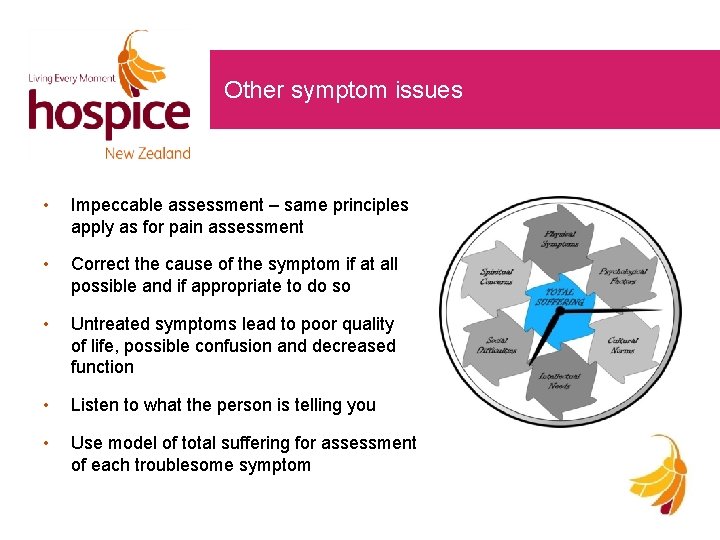
Other symptom issues • Impeccable assessment – same principles apply as for pain assessment • Correct the cause of the symptom if at all possible and if appropriate to do so • Untreated symptoms lead to poor quality of life, possible confusion and decreased function • Listen to what the person is telling you • Use model of total suffering for assessment of each troublesome symptom
What is nausea? • Nausea is a subjective feeling of an unpleasant wavelike sensation experienced in the back of the throat and/or epigastrium that may or may not result in vomiting • Nausea, vomiting and retching are common and distressing • 50 -60% of people with advanced disease suffer from one or more of these and it affects their quality of life
Assessment of vomiting • Need to take a detailed history of when they feel sick or vomit and a clinical examination to determine cause – may also need blood tests and x-rays • It is important to; distinguish between vomiting, expectoration and regurgitation note the content of the vomit separately evaluate nausea and vomiting review the medicines they are taking examine their mouth, abdomen – look for thrush, check bowel sounds to exclude a bowel obstruction the time of onset may provide clues as may associated symptoms • Re-evaluate at regular intervals
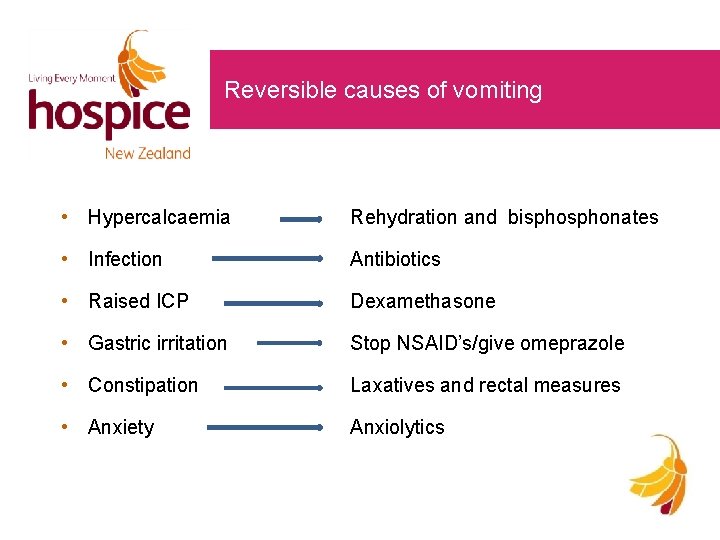
Reversible causes of vomiting • Hypercalcaemia Rehydration and bisphonates • Infection Antibiotics • Raised ICP Dexamethasone • Gastric irritation Stop NSAID’s/give omeprazole • Constipation Laxatives and rectal measures • Anxiety Anxiolytics
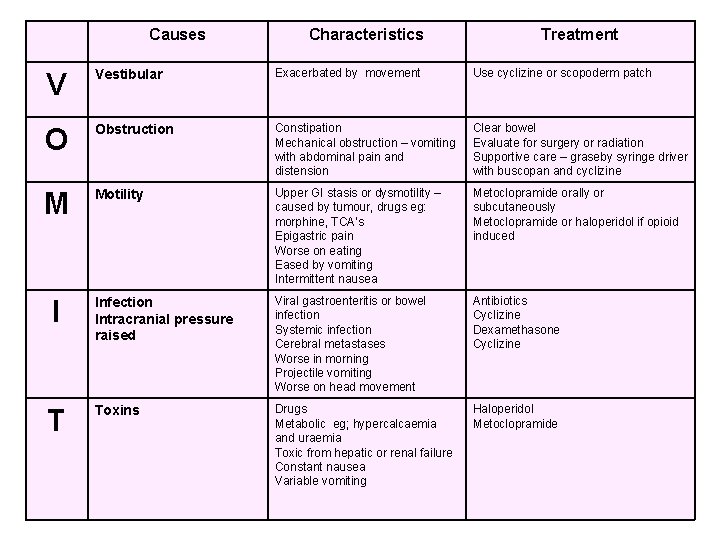
Causes Characteristics Treatment V Vestibular Exacerbated by movement Use cyclizine or scopoderm patch O Obstruction Constipation Mechanical obstruction – vomiting with abdominal pain and distension Clear bowel Evaluate for surgery or radiation Supportive care – graseby syringe driver with buscopan and cyclizine M Motility Upper GI stasis or dysmotility – caused by tumour, drugs eg: morphine, TCA’s Epigastric pain Worse on eating Eased by vomiting Intermittent nausea Metoclopramide orally or subcutaneously Metoclopramide or haloperidol if opioid induced Infection Intracranial pressure raised Viral gastroenteritis or bowel infection Systemic infection Cerebral metastases Worse in morning Projectile vomiting Worse on head movement Antibiotics Cyclizine Dexamethasone Cyclizine Toxins Drugs Metabolic eg; hypercalcaemia and uraemia Toxic from hepatic or renal failure Constant nausea Variable vomiting Haloperidol Metoclopramide I T
General principles Diet • Avoid exposure to any foods that precipitate nausea • Give small snacks and not big meals • Perhaps the family can provide preferred foods • Food presentation • Nutritional supplements Avoid air conditioned circumstances
Pharmacological principles • Nausea can be treated with oral drugs But alternative routes are needed for people with severe nausea • Persistent nausea may decrease gastric emptying with resultant decrease in drug absorption Use subcutaneous or rectal route • Chart antiemetic's regularly • Combinations are often required-check interactions
Common issues to consider • PRN drugs for nausea Ondansetron not useful in palliative care • Laxatives often omitted Movicol should not be used as first line • Polypharmacy at EOL • Subcutaneous medications
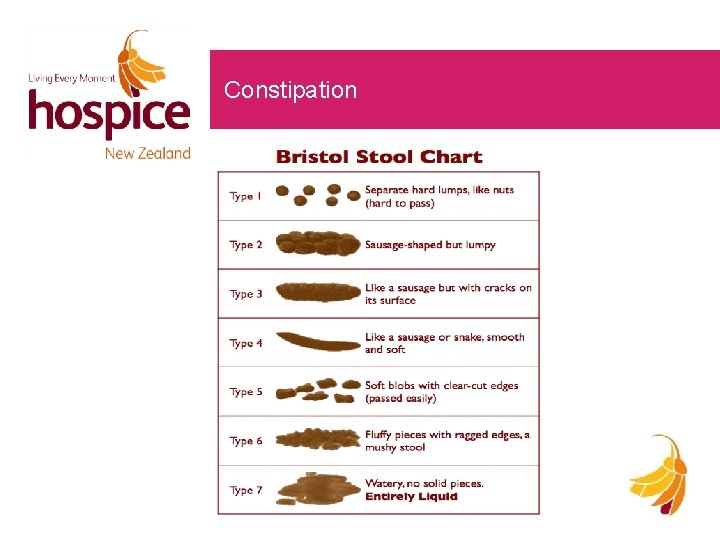
Constipation
Treatment • Most important is prevention • Appropriate food and fluids • Keep daily record of bowel motions or provide person with self reporting diary • Education of risk of constipation to person, family and whanau • Intervention see guidelines
Non drug treatments • Bowel Mixture 1 cup of stewed apples 1 cup of stewed prunes 1/2 cup of cooking bran Mix all together – take 2 tbs/day • Encourage regular activity within the person’s abilities • Encouraging good bowel habits • Toilet facilities – ensure privacy • Gentle abdominal massage
Dyspnoea • Dyspnoea is the unpleasant awareness of breathing. • It is subjective, usually frightening, and can be present even if the breathing appears normal • Most distressing symptom experienced by people with life limiting illness • There are many potential underlying causes – treat where possible • Supportive therapy is important
Treating dyspnoea pharmacologically • Oxygen: may be useful, however it is controversial – take care of people who retain CO 2 • Nebulisers • Opioids main therapy decrease perception of breathlessness decrease ventilatory drive decrease oxygen consumption • Benzodiazepines midazolam nasal spray • Steroids – can help bronchodilation
Supportive therapy • A calm environment • Position • Limit activity to reduce exertion • A cool draft (fan, open window, air conditioner, humidifier) • Breathing exercises (physiotherapy referral) • Relaxation / life-style modification (OT referral) • Complementary therapy (massage, acupuncture, self-hypnosis, music therapy etc) • Educate patient, family and whanau about dyspnoea • Evaluate and manage anxiety • Not being left alone

Retained airway secretions Also known as “death rattle” • Explanation to family • Regular position changes • Administer anticholinergics scopoderm patch – need to apply early to be effective Buscopan (hyoscine butylbromide) tabs or subcut atropine (tends to be excitatory and should be avoided) • Suction – rarely indicated
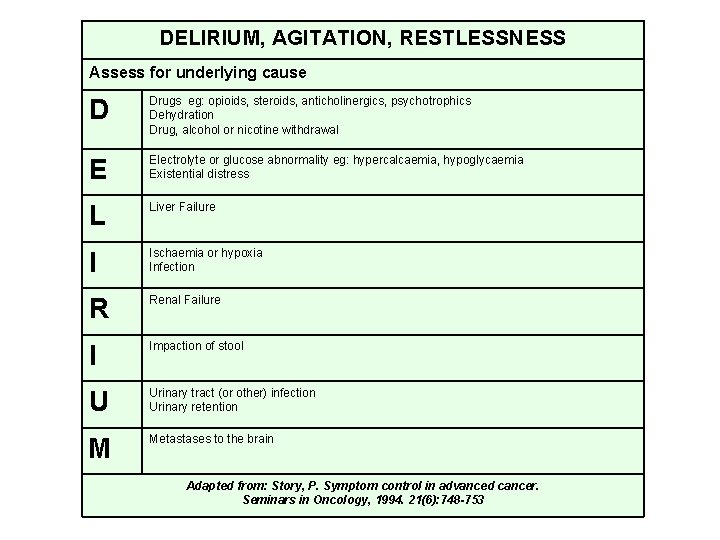
DELIRIUM, AGITATION, RESTLESSNESS Assess for underlying cause D Drugs eg: opioids, steroids, anticholinergics, psychotrophics Dehydration Drug, alcohol or nicotine withdrawal E Electrolyte or glucose abnormality eg: hypercalcaemia, hypoglycaemia Existential distress L Liver Failure I Ischaemia or hypoxia Infection R Renal Failure I Impaction of stool U Urinary tract (or other) infection Urinary retention M Metastases to the brain Adapted from: Story, P. Symptom control in advanced cancer. Seminars in Oncology, 1994. 21(6): 748 -753 42
Management • Assess cause(s) and treat where possible • Calm environment • Family present • Drug therapy Haloperidol Benzodiazepine (clonazepam, midazolam) Nozinan
Specialist and local resources • NZ Palliative Care Handbook (2012) • Your Local DHB resources such as: – CDHB Palliative Care Intranet site http: //cdhb. govt. nz/documents/palliative-care-manual/palliative-care/index. htm • New Zealand Doctor – has monthly palliative care drug information provided by the Palliative Care Medicines Working Group • http: //www. palliativedrugs. com • http: //medsafe. govt. nz/profs/datasheet
Conclusion • You can make a difference • Excellent communication is paramount – listen to understand, rather than listening to reply • What is happening for the person at this particular time • Their needs will change over time • Think ahead of time – plan and prevent • Use specialist resources
- Slides: 45