
Learning Outcomes Developing Give examples of different ways


- Slides: 39
Learning Outcomes: Developing- Give examples of different ways in which we use plastic. Securing- Recall what plastic is. Exceeding- Identify different types of plastic using a key. Extending- Describe how different plastics are different and link to their uses. Complete the wordsearch with some keywords from what we will be looking at over the next few lessons.
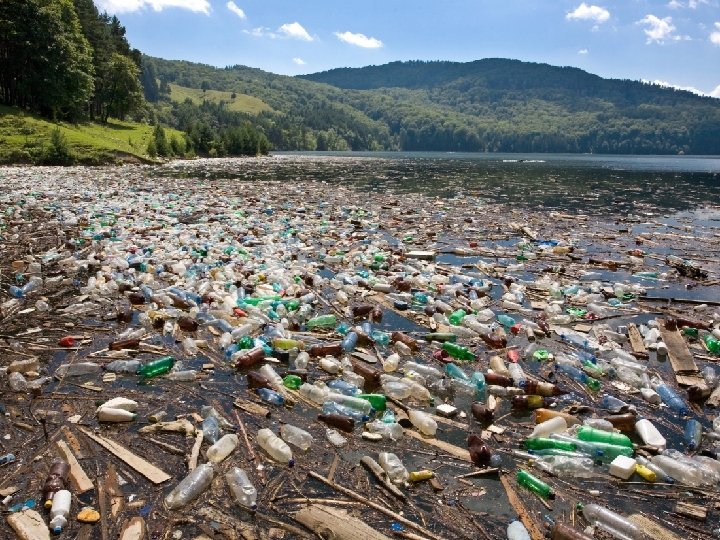
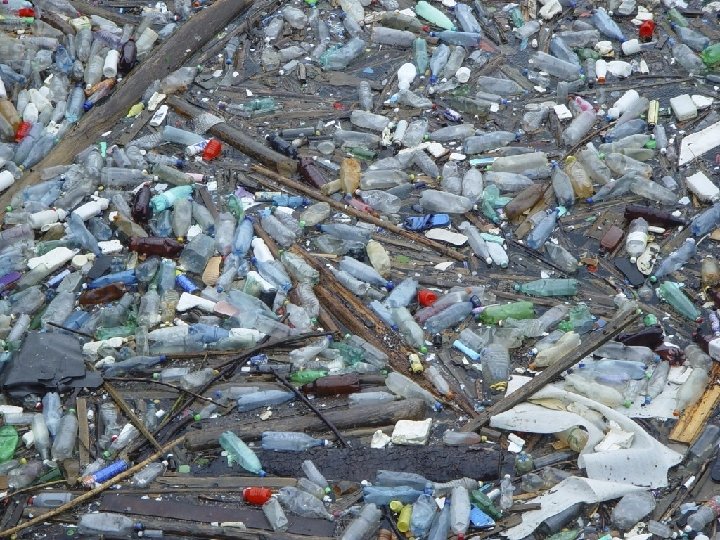
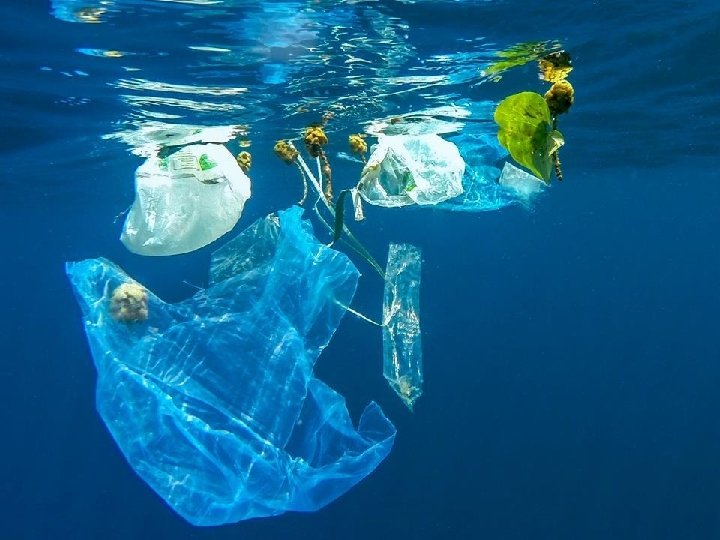
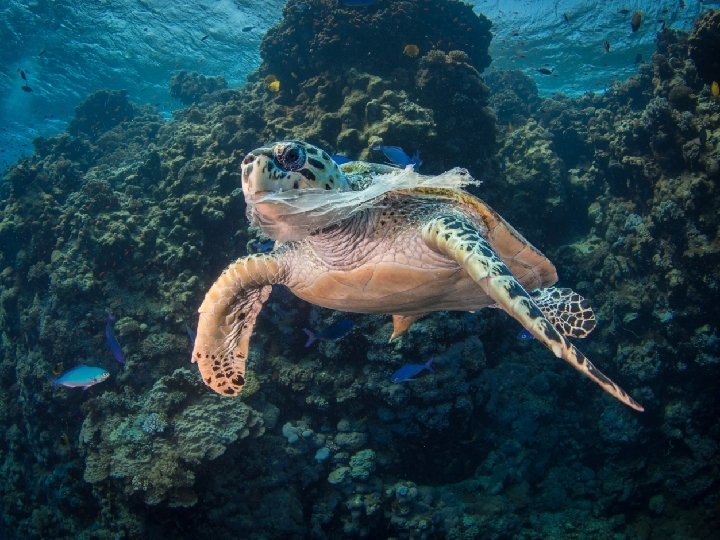
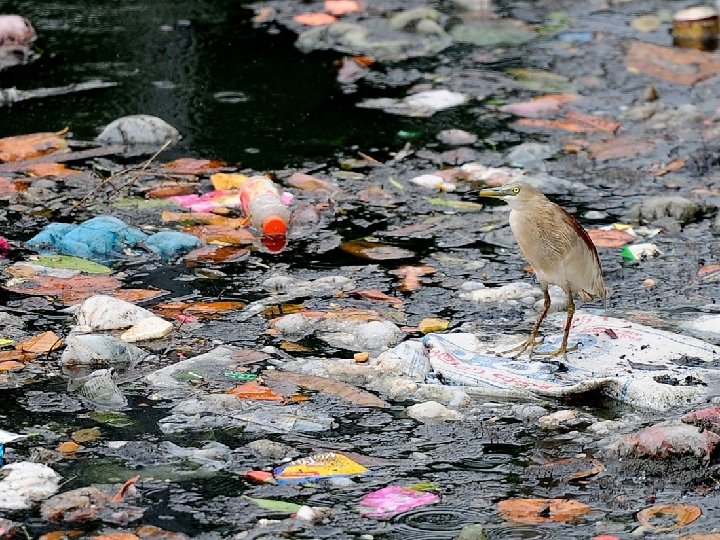
You are about to be shown a series of pictures. Write down what you can see in the pictures and think about what they have in common.
In what ways have you used plastic items this week? TASK: Draw a spider diagram with all the plastic items you have used over Christmas. STRETCH: Which are examples of single use plastic items (something you use once and then throw away)?
Using Plastic
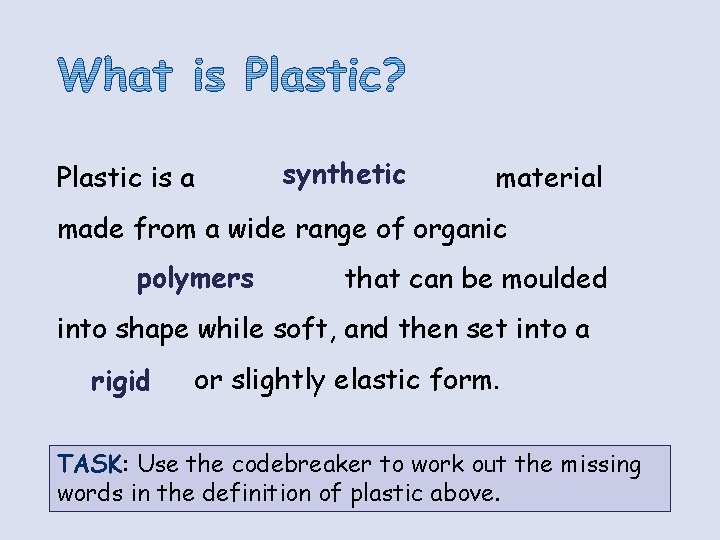
synthetic Plastic is a 18, 24, 13, 19, 7, 4, 19, 8, 2 material made from a wide range of organic polymers 15, 14, 11, 24, 12, 4, 17, 18 that can be moulded into shape while soft, and then set into a 17, 8, 6, 8, 3 or slightly elastic form. rigid TASK: Use the codebreaker to work out the missing words in the definition of plastic above.
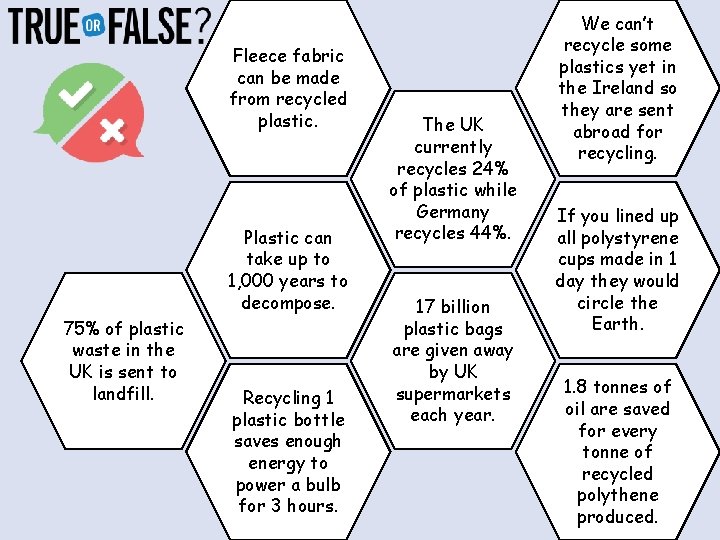
Fleece fabric can be made from recycled plastic. Plastic can take up to 1, 000 years to decompose. 75% of plastic waste in the UK is sent to landfill. Recycling 1 plastic bottle saves enough energy to power a bulb for 3 hours. The UK currently recycles 24% of plastic while Germany recycles 44%. 17 billion plastic bags are given away by UK supermarkets each year. We can’t recycle some plastics yet in the Ireland so they are sent abroad for recycling. If you lined up all polystyrene cups made in 1 day they would circle the Earth. 1. 8 tonnes of oil are saved for every tonne of recycled polythene produced.
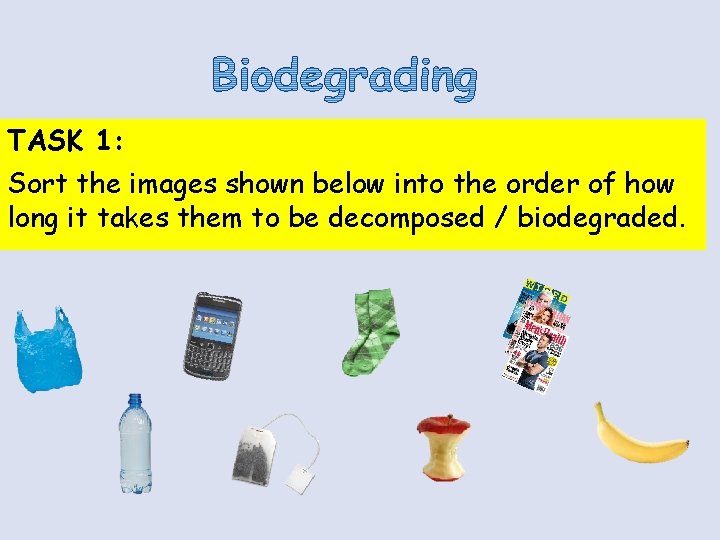
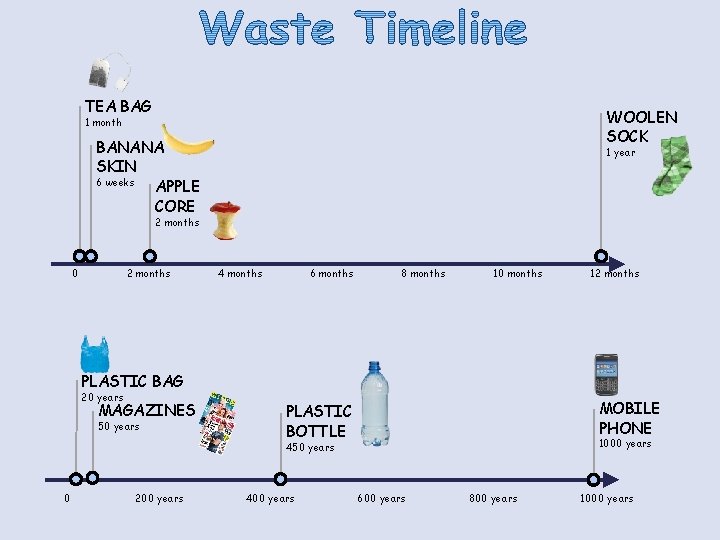
TASK 1: Sort the images shown below into the order of how long it takes them to be decomposed / biodegraded.
Did you get them in the right order? Fastest to decompose Slowest to decompose TASK 2: How long do you think each item would take to decompose fully?
TEA BAG WOOLEN SOCK 1 month BANANA SKIN 6 weeks APPLE CORE 1 year 2 months 0 2 months 4 months 6 months 8 months 10 months 12 months PLASTIC BAG 20 years MAGAZINES 50 years MOBILE PHONE PLASTIC BOTTLE 1000 years 450 years 0 200 years 400 years 600 years 800 years 1000 years
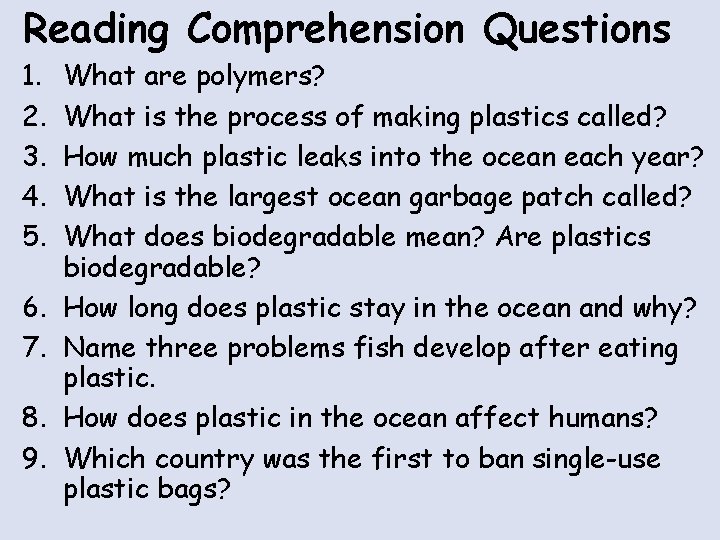
Reading Comprehension Questions 1. 2. 3. 4. 5. 6. 7. 8. 9. What are polymers? What is the process of making plastics called? How much plastic leaks into the ocean each year? What is the largest ocean garbage patch called? What does biodegradable mean? Are plastics biodegradable? How long does plastic stay in the ocean and why? Name three problems fish develop after eating plastic. How does plastic in the ocean affect humans? Which country was the first to ban single-use plastic bags?
TASK! Use your time in the computer room to research what various companies and organisations are doing to help people move away from one use packaging. WHERE to look? Think of shops, supermarkets and brands that you buy and use. • Look at their websites and find out if they are doing anything to help combat plastic waste and to reduce their environmental impact. 6 Examples needed
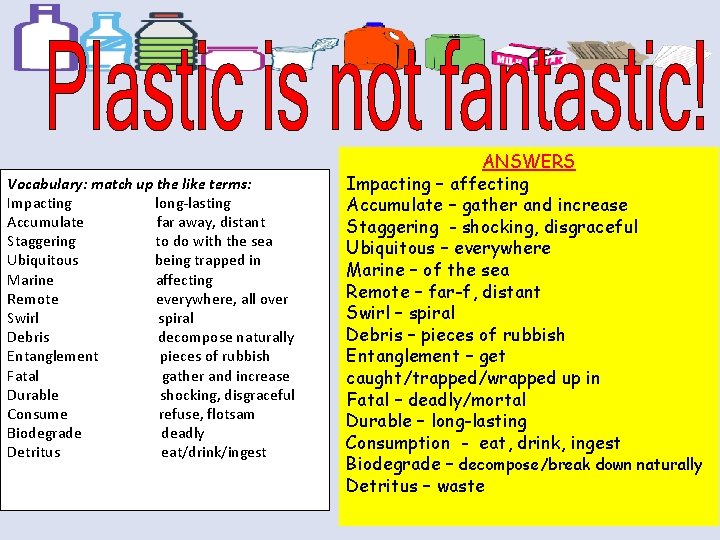
Read the passage and answer the questions in full sentences: 1. Name four things which plastic pollution is impacting. 2. Is plastic pollution diminishing? 3. Name three ways in which plastic enters the seas and oceans. 4. Name three places where plastic can be found. 5. What percentage of this plastic pollution comes from land-based sources and our own homes? 6. What do 500 marine species suffer from? 7. Is plastic biodegradable? 8. Is plastic the only pollutant of our seas and oceans? 9. Is it just governments and multinational companies that should address the issue of pollution? 10. What does the writer want people to do and why? To what extent do you agree?
Vocabulary: match up the like terms: Impacting long-lasting Accumulate far away, distant Staggering to do with the sea Ubiquitous being trapped in Marine affecting Remote everywhere, all over Swirl spiral Debris decompose naturally Entanglement pieces of rubbish Fatal gather and increase Durable shocking, disgraceful Consume refuse, flotsam Biodegrade deadly Detritus eat/drink/ingest ANSWERS Impacting – affecting Accumulate – gather and increase Staggering - shocking, disgraceful Ubiquitous – everywhere Marine – of the sea Remote – far-f, distant Swirl – spiral Debris – pieces of rubbish Entanglement – get caught/trapped/wrapped up in Fatal – deadly/mortal Durable – long-lasting Consumption - eat, drink, ingest Biodegrade – decompose/break down naturally Detritus – waste
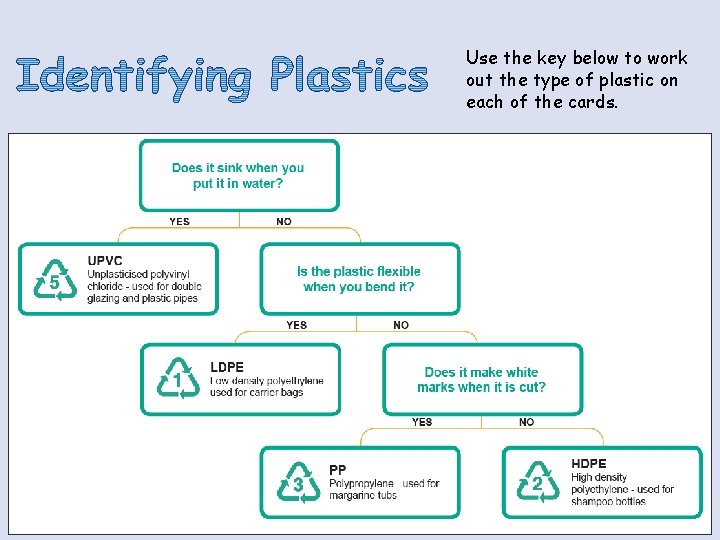
Use the key below to work out the type of plastic on each of the cards.
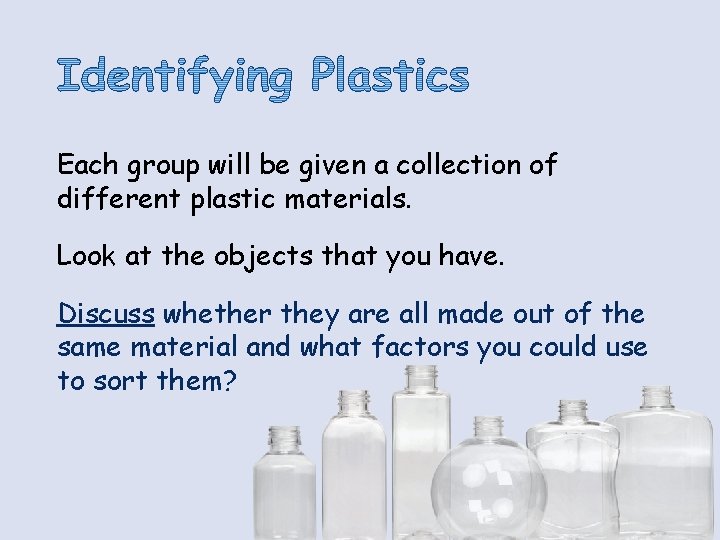
Each group will be given a collection of different plastic materials. Look at the objects that you have. Discuss whether they are all made out of the same material and what factors you could use to sort them?
Using the Plastics Information Chart complete the identifying plastics table, looking at: • If there is symbol • How see through it is • How bendy it is • How it scratches • If it floats EXTENDING: What do you notice about the formula and molecular structure of the different plastics?
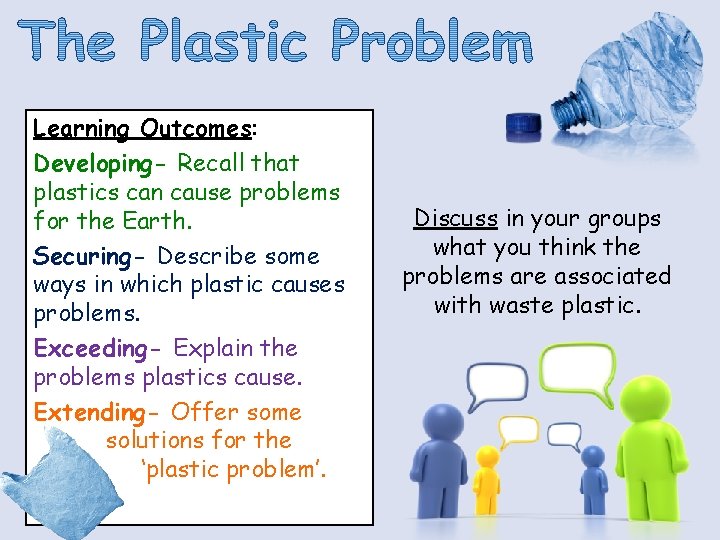
Learning Outcomes: Developing- Recall that plastics can cause problems for the Earth. Securing- Describe some ways in which plastic causes problems. Exceeding- Explain the problems plastics cause. Extending- Offer some solutions for the ‘plastic problem’. Discuss in your groups what you think the problems are associated with waste plastic.
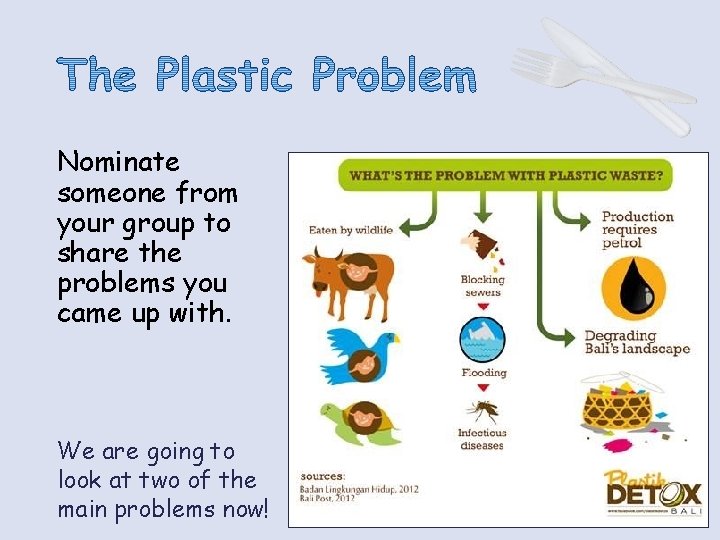
Nominate someone from your group to share the problems you came up with. We are going to look at two of the main problems now!
Using the information we have looked at today so far, create an infographic on the ‘plastic problem’. There are several examples for you to use as inspiration!
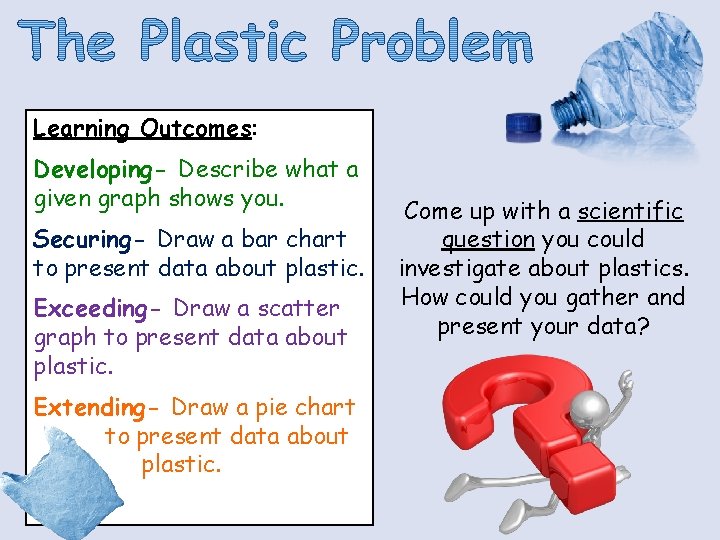
Learning Outcomes: Developing- Describe what a given graph shows you. Securing- Draw a bar chart to present data about plastic. Exceeding- Draw a scatter graph to present data about plastic. Extending- Draw a pie chart to present data about plastic. Come up with a scientific question you could investigate about plastics. How could you gather and present your data?
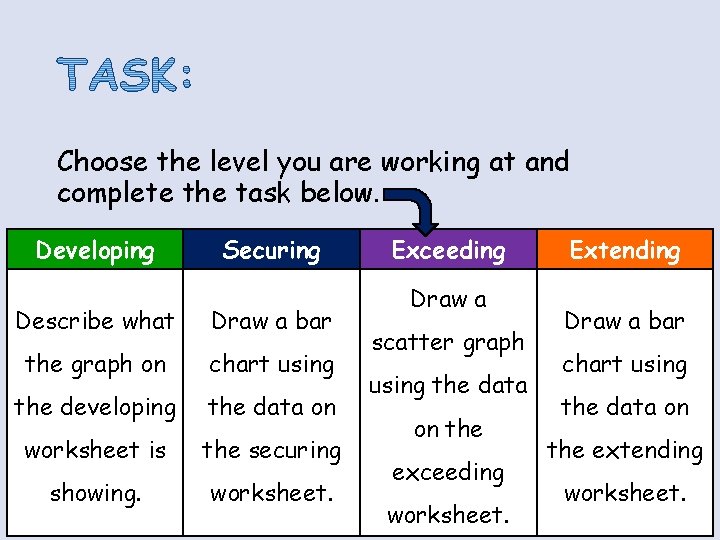
Choose the level you are working at and complete the task below. Developing Securing Describe what Draw a bar the graph on chart using the developing the data on worksheet is the securing showing. worksheet. Exceeding Draw a scatter graph using the data on the exceeding worksheet. Extending Draw a bar chart using the data on the extending worksheet.
Pair up with someone who chose a different level to you- take it in turns to describe what your graph shows.
Phones out ready to play. https: //play. kahoot. it/ #/? quiz. Id=136 d 54 c 90776 -4763 -8388 b 16 d 978 eda 61
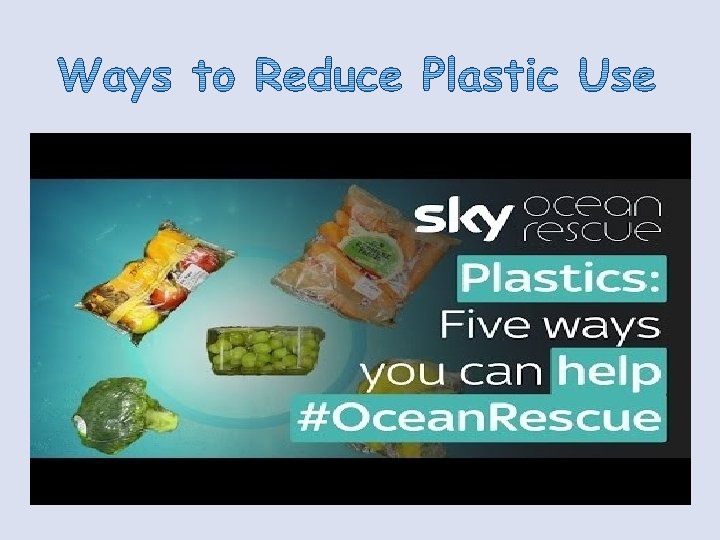
Learning Outcomes: Developing- Suggest ways you can cut down plastic use. Securing- Describe some solutions to the plastic problem. Exceeding- Explain some solutions to the plastic problem. Extending- Suggest large scale ways in which we can combat the plastic problem. Discuss in your groups ways you could each personally cut down on the plastic that you use.
What do you think the 4 R’s might be to help us combat our plastic problem? End
Reprocessing the product or some of its parts to make something else. Which ‘R’ is this description for?
Using the whole product or some of its parts to make something else. Which ‘R’ is this description for?
Looking at the whole system for the product and exploring ways to improve it that considers people and the environment. Which ‘R’ is this description for?
Cutting down the amount of energy and / or materials used to make the product. Which ‘R’ is this description for?
Create a poster trying to get people to combat the plastic problem. Developing State ways in which we can all cut down on plastic. Securing Describe how we can cut down on the plastic we use. Exceeding Extending Explain how cutting down on the plastic we use can solve the plastic problem. Suggest large scale solutions for the plastic problem- thinking about what big companies / governments can do.
You have been given two post-it notes On one… On the other… Write down your most memorable fact about the plastic problem. Write down something you pledge to do to combat the plastic problem. And stick it on the left hand side of the room. And stick it on the right hand side of the room.