
Learning Outcomes 1 To be able to understand
Learning Outcomes: 1. To be able to understand the terms Weathering and Erosion 2. To be able to understand describe the different types of weathering 3. To be able to understand describe the different processes of erosion
Agents of Denudation Weathering Erosion • Process which breaks down rocks into smaller pieces • Deposited where they fall • Weathering does not transport material • Weathering agents include frost, temperature and chemical reactions. • Process by which rocks are broken down and transported and deposited elsewhere • Erosion agents are weather, ice, sea and wind
Weathering Is the process by which rocks are broken down or decay 1. Mechanical weathering (freeze thaw, Exfoliation, pressure release) • Chemical weathering (Carbonation, Hydration, oxidation and hydrolysis) • Biological weathering (plants and animals)
Mechanical weathering (freeze thaw, Exfoliation, pressure release) • This is when rocks are broken down into smaller pieces by physical processes • The chemical composition of the rock does not change.
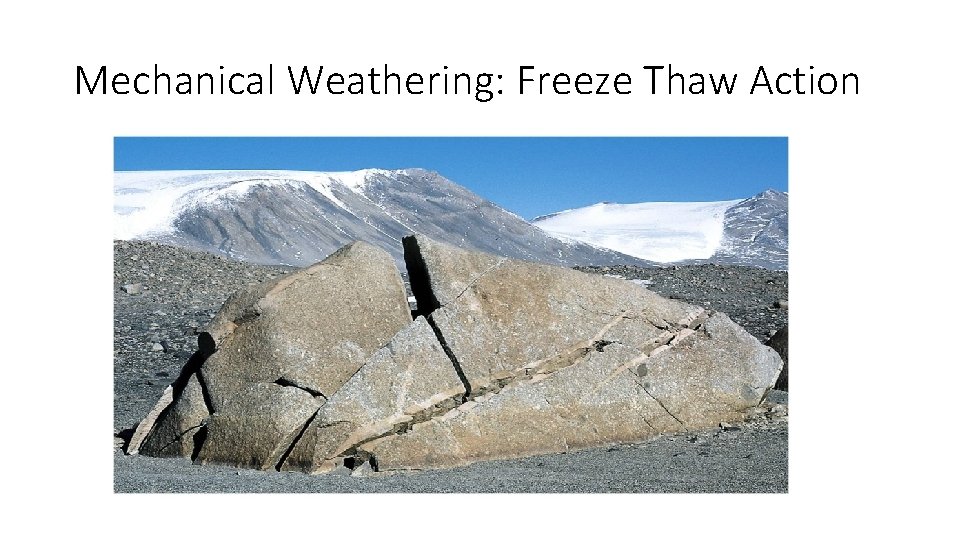
Mechanical Weathering: Freeze Thaw Action

Freeze Thaw Action • Occurs in highlands where water freezes in cracks in rocks at night • Forms scree slopes • Ex. Mt. Errigal, The alps, The Himalayas
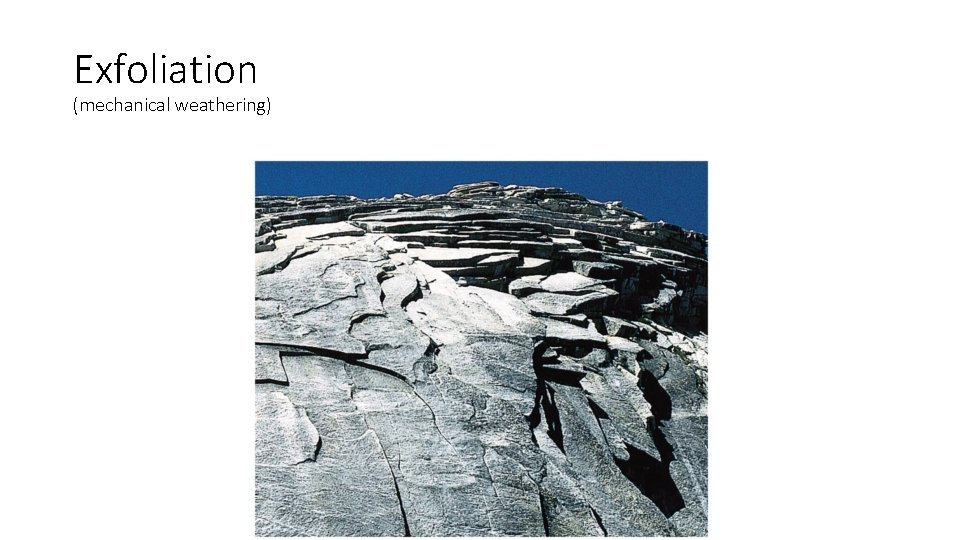
Exfoliation (mechanical weathering)
Exfoliation (mechanical weathering) • Occurs where there is a big temperature difference between daytime and night time • Outer layers of rock peel off like an onion • Ex. In deserts
2. Chemical weathering • Is weathering caused by minerals in the rock reacting with water and air • Carbonation • Hydration
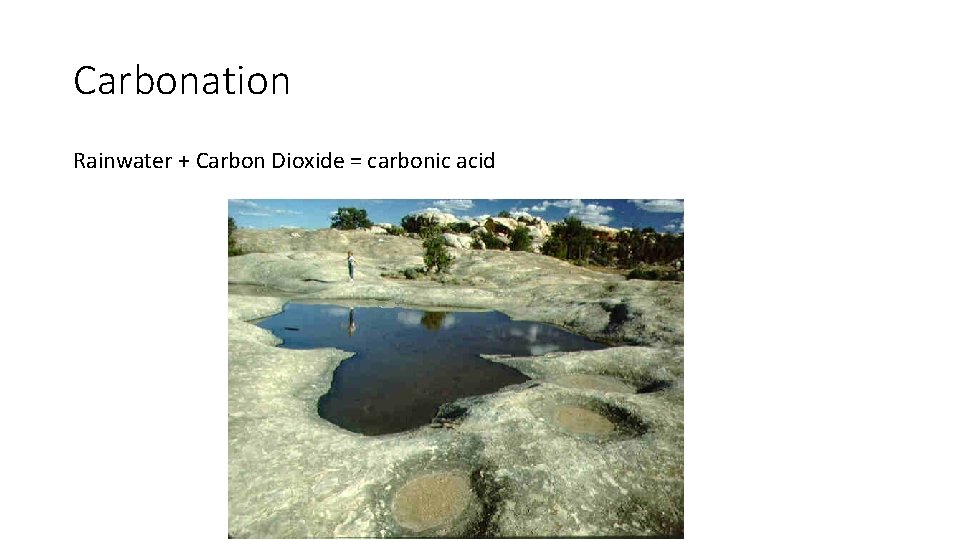
Carbonation Rainwater + Carbon Dioxide = carbonic acid
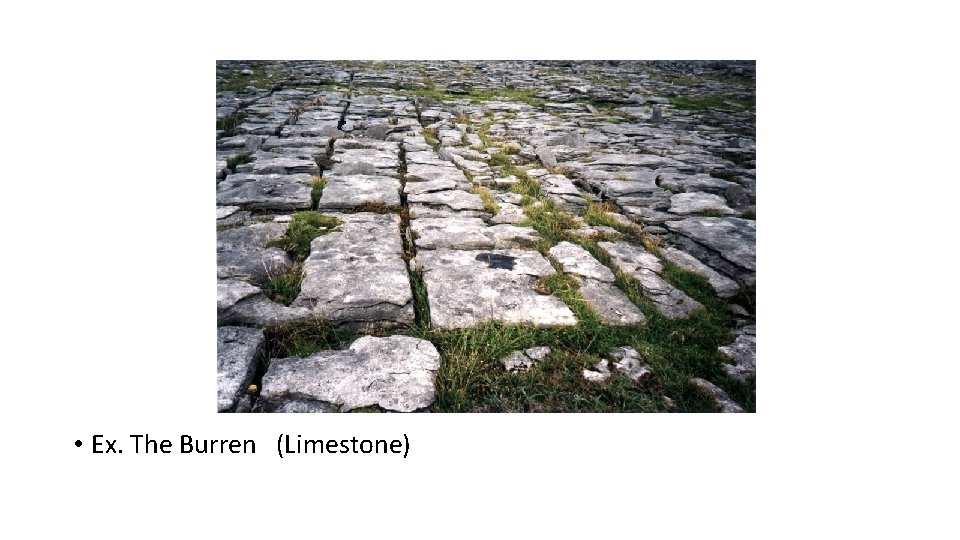
• Ex. The Burren (Limestone)
Hydration • Water is absorbed by minerals in rocks (ex. Feldspar) • The water causes this mineral to expand • Shatters rock = Weathering
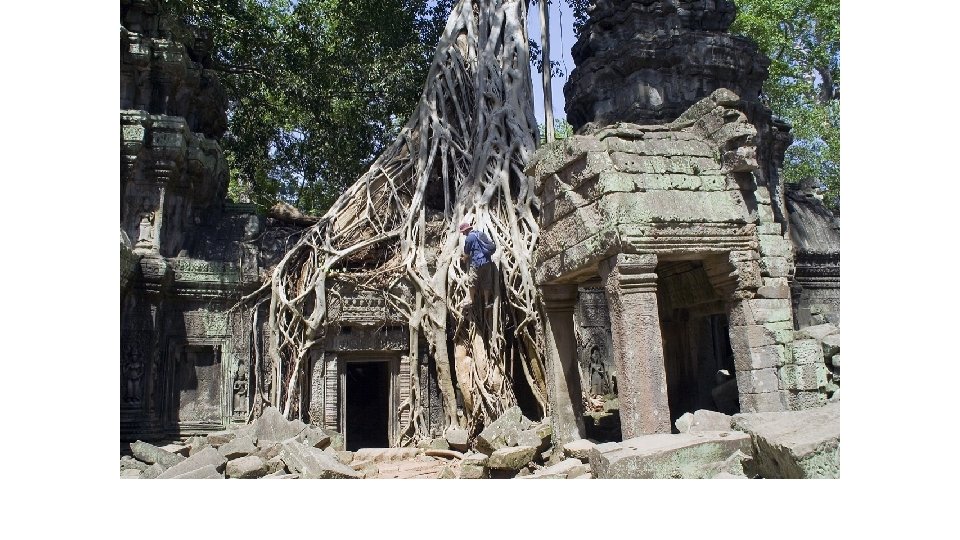
3. Biological weathering • This is weathering caused by plants and animals. • Ex. Tree roots • Ex. Humans • Ex. Earth worms/ rabbits
- Slides: 14