
LEARNING ORGANIZATION AND KNOWLEDGE MANAGEMENT Compiled By Shyan
LEARNING ORGANIZATION AND KNOWLEDGE MANAGEMENT Compiled By: Shyan Kirat Rai
O∆Z
Learning Organization Learning organisation is one that manages its own learning processes to its advantage A learning organization is the term given to a company that facilitates the learning of its members and continuously transforms itself learning organizations develop as a result of the pressures facing modern organizations and enables them to remain competitive in the business environment
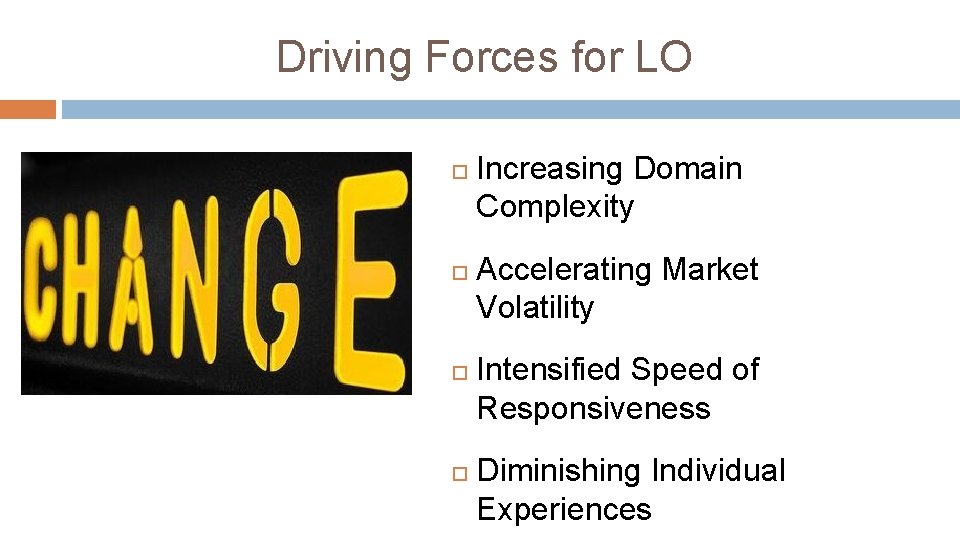
Driving Forces for LO Increasing Domain Complexity Accelerating Market Volatility Intensified Speed of Responsiveness Diminishing Individual Experiences
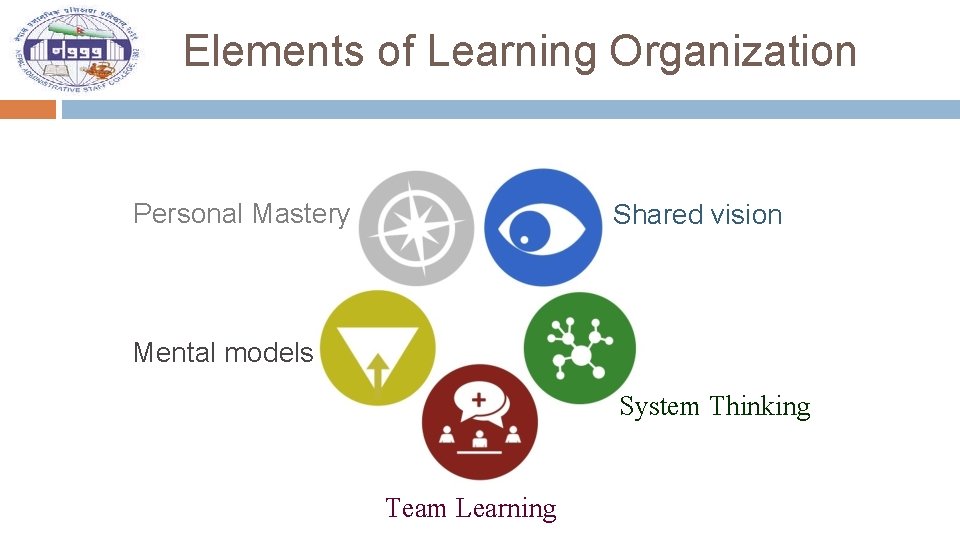
Elements of Learning Organization Personal Mastery Shared vision Mental models System Thinking Team Learning
Advantages of LO Maintaining levels of innovation and remaining competitive Being better placed to respond to external pressures Having the knowledge to better link resources to customer needs Improving quality of outputs at all levels Improving Corporate image by becoming more people oriented Increasing the pace of change within the organization
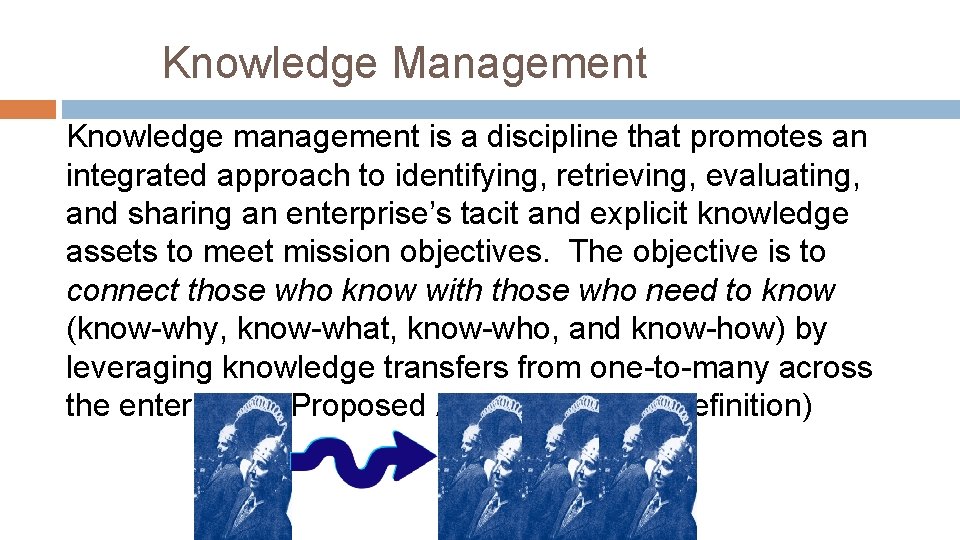
Knowledge Management Knowledge management is a discipline that promotes an integrated approach to identifying, retrieving, evaluating, and sharing an enterprise’s tacit and explicit knowledge assets to meet mission objectives. The objective is to connect those who know with those who need to know (know-why, know-what, know-who, and know-how) by leveraging knowledge transfers from one-to-many across the enterprise. (Proposed AR 25 -1 revised definition)
KM Thoughts “KM is a JOURNEY DESTINATION” not a -Warick Holder
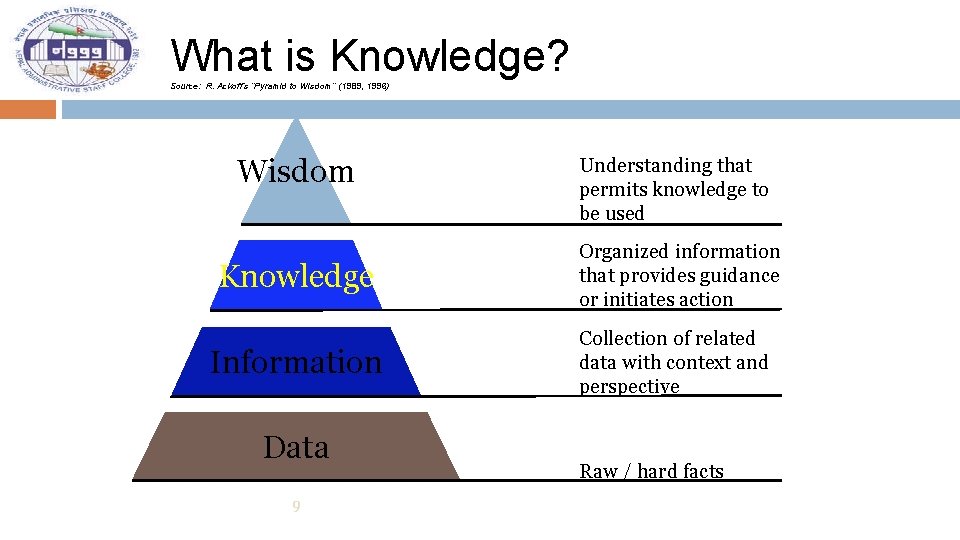
What is Knowledge? Source: R. Ackoff’s “Pyramid to Wisdom” (1989, 1996) Wisdom Understanding that permits knowledge to be used Knowledge Organized information that provides guidance or initiates action Information Collection of related data with context and perspective Data 9 Raw / hard facts
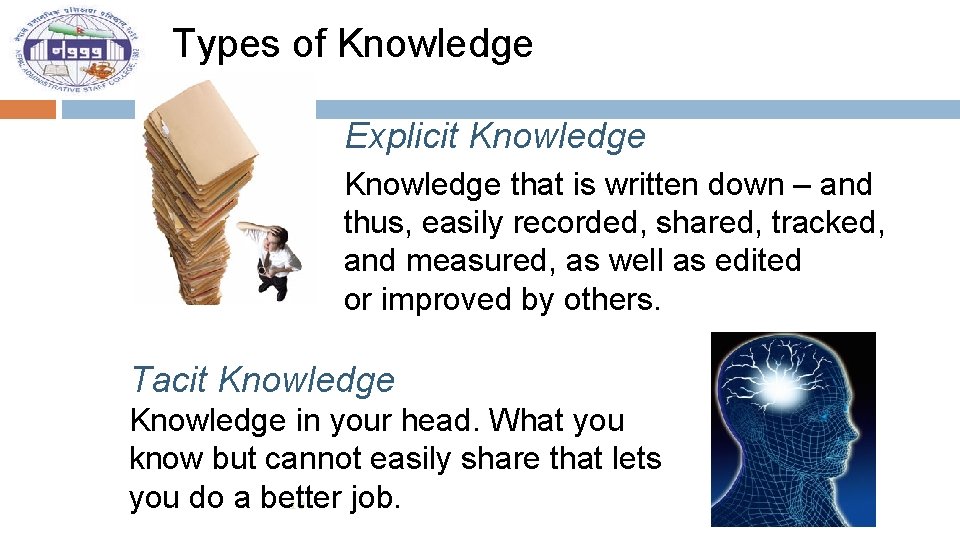
Types of Knowledge Explicit Knowledge that is written down – and thus, easily recorded, shared, tracked, and measured, as well as edited or improved by others. Tacit Knowledge in your head. What you know but cannot easily share that lets you do a better job. 10
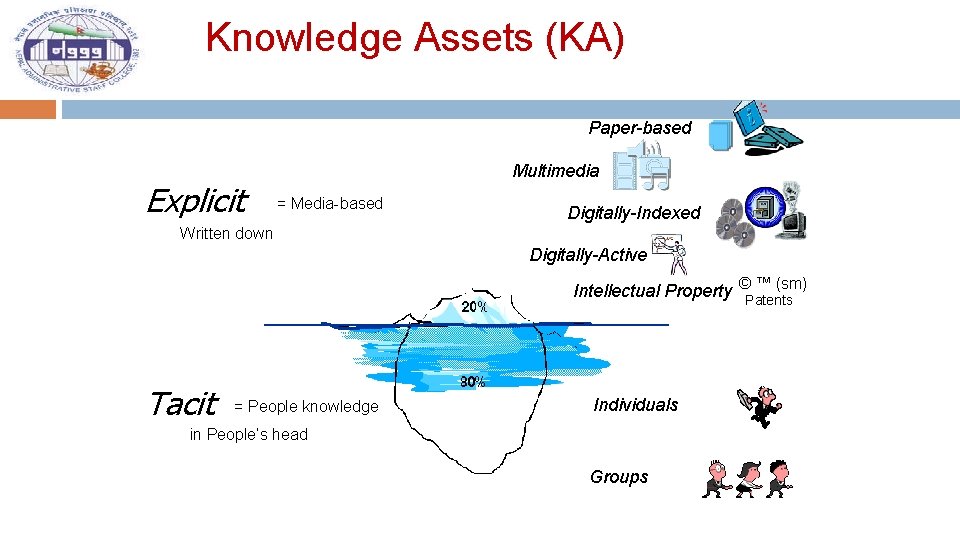
Knowledge Assets (KA) Paper-based Explicit Multimedia = Media-based Digitally-Indexed Written down Digitally-Active ™ (sm) Intellectual Property ©Patents Tacit = People knowledge Individuals in People’s head Groups
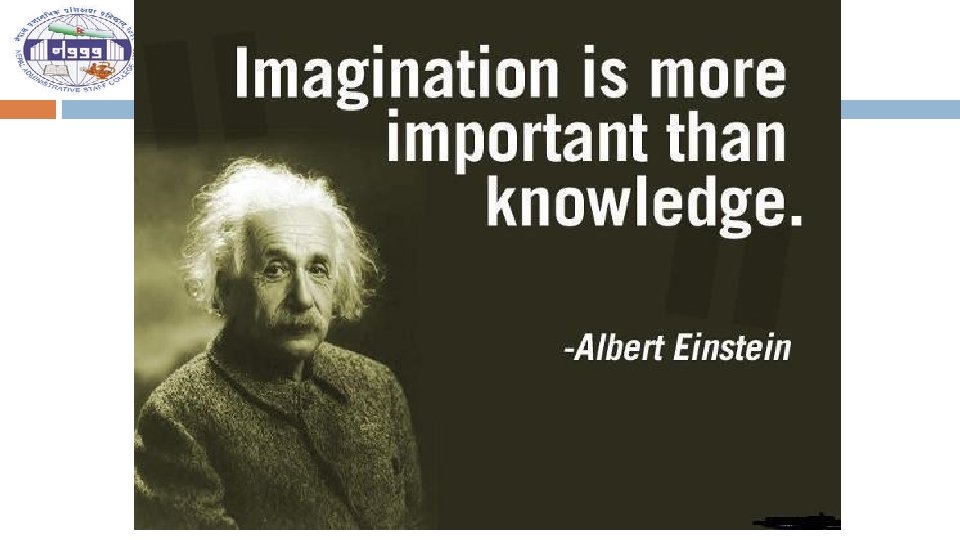
KM Thoughts “In the end, learning faster than our competitors is the only sustainable competitive advantage” -Arie de Geus – Shell
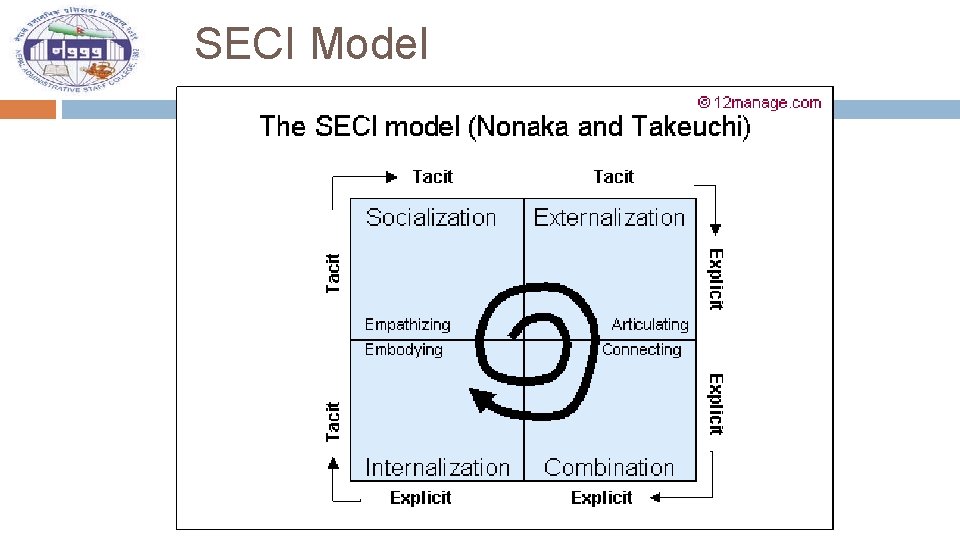
SECI Model
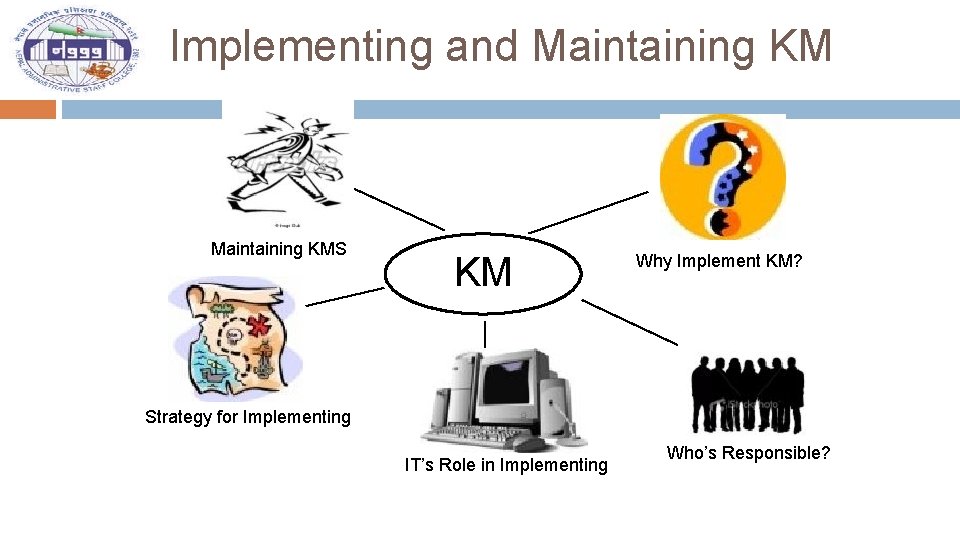
Implementing and Maintaining KMS KM Why Implement KM? Strategy for Implementing IT’s Role in Implementing Who’s Responsible?
US Army Knowledge Management “It is the Army’s goal to deliver critical capabilities to the war fighter, and oversee the development of a knowledge -based workforce” LTC William Nelson Deputy Director GA & CKO (Governance, Acquisition and Chief Knowledge Office) Army Office of CIO/G-6
Vision A transformed Army, with agile capabilities and adaptive processes, powered by world class, secure, network-centric access to knowledge, systems, and services, interoperable with the Joint environment Army Knowledge Management is the strategy to transform the Army into a net-centric, knowledge-based force
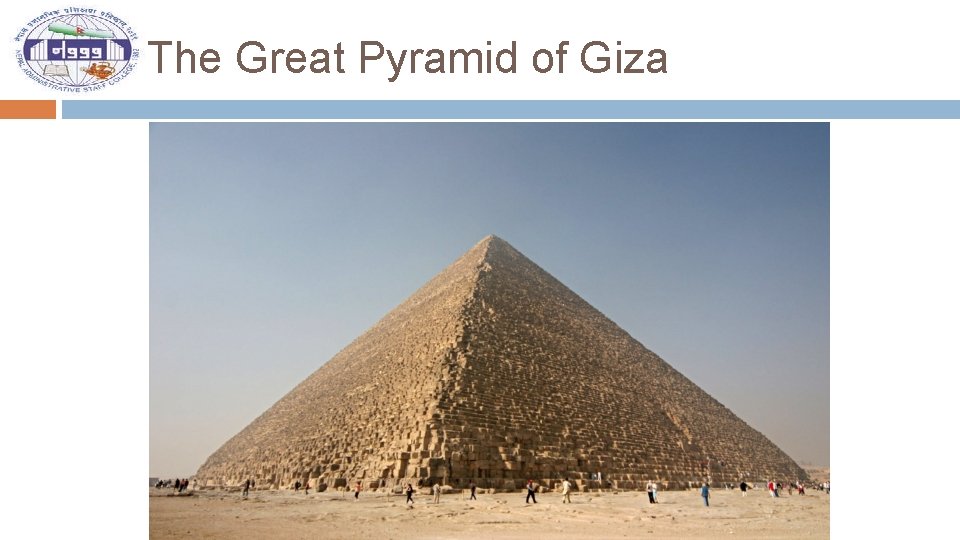
The Great Pyramid of Giza

Inventions

Thank You for your patience! skrai@nasc. org. np
- Slides: 22