
Learning objectives What are earthquakes and where do
Learning objectives What are earthquakes and where do they occur? What causes earthquakes? How are earthquakes measured? What is the difference between the epicentre and the focus? How can we limit the damage caused by earthquakes? Pakistan earthquake – October 2005 What is a tsunami?
• Describe a range of strategies and methods used to reduce the damaging effects of earthquakes and volcanic eruptions used in countries with different levels of economic development. Include short-term responses and long-term responses (prediction, planning, and preparation). • This is what the exam board are expecting you to be able to do.

How can we limit earthquake damage? predict plan water levels can rise in wells and lakes because of cracks in the rock protect a tiltmeter can check any movement within the rocks Predict foreshocks before the main quake can be detected by a seismometer animals can act strangely before the earthquake
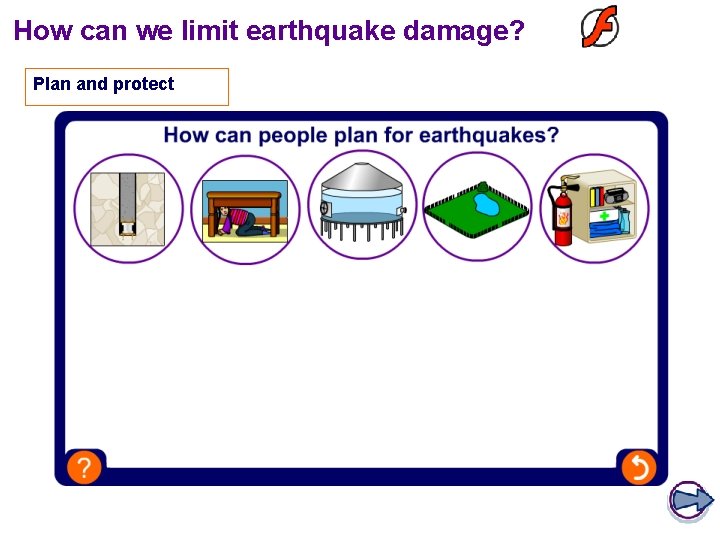
How can we limit earthquake damage? Plan and protect
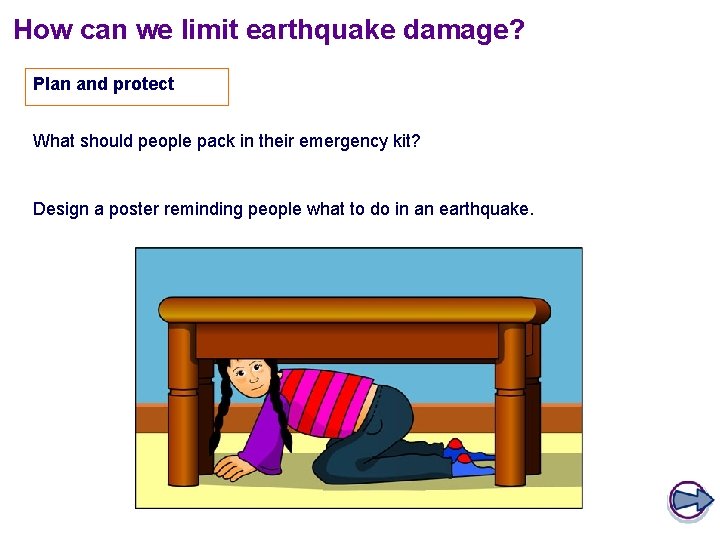
How can we limit earthquake damage? Plan and protect What should people pack in their emergency kit? Design a poster reminding people what to do in an earthquake.

Building regulations in earthquake zones What other measures would make buildings less likely to collapse in an earthquake?
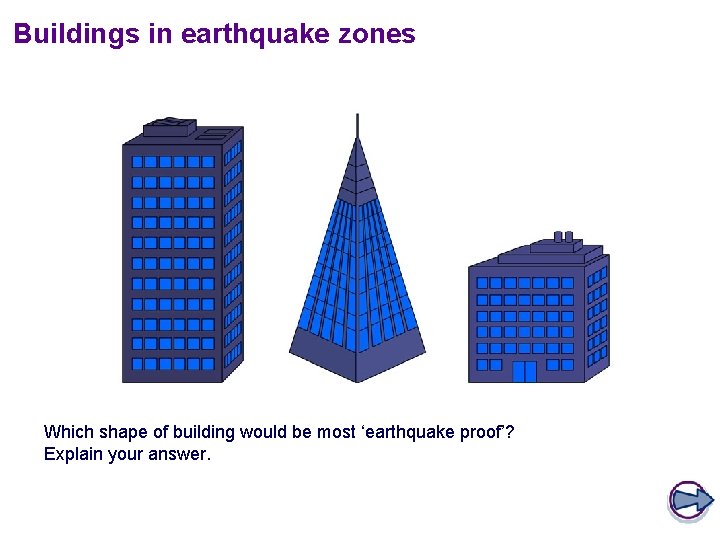
Buildings in earthquake zones Which shape of building would be most ‘earthquake proof’? Explain your answer.
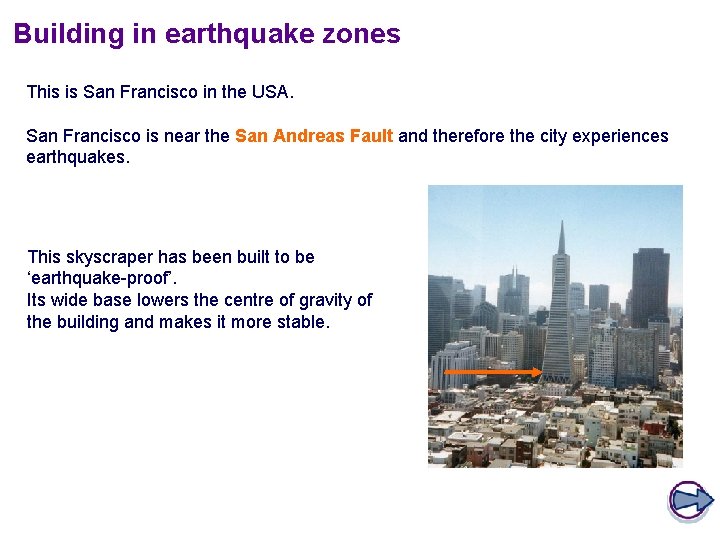
Building in earthquake zones This is San Francisco in the USA. San Francisco is near the San Andreas Fault and therefore the city experiences earthquakes. This skyscraper has been built to be ‘earthquake-proof’. Its wide base lowers the centre of gravity of the building and makes it more stable.
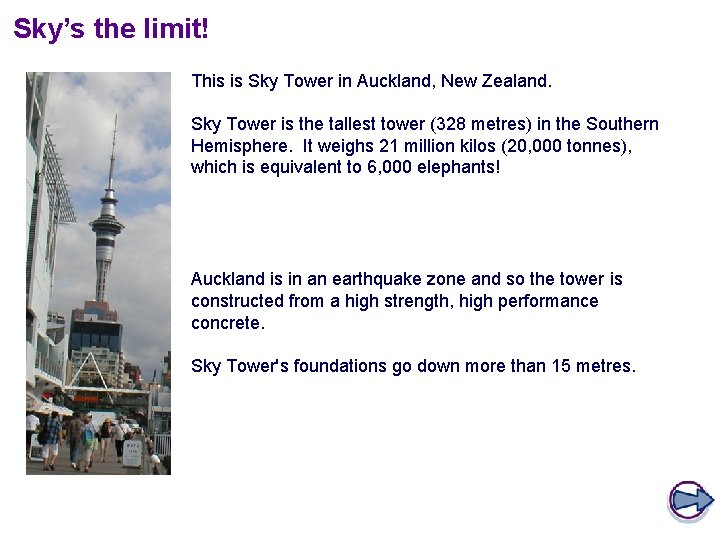
Sky’s the limit! This is Sky Tower in Auckland, New Zealand. Sky Tower is the tallest tower (328 metres) in the Southern Hemisphere. It weighs 21 million kilos (20, 000 tonnes), which is equivalent to 6, 000 elephants! Auckland is in an earthquake zone and so the tower is constructed from a high strength, high performance concrete. Sky Tower's foundations go down more than 15 metres.

Factors affecting the damage caused by earthquakes size of the earthquake emergency services building design and construction time of day education physical landscape 1) 2) 3) Which factor/s do you think is/are the most important? Which factors are related to the wealth of the country? How can the education of the population affect the amount of damage caused by an earthquake?
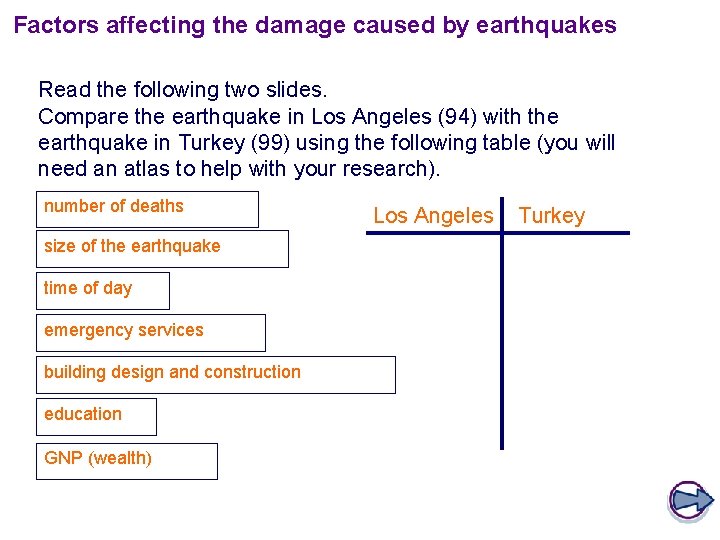
Factors affecting the damage caused by earthquakes Read the following two slides. Compare the earthquake in Los Angeles (94) with the earthquake in Turkey (99) using the following table (you will need an atlas to help with your research). number of deaths size of the earthquake time of day emergency services building design and construction education GNP (wealth) Los Angeles Turkey
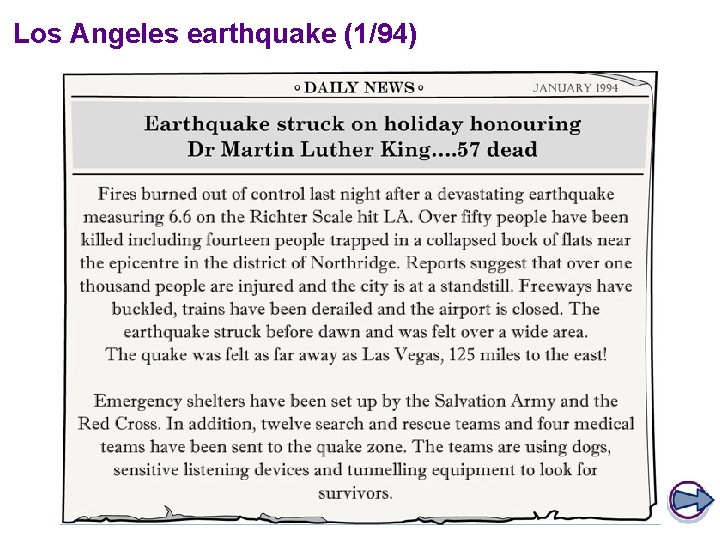
Los Angeles earthquake (1/94)

Earthquake proofing Richer, industrialized countries have been able to employ advanced building techniques to minimize the devastation caused by earthquakes. These techniques are very expensive. High demand for housing in Pakistan and poor economic conditions, has meant most houses have been poorly constructed often by the occupants themselves. However, since the earthquake, the Pakistani government has introduced a new building code. It includes designs and details about how to make buildings more resistant to earthquakes.
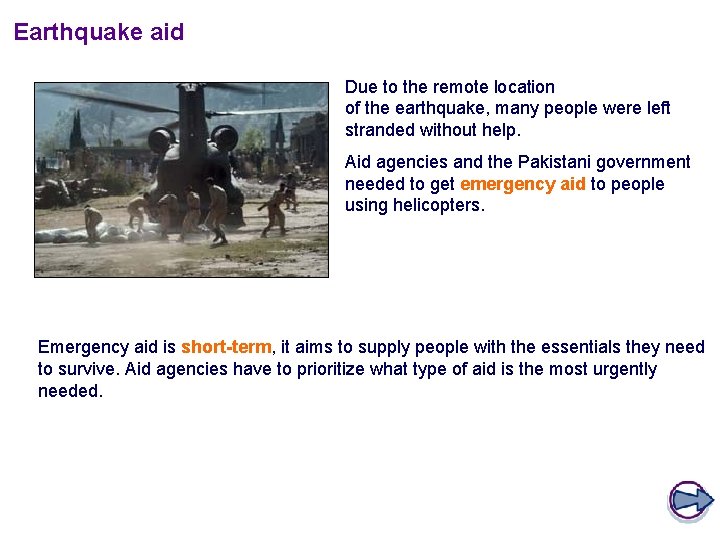
Earthquake aid Due to the remote location of the earthquake, many people were left stranded without help. Aid agencies and the Pakistani government needed to get emergency aid to people using helicopters. Emergency aid is short-term, it aims to supply people with the essentials they need to survive. Aid agencies have to prioritize what type of aid is the most urgently needed.

Learning objectives What is a volcano? Why do volcanoes occur? Where are volcanoes found? What happened in the 1980 Mount St Helens eruption? Can volcanic eruptions be predicted? Why do people live in volcanic areas?
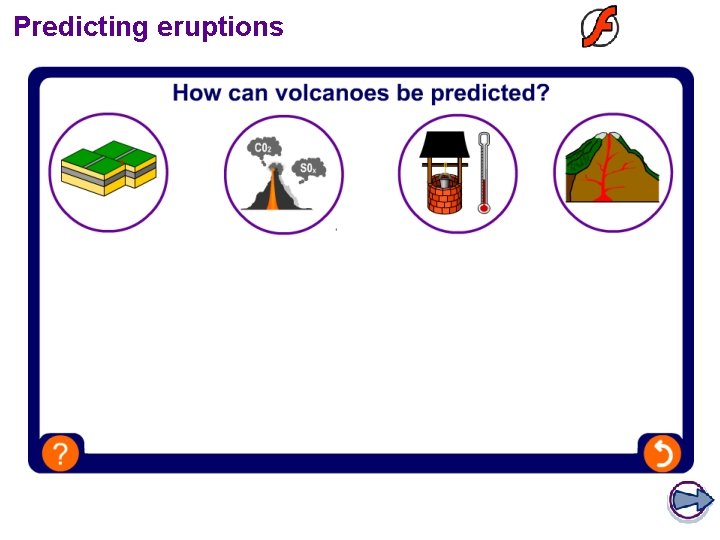
Predicting eruptions
The problem of prediction Volcanologists (people who study volcanoes) are skilled at predicting the likelihood of an eruption. However, it's very difficult to pinpoint exactly when an eruption will happen. Often, moving magma doesn't result in an eruption, but instead cools below the surface. Monitoring potential eruptions is expensive. With many volcanoes erupting only every few hundred years, it's not possible to monitor every site.
• Read the following sheet and highlight what you think are the most important facts to know when discussing how to reduce the effects of volcanoes. • Create a mindmap of this for revision – if you want pictures ask me and we can print some out to help.
• Put in the map on pg 71 on visualiser
- Slides: 19