
Learning Objectives Understand the cultural and environmental issues
Learning Objectives • Understand the cultural and environmental issues Lesson Title – Cultural & Environmental Cultural and environmental (Your page and title have already been created by Mr Frith in Class Notebook, please open this page and complete your work) © OCR 2016
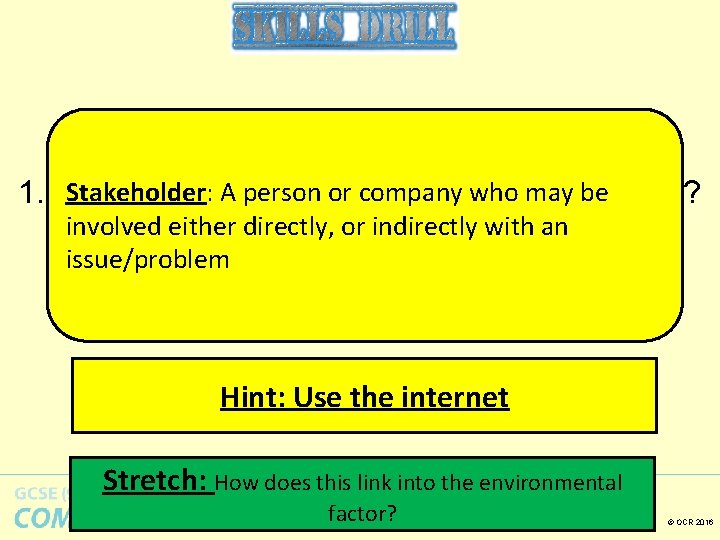
Stakeholder: personis ormeant company may be 1. What do you. A think bywho a stakeholder? involved either directly, or indirectly with an 2. Can you name any stakeholders? issue/problem Hint: Use the internet Stretch: How does this link into the environmental factor? © OCR 2016
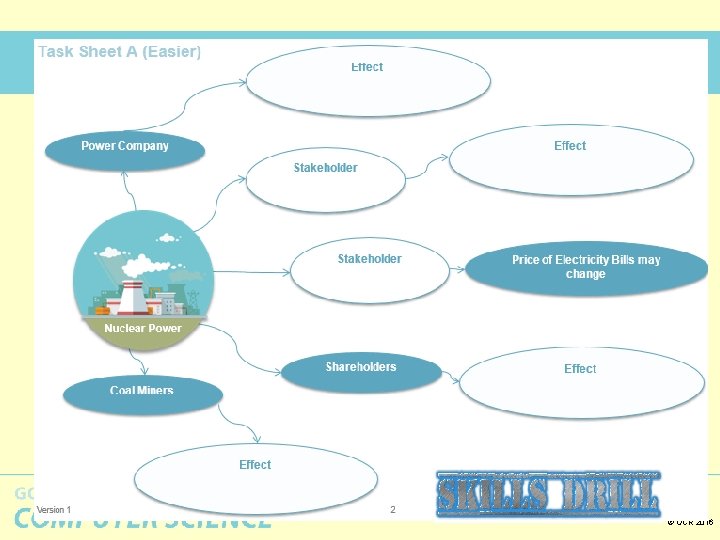
© OCR 2016
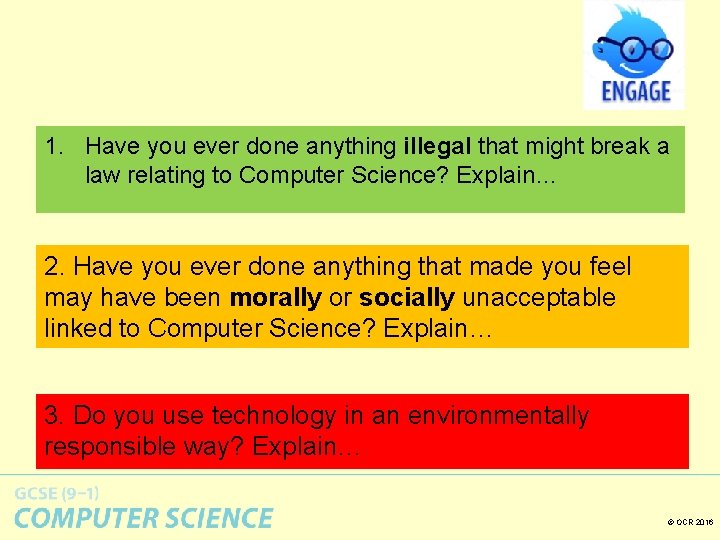
1. Have you ever done anything illegal that might break a law relating to Computer Science? Explain… 2. Have you ever done anything that made you feel may have been morally or socially unacceptable linked to Computer Science? Explain… 3. Do you use technology in an environmentally responsible way? Explain… © OCR 2016
Objective: Understand the rules and implications of the legislation that is relevant to computer science What issues can you think of when it comes to using technology? Complete the ovals to state the range of issues that should be considered when discussing computer technology. Stretch: Computer Technology Find a definition of ‘Ethics’ and ‘Morals’ © OCR 2016
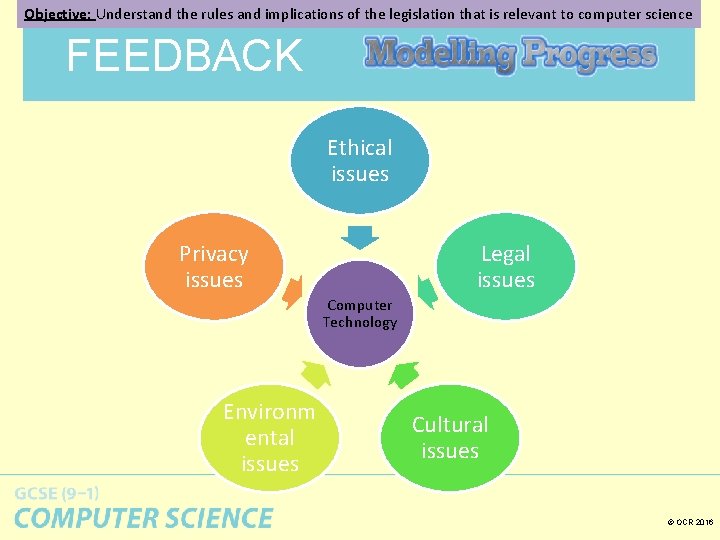
Objective: Understand the rules and implications of the legislation that is relevant to computer science FEEDBACK Ethical issues Privacy issues Legal issues Computer Technology Environm ental issues Cultural issues © OCR 2016
Why are you learning about this? Cultural Issues • Many countries have different views to us on things that we may find surprising • Cultural issues may cover things like: • Languages • Character Sets • Colours • Use of social media Moral Issues • You need to be able to discuss issues and state whether these legislations/acts would be broken • The acts/laws will be discussed within another lesson © OCR 2016
Cultural Issues The introduction of computers has changed society, sometimes for the better, sometimes for the worse. 'Cultural issues' is the term used for computer matters that have an effect on the nature and culture of society. Some of these issues include: • The digital divide - Division that exists between those people who can use technology and are comfortable doing so, and those who are not. • The changing nature of employment - Another cultural issue is the changing nature of employment. Many companies now allow employees to work from home and communicate with them via technology. © OCR 2016
Cultural Issues • Many countries have different views to us on things that we may find surprising • Cultural issues may cover things like: • Languages • Character Sets • Colours • Use of social media • Religion • Government © OCR 2016
Objective: Understand the rules and implications of the legislation that is relevant to computer science Environmental Issues • Environmental issues are those where the manufacturing and use of computers had a negative impact on the environment • Resources are needed to in order for computers to be produced, distributed and used. Metals and plastics are used to manufacture components, while energy is expended in distributing equipment and in using it. © OCR 2016
Objective: Understand the rules and implications of the legislation that is relevant to computer science Environmental Issues Many computer components are either hard to recycle or contain toxic materials, such as lead. Also, users discard ICT equipment quite quickly: • people have new smartphones every couple of years • many organisations replace computers after three or four years • many people replace older technology before it fails simply because they perceive it to be old-fashioned or out of date All of this means that computers have a heavy impact on the environment. However, many devices are now more power efficient and some companies have come up with innovative ways to save power. © OCR 2016
Objective: Understand the rules and implications of the legislation that is relevant to computer science Environmental Issues • Computers have helped in manufacturing, engineering, surgery, medicine etc. • Generally technology requires electricity to function • Often judgements need to be made as to whether this is a good balance • Also, what happens to old computers/robots etc? © OCR 2016
Objective: Understand the rules and implications of the legislation that is relevant to computer science What is Ethics / Morals ? • Morals and Ethics are slightly different but work along the same ideas • It is something that may feel wrong, or be unacceptable – but doesn’t actually break a law © OCR 2016
Objective: Understand the rules and implications of the legislation that is relevant to computer science Ethics / Morals • Moral: • behaving in ways considered by most people to be correct and honest • Ethics are moral principles, or rules, which govern a person's attitudes and behaviour. • Ethics apply to the use of computers as much as they do to other things in life. Ethical issues in computing include: • ensuring public safety • security of data • You will often find that professional bodies have “Code of Ethics” which members must follow. © OCR 2016
Ethics Ensuring public safety • Ensuring public safety is paramount. As new technologies are introduced, they bring safety concerns. For example, driverless cars may soon be on the roads in the UK. The designers of driverless cars have not only had to ensure the safety of passengers, but also of other drivers and pedestrians. Ethics apply here as a situation may occur where the car's software has to decide who has safety priority, the passengers or other road users Data security • Personal data is precious and needs to be kept safe. Unfortunately, there are people that attempt to hack systems in order to gain access to other people's data. Social media accounts, phone mailboxes and networks that computers connect to are all prone to hacking. © OCR 2016
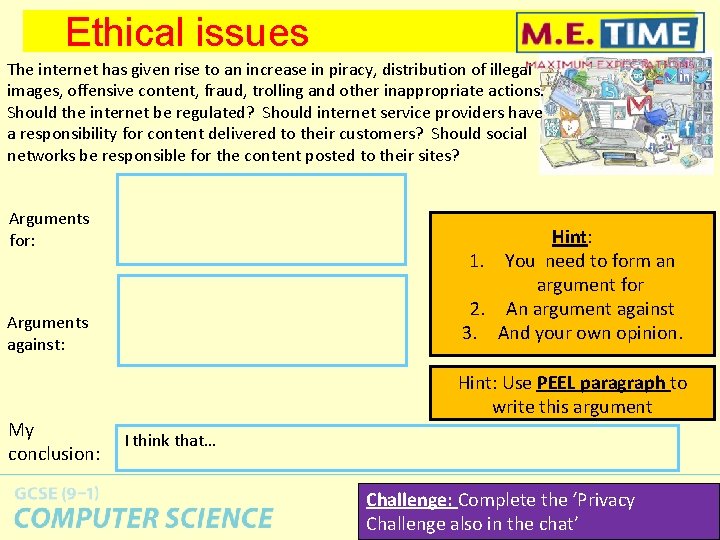
Ethical issues The internet has given rise to an increase in piracy, distribution of illegal images, offensive content, fraud, trolling and other inappropriate actions. Should the internet be regulated? Should internet service providers have a responsibility for content delivered to their customers? Should social networks be responsible for the content posted to their sites? Arguments for: Hint: 1. You need to form an argument for 2. An argument against 3. And your own opinion. Arguments against: My conclusion: Hint: Use PEEL paragraph to write this argument I think that… Challenge: Complete the ‘Privacy Challenge also in the chat’ © OCR 2016
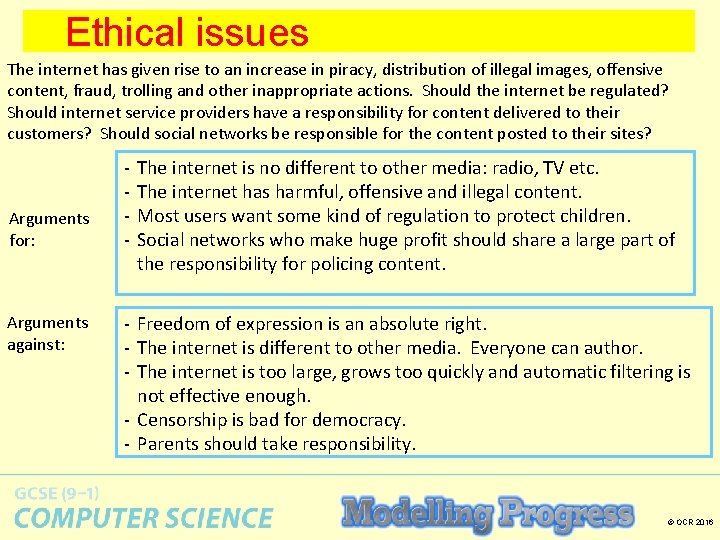
Ethical issues The internet has given rise to an increase in piracy, distribution of illegal images, offensive content, fraud, trolling and other inappropriate actions. Should the internet be regulated? Should internet service providers have a responsibility for content delivered to their customers? Should social networks be responsible for the content posted to their sites? Arguments for: Arguments against: - The internet is no different to other media: radio, TV etc. The internet has harmful, offensive and illegal content. Most users want some kind of regulation to protect children. Social networks who make huge profit should share a large part of the responsibility for policing content. - Freedom of expression is an absolute right. - The internet is different to other media. Everyone can author. - The internet is too large, grows too quickly and automatic filtering is not effective enough. - Censorship is bad for democracy. - Parents should take responsibility. © OCR 2016
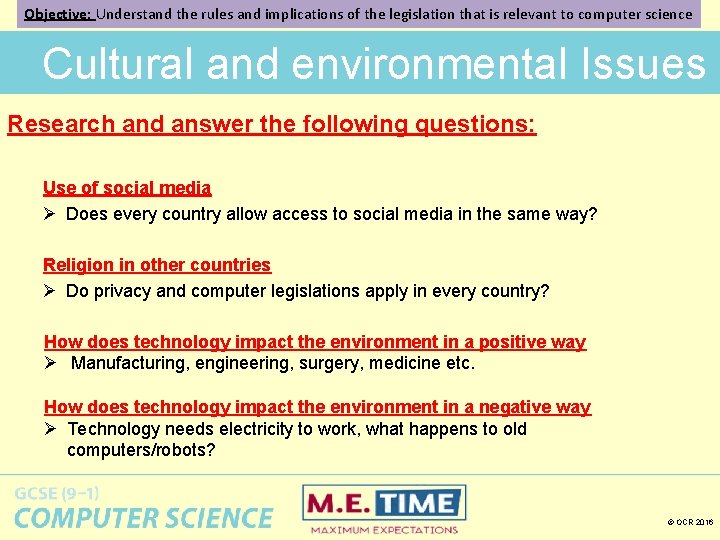
Objective: Understand the rules and implications of the legislation that is relevant to computer science Cultural and environmental Issues Research and answer the following questions: Use of social media Ø Does every country allow access to social media in the same way? Religion in other countries Ø Do privacy and computer legislations apply in every country? How does technology impact the environment in a positive way Ø Manufacturing, engineering, surgery, medicine etc. How does technology impact the environment in a negative way Ø Technology needs electricity to work, what happens to old computers/robots? © OCR 2016
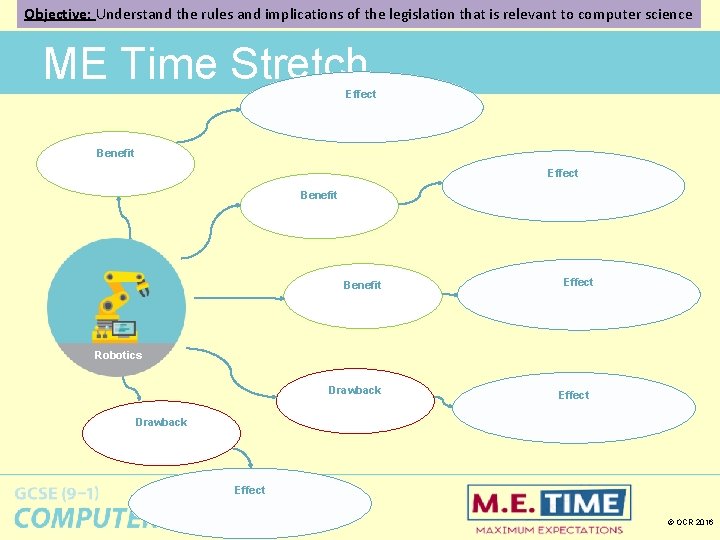
Objective: Understand the rules and implications of the legislation that is relevant to computer science ME Time Stretch Effect Benefit Effect Robotics Drawback Effect © OCR 2016
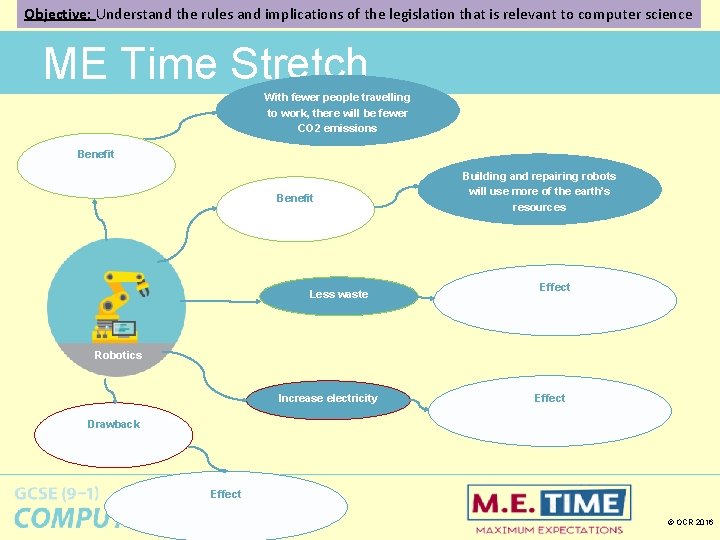
Objective: Understand the rules and implications of the legislation that is relevant to computer science ME Time Stretch With fewer people travelling to work, there will be fewer CO 2 emissions Benefit Less waste Building and repairing robots will use more of the earth’s resources Effect Robotics Increase electricity Effect Drawback Effect © OCR 2016
Objective: Understand the rules and implications of the legislation that is relevant to computer science Ethical Legal Cultural Environmental © OCR 2016
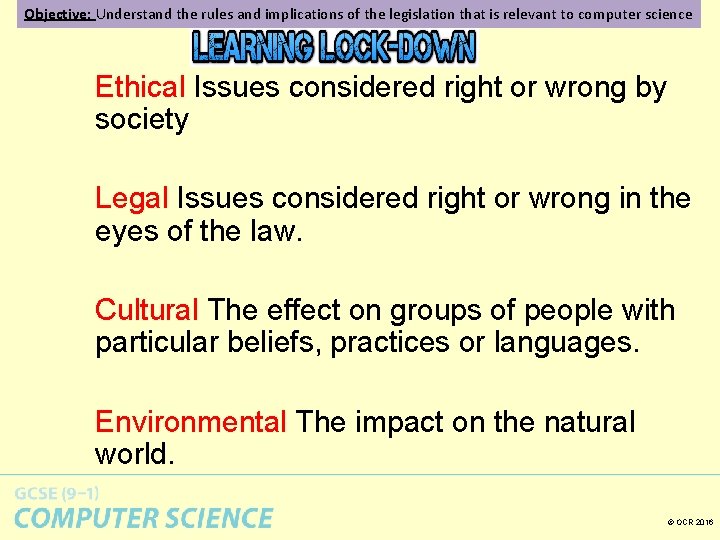
Objective: Understand the rules and implications of the legislation that is relevant to computer science Ethical Issues considered right or wrong by society Legal Issues considered right or wrong in the eyes of the law. Cultural The effect on groups of people with particular beliefs, practices or languages. Environmental The impact on the natural world. © OCR 2016
- Slides: 22