
Learning objectives To develop understanding of the scientific
Learning objectives • To develop understanding of the scientific principles related to carbohydrates: gelatinisation • To demonstrate knowledge of the process of gelatinisation
Gelatinisation – Match up • There are 8 images and 8 statements (If your class size is over 16 – use 2 packs. • You are the only one who is allowed to see your card. • Move around the room to find your partner – You can ONLY do this by reading/describing what is on your card
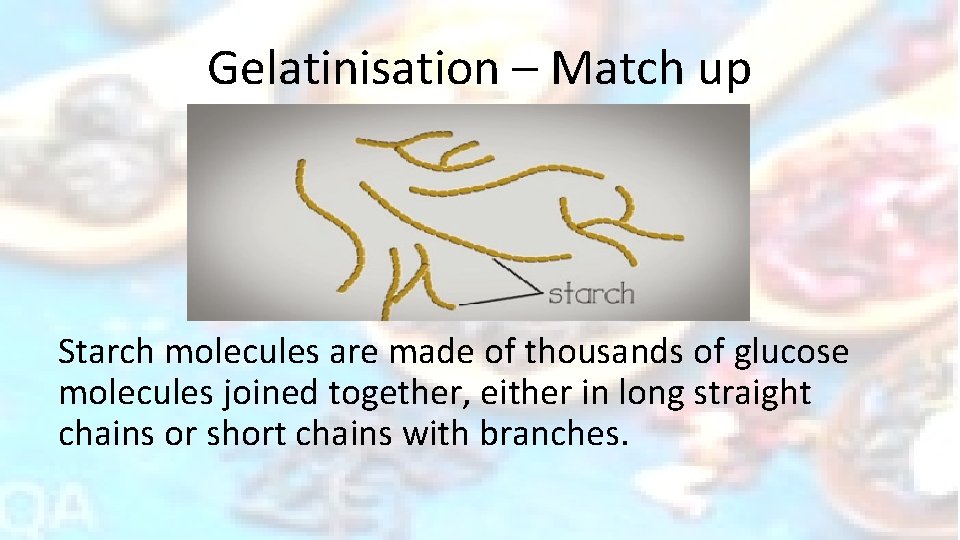
Gelatinisation – Match up Starch molecules are made of thousands of glucose molecules joined together, either in long straight chains or short chains with branches.
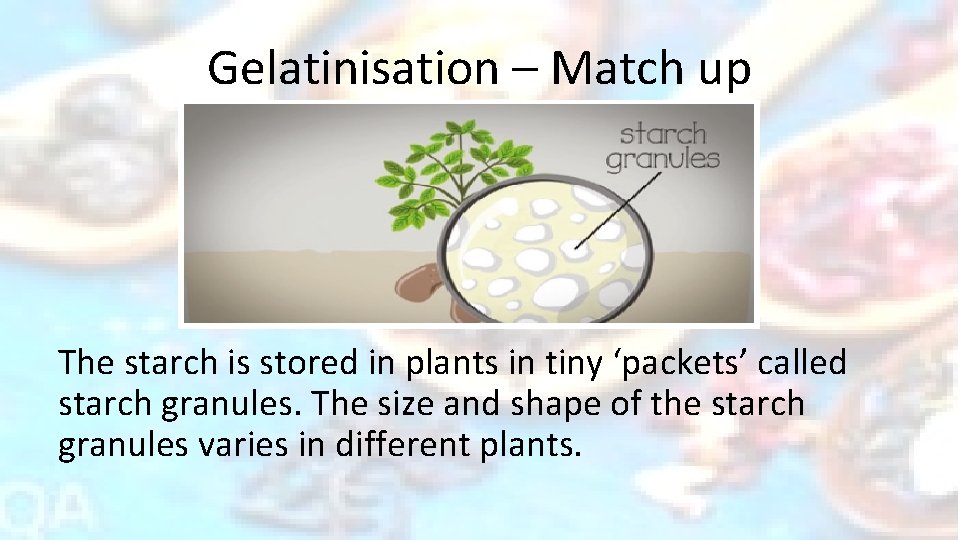
Gelatinisation – Match up The starch is stored in plants in tiny ‘packets’ called starch granules. The size and shape of the starch granules varies in different plants.

Gelatinisation – Match up When starch granules are in put into cold water, they sink to the bottom of the pan.
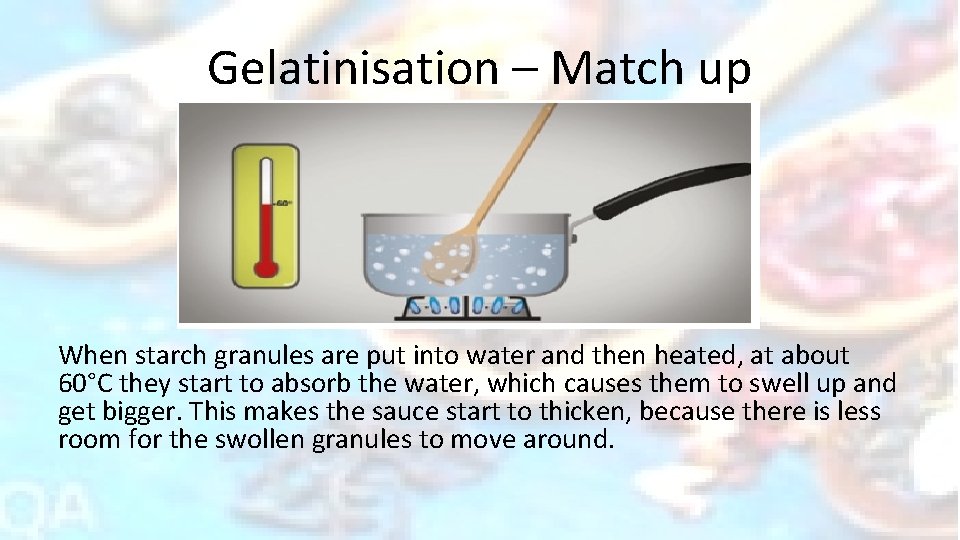
Gelatinisation – Match up When starch granules are put into water and then heated, at about 60°C they start to absorb the water, which causes them to swell up and get bigger. This makes the sauce start to thicken, because there is less room for the swollen granules to move around.
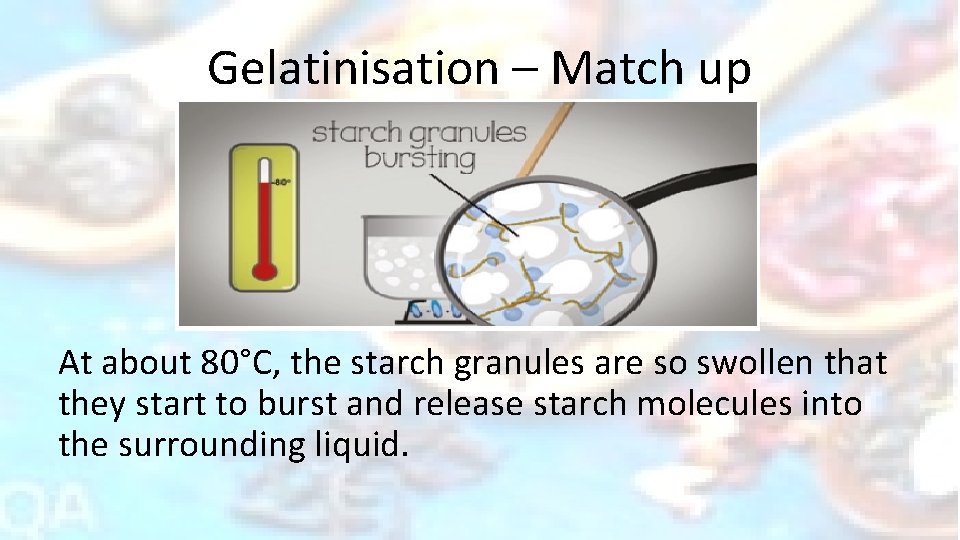
Gelatinisation – Match up At about 80°C, the starch granules are so swollen that they start to burst and release starch molecules into the surrounding liquid.
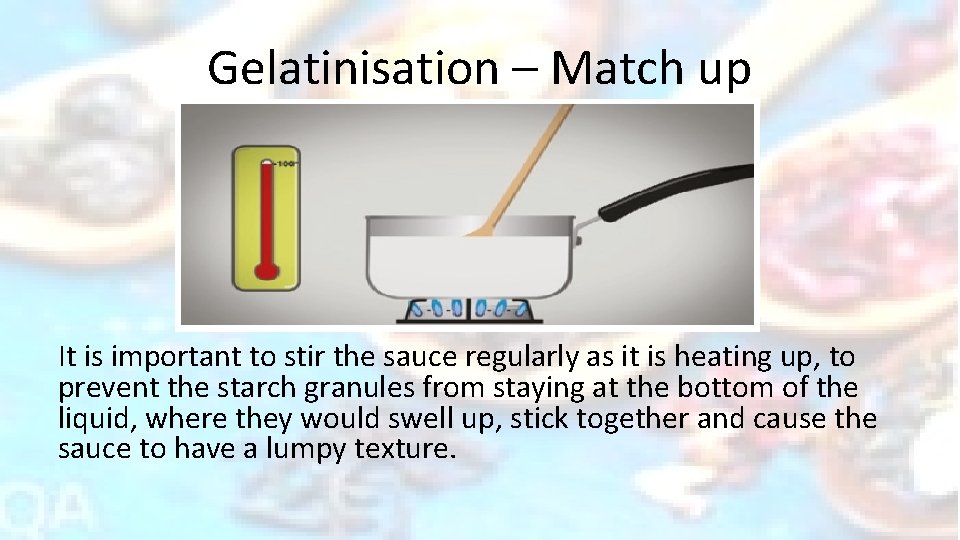
Gelatinisation – Match up It is important to stir the sauce regularly as it is heating up, to prevent the starch granules from staying at the bottom of the liquid, where they would swell up, stick together and cause the sauce to have a lumpy texture.
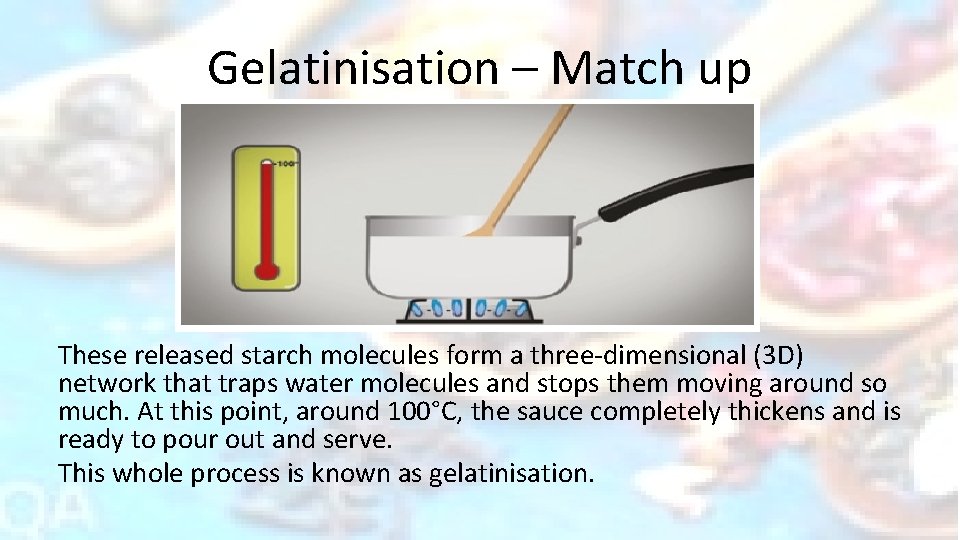
Gelatinisation – Match up These released starch molecules form a three-dimensional (3 D) network that traps water molecules and stops them moving around so much. At this point, around 100°C, the sauce completely thickens and is ready to pour out and serve. This whole process is known as gelatinisation.
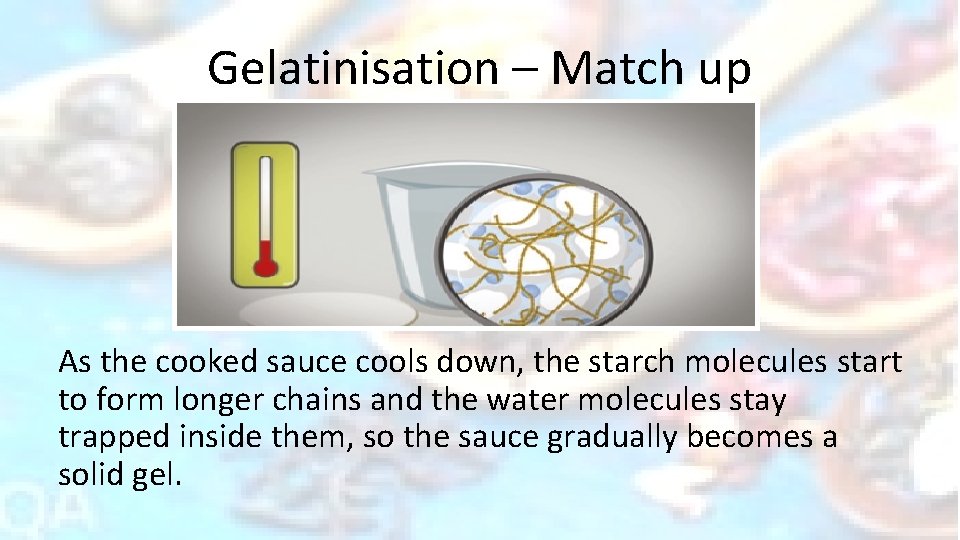
Gelatinisation – Match up As the cooked sauce cools down, the starch molecules start to form longer chains and the water molecules stay trapped inside them, so the sauce gradually becomes a solid gel.
Gelatinisation Animation: Gelatinisation Chapter 4: Functional and chemical properties of food page 117 • When you made the Fish Pie you demonstrated gelatinisation by manufacturing a Béchamel Sauce (White Sauce) • In your exercise books create a flow chart or cartoon strip of the process of gelatinisation. • Use the text books to help you
Next lesson • Bring ingredients for Sweet and Sour • Container with lid
- Slides: 12