
Learning Objectives q To classify diseases Watch this
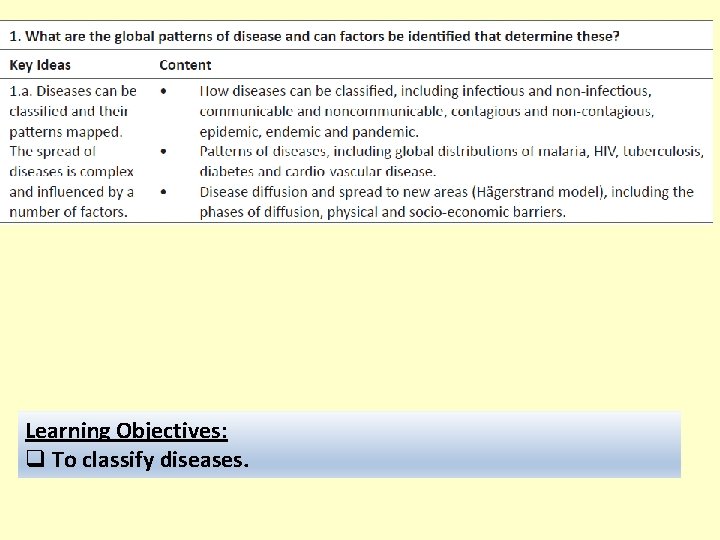
Learning Objectives: q To classify diseases.
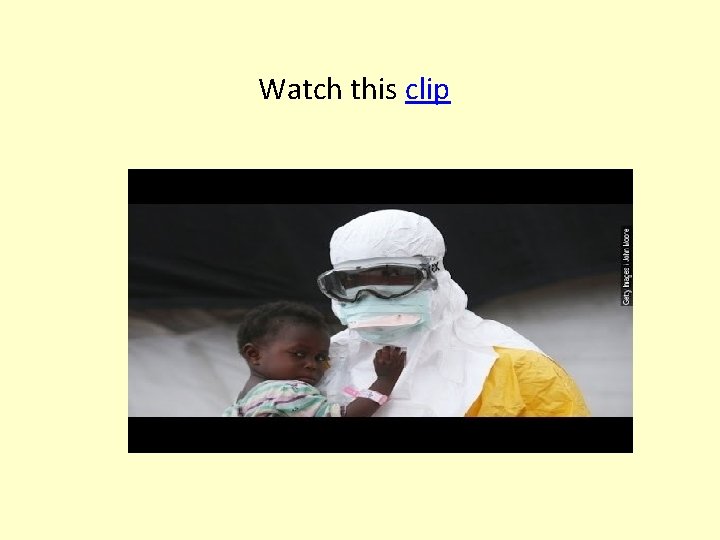
Watch this clip
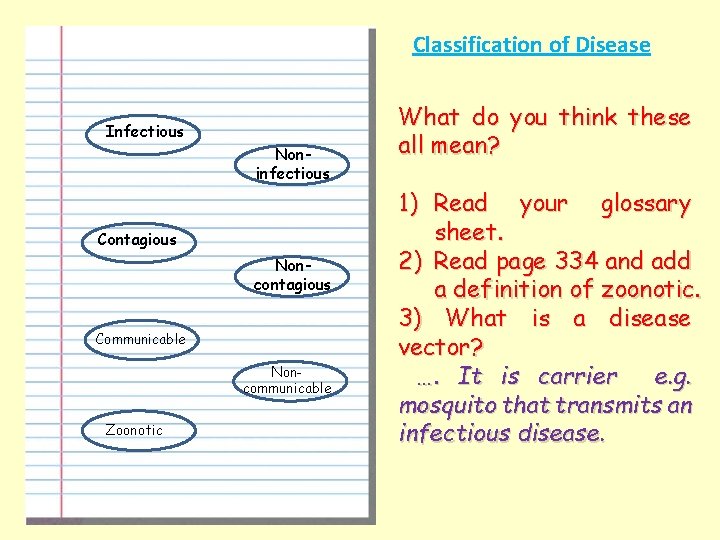
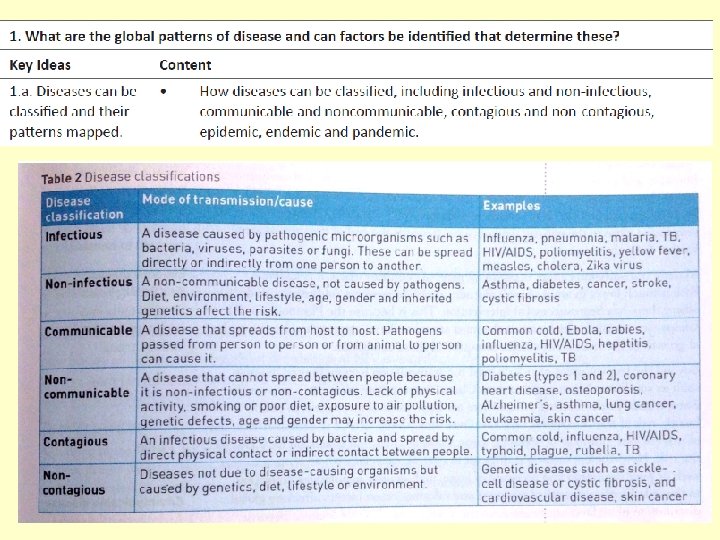
Classification of Disease Infectious Noninfectious Contagious Noncontagious Communicable Noncommunicable Zoonotic What do you think these all mean? 1) Read your glossary sheet. 2) Read page 334 and add a definition of zoonotic. 3) What is a disease vector? …. It is carrier e. g. mosquito that transmits an infectious disease.
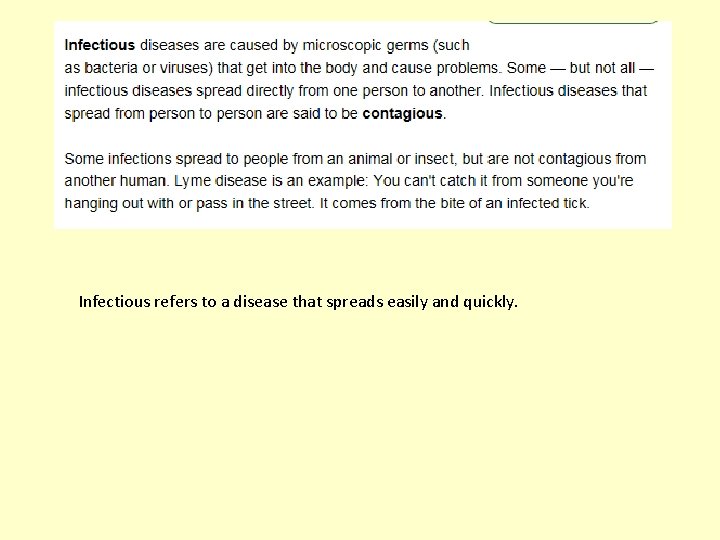
Infectious refers to a disease that spreads easily and quickly.

Exam Tip: Accurate use of terminology in exam answers help demonstrate knowledge and understanding.
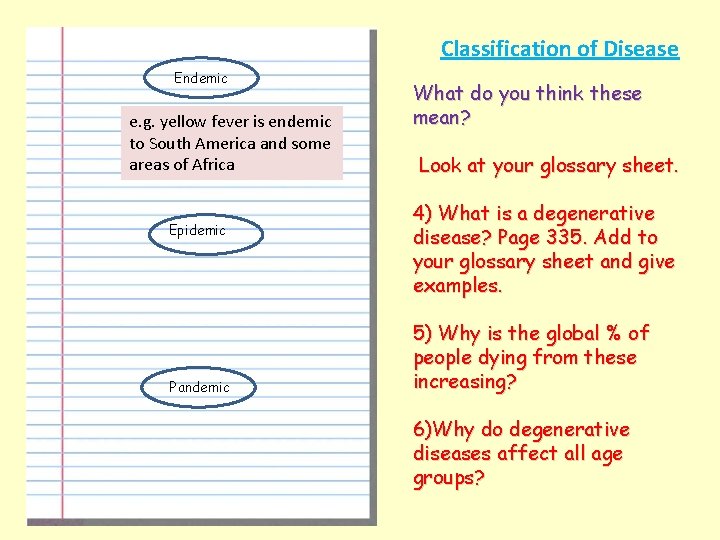
Classification of Disease Endemic e. g. yellow fever is endemic to South America and some areas of Africa Epidemic Pandemic What do you think these mean? Look at your glossary sheet. 4) What is a degenerative disease? Page 335. Add to your glossary sheet and give examples. 5) Why is the global % of people dying from these increasing? 6)Why do degenerative diseases affect all age groups?
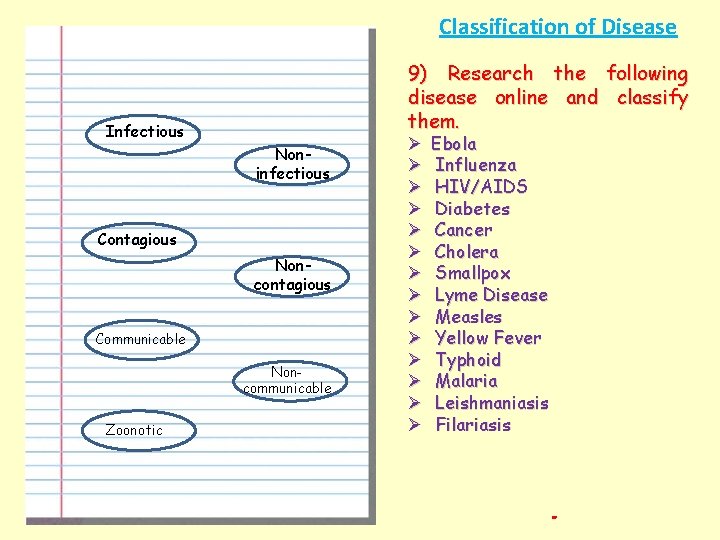
Classification of Disease 9) Research the disease online and them. Infectious Noninfectious Contagious Noncontagious Communicable Noncommunicable Zoonotic Ø Ø Ø Ø Ebola Influenza HIV/AIDS Diabetes Cancer Cholera Smallpox Lyme Disease Measles Yellow Fever Typhoid Malaria Leishmaniasis Filariasis following classify
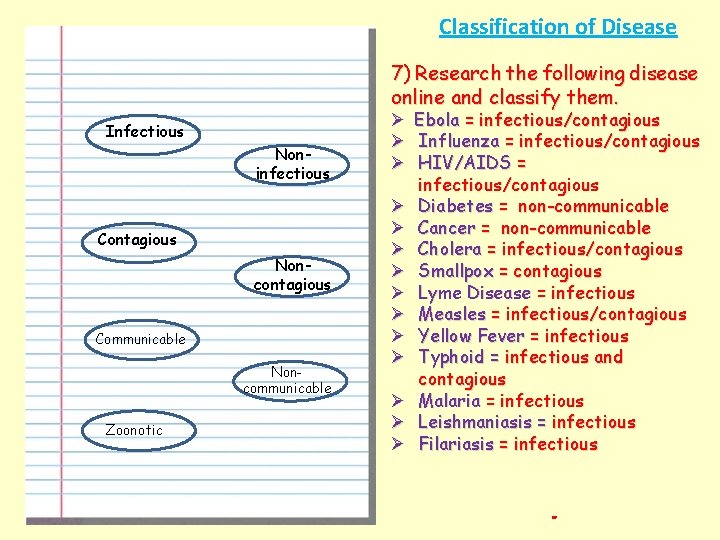
Classification of Disease 7) Research the following disease online and classify them. Infectious Noninfectious Contagious Noncontagious Communicable Noncommunicable Zoonotic Ø Ø Ø Ø Ebola = infectious/contagious Influenza = infectious/contagious HIV/AIDS = infectious/contagious Diabetes = non-communicable Cancer = non-communicable Cholera = infectious/contagious Smallpox = contagious Lyme Disease = infectious Measles = infectious/contagious Yellow Fever = infectious Typhoid = infectious and contagious Malaria = infectious Leishmaniasis = infectious Filariasis = infectious
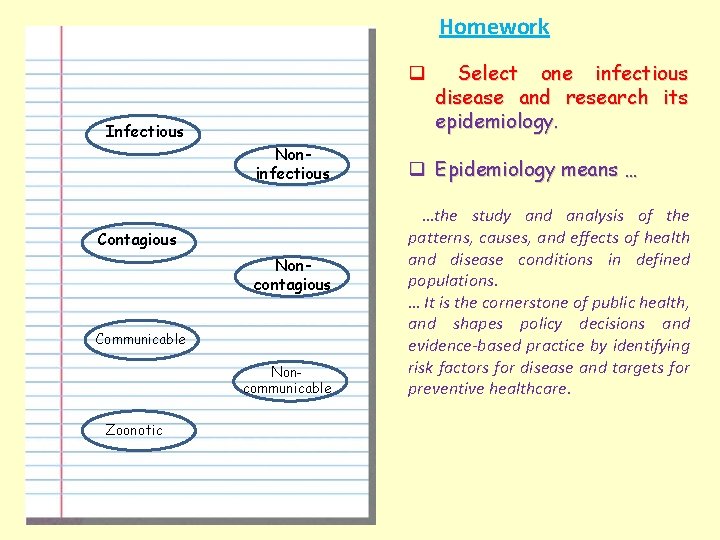
Homework q Infectious Noninfectious Contagious Noncontagious Communicable Noncommunicable Zoonotic Select one infectious disease and research its epidemiology. q Epidemiology means … …the study and analysis of the patterns, causes, and effects of health and disease conditions in defined populations. … It is the cornerstone of public health, and shapes policy decisions and evidence-based practice by identifying risk factors for disease and targets for preventive healthcare.
HW: Review Questions You need to be able to answer in detail and support with examples the following questions: 1) What is the difference between an infectious disease and a contagious disease? 2) State 3 causes of infectious diseases. 3) What is an endemic disease? Give an example. 4) What is the difference between an epidemic and a pandemic? 5) What is a disease vector? Name 2.
- Slides: 12