
Learning Objectives of the Module Summarise the hydrological
Learning Objectives of the Module • Summarise the hydrological cycle • Describe the effects of mining on the hydrological cycle • Explain the minesite water management planning process • Identify issues to consider when developing and implementing the Minesite Water Management Plan (MWMP) • Apply best practice approaches to water management planning BEST PRACTICE ENVIRONMENTAL MANAGEMENT IN MINING 2
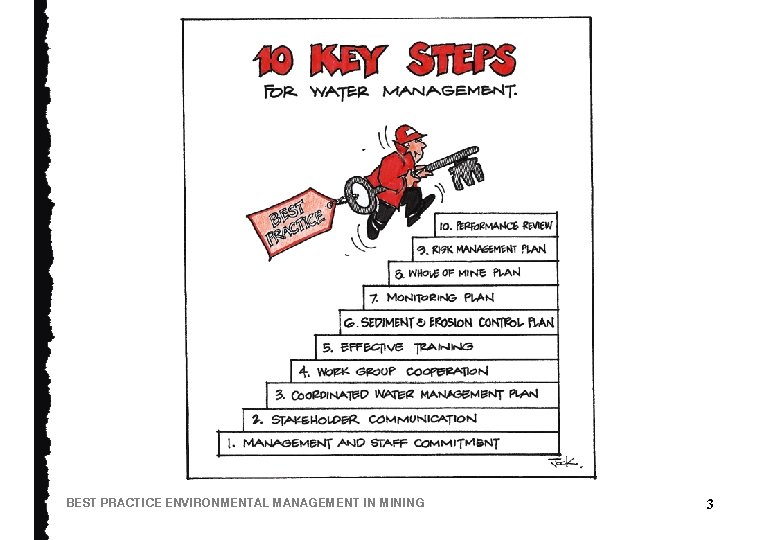
BEST PRACTICE ENVIRONMENTAL MANAGEMENT IN MINING 3
Rivers and Streams • Mine operations can affect rivers and streams in an area. Changes can include: – Quantitative: amount of water flowing in the stream – Qualitative: adding dissolved or suspended solids to the water – Effects on competing community uses for water e. g. drinking water, transport, fishing BEST PRACTICE ENVIRONMENTAL MANAGEMENT IN MINING 4
The Hydrological Cycle Minesite water management is about limiting adverse effects of mining operations on the regional hydrological cycle and ensuring that hydrological processes do not jeopardise mining operations. BEST PRACTICE ENVIRONMENTAL MANAGEMENT IN MINING 5
Hydrological Processes The hydrological cycle is the interchange of water in all its physical forms between the earth’s atmosphere, surface and mantle - the biosphere. Basic Hydrological Processes • Rainfall • Infiltration • Surface runoff • Evapotranspiration • Percolation BEST PRACTICE ENVIRONMENTAL MANAGEMENT IN MINING Aggregate Processes • Stream flow • Ground water flow 6
Precipitation • Types of precipitation - Rain - Hail - Snow - Sleet • Mining has no significant impacts on the amount and intensity of precipitation • Mining can impact on the ‘water quality’ of the precipitation e. g. acid rain BEST PRACTICE ENVIRONMENTAL MANAGEMENT IN MINING 7
Infiltration • Infiltration occurs when rainfall reaching the ground moves down into the soil profile • Infiltration is affected by: – The soil’s saturated hydraulic conductivity and its initial moisture content – The surface condition of the soil – Intensity, duration and pattern of the rainfall event • Compacted soil reduces infiltration which increases surface runoff and may increase soil erosion BEST PRACTICE ENVIRONMENTAL MANAGEMENT IN MINING 8
Surface runoff • Runoff occurs when water reaches the ground faster than it can infiltrate into the soil • Surface runoff is a major cause of soil erosion • A cover of vegetation slows surface runoff and binds the surface soil BEST PRACTICE ENVIRONMENTAL MANAGEMENT IN MINING 9
Evapotranspiration and Evaporation • Evapotranspiration is the process where plants extract water from the soil and respire it as water vapour through their leaves to the atmosphere • Open water evaporation is water passing from the surface of a water body into the atmosphere as water vapour BEST PRACTICE ENVIRONMENTAL MANAGEMENT IN MINING 10
Percolation and Ground Water Flow • Percolation: vertical movement of water under gravity through saturated or nearly saturated soil to recharge aquifers – Clearing vegetation reduces infiltration and percolation; this may adversely affect ground water tables • Ground water flows from recharge areas to discharge areas – Ground water flow is affected by geology and hydraulic variations in the aquifer BEST PRACTICE ENVIRONMENTAL MANAGEMENT IN MINING 11
Streamflow • Surface runoff which flows down a catchment and eventually into rivers and streams becomes ‘stream flow’ • Mining activities can alter stream flow regimes (water diversion, erosion behaviour) • Streamflows can also affect mining operations (flood risk, water shortages) BEST PRACTICE ENVIRONMENTAL MANAGEMENT IN MINING 12
Seasonal Variation • Precipitation and evapotranspiration which largely drive the hydrological cycle may have distinct seasonal variations such as ‘wet’ or ‘dry’ seasons • Seasonal rainfall variation can significantly affect minesite water management • Mining operations may have to be scheduled by season to minimise environmental risk BEST PRACTICE ENVIRONMENTAL MANAGEMENT IN MINING 13
Random Variation • Hydrological processes also vary randomly with weather fluctuations • A risk management approach is needed to address these variations when planning minesite water management BEST PRACTICE ENVIRONMENTAL MANAGEMENT IN MINING 14
Water Balances • A minesite water balance is a tool used to assess amounts of water entering, leaving and moving across the minesite • The water balance equation incorporates: – – – Rainfall Infiltration; Surface runoff Evapotranspiration Percolation BEST PRACTICE ENVIRONMENTAL MANAGEMENT IN MINING 15
Elements of a Minesite Water Management System • A minesite water management system consists of a number of physical elements plus a number of process elements • Uncontrolled releases of water represent a failure of a water management system and is not best practice BEST PRACTICE ENVIRONMENTAL MANAGEMENT IN MINING 16
Physical+Elements A minesite water management system has several inter-connected physical elements that: – Supply water for mine operations – Convey water – Store water and liquid wastes (e. g. tailings) – Dispose of water by evaporation or discharge – Improve water quality BEST PRACTICE ENVIRONMENTAL MANAGEMENT IN MINING 17
Physical Elements • Water supply: sources may include – Dams – Bores – Natural water bodies • The effect of using water for the mining operation must be carefully considered. BEST PRACTICE ENVIRONMENTAL MANAGEMENT IN MINING 18
Physical Elements Conveyance Storage • Pumps, pipelines and open channels for moving water • Issues include: • Water storages (i. e. tanks or dams) • Tailings dams • Open cut pits] • Issues include: – Capacity and reliability – Integrity (potential for rupture) – Channel capacity and bed and bank erosion BEST PRACTICE ENVIRONMENTAL MANAGEMENT IN MINING – Capacity – Spills: likelihood, impact – Seepage and impact on ground water 19
Treatment • There are 3 types of water treatment commonly used on minesites: – sediment basins; – Wetlands; and – Chemical treatments • Common issues include capacity, efficiency, retention time and safety BEST PRACTICE ENVIRONMENTAL MANAGEMENT IN MINING 20
Disposal • There are only 3 ways to dispose of excess water on a best practice minesite: – Evaporation (from evaporation basins, tailings dams, open cut pits, water storages and application) – Release to surface waters as a ‘controlled release’ from a storage – By recharge to ground water BEST PRACTICE ENVIRONMENTAL MANAGEMENT IN MINING 21
Process Elements • Minesite water management system – Erosion or sediment control plan – Plans for management of hazardous materials and wastes (acidic, alkaline or highly reactive) – Inspection and maintenance plan – Water monitoring (volume, flow and quality) – Reporting BEST PRACTICE ENVIRONMENTAL MANAGEMENT IN MINING 22
Erosion and Sediment Control Plan • Aim to control risk of sediment loss from disturbed areas – Silt fences, sediment dams – Revegetation of spoil piles and other disturbed areas • Good sediment control protects streams from degradation by suspended sediments BEST PRACTICE ENVIRONMENTAL MANAGEMENT IN MINING 23
Managing Hazardous Materials and Waste • Mines use many hazardous materials. – Grease, oils, petroleum products, toxic substances such as cyanide • Spoil and other mine wastes may react with oxygen and water and generate water pollution. – Pyritic material oxidises to form sulphuric acid (acid mine drainage). BEST PRACTICE ENVIRONMENTAL MANAGEMENT IN MINING 24
Inspection and Maintenance • The water management plan must be maintained, inspected and modified if necessary. Some issues include: – Bed and bank erosion in channels – Silt build-up – Damage to pipelines – Calibrating monitoring equipment BEST PRACTICE ENVIRONMENTAL MANAGEMENT IN MINING 25
Monitoring • Baseline monitoring – Essential pre-mining information • Design monitoring – Data required to design the physical and process elements of the management system • Operations monitoring – Data from daily measurements of the system • Incident monitoring BEST PRACTICE ENVIRONMENTAL MANAGEMENT IN MINING 26
Developing a Best Practice Minesite Water Management Plan • Community expectations • Flood risk and hazard • Statutory requirements • Water supply • Risk Management • Soil erosion • Minesite water balance • Water quality • Monitoring hydrological processes • Computer models • Operational monitoring • Performance indicators • Emergency monitoring • Training and research BEST PRACTICE ENVIRONMENTAL MANAGEMENT IN MINING 27
Community Expectations • Communities expect responsible management of mining operations – Community consultation from planning to closure – Liaison with stakeholders from areas that might be affected – Protection of water quality for downstream users and habitats during operation, during closure, and after rehabilitation BEST PRACTICE ENVIRONMENTAL MANAGEMENT IN MINING 28
Statutory Requirements • Best practice includes: -– Identifying all relevant environmental and water resources legislation • Legislation may apply to the mine lease or to the broader catchments containing the lease – Effective communication with regulatory agencies to make sure legal requirements are met BEST PRACTICE ENVIRONMENTAL MANAGEMENT IN MINING 29
Risk Management • Hydrological Risk – Risk associated with processes that fluctuate randomly such as floods or drought – Such events may be rare but have devastating consequences • Operational Risk – Risk to safety, the environment or the economics of the mine arising from its operations BEST PRACTICE ENVIRONMENTAL MANAGEMENT IN MINING 30
Minesite Water Balance • An annual minesite water balance summarises the major sources and destinations of water flows onto, across and off the minesite • For a storage dam values include: – Inputs (rainfall, ground water flow, runoff, returns from process) – Outputs (inputs to process, evaporation, seepage, discharge, pump transfers) BEST PRACTICE ENVIRONMENTAL MANAGEMENT IN MINING 31
Monitoring of Hydrological Processes • There are 3 distinct phases of hydrological monitoring: – Baseline monitoring – Operational monitoring – Post-mining monitoring • Typical hydrological processes monitored include rainfall, evaporation, stream flow and water quality BEST PRACTICE ENVIRONMENTAL MANAGEMENT IN MINING 32
Rainfall and Evaporation • Rainfall monitoring stations – Aim to provide data for numerical models for developing the water management plan • Requirements include: – A number of rainfall stations across the site – At least one automatic weather station to monitor solar radiation, wind speed and direction, temperature, relative humidity, rainfall – Data allow estimation of evapotranspiration and open water evaporation rate BEST PRACTICE ENVIRONMENTAL MANAGEMENT IN MINING 33
Streamflow • To monitor stream flow accurately mine management should: – Site stream flow stations so they coordinate with rainfall and water quality monitoring sites; – Establish at least one ‘key’ stream-gauging station – Identify existing or past official stream-gauging stations near the minesite BEST PRACTICE ENVIRONMENTAL MANAGEMENT IN MINING 34
Water Quality • Water quality monitoring points are needed at both entry and exit points to the minesite on all major streams at risk from mining operations • Use ‘event based’ sampling programs • Report on annual water quality reviews BEST PRACTICE ENVIRONMENTAL MANAGEMENT IN MINING 35
Operational Monitoring • Flows in key pipelines • Inspection of hydraulic integrity of key pipelines • Water levels and water quality in key storages (especially ‘dirty’ water storages) • Minesite rainfalls • Silt build-up in silt traps and wetlands • Bed and bank erosion in channels BEST PRACTICE ENVIRONMENTAL MANAGEMENT IN MINING 36
Best Practice Principles of Emergency Monitoring • The emergency monitoring plan should address: – The volume, discharge rate and quality of water that ‘escaped’ and the impact on downstream water bodies; – The possibility of alerting downstream landholders and water users of what has happened and what the consequences might be. BEST PRACTICE ENVIRONMENTAL MANAGEMENT IN MINING 37
Flood Risk and Hazard • Identify flood risks and parts of the mine that may be affected by flood events – How serious is the hazard? • Nuisance, lost production, loss of life • Develop a flood risk management plan – Structural works, planning, building controls, warning and evacuation plans BEST PRACTICE ENVIRONMENTAL MANAGEMENT IN MINING 38
Water Supply • Recycle as much water as possible • Evaluate the risks and plan for supply shortfalls • Assess the water quality and need for treatment • Evaluate impacts on downstream flow, habitats and other users • Assess risks and consequences of dam failure • Assess uses of water storages after mining (e. g. irrigation, recreation) BEST PRACTICE ENVIRONMENTAL MANAGEMENT IN MINING 39
Soil Erosion An erosion management plan should: – Identify areas of existing or likely erosion – Plan appropriate controls – Seek regulatory advice and approval of the plan before implementing the plan – Try to control erosion at the source BEST PRACTICE ENVIRONMENTAL MANAGEMENT IN MINING 40
Water Quality A water quality management plan should: – Identify water quality issues and plan controls – Seek approval from regulatory authorities before implementing plan – Separate runoff from ‘clean’ areas of the minesite from ‘dirty’ area runoff – Control pollutants at the source – Design and implement water quality monitoring programs BEST PRACTICE ENVIRONMENTAL MANAGEMENT IN MINING 41
Computer Models • Computer models are used to investigate minesite water management issues and to simulate water management systems • When using models you should check: – Assumptions made by the model – Reliability of input data – Calibration of model – Time and area scales BEST PRACTICE ENVIRONMENTAL MANAGEMENT IN MINING 42
Performance Indicators • Performance indicators provide an auditable check of the water management system’s operation – Define performance indicators to monitor minesite water management operations and its components – Prepare annual reports on the water management system operations based on these indicators – Review procedures when necessary BEST PRACTICE ENVIRONMENTAL MANAGEMENT IN MINING 43
Training • Several minesite work groups are likely to be involved in the operation of different parts of the water management system – Explain the overall water management system to all operators – Clearly define areas of responsibility and chains of command – Ensure operators are trained in their own area of responsibility BEST PRACTICE ENVIRONMENTAL MANAGEMENT IN MINING 44
Considerations in the Exploration Phase • Develop and maintain good relations with landholders • Minimise environmental disturbance during exploration • Define procedures to manage drilling fluids, petroleum products and camp wastes to protect surface and ground waters • Initiate a baseline water monitoring program BEST PRACTICE ENVIRONMENTAL MANAGEMENT IN MINING 45
Considerations in the Mine Development Phase • Planning and liaising for success • Mine water management plan • Performance review and training BEST PRACTICE ENVIRONMENTAL MANAGEMENT IN MINING 46
Considerations in the Mine Operation Phase • Reviewing and adapting the mine water management plan • Water monitoring • Performance review and training BEST PRACTICE ENVIRONMENTAL MANAGEMENT IN MINING 47
Considerations in the Mine Closure Phase • Planning for mine closure • Water monitoring • Performance indicators BEST PRACTICE ENVIRONMENTAL MANAGEMENT IN MINING 48
Conclusion • Managing water used on, and leaving, a minesite is a key aspect of minimising environmental impacts • To be most effective, the water management system needs to be incorporated in the initial planning stages and adapted as conditions and mine layout develop during operations, right through to decommissioning and beyond BEST PRACTICE ENVIRONMENTAL MANAGEMENT IN MINING 49
- Slides: 48