
Learning Objectives Know the general structure of a
Learning Objectives • Know the general structure of a virus and the structure of Sars-Co. V 2 virus • Describe the process of viral infection and replication. • Understand the concerns with certain viruses being able to cross species boundaries to cause infection. • Explain the life cycle of the HIV virus. • Know the difference between vaccines and antivirals
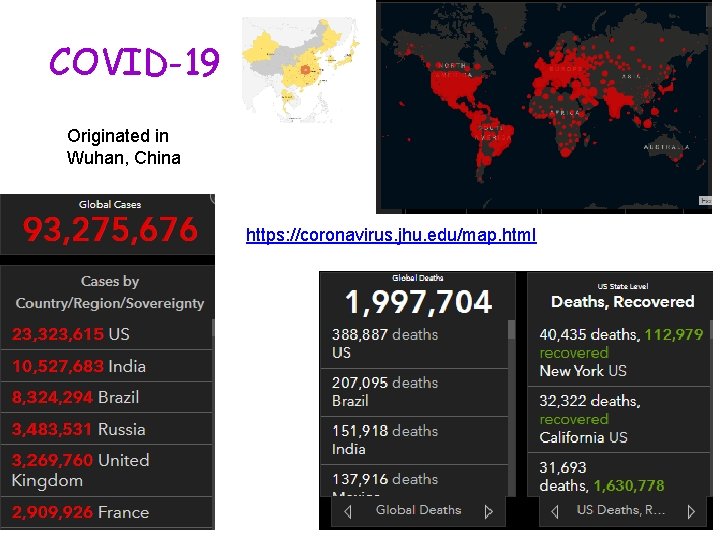
COVID-19 Originated in Wuhan, China https: //coronavirus. jhu. edu/map. html
Some COVID symptoms • Lungs: Inflammation, which damage lung cells and blood vessels. • Eye, Nose and Throat: Runny nose and conjunctivitis, • Heart: Inflammation of the heart lining, heart attacks and abnormal heart rhythms. • Nervous system: Loss of smell and taste; . seizures, strokes and hallucinations • Kidneys • Diarrhea
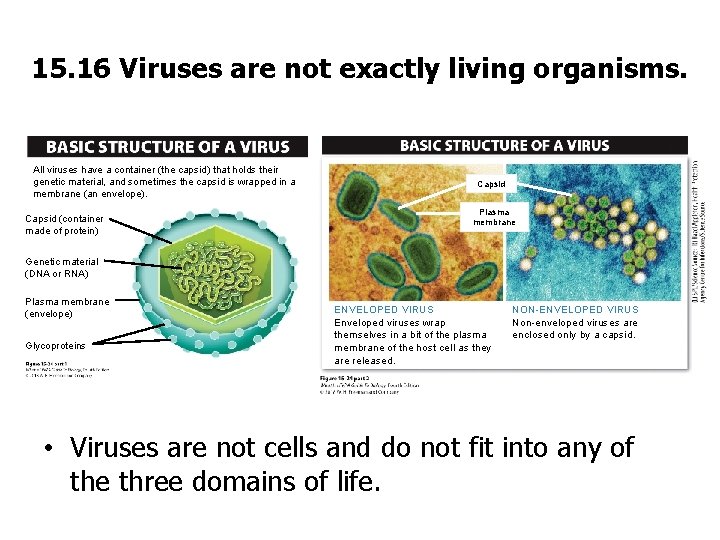
15. 16 Viruses are not exactly living organisms. All viruses have a container (the capsid) that holds their genetic material, and sometimes the capsid is wrapped in a membrane (an envelope). Capsid (container made of protein) Capsid Plasma membrane Genetic material (DNA or RNA) Plasma membrane (envelope) Glycoproteins ENVELOPED VIRUS Enveloped viruses wrap themselves in a bit of the plasma membrane of the host cell as they are released. NON-ENVELOPED VIRUS Non-enveloped viruses are enclosed only by a capsid. • Viruses are not cells and do not fit into any of the three domains of life.
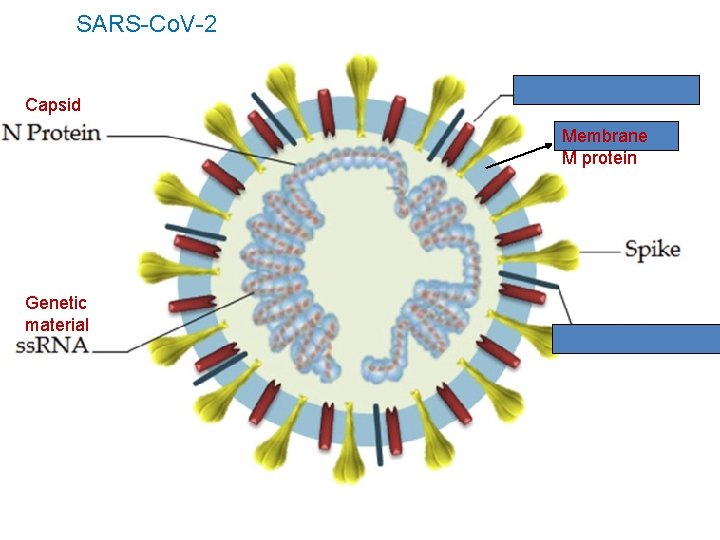
SARS-Co. V-2 Capsid Membrane M protein Genetic material
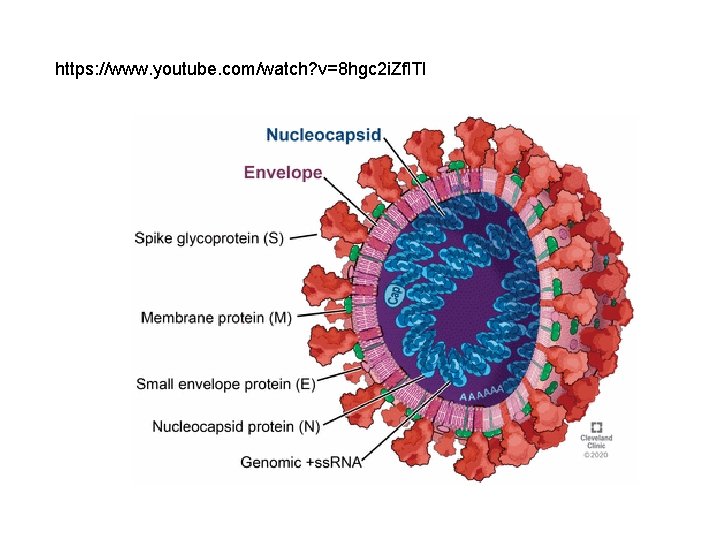
https: //www. youtube. com/watch? v=8 hgc 2 i. Zfl. TI
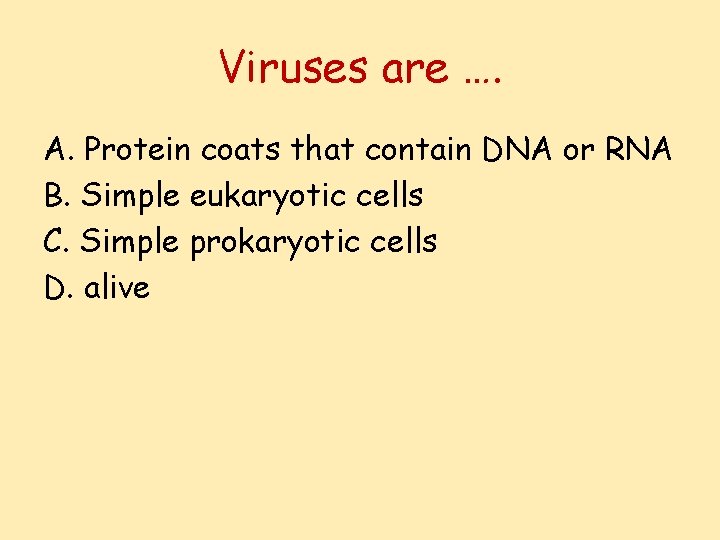
Viruses are …. A. Protein coats that contain DNA or RNA B. Simple eukaryotic cells C. Simple prokaryotic cells D. alive
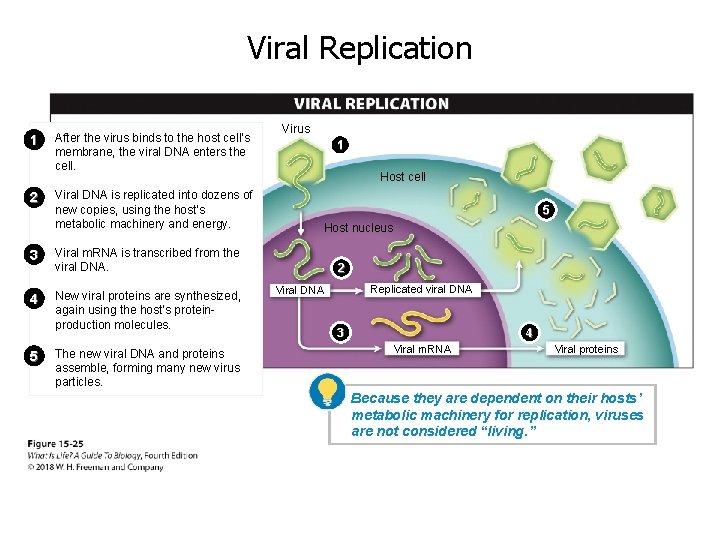
Viral Replication 1 2 After the virus binds to the host cell’s membrane, the viral DNA enters the cell. Viral DNA is replicated into dozens of new copies, using the host’s metabolic machinery and energy. 3 Viral m. RNA is transcribed from the viral DNA. 4 New viral proteins are synthesized, again using the host’s proteinproduction molecules. 5 The new viral DNA and proteins assemble, forming many new virus particles. Virus 1 Host cell 5 Host nucleus 2 Replicated viral DNA Viral DNA 3 4 Viral m. RNA Viral proteins Because they are dependent on their hosts’ metabolic machinery for replication, viruses are not considered “living. ”
Other Types of Non-Living Infectious Agents • Prions are misfolded proteins. – Usually acquired through ingestion of an infected animal – Cause degenerative neurological diseases in humans – Creutzfeldt-Jakob disease – “Mad cow disease” – No known cure or treatment
Take Home Message 15. 16 q. A virus is not alive, but it can carry out some of the same functions as living organisms if it can get inside a cell. q. A virus takes over the protein-making machinery of the host cell to produce more viral genetic material (RNA or DNA) and protein. q The viral proteins and genetic material are assembled into new virus particles and released from the cell.
15. 17 Viruses are responsible for many health problems. • Many diseases are caused by viruses. – Influenza – HIV/AIDS – Common cold – Herpes • DNA viruses – Vaccines may be developed to fight infection. • RNA viruses – Mutate rapidly
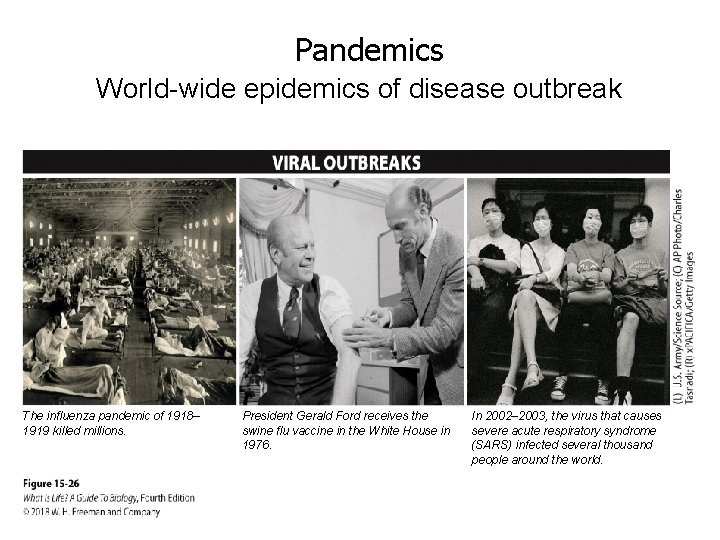
Pandemics World-wide epidemics of disease outbreak The influenza pandemic of 1918– 1919 killed millions. President Gerald Ford receives the swine flu vaccine in the White House in 1976. In 2002– 2003, the virus that causes severe acute respiratory syndrome (SARS) infected several thousand people around the world.
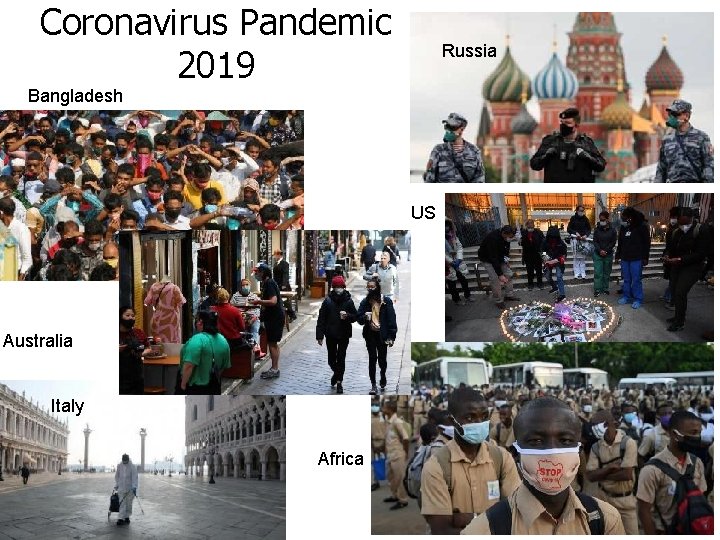
Coronavirus Pandemic 2019 Russia Bangladesh US Australia Italy Africa
Take Home Message 15. 17 q Many diseases are caused by viruses. q DNA viruses are relatively stable, because DNA-replicating enzymes check for errors and correct them during replication. q RNA viruses change quickly, however, because RNA replication enzymes do not have error-checking mechanisms.
Viruses that have ___ as their genetic material make vaccination futile. A. Glycoproteins B. Reverse transcriptase C. DNA D. RNA
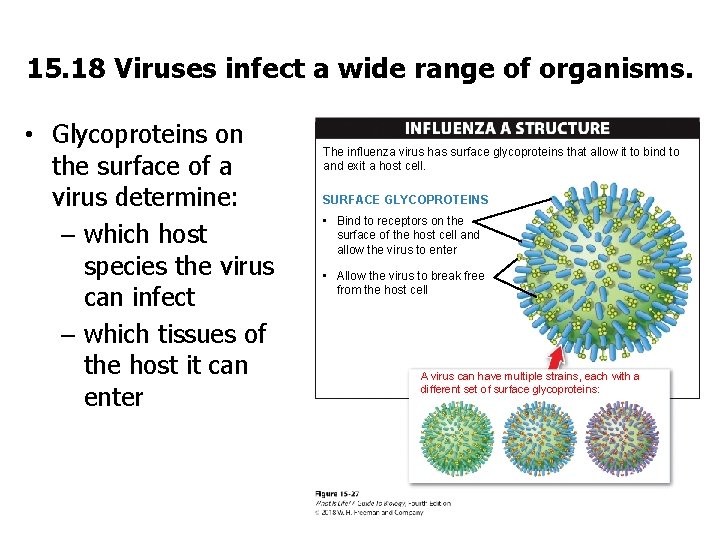
15. 18 Viruses infect a wide range of organisms. • Glycoproteins on the surface of a virus determine: – which host species the virus can infect – which tissues of the host it can enter The influenza virus has surface glycoproteins that allow it to bind to and exit a host cell. SURFACE GLYCOPROTEINS • Bind to receptors on the surface of the host cell and allow the virus to enter • Allow the virus to break free from the host cell A virus can have multiple strains, each with a different set of surface glycoproteins:
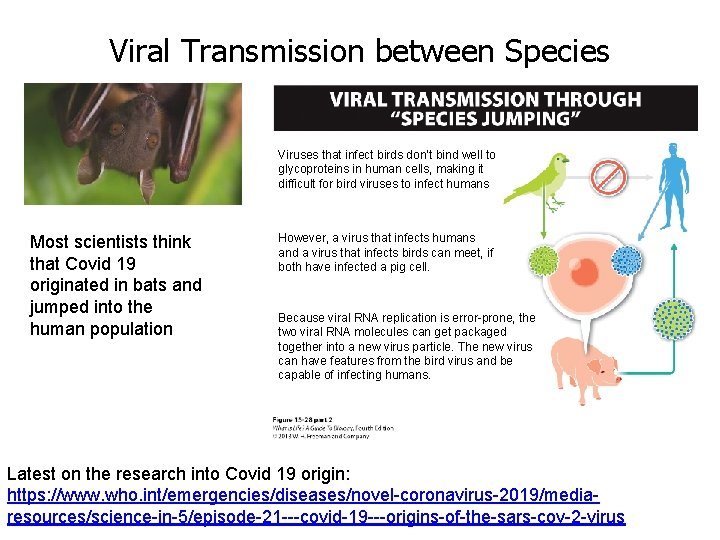
Viral Transmission between Species Viruses that infect birds don’t bind well to glycoproteins in human cells, making it difficult for bird viruses to infect humans Most scientists think that Covid 19 originated in bats and jumped into the human population However, a virus that infects humans and a virus that infects birds can meet, if both have infected a pig cell. Because viral RNA replication is error-prone, the two viral RNA molecules can get packaged together into a new virus particle. The new virus can have features from the bird virus and be capable of infecting humans. Latest on the research into Covid 19 origin: https: //www. who. int/emergencies/diseases/novel-coronavirus-2019/mediaresources/science-in-5/episode-21 ---covid-19 ---origins-of-the-sars-cov-2 -virus
Take Home Message 15. 18 q Glycoproteins on the surfaces of viruses determine the types of cells a virus can invade. q Most viruses infect just one species, or only a few closely related species, and enter only one kind of cell in that species.
If the bird flu virus can enter a pig cell, then the pig cell must have ____ that allow the bird flu virus to enter the cell. A. Cell membrane B. Capsid C. Glycoproteins D. All of the above
15. 19 HIV illustrates the difficulty of controlling infectious viruses. • Human immunodeficiency virus (HIV) • Acquired immunodeficiency syndrome (AIDS) – HIV causes AIDS • HIV has hallmark qualities that make viral diseases hard to control.
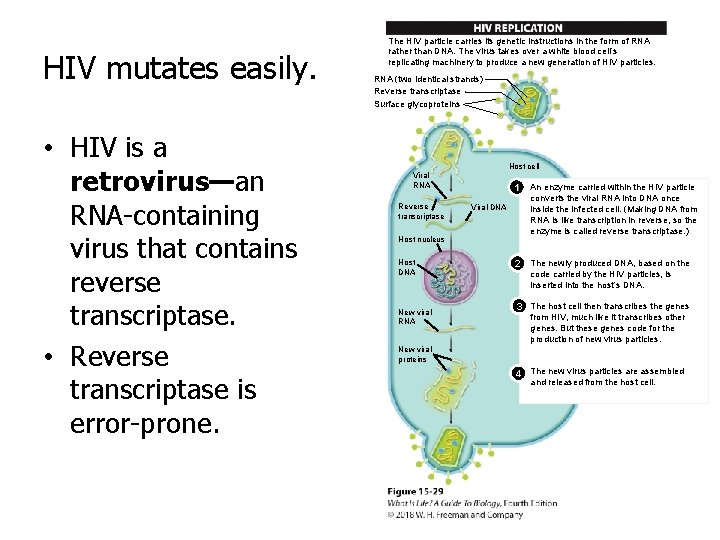
HIV mutates easily. • HIV is a retrovirus—an RNA-containing virus that contains reverse transcriptase. • Reverse transcriptase is error-prone. The HIV particle carries its genetic instructions in the form of RNA rather than DNA. The virus takes over a white blood cell’s replicating machinery to produce a new generation of HIV particles. RNA (two identical strands) Reverse transcriptase Surface glycoproteins Host cell Viral RNA Reverse transcriptase Host nucleus Host DNA New viral RNA 1 Viral DNA An enzyme carried within the HIV particle converts the viral RNA into DNA once inside the infected cell. (Making DNA from RNA is like transcription in reverse, so the enzyme is called reverse transcriptase. ) 2 The newly produced DNA, based on the code carried by the HIV particles, is inserted into the host’s DNA. 3 The host cell then transcribes the genes from HIV, much like it transcribes other genes. But these genes code for the production of new virus particles. New viral proteins 4 The new virus particles are assembled and released from the host cell.
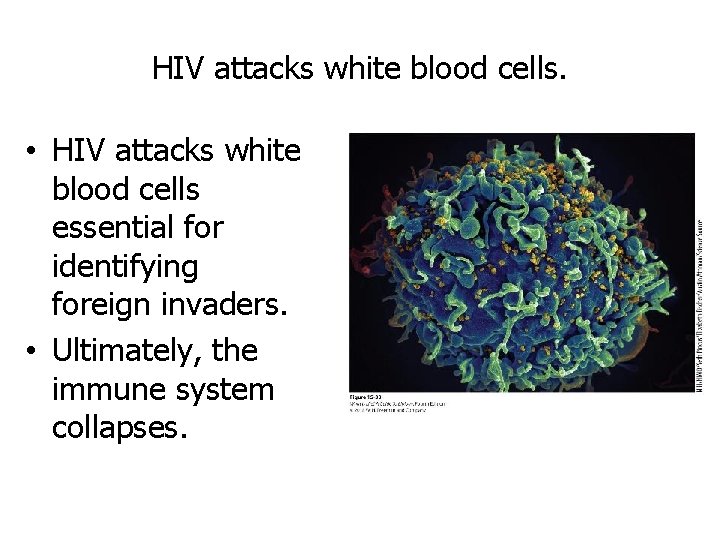
HIV attacks white blood cells. • HIV attacks white blood cells essential for identifying foreign invaders. • Ultimately, the immune system collapses.
Take Home Message 15. 19 q HIV is especially difficult to control. q Mutations change the properties of the retrovirus so that it is hard for the immune system to recognize it, and they produce variants that are resistant to the drugs being used to treat the HIV infection.
Which of the below statements is correct? A. All viruses are retroviruses B. All DNA viruses are retroviruses C. All RNA viruses are retroviruses D. All retroviruses are RNA viruses E. Retroviruses lack both RNA and DNA
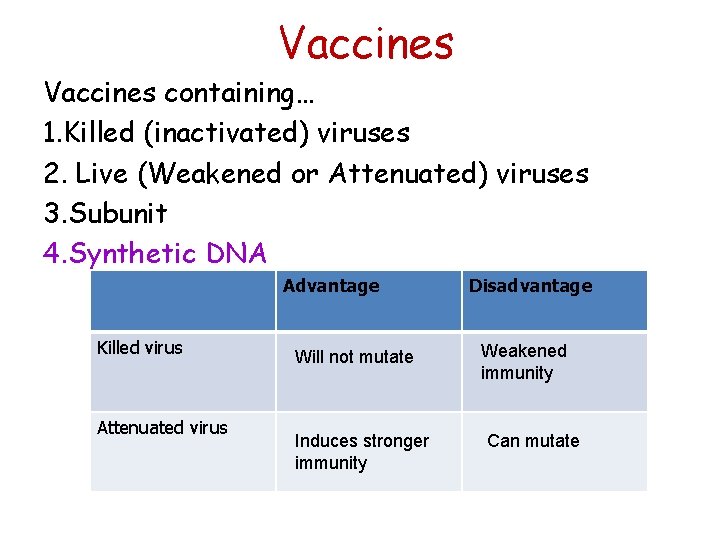
Vaccines containing… 1. Killed (inactivated) viruses 2. Live (Weakened or Attenuated) viruses 3. Subunit 4. Synthetic DNA Advantage Killed virus Attenuated virus Will not mutate Induces stronger immunity Disadvantage Weakened immunity Can mutate
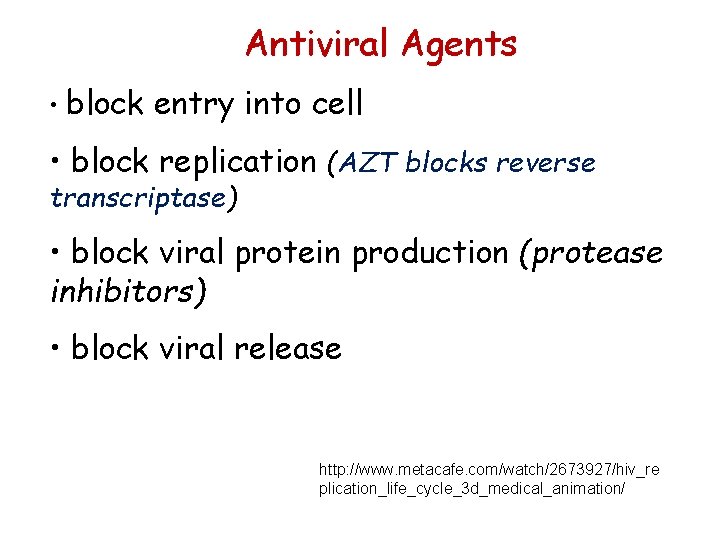
Antiviral Agents • block entry into cell • block replication (AZT blocks reverse transcriptase) • block viral protein production (protease inhibitors) • block viral release http: //www. metacafe. com/watch/2673927/hiv_re plication_life_cycle_3 d_medical_animation/
- Slides: 26