
Learning Objectives Identify various microscope parts and state
Learning Objectives • Identify various microscope parts and state the function for each part. • Demonstrate the proper way to carry a microscope.

Microscope Notes

Robert Hooke (1665) Described the cellular structure of cork. First to describe the structures as “cells”
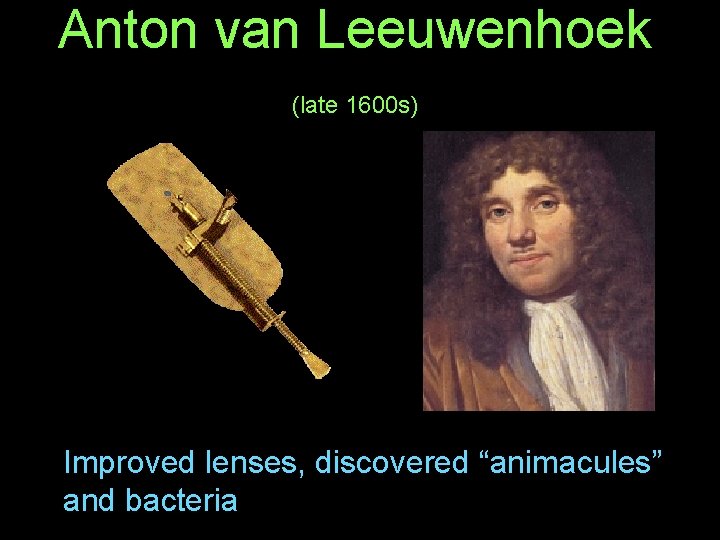
Anton van Leeuwenhoek (late 1600 s) Improved lenses, discovered “animacules” and bacteria

Matthias Schleiden (1838) Discovered that plant parts are made of cells
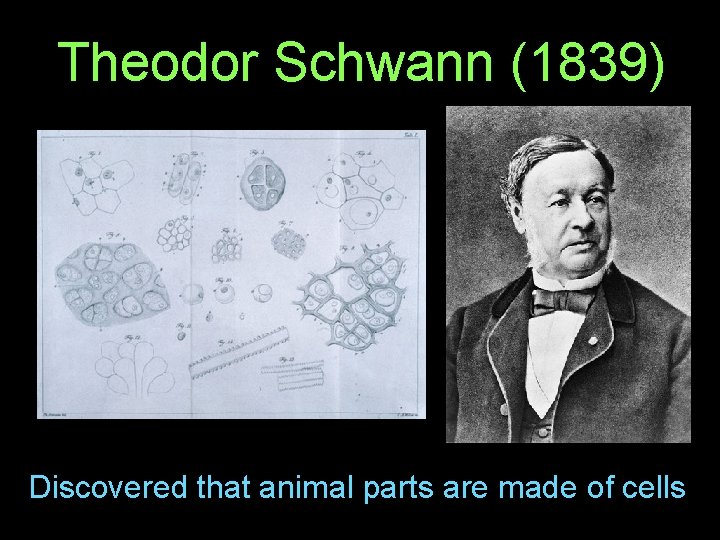
Theodor Schwann (1839) Discovered that animal parts are made of cells
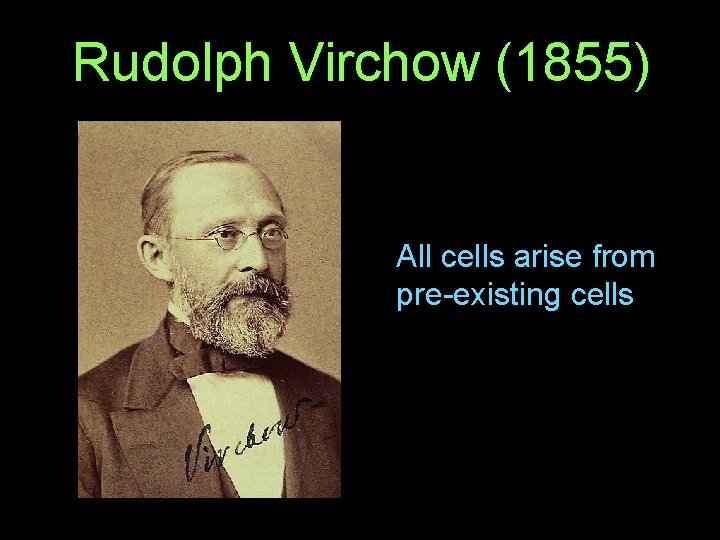
Rudolph Virchow (1855) All cells arise from pre-existing cells
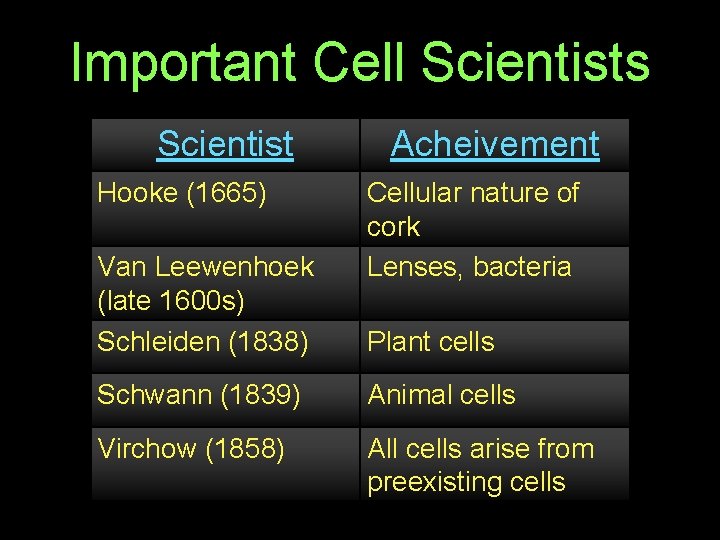
Important Cell Scientists Scientist Hooke (1665) Van Leewenhoek (late 1600 s) Schleiden (1838) Acheivement Cellular nature of cork Lenses, bacteria Plant cells Schwann (1839) Animal cells Virchow (1858) All cells arise from preexisting cells
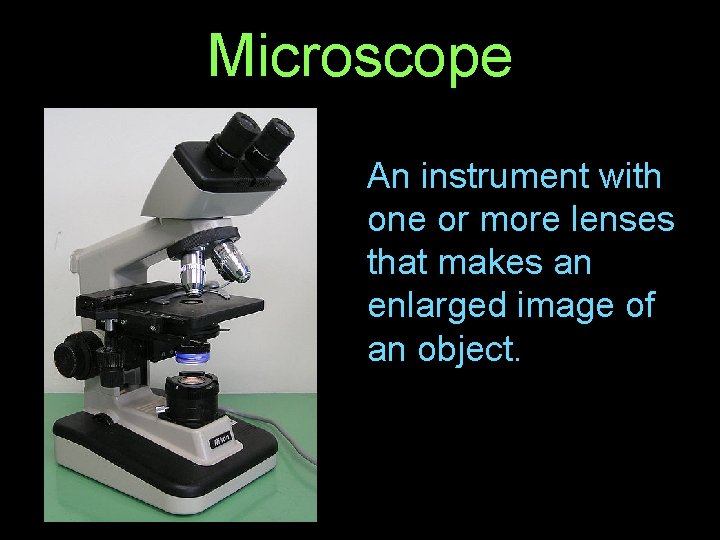
Microscope An instrument with one or more lenses that makes an enlarged image of an object.
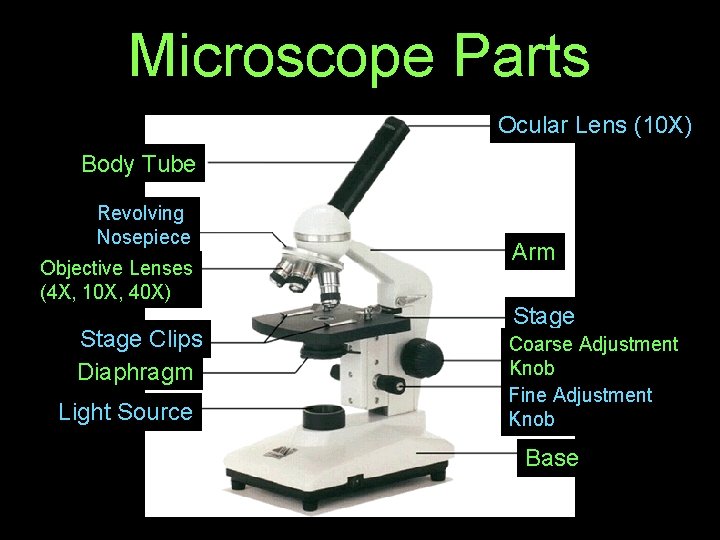
Microscope Parts Ocular Lens (10 X) Body Tube Revolving Nosepiece Objective Lenses (4 X, 10 X, 40 X) Stage Clips Diaphragm Light Source Arm Stage Coarse Adjustment Knob Fine Adjustment Knob Base

Demo How to Carry a Microscope
You. Tube Video How to Focus a Microscope
Steps for Focusing the Microscope 1. 2. 3. 4. 5. 6. 7. 8. 9. Place slide under the stage clips on stage Turn to lowest (4 X) objective lens Turn on light First, focus with coarse adjustment Second, focus with fine adjustment Change to middle (10 X) objective lens Repeat step 5 only Change to high (40 X) objective lens Focus with fine adjustment
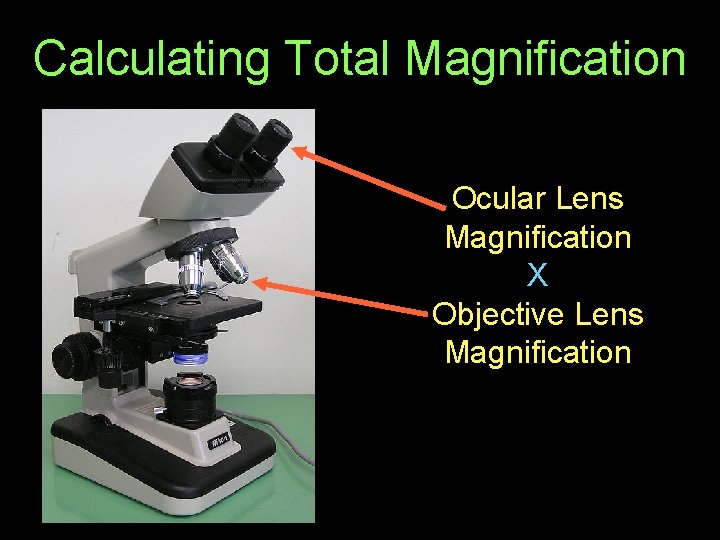
Calculating Total Magnification Ocular Lens Magnification X Objective Lens Magnification
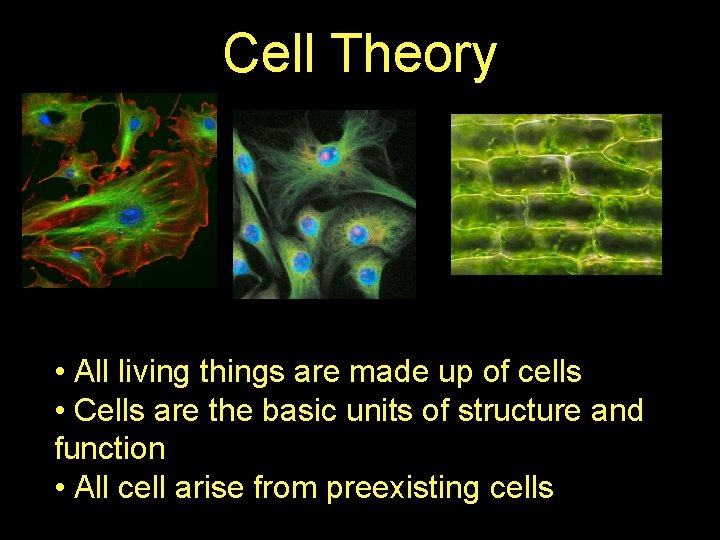
Cell Theory • All living things are made up of cells • Cells are the basic units of structure and function • All cell arise from preexisting cells

Stop Here
- Slides: 16