
Learning Objectives Define the terms scientific method hypothesis
Learning Objectives • Define the terms: scientific method, hypothesis, procedure, independent variable (IV), data, dependent variable (DV), materials, conclusion, control group, and variables.
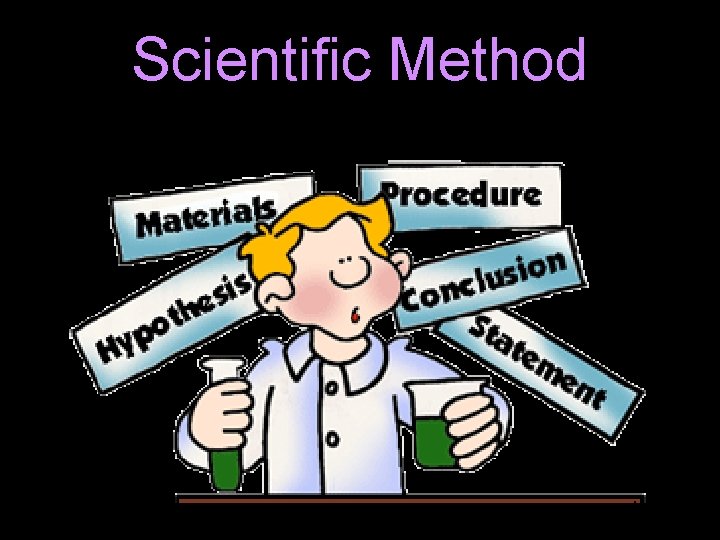
Scientific Method
Scientific Method The Scientific Method involves a series of steps that are used to investigate a natural occurrence.
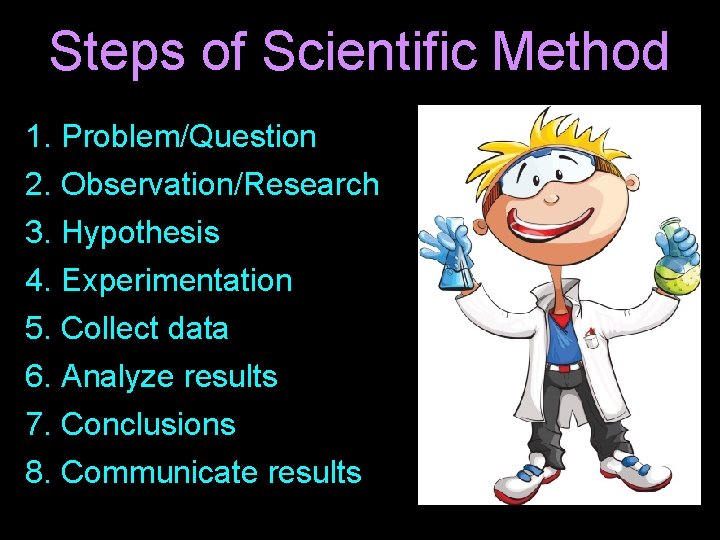
Steps of Scientific Method 1. Problem/Question 2. Observation/Research 3. Hypothesis 4. Experimentation 5. Collect data 6. Analyze results 7. Conclusions 8. Communicate results
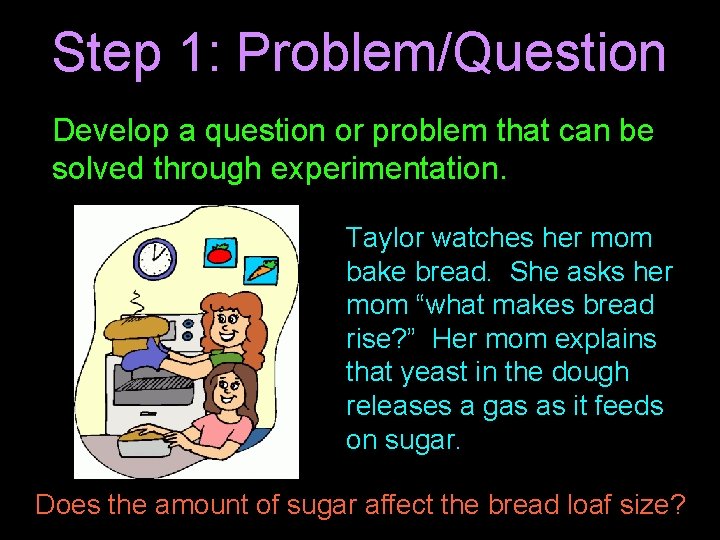
Step 1: Problem/Question Develop a question or problem that can be solved through experimentation. Taylor watches her mom bake bread. She asks her mom “what makes bread rise? ” Her mom explains that yeast in the dough releases a gas as it feeds on sugar. Does the amount of sugar affect the bread loaf size?
Step 2: Observation/Research Taylor researches the areas of baking and fermentation and tries to come up with a way to test her question.
Step 3: Formulate a Hypothesis A hypothesis is an educated guess about the relationship between IV and DV. After much research and thinking, Taylor comes up with a hypothesis: “If more sugar is added, then the bread will rise higher”
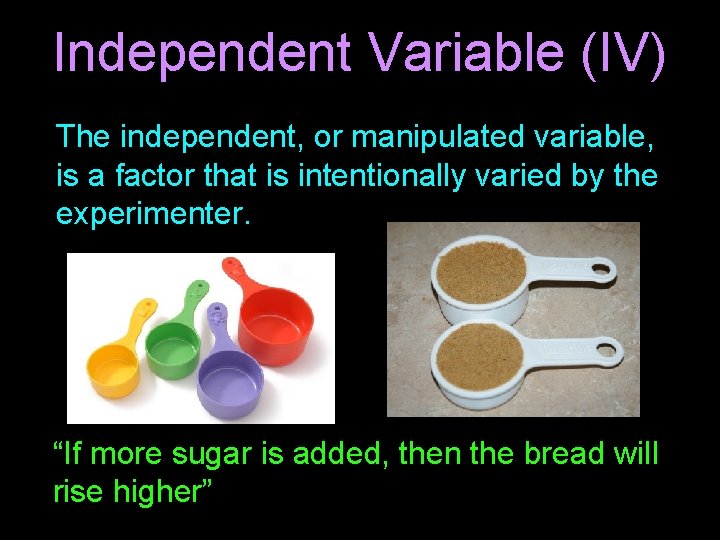
Independent Variable (IV) The independent, or manipulated variable, is a factor that is intentionally varied by the experimenter. “If more sugar is added, then the bread will rise higher”
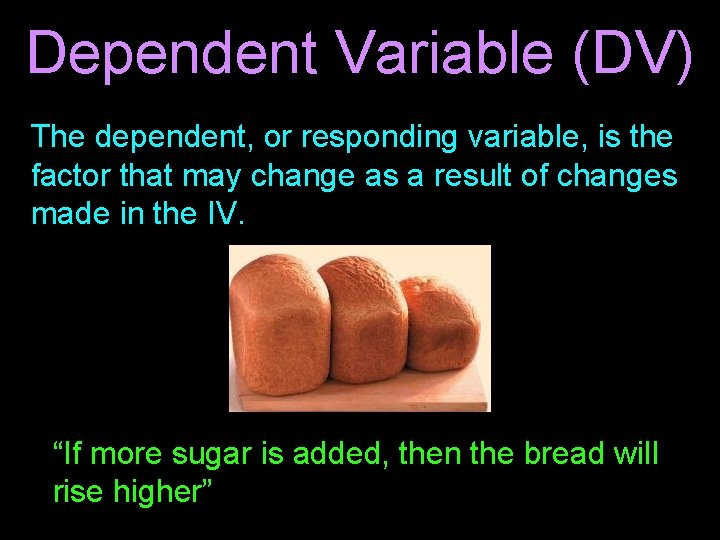
Dependent Variable (DV) The dependent, or responding variable, is the factor that may change as a result of changes made in the IV. “If more sugar is added, then the bread will rise higher”
Step 4: Experimentation Taylor creates a step by step procedure and list of needed materials. She determines her control group and constants. What are the control group and constants?
Control Group The control is the group that serves as the standard of comparison. The control group will be the amount of sugar usually added in the recipe. “If more sugar is added, then the bread will rise higher”
Constants The constants are all other factors in the experiment that remain the same so that any observed changes are due only to the IV. All other ingredients except the sugar Oven Rise time Baking time Brand of ingredients Oven temp. Type of pan used Location Name the constants in this experiment
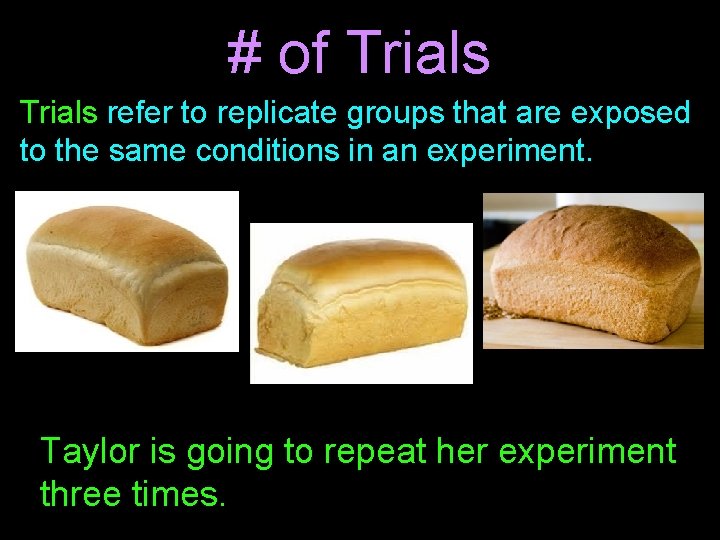
# of Trials refer to replicate groups that are exposed to the same conditions in an experiment. Taylor is going to repeat her experiment three times.
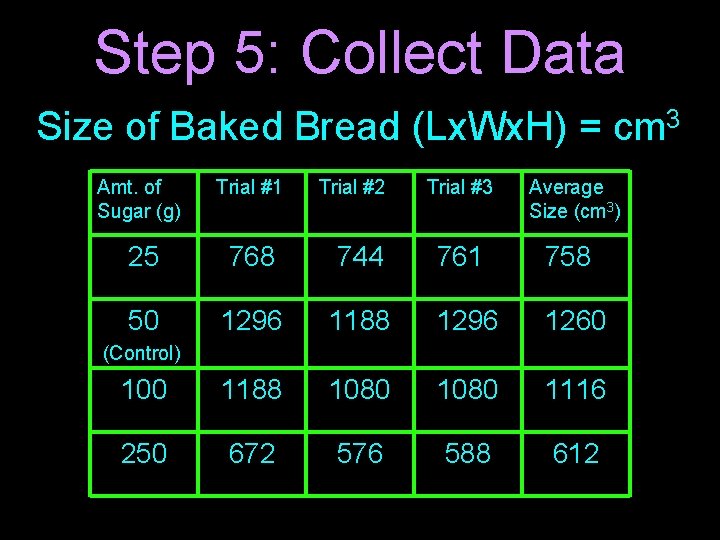
Step 5: Collect Data Size of Baked Bread (Lx. Wx. H) = cm 3 Amt. of Sugar (g) Trial #1 Trial #2 Trial #3 Average Size (cm 3) 25 768 744 761 758 50 1296 1188 1296 1260 100 1188 1080 1116 250 672 576 588 612 (Control)
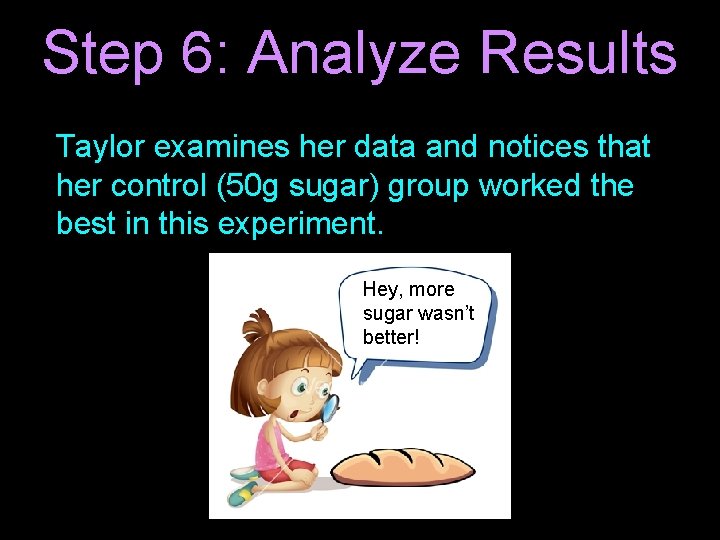
Step 6: Analyze Results Taylor examines her data and notices that her control (50 g sugar) group worked the best in this experiment. Hey, more sugar wasn’t better!
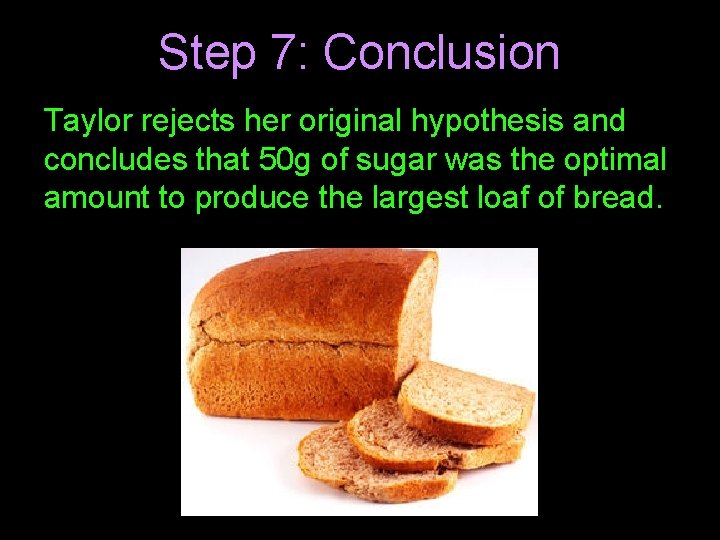
Step 7: Conclusion Taylor rejects her original hypothesis and concludes that 50 g of sugar was the optimal amount to produce the largest loaf of bread.
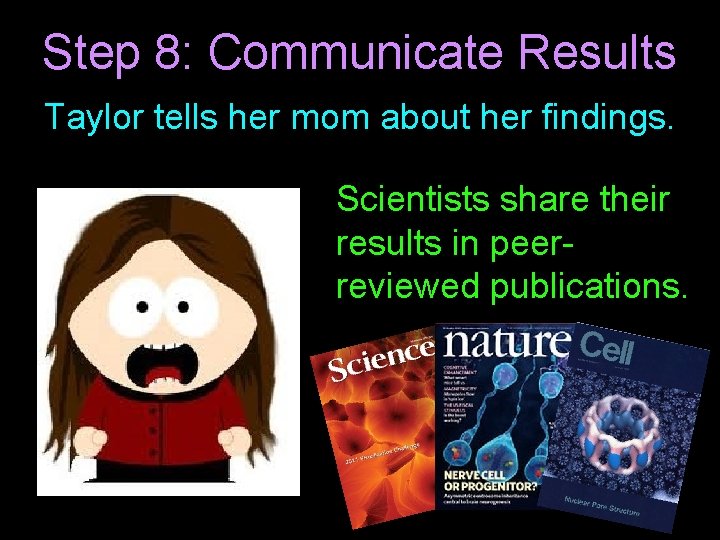
Step 8: Communicate Results Taylor tells her mom about her findings. Scientists share their results in peerreviewed publications.

Stop Here
Now it’s Your Turn to Design an Experiment Using the Scientific Method
- Slides: 19