
Learning Objectives By the end of the lesson
Learning Objectives By the end of the lesson you will be able: • Describe the formation of igneous, metamorphic and sedimentary rocks. 23 November 2020
Starter What do you know about different types of rocks? 23 November 2020
Starter There are 3 different types. 23/11/2020
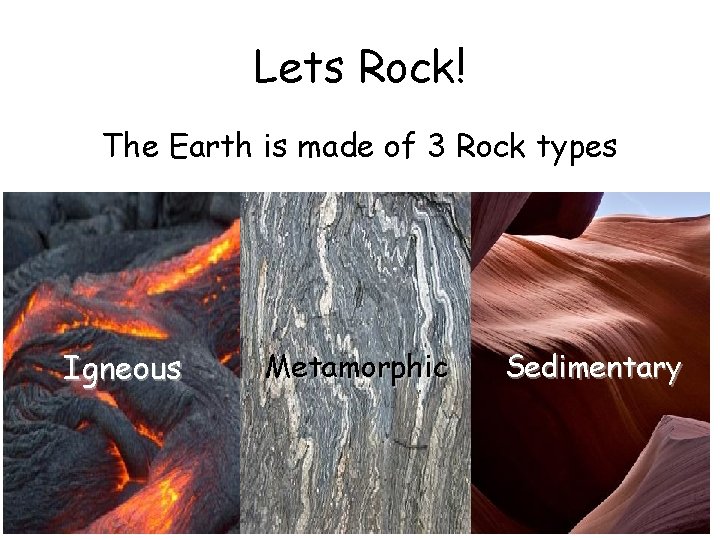
Lets Rock! The Earth is made of 3 Rock types Igneous Metamorphic Sedimentary
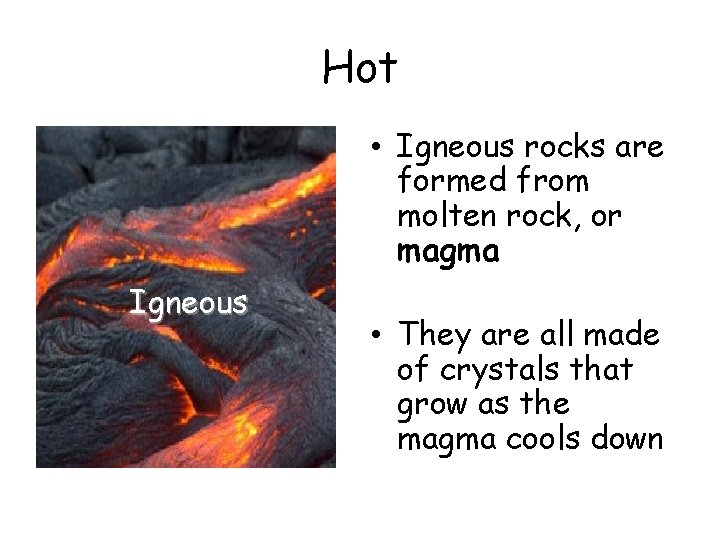
Hot • Igneous rocks are formed from molten rock, or magma Igneous • They are all made of crystals that grow as the magma cools down
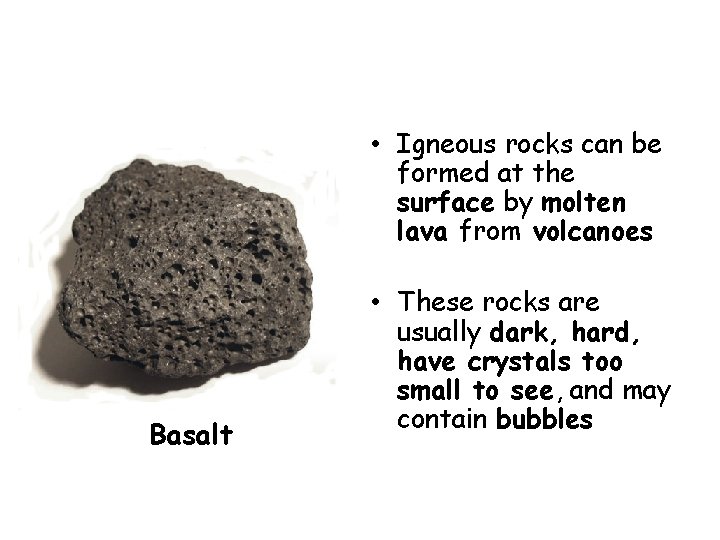
• Igneous rocks can be formed at the surface by molten lava from volcanoes Basalt • These rocks are usually dark, hard, have crystals too small to see, and may contain bubbles
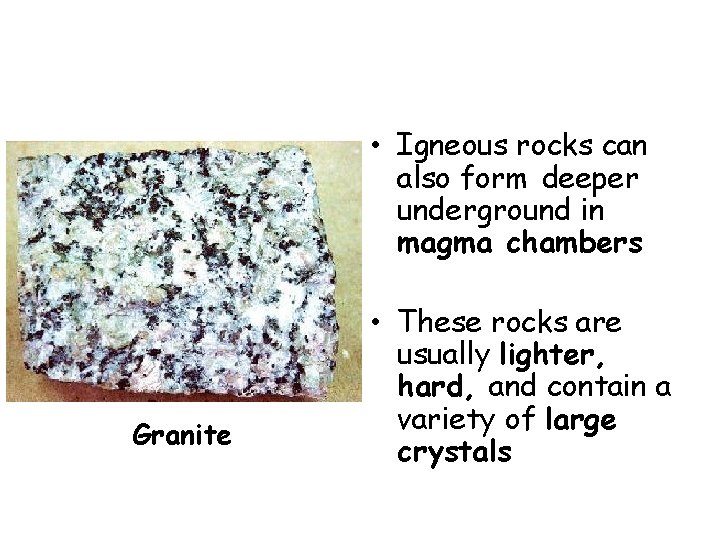
• Igneous rocks can also form deeper underground in magma chambers Granite • These rocks are usually lighter, hard, and contain a variety of large crystals
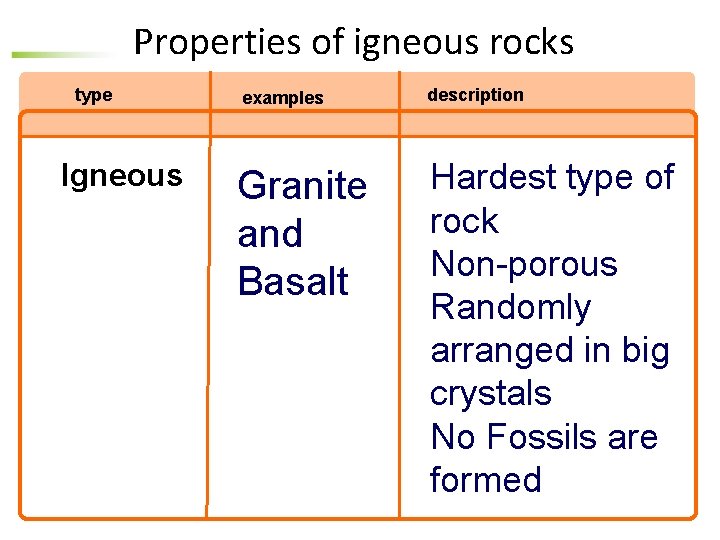
Properties of igneous rocks type Igneous examples Granite and Basalt description Hardest type of rock Non-porous Randomly arranged in big crystals No Fossils are formed
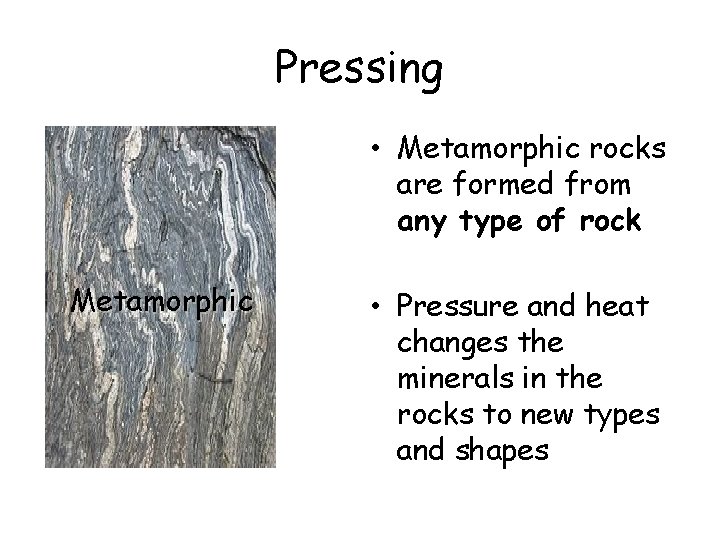
Pressing • Metamorphic rocks are formed from any type of rock Metamorphic • Pressure and heat changes the minerals in the rocks to new types and shapes
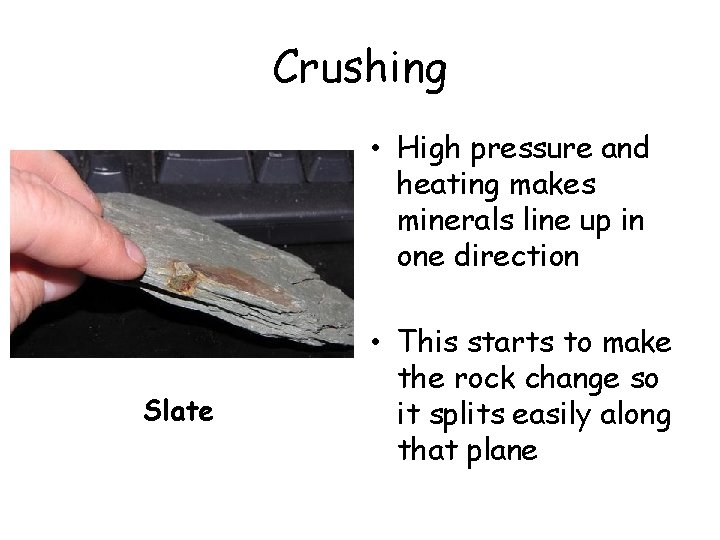
Crushing • High pressure and heating makes minerals line up in one direction Slate • This starts to make the rock change so it splits easily along that plane
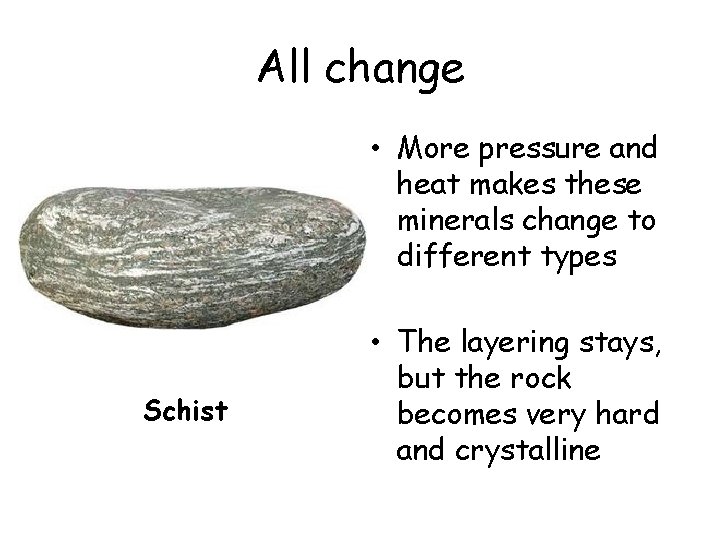
All change • More pressure and heat makes these minerals change to different types Schist • The layering stays, but the rock becomes very hard and crystalline
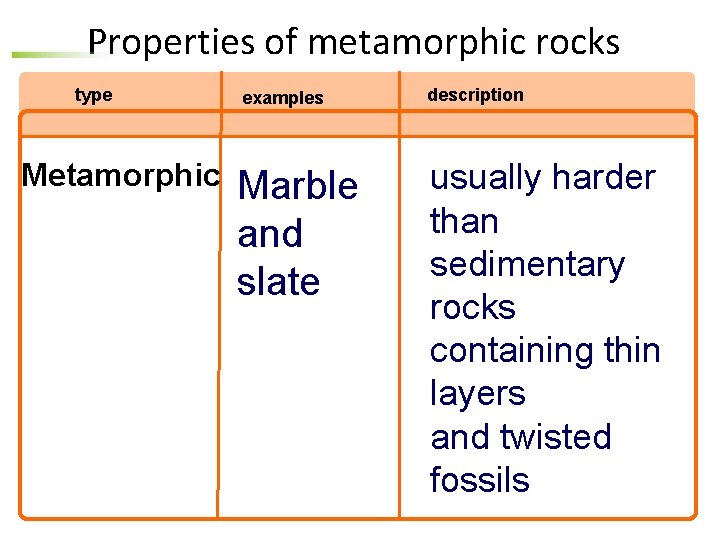
Properties of metamorphic rocks type Metamorphic examples Marble and slate description usually harder than sedimentary rocks containing thin layers and twisted fossils
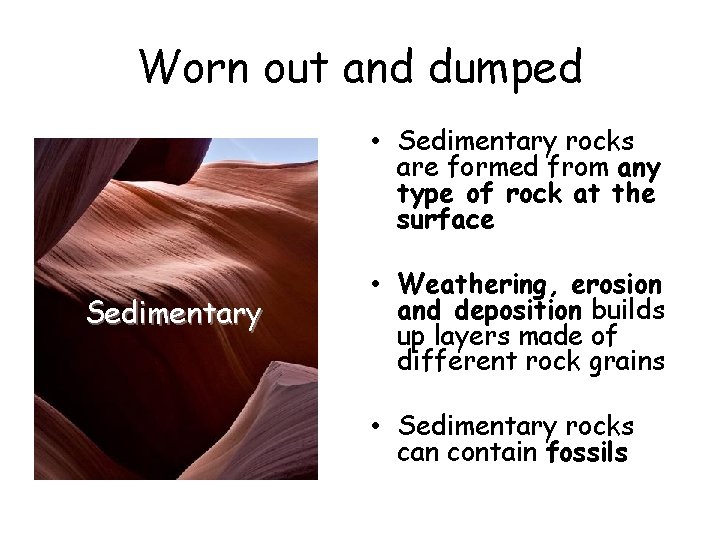
Worn out and dumped • Sedimentary rocks are formed from any type of rock at the surface Sedimentary • Weathering, erosion and deposition builds up layers made of different rock grains • Sedimentary rocks can contain fossils

Properties of Sedimentary rocks type examples description Sedimentary sandstone 1. The softest rock type and limestone 2. Contain layers 3. Sometimes have fossils trapped within them. 4. Made from small grains weakly held together so rocks are often porous
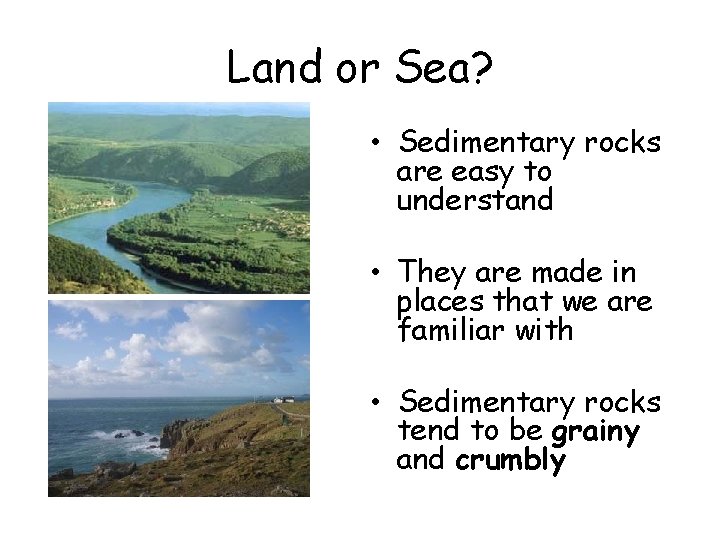
Land or Sea? • Sedimentary rocks are easy to understand • They are made in places that we are familiar with • Sedimentary rocks tend to be grainy and crumbly
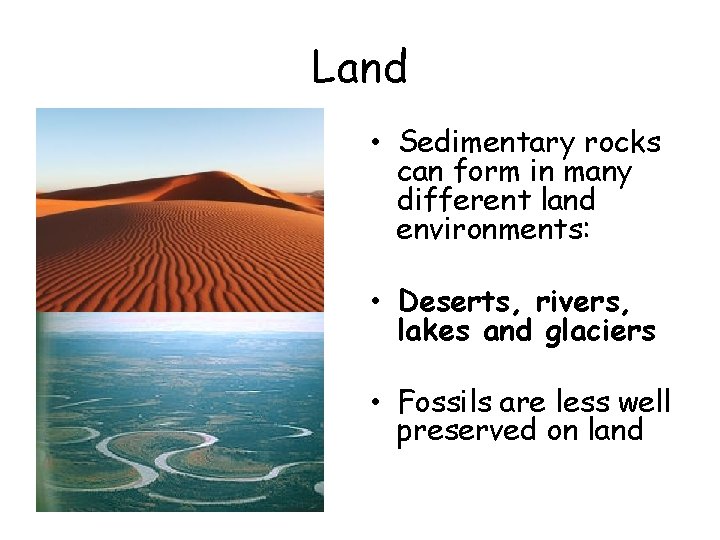
Land • Sedimentary rocks can form in many different land environments: • Deserts, rivers, lakes and glaciers • Fossils are less well preserved on land
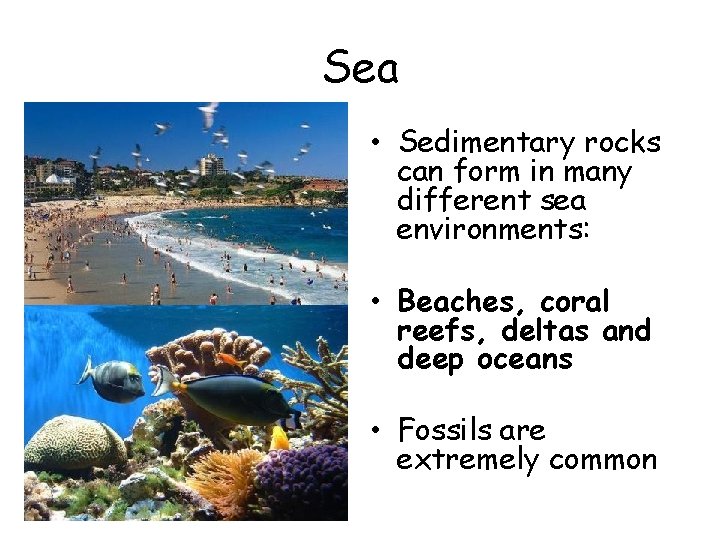
Sea • Sedimentary rocks can form in many different sea environments: • Beaches, coral reefs, deltas and deep oceans • Fossils are extremely common
Main Tasks • Complete the worksheet about different types of rocks 23 November 2020
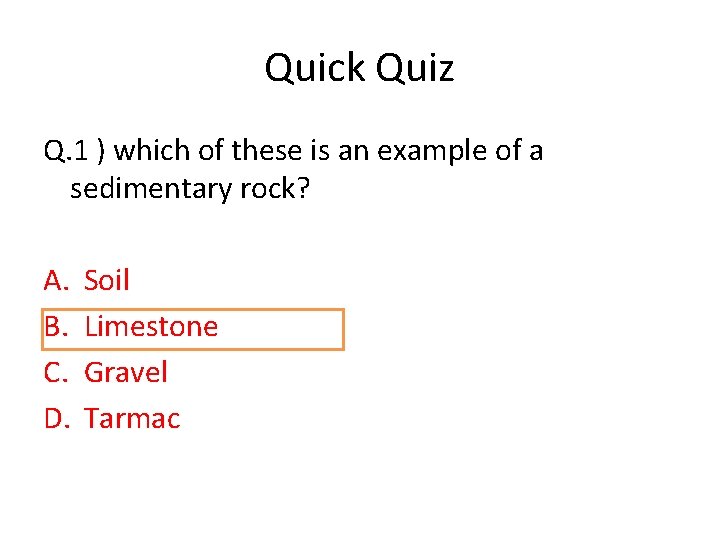
Quick Quiz Q. 1 ) which of these is an example of a sedimentary rock? A. B. C. D. Soil Limestone Gravel Tarmac
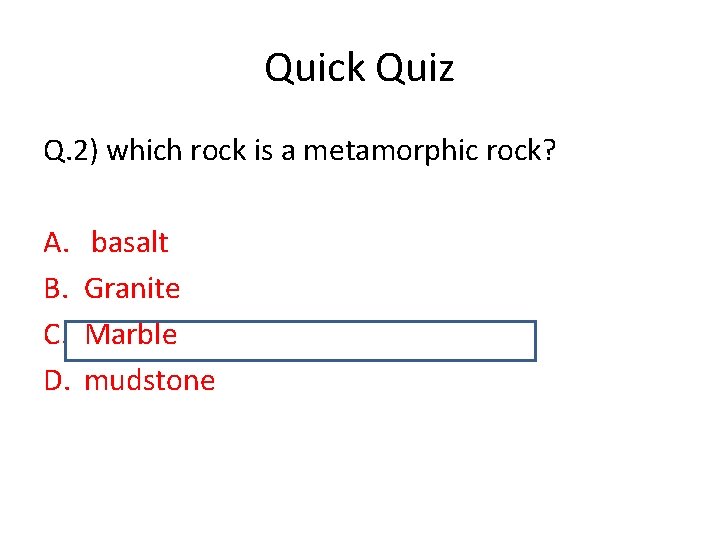
Quick Quiz Q. 2) which rock is a metamorphic rock? A. B. C. D. basalt Granite Marble mudstone
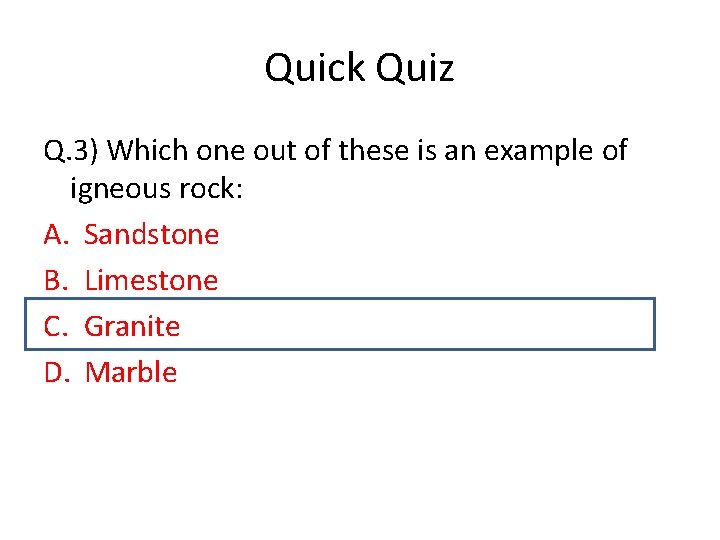
Quick Quiz Q. 3) Which one out of these is an example of igneous rock: A. Sandstone B. Limestone C. Granite D. Marble
Quick Quiz Q. 4) How is igneous rock formed? A. Molten Magma cools and solidifies B. Weathering C. Erosion by weathering D. Extreme pressure and temperature
Quick Quiz Q. 5) Which of these is the most porous type of rock? A. Metamorphic B. Igneous C. Sedimentary
- Slides: 23