
Learning Objectives By the end of the lesson
Learning Objectives • By the end of the lesson I will be able to: • 1) Understand the process of electrolysis. • 2) Explain how we can use electrolysis to splitting water to produce hydrogen.
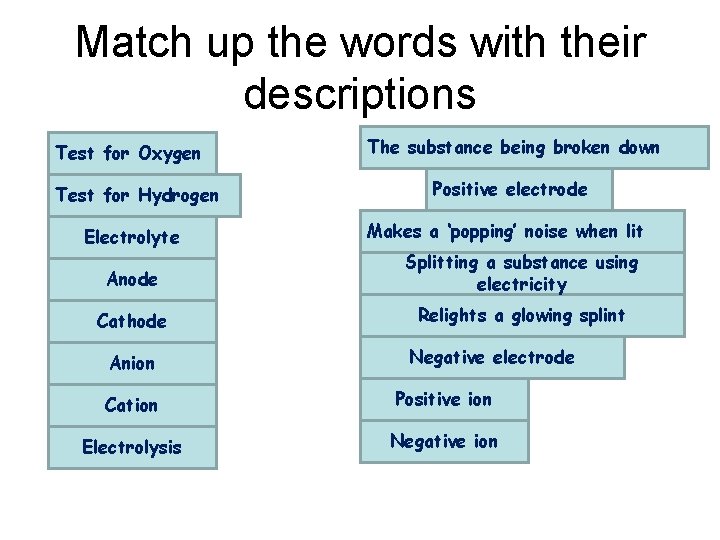
Match up the words with their descriptions Test for Oxygen The substance being broken down Test for Hydrogen Positive electrode Electrolyte Makes a ‘popping’ noise when lit Anode Splitting a substance using electricity Cathode Relights a glowing splint Anion Negative electrode Cation Positive ion Electrolysis Negative ion
Electrolysis is splitting up substances using electricity (Lysis is latin for splitting)
What is electrolysis? • Electric current is used to breakdown a substance made up of ions • An electrolyte is the name for the substance being broken down
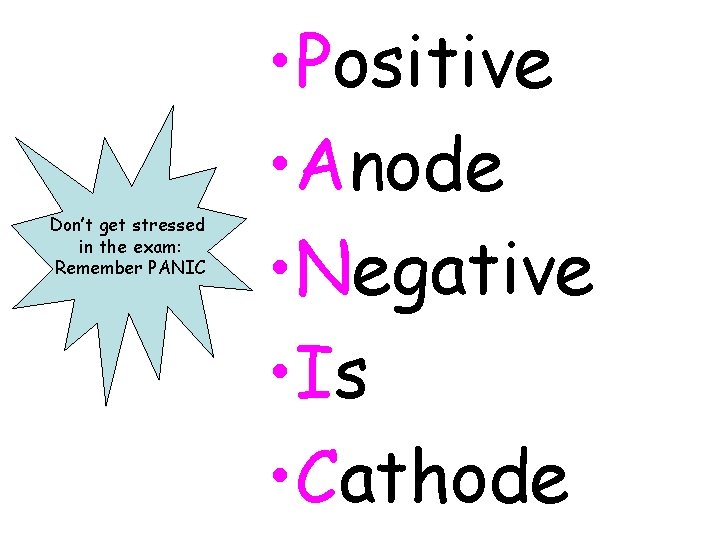
Don’t get stressed in the exam: Remember PANIC • Positive • Anode • Negative • Is • Cathode
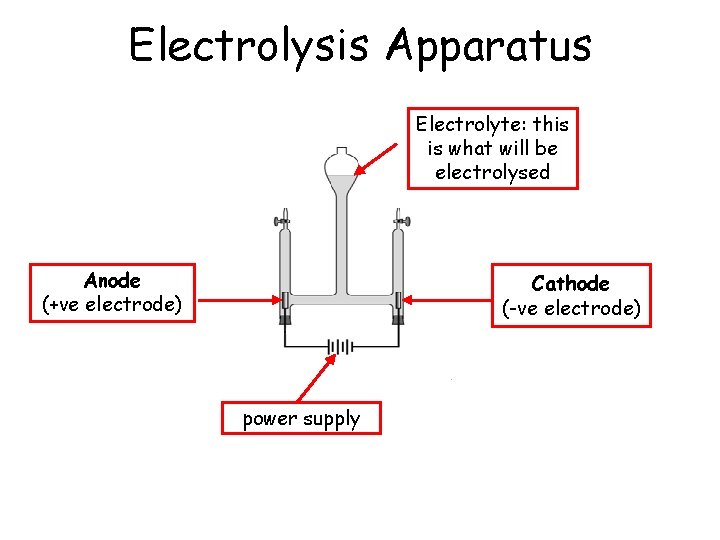
Electrolysis Apparatus Electrolyte: this is what will be electrolysed Anode (+ve electrode) Cathode (-ve electrode) power supply
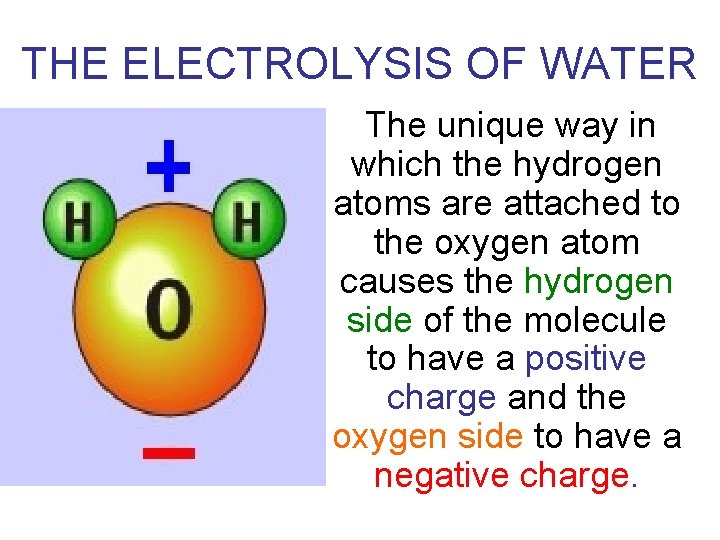
THE ELECTROLYSIS OF WATER The unique way in which the hydrogen atoms are attached to the oxygen atom causes the hydrogen side of the molecule to have a positive charge and the oxygen side to have a negative charge.
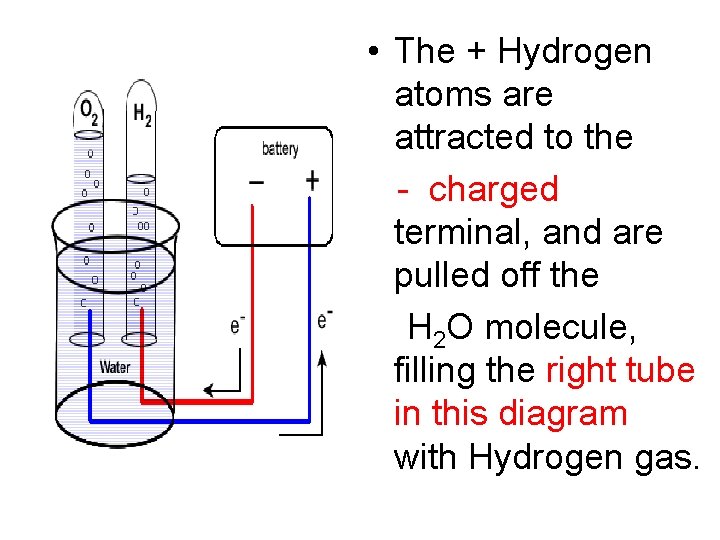
• The + Hydrogen atoms are attracted to the - charged terminal, and are pulled off the H 2 O molecule, filling the right tube in this diagram with Hydrogen gas.
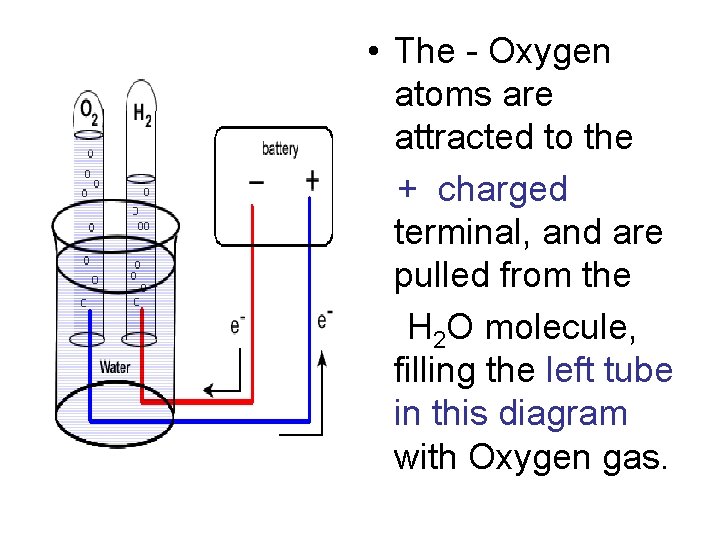
• The - Oxygen atoms are attracted to the + charged terminal, and are pulled from the H 2 O molecule, filling the left tube in this diagram with Oxygen gas.
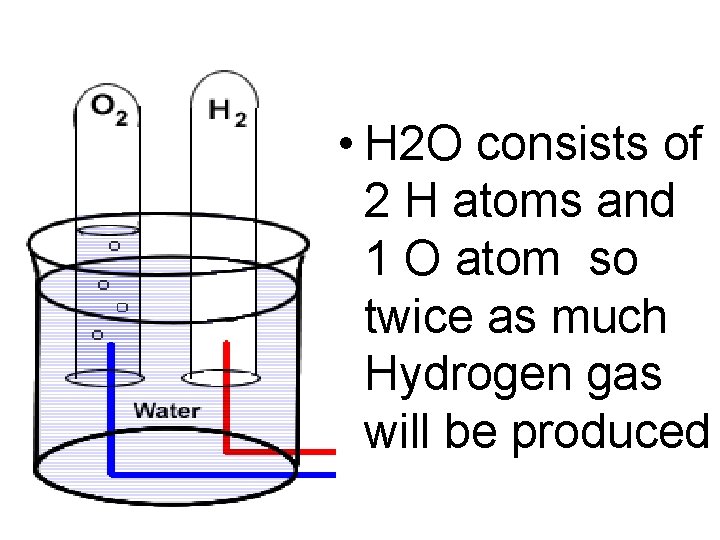
• H 2 O consists of 2 H atoms and 1 O atom so twice as much Hydrogen gas will be produced
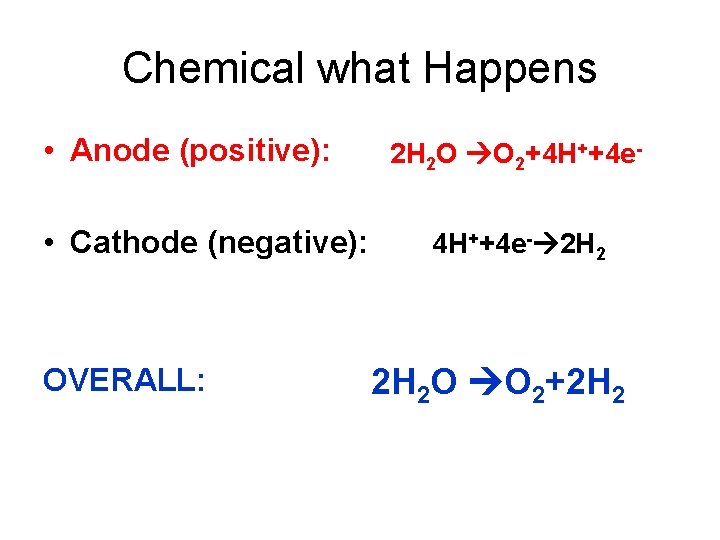
Chemical what Happens • Anode (positive): • Cathode (negative): OVERALL: 2 H 2 O O 2+4 H++4 e- 2 H 2 O O 2+2 H 2
Electrolysis of Water • http: //www. youtube. com/watch? v=Vn. YSw 349 qv. M
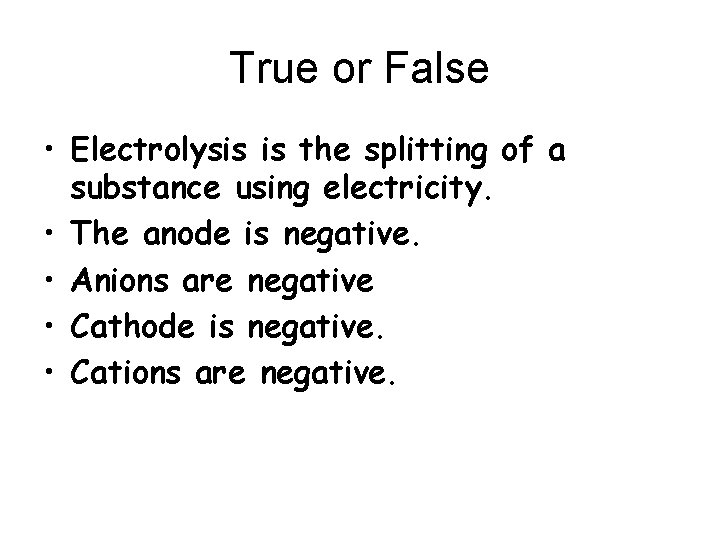
True or False • Electrolysis is the splitting of a substance using electricity. • The anode is negative. • Anions are negative • Cathode is negative. • Cations are negative.
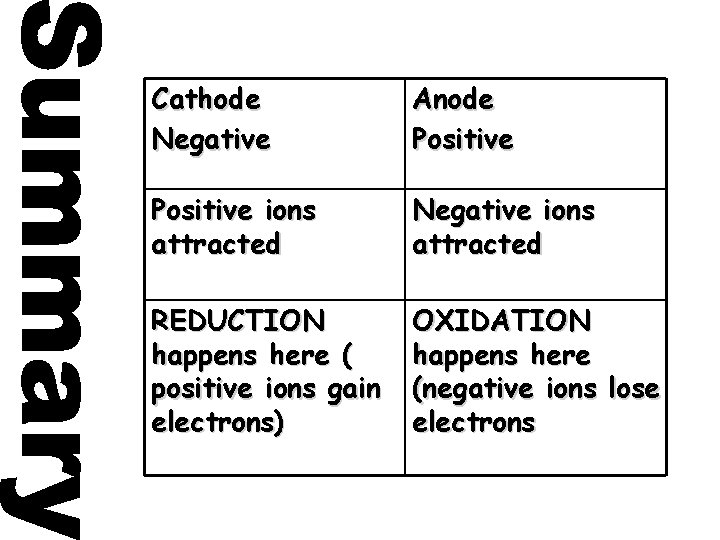
Cathode Negative Anode Positive ions attracted Negative ions attracted REDUCTION happens here ( positive ions gain electrons) OXIDATION happens here (negative ions lose electrons
Uses of Electrolysis
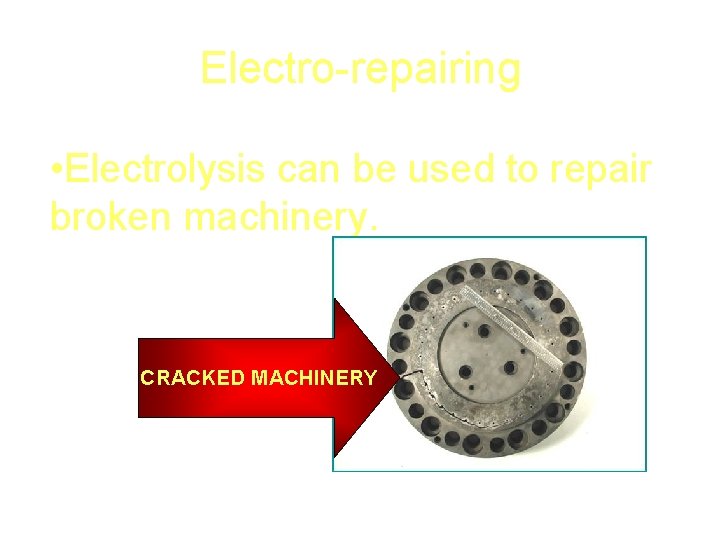
Electro-repairing • Electrolysis can be used to repair broken machinery. CRACKED MACHINERY
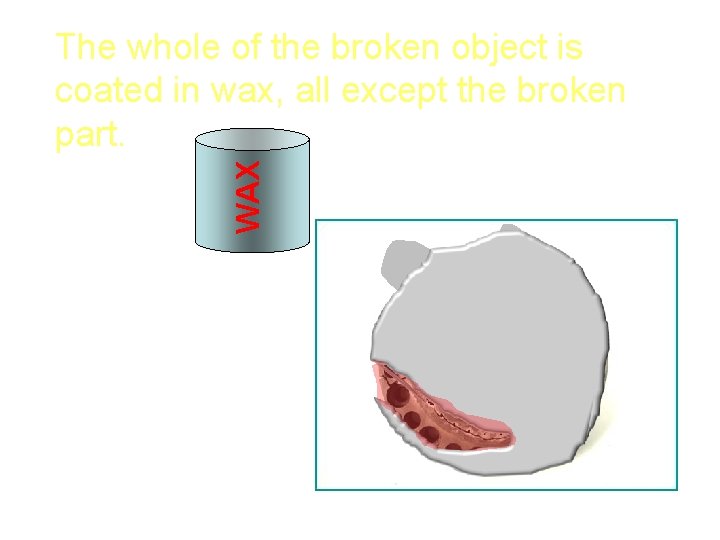
WAX The whole of the broken object is coated in wax, all except the broken part.
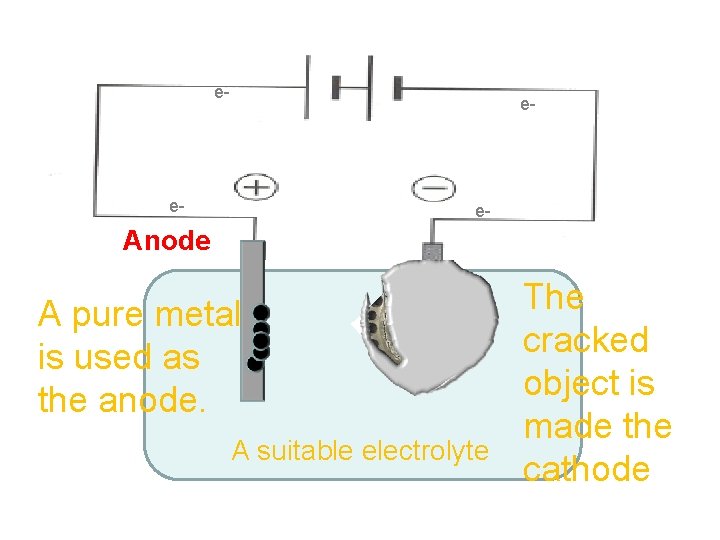
e- e- Cathode Anode A pure metal is used as the anode. A suitable electrolyte The cracked object is made the cathode
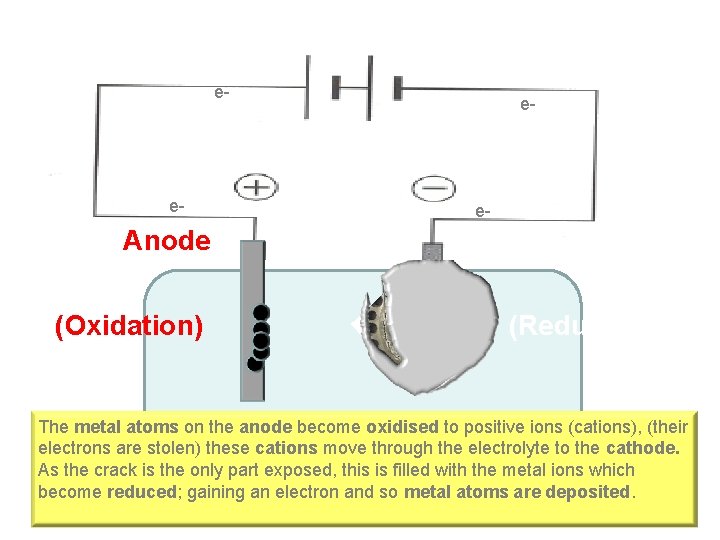
e- e- Anode (Oxidation) e- e- Cathode (Reduction) h The metal atoms on the anode become oxidised to positive ions (cations), (their electrons are stolen) these cations move through the electrolyte to the cathode. As the crack is the only part exposed, this is filled with the metal ions which become reduced; gaining an electron and so metal atoms are deposited.
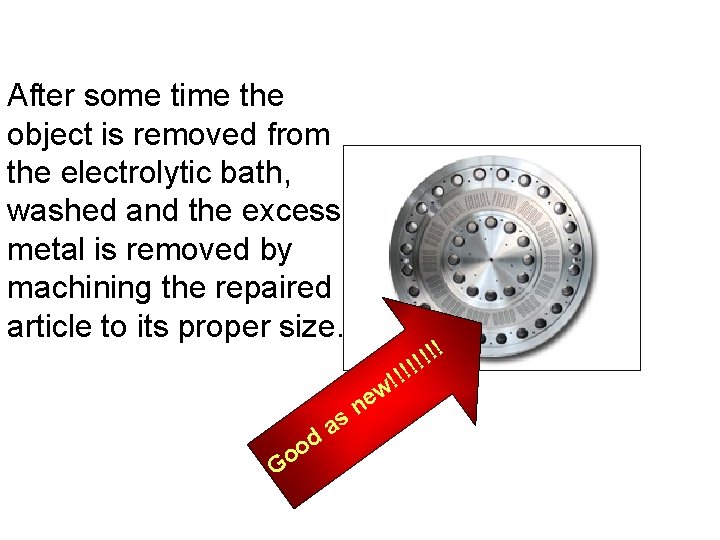
After some time the object is removed from the electrolytic bath, washed and the excess metal is removed by machining the repaired article to its proper size. G d o o as w e n ! !! !
- Slides: 21