
Learning Objectives 1 To learn what auxiliary verbs

Learning Objectives: • 1. To learn what auxiliary verbs are. • 2. To figure out the classification of auxiliary verbs. • 3. To understand the function of auxiliary verbs. Let's go and exp lore~
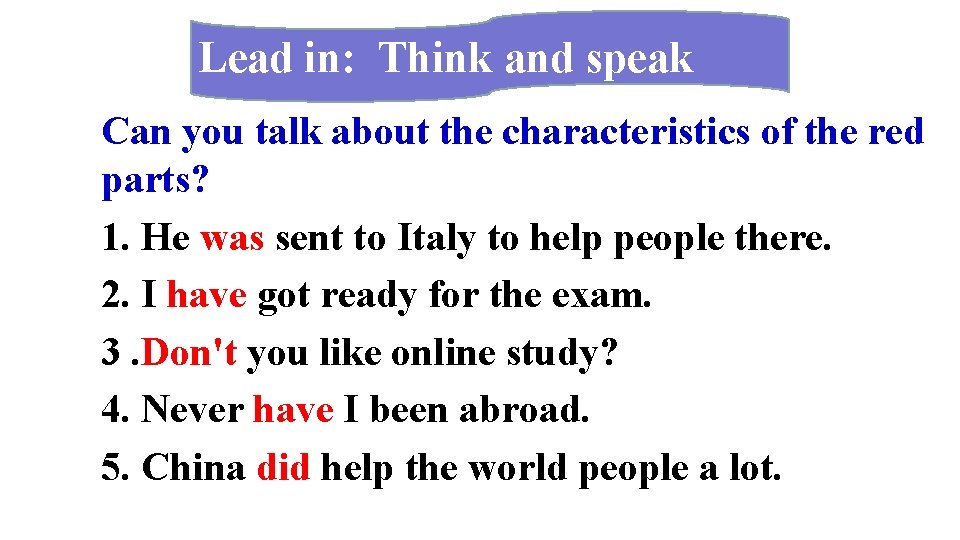
Lead in: Think and speak Can you talk about the characteristics of the red parts? 1. He was sent to Italy to help people there. 2. I have got ready for the exam. 3. Don't you like online study? 4. Never have I been abroad. 5. China did help the world people a lot.

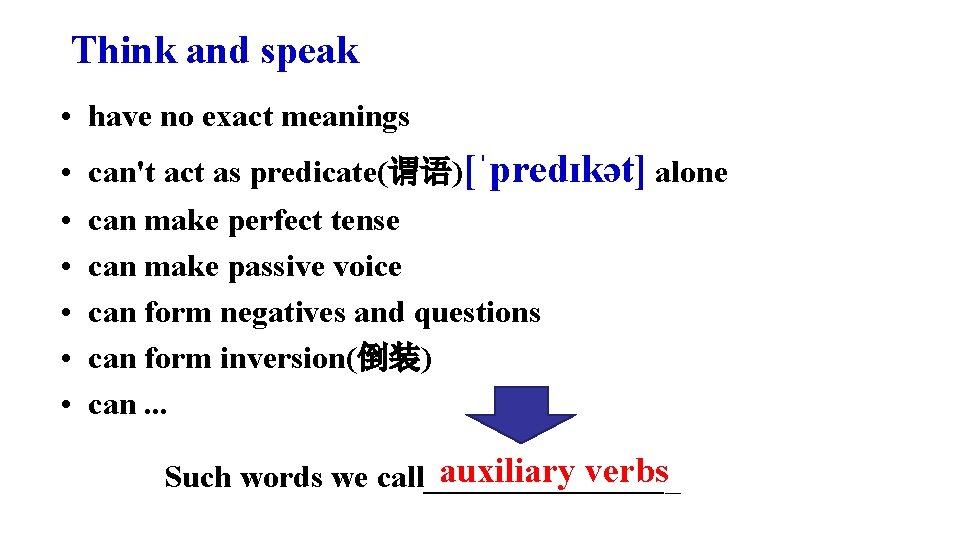
Think and speak and discuss • have no exact meanings • • • can't act as predicate(谓语)[ˈpredɪkət] alone can make perfect tense can make passive voice can form negatives and questions can form inversion(倒装) can. . . auxiliary verbs Such words we call________
![Definition What are auxiliary verbs? • Auxiliary[ɔ: gˈzɪliəri] verbs are usually used before the](http://slidetodoc.com/presentation_image_h2/994563ce4657ca505e8c35f8a02594ce/image-6.jpg "Definition What are auxiliary verbs? • Auxiliary[ɔ: gˈzɪliəri] verbs are usually used before the")
Definition What are auxiliary verbs? • Auxiliary[ɔ: gˈzɪliəri] verbs are usually used before the main verb to help form tenses, moods and voices. It can also help form inversions, emphasis, questions and negatives but cannot stand alone in the predicate of a sentence. • 助动词通常位于主要动词前面,帮助其构成时态,语气,语态, 并可以帮助形成倒装,强调,疑问和否定,但是助动词不可以 单独做谓语。
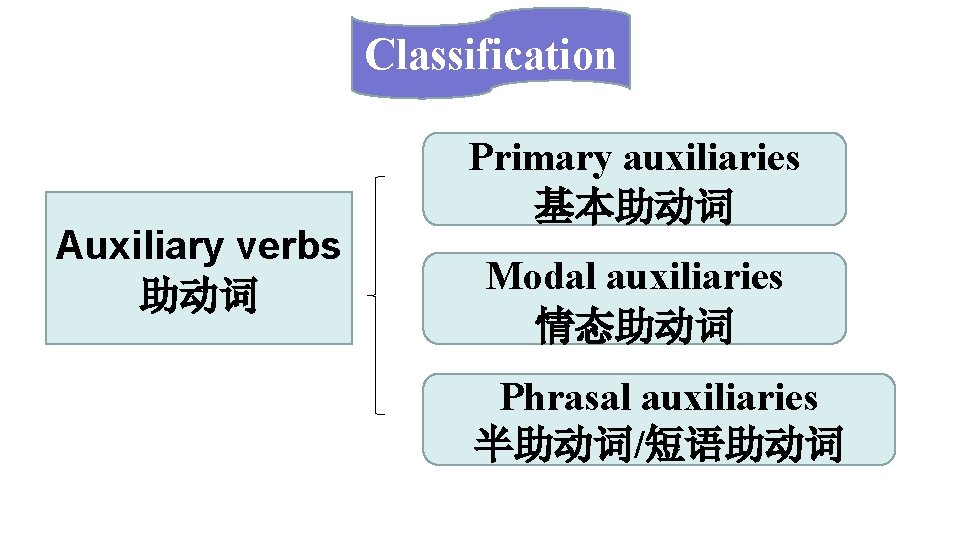
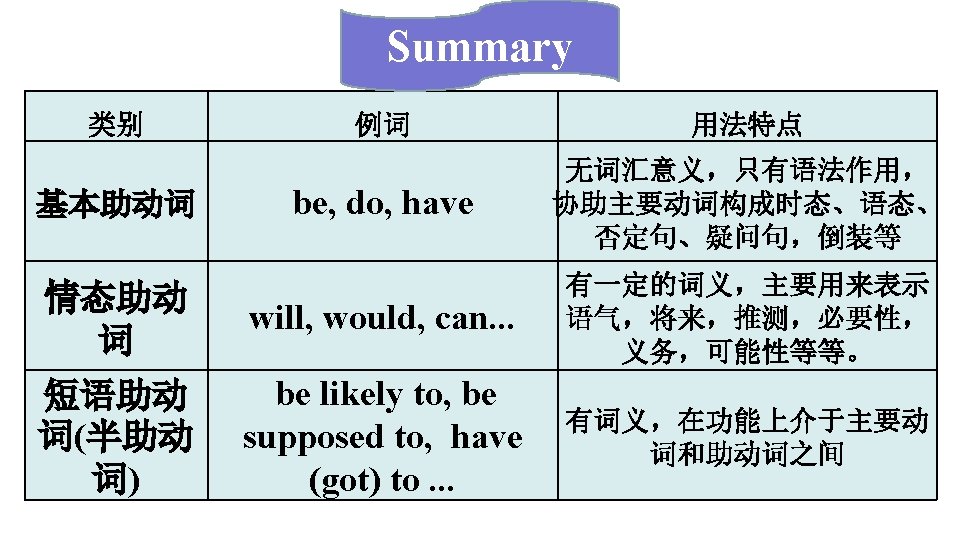
Classification Auxiliary verbs 助动词 Primary auxiliaries 基本助动词 Modal auxiliaries 情态助动词 Phrasal auxiliaries 半助动词/短语助动词
Function 1. Primary auxiliaries基本助动词 do be have

Primary auxiliaries基本助动词---be 系动词is+名词短语构成 系表结构 • a. Peppa is a cute pig, and now she is playing with the ball. 助动词is+doing 构成进行体
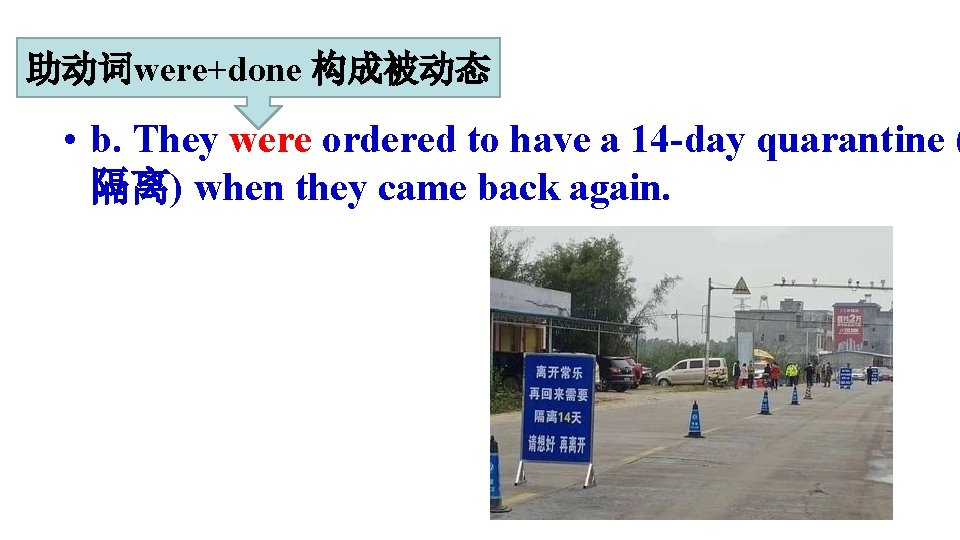
助动词were+done 构成被动态 • b. They were ordered to have a 14 -day quarantine ( 隔离) when they came back again.
Practice 1 studying (study) hard online • 1. Students are ______ these days. • 2. He took no regardless of others' security and was criticized (criticize) by society. health and ______
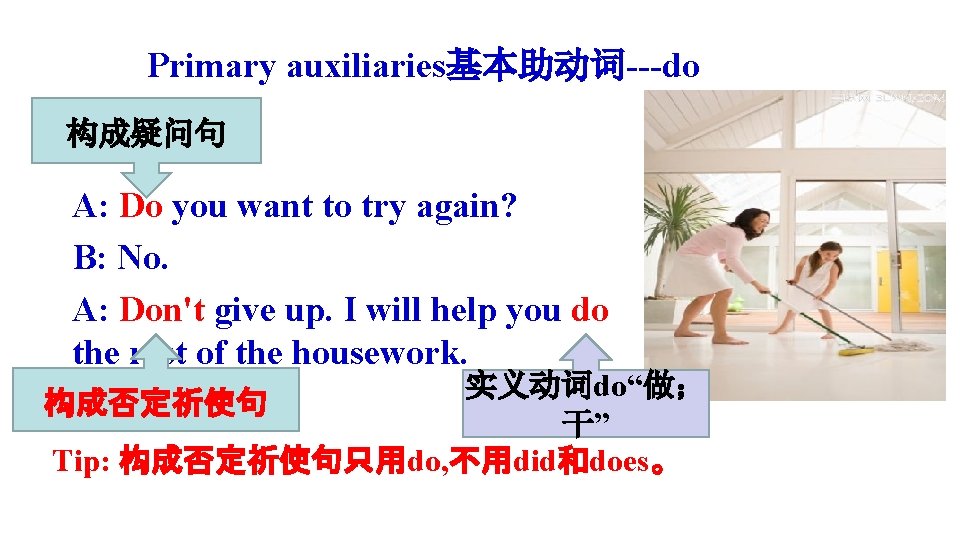
Primary auxiliaries基本助动词---do 构成疑问句 A: Do you want to try again? B: No. A: Don't give up. I will help you do the rest of the housework. 实义动词do“做; 构成否定祈使句 干” Tip: 构成否定祈使句只用do, 不用did和does。
用于倒装句 b. Little do I know about her, but my friends say she sings better than I do. 代替实义动词sing Tip: do用于倒装句时,应具备never, seldom, rarely, little, only, so等副词位于句首的条件。
c. Do be careful, because we don't know anything about it. 用于加强语气 用于构成否定句
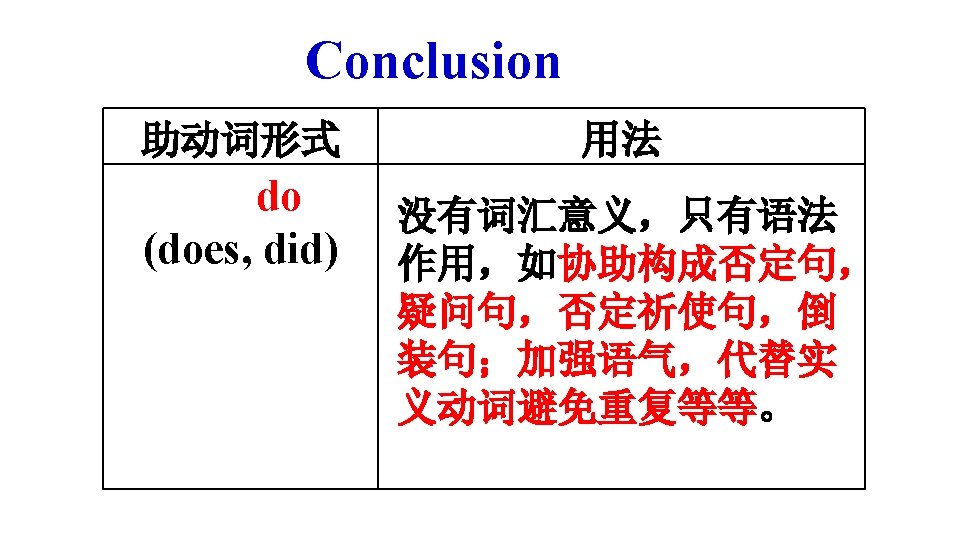
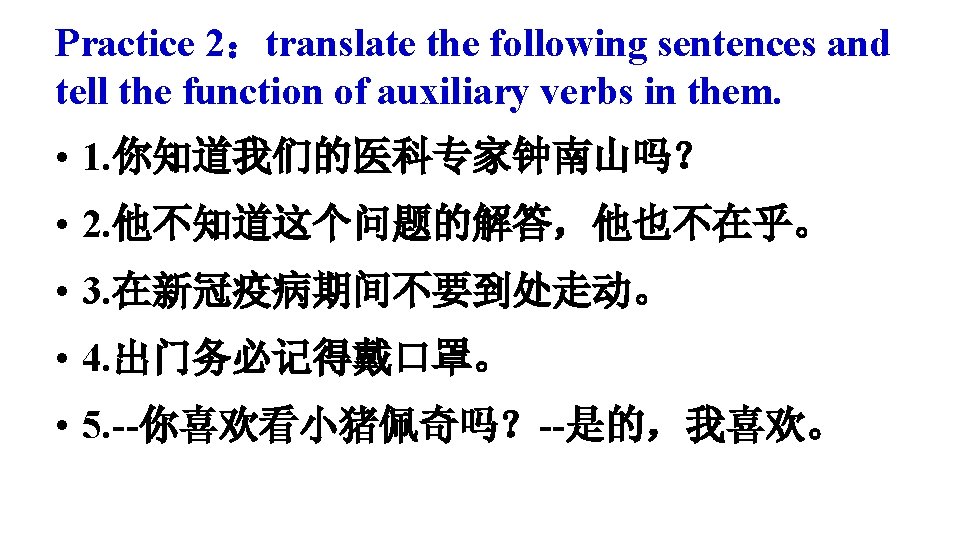
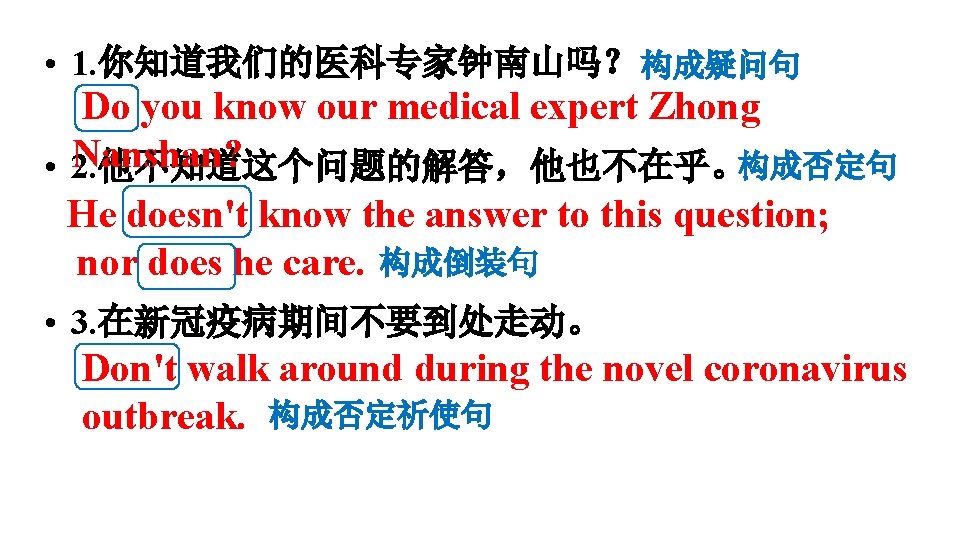
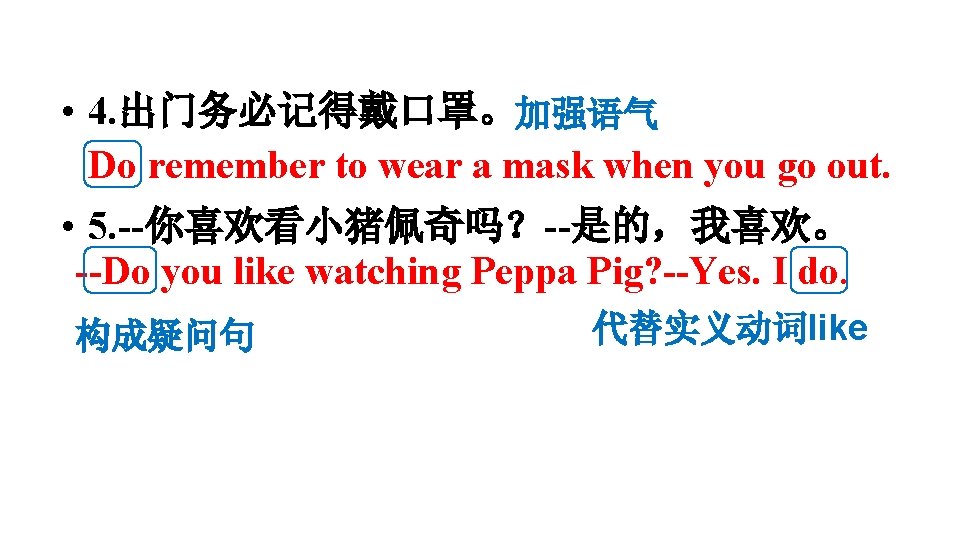
• 1. 你知道我们的医科专家钟南山吗? 构成疑问句 Do you know our medical expert Zhong Nanshan? 构成否定句 • 2. 他不知道这个问题的解答,他也不在乎。 He doesn't know the answer to this question; nor does he care. 构成倒装句 • 3. 在新冠疫病期间不要到处走动。 Don't walk around during the novel coronavirus outbreak. 构成否定祈使句
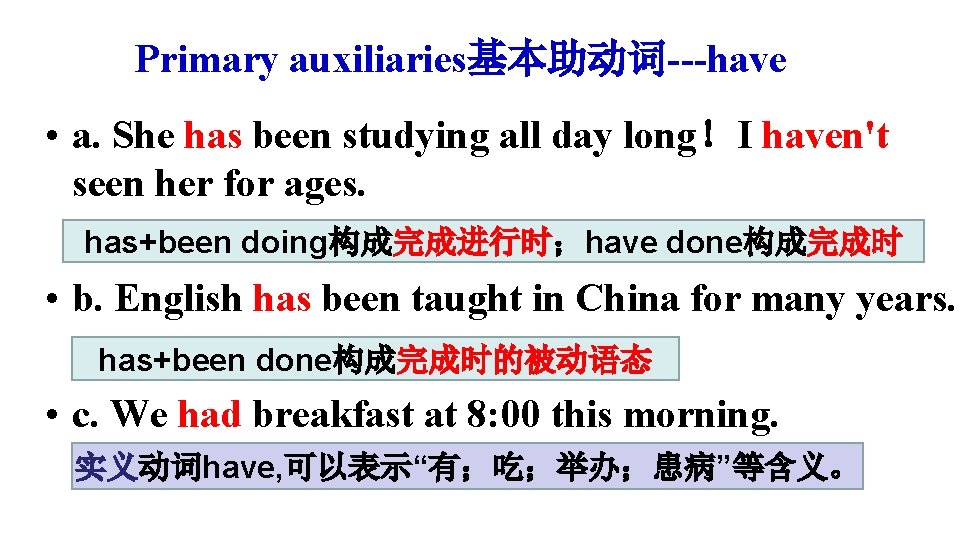
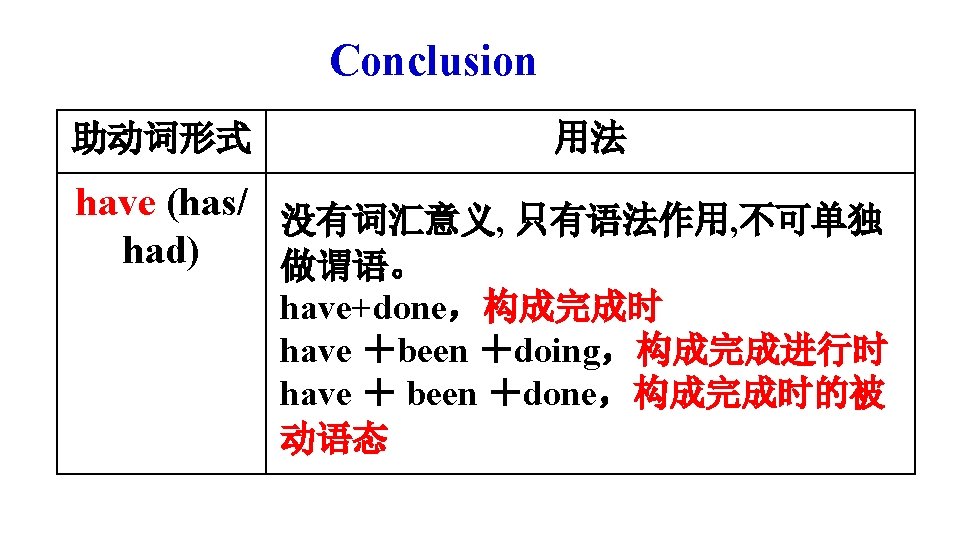
Primary auxiliaries基本助动词---have • a. She has been studying all day long!I haven't seen her for ages. has+been doing构成完成进行时;have done构成完成时 • b. English has been taught in China for many years. has+been done构成完成时的被动语态 • c. We had breakfast at 8: 00 this morning. 实义动词have, 可以表示“有;吃;举办;患病”等含义。
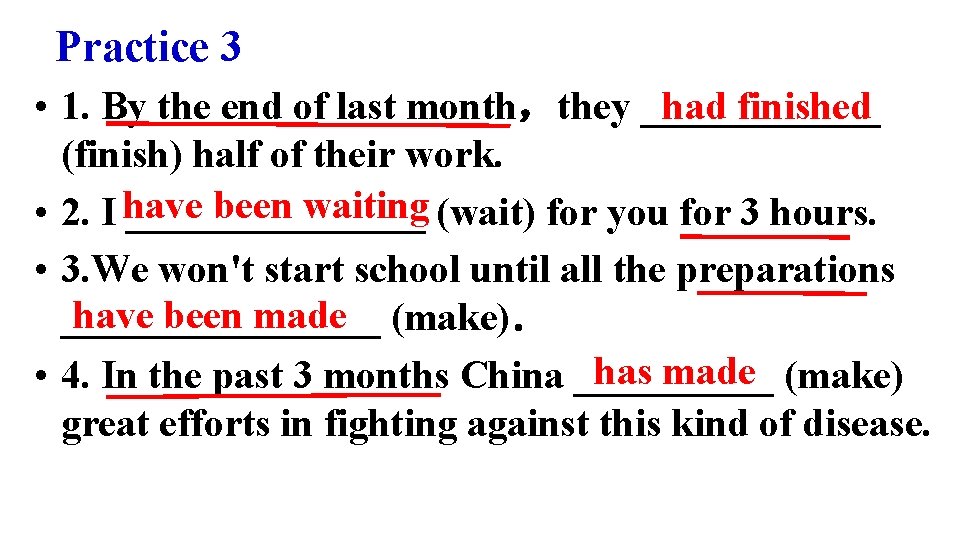
Practice 3 had finished • 1. By the end of last month,they ______ (finish) half of their work. been waiting (wait) for you for 3 hours. • 2. I have ________ • 3. We won't start school until all the preparations have been made (make). ________ has made (make) • 4. In the past 3 months China _____ great efforts in fighting against this kind of disease.
![2. Modal auxiliaries情态助动词 Modal [ˈməʊdl] auxiliary verbs (also called modal verbs) are often used](http://slidetodoc.com/presentation_image_h2/994563ce4657ca505e8c35f8a02594ce/image-23.jpg "2. Modal auxiliaries情态助动词 Modal [ˈməʊdl] auxiliary verbs (also called modal verbs) are often used")
2. Modal auxiliaries情态助动词 Modal [ˈməʊdl] auxiliary verbs (also called modal verbs) are often used to express mood, future, prediction, necessity, obligation or possibility, etc. 情态助动词(也称情态动词),通常用于表达 语气,将来,推测,必要性,责任或义务,可 能性等等。
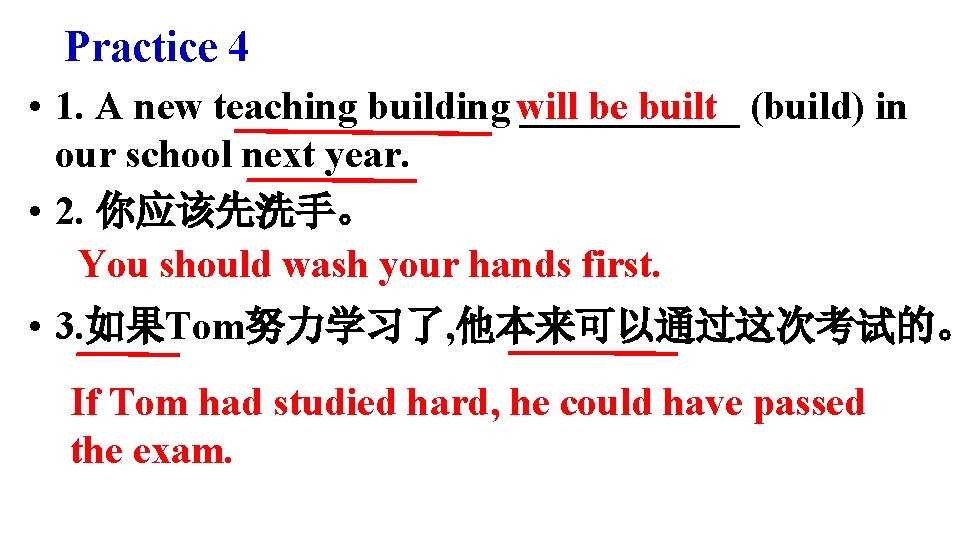
Practice 4 be built (build) in • 1. A new teaching building will ______ our school next year. • 2. 你应该先洗手。 You should wash your hands first. • 3. 如果Tom努力学习了, 他本来可以通过这次考试的。 If Tom had studied hard, he could have passed the exam.
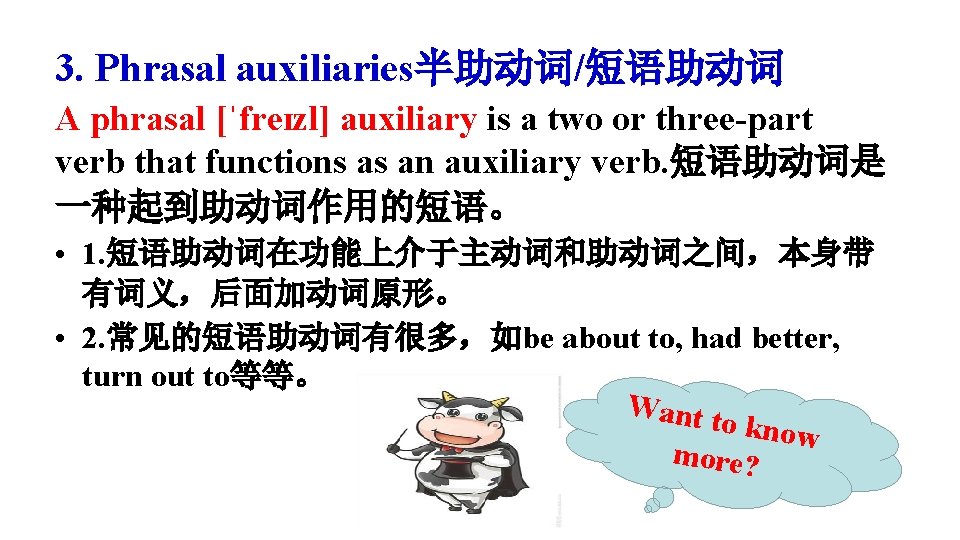
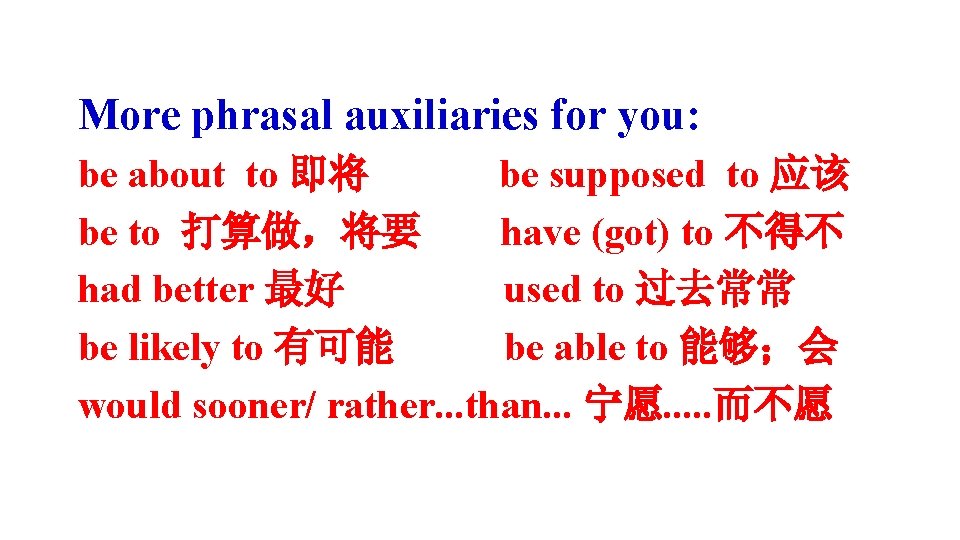
More phrasal auxiliaries for you: be about to 即将 be supposed to 应该 be to 打算做,将要 have (got) to 不得不 had better 最好 used to 过去常常 be likely to 有可能 be able to 能够;会 would sooner/ rather. . . than. . . 宁愿. . . 而不愿
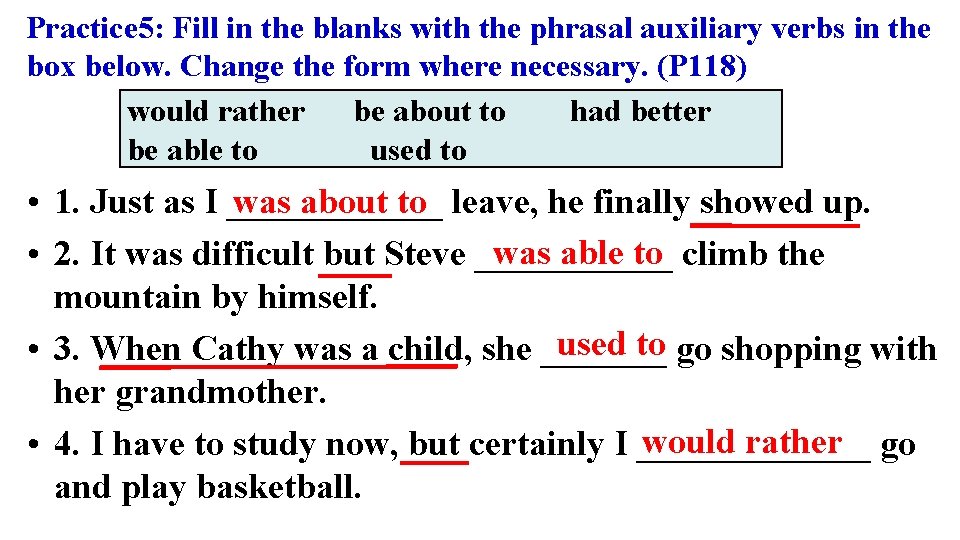
Practice 5: Fill in the blanks with the phrasal auxiliary verbs in the box below. Change the form where necessary. (P 118) would rather be about to had better be able to used to • 1. Just as I ______ was about to leave, he finally showed up. was able to climb the • 2. It was difficult but Steve ______ mountain by himself. used to go shopping with • 3. When Cathy was a child, she _______ her grandmother. would rather go • 4. I have to study now, but certainly I _______ and play basketball.
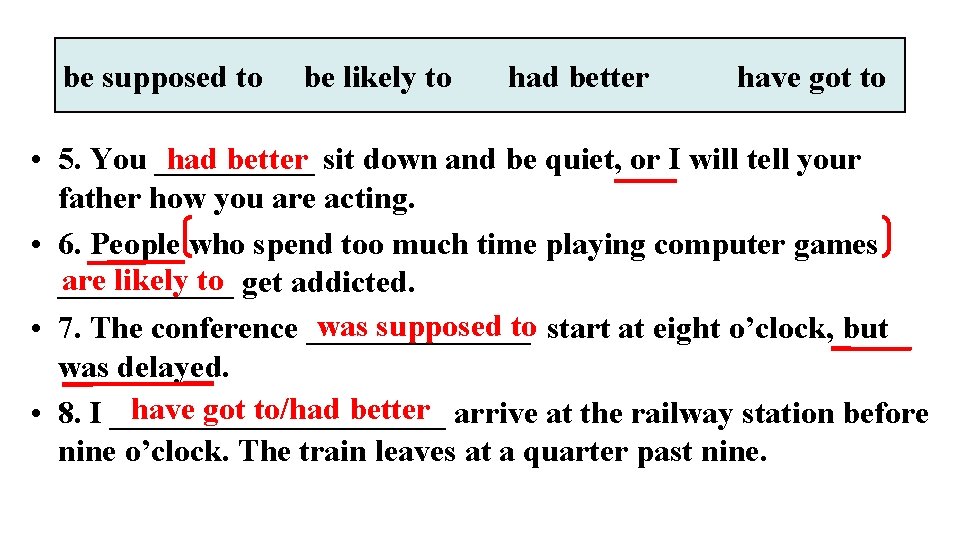
be supposed to be likely to had better have got to • 5. You _____ had better sit down and be quiet, or I will tell your father how you are acting. • 6. People who spend too much time playing computer games are likely to get addicted. ______ was supposed to start at eight o’clock, but • 7. The conference _______ was delayed. have got to/had better arrive at the railway station before • 8. I ___________ nine o’clock. The train leaves at a quarter past nine.
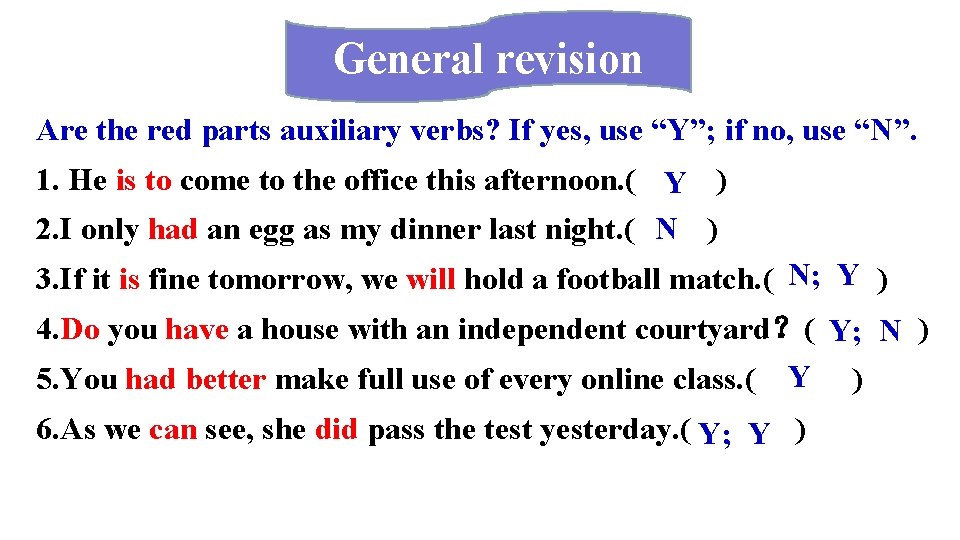
General revision Are the red parts auxiliary verbs? If yes, use “Y”; if no, use “N”. 1. He is to come to the office this afternoon. ( Y ) 2. I only had an egg as my dinner last night. ( N ) 3. If it is fine tomorrow, we will hold a football match. ( N; Y ) 4. Do you have a house with an independent courtyard?( Y; N ) 5. You had better make full use of every online class. ( Y ) 6. As we can see, she did pass the test yesterday. ( Y; Y )
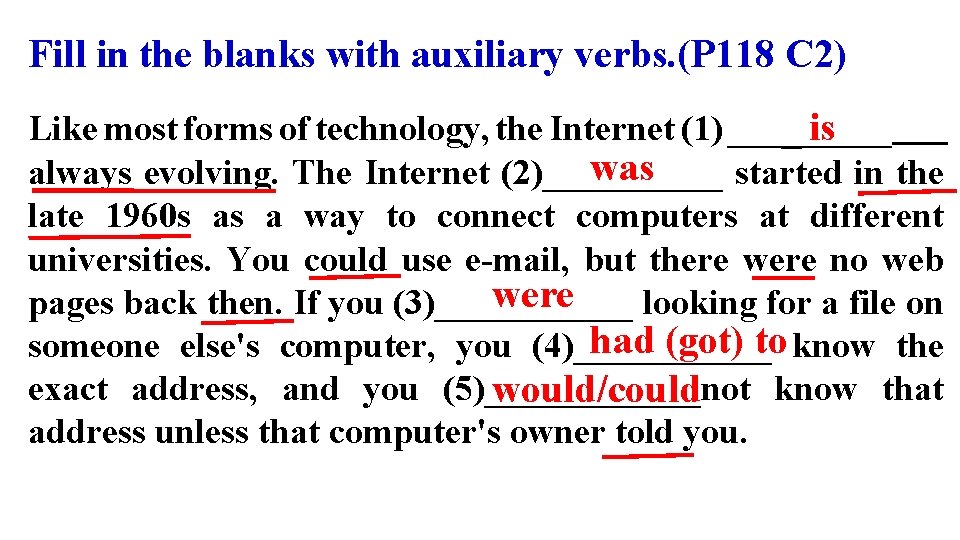
Fill in the blanks with auxiliary verbs. (P 118 C 2) is Like most forms of technology, the Internet (1) _____ was always evolving. The Internet (2)_____ started in the late 1960 s as a way to connect computers at different universities. You could use e-mail, but there were no web were pages back then. If you (3)______ looking for a file on had (got) to know the someone else's computer, you (4)______ exact address, and you (5)______not know that would/could address unless that computer's owner told you.
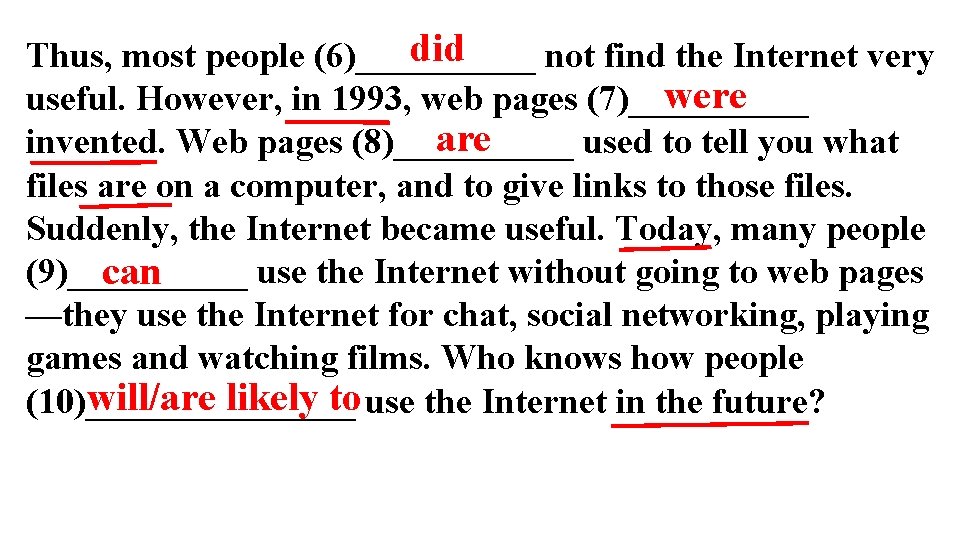
did Thus, most people (6)_____ not find the Internet very were useful. However, in 1993, web pages (7)_____ are invented. Web pages (8)_____ used to tell you what files are on a computer, and to give links to those files. Suddenly, the Internet became useful. Today, many people (9)_____ use the Internet without going to web pages can —they use the Internet for chat, social networking, playing games and watching films. Who knows how people will/are likely to use the Internet in the future? (10)________
w o r k • 1. Review the usage of auxiliary verbs. • 2. Finish exercise A and B on Page 41.

See You~
- Slides: 34