
Learning Objectives 1 Identify major classifications of inventory
Learning Objectives 1. Identify major classifications of inventory. 2. Distinguish between perpetual and periodic inventory systems. 3. Identify the effects of inventory errors on the financial statements. 4. Identify the items that should be included as inventory cost.

Inventory Classification • Inventory consists of: - finished goods held for sale in the ordinary course of business - goods held or consumed in the production of finished goods • A merchandising concern has one inventory account – Merchandise Inventory • A manufacturing concern will normally have three inventory accounts: – Raw materials – Work in process – Finished goods
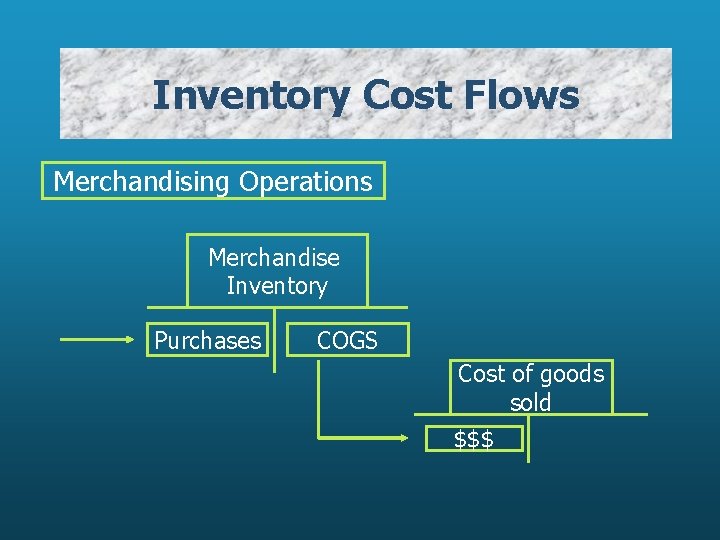
Inventory Cost Flows Merchandising Operations Merchandise Inventory Purchases COGS Cost of goods sold $$$
Inventory Control • Inventory control is important for: - ensuring availability of inventory items - preventing excessive accumulation of inventory items • The perpetual system maintains a continuous record of inventory changes • The periodic system updates inventory records only periodically
Perpetual System • Purchases and sales of inventory recorded directly to Inventory account • Inventory purchases, freight, purchase returns and discounts are debited to the Inventory account • Cost of Goods Sold (COGS) is debited and Inventory is credited for each sale • Subsidiary ledger is maintained for individual inventory items • Periodic inventory counts are still required to ensure reliability
Periodic System • Inventory purchases recorded as a debit to Purchases account • COGS is a calculation on the Income Statement • Physical inventory is counted and verified periodically • Under both periodic and perpetual inventory systems, physical counts of inventory are conducted at least once a year • Any differences in counted and recorded quantities are posted to a separate account – Inventory Over and Short
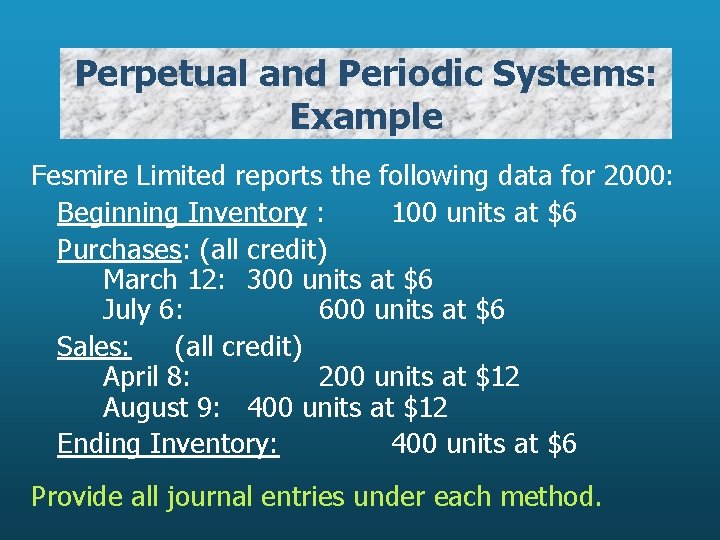
Perpetual and Periodic Systems: Example Fesmire Limited reports the following data for 2000: Beginning Inventory : 100 units at $6 Purchases: (all credit) March 12: 300 units at $6 July 6: 600 units at $6 Sales: (all credit) April 8: 200 units at $12 August 9: 400 units at $12 Ending Inventory: 400 units at $6 Provide all journal entries under each method.
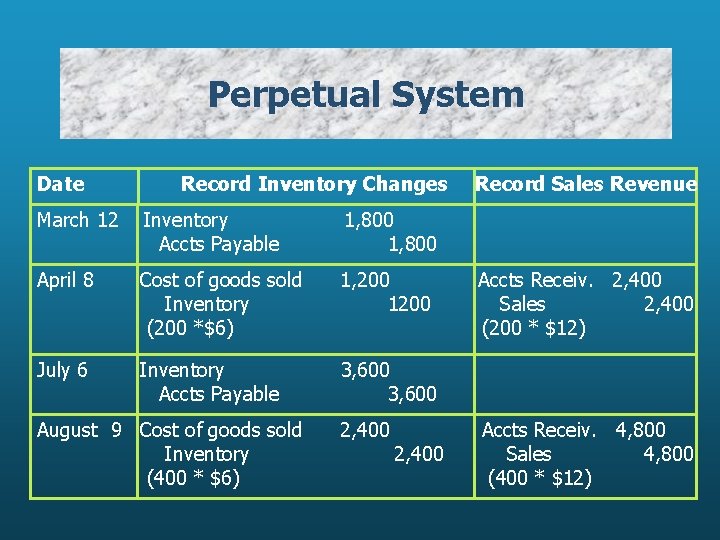
Perpetual System Date Record Inventory Changes March 12 Inventory Accts Payable 1, 800 April 8 Cost of goods sold Inventory (200 *$6) 1, 200 1200 July 6 Inventory Accts Payable 3, 600 August 9 Cost of goods sold Inventory (400 * $6) 2, 400 Record Sales Revenue Accts Receiv. 2, 400 Sales 2, 400 (200 * $12) Accts Receiv. 4, 800 Sales 4, 800 (400 * $12)
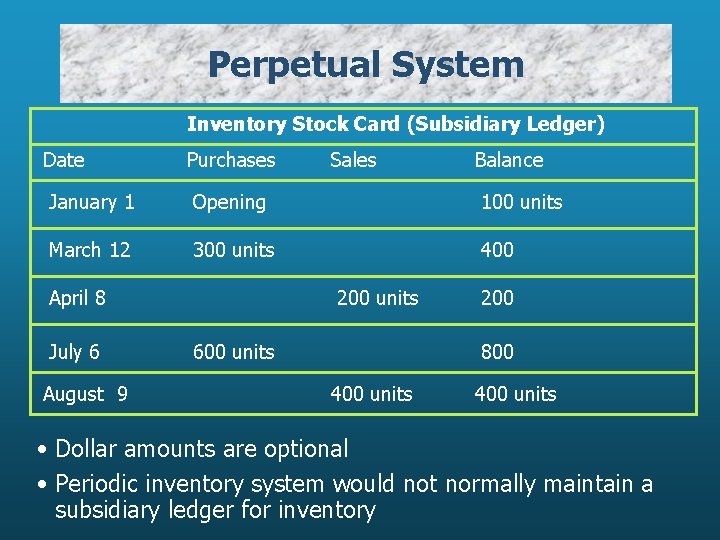
Perpetual System Inventory Stock Card (Subsidiary Ledger) Date Purchases January 1 Opening 100 units March 12 300 units 400 April 8 July 6 August 9 Sales 200 units 600 units Balance 200 800 400 units • Dollar amounts are optional • Periodic inventory system would not normally maintain a subsidiary ledger for inventory
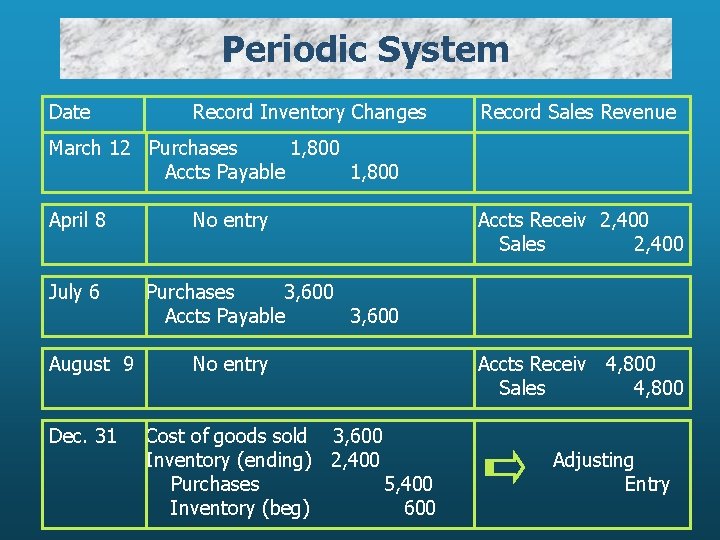
Periodic System Date Record Inventory Changes Record Sales Revenue March 12 Purchases 1, 800 Accts Payable 1, 800 April 8 July 6 August 9 Dec. 31 No entry Accts Receiv 2, 400 Sales 2, 400 Purchases 3, 600 Accts Payable 3, 600 No entry Cost of goods sold 3, 600 Inventory (ending) 2, 400 Purchases 5, 400 Inventory (beg) 600 Accts Receiv 4, 800 Sales 4, 800 Adjusting Entry
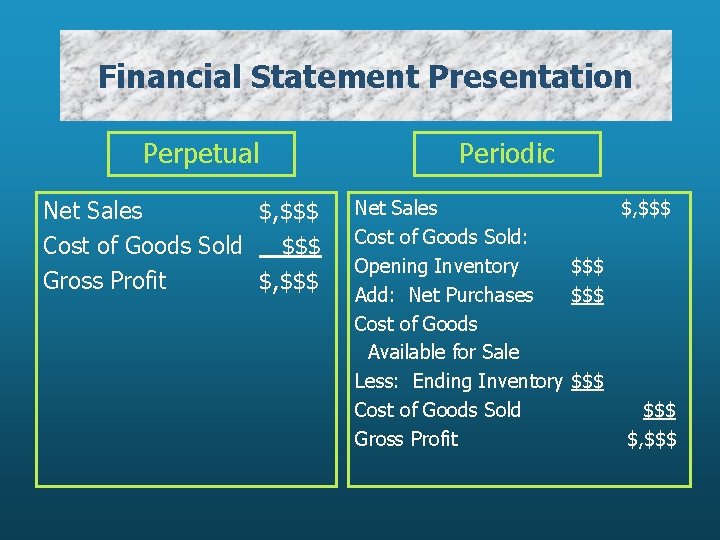
Financial Statement Presentation Perpetual Net Sales $, $$$ Cost of Goods Sold $$$ Gross Profit $, $$$ Periodic Net Sales $, $$$ Cost of Goods Sold: Opening Inventory $$$ Add: Net Purchases $$$ Cost of Goods Available for Sale Less: Ending Inventory $$$ Cost of Goods Sold $$$ Gross Profit $, $$$
- Slides: 11