
Learning Objective To explain links between our learning
Learning Objective: To explain links between our learning. www. planbee. com
In the next lesson we will be conducting the mummification process on a tomato. What do you already know about the Ancient Egyptian mummification process? Who was the god associated with the embalming and mummification process? Take a look at the picture on the next slide to jog your memory. www. planbee. com
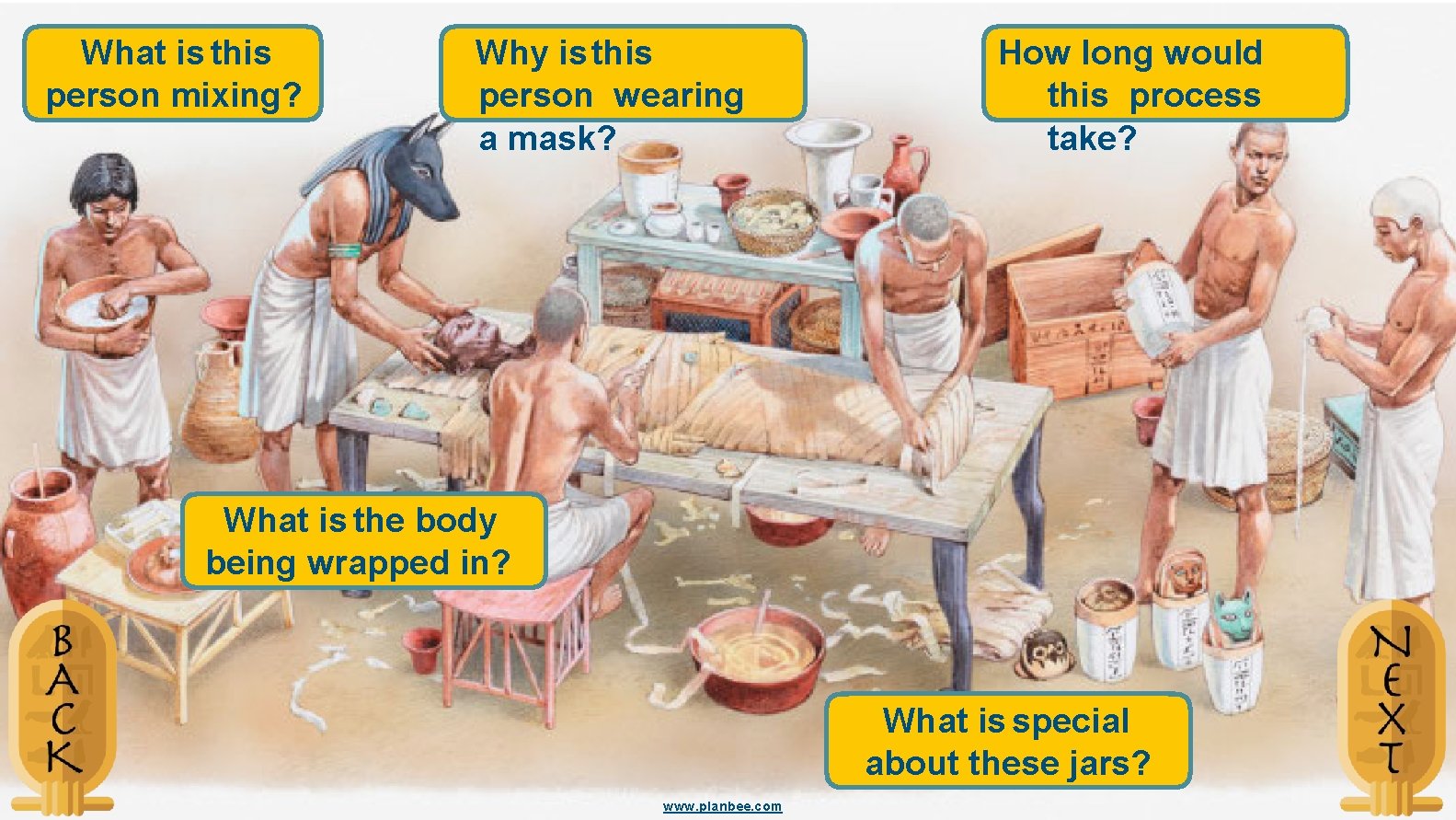
What is this person mixing? Why isthis person wearing a mask? How long would this process take? What is the body being wrapped in? What is special about these jars? www. planbee. com
Ancient Egyptian Mummification www. planbee. com
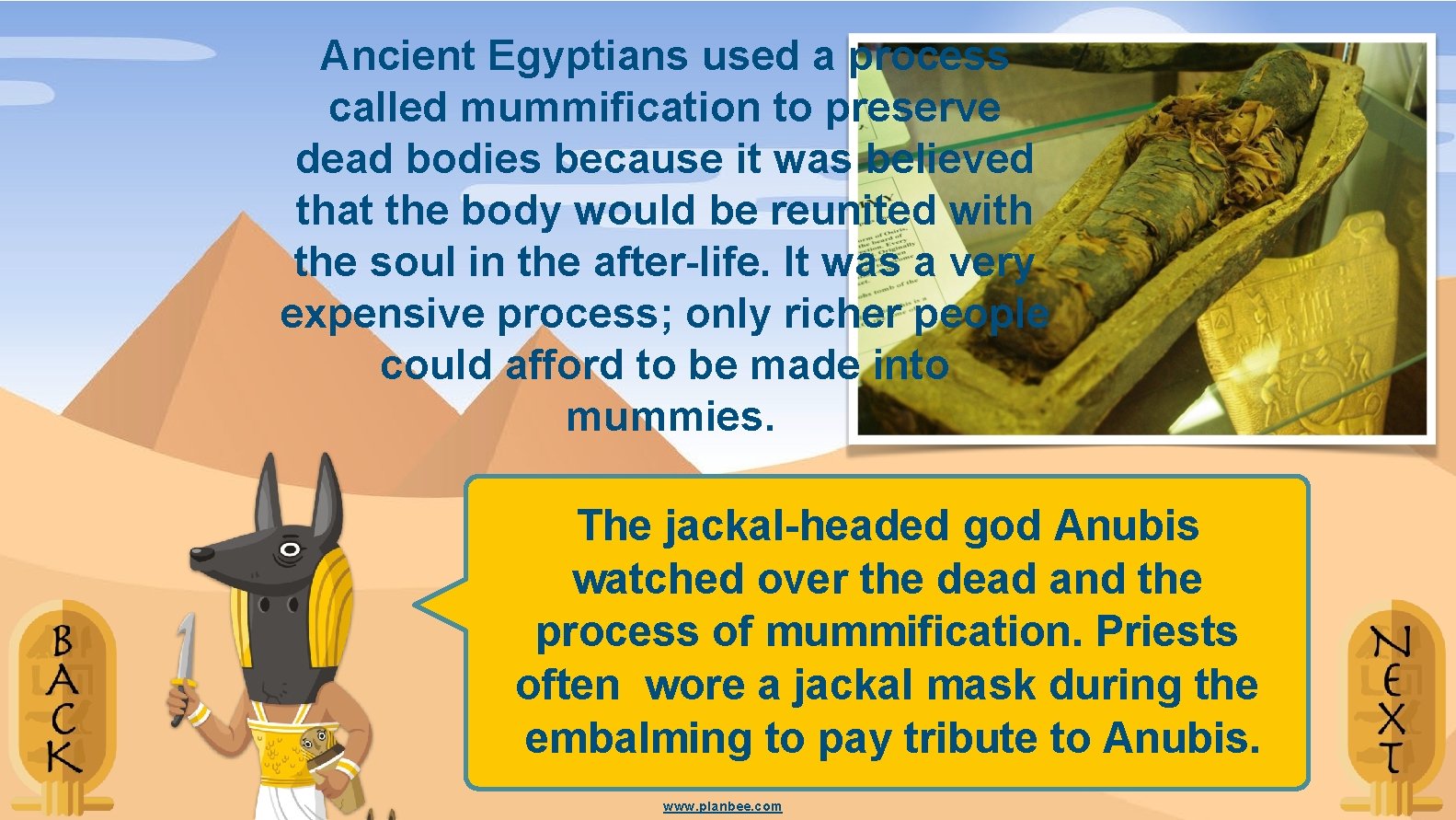
Ancient Egyptians used a process called mummification to preserve dead bodies because it was believed that the body would be reunited with the soul in the after-life. It was a very expensive process; only richer people could afford to be made into mummies. The jackal-headed god Anubis watched over the dead and the process of mummification. Priests often wore a jackal mask during the embalming to pay tribute to Anubis. www. planbee. com
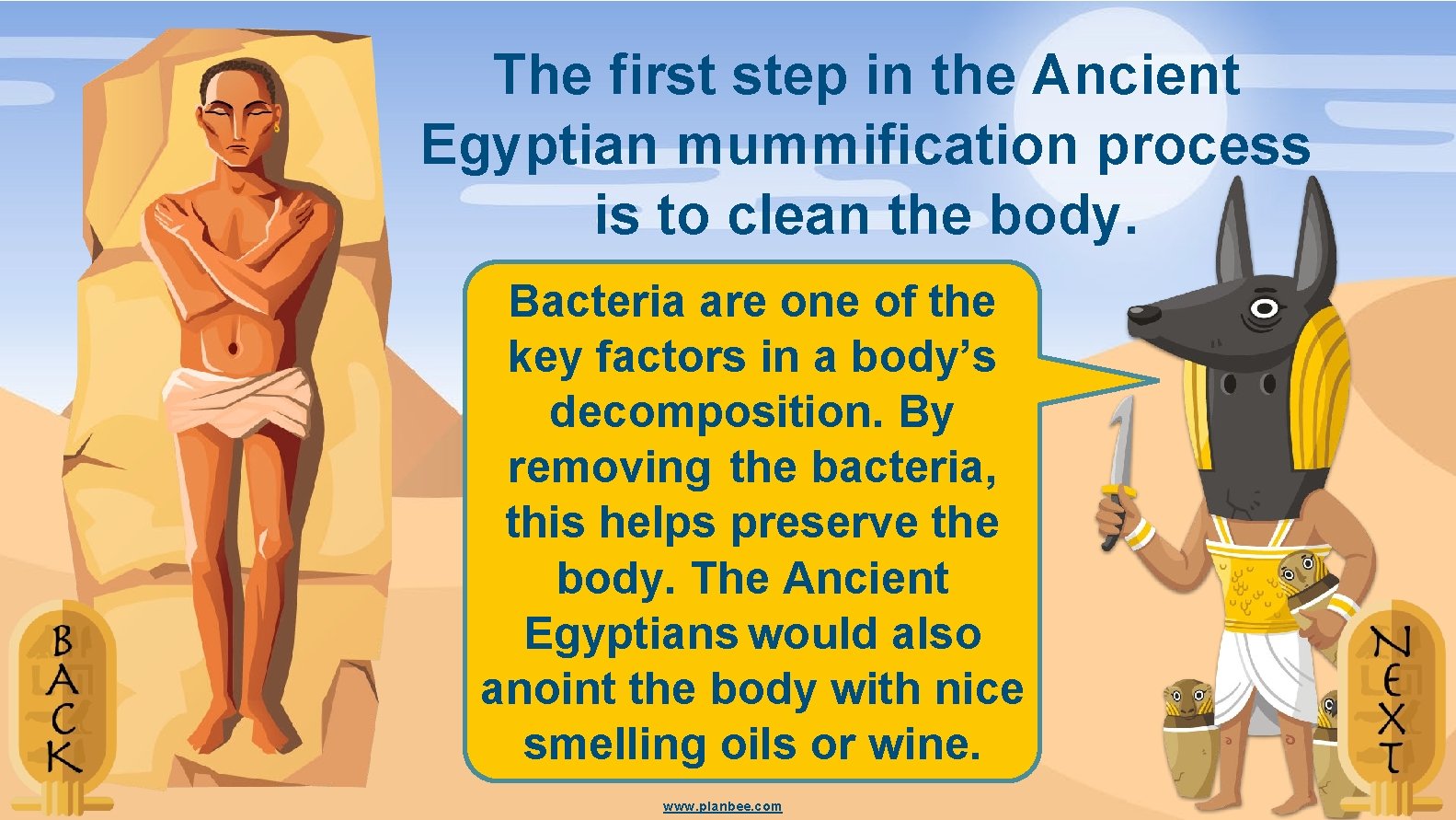
The first step in the Ancient Egyptian mummification process is to clean the body. Bacteria are one of the key factors in a body’s decomposition. By removing the bacteria, this helps preserve the body. The Ancient Egyptians would also anoint the body with nice smelling oils or wine. www. planbee. com
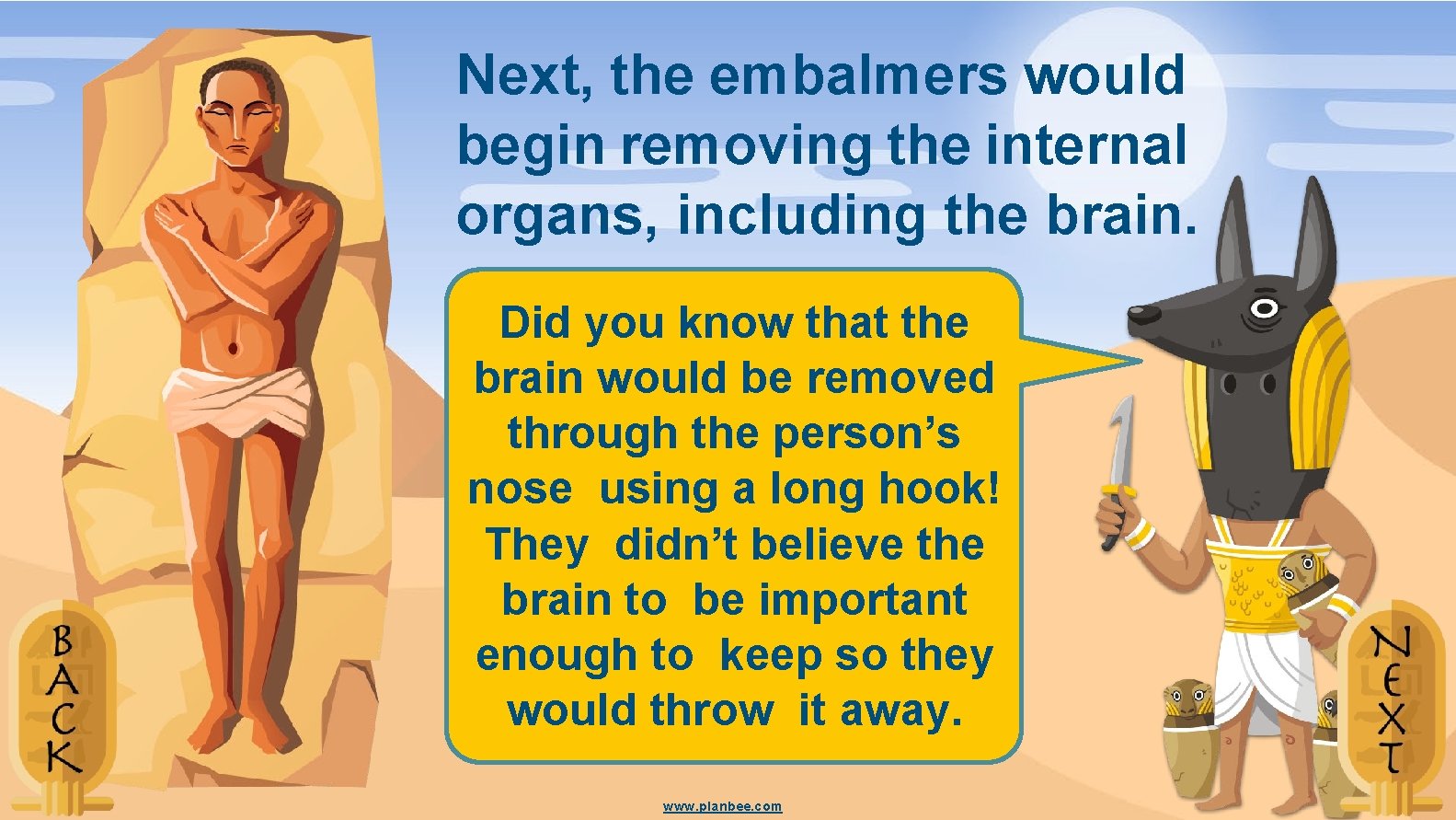
Next, the embalmers would begin removing the internal organs, including the brain. Did you know that the brain would be removed through the person’s nose using a long hook! They didn’t believe the brain to be important enough to keep so they would throw it away. www. planbee. com
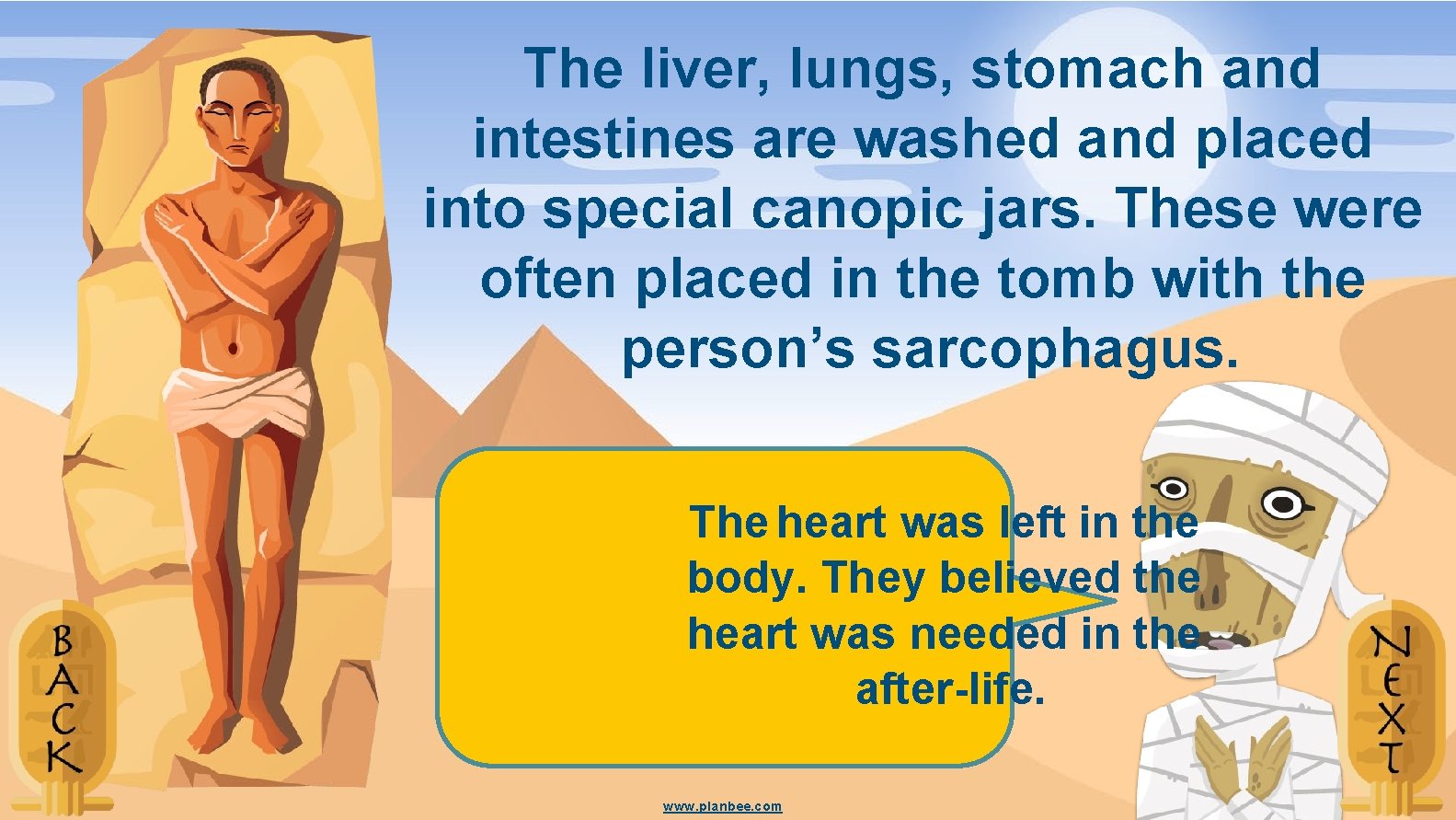
The liver, lungs, stomach and intestines are washed and placed into special canopic jars. These were often placed in the tomb with the person’s sarcophagus. The heart was left in the body. They believed the heart was needed in the after-life. www. planbee. com
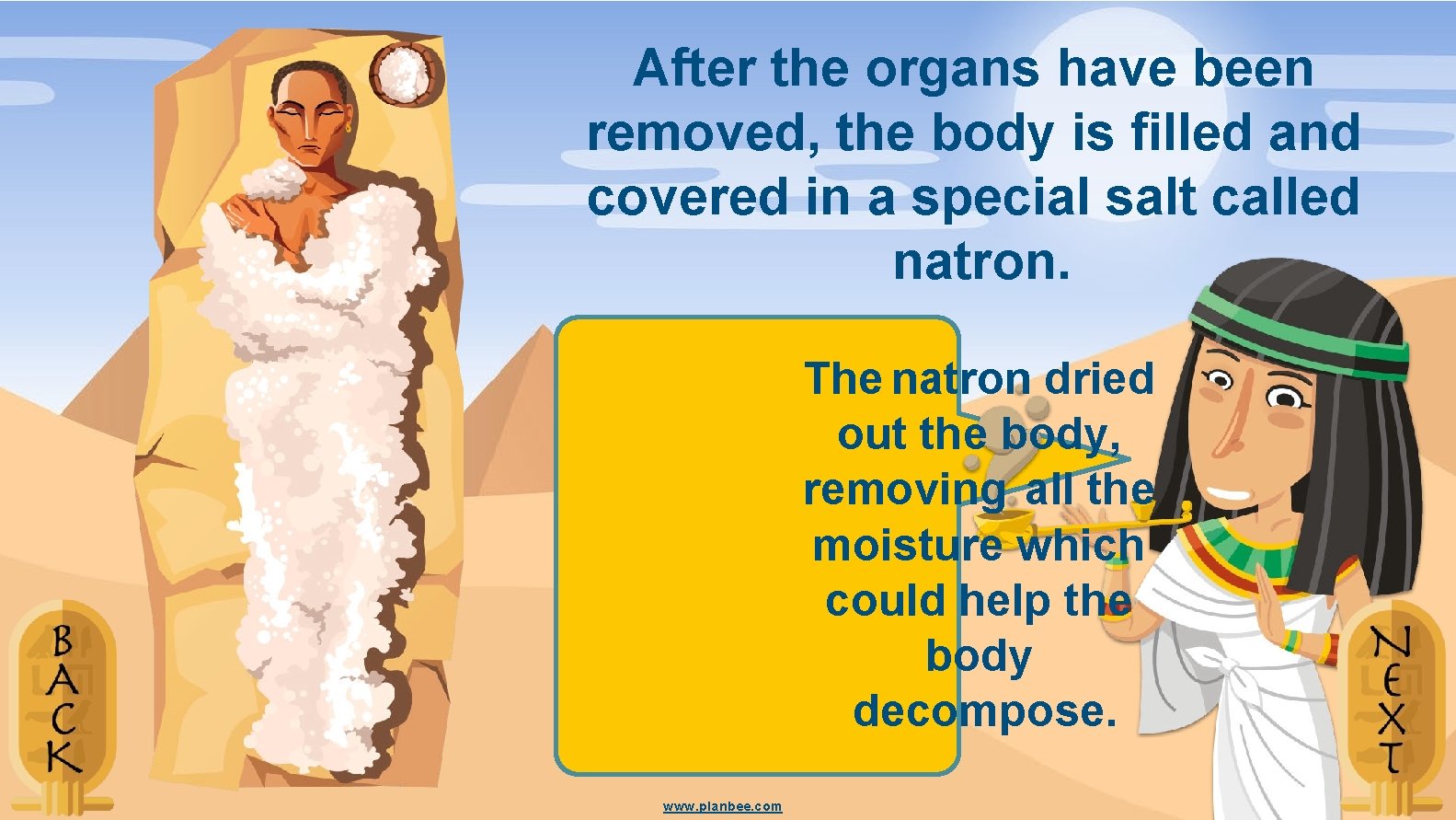
After the organs have been removed, the body is filled and covered in a special salt called natron. The natron dried out the body, removing all the moisture which could help the body decompose. www. planbee. com
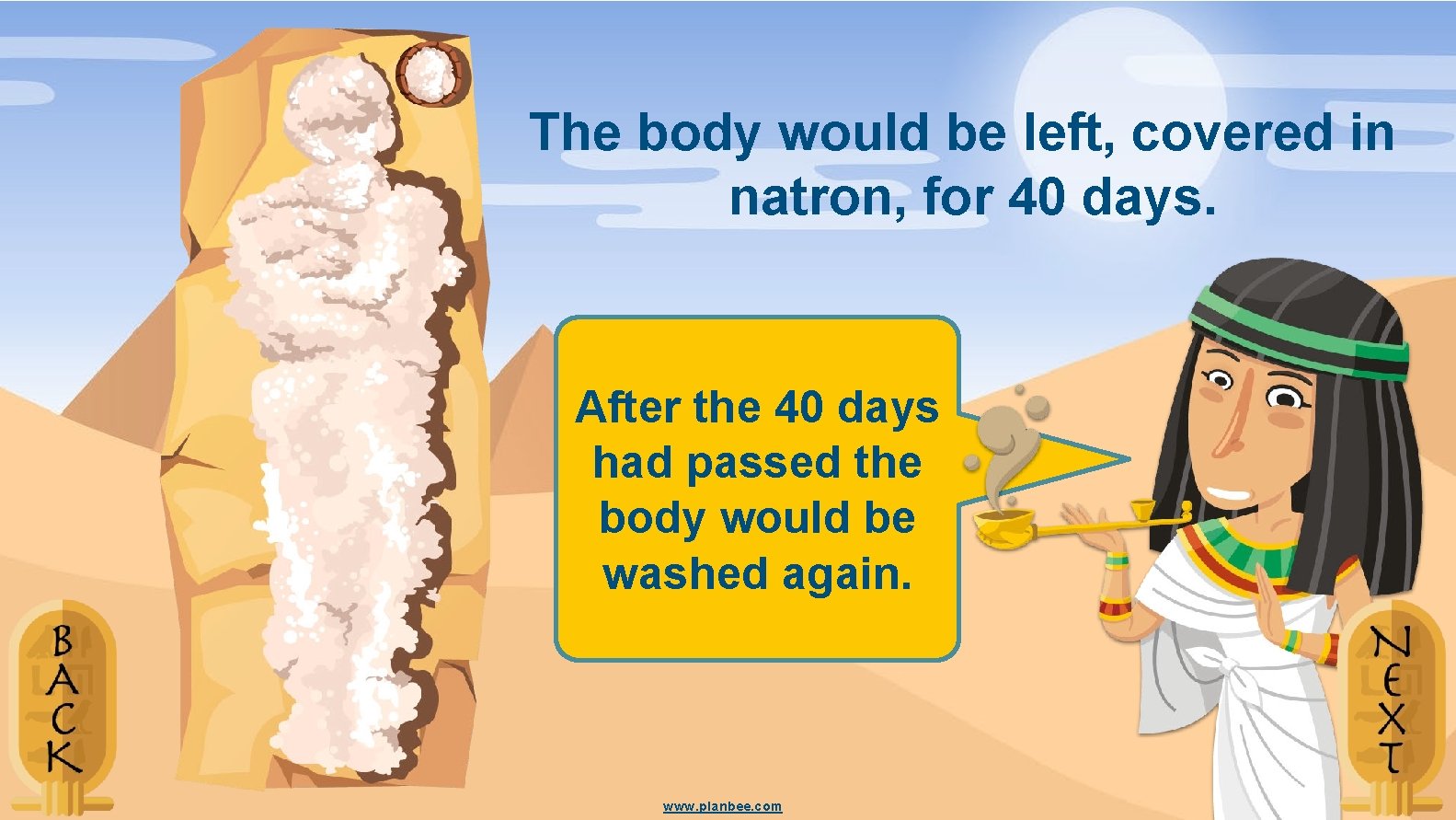
The body would be left, covered in natron, for 40 days. After the 40 days had passed the body would be washed again. www. planbee. com
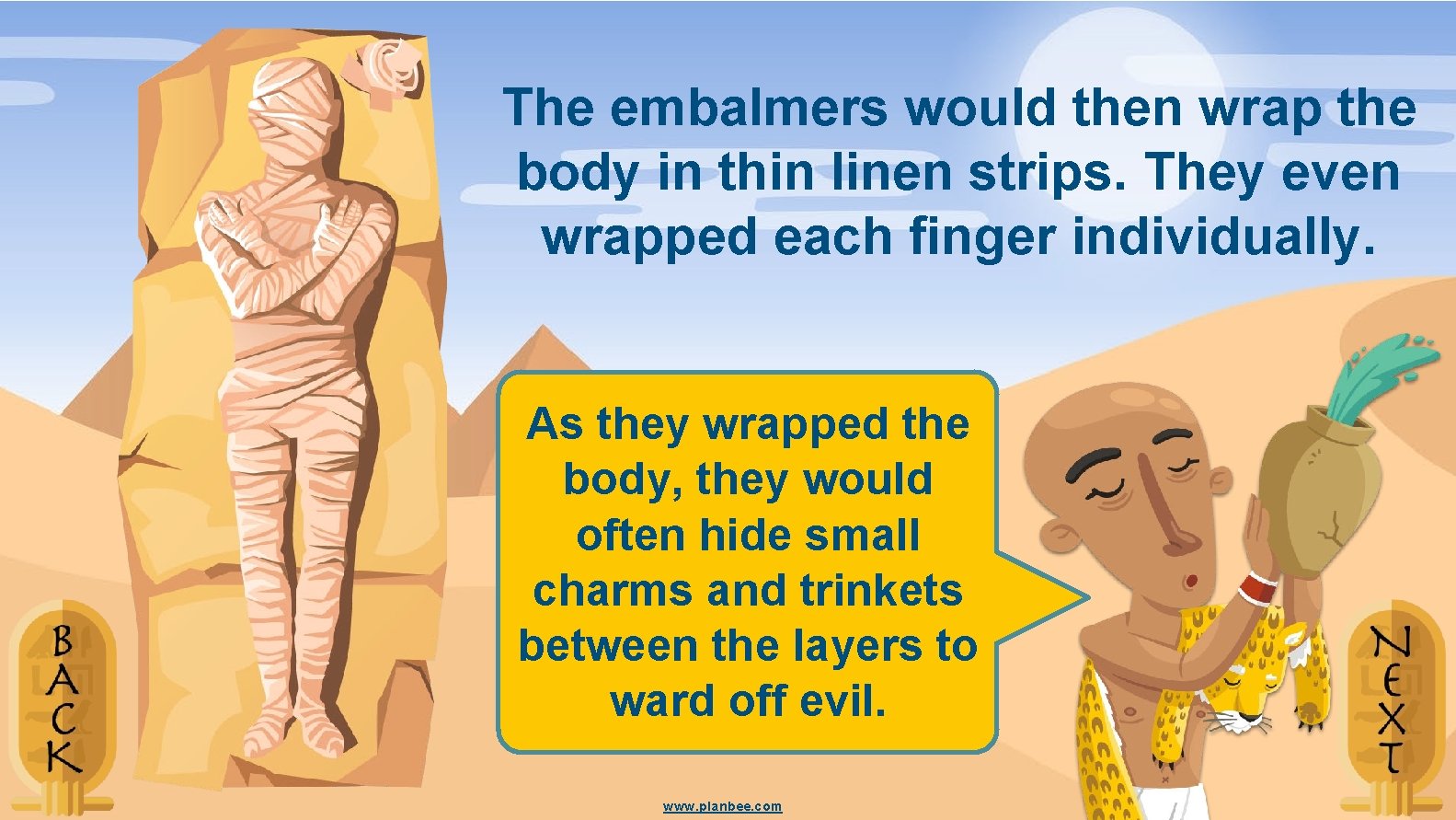
The embalmers would then wrap the body in thin linen strips. They even wrapped each finger individually. As they wrapped the body, they would often hide small charms and trinkets between the layers to ward off evil. www. planbee. com
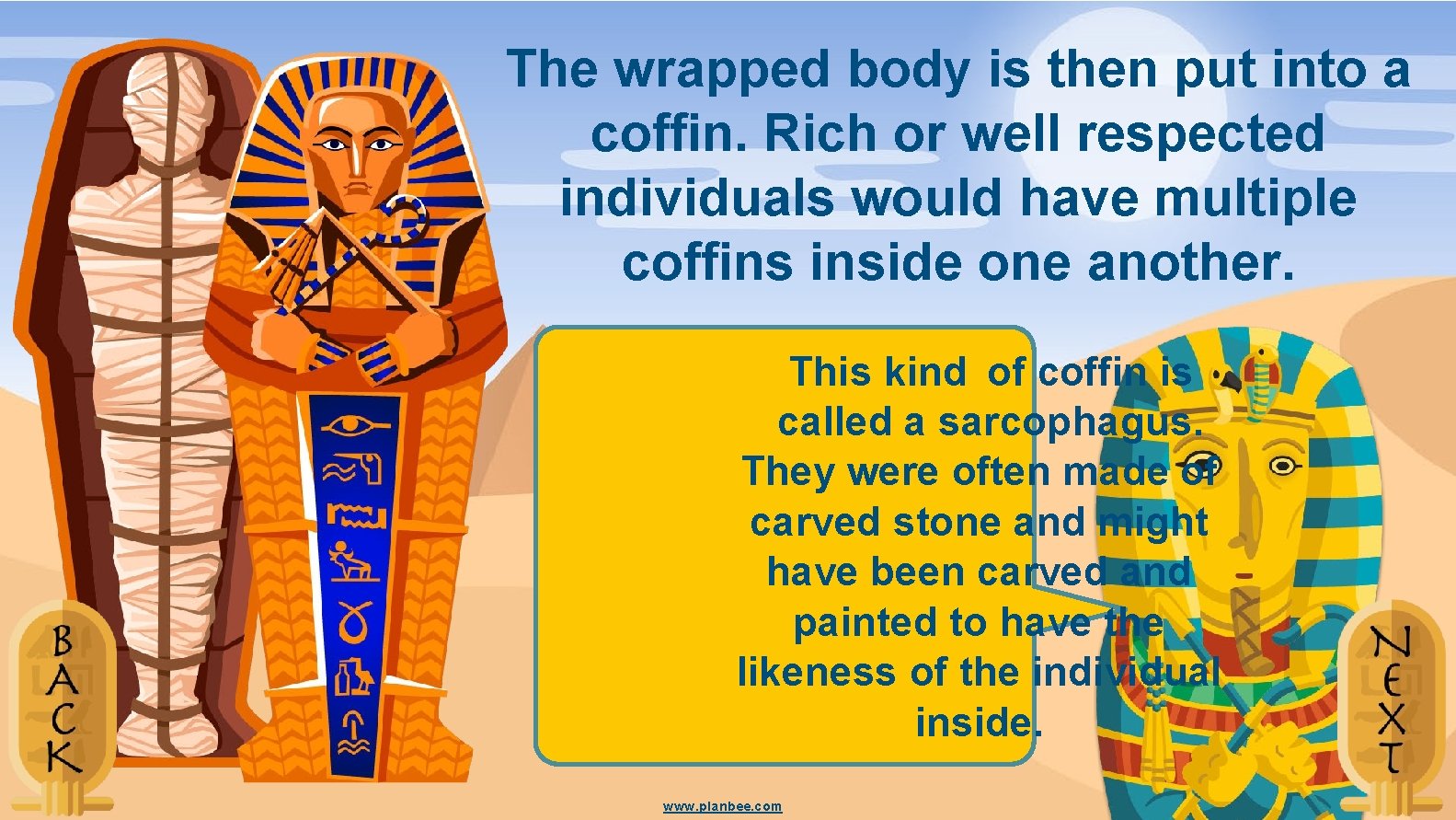
The wrapped body is then put into a coffin. Rich or well respected individuals would have multiple coffins inside one another. This kind of coffin is called a sarcophagus. They were often made of carved stone and might have been carved and painted to have the likeness of the individual inside. www. planbee. com
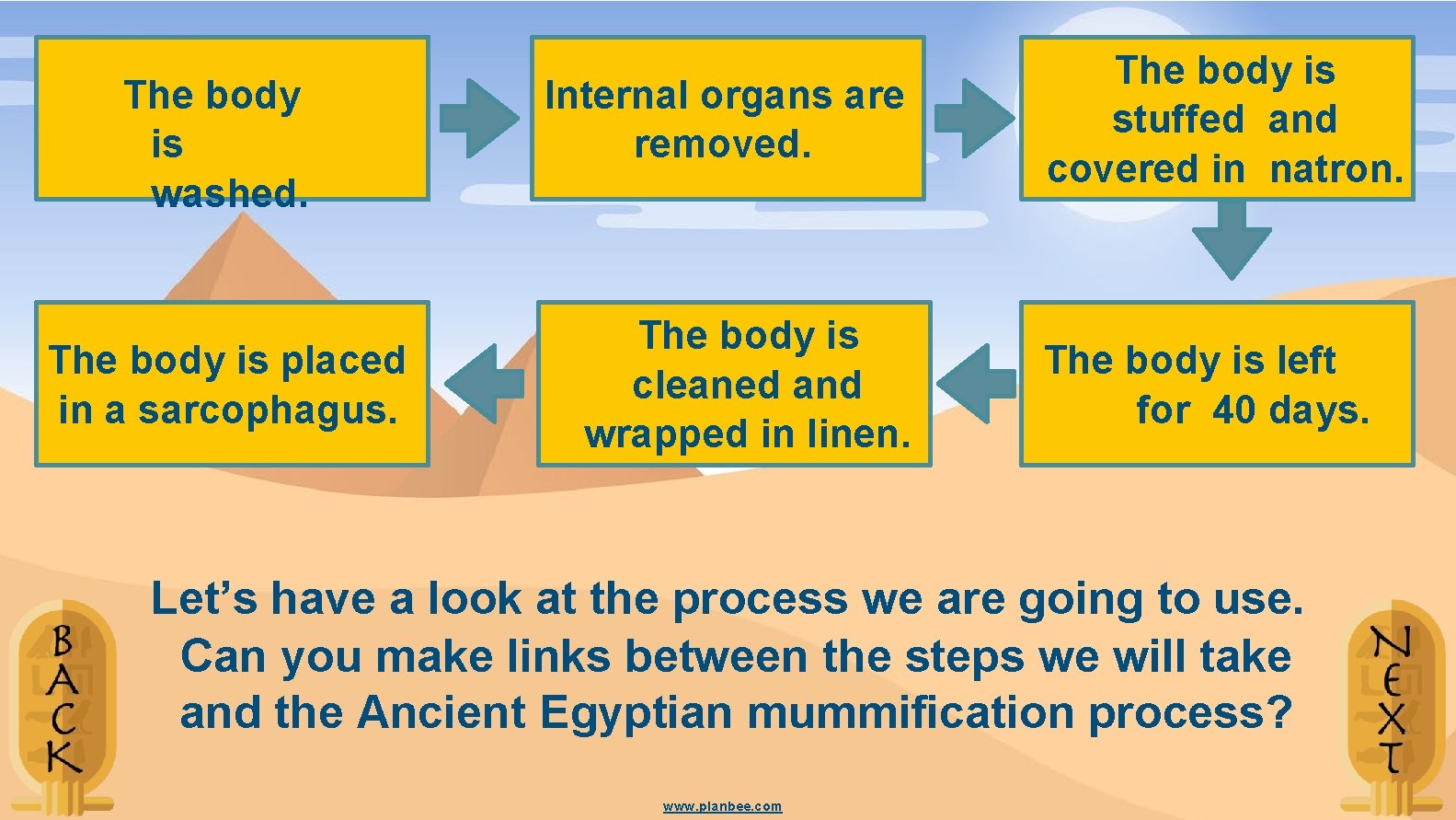
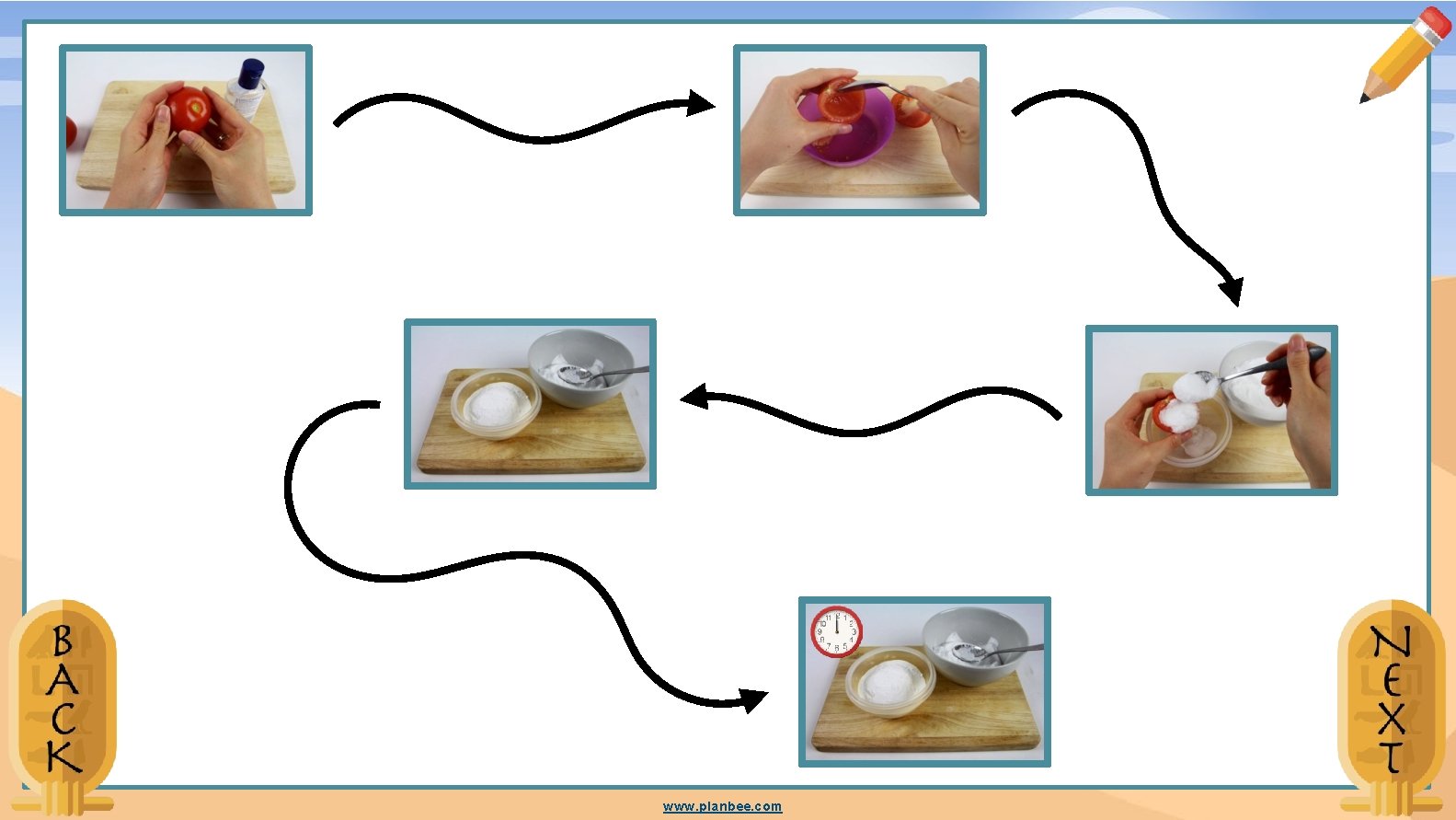
The body is washed. The body is placed in a sarcophagus. Internal organs are removed. The body is cleaned and wrapped in linen. The body is stuffed and covered in natron. The body is left for 40 days. Let’s have a look at the process we are going to use. Can you make links between the steps we will take and the Ancient Egyptian mummification process? www. planbee. com
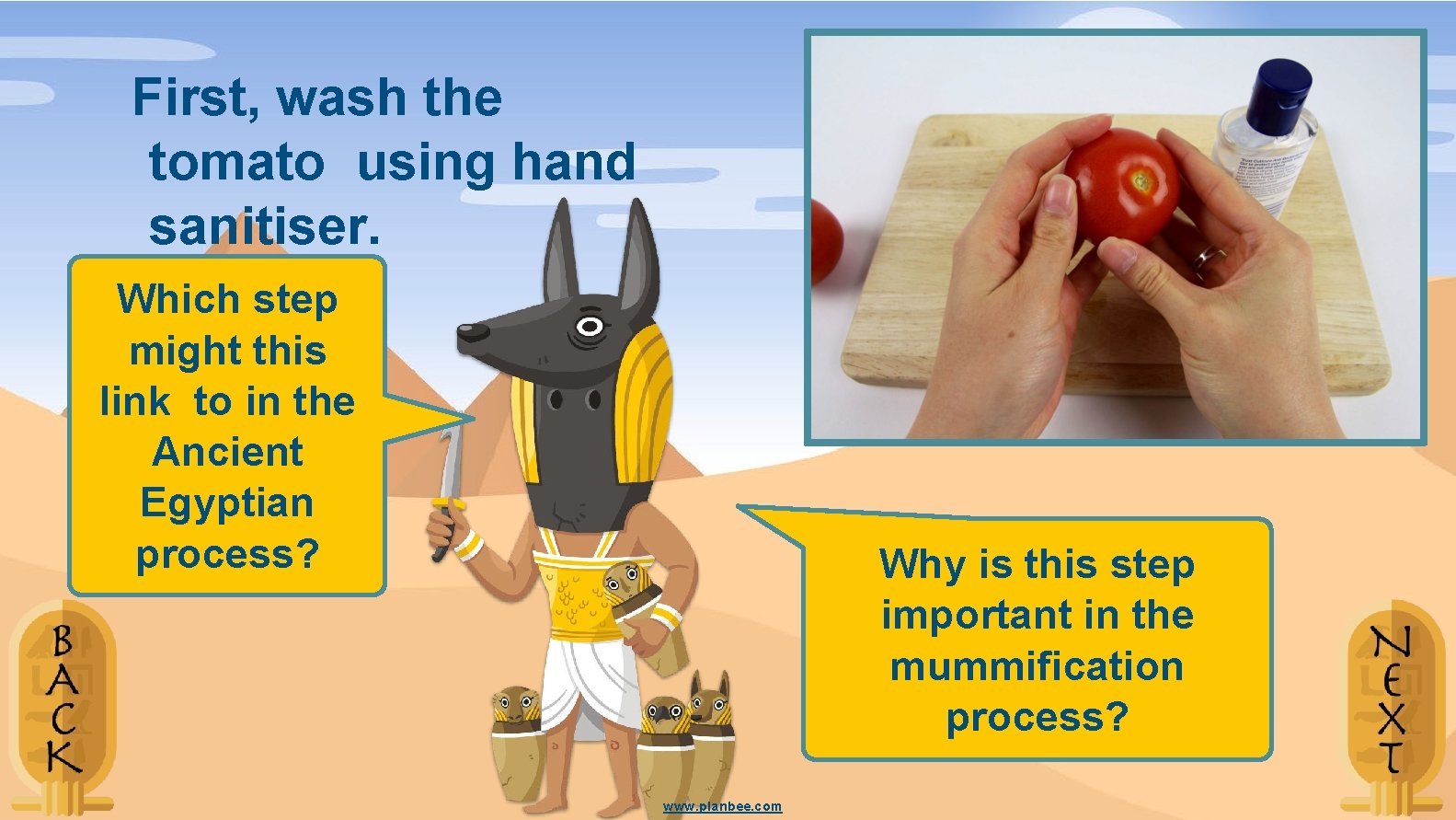
First, wash the tomato using hand sanitiser. Which step might this link to in the Ancient Egyptian process? Why is this step important in the mummification process? www. planbee. com
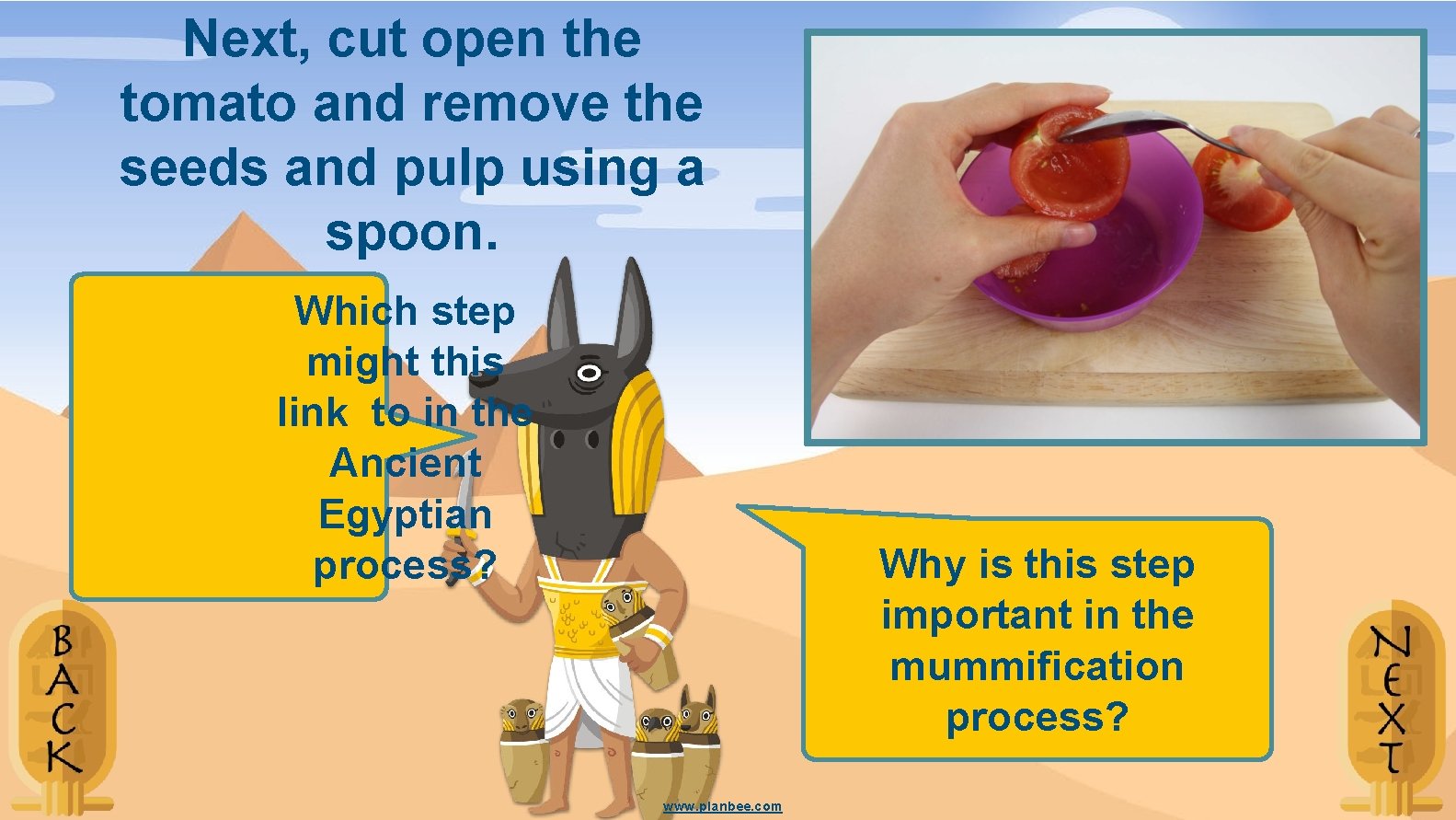
Next, cut open the tomato and remove the seeds and pulp using a spoon. Which step might this link to in the Ancient Egyptian process? Why is this step important in the mummification process? www. planbee. com
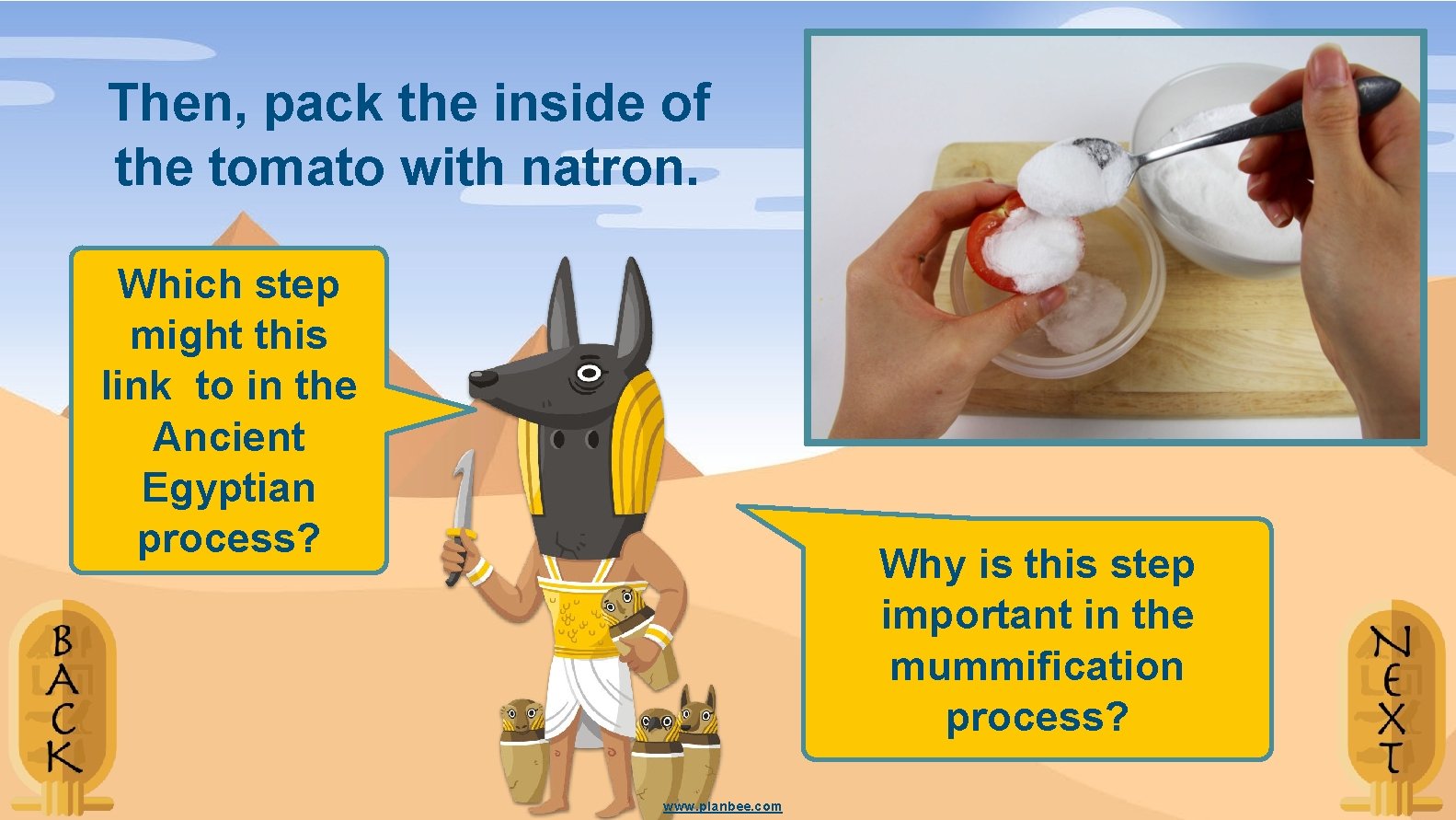
Then, pack the inside of the tomato with natron. Which step might this link to in the Ancient Egyptian process? Why is this step important in the mummification process? www. planbee. com
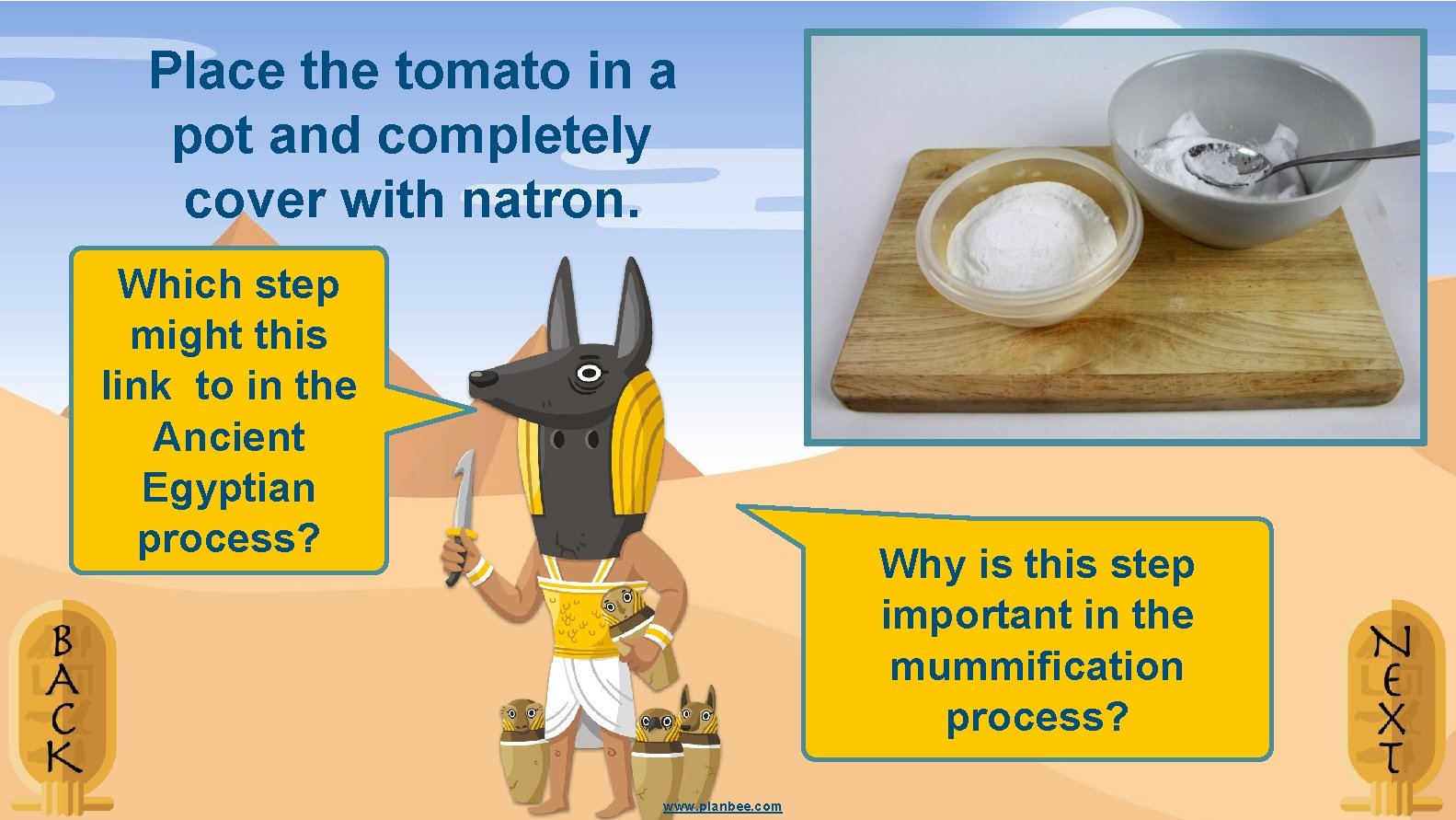
Place the tomato in a pot and completely cover with natron. Which step might this link to in the Ancient Egyptian process? Why is this step important in the mummification process? www. planbee. com
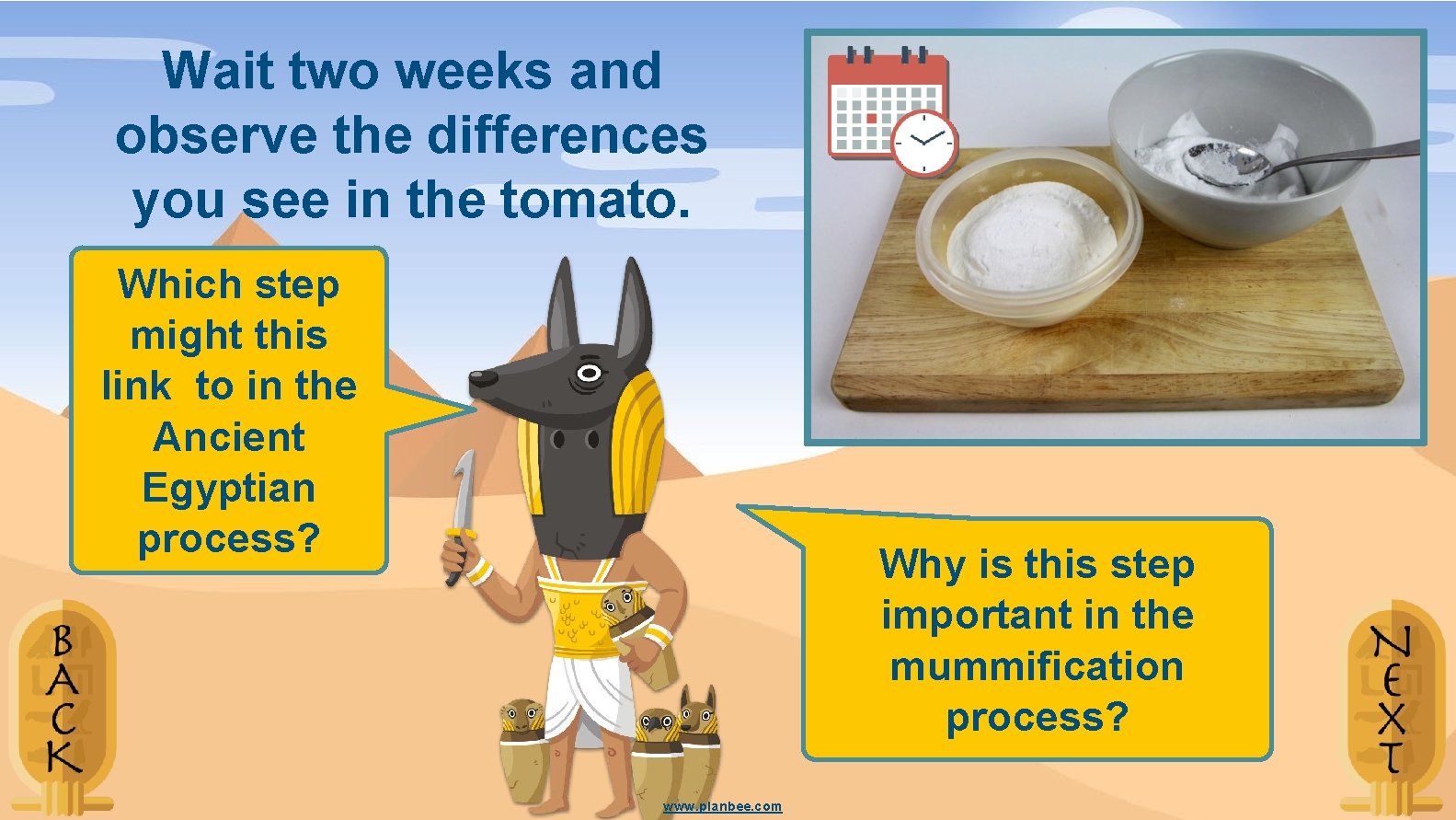
Wait two weeks and observe the differences you see in the tomato. Which step might this link to in the Ancient Egyptian process? Why is this step important in the mummification process? www. planbee. com
www. planbee. com
Plenary Were there any big differences between the Ancient Egyptian mummification process and the one we will be doing? www. planbee. com
- Slides: 20