
Learning Objective To be able to Describe bacterial
Learning Objective To be able to: Describe bacterial diseases and the use of antibiotics Key Words: Bacteria, antibiotic, disease
05 February 2022 Bacterial Diseases Date and title in books. You need a pen, pencil & a ruler. Starter Activity – 2 minutes Exam Question
Learning Outcomes (F) Target 1 -9 Identify that antibiotics treat bacterial infections only (F/H) Target 4 -9 Describe how antibiotics work (H) Target 5 -9 Explain the issues with bacteria becoming resistant to antibiotics Extension: Application of Knowledge Target 8/9 Explain the treatment options for pain, viral and bacteria diseases using data.
Salmonella • Salmonella is food poisoning spread by bacteria that is eaten. • In the UK, poulty are vaccinated again salmonella to control the spread. • Salmonella causes stomach cramps, vomiting and diarrhoea. These are caused by the toxins released from the bacteria.

Invasion! Pathogens are micro-organisms that can cause disease. What happens when a pathogen enters your body? The pathogen begins to reproduce and may make toxins. The pathogen or toxins may destroy the body’s cells and make you feel unwell. Painkillers can relieve the symptoms of an infection but do not kill the pathogen. Your immune system must begin to mount an attack. 5 of 25 © Boardworks Ltd 2011
Antibiotics • Antibiotics damage bacteria and eventually kill them. Each type of antibiotic interferes with the bacteria’s life processes, e. g making a cell wall. • They do not kill viruses, protozoa or fungi. • However, they don’t affect human cells either.
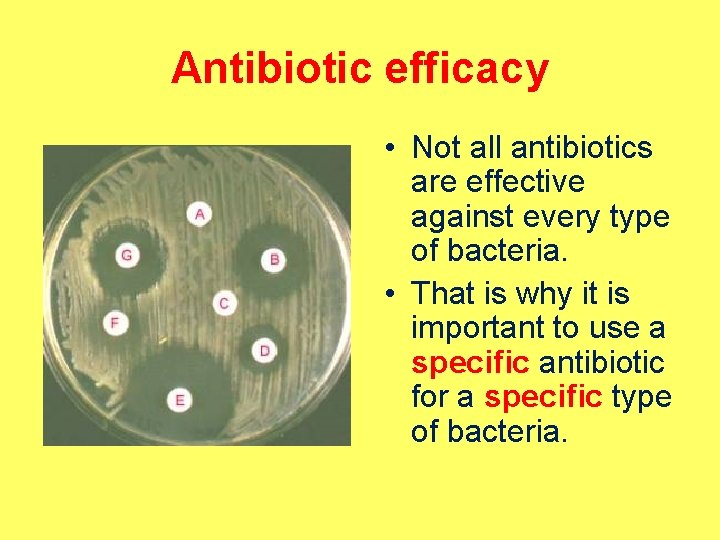
Antibiotic efficacy • Not all antibiotics are effective against every type of bacteria. • That is why it is important to use a specific antibiotic for a specific type of bacteria.
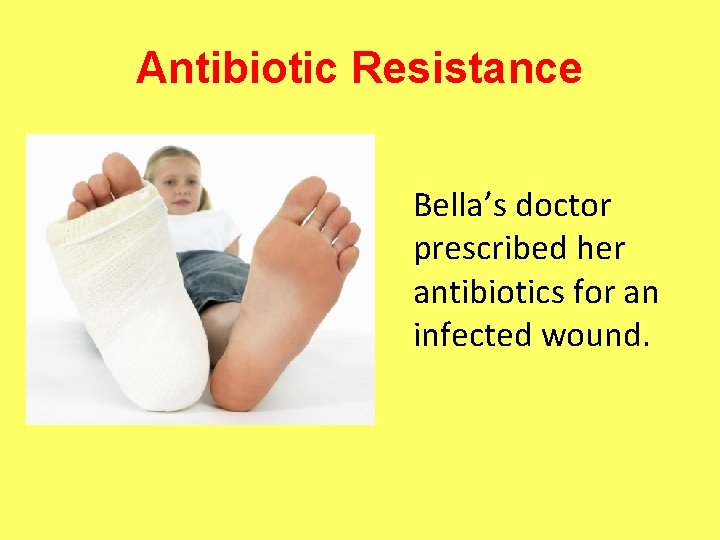
Antibiotic Resistance Bella’s doctor prescribed her antibiotics for an infected wound.
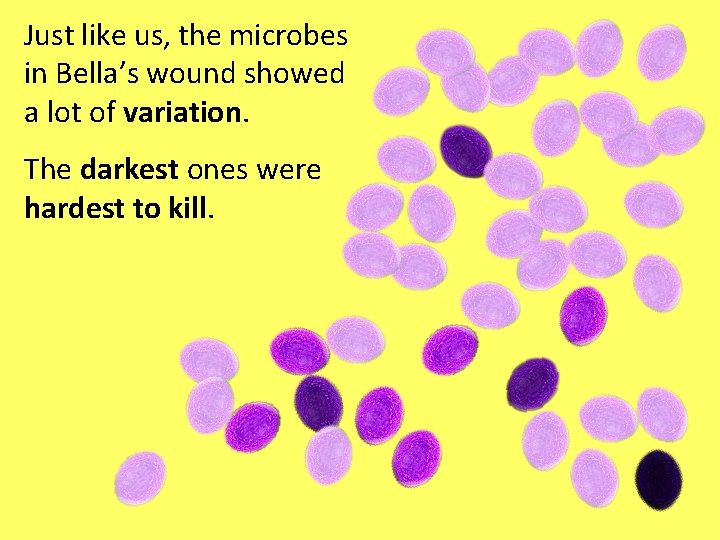
Just like us, the microbes in Bella’s wound showed a lot of variation. The darkest ones were hardest to kill.
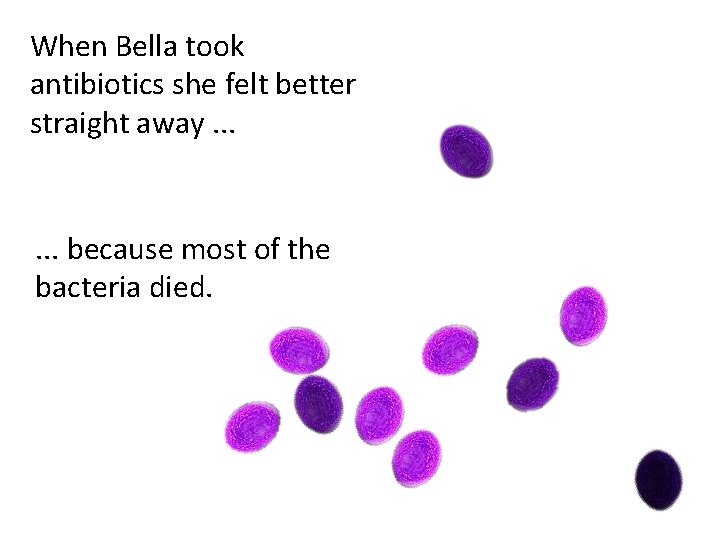
When Bella took antibiotics she felt better straight away. . . because most of the bacteria died.
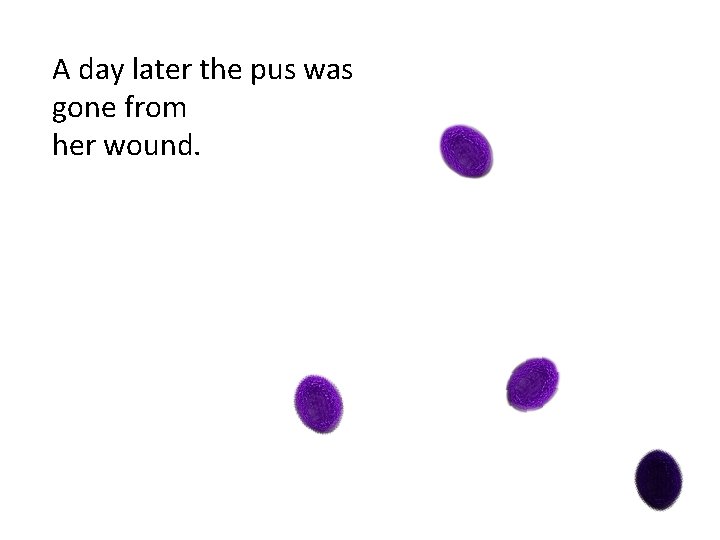
A day later the pus was gone from her wound.
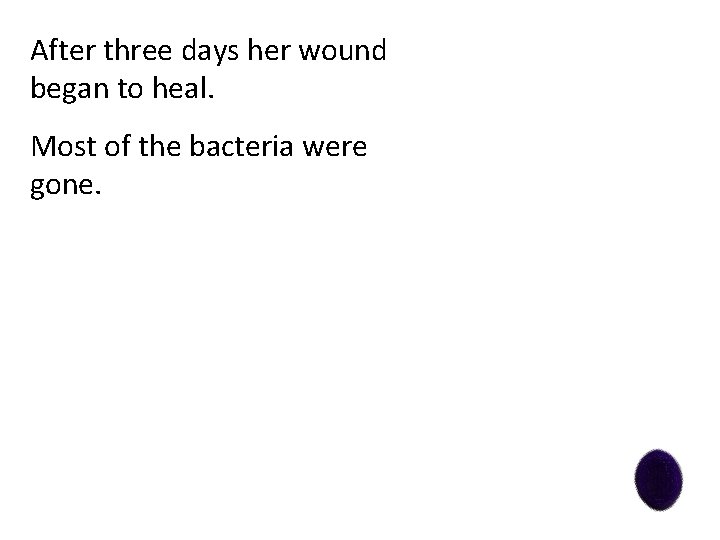
After three days her wound began to heal. Most of the bacteria were gone.
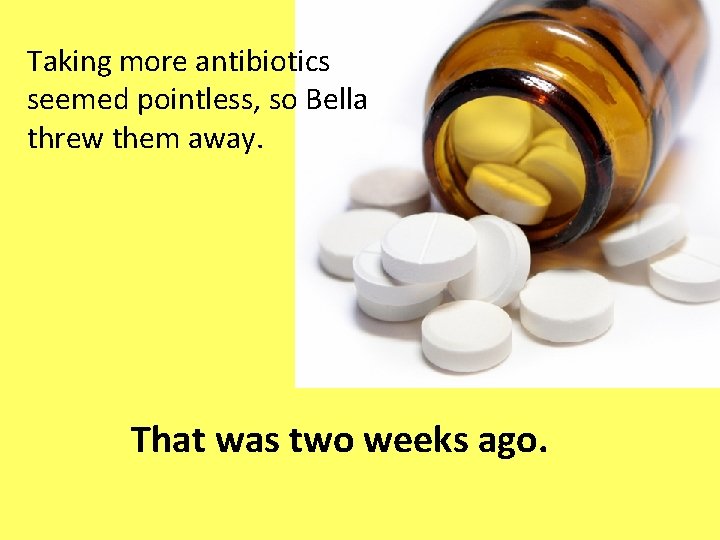
Taking more antibiotics seemed pointless, so Bella threw them away. That was two weeks ago.
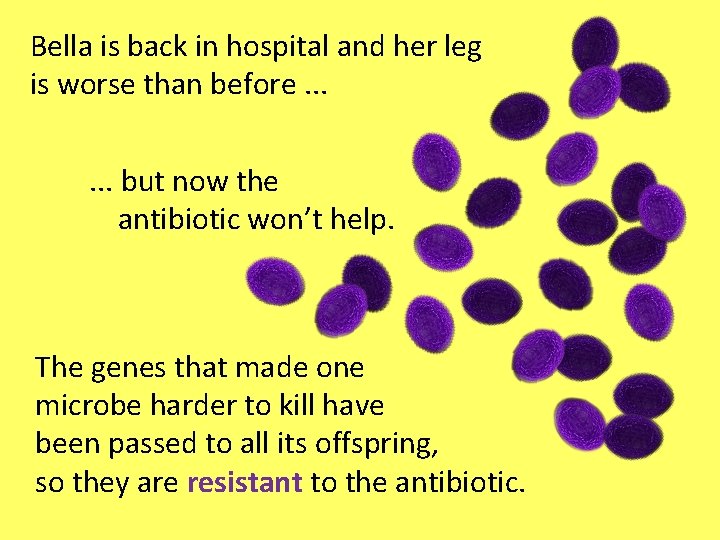
Bella is back in hospital and her leg is worse than before. . . but now the antibiotic won’t help. The genes that made one microbe harder to kill have been passed to all its offspring, so they are resistant to the antibiotic.
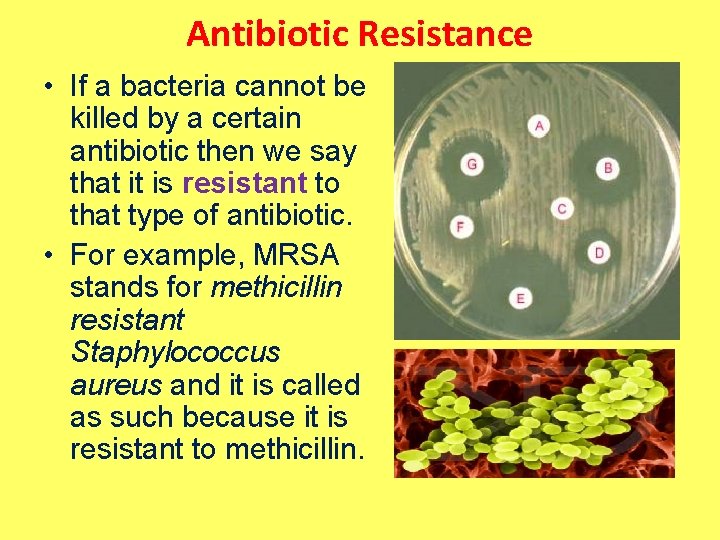
Antibiotic Resistance • If a bacteria cannot be killed by a certain antibiotic then we say that it is resistant to that type of antibiotic. • For example, MRSA stands for methicillin resistant Staphylococcus aureus and it is called as such because it is resistant to methicillin.
Gonorrhoea • Gonorrhoea is a sexually transmitted disease (STD), spread by sexual contact. • It causes a thick yellow or green discharge from the vagina or penis and pain when urinating. • It was easily treated by penicillin but has become resistant due to over using penicillin.
- Slides: 16