
Learning Objective 8 Summarize guidelines for riding safely

Learning Objective 8 Summarize guidelines for riding safely on the apparatus. 2– 2
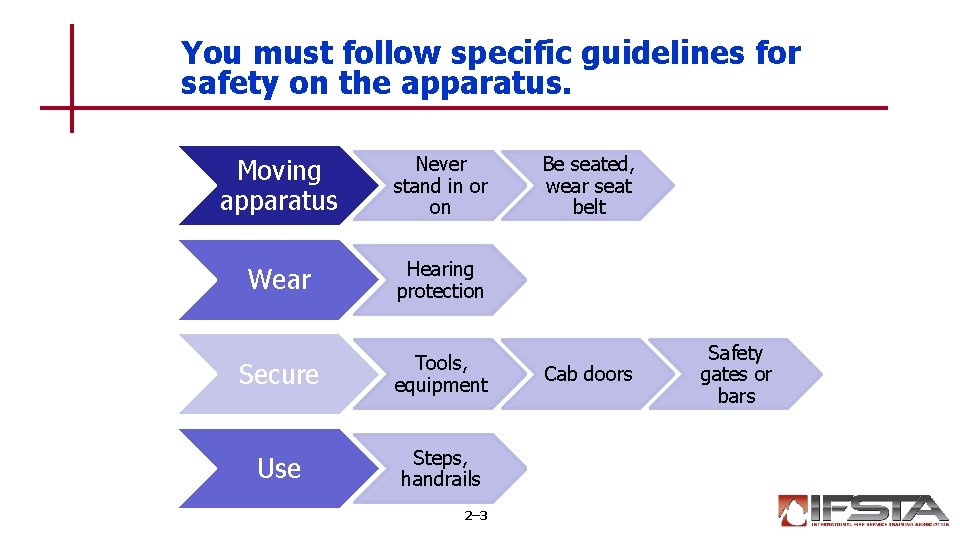
You must follow specific guidelines for safety on the apparatus. Moving apparatus Never stand in or on Wear Hearing protection Secure Tools, equipment Use Steps, handrails 2– 3 Be seated, wear seat belt Cab doors Safety gates or bars
REVIEW QUESTION What are the guidelines for safely riding on, mounting, and dismounting an apparatus? 2– 4
Learning Objective 9 Describe ways to help prevent accidents and injuries in fire stations and facilities. 2– 5
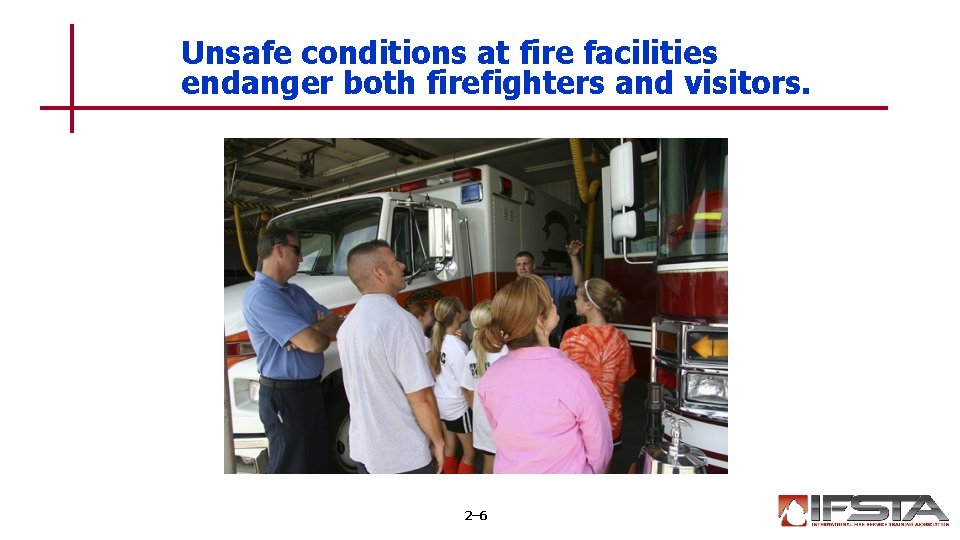
Unsafe conditions at fire facilities endanger both firefighters and visitors. 2– 6
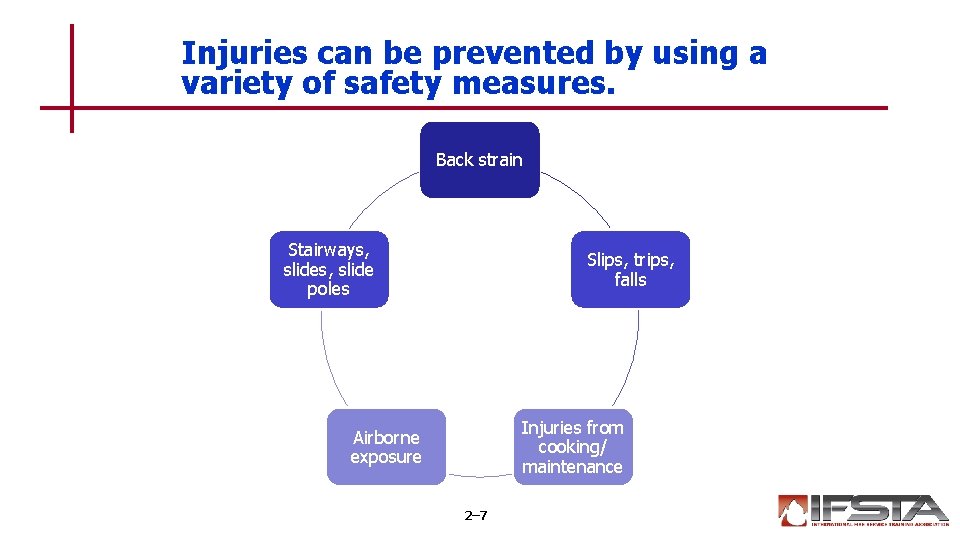
Injuries can be prevented by using a variety of safety measures. Back strain Stairways, slide poles Slips, trips, falls Injuries from cooking/ maintenance Airborne exposure 2– 7
REVIEW QUESTION How can firefighters prevent most back and leg strains related to injuries at fire stations and facilities? 2– 8
Learning Objective 10 Explain general guidelines for tool and equipment safety. 2– 9
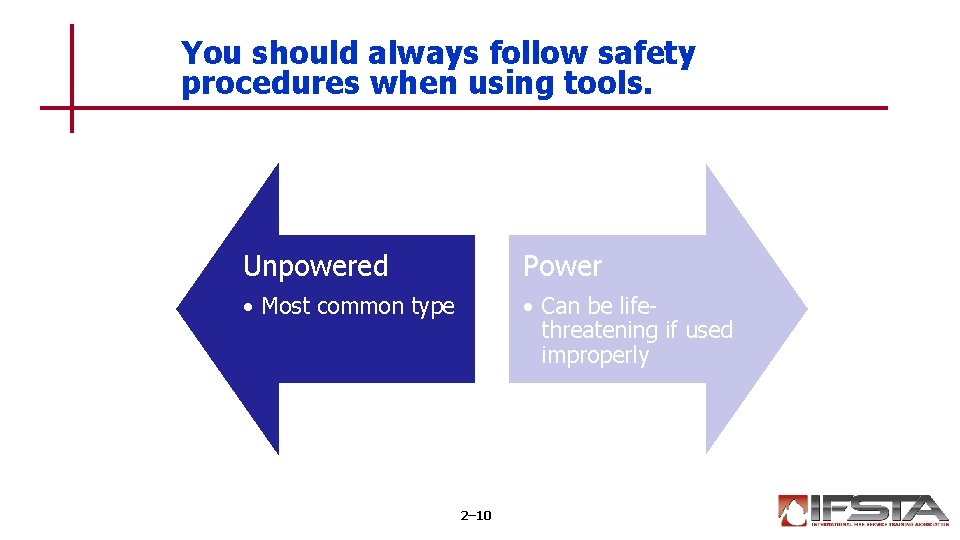
You should always follow safety procedures when using tools. Unpowered Power • Most common type • Can be lifethreatening if used improperly 2– 10
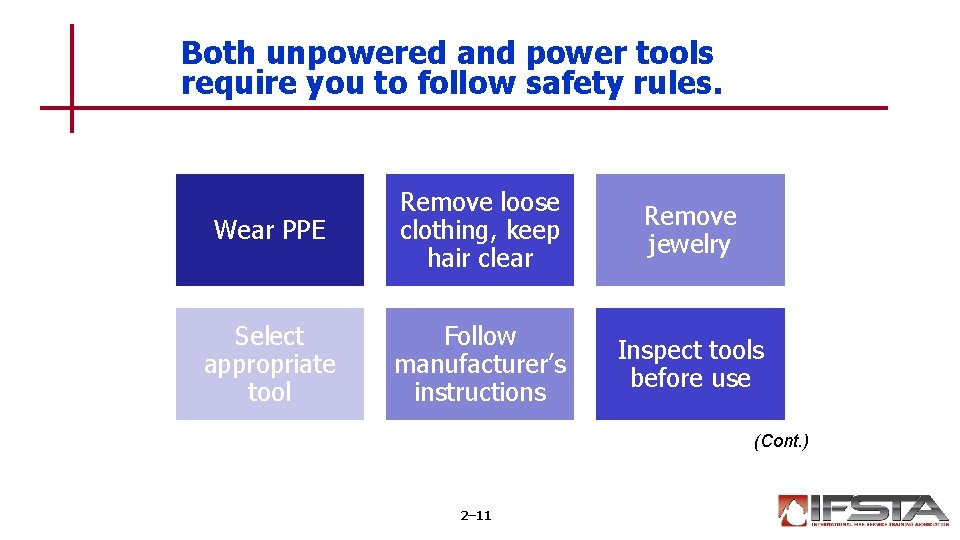
Both unpowered and power tools require you to follow safety rules. Wear PPE Remove loose clothing, keep hair clear Remove jewelry Select appropriate tool Follow manufacturer’s instructions Inspect tools before use (Cont. ) 2– 11
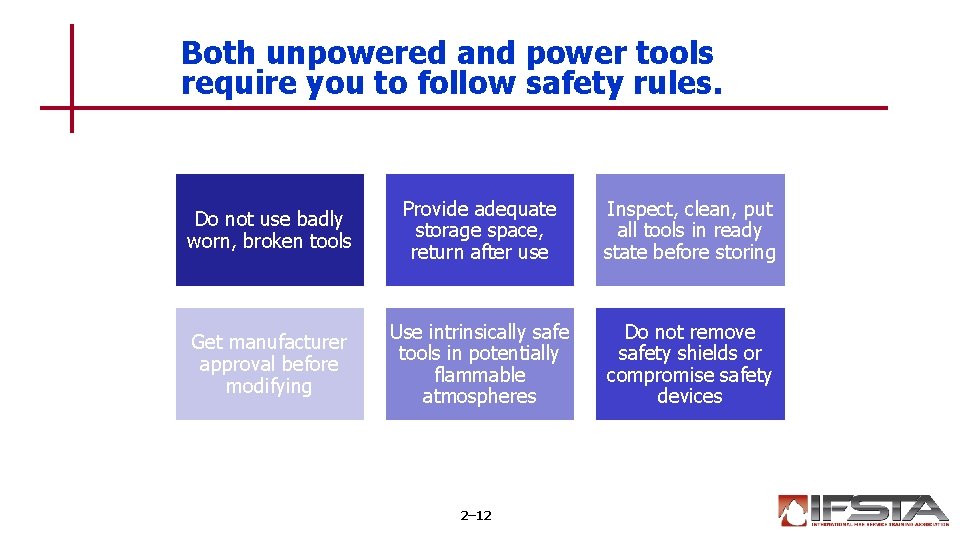
Both unpowered and power tools require you to follow safety rules. Do not use badly worn, broken tools Provide adequate storage space, return after use Inspect, clean, put all tools in ready state before storing Get manufacturer approval before modifying Use intrinsically safe tools in potentially flammable atmospheres Do not remove safety shields or compromise safety devices 2– 12
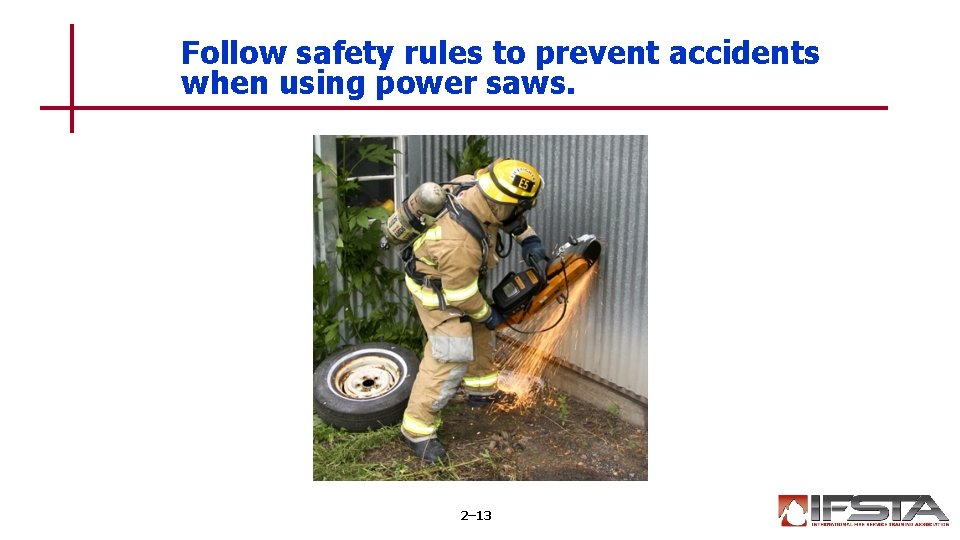
Follow safety rules to prevent accidents when using power saws. 2– 13
REVIEW QUESTION What are two general guidelines to follow that can improve tool and equipment safety? 2– 14
Learning Objective 11 Describe ways to maintain safety in training. 2– 15
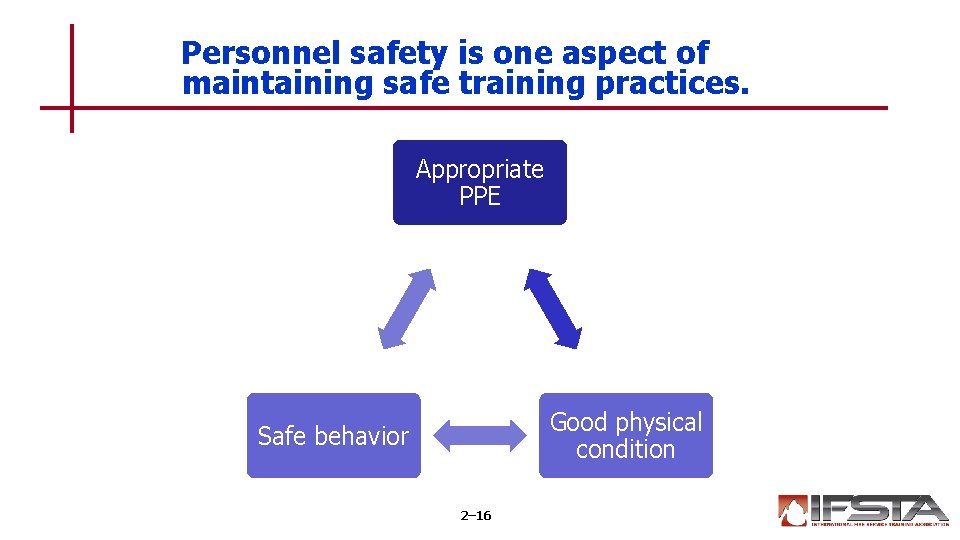
Personnel safety is one aspect of maintaining safe training practices. Appropriate PPE Good physical condition Safe behavior 2– 16
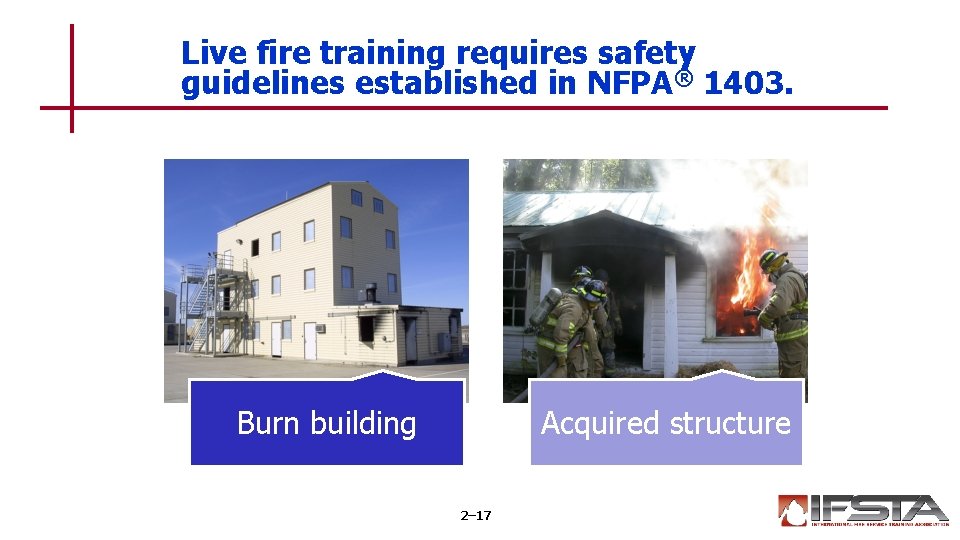
Live fire training requires safety guidelines established in NFPA® 1403. Burn building Acquired structure 2– 17
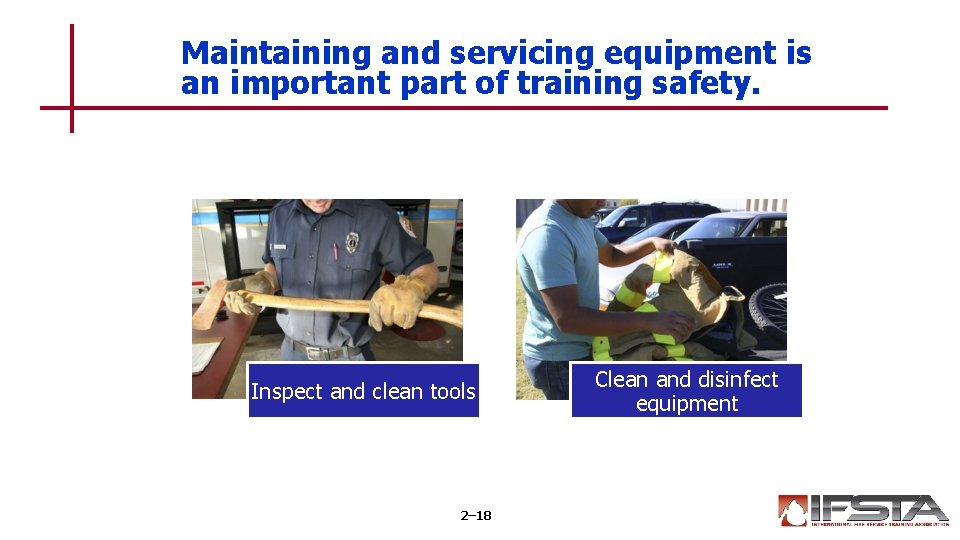
Maintaining and servicing equipment is an important part of training safety. Inspect and clean tools 2– 18 Clean and disinfect equipment
REVIEW QUESTION What three steps can you take to maintain personnel safety during training? 2– 19
Learning Objective 12 State the practices a Firefighter I uses for emergency scene preparedness and safety. 2– 20
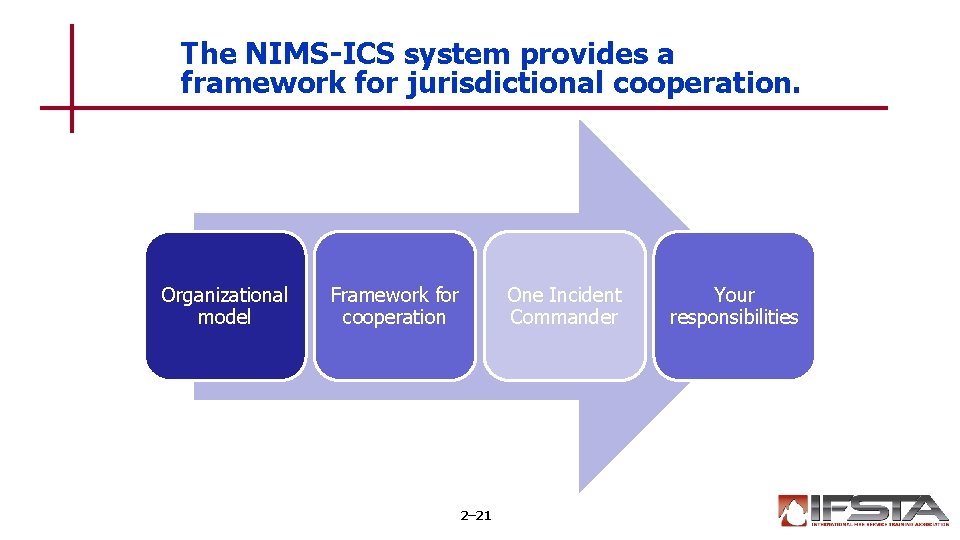
The NIMS-ICS system provides a framework for jurisdictional cooperation. Organizational model Framework for cooperation One Incident Commander 2– 21 Your responsibilities
Preparedness is also an important aspect of firefighter safety. Volunteer Career 2– 22 EMS
Emergency scene safety requires following some fundamental rules. Situational awareness Rules Basic structural techniques 2– 23
REVIEW QUESTION What fundamental rules can help minimize risks at an emergency scene? 2– 24
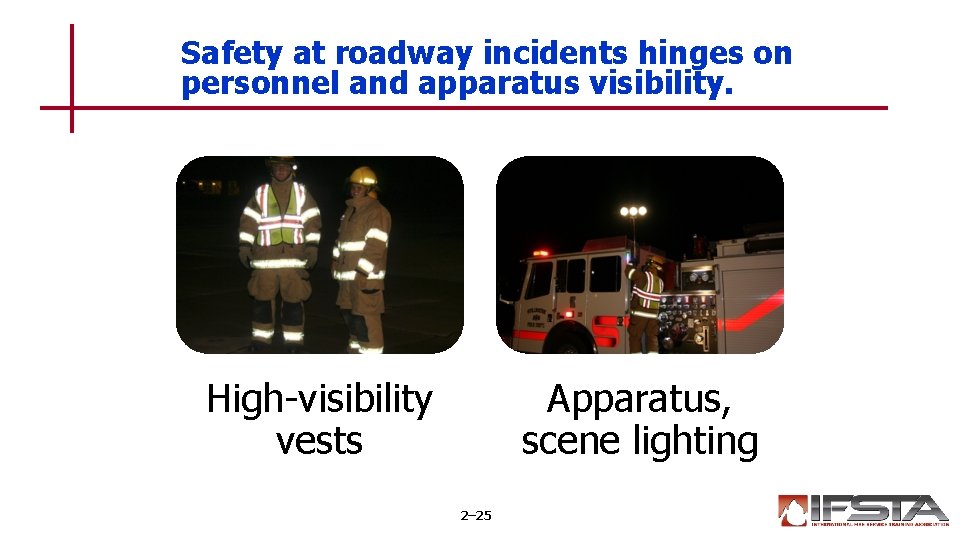
Safety at roadway incidents hinges on personnel and apparatus visibility. High-visibility vests Apparatus, scene lighting 2– 25
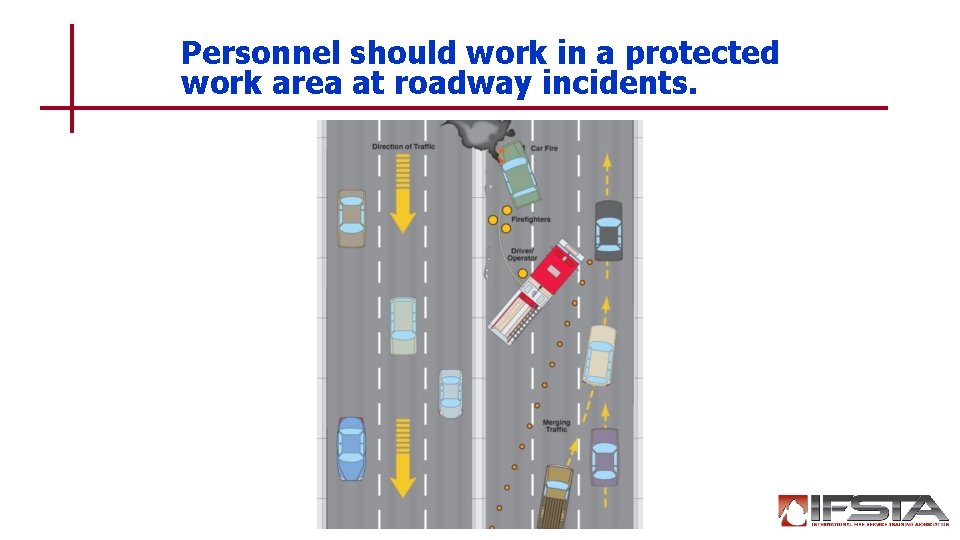
Personnel should work in a protected work area at roadway incidents. • 1– 26
REVIEW QUESTION What protective equipment is available to increase your safety at emergency scenes? 2– 27
Learning Objective 13 Summarize general guidelines for scene management including highway incidents, crowd control, and cordoning off emergency scenes. 2– 28
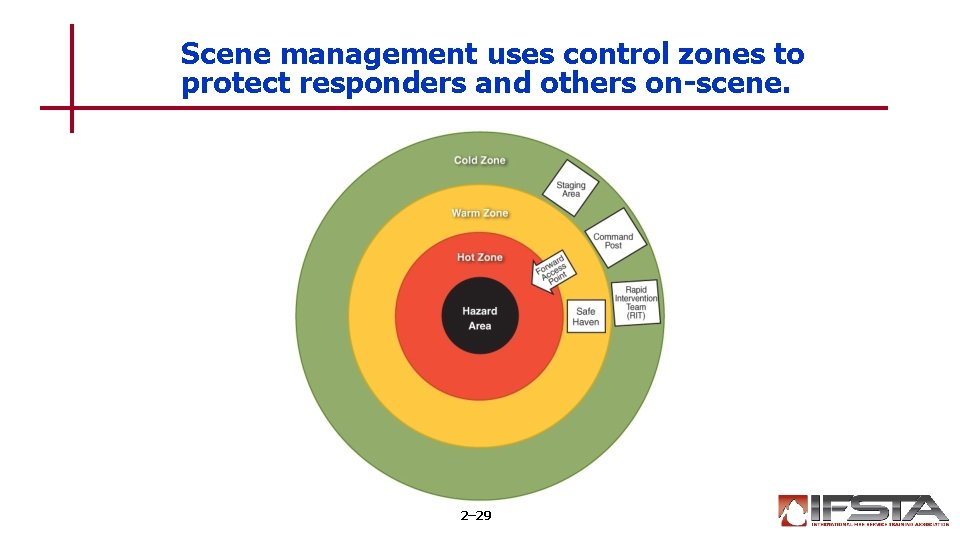
Scene management uses control zones to protect responders and others on-scene. 2– 29
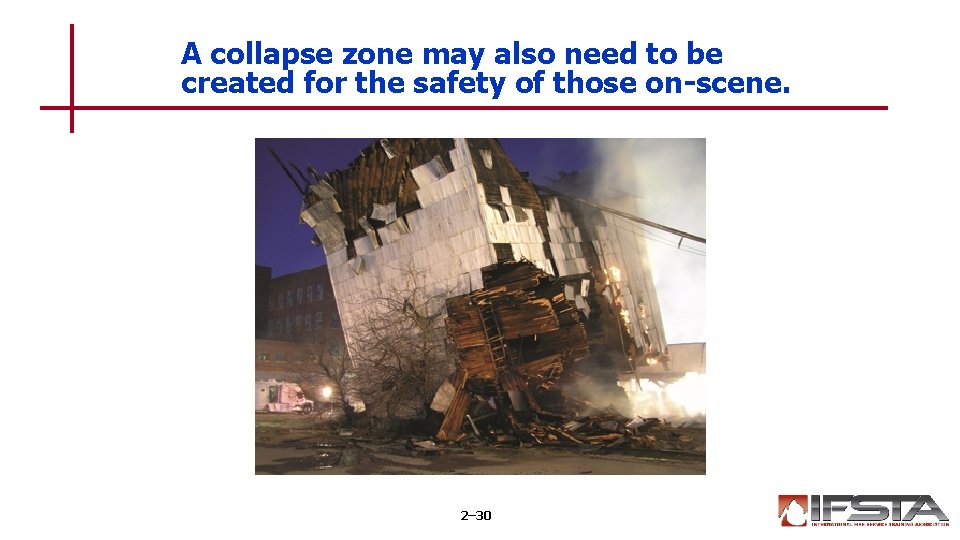
A collapse zone may also need to be created for the safety of those on-scene. 2– 30
REVIEW QUESTION What types of control zones may be used to establish scene security? 2– 31
Learning Objective 14 Explain the importance of personnel accountability. 2– 32
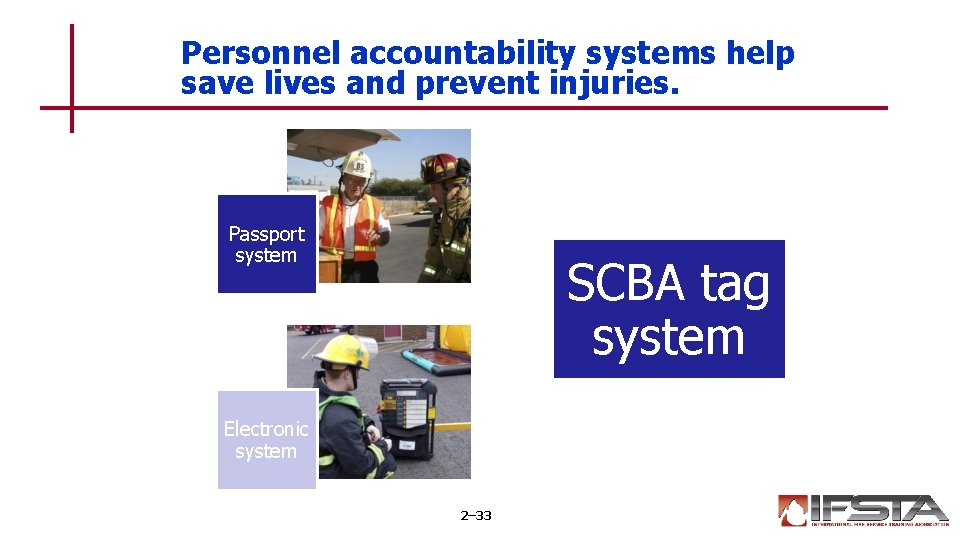
Personnel accountability systems help save lives and prevent injuries. Passport system SCBA tag system Electronic system 2– 33
REVIEW QUESTION Why is proper use of your personnel accountability system so important? 2– 34
Summary • Safety is essential to your mission of protecting the public. • Protect yourself by relying on situational awareness, wearing required PPE, following orders, and following departmental safety policies and procedures. (Cont. ) 2– 35
Summary • Take responsibility for your own safety – you cannot protect the community unless you first protect yourself. 2– 36
- Slides: 36