
Learning Objective 4 Describe webbing and webbing construction
Learning Objective 4 Describe webbing and webbing construction. 8– 1
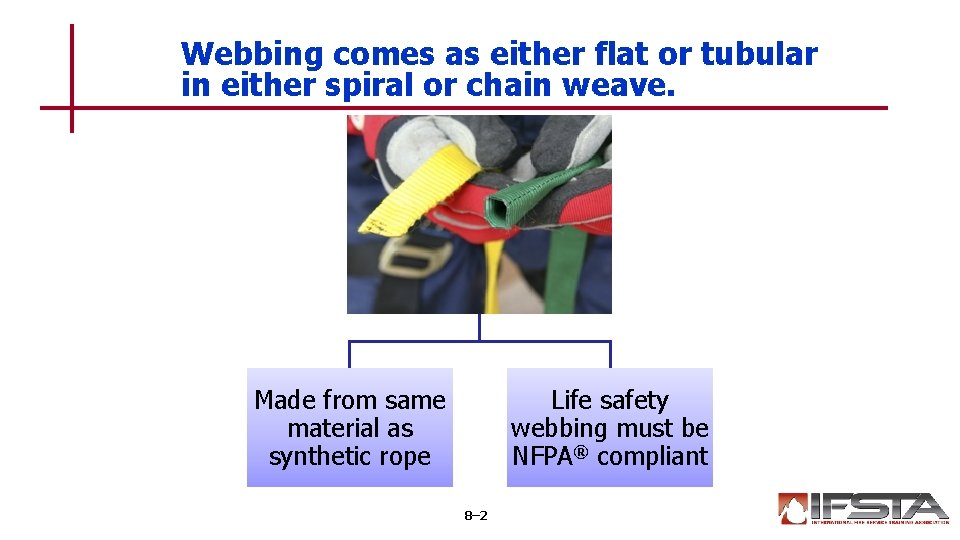
Webbing comes as either flat or tubular in either spiral or chain weave. Made from same material as synthetic rope Life safety webbing must be NFPA® compliant 8– 2
Life safety webbing is used for four different purposes. Support firefighters during technical rescue Construct technical rescue anchor systems Package and secure victims to litters Fasten rescue components together 8– 3
Utility webbing is not regulated by a standard. Must support load limit plus safety factor Used for variety of tasks 8– 4
REVIEW QUESTION What are the two main uses for 8– 5 webbing?
Webbing care and maintenance procedures are similar to rope. Follow same guidelines as synthetic fiber rope Always follow manufacturer’s instructions 8– 6
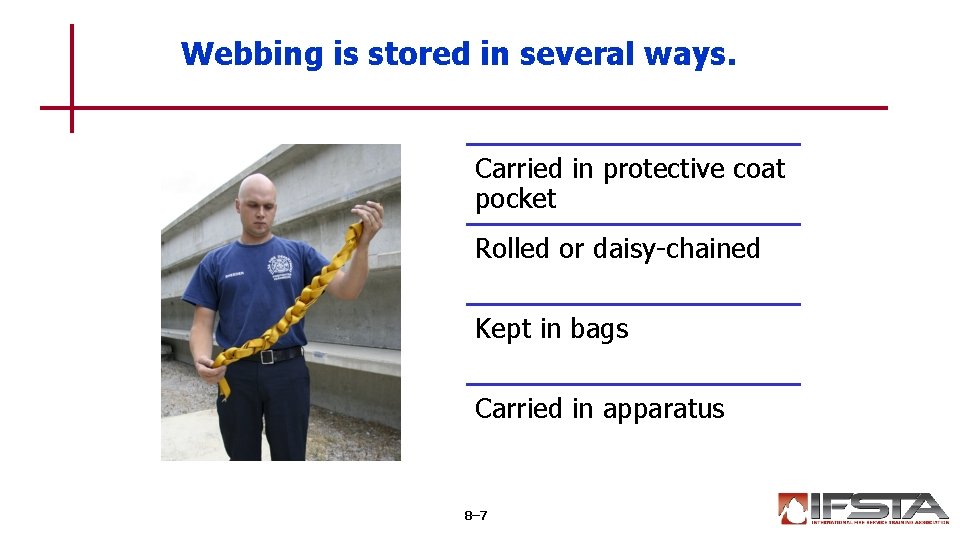
Webbing is stored in several ways. Carried in protective coat pocket Rolled or daisy-chained Kept in bags Carried in apparatus 8– 7
Learning Objective 5 and 6 Describe parts of a rope and considerations in tying a knot. Describe knot characteristics and knot elements. 8– 8
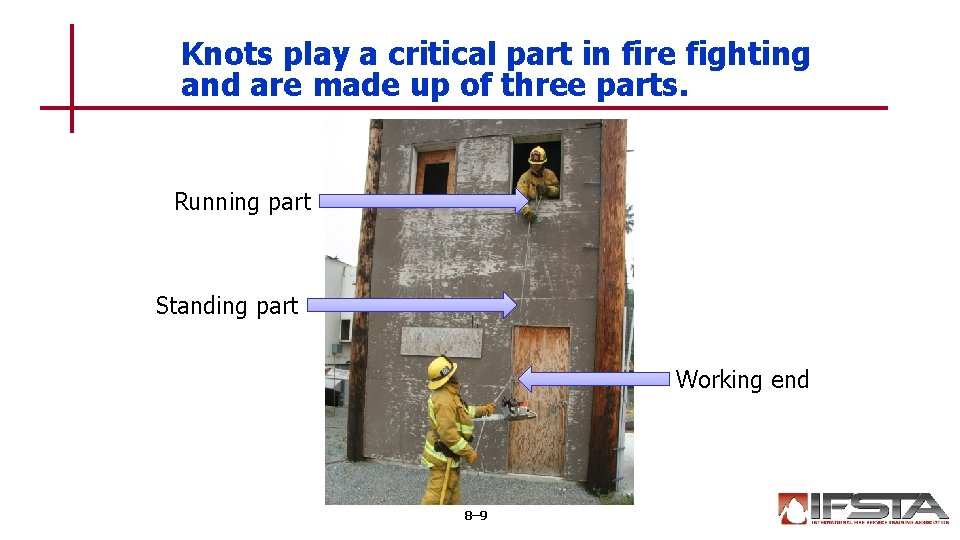
Knots play a critical part in fire fighting and are made up of three parts. Running part Standing part Working end 8– 9
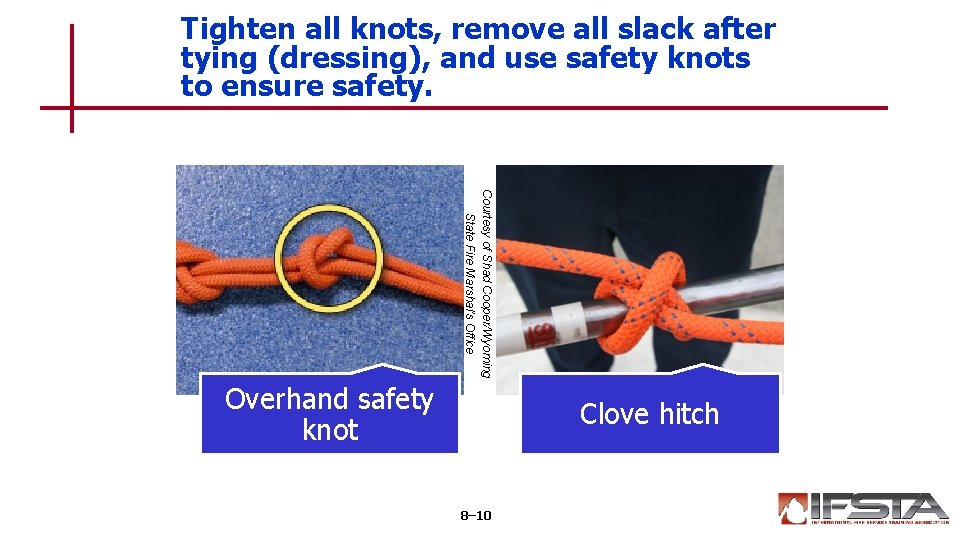
Tighten all knots, remove all slack after tying (dressing), and use safety knots to ensure safety. Courtesy of Shad Cooper/Wyoming State Fire Marshal’s Office Overhand safety knot Clove hitch 8– 10
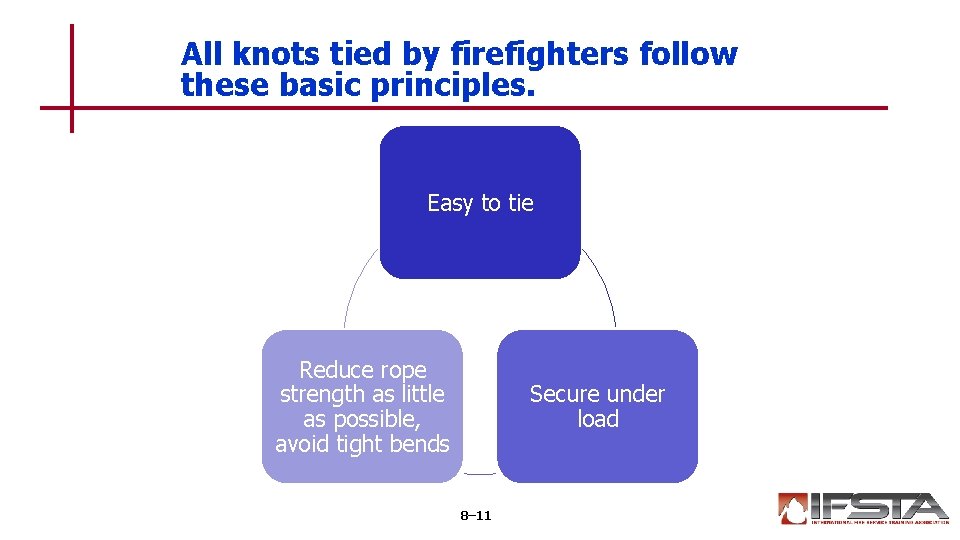
All knots tied by firefighters follow these basic principles. Easy to tie Reduce rope strength as little as possible, avoid tight bends Secure under load 8– 11
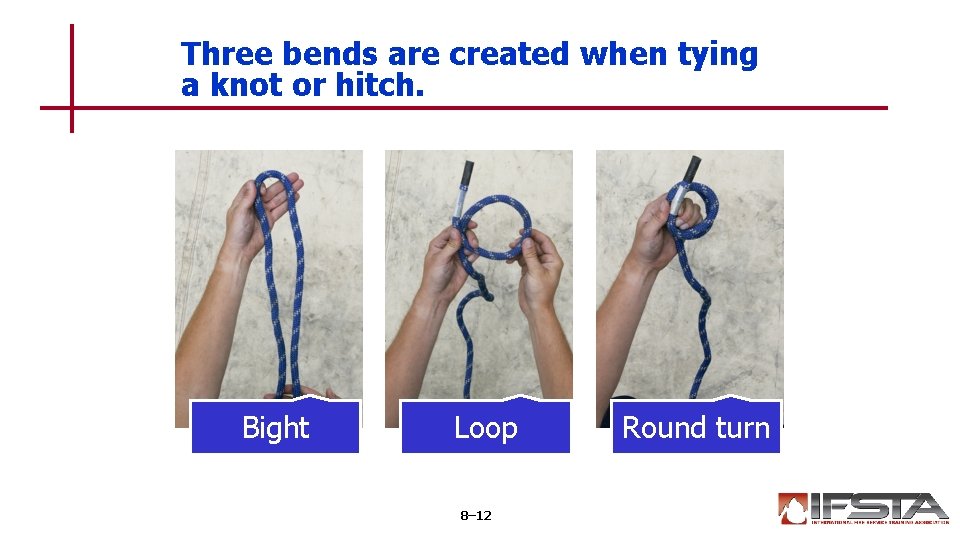
Three bends are created when tying a knot or hitch. Bight Loop 8– 12 Round turn
REVIEW QUESTION What are three parts of a knot? 8– 13
Learning Objective 7 Describe characteristics of knots commonly used in the fire service. 8– 14
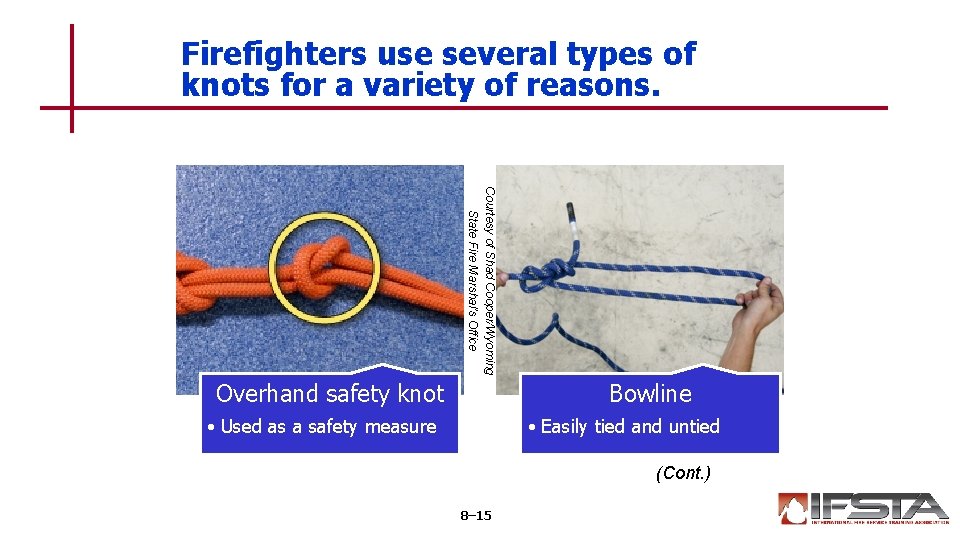
Firefighters use several types of knots for a variety of reasons. Courtesy of Shad Cooper/Wyoming State Fire Marshal’s Office Overhand safety knot Bowline • Used as a safety measure • Easily tied and untied (Cont. ) 8– 15
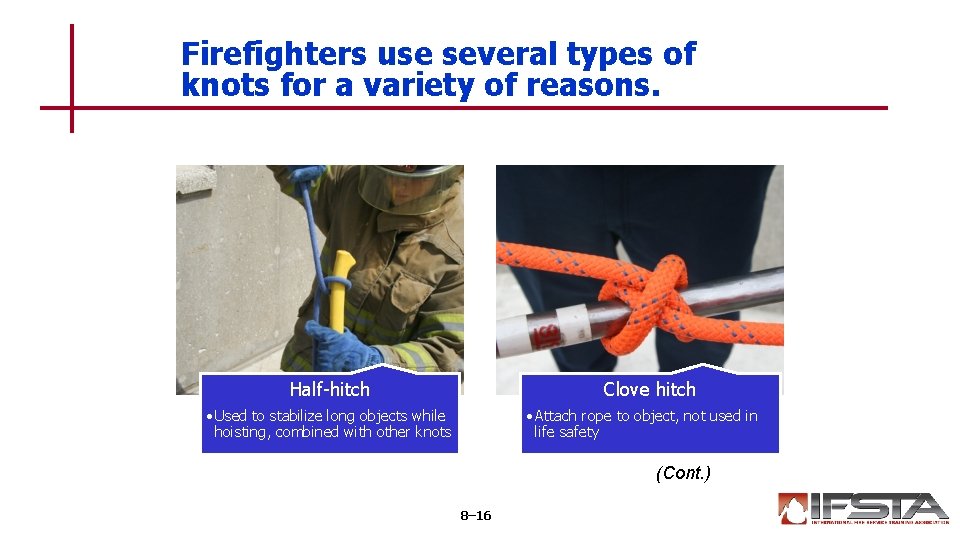
Firefighters use several types of knots for a variety of reasons. Half-hitch Clove hitch • Used to stabilize long objects while hoisting, combined with other knots • Attach rope to object, not used in life safety (Cont. ) 8– 16
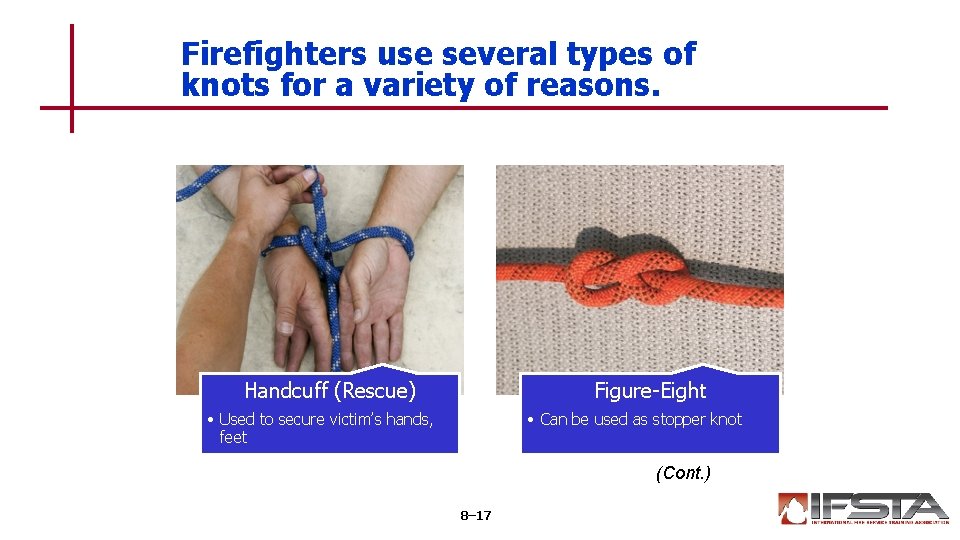
Firefighters use several types of knots for a variety of reasons. Handcuff (Rescue) Figure-Eight • Used to secure victim’s hands, feet • Can be used as stopper knot (Cont. ) 8– 17
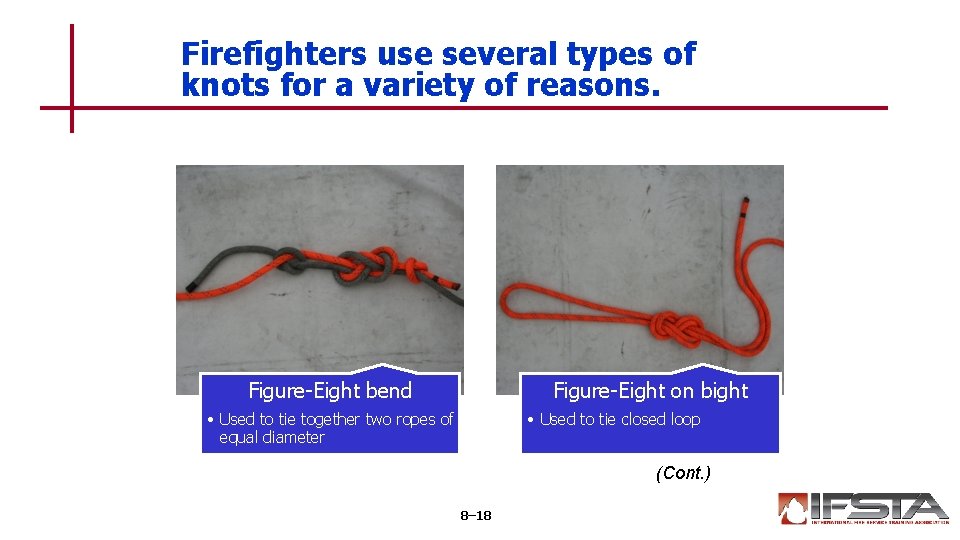
Firefighters use several types of knots for a variety of reasons. Figure-Eight bend Figure-Eight on bight • Used to tie together two ropes of equal diameter • Used to tie closed loop (Cont. ) 8– 18
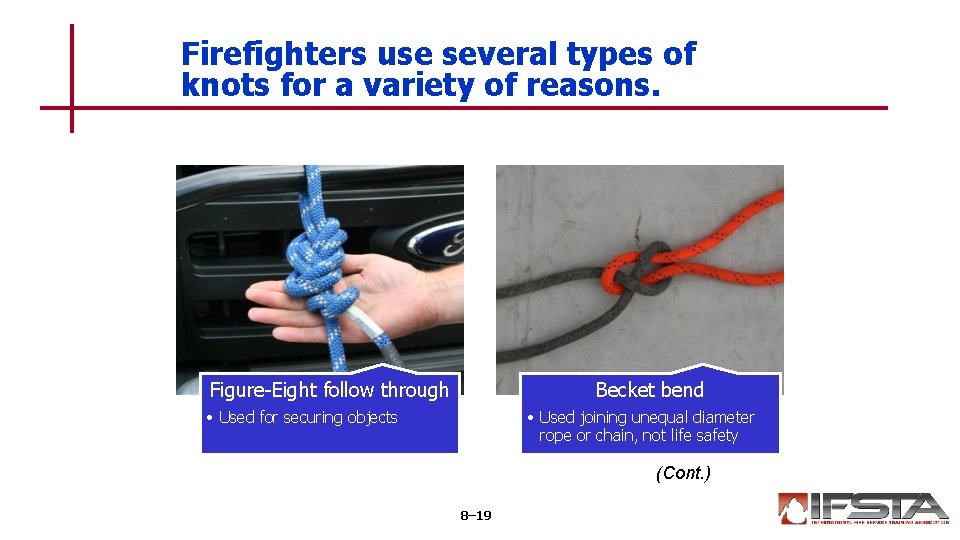
Firefighters use several types of knots for a variety of reasons. Figure-Eight follow through Becket bend • Used for securing objects • Used joining unequal diameter rope or chain, not life safety (Cont. ) 8– 19
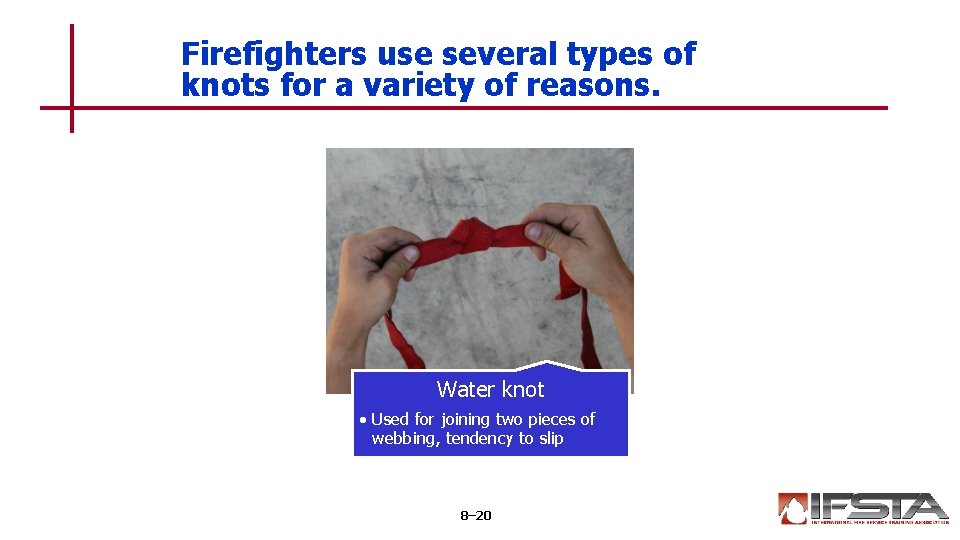
Firefighters use several types of knots for a variety of reasons. Water knot • Used for joining two pieces of webbing, tendency to slip 8– 20
REVIEW QUESTION What are three main elements of a knot that can be combined to create knots and hitches? 8– 21
Learning Objective 8 Select commonly used rope applications. 8– 22 hardware for specific
Learning Objective 9 Summarize hoisting safety considerations. 8– 23
Ropes and webbing have five main uses at emergency incidents. Rescue (life safety rope only) Hoist tools, equipment Search line Barrier to control zone Stabilization Never exceed the load ability of a rope. 8– 24
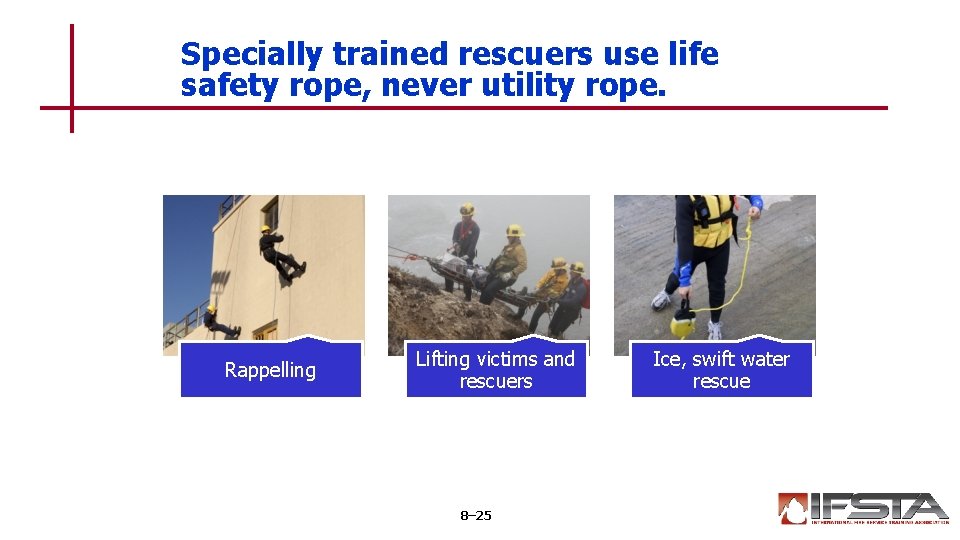
Specially trained rescuers use life safety rope, never utility rope. Rappelling Lifting victims and rescuers 8– 25 Ice, swift water rescue
Always keep safety first when hoisting tools and equipment. Hoisting SCBA prohibited by OSHA Control or tag line may be used Use proper knots, securing procedures 8– 26
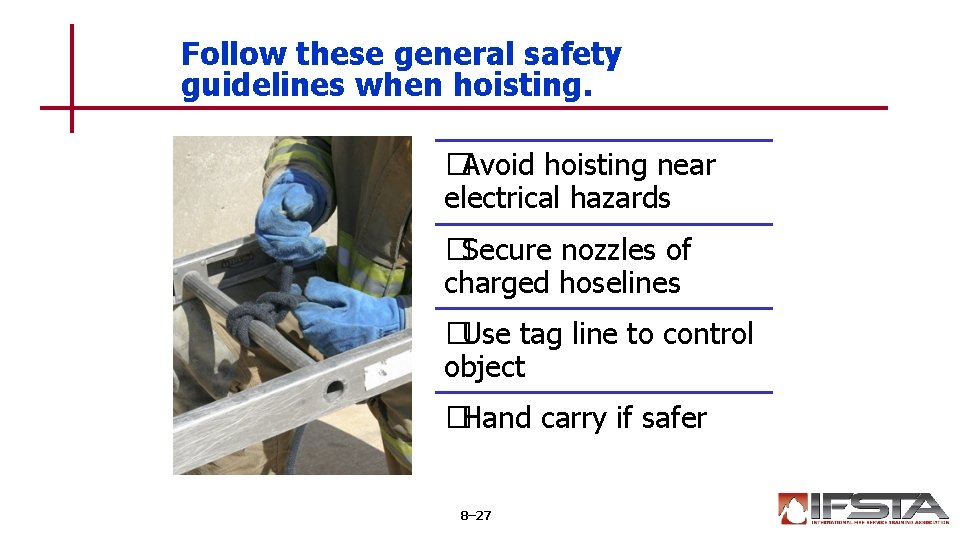
Follow these general safety guidelines when hoisting. �Avoid hoisting near electrical hazards �Secure nozzles of charged hoselines �Use tag line to control object �Hand carry if safer 8– 27
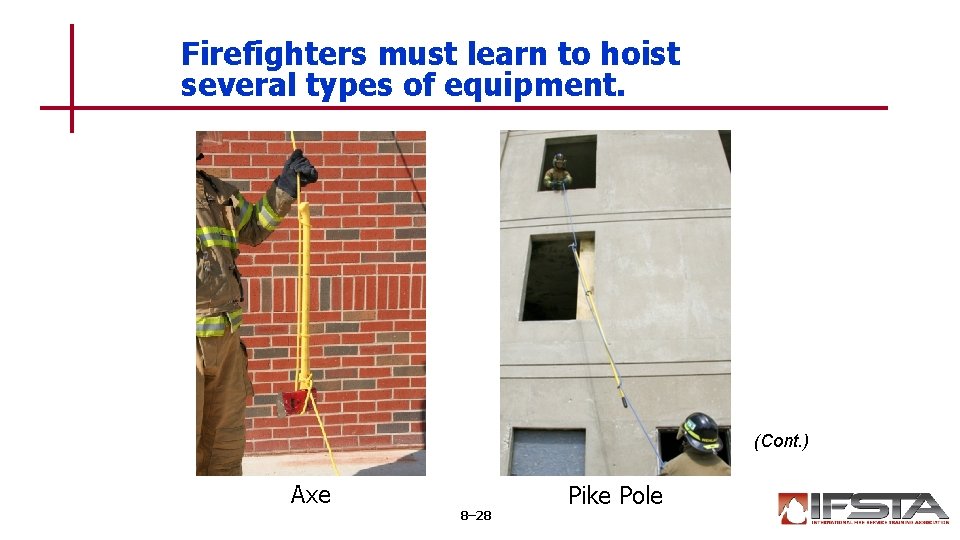
Firefighters must learn to hoist several types of equipment. (Cont. ) Axe 8– 28 Pike Pole
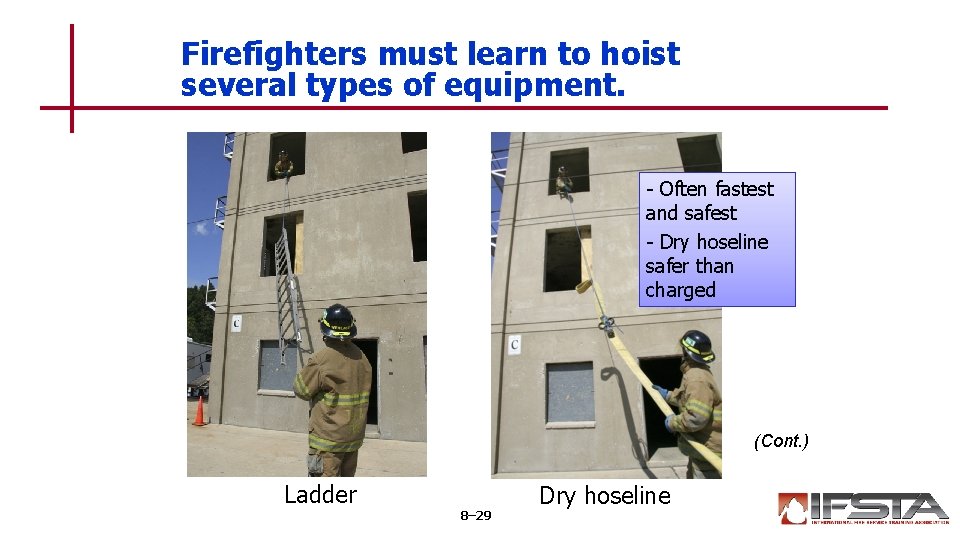
Firefighters must learn to hoist several types of equipment. - Often fastest and safest - Dry hoseline safer than charged (Cont. ) Ladder 8– 29 Dry hoseline
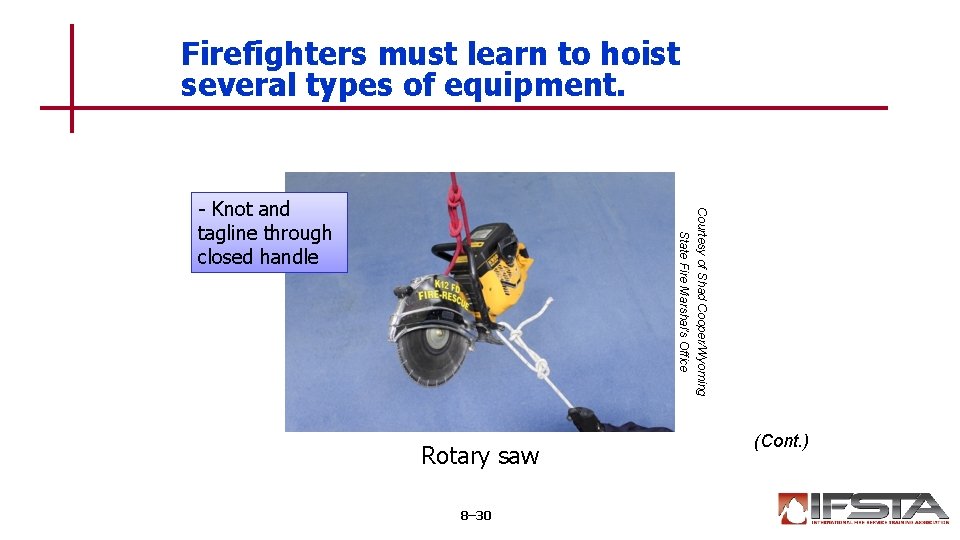
Firefighters must learn to hoist several types of equipment. Courtesy of Shad Cooper/Wyoming State Fire Marshal’s Office - Knot and tagline through closed handle Rotary saw 8– 30 (Cont. )
REVIEW QUESTION What are three safety guidelines that must be used when hoisting tools or equipment? 8– 31
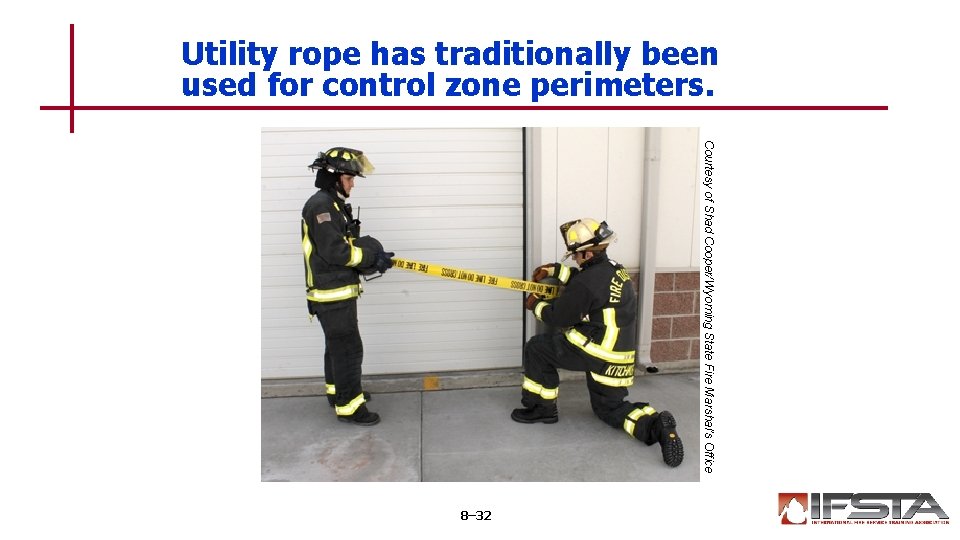
Utility rope has traditionally been used for control zone perimeters. Courtesy of Shad Cooper/Wyoming State Fire Marshal’s Office 8– 32
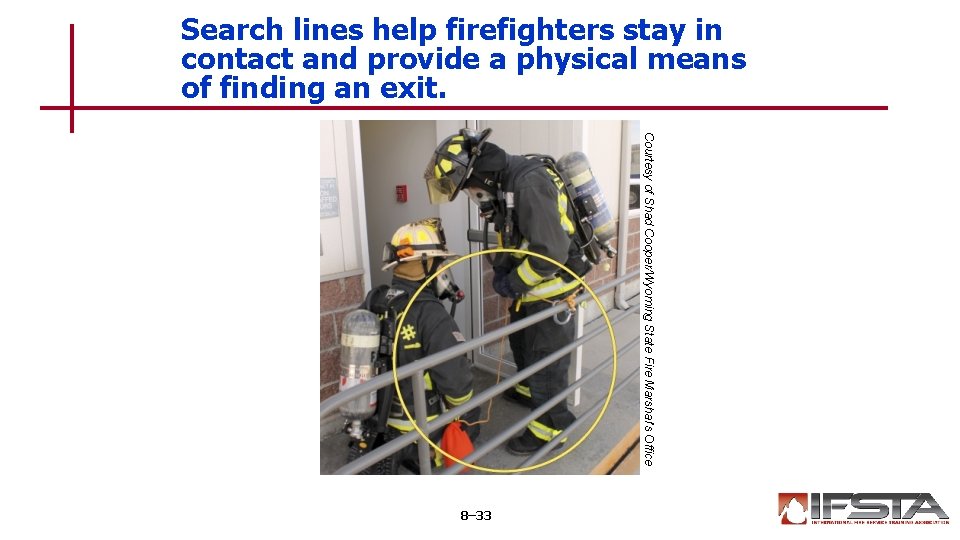
Search lines help firefighters stay in contact and provide a physical means of finding an exit. Courtesy of Shad Cooper/Wyoming State Fire Marshal’s Office 8– 33
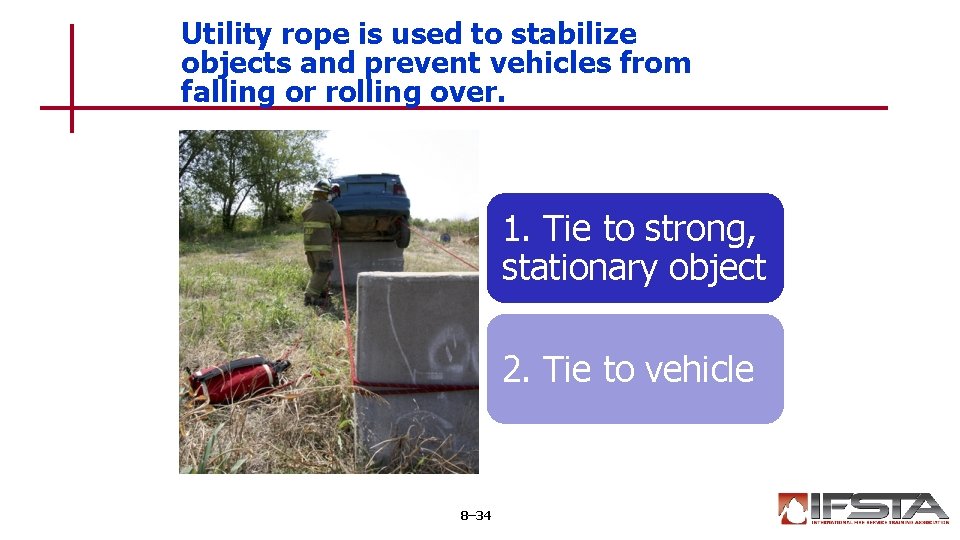
Utility rope is used to stabilize objects and prevent vehicles from falling or rolling over. 1. Tie to strong, stationary object 2. Tie to vehicle 8– 34
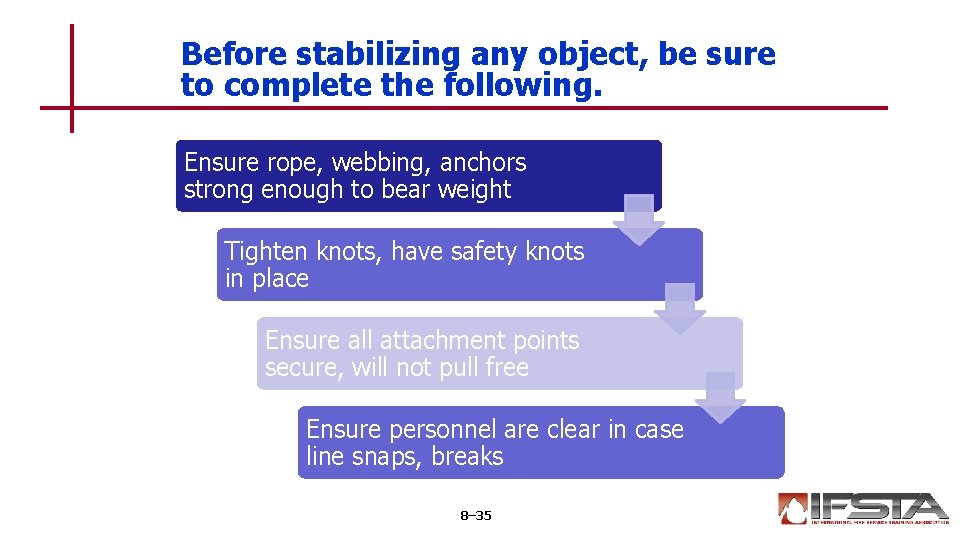
Before stabilizing any object, be sure to complete the following. Ensure rope, webbing, anchors strong enough to bear weight Tighten knots, have safety knots in place Ensure all attachment points secure, will not pull free Ensure personnel are clear in case line snaps, breaks 8– 35
Summary • Firefighters use rope and webbing to hoist tools and equipment, stabilize objects, designate control zones, perform rescues, and escape from life-threatening situations. 8– 36
Summary • To use them safely and effectively, you must know the various types of ropes, their applications, and how to tie a variety of knots quickly and correctly. • Finally, you must know how to inspect, clean, maintain, and store ropes and webbing so that they are ready for use when needed. 8– 37
- Slides: 37