
Learning Log and Reflection Module 2 Reflection What
- Slides: 16
Learning Log and Reflection Module 2
Reflection What is your experience of… - Doing it - Being ‘made’ to do it - Having to write it down @NHS_Health. Ed. Eng
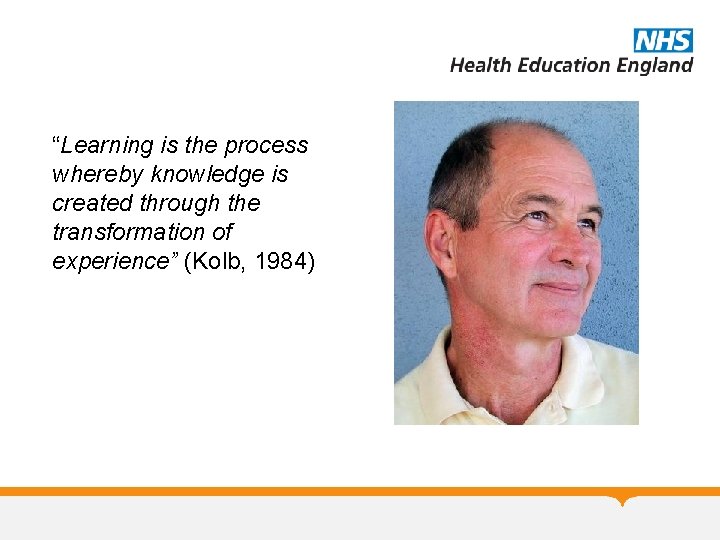
“Learning is the process whereby knowledge is created through the transformation of experience” (Kolb, 1984)
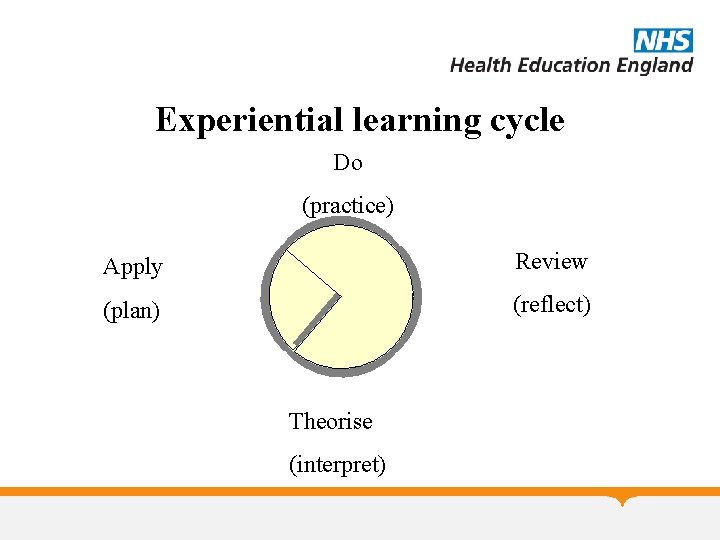
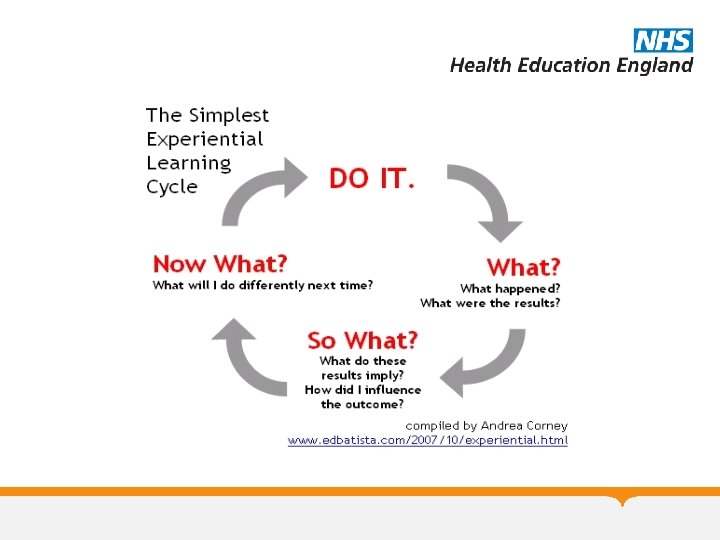
Experiential learning cycle Do (practice) Apply Review (plan) (reflect) Theorise (interpret)
What is it? ‘the process of analysing, questioning and reframing an experience, in order to make an assessment of it for the purposes of learning and/or improving practice…’ (Aronson) @NHS_Health. Ed. Eng
What is it? ‘the process of analysing, questioning and reframing an experience, in order to make an assessment of it for the purposes of learning and/or improving practice…’ (Aronson) @NHS_Health. Ed. Eng
Problems… • Defining and agreeing what it is (reflection vs critical reflection) - ’I do it naturally…. everyone does’ • Attitudes to writing it down/ discussing - ‘it’s personal…I don’t need to talk about it’ @NHS_Health. Ed. Eng
‘practitioners require guidance to see beyond themselves, to see their own self-distortions and limited horizons, and how those forces embedded within practice have limited their ability to know and achieve desirable work, ’ (Johns and Freshwater). @NHS_Health. Ed. Eng
So what’s the evidence? • Reflection is an active process – not the same as passive thinking. • Makes it active • Stops you rushing • Evidence it promotes better reflection and better learning @NHS_Health. Ed. Eng
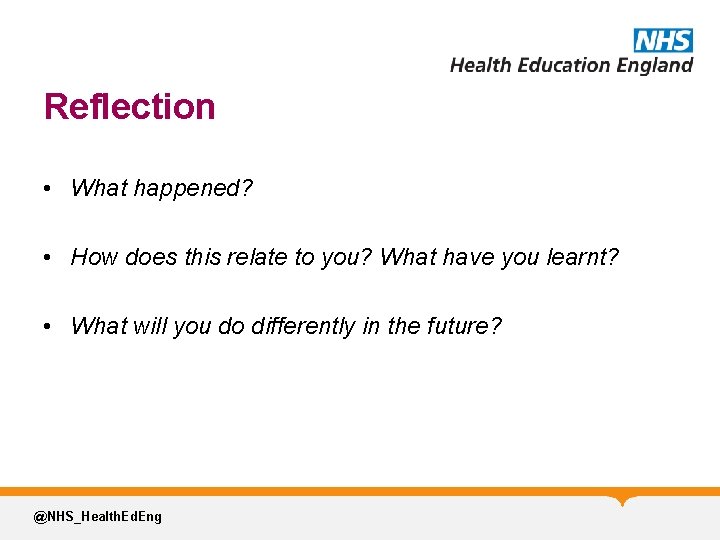
Reflection • What happened? • How does this relate to you? What have you learnt? • What will you do differently in the future? @NHS_Health. Ed. Eng
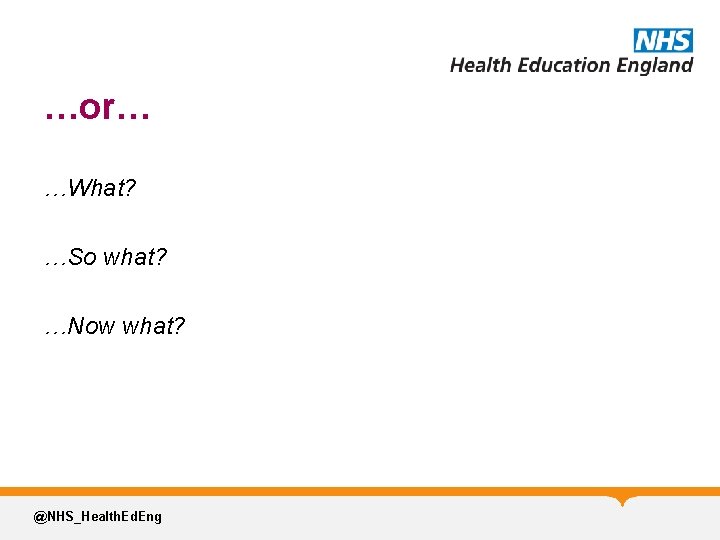
…or… …What? …So what? …Now what? @NHS_Health. Ed. Eng
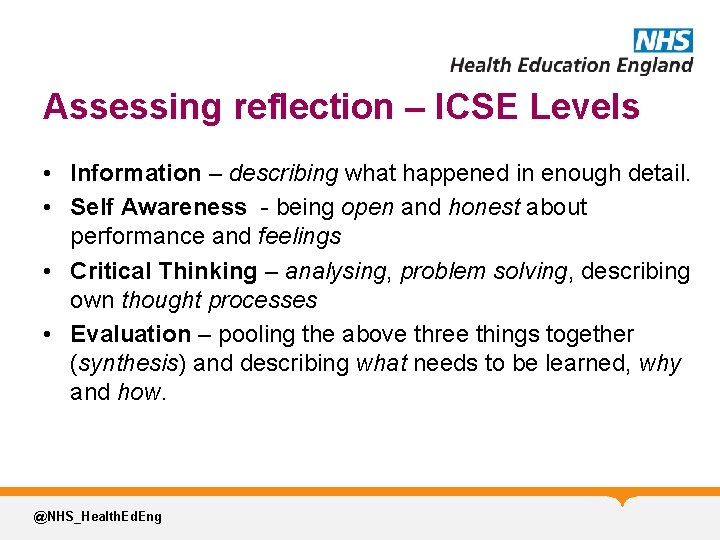
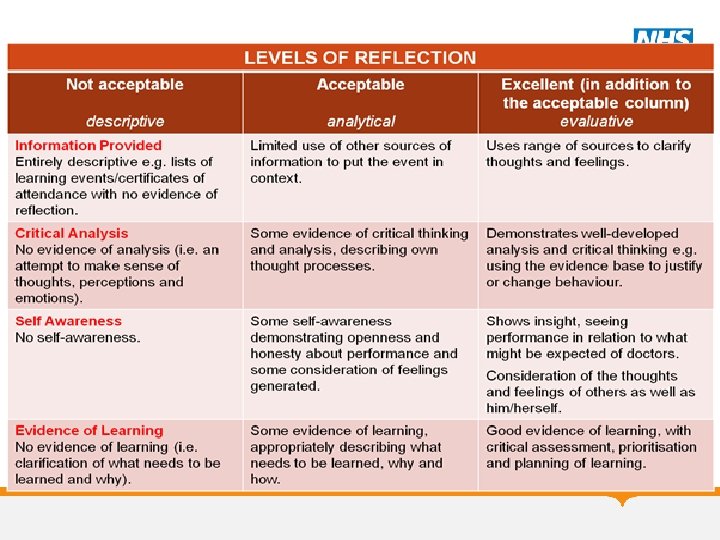
Assessing reflection – ICSE Levels • Information – describing what happened in enough detail. • Self Awareness - being open and honest about performance and feelings • Critical Thinking – analysing, problem solving, describing own thought processes • Evaluation – pooling the above three things together (synthesis) and describing what needs to be learned, why and how. @NHS_Health. Ed. Eng
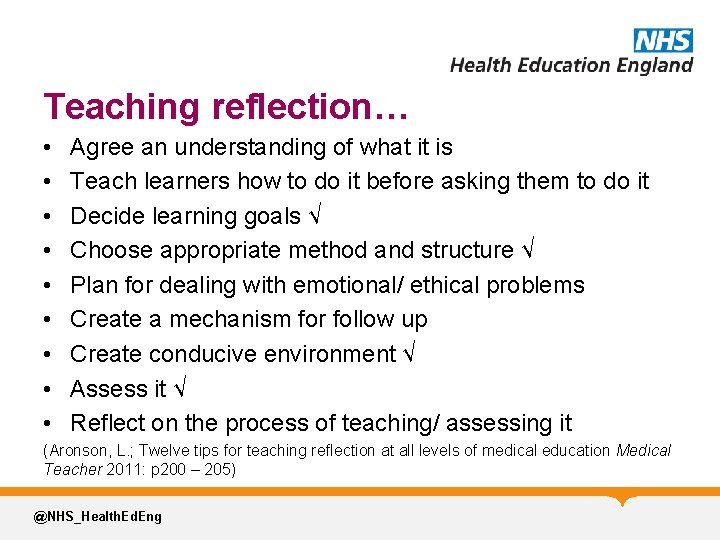
Teaching reflection… • • • Agree an understanding of what it is Teach learners how to do it before asking them to do it Decide learning goals √ Choose appropriate method and structure √ Plan for dealing with emotional/ ethical problems Create a mechanism for follow up Create conducive environment √ Assess it √ Reflect on the process of teaching/ assessing it (Aronson, L. ; Twelve tips for teaching reflection at all levels of medical education Medical Teacher 2011: p 200 – 205) @NHS_Health. Ed. Eng
Reflective Logs Quality vs quantity @NHS_Health. Ed. Eng