
Learning Life Skills on the School Bus Identification
Learning Life Skills on the School Bus Identification and teaching of generalizable transportation skills 1
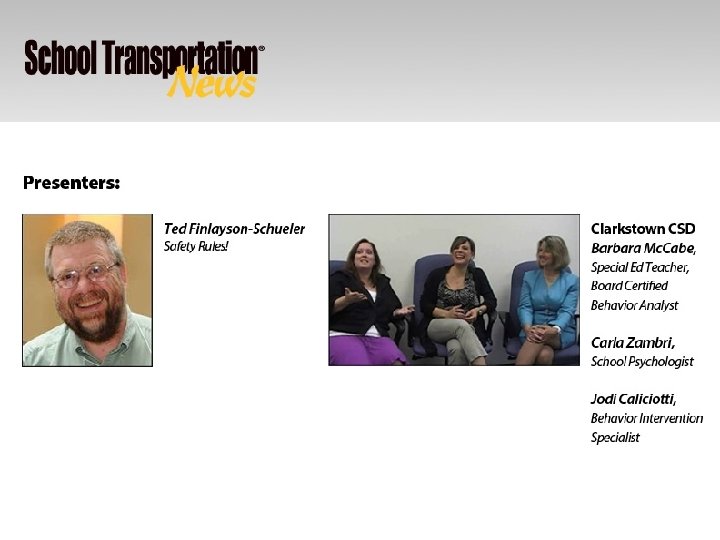
Meet Your Guides Moderator ? – Ryan Gray, STN Ted Finlayson-Schueler, Safety Rules! Clarkstown CSD • Jodi Caliciotti, Special Ed Teacher • Carla Zambri, School Psychologist • Barbara Mc. Cabe, Special Ed Teacher 2
Today’s Goals At the conclusion of this presentation, you will have an understanding of: • Travel Training within the context of IDEA, FAPE, LRE, Related Services and Transition Planning • The difference between IDEA and ADA • Broad travel training concepts and school bus corollaries • Specific potentially transferable travel skills • Feasibility and Risk with this population • Necessary, resources, processes and support 3
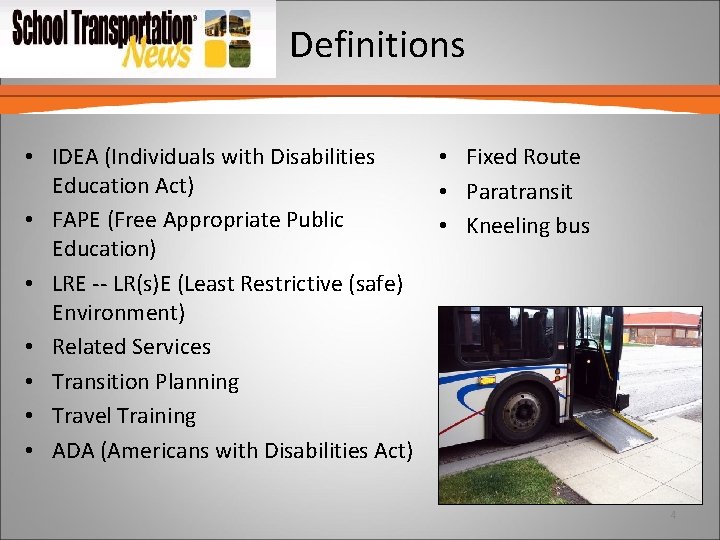
Definitions • IDEA (Individuals with Disabilities Education Act) • FAPE (Free Appropriate Public Education) • LRE -- LR(s)E (Least Restrictive (safe) Environment) • Related Services • Transition Planning • Travel Training • ADA (Americans with Disabilities Act) • Fixed Route • Paratransit • Kneeling bus 4

Travel Training Providing instruction, as appropriate, to children with significant cognitive disabilities, and any other children with disabilities who require this instruction, to enable them to develop an awareness of the environment in which they live and learn the skills necessary to move effectively from place to place within that environment, as for example in school, in the home, and in the community. – 34 C. F. R. 300. 26(b)(4) 5
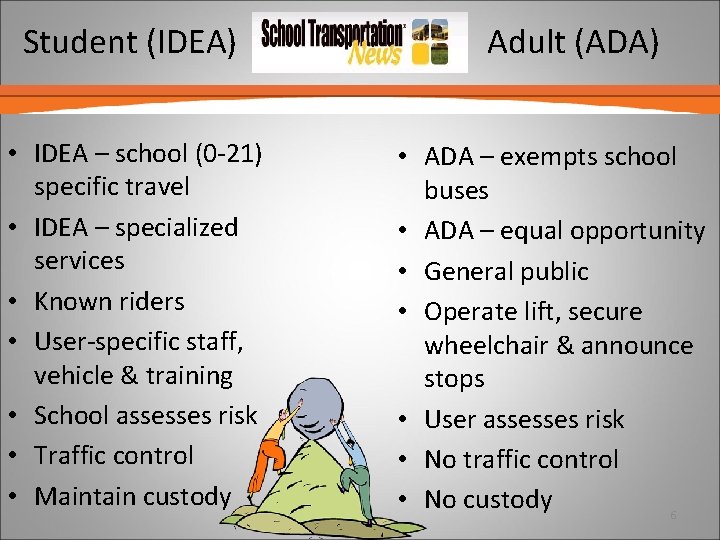
Student (IDEA) • IDEA – school (0 -21) specific travel • IDEA – specialized services • Known riders • User-specific staff, vehicle & training • School assesses risk • Traffic control • Maintain custody Adult (ADA) • ADA – exempts school buses • ADA – equal opportunity • General public • Operate lift, secure wheelchair & announce stops • User assesses risk • No traffic control • No custody 6
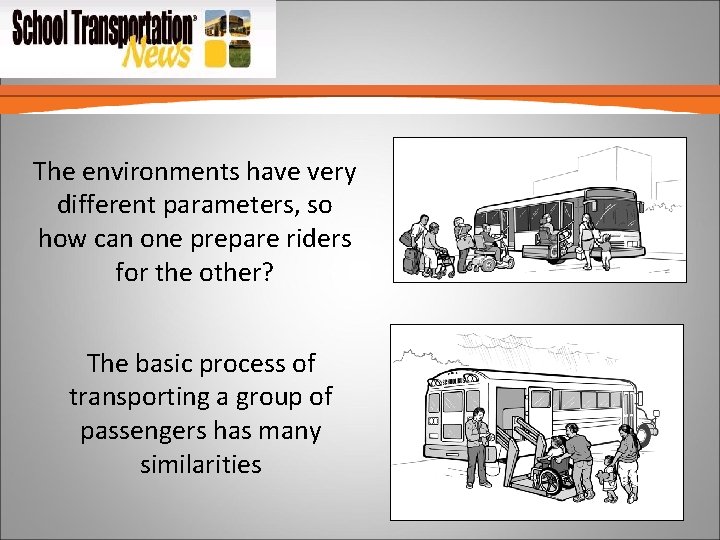
The environments have very different parameters, so how can one prepare riders for the other? The basic process of transporting a group of passengers has many similarities 7
Driving Principles • Safety • LR(s)E • Teach selfadvocacy • Team focused • Baby steps Traditional Travel Training: Short -term, comprehensive, intensive instruction (2 -6 wk) School Bus Travel Training: Longterm, incremental instruction focused on individual skills that can be generalized to the transit environment (ages 3 -21 or about 7, 000 bus stops) 8
ESPA* Core Travel Skills Background Skills • Intellectual • Physical • Wayfinding • Pedestrian • Safety Technical skills • Boarding the vehicle • Riding the vehicle • De-boarding the vehicle *Easter Seals Project Action 9
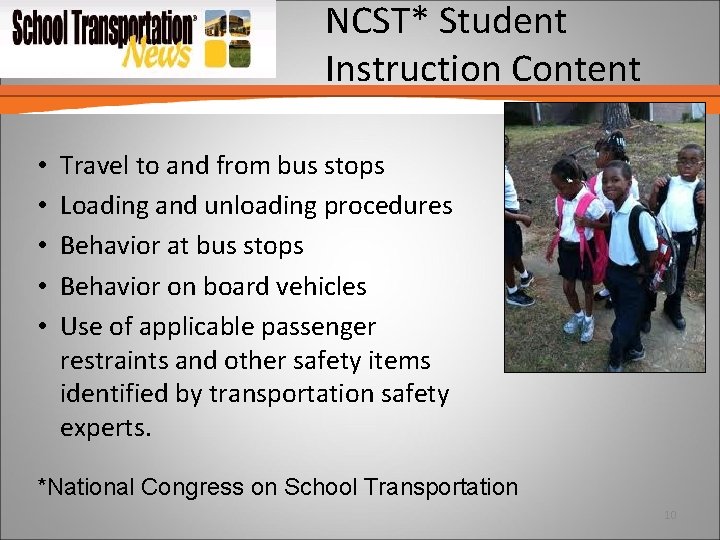
NCST* Student Instruction Content • • • Travel to and from bus stops Loading and unloading procedures Behavior at bus stops Behavior on board vehicles Use of applicable passenger restraints and other safety items identified by transportation safety experts. *National Congress on School Transportation 10
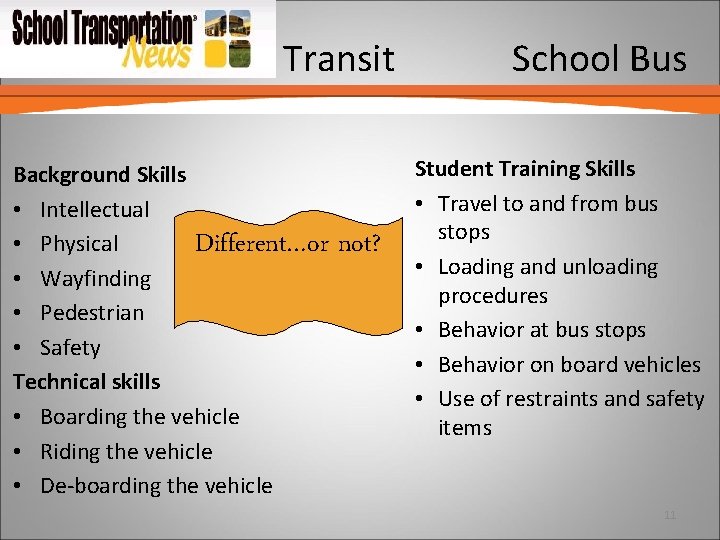
Transit School Bus Background Skills • Intellectual • Physical Different…or • Wayfinding • Pedestrian • Safety Technical skills • Boarding the vehicle • Riding the vehicle • De-boarding the vehicle not? Student Training Skills • Travel to and from bus stops • Loading and unloading procedures • Behavior at bus stops • Behavior on board vehicles • Use of restraints and safety items 11
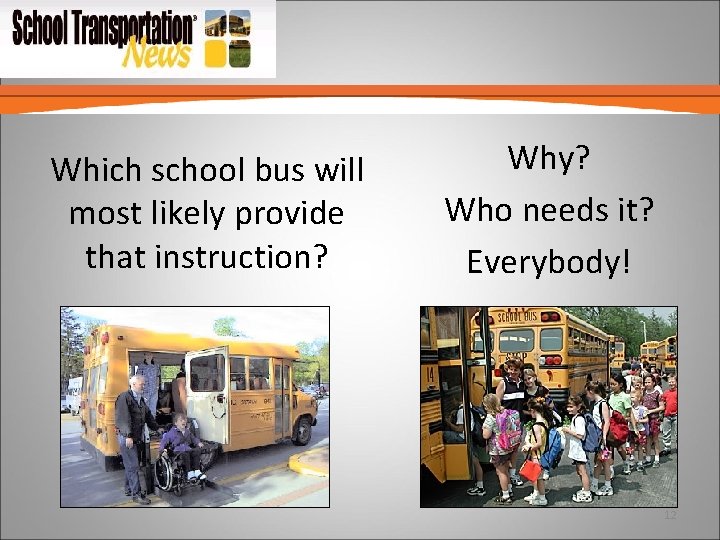
Which school bus will most likely provide that instruction? Why? Who needs it? Everybody! 12
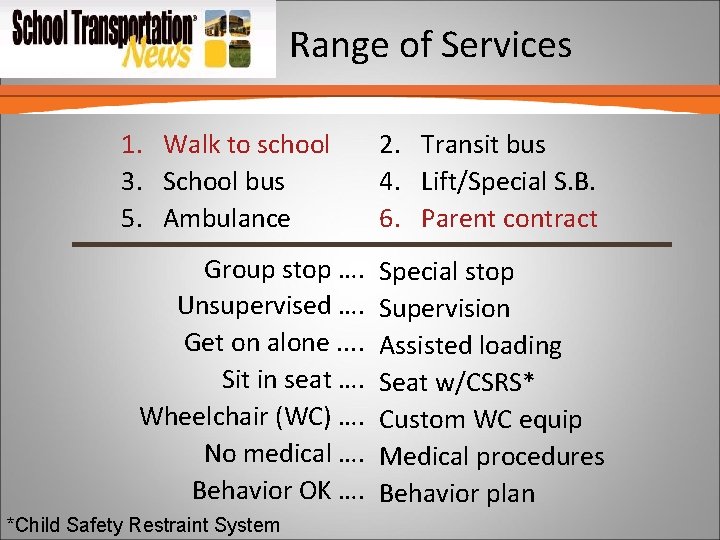
Range of Services 1. Walk to school 3. School bus 5. Ambulance 2. Transit bus 4. Lift/Special S. B. 6. Parent contract Group stop …. Special stop Unsupervised …. Supervision Get on alone. . Assisted loading Sit in seat …. Seat w/CSRS* Wheelchair (WC) …. Custom WC equip No medical …. Medical procedures Behavior OK …. Behavior plan *Child Safety Restraint System
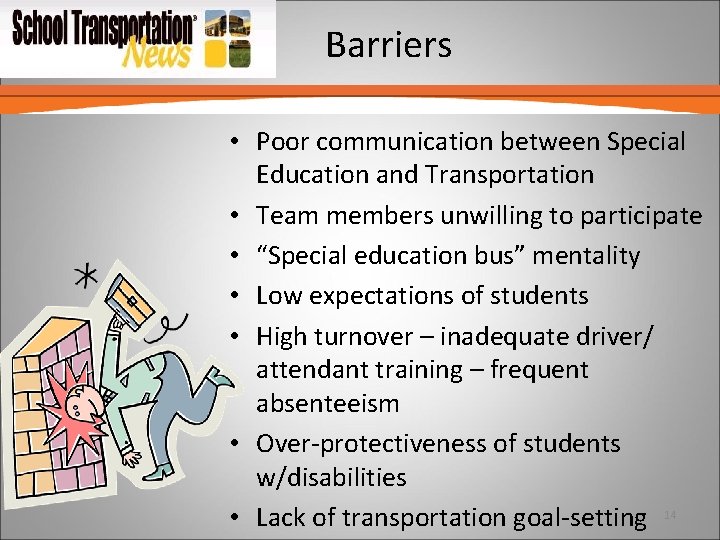
Barriers • Poor communication between Special Education and Transportation • Team members unwilling to participate • “Special education bus” mentality • Low expectations of students • High turnover – inadequate driver/ attendant training – frequent absenteeism • Over-protectiveness of students w/disabilities • Lack of transportation goal-setting 14
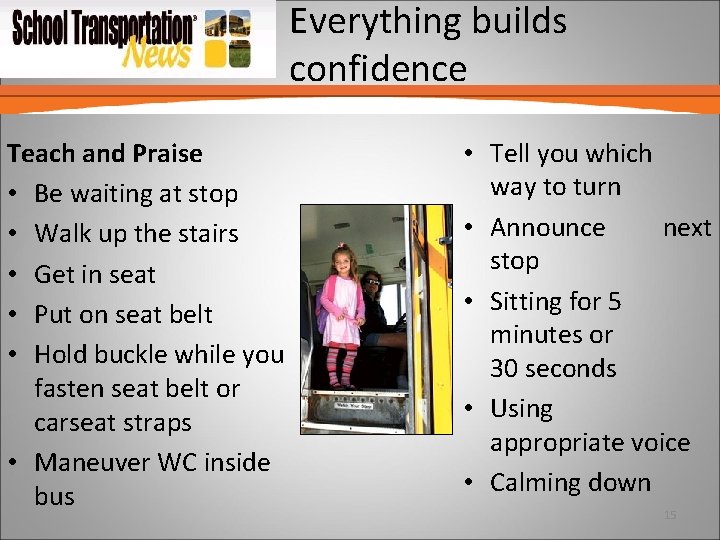
Everything builds confidence Teach and Praise • Be waiting at stop • Walk up the stairs • Get in seat • Put on seat belt • Hold buckle while you fasten seat belt or carseat straps • Maneuver WC inside bus • Tell you which way to turn • Announce next stop • Sitting for 5 minutes or 30 seconds • Using appropriate voice • Calming down 15
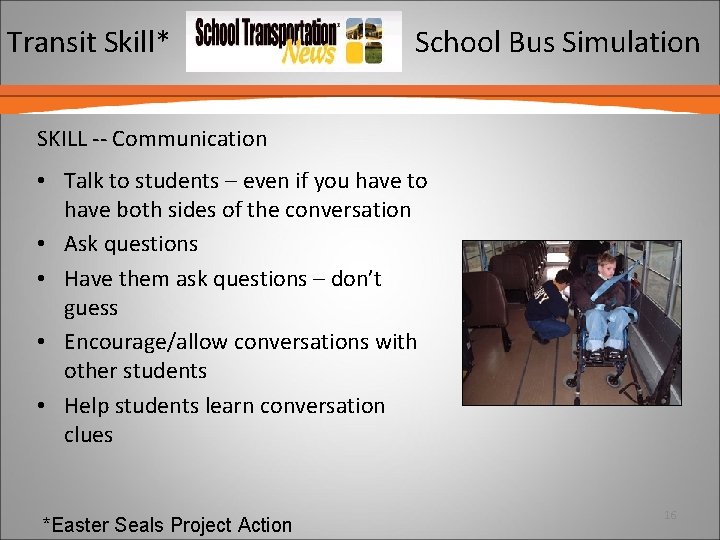
Transit Skill* School Bus Simulation SKILL -- Communication • Talk to students – even if you have to have both sides of the conversation • Ask questions • Have them ask questions – don’t guess • Encourage/allow conversations with other students • Help students learn conversation clues *Easter Seals Project Action 16
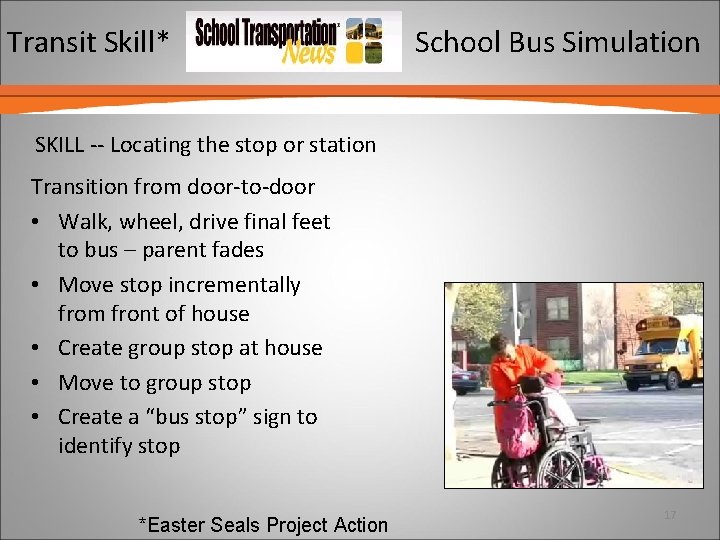
Transit Skill* School Bus Simulation SKILL -- Locating the stop or station Transition from door-to-door • Walk, wheel, drive final feet to bus – parent fades • Move stop incrementally from front of house • Create group stop at house • Move to group stop • Create a “bus stop” sign to identify stop *Easter Seals Project Action 17
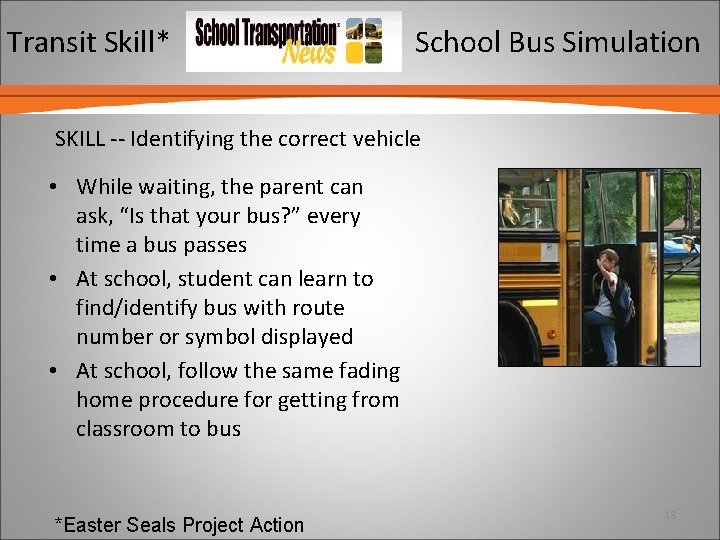
Transit Skill* School Bus Simulation SKILL -- Identifying the correct vehicle • While waiting, the parent can ask, “Is that your bus? ” every time a bus passes • At school, student can learn to find/identify bus with route number or symbol displayed • At school, follow the same fading home procedure for getting from classroom to bus *Easter Seals Project Action 18
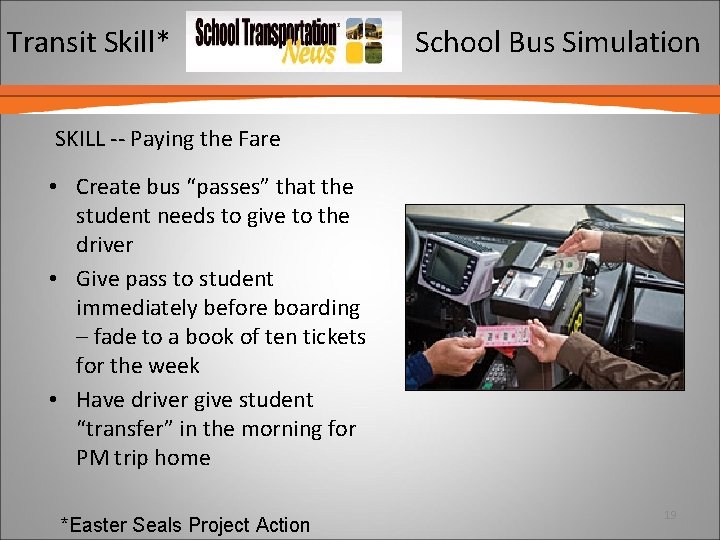
Transit Skill* School Bus Simulation SKILL -- Paying the Fare • Create bus “passes” that the student needs to give to the driver • Give pass to student immediately before boarding – fade to a book of ten tickets for the week • Have driver give student “transfer” in the morning for PM trip home *Easter Seals Project Action 19
Transit Skill* School Bus Simulation SKILL -- Identifying Landmarks and Bus Stops • Teach them landmarks/street names • Teach them the route • Have them describe their location and plans for travel • Give them a map of the bus route each day and they can mark progress • Have them write the time they pass landmarks, major streets, etc. • Have them “signal” the driver when their stop is approaching (buzzer) *Easter Seals Project Action 20

Transit Skill* School Bus Simulation SKILL -- Finding a seat Begin with helping child to assigned seat Create marker to identify child’s seat Allow child to find seat Encourage helping with CSRS Practice fading as established by transportation goals • Establish a “safety signal” so child can communicate dis-ease • • • *Easter Seals Project Action 21
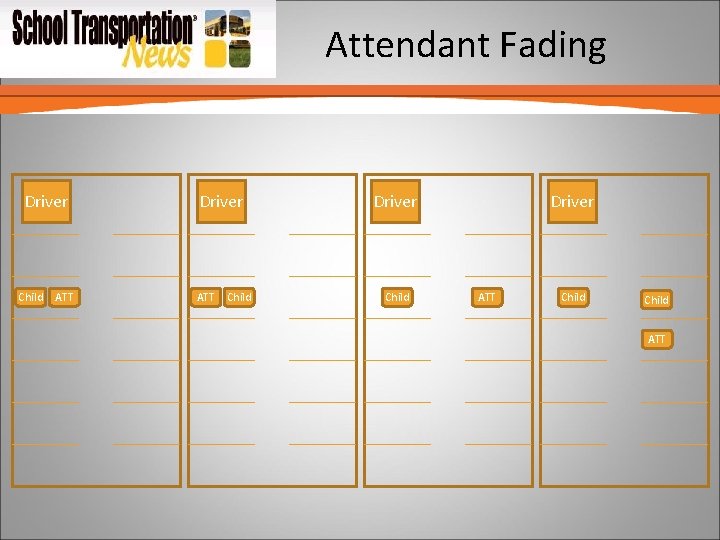
Attendant Fading Driver Child ATT Driver ATT Child ATT
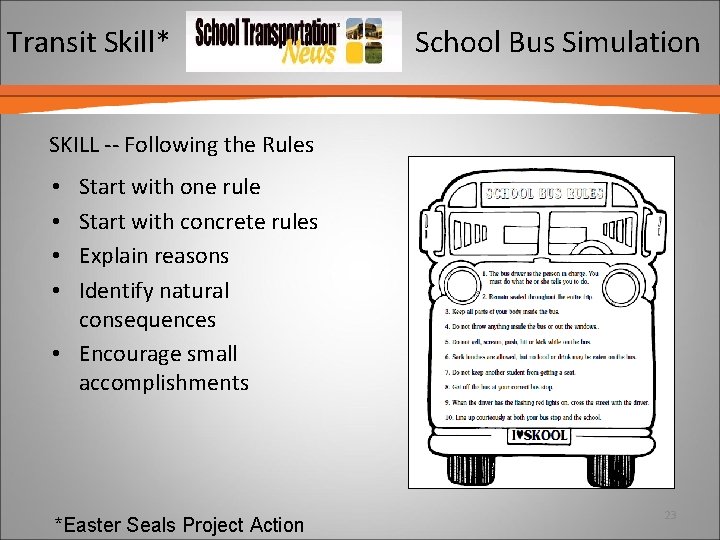
Transit Skill* School Bus Simulation SKILL -- Following the Rules Start with one rule Start with concrete rules Explain reasons Identify natural consequences • Encourage small accomplishments • • *Easter Seals Project Action 23
Praiseworthy He got it half right! 24
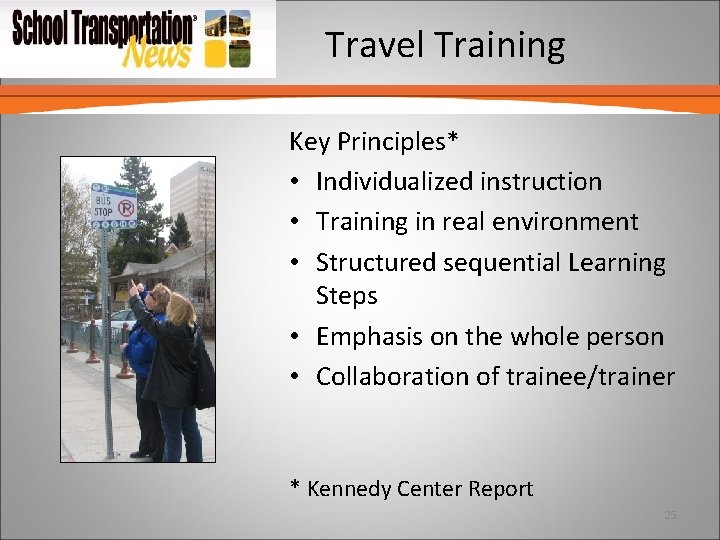
Travel Training Key Principles* • Individualized instruction • Training in real environment • Structured sequential Learning Steps • Emphasis on the whole person • Collaboration of trainee/trainer * Kennedy Center Report 25
Implementation Needs • Stable, well-trained bus staff • Commitment to LR(s)E • Transportation involvement in IEP goal setting • Transportation is a part of BIPs • PT and OT coordinate with transportation in skill development • Qualified Travel Instructor is a part of the identification of transferable skills 26
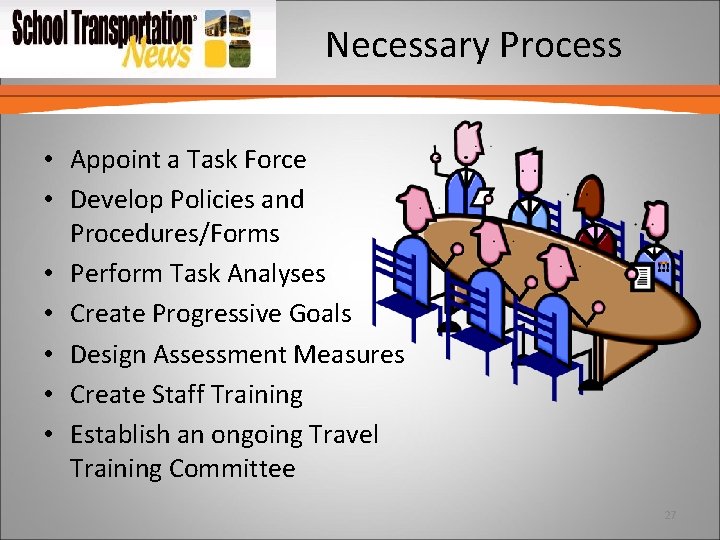
Necessary Process • Appoint a Task Force • Develop Policies and Procedures/Forms • Perform Task Analyses • Create Progressive Goals • Design Assessment Measures • Create Staff Training • Establish an ongoing Travel Training Committee 27
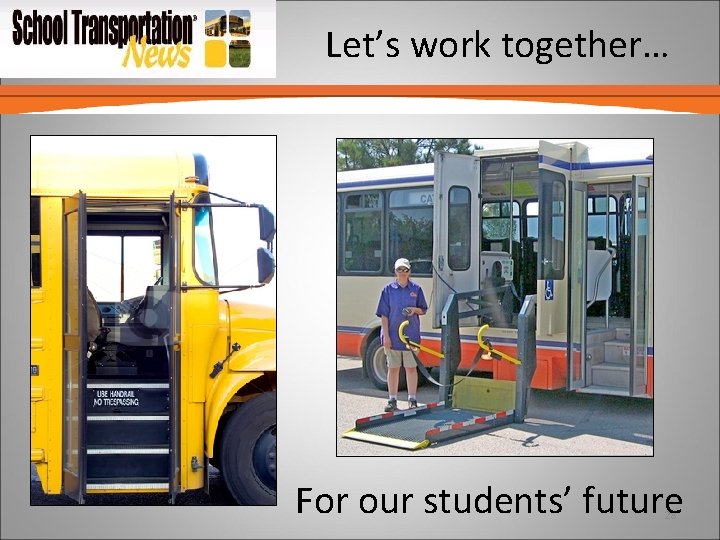
Let’s work together… For our students’ future 28
29
- Slides: 29