
Learning Intentions To identify different types of wood
- Slides: 18
Learning Intentions To identify different types of wood and their properties
Success Criteria I can state a type of softwood/hardwood/manufactured board I can describe the properties of a type of wood I can name different woods based on appearance I can describe how a manufactured board is constructed
Why do we need to know about types of wood? Hardwoods and softwoods have different properties, this means that they can be used in different ways and for different products.
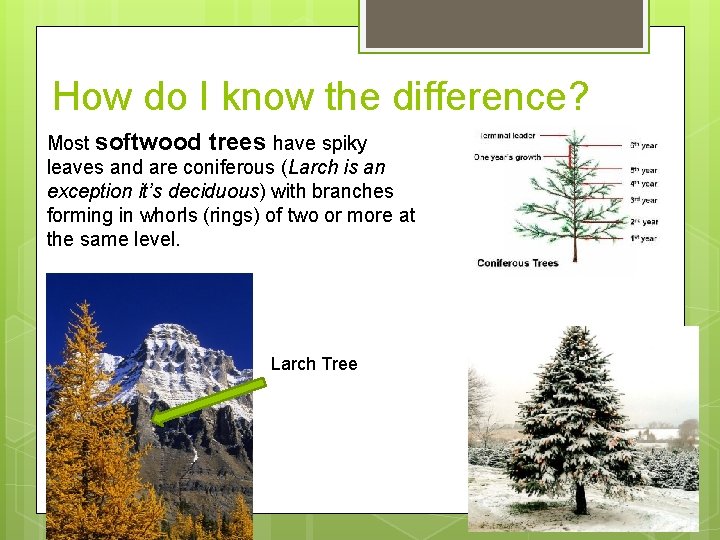
How do I know the difference? Most softwood trees have spiky leaves and are coniferous (Larch is an exception it’s deciduous) with branches forming in whorls (rings) of two or more at the same level. Larch Tree
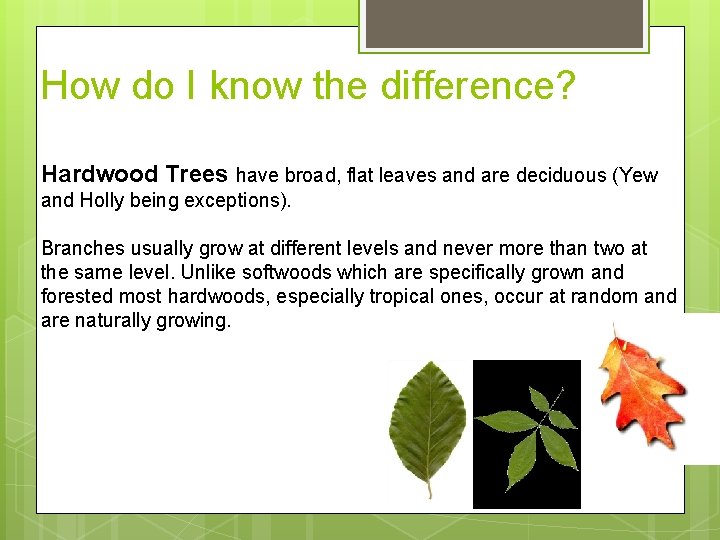
How do I know the difference? Hardwood Trees have broad, flat leaves and are deciduous (Yew and Holly being exceptions). Branches usually grow at different levels and never more than two at the same level. Unlike softwoods which are specifically grown and forested most hardwoods, especially tropical ones, occur at random and are naturally growing.
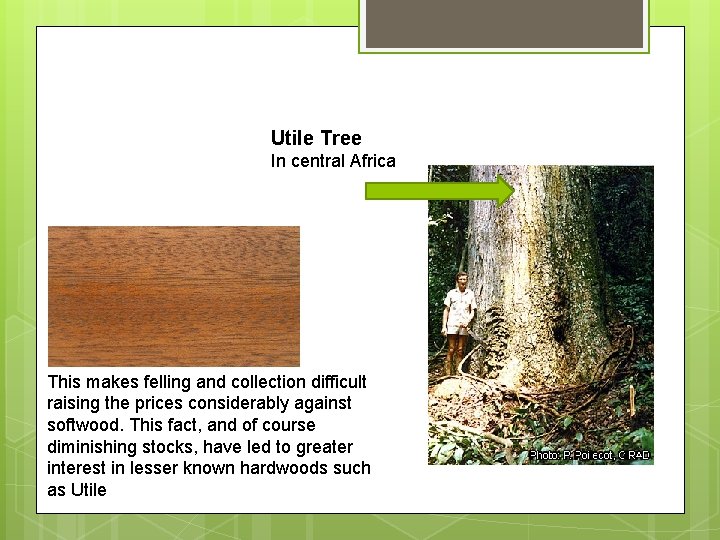
Utile Tree In central Africa This makes felling and collection difficult raising the prices considerably against softwood. This fact, and of course diminishing stocks, have led to greater interest in lesser known hardwoods such as Utile
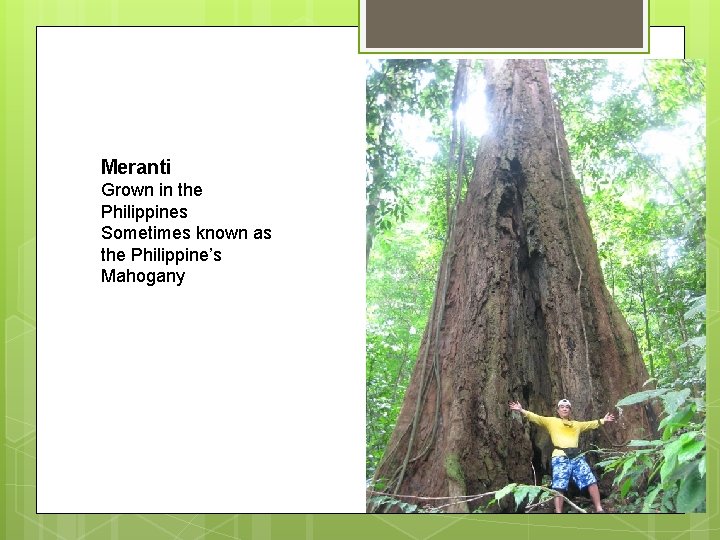
Meranti Grown in the Philippines Sometimes known as the Philippine’s Mahogany
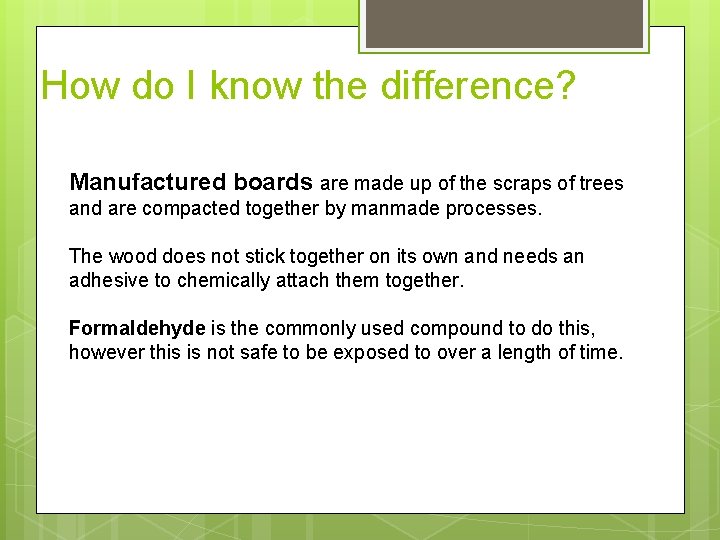
How do I know the difference? Manufactured boards are made up of the scraps of trees and are compacted together by manmade processes. The wood does not stick together on its own and needs an adhesive to chemically attach them together. Formaldehyde is the commonly used compound to do this, however this is not safe to be exposed to over a length of time.
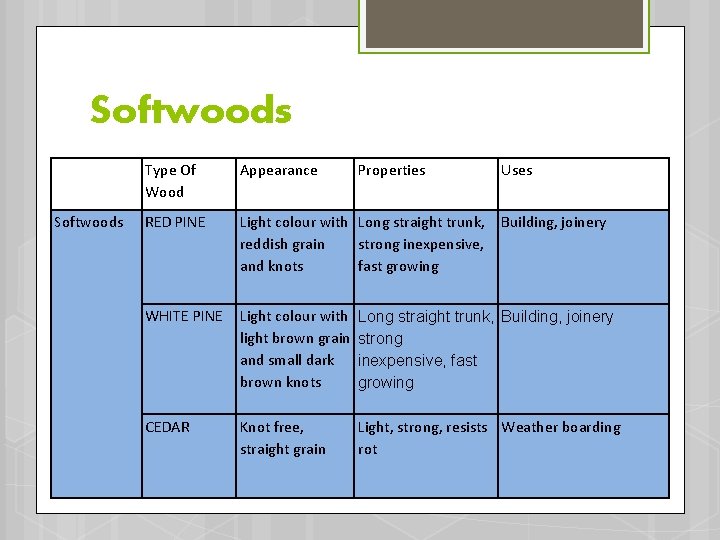
Softwoods Type Of Wood Appearance Properties Uses RED PINE Light colour with Long straight trunk, reddish grain strong inexpensive, and knots fast growing WHITE PINE Light colour with light brown grain and small dark brown knots Long straight trunk, Building, joinery strong inexpensive, fast growing CEDAR Knot free, straight grain Light, strong, resists Weather boarding rot Building, joinery
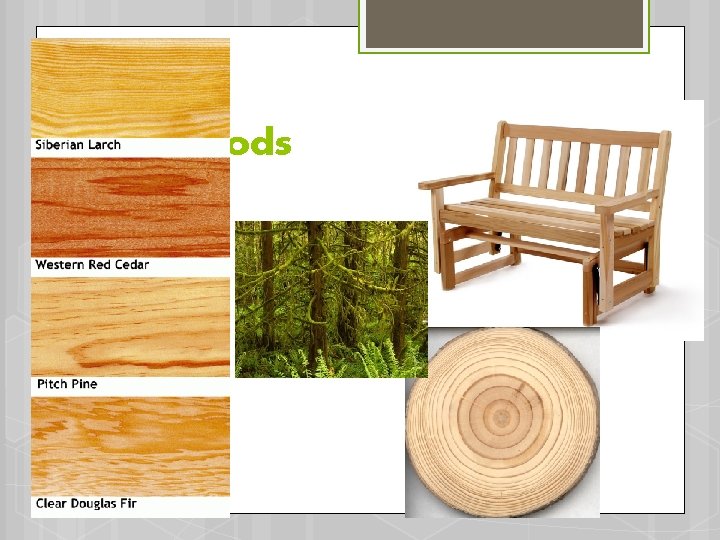
Softwoods
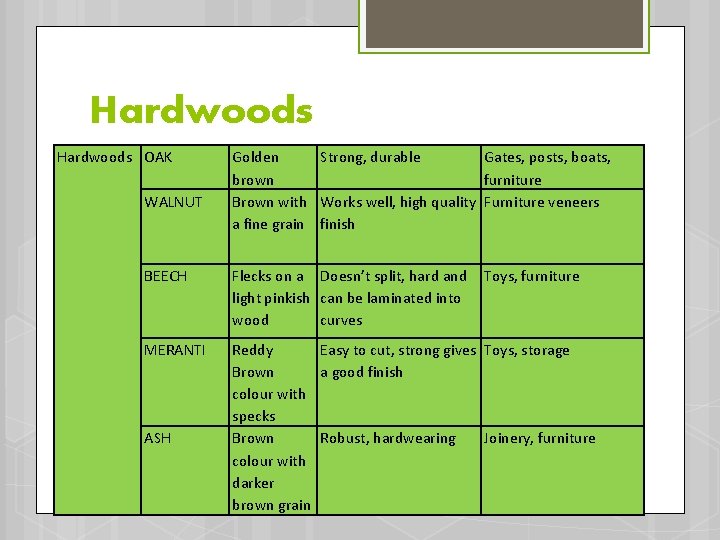
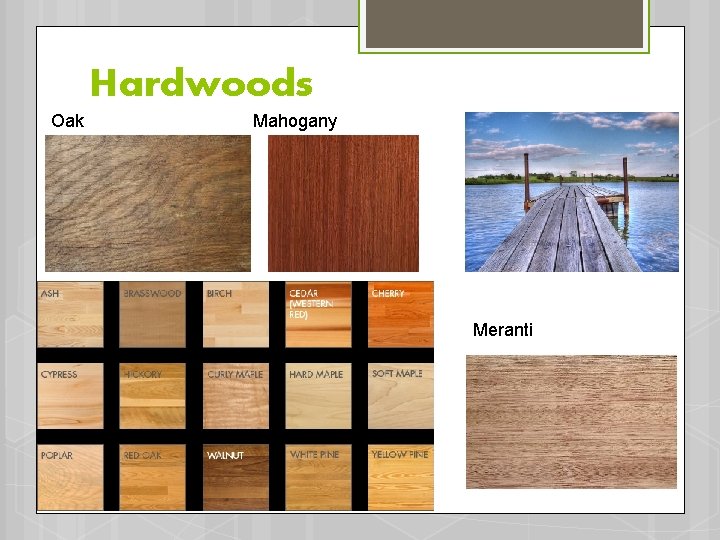
Hardwoods OAK WALNUT Golden Strong, durable Gates, posts, boats, brown furniture Brown with Works well, high quality Furniture veneers a fine grain finish BEECH Flecks on a Doesn’t split, hard and light pinkish can be laminated into wood curves MERANTI Reddy Easy to cut, strong gives Toys, storage Brown a good finish colour with specks Brown Robust, hardwearing Joinery, furniture colour with darker brown grain ASH Toys, furniture
Hardwoods Oak Mahogany Meranti
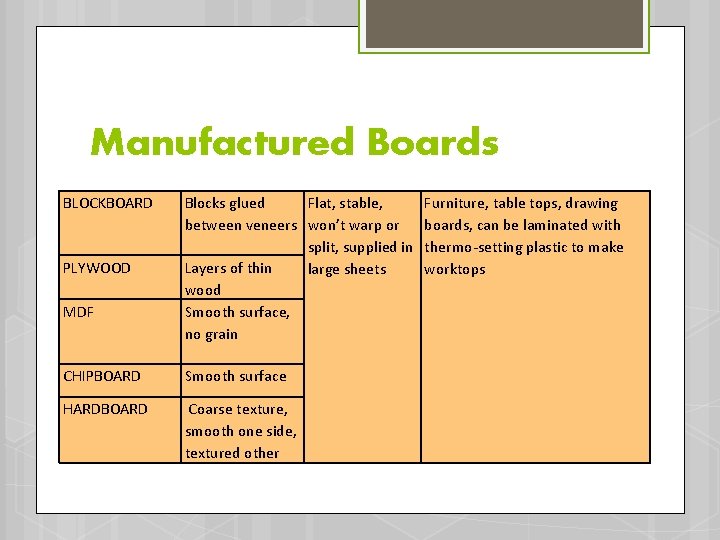
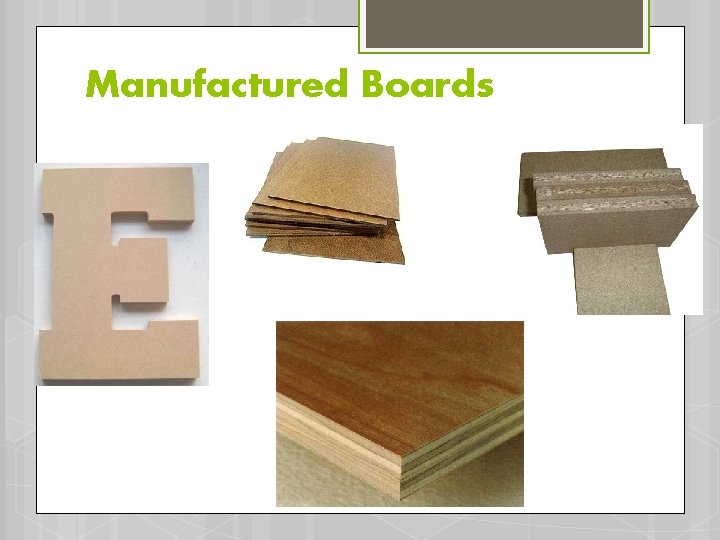
Manufactured Boards BLOCKBOARD PLYWOOD MDF Blocks glued Flat, stable, between veneers won’t warp or split, supplied in Layers of thin large sheets wood Smooth surface, no grain CHIPBOARD Smooth surface HARDBOARD Coarse texture, smooth one side, textured other Furniture, table tops, drawing boards, can be laminated with thermo-setting plastic to make worktops
Manufactured Boards
Your Task Write down: How many softwoods you know. How many hardwoods you know. many manufactured boards you know.
Your Task What are the properties of Red Pine? What are the properties of Oak? What are the properties of Plywood?
Your Task • Write down: • Products are made of softwoods • Products are made of hardwoods • Products are made of manufactured boards