
Learning Intentions By the end of this lesson
Learning Intentions By the end of this lesson, you will be able to: 1. Identify general characteristics of Phylum Cnidaria 2. Describe functions of major structures in terms of life functions and explain their evolutionary significance (adaptations) 3. Recall key ecological roles of cnidarians
Phylum Cnidaria
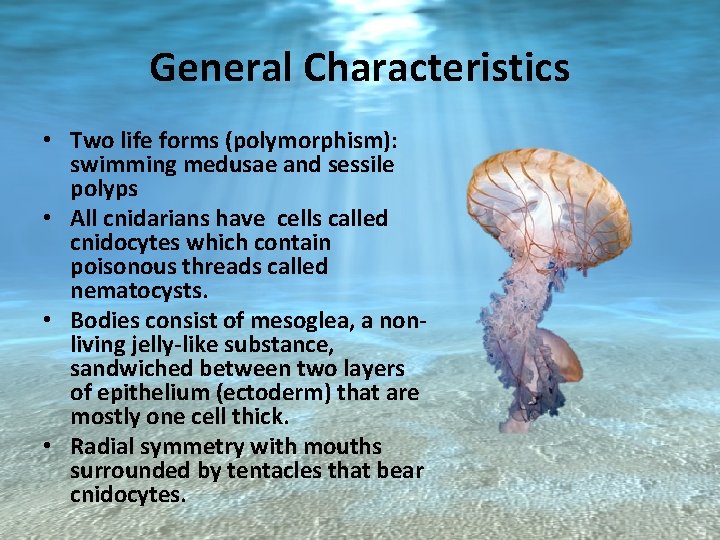
General Characteristics • Two life forms (polymorphism): swimming medusae and sessile polyps • All cnidarians have cells called cnidocytes which contain poisonous threads called nematocysts. • Bodies consist of mesoglea, a nonliving jelly-like substance, sandwiched between two layers of epithelium (ectoderm) that are mostly one cell thick. • Radial symmetry with mouths surrounded by tentacles that bear cnidocytes.
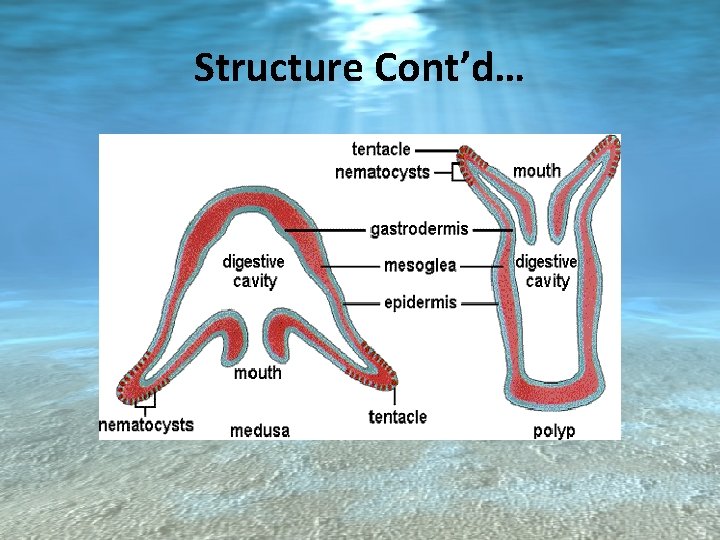
Structure Cont’d…
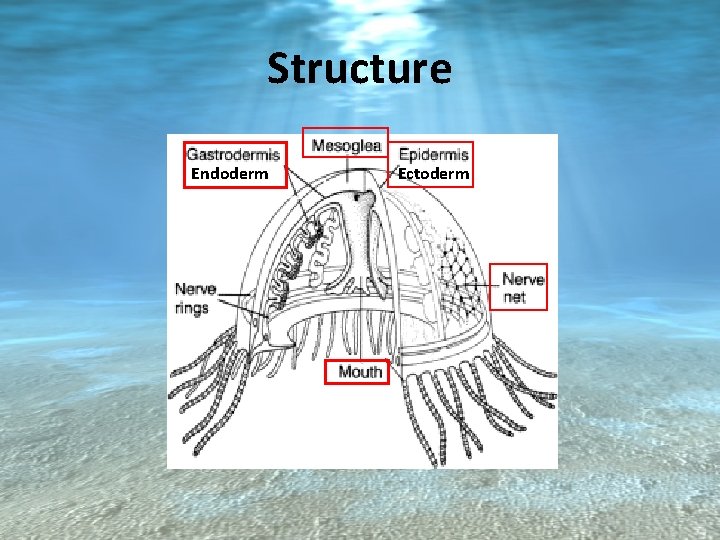
Structure Endoderm Ectoderm
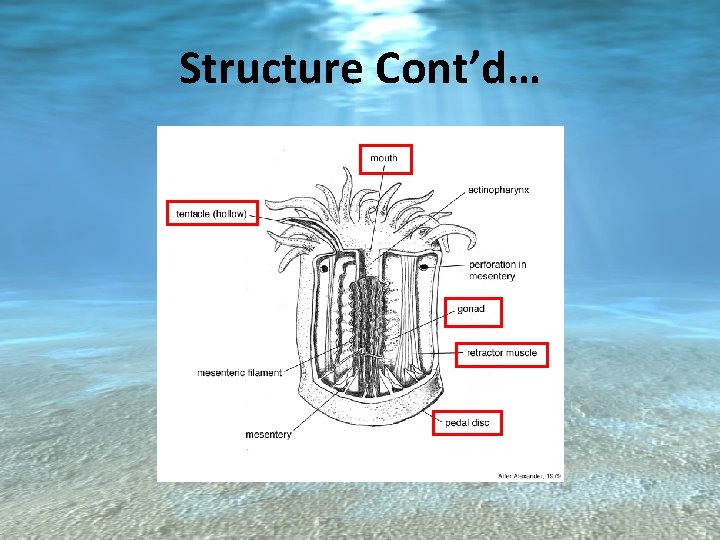
Structure Cont’d…
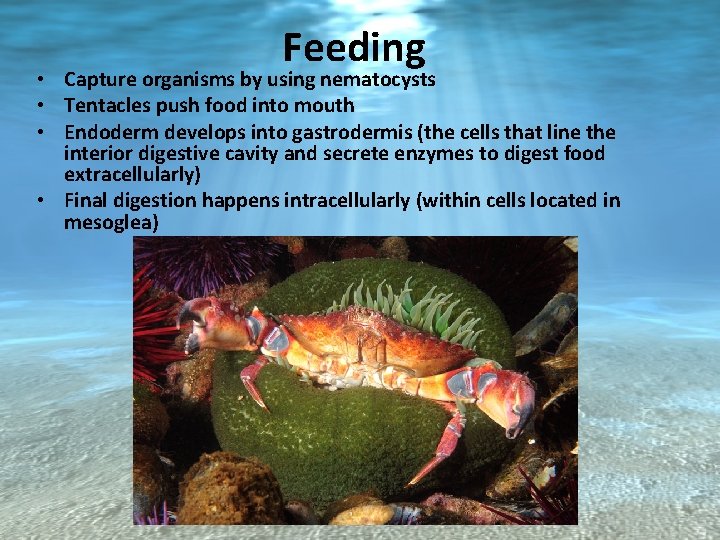
Feeding • Capture organisms by using nematocysts • Tentacles push food into mouth • Endoderm develops into gastrodermis (the cells that line the interior digestive cavity and secrete enzymes to digest food extracellularly) • Final digestion happens intracellularly (within cells located in mesoglea)
Gas Exchange/Excretion • Diffusion of gases from water into epithelial cells • Diffusion of wastes from mesoglea into water (pushed out through mouth)
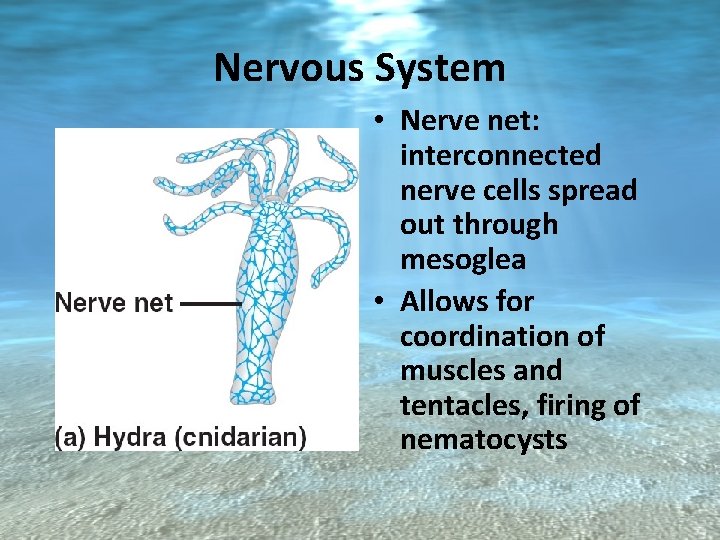
Nervous System • Nerve net: interconnected nerve cells spread out through mesoglea • Allows for coordination of muscles and tentacles, firing of nematocysts
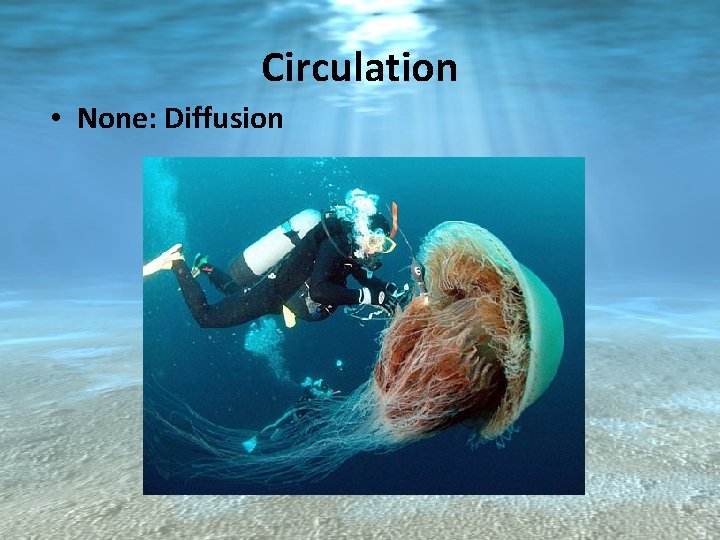
Circulation • None: Diffusion
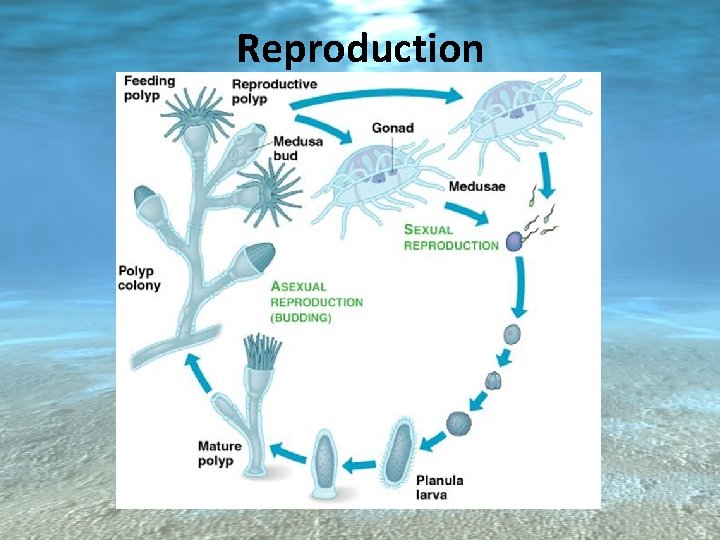
Reproduction
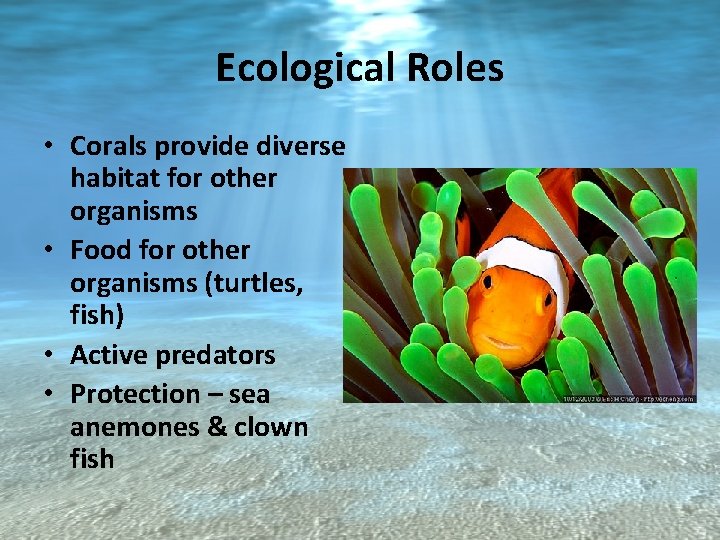
Ecological Roles • Corals provide diverse habitat for other organisms • Food for other organisms (turtles, fish) • Active predators • Protection – sea anemones & clown fish
- Slides: 12